
AI-powered advertising is developing along several connected fronts rather than following a single path. Reports about Amazon Alexa+, YouTube’s Gemini-powered tools, and Google Search Console show AI entering the transaction, campaign-planning, and visibility-measurement stages of marketing.
Together, these developments offer marketers a useful framework for evaluating AI products: identify the decision each tool supports, distinguish an optimization signal from proven business impact, and determine which parts of the customer journey remain unmeasured.
Key takeaways
- Amazon’s reported Alexa+ ad format turns the assistant into an advertising, product-discovery, and purchasing interface.
- YouTube’s new tools use AI and expanded data to support trend research, creator selection, and creative optimization.
- Google Search Console’s AI performance report provides visibility data, but the reported version does not include clicks.
- These products cover different stages of marketing, so their signals should not be treated as interchangeable measures of success.
Conversational ads compress the path to purchase
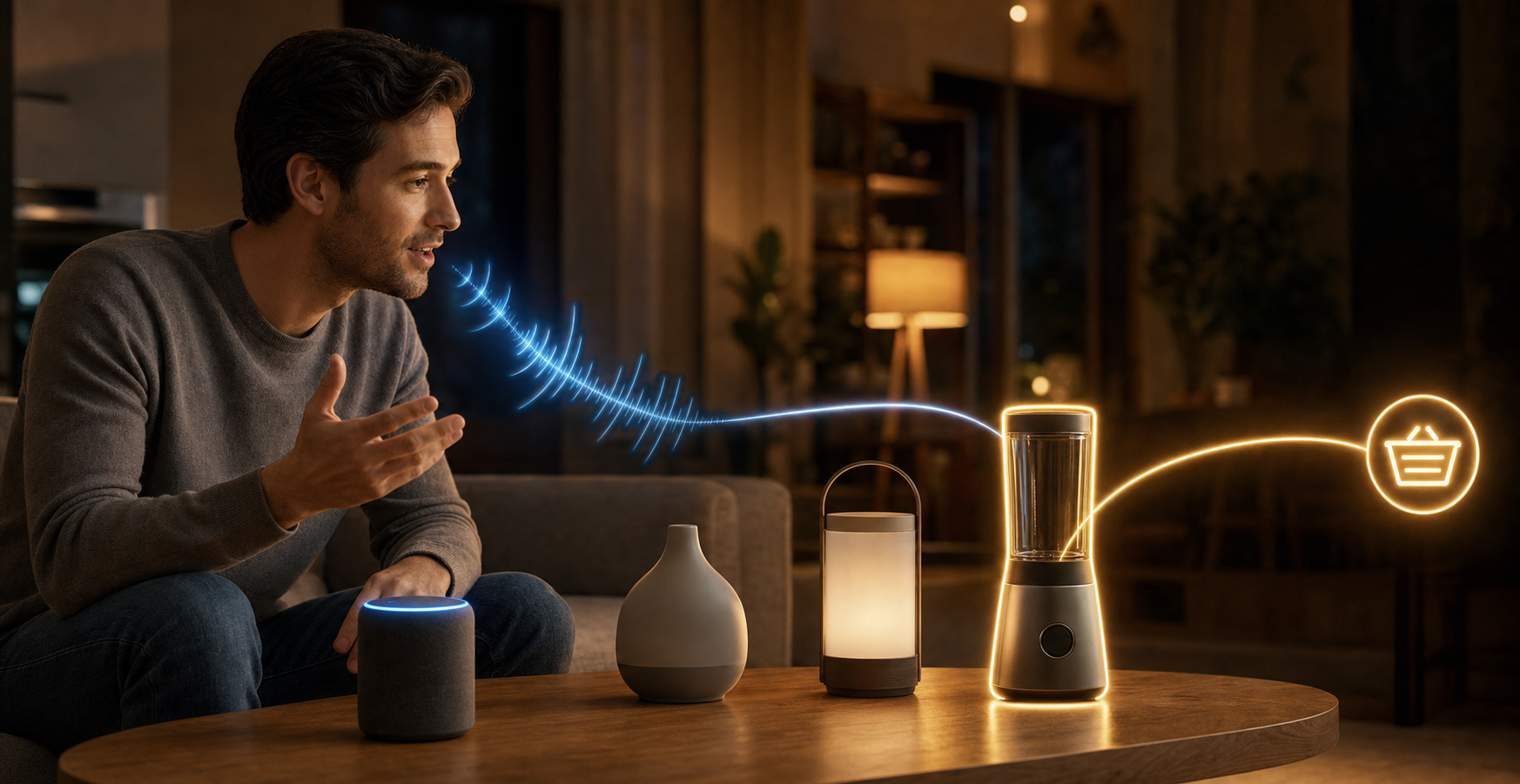
The report on Alexa+ Agentic Ads describes a format in which a person can encounter an offer, ask questions, compare options, check availability, and complete a purchase without leaving the Alexa conversation. The reported initial applications include dining and live events on Echo Show devices, with Papa Johns involved in food ordering and promotions connected to artists including Beck, Jill Scott, and Omar Courtz.
According to that report, concert tickets can be placed in a buyer’s Ticketmaster account after purchase. In the restaurant example, Alexa+ can use previous interactions and preferences when suggesting an order. These are reported examples of how the format operates, not evidence that it has already produced higher conversion rates.
The strategic change is larger than the addition of voice controls. A conventional digital ad commonly hands the customer to a separate site or application. In the Alexa+ model, the assistant can become the ad surface, product guide, and transaction interface. Amazon reportedly aims to reduce the abandonment associated with that handoff, but the source provides no campaign results with which to assess the effect.
This model changes what an advertiser must prepare. Creative still has to generate interest, but the experience also depends on structured product information, current availability, clear choices, and a reliable transaction process. Brands therefore need to evaluate the quality of the conversation as carefully as the initial promotion. They also need explicit rules for recommendations, confirmations, and situations in which the assistant cannot complete a request.
YouTube is applying AI before campaigns reach the customer
Amazon’s reported format applies AI at the moment of consideration and purchase. YouTube’s tools address an earlier set of decisions: what audiences are watching, which creators may be relevant, and how campaign creative might be improved.
The YouTube report says Google Ads’ Insights Finder now supplies more detailed YouTube trend information in the United States. It also reports the addition of selected Brand Pulse metrics, intended to give advertisers a combined view of paid and organic activity. A Content & Creator Insights API is described as giving agencies and partners more information about creators and their audiences for planning and selection.
Gemini-powered recommendations represent another layer. The source says these suggestions are expected to offer guidance on visuals and other creative elements for Demand Gen campaigns. The timing matters when evaluating the announcement: the reported trend, brand, and creator capabilities should be distinguished from the creative recommendations described as forthcoming.
Used together, the tools could support a workflow that begins with identifying an emerging topic, continues through creator and audience research, and then informs media and creative decisions. That can shorten the distance between data and action. It does not, by itself, establish that a trend caused a result, that a creator produced incremental demand, or that an AI recommendation will improve performance. Those questions still require campaign-level evaluation.
AI visibility reporting does not yet equal attribution
The Google Search Console report covers a different measurement problem: whether and where a site appears in Google’s AI-driven search experiences. It says the AI performance report includes impressions as well as breakdowns by page, country, device, and date. The reported version does not include click data.
Access was described as an incremental rollout. The source reported sightings for sites in the United States, India, Switzerland, and other markets beyond the United Kingdom. It also relayed Google’s statement that feedback was being reviewed as availability expanded. This makes the feature a developing reporting surface rather than a uniformly available measurement standard.
The absence of clicks defines what the report can and cannot answer. Impressions can help a publisher monitor AI visibility, locate pages that are appearing, and compare patterns across the available dimensions. They cannot show whether exposure generated a visit, assisted a sale, or changed customer behavior. Visibility is an important diagnostic signal, but it is not a substitute for traffic, conversion, or incrementality evidence.
This distinction also clarifies the relationship among the three reports. Search Console offers an exposure-oriented view, YouTube supports research and campaign decisions, and Alexa+ is designed to carry a consumer through a transaction. A single label such as “AI performance” can obscure those differences. Marketers should instead identify where each signal sits in the journey and avoid combining unlike measures into one headline indicator.
A measurement model for AI-mediated advertising

Connect every signal to a decision
A metric is most useful when its operational purpose is clear. AI-search impressions may guide content diagnosis, creator data may inform partnership research, and conversational-commerce outcomes may inform offer or transaction design. Assigning each signal to a decision prevents visibility, planning intelligence, and sales evidence from being treated as equivalent.
Treat recommendations as testable hypotheses
An AI-generated creative suggestion can accelerate analysis, but it should enter the campaign process as a hypothesis. Established methods such as controlled comparisons and consistent success criteria remain necessary to determine whether a proposed visual, message, or format improves the intended outcome.
Measure the complete journey where possible
Fewer interfaces can mean less customer friction, but they can also make familiar milestones less visible. Teams assessing an assistant-led purchase experience should establish which stages can be observed, how completed transactions are reconciled with campaign activity, and where the available platform reporting stops. Gaps should be recorded rather than filled with assumptions.
Review the experience as well as the dashboard
When an AI system explains an offer or recommends an option, its behavior becomes part of the brand experience. Evaluation should therefore cover the accuracy and clarity of responses, the handling of unavailable choices, and the transparency of purchase confirmation in addition to campaign metrics. This is especially important when the assistant performs several roles that were previously divided among an ad, landing page, product interface, and checkout.
As these systems mature, the most durable advantage will come from measurement discipline: knowing when AI is acting as an interface, when it is supplying a planning signal, and when there is enough evidence to support a business conclusion.
References
- CrushPress.AI – Amazon Revolutionizes Shopping with Alexa+ Conversational Ads
- CrushPress.AI – Discover Google’s New AI Performance Reports: Expanded Access Unveiled
- CrushPress.AI – Discover YouTube’s New AI Tools for Enhanced Insights
Leave a Reply