LLMs have changed how people search and how Google responds. The SERP has not been limited to 10 blue links for a long time, but traditional search has usually centered on one core intent: the thing someone is trying to find.
Now, AI Overviews can create a full answer directly in the SERP. They do more than respond to the original query. They also bring in related terms, contextual refinements, and supporting information that help searchers make better decisions.
That is why I pay close attention to Google query expansion. When I understand how Google connects related searches, I can find visibility opportunities that competitors may miss.
What is Google query expansion?
I think of Google query expansion as Google broadening a searcher’s query so it can return more accurate results, especially for long-tail searches that might otherwise produce weak or limited results.
This can happen through synonyms. For example, Google may connect “budget” with “affordable” when the intent is similar.
It can also happen through intent expansion. Google may understand what my audience means even when they do not type the exact words I expected.
Related topic expansion matters too. Google can use similar searches and connected topics to surface content that supports the searcher’s broader need.
I do not use this as an excuse to stuff keywords into a page. Instead, I use query expansion as a research signal. When I see related searches that make sense, I can add useful supporting information and help my content rank for a wider range of relevant queries.
Here is a simple example. If I have an article about backyard chicken care and someone searches “What’s the average lifespan of a chicken?”, my page might appear even if I never used the word “lifespan.”
In that case, Google has decided the article is semantically relevant. Once I know Google has made that connection, I can add a helpful section about chicken lifespan. That gives the page a stronger chance to rank for the term and attract more traffic.
It can also improve the odds that my content appears in relevant AI Overviews.
The difference between Google query expansion and query fan-outs
Google query expansion and query fan-outs are related, but I do not treat them as the same thing.
Query expansion is part of traditional search. Google broadens a query with synonyms, related terms, and intent signals before results are generated. Because of that, my content can rank for searches I did not directly target.
Query fan-outs are part of AI Mode. They break a query into multiple related subqueries while the AI response is being generated. Because of that, my content can be retrieved as a source for an AI-generated answer.
So why does traditional query expansion still matter in a search world shaped by LLMs and AI Overviews?
Because the same semantic relationships that help Google expand a query can also influence which content AI systems retrieve during query fan-outs.
How I find query expansion opportunities
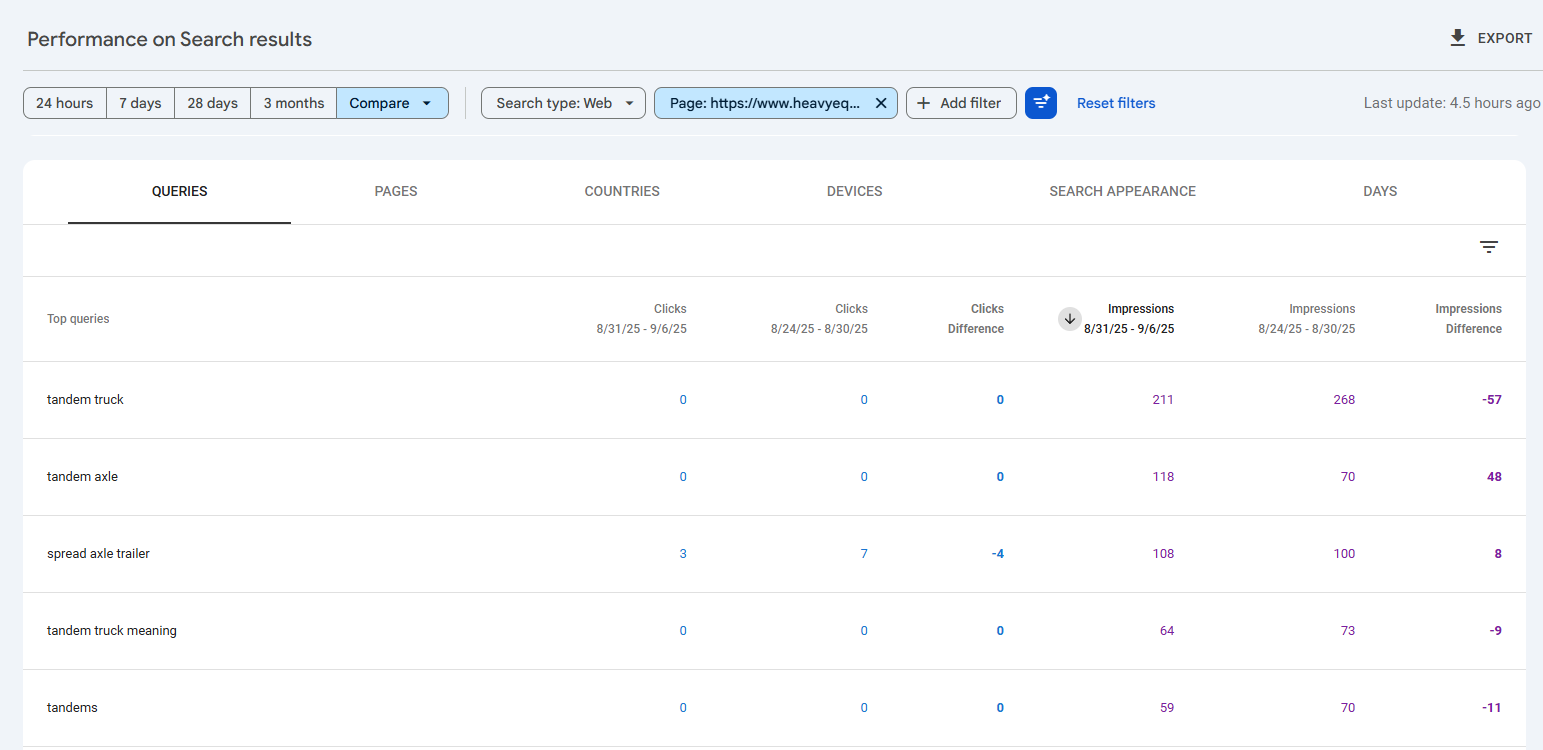
The first place I look is Google Search Console. It is one of the clearest ways to confirm whether query expansion is already happening for my site and my content.

My workflow is straightforward. I go to Performance > Search results, filter by a specific page, pull the full query list, and sort by impressions.
From there, I look for queries I never intentionally targeted. I pay attention to synonyms with meaningful impressions, question-based searches that may be especially useful for AI visibility, and broader keywords that are not currently addressed on the page.
I do not assume every discovered query deserves a content update. Sometimes a page appears for terms that are not truly relevant. When that happens, I audit the page and make sure the content is not drifting into unrelated topics that fail to match the promise of the SERP result.
How I plan better content with query expansion
Once I understand which expanded queries Google is connecting to my content, I use that data to strengthen the page instead of chasing isolated keywords.
I write for topic coverage
For a long time, strong SEO has been less about exact keywords and more about semantic relevance. I try to build coverage around subtopics, related questions, and adjacent ideas because that gives Google more context than a page built around one keyword alone.
I answer questions adjacent to the main topic
For example, if I am working on content for a company that sells chicken feed, I would not only explain the feed itself. I would also consider why the right balance matters and how the right feed can support chicken health.
I can find those adjacent questions by reviewing query expansion data in Google Search Console, checking tools like Ahrefs, and studying the SERP to see what supporting information Google is already surfacing for the topic.
I use expansion data to find content gaps
If Google Search Console shows that Google is pulling my page for a query I have not planned for, and that query is genuinely relevant, I treat it as a signal that the page may need more complete coverage.
Sometimes query expansion data includes odd or unrelated searches. I ignore those. But when I find adjacent queries that clearly strengthen the topic, I add them to the page in a useful and natural way.
I also revisit content regularly, usually at least once a quarter. New queries can appear, while others fade away. Since I am already keeping content fresh for the SERP, query expansion gives me another practical way to make each topic stronger.
How I use query expansion to improve AI Overviews visibility
AI Overviews often pull from ranking pages on a topic to build a more complete answer. Those answers can include semantic connections and supporting subtopics, not just the exact phrase someone searched.
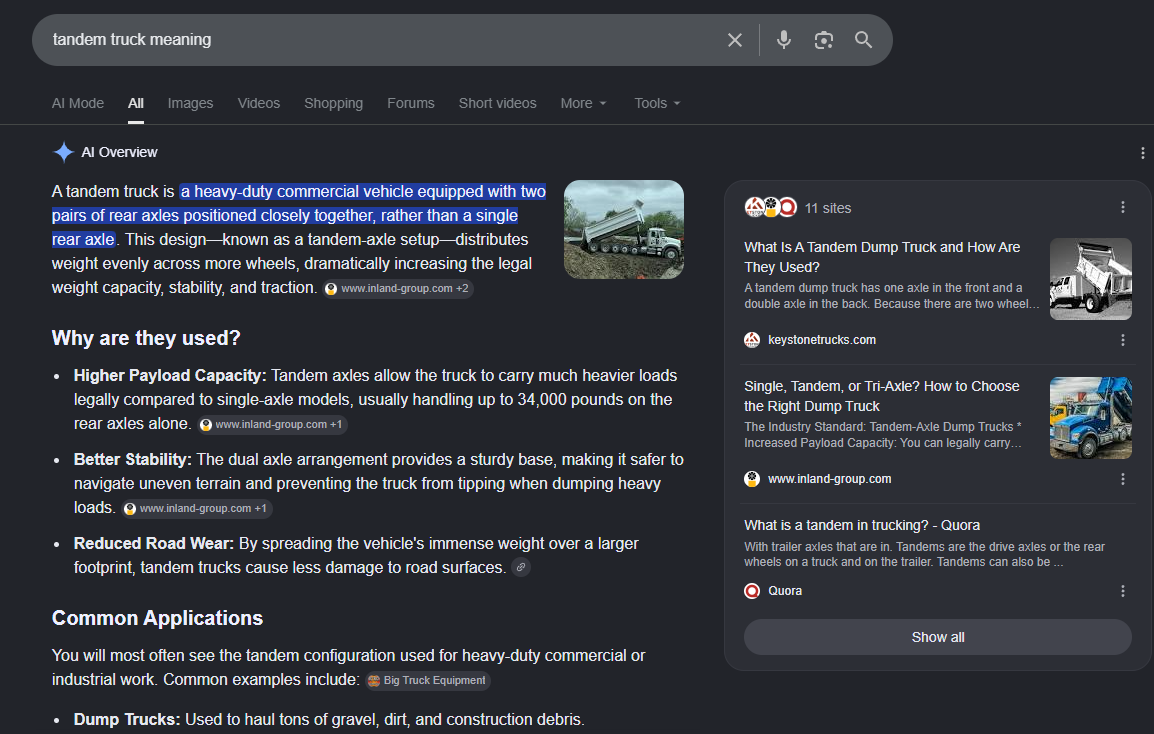
That is why I cross-reference my query expansion data with the main keyword in the SERP. If an AI Overview includes supporting topics that are relevant to my page, I consider adding those topics to the content.
For example, I followed this process for a blog post titled “Tandem vs. Spread Axles in Trucking.” After filtering by impressions, I found that the page appeared for “tandem truck meaning,” even though that exact phrase was not specifically included in the content.
The page ranked first, but it was not included in the AI Overview for that specific query. That told me there was an opportunity.
Because the page already ranked well, I could use the expanded query and the supporting information in the SERP to create a section that better addressed both the query expansion term and the query fan-out patterns behind the AI Overview.
That is the value of this process. Query expansions can reveal supporting topics that strengthen traditional search visibility and improve the chances of being included in AI-driven results.
How query expansion helps my SEO strategy evolve
I use query expansion as a practical way to identify supporting topics and expand content coverage across search experiences.
As clicks become harder to earn, I want my content to appear across more relevant search moments. Broader visibility can strengthen brand awareness, support AI visibility, and keep my content in front of the people most likely to need it.
Inspired by this post on Search Engine Land.

Leave a Reply