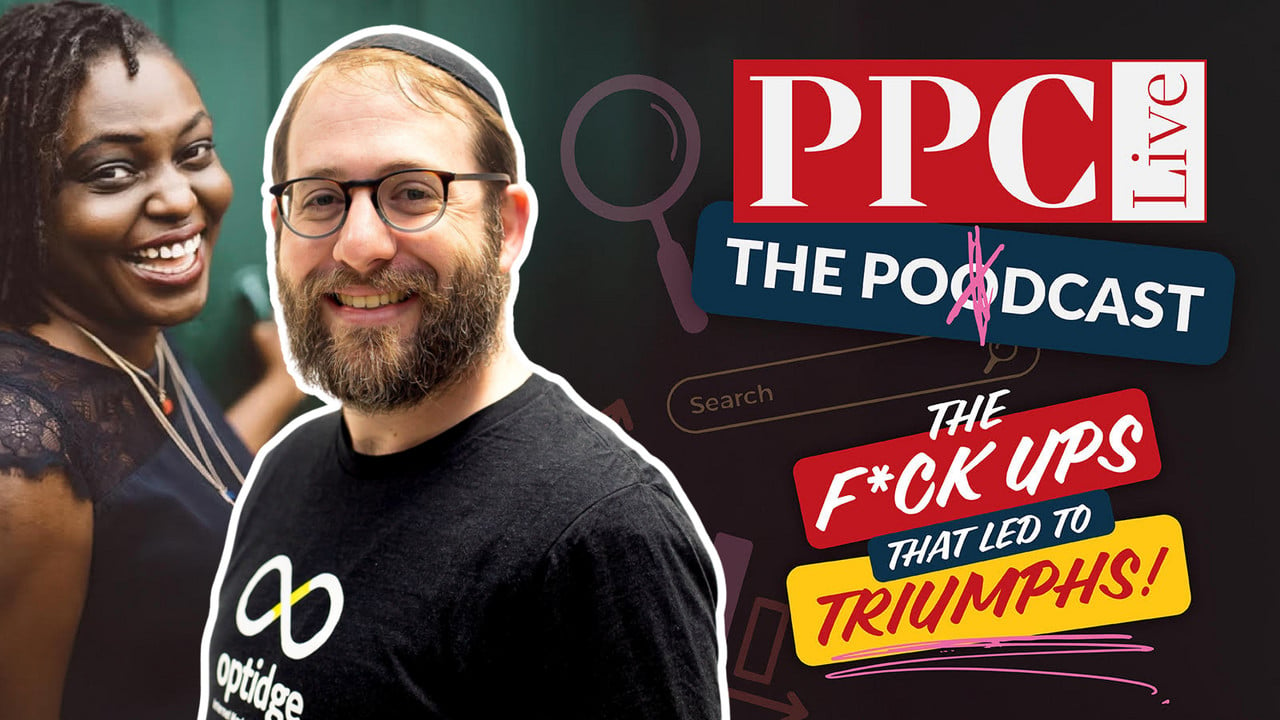

I think every PPC professional has at least one mistake they wish they could erase. For Danny Gavin, founder of Optidge, it was not a failed bidding strategy, a blown budget, or a campaign that never found its footing. It was something much simpler, and in many ways, much more painful.
When Danny joined me on PPC Live The Podcast, he shared the story of a technical issue that kept landing page leads from reaching the client. For one to two months, the campaigns were still generating qualified prospects, but the client believed nothing was working because those enquiries never appeared in their inbox.
The mistake that no one spotted
At the time, Danny’s agency was still small, with only a handful of people managing client accounts. One client, an autism therapy provider, appeared to be getting strong results inside Google Ads.
Clicks were rising. Cost per lead looked healthy. From inside the ad platform, everything pointed to success.
But the client was growing more frustrated because no enquiries were coming through.
The problem was not Google Ads.
It was not the landing page.
It was the email notification system.
Every form submission was being stored correctly in the database, but a technical failure stopped the notification emails from reaching the client. Because neither side realized those emails had failed, the issue went unnoticed for weeks.
By the time the problem was found, dozens of leads had already gone cold.
Why the emotional impact was worse than the technical problem
What stood out to me was that the financial loss was not the part Danny remembered most. The harder part was the feeling that his agency had let the client down. Because he knew the client personally, the mistake felt even more personal.
His team had spent weeks reporting positive campaign performance while the client saw no return from their investment. That disconnect created guilt, regret, and a real sense of helplessness.
As Danny explained it, the agency felt as if it had taken the client’s money without delivering value, even though the campaigns themselves were actually working.
Honesty became the first step
Once the problem became clear, Danny did not try to hide it. His view is straightforward: when mistakes happen, honesty is the only response that gives you any chance of repairing trust.
Instead of making excuses, the agency investigated immediately, exported every lead stored in the database, and gave the client everything they could recover. Many of those opportunities had already gone cold, but at least the client had access to the data that still existed.
From there, the focus had to move from blame to prevention.
Building systems that stop the same mistake happening twice
That experience changed the agency’s processes in a lasting way.
Instead of relying on one notification email, Danny’s team introduced multiple safeguards:
- CC’ing the agency on every lead notification.
- Automatically logging every lead into a shared Google Sheet.
- Testing forms regularly to confirm submissions and notifications both work.
- Checking with clients routinely to confirm leads are actually being received.
Those checks are now part of the agency’s standard operating procedures. They are no longer assumptions about technology working in the background.
Why communication matters as much as optimisation
Looking back, Danny sees the technical failure as only part of the issue. Communication failed too. No one had asked the simple question: “Are you actually receiving the leads?”
Today, communication is one of Optidge’s core values.
Rather than expecting PPC specialists to manage constant client communication while also running campaigns, the agency brought in dedicated account managers whose primary role is to keep clients informed.
The lesson I took from this is simple: campaign metrics alone do not define success.
Success only happens when the client experiences the results you are reporting.
Sometimes clients remember how you responded
At first, the relationship with the client ended. Danny assumed the mistake had permanently damaged the trust they had built.
Years later, though, that same client reached out again about potentially working together. In her email, she described Optidge as the most professional agency she had worked with. For Danny, it was a reminder that clients do not forget mistakes, but they also remember how agencies respond to them.
Transparency, professionalism, and a genuine effort to improve can leave a stronger impression than perfection.
Common PPC mistakes Danny still sees today
Although this happened years ago, Danny still sees agencies making similar mistakes today.
One of the biggest is focusing only on traffic instead of business outcomes. Sending visitors to a page is no longer enough.
Strong lead generation requires understanding what happens after someone clicks.
When Danny audits accounts, he often finds agencies failing to:
- Feed qualified lead data back into advertising platforms.
- Review search terms thoroughly and maintain negative keywords.
- Build landing pages that match campaign intent.
- Measure lead quality instead of simply counting conversions.
Without those fundamentals, campaign optimisation is based on incomplete information.
Where AI is genuinely helping lead generation
Danny believes AI has real potential in lead generation, but not always in the way marketers expect.
One of the most useful opportunities is phone call analysis.
Instead of manually listening to every conversation, AI can now help agencies:
- Generate call transcripts.
- Categorise calls by quality.
- Identify whether a call became a genuine sales opportunity.
- Feed qualified conversion data back into Google Ads.
That makes it possible to optimise around real business outcomes instead of surface-level metrics.
Why AI still needs human oversight
Even though Danny is using AI, he does not treat it as an infallible system.
Like automation inside advertising platforms, AI can make mistakes, miss context, and confidently reach the wrong conclusion.
For industries with strict privacy requirements, such as healthcare, AI may not be appropriate for handling sensitive customer information at all.
His advice is to trust AI enough to improve efficiency, but always verify the work.
Human expertise still matters.
The biggest lesson
I do not think any PPC professional can avoid mistakes completely.
What defines a strong agency is how it responds when something goes wrong.
That means being honest, fixing the immediate problem, building safeguards, and making sure the same issue does not happen again.
As Danny puts it, a mistake only becomes valuable when you have genuinely learned from it.
Inspired by this post on Search Engine Land.

Leave a Reply