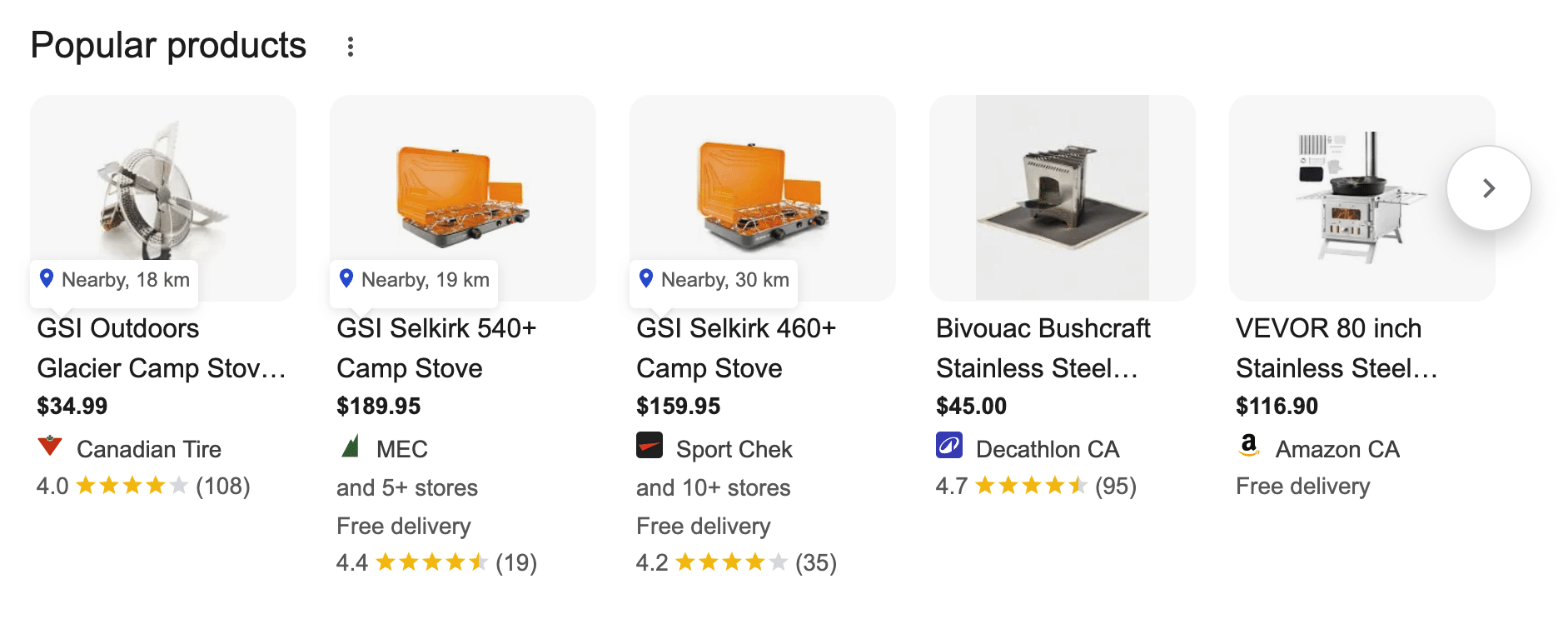
When I search for products on Google, I’ve noticed significant changes to the results page. Now, product packs and scrollable carousels appear multiple times within a single results page, reshaping my shopping experience.
As part of my ongoing journey to boost ecommerce visibility, I constantly analyze data. Recently, I’ve tracked searches presenting up to 60 individual organic product listings on one page. These premium placements increasingly mark the beginning of the purchase journey for many users.
This transformation is gradual, and interestingly, I see many brands still adjusting their strategies. It’s crucial to revisit these changes because the opportunity for traffic through product packs is immense, with fierce competition. Today’s leading brands approach this differently.
Thanks to Nozzle, I’ve delved into data from over 63,000 merchants across a wide array of ecommerce keywords from January 2025 to January 2026. Here’s what I discovered that really caught my attention.
Defining Success: Appearances vs. Actual Traffic
I found that just appearing in product packs and actually capturing traffic are two distinct achievements, and the difference between them can be substantial as the data shows.
For instance, in this dataset:
- eBay appears in product results for 874,621 keywords.
- Home Depot has a similar presence, appearing for 831,699 keywords.
However, the estimated traffic paints a contrasting picture:
- eBay garners about 3.2 million visits from these pack appearances.
- Home Depot, meanwhile, generates nearly 28.8 million visits from a slightly smaller keyword range.
The secret? Quality position within the pack. Home Depot’s products consistently snag prime, visible, above-the-fold spots that attract shoppers’ clicks.
For eBay, many keywords involve long-tail marketplace terms that dilute overall impact. Understanding Google’s use of product packs to drive purchase decisions for common goods is crucial for brands aiming to compete effectively in this space.
- For marketers: Dissecting product pack performance means wisely segmenting data, focusing on categories with significant search volumes to optimize visibility within the packs. That’s how to pinpoint where the genuine opportunities lie.
The Critical Gap: Distinguishing Product Pack Visibility
Product carousels scroll horizontally, increasing exposure for the first few slots, while listings tucked further back remain unseen. This distinction is crucial for assessing true reach.
Disparities among major retailers further illustrate this point:
- REI has a massive catalog of 3.8 million products, yet 1.52 million of these require scrolling before they are visible.
- Walmart finds itself in a similar spot, with 1.29 million of its 3.5 million unique products are relegated to non-visible placements.
Even industry titans often miss out on optimal visibility, skewing the perceived benefits of their presence. Analyzing visible versus non-visible appearances is essential for identifying where optimizing product data and feeds can yield substantial returns.
- For CMOs: When using total product pack appearances as a metric, it’s wise to ask how many of those appearances are truly visible. Understanding this ratio better reflects the channel’s contribution to the business.
Does Discounting Drive Product Pack Visibility?
It’s a common belief that discounted items might secure better placement in Google’s product packs. However, data from the top 10 merchants doesn’t necessarily support this notion.
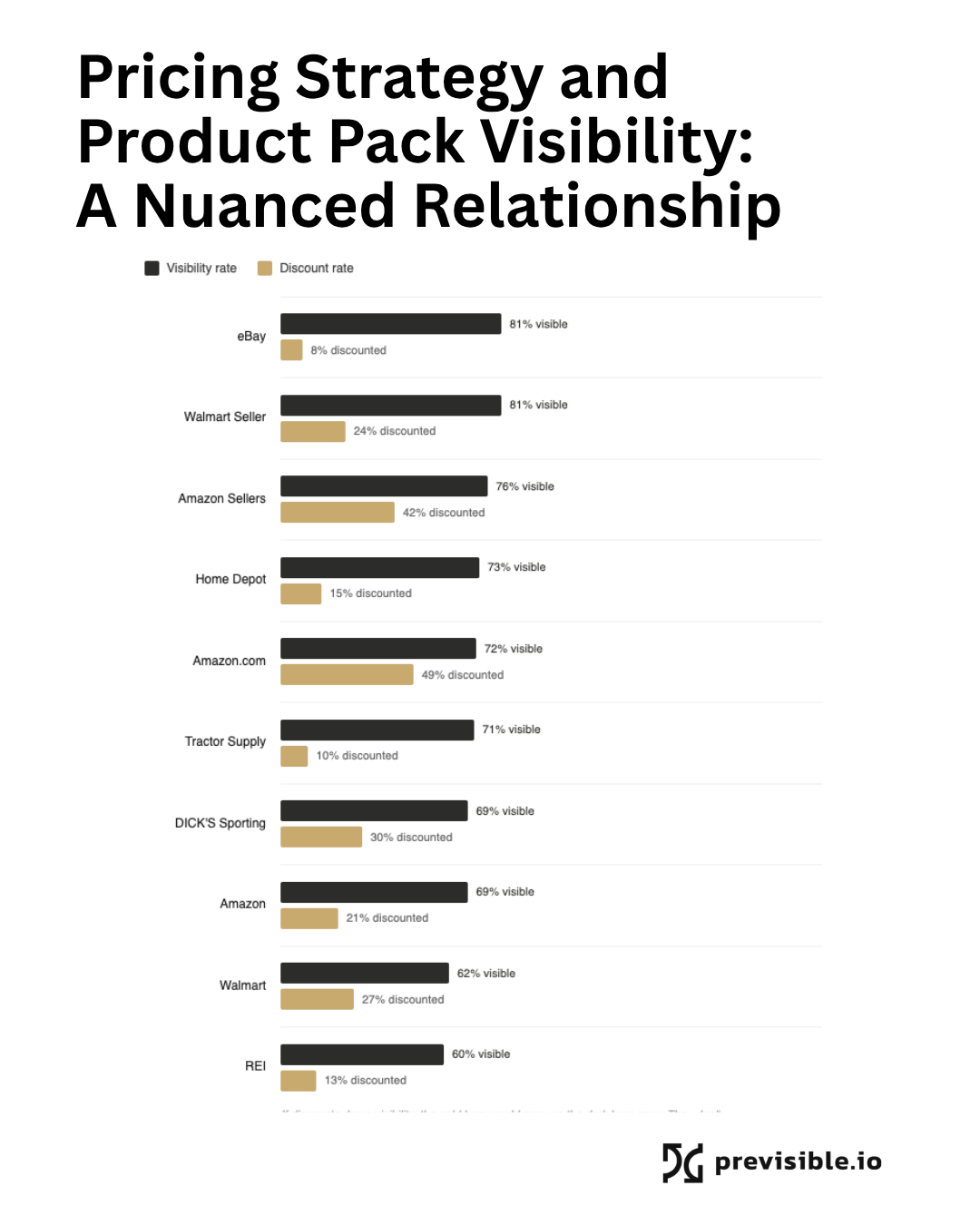
- Amazon.com leads the pack with 49% of its catalog discounted, achieving a 72% visibility rate, placing it squarely mid-tier.
- eBay, on the other hand, discounts only 8% of its products yet matches the highest visibility rate in the dataset at 81%.
- Walmart Seller discounts 24% of its items, reaching 81% visibility, while Walmart itself discounts 27% but ranks lower at 62% visibility.
This irregularity indicates that discounting is just one of many factors. It doesn’t solely determine a product’s chance of securing a prominent spot. Feed quality, category relevance, reviews, and image standards wield greater influence.
- For retail teams: If your strategy for product packs relies heavily on promotions, you might need to pivot. The current landscape favors strategies aligned with where purchasing decisions occur over sheer pricing tactics.
Specialist Brands Competing with Giants and Winning
A refreshing realization from this data is that product pack success isn’t exclusive to the retail giants. Specialist brands, leveraging focused expertise, compete exceptionally well against far larger competitors.
- Camp Chef, for instance, appears in results for 155,299 keywords—just a small fraction of Walmart or eBay’s footprint—yet it pulls in an estimated 2.6 million visits, thanks to advantageous product placements.
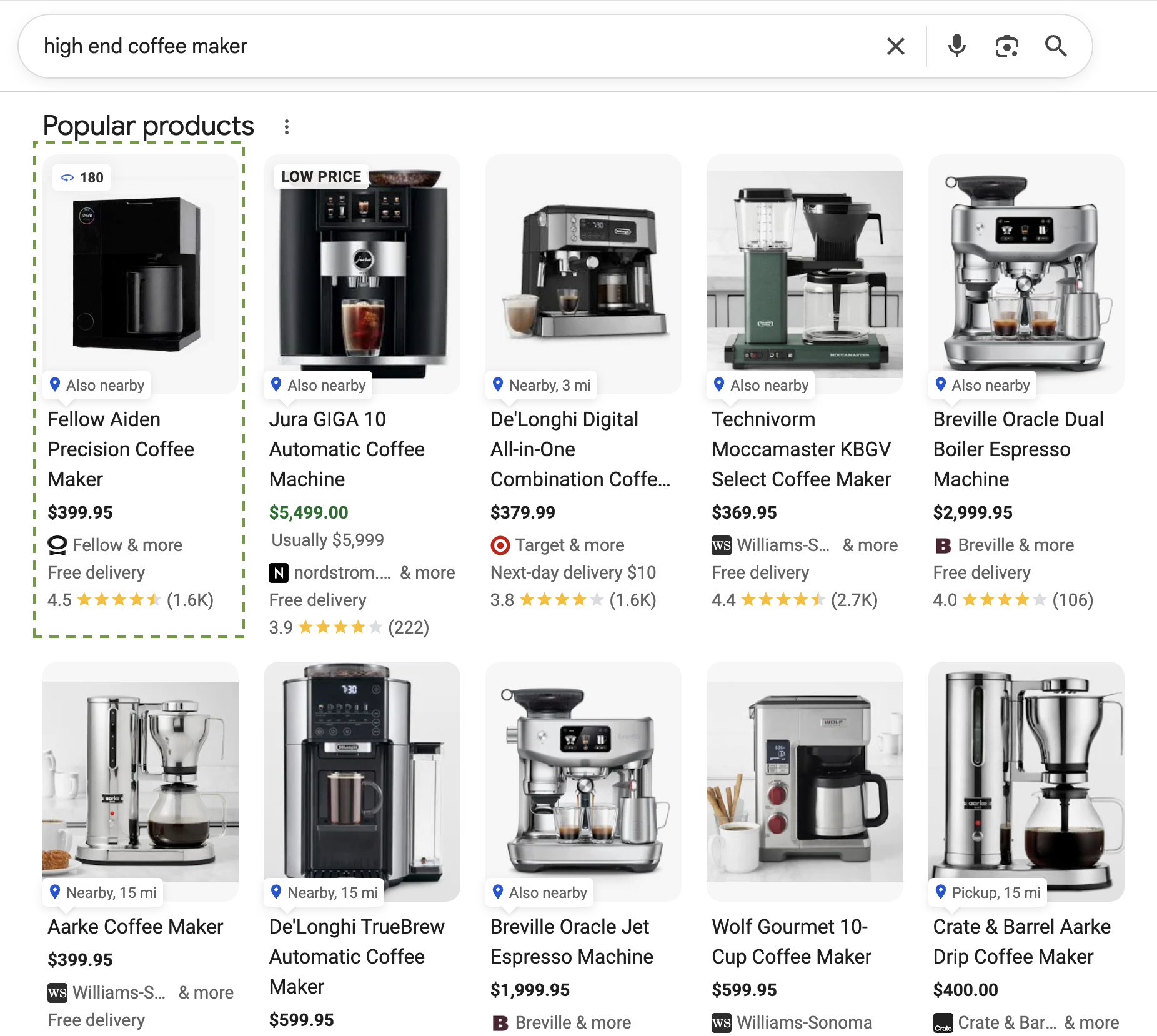
- Brands like Fellow, expanding into niches such as high-end coffee makers, find opportunities for growth through strong organic channels.
These brands achieve impressive product pack traffic against much larger rivals because they prioritize category relevance and high-quality product feeds over sheer scale.
For brands traditionally overshadowed in traditional SEO, product packs present a chance to compete on a more level field. Detailed product data, competitive prices, quality imagery, and favorable reviews can supersede a larger competitor for crucial category keywords.
- For agencies: This channel awards dedication and quality over brute scale. Brands with depth in a category can translate that expertise into superior product pack performance, outpacing broader competitors.
Staying Informed on Product Pack Visibility Shifts
Examining the entire dataset, I noticed a consistent pattern: nearly all merchants experience shifts in product pack visibility throughout the year.
Brands holding strong positions during parts of the year sometimes see fluctuations as Google adjusts how it surfaces product results. Some grew steadily midyear only to recede in Q4, while others surged during promotions before reverting to previous levels.
This fluidity is typical of the channel. Google regularly updates its criteria for product pack placements, influenced by factors like feed quality, product availability, review counts, pricing, and images.
The brands thriving are those with sustained visibility into performance, staying agile and responsive to changes before they impact revenue.
With Google’s future announcements and AI integration like Gemini 3 looming, the foundational structure of product packs will shift, influenced by agentic commerce and the Universal Commerce Protocol.
As Google navigates balancing paid and organic visibility, a two-tiered search economy emerges. Securing AI Overview citations becomes vital for brand recognition, impacting both organic and paid product pack performances.
The Bigger Picture
Google’s product packs have morphed from merely supplementary to pivotal touchpoints in commercial searches.
The extensive Nozzle data analysis of over 63,000 merchants reveals that competition is already fierce in this domain. Leaders are distancing themselves, and the gap between attentive and indifferent brands manifests tangibly in traffic and revenue disparities.
The silver lining is that the essentials for success in this space are accessible to most brands: robust product data, strategic pricing, high-quality creative, and vigilant monitoring.
These require not a colossal budget but focus, the right tools, and asking the right strategic questions within the right organizational levels.
Inspired by this post on Search Engine Land.

Leave a Reply