Hey there! Meta has recently rolled out some exciting updates to their ad measurement framework, designed to simplify attribution in our ever-evolving “social-first” advertising landscape. I’m here to break it all down for you.
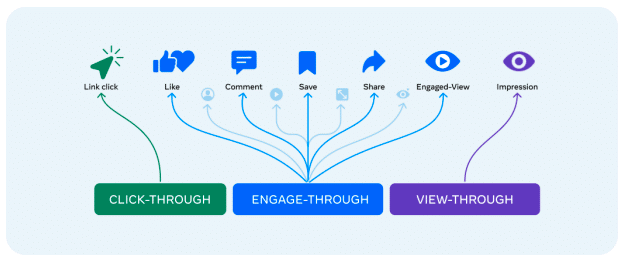
What’s new? Meta is redefining how click-through attributions work for both website and in-store conversions. From now on, only link clicks will contribute to click-through attribution, while other interactions like likes, shares, and saves won’t count. This shift aims to align Meta Ads Manager better with tools like Google Analytics, reducing discrepancies.
The shift in focus. WARC reports that social media has now overtaken search as the world’s largest ad channel. But many of our current attribution models were designed with search behavior in mind. Unlike in the past where every type of click was tallied, this update recognizes the unique engagement patterns on social platforms, historically leading to reporting misalignment.
What’s evolving? Conversions attributed to actions other than link clicks will now be categorized under a new term, “engage-through attribution,” which replaces the old “engaged-view attribution.” Additionally, Meta is shortening the video engaged-view window from 10 seconds to just 5 seconds. This change reflects faster conversion activity, especially noticeable in Reels, where 46% of purchase conversions happen within the first two seconds.
Why should we care? These updates provide clarity by distinguishing link-driven conversions from other social interactions. This distinction will help marketers better understand campaign performance, boosting confidence through more precise data analysis. The new engage-through attribution process highlights the impact of likes, saves, and shares.
With these changes, advertisers can trust their data more and make more informed, impactful decisions.
Collaborations in the pipeline. To offer advertisers a more comprehensive view of performance, Meta is collaborating with analytics providers like Northbeam and Triple Whale to integrate both clicks and views into their attribution models.
Rollout details. These changes are slated to begin later this month for campaigns focusing on website or in-store conversions. While billing methods remain unchanged, you might notice shifts in reporting as these new attribution definitions are implemented in Ads Manager.
The bottom line: Meta is striving to combine clearer click reporting similar to search engines with insightful data on social interactions. This balance offers advertisers a cleaner, broader comparison across platforms while focusing on the unique contributions of engagement-driven actions.
Dig deeper. For more information, you can check out Meta’s detailed explanation in their Simplifying Ad Measurement for a Social-First World.
Inspired by this post on Search Engine Land.

Leave a Reply