As I dive into the evolving world of SEO, I’ve noticed one thing: the industry is entering its most unpredictable phase yet. With traffic on the decline and AI increasingly handling informational queries, it’s clear that the landscape is shifting beneath our feet.
It’s fascinating to observe how social platforms are now serving as search engines, and Google is transforming from a gateway to a comprehensive answer engine. This transformation leaves many of us in the industry uncertain about what metrics matter, what we should optimize, and essentially, what SEO’s role truly is in this new digital era.
Despite the chaos, I’ve found clarity in one specific marketing metric that cuts through the noise: share of search. This metric offers a straightforward insight into brand health and potential future demand, aligning marketers and SEOs with confidence.
Share of search becomes particularly important as we notice a significant shift in how discovery and measurement need to adapt. The days of accidental discovery through traditional search behavior are dwindling.
AI and platforms like Meta are increasingly providing direct answers without directing traffic elsewhere, shifting the focus towards metrics that provide a clearer indication of consumer interest, like share of search.
Interestingly, share of search, a concept developed by James Hankins and Les Binet, calculates a brand’s search volume against the total search volume for its category. This simple yet powerful metric correlates strongly with market share and future buying behavior.
In our rapidly changing environment, share of search provides a critical signal for marketers, showing whether a brand is being searched for more or less compared to competitors. This insight offers a palpable reflection of underlying consumer interest and demand.
While traffic as a metric is losing its significance because of AI pre-answering queries, share of search cannot be manipulated easily. It stands resilient as a reflection of authentic consumer desire.
Moreover, this metric crosses platforms effortlessly, as people now search across various digital spaces such as Amazon, TikTok, YouTube, and potentially even LinkedIn. Share of search adapts to fragmented discovering behavior precisely.
It’s exciting to see how, even if AI-driven systems like ChatGPT rarely generate clicks, they often trigger brand searches, emphasizing the importance of this metric as a measure of marketing effectiveness.
For SEOs like me, adopting share of search means transforming our roles from content producers into strategic partners, providing deeper insights into consumer behavior and brand demand.
Ultimately, embracing share of search elevates our value within an organization, offering a fresh narrative around brand visibility and performance. As AI continues to reshape the digital landscape, this metric is becoming indispensable for those of us in SEO and marketing. I encourage everyone to learn more about this compelling metric and explore its potential to transform how we measure success in the AI era.
I recently discovered that Google has made some updates to their JavaScript SEO basics documentation. This change has brought clarity to how Google’s crawler deals with noindex tags on pages utilizing JavaScript. The main takeaway? If you’re aiming to have your page indexed, definitely avoid including a noindex tag in the original page code.
What’s New: Google has adjusted this section to specify that when Google encounters a noindex tag, it may bypass rendering and executing JavaScript. Consequently, efforts to modify or remove the robots meta tag using JavaScript might not yield the desired results. So, if indexing is a goal, keep the noindex tag out of the original code.
Previously, the guidelines indicated a certain certainty: if a noindex tag was detected, Google skipped rendering and executing any JavaScript. This meant any attempts to counter this with JavaScript adjustments would simply not work. The advice stood firm—keep noindex tags out of the original code if there’s any chance you need the page indexed.
Reason for Change: Google clarified that while it can render pages employing JavaScript, this behavior is not consistently defined and is subject to change. If there’s any chance you want your page to show up in search, play it safe and leave out the noindex tag from the original code.
Why This Matters: It’s often safer to steer clear of JavaScript when setting crucial protocols, especially concerning the blocking of Googlebot or other crawlers. If you need a search engine not to rank a particular page, avoid using JavaScript to execute those directives.
Every week, I sift through fresh data that showcases both the common ground and the differences in effective organic search techniques. These insights span traditional SEO methods on Google SERPs and newer practices like GEO for platforms such as ChatGPT and AI-driven overviews.
It can feel overwhelming. One moment, we read how traditional SEO methods suit ChatGPT; the next, discussions highlight how one platform favors Reddit while another favors a different approach.
As this landscape rapidly evolves, I’m eager to share the approach, process, and resources my team is utilizing to craft content for 2026.
Our strategy stretches beyond a mere content calendar. It involves merging insights about our audience with the dynamics of organic platforms, alongside our brand’s unique perspective, to create a content system that truly adds value.
The goal is to create high-quality content that stands out. E-E-A-T principles remain core to our strategy, applicable to both AI search discoverability and traditional SEO.
Understanding the audience is the foundation of strong content creation. I constantly ask myself: Who are they? What do they need? What type of content will guide them?
Content, like any product or service, requires identifying a need and addressing it, understanding the involved emotions, and demonstrating credentials through third-party brand mentions, a leading factor in AI search visibility.
For content to be effective in both Google and LLM search realms, it should be crafted as an authoritative source with structured data, prioritizing clarity, depth, and a consistent brand voice AI models will quote.
In a world teeming with AI content, what sets us apart are original insights and data. Therefore, our content systems incorporate a step for “original proof” like data, interviews, or unique commentary.
I’m also focusing on how our content fits into AI experiences, placing value on summaries, bullet points, and explainers that address complexity effectively.
Optimizing for retrieval and credibility rather than just ranking is critical. This approach ensures our content is impactfully represented by AI systems through schema, structured data, and a consistent brand voice.
The content strategy process I recommend starts with empathy, acknowledging the audience’s problem, and providing objective solutions, thus establishing trust. The goal is to transform this understanding into a modular engine, creating multiple media forms aligned to a central theme.
Adaptation is crucial, and my team utilizes a range of resources to achieve a detailed, audience-focused content strategy. This includes qualitative interviews and audience analysis from AI tools, helping shape informed structural decisions.
Social media platforms are instrumental for real-time audience insights and increasing brand mentions, signaling relevance to AI platforms.
Competitor analysis has shifted focus too, evaluating content depth and originality, and identifying opportunities to showcase the expertise our brand brings to the table.
Our KPIs must now reflect the evolution in search, weighing brand mentions alongside traditional metrics to capture content’s full impact on conversions and cross-channel engagement.
In the end, continually adapting to trends ensures we don’t rest on past successes. The real-time changes in user behavior driven by ChatGPT and similar platforms require us to stay vigilant and prepared.
As someone deeply involved in marketing, I’ve seen how the explosion of marketing channels and touchpoints has made measuring success a truly strategic endeavor.
I’ve noticed that click-based attribution models—such as last-click and first-click—are still widely used as standard. Yet, as I delve deeper into these metrics, I realize they’re becoming less effective as standalone measures.
These models dominate executive dashboards, giving me pause because this reliance can impose significant limitations.
In my experience, click-based metrics can indeed be valuable for understanding digital interactions. However, it’s risky for executives to center major strategies and budget allocations solely around clicks, as this can lead to neglecting vital parts of the customer journey—parts that truly count.
In this article, I want to explore:
What click-based attribution really captures.
How it falls short in a complex, multi-channel world.
The risks of over-relying on click metrics for business decisions.
Alternative measurement approaches that better align marketing with actual business results.
Ways marketing leaders, like myself, can guide executives toward more comprehensive outcome-focused frameworks.
My goal isn’t to dismiss clicks; they have their place. They should, however, provide context rather than serve as the core measure of success.
What Does Click-Based Attribution Actually Measure?
Click-based attribution tracks ad clicks and assigns conversion credit to the responsible marketing touchpoints. In my role, I observe that models vary—first-click, last-click, linear, time-decay, to name a few—but fundamentally, they all divide credit along the user journey differently.
Platforms tend to default to click-based models because clicks are straightforward to capture and report. However, their clarity can often mislead.
I’ve learned that click-based attribution hinges entirely on user interaction with tracking links. Without a click, or with delayed decisions, important touchpoints might be misattributed or entirely overlooked.
While this approach might work in simplistic funnels, today’s customer journeys are multi-device and multi-channel, quickly diminishing the value of clicks in context.
The Problems with Solely Relying on Click-Based Attribution
When I examine today’s buyers, I see that they rarely follow neat, linear paths—an assumption made by click-based models.
Instead, buyers interact across many devices, channels, and may even engage through offline touchpoints. Consider social media, AI like ChatGPT, or brand recognition from videos, influencers, or website content.
Many valuable interactions go untracked by clicks, though they meaningfully influence buyer perception and conversion readiness.
Imagine a buyer: they watch a video on LinkedIn, then research your product through third-party reviews and your case studies on your website. Days later, they directly Google your brand and make a purchase.
In click-based systems, only the final branded search click would be credited, overlooking all previous touchpoints that educated and persuaded the customer.
Such blind spots aren’t trivial; they form a canyon between reality and measurement.
For the last two years, I’ve been swept up in the AI gold rush era. It’s reminiscent of what Taylor Swift would call the “Lover” phase—everything was shiny, fresh, and filled with potential.
My approach? I tried to buy it all.
But now, I’m shifting gears to a “Reputation” phase, which feels darker, edgier, and all about the receipts.
Noticing headlines like Microsoft’s decision to lower AI sales targets got me thinking. People framed it as a disappointment, but what I see is a market maturing.
As we’re evolving, I’m realizing that we’re leaving behind the AI gold rush era. Microsoft’s recalibration is just one sign that we’re stepping into AI’s Production Phase era.
Conversations are changing: I’m more focused on whether these tools actually work within my business, connect to our stack, and drive revenue.
There’s a shift happening as the AI market remains a bit unstable. With almost 40% of U.S. consumers having tried generative AI, regular use isn’t quite there yet, as shown by moves in platform loyalty.
This instability means that for me, orchestration is key to staying future-proof in a fragmented ecosystem.
The martech scene has exploded with over 15,384 solutions available, yet I see only 33% of tech being fully utilized. We were paying for a full suite, but truly benefiting from just a third of it.
During the rush, we bought point solutions to address specific problems, but lacked a conductor to bring everything together harmoniously.
This results in what I’d call Pilot Theater—demos that impress but fail to deliver ROI because they’re trapped in isolated silos.
Imagine your P&L hit by these issues: budget disconnects, experience breaks, and content gaps. These gaps are a signal, but what’s missing is coordination, and the pressure is mounting with CEOs keen for AI ROI.
Moving forward, I have to go beyond automation, to embrace agentic orchestration—this is where systems don’t just automate, but adapt and integrate.
Orchestration becomes the nervous system of my marketing operations. It’s my survival strategy in a rapidly evolving AI space.
Real orchestration happens now, with intelligent feedback loops replacing manual processes. Here’s how it’s working for me:
I’ve seen how orchestration aligns efforts, such as in budget fluidity, buying group alignment, and closing content loops to meet real buyer needs.
As a leader, I’m now part of what’s known as the “Builder” generation. Marketing teams, including mine, are becoming more like product teams, building custom platforms to meet our unique needs.
Integration is key, and it’s becoming clear: Orchestrators are now the leaders. This isn’t the end of AI, but the end of tourist AI. Growth now requires intelligence, not volume.
My advantage lies in developing an AI nervous system that is effective across channels, capitalizing on opportunities before they slip away. The orchestration era in AI is here to stay and it’s time for orchestrators, like myself, to lead.
Every year, Black Friday offers a unique glimpse into how consumers search, compare, and decide. This year, it added another layer: it became a real-world arena to see how AI models comprehend commerce amidst genuine demand.
I embarked on a journey to test major large language models (LLMs), analyzing 10,000 responses to understand how these systems perceive the retail landscape and the signals that shape their responses.
As I dissected the dataset, a pattern was unmistakable: Black Friday acts as a genuine stress test for AI-driven discovery.
The sheer number of queries and the diversity of categories reveal the sources, structures, and behaviors LLMs rely on for reasoning about products, retailers, and consumer intent.
The outcomes offer a sneak peek into how AI search is transforming—and how this will impact the broader commerce ecosystem.
TLDR; LLMs lean heavily on a limited range of external domains with YouTube, large retailers, and U.S. review media leading the charge.
Generalist retailers dominantly capture nearly half of all retail citations, serving as the recurring funnel LLMs use to address shopping queries.
Social and user-generated content see an 8.1% surge during Black Friday, as conventional retail and media sites experience a decline.
Off-page signals like Reddit, YouTube, Amazon, and Consumer Reports are vital, equally important as on-page content for shaping LLM comparisons and recommendations.
Structured comparison content wields significant influence, far surpassing branded assets.
The behavior of LLMs differs not only from Google but also from each other, with each platform like Gemini, OpenAI, and Perplexity offering unique formats, lengths, and reasoning patterns.
Unlike traditional search, where the process begins with a query leading to a list of ranked results, AI search reverses this. It starts with a model’s internal web of relationships, sources, and signals to construct a response.
In our review of the top 50 most-cited domains across 10,000 LLM responses—all centered around deals, reviews, and product recommendations—the distribution was notably skewed:
YouTube led with 1,509 citations, followed by Best Buy with 950, Walmart with 885, Target with 477, TechRadar with 355, RTings with 342, and Consumer Reports with 325.
This cluster shapes much of the commercial “knowledge” from which LLMs draw. It gravitates towards large retailers, global media outlets, and platforms specializing in comparisons and reviews.
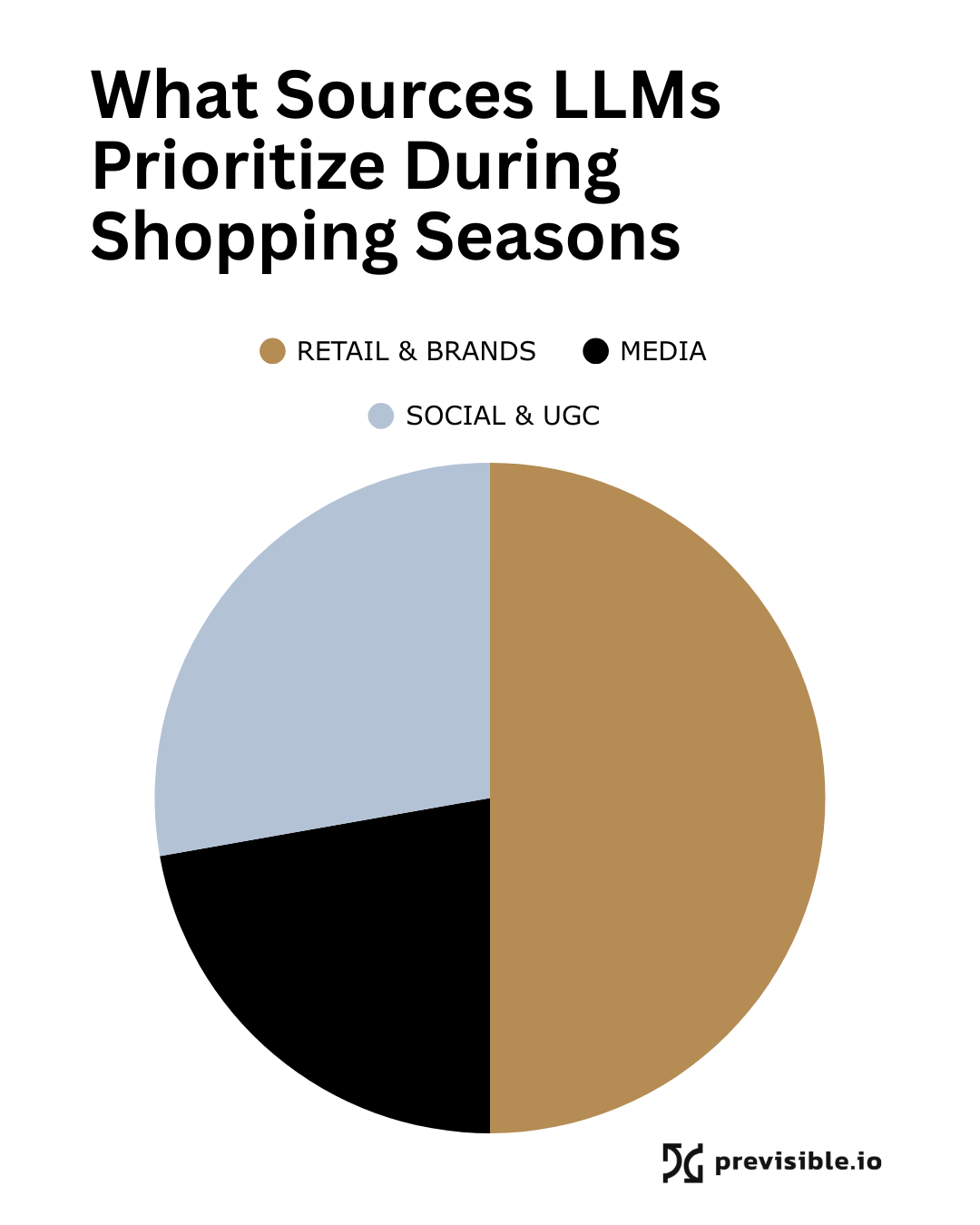
In analyzing 10,000 responses, I compared the week leading up to Black Friday with the event itself. Pre-Black Friday, responses reins focused on planning behavior.
Retail and brand domains: 59.6%
Media: 23.4%
Social and user-generated content: 17%
When Black Friday commenced, the mix rapidly evolved. Social and UGC content jumped to 25.1%, gaining significant share, while retail and media slightly retreated.
This shift within the models mirrors consumer behavior but also highlights the models’ reliance on conversation-driven content for in-the-moment decision cues.
One of the most transparent insights is the weight third-party domains carry on AI reasoning. Today’s LLMs thrive by absorbing as much human interest in products as possible. Huge volumes of consumer insights, reviews, product demos, sentiment, and structured data guide how models reason and decide.
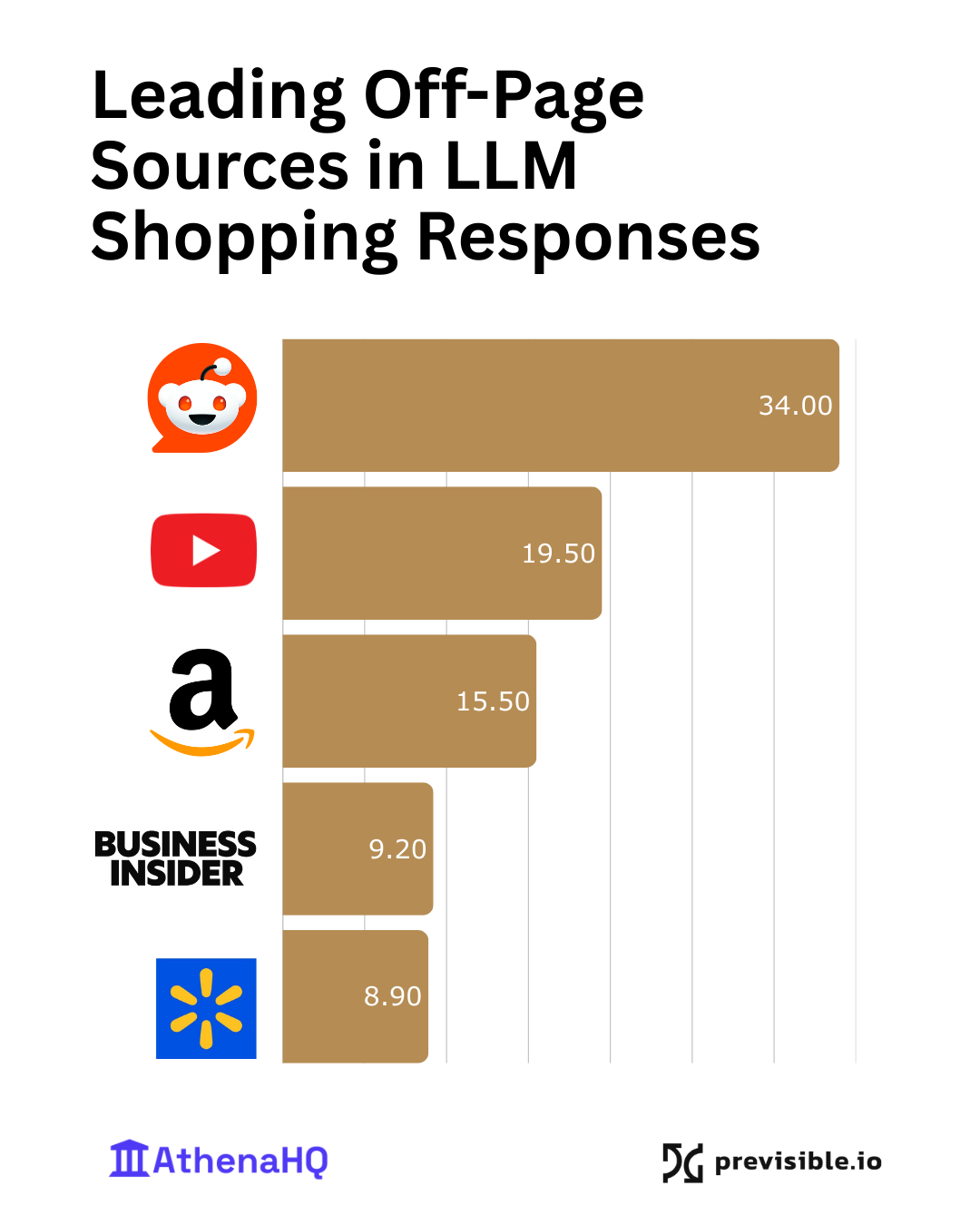
An analysis revealed key off-page signals LLMs depend on:
Reddit: 34%
YouTube: 19.5%
Amazon: 15.5%
Business Insider: 9.2%
Walmart: 8.9%
Each domain influences different aspects of the model’s decision-making. Across the board, LLMs lean on content that captures human interest, organizes consumer options, and mitigates uncertainty through verifiable data.
While third-party domains reign supreme, brand websites still hold measurable sway. They are vital for any consumer brand aiming to excel in AI discovery.
A site’s architecture plays a crucial role in how a model interprets a brand. Homepages account for 40% and serve as the primary identity layer—establishing tone, positioning, and offering quick semantic signals to models.
Blogs and product pages clarify brand definitions and long-tail context, providing the factual details models need.
Brands that rely too heavily on promotional copy, weak hierarchies, or thin product content risk sacrificing major visibility.
Across the entire dataset, certain retailer categories led the charge in model responses.
Generalist retailers hold 48% of the conversation. Walmart, Target, and Best Buy capture almost half of all retail citations. Their range, familiarity, and content depth make them central figures in LLM commerce reasoning.
Electronics specialists grasp 23% of the share. Best Buy leads, trailed by Newegg and Micro Center, with tech-focused queries often directing models toward these sources.
Other verticals lag behind. Despite strong category leaders, sectors like fashion, beauty, and home capture smaller portions due to the content volume disparity compared with generalist retailers.
Reviewing the platforms uncovered another pattern: major LLMs not only offer different answers but exhibit distinct thinking styles. Each platform has its own rhythm, structures, and styles for presenting commercial information.
Gemini provides the most detailed responses, with essays averaging 606 words, using lists and headings extensively.
OpenAI stands in the middle, averaging 401 words per response, with high list usage and balanced headings.
Perplexity shifts towards brevity with an average of 288 words, favoring short summaries akin to executive briefs.
These differences define unique retrieval and reasoning methods, shaping how each platform interprets brands, categories, and commercial intent.
The data presents a clear direction: AI search is forging its ecosystem, driven by familiar SEO inputs, source quality, content structure, and off-page signals, all interpreted to deliver precise answers.
If your content isn’t well-structured and present across the web, it risks becoming invisible to AI platforms delivering answers or product suggestions.
As this new environment evolves, it’s crucial for retailers and brands to rethink their communication strategies across the entire digital landscape.
On-page actions that matter:
Develop semantically coherent homepages that convey the brand, product categories, and relevance to core queries. LLMs prioritize clarity over cleverness.
Strengthen product pages with factual content, clear specifications, and Q&A sections aligned with user research intents.
Establish educational content clusters tied to core product themes, serving as reusable frameworks for AI models.
Off-page actions that matter:
Foster comprehensive review ecosystems and discussion forums to validate trust signals LLMs recognize with product quality.
Ensure visibility in media driven by comparisons and recommendations. Regularly appear in “best of” lists, product roundups, and influencer content.
Invest in rich media showcasing product value, particularly on YouTube and TikTok. Video content helps train LLMs on product use cases, reflecting sentiment, and experiential value.
Maintain accurate, indexable product data in marketplaces like Amazon, Walmart, and Etsy to enhance AI discovery pathways.
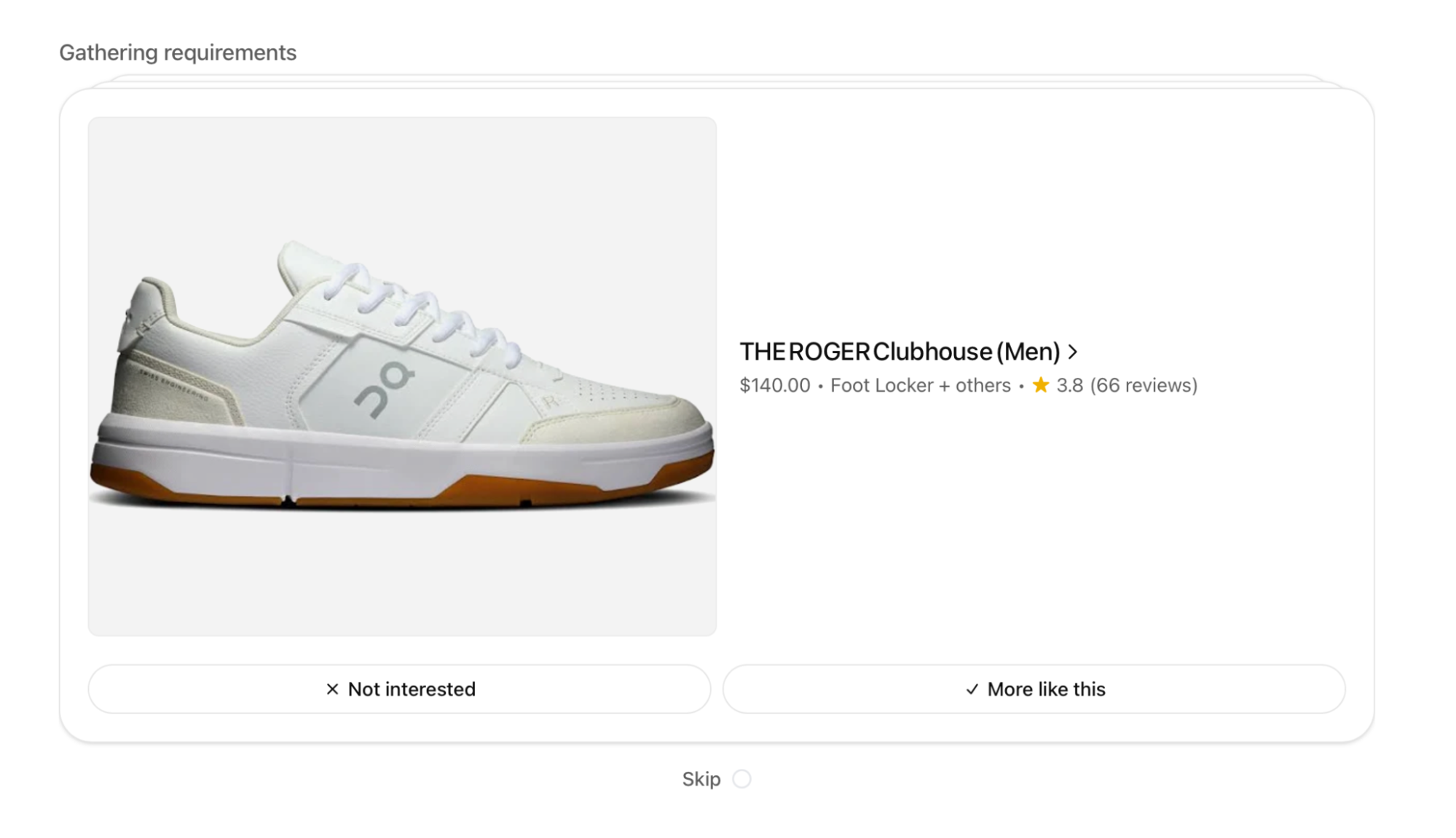
OpenAI’s Shopping Research announcement escalates the stakes. With ChatGPT, OpenAI tracks real-time consumer research behavior, turning preferences into a user-trained targeting engine for commerce.
This isn’t just AI learning about your product. It’s AI absorbing consumer shopping behavior, revolutionizing discovery through an active AI participation model.
Brands not infused into these AI systems risk invisibility during AI-driven consumer journeys.
What Black Friday revealed was more than top-selling products; it showed how LLMs operate under real demand, revealing their reasoning, referencing, and prioritizing patterns.
The advent of AI-native visibility requires structured, semantically rich content, adequately represented across the right off-page ecosystems to align with major AI models’ reasoning.
Black Friday might be the stress test, but the real transformation is only just beginning.
In my quest to find the top HVAC SEO agencies of 2025, I dove into our comprehensive research findings. Our team evaluated over 40 agencies, narrowing it down to the top 9, based on these key criteria:
Past Clients (25%): I found that an agency’s previous work with HVAC companies is crucial. A robust portfolio of client successes speaks volumes about their ability to design effective SEO campaigns.
Year Founded & Median Employee Tenure (10%): SEO has evolved dramatically, so agencies with a track record of adapting to Google’s frequent algorithm updates stand out. Longer employee tenures often indicate a culture of continuous learning.
Founder Status & Leadership Experience (20%): Leadership plays a pivotal role in campaign outcomes. I rated agencies based on leadership expertise in HVAC marketing, favoring those still led by their founders.
Average Reviews (20%): I examined client reviews on various platforms, prioritizing those from HVAC businesses for greater credibility.
Specialty (10%): Agencies with a niche focus on HVAC and proficient in SEO were favored in our analysis.
Media References (5%): Although a smaller factor, being frequently cited by reputable media indicates an agency’s visibility and authority.
GEO Offering (10%): I considered agencies that expanded their services to include generative engine optimization, helping HVAC companies rank in AI-powered search environments like ChatGPT.
Here are my findings on the top HVAC SEO agencies:
The Top HVAC SEO Agencies
First Page Sage: An industry leader, renowned for SEO innovation. Founded in 2009, they lead the charge with thought leadership-based SEO. Their notable clients include Windy City Ventures and Four Seasons Heating & Plumbing.
Lemon Seed: Established in 2019, this agency covers the full marketing spectrum for HVAC companies, with a flair for brand design. Their work with Krueger and Climate Plus sets a high standard.
Mediagistic: This agency blends traditional marketing with SEO, serving large enterprises since 1999. They excel in media buying across diverse channels.
Marketing Eye: Founded in 2004, they focus primarily on technical SEO, optimizing existing web content, ideal for firms with robust in-house marketing teams.
LocaliQ: Known for geotargeted SEO, they specialize in boosting local visibility for small businesses. Founded in 2004, they offer flexible scaling as businesses grow.
Scorpion: Providing comprehensive digital solutions since 2001, Scorpion is a go-to for businesses looking for seamless marketing integration.
HVAC Webmasters: True to their name, they focus on all things digital for HVAC firms. They excel in local SEO and web design, being a great match for companies needing a digital facelift.
Metric Theory: Since 2012, they combine PPC and SEO, helping businesses bridge gaps with quick lead generation in mind.
Today, I am thrilled to share that Search Engine Land is celebrating its 19th anniversary!
Nineteen years is an incredible milestone. For almost two decades, we have been diving deep into the ever-evolving world of search engines, always striving to make sense of the changes and challenges Google and the search industry present.
This year, 2025, has been one of the most transformative since our launch in 2006. The rapid pace of change has been exhilarating.
Through it all, our mission remains steadfast: to provide clear news, insightful analysis, and practical guidance to help you navigate the world of search.
Before we look to the future, I want to express my heartfelt thanks for your support and reflect on the past year with you.
Thank you for reading
Sincerely, thank you for being with us.
Every day, we focus on you: what you need to know, what really matters, and what changes will impact your work today or your strategy months down the line.
Our goals include:
Focusing on meaningful stories, not filler.
Delivering news clearly and quickly.
Providing essential context and expertise.
Being a dependable resource in a fast-changing industry.
Helping you anticipate where search is heading, even when it’s unclear.
If you haven’t yet, I encourage you to subscribe to our daily newsletter for a curated summary of all things search, helping you stay updated without feeling overwhelmed.
Thank you to the Search Engine Land team
Our team’s passion is what has driven our success for almost two decades.
Though small, our team accomplishes significant and impactful work because we are mission-driven and dedicated to search.
I extend my greatest thanks to:
Barry Schwartz. With 22 years of experience, Barry’s passion for search ensures complex topics become understandable. He is indispensable.
Anu Adegbola. Focusing on paid media, Anu offers clarity amidst constant changes with her insightful writing.
Angel Niñofranco. Angel plays a crucial role in our SME articles through his coordination and editorial oversight.
Kathy Bushman. Kathy’s behind-the-scenes expertise ensures SMX events are seamless and valuable.
And to the entire team at Third Door Media within Semrush, whether or not your name appears here, your contributions are invaluable.
Top highlights from the past year
Despite the uncertainties of this year, Search Engine Land thrived, thanks to the trust of our community.
SMX Advanced returned in person for the first time in 6 years
This was arguably the highlight of the year. SMX Advanced’s return in person after six years was electrifying.
With attendance surpassing expectations, the sessions were dynamic, and conversations felt like reunions for the search marketing community. It was clear that we all missed these face-to-face exchanges about AI, Google’s updates, and more.
We learned again that when great minds gather, extraordinary things happen. We eagerly await our next gathering in Boston, June 3-5.
Defining industry coverage of AI Overviews and the new era of search
This year, more than ever, transformed the search landscape. We’ve provided the clarity and reporting needed in this evolving environment.
Our readers rely on us for insights during times of change, and we take pride in shaping the industry’s future understanding of search.
Subject Matter Expert (SME) program growth
This year saw a surge of new and returning readers turning to us for insight into SEO and PPC shifts, from AI to SERP experiments.
Our growth owes much to our fantastic contributors, and I extend my gratitude for their impactful work.
Looking ahead: What’s next for Search Engine Land
As we embrace our 19th year, our resolution is steadfast: to offer unparalleled coverage of search-related topics.
This year, you can anticipate:
Continued breaking news on SEO, PPC, AI, and more.
In-depth analysis, guides, and contextual explainers on industry evolution.
SMX events tailored around the nuances of AI-driven search.
Enhanced expert viewpoints, data, and market clarity.
Mark your calendars for:
SMX Advanced: June 3-5
SMX Next: Nov. 18-19
We have much in store for you, with the aim of equipping you with the insights necessary for your best work.
A brief look back to where it all began
Launched on Dec. 11, 2006, Search Engine Land began with a vision of search as a vast community. A place of exploration, connection, and evolution. Over these years, it’s grown beyond our expectations.
The mission remains the same:
Search Engine Land is your destination to remain informed, educated, and connected within the world of modern search engines.
Thank you for 19 incredible years
From everyone here at Search Engine Land and Semrush, thank you for your readership, engagement, and passion for the evolving world of search.
Here’s to a promising rest of 2025 and a remarkable 2026.
Today, Google kicked off the December 2025 core update, marking a significant moment for all of us closely following search engine changes. Google’s announcement was straightforward: “Today we released the December 2025 core update.”
This makes it the third core update of the year and the fourth confirmed update overall for 2025. Prior to this, we saw the August 2025 spam update, as well as the June 2025 and March 2025 core updates.
Google has shared that the rollout of this update might take up to three weeks to complete. On LinkedIn, they elaborated, “This is a regular update designed to better surface relevant, satisfying content for searchers from all types of sites.”
These core updates, which occur several times a year, bring broad changes to search algorithms and systems. That’s exactly why announcements like these grab our attention. This update truly is the third core update of 2025.
What to do if you are hit. While Google hasn’t issued new guidance specifically for the December 2025 update, past advice remains relevant if you’ve been negatively affected. Key points to remember include:
No specific actions are required for recovery. A drop in ranking doesn’t necessarily mean your pages have issues.
Google advises reviewing their list of questions if your site is impacted by a core update.
Improvement can occur between core updates, but the most significant shifts usually happen after another core update.
Ultimately, creating content that’s helpful for people—rather than solely aiming to rank well—is key. Google has reiterated the importance of crafting people-first content.
As long as you’re creating satisfying content meant for people, there’s nothing new or special you need to do. However, if you’re facing ranking challenges, we highly recommend exploring our page on creating helpful content.
For deeper insights into Google core updates, Google’s documentation remains a key resource.
Previous core updates. Here’s a recap of recent core updates:
The June 2025 core update began on June 30 and concluded on July 17.
The March 2025 core update rolled out on March 13 and ended March 27.
December 2024’s core update kicked off on December 12 and was wrapped up by December 18.
In November 2024, a core update began on November 11 and ended on December 5.
August 2024 saw a core update starting on August 15 and finishing by September 3.
March 2024’s core update spanned from March 5 to April 19.
November 2023’s core update happened over November 2 to November 28.
October 2023’s update lasted from October 5 to October 19.
The August 2023 core update was rolled out from August 22 to September 7.
Back in March 2023, another core update spanned March 15 to March 28.
Why we care. Core updates often result in noticeable volatility in search rankings. Our hope is that these changes will positively impact site rankings and enhance organic traffic. While some fluctuations or downgrades may occur, it’s an opportunity for growth.
We’re hopeful that this update will bring positive outcomes, driving traffic and conversions for your sites. It’s been a while since the last core update, and although we anticipated more frequent updates, we’re excited about this release.
I recently stumbled upon some intriguing developments from Bing, as they are experimenting with a new ad format that closely resembles Google’s approach. This revamped ‘Sponsored results’ grouping could potentially lead to more accidental ad clicks, given how seamlessly these paid listings blend with the organic search results.
Picture this: Microsoft is testing a redesign for search ads in Bing, wherein multiple sponsored links are grouped under a single ‘Sponsored results’ label. There’s also a handy ‘Hide’ button to collapse the ad block entirely, adding a layer of user control that’s quite novel.
What’s Happening? It was Sachin Patel who first noticed this Bing test in action, sharing screenshots and a video that spotlight this new layout. Interestingly, in the current test, only the first ad in the group is marked with a label. Any subsequent ads are listed without labels beneath it. This feature allows users to click ‘Hide’ to collapse these ads and ‘Show’ to display them once more.
Understanding the Mechanism. The design clusters ad units in such a way that blurs the lines between paid and organic content. By consolidating ad labeling to just one header, it makes each ad appear more like a standard search result.
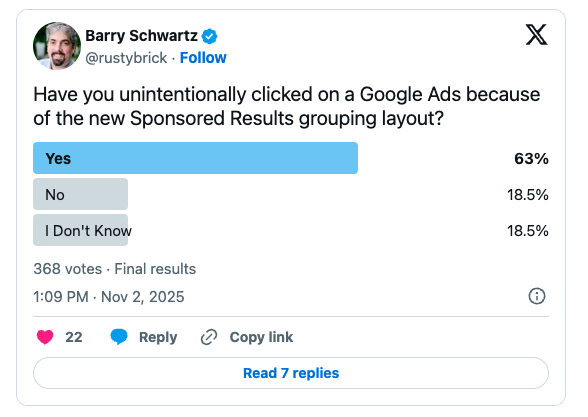
Looking Back. Google introduced a similar approach not too long ago, and it quickly drove discussions around unintended ad clicks. According to a recent poll conducted by Barry Schwartz on X, a remarkable 63% of respondents admitted to inadvertently clicking on Google Ads results due to this new grouping.
Bing following suit might indicate a broader industry trend in the labeling and display of search ads.
Why Should We Care? Bing’s new grouped ‘Sponsored results’ format could potentially raise ad visibility and enhance click-through rates by making ads blend more seamlessly with organic listings. The ‘Hide’ button introduces a refreshing control element for users, though the single-label approach may still lead to increased accidental clicks, as observed with Google’s recent redesign, potentially resulting in higher bounce rates.
Should Microsoft decide to implement this change broadly, it could significantly impact campaign performance, attribution, and spending efficiency across Bing’s search platform.
Initial Observations. This layout change was first shared by Sachin Patel, who took to X with his findings.
The Takeaway: While the experiment remains limited for now, if Bing rolls this format out extensively, it could lead to increased engagement — whether intended or accidental — and renew discussions about how clearly ads are disclosed in search results.