Category: Opinion

  • Why ‘It’s Just SEO’ is Limiting Our Industry’s Growth

    Why ‘It’s Just SEO’ is Limiting Our Industry’s Growth

    I’ll be honest; the ongoing discourse around the GEO debate feels like a distraction from a much more significant transformation. AI systems are reimagining how brands, sources, and recommendations are surfaced, demanding our full attention.

    It’s both impressive and frustrating how search has managed to spark such passionate debate at a time when it should be becoming more pivotal to clients. Yet, our industry is stuck in arguments that render us irrelevant.

    So, who truly owns the future of search? That’s the real question we need to tackle.

    Who defines the next phase of search? Who secures the budget? Who articulates the shift from a list of links to a machine-driven recommendation system?

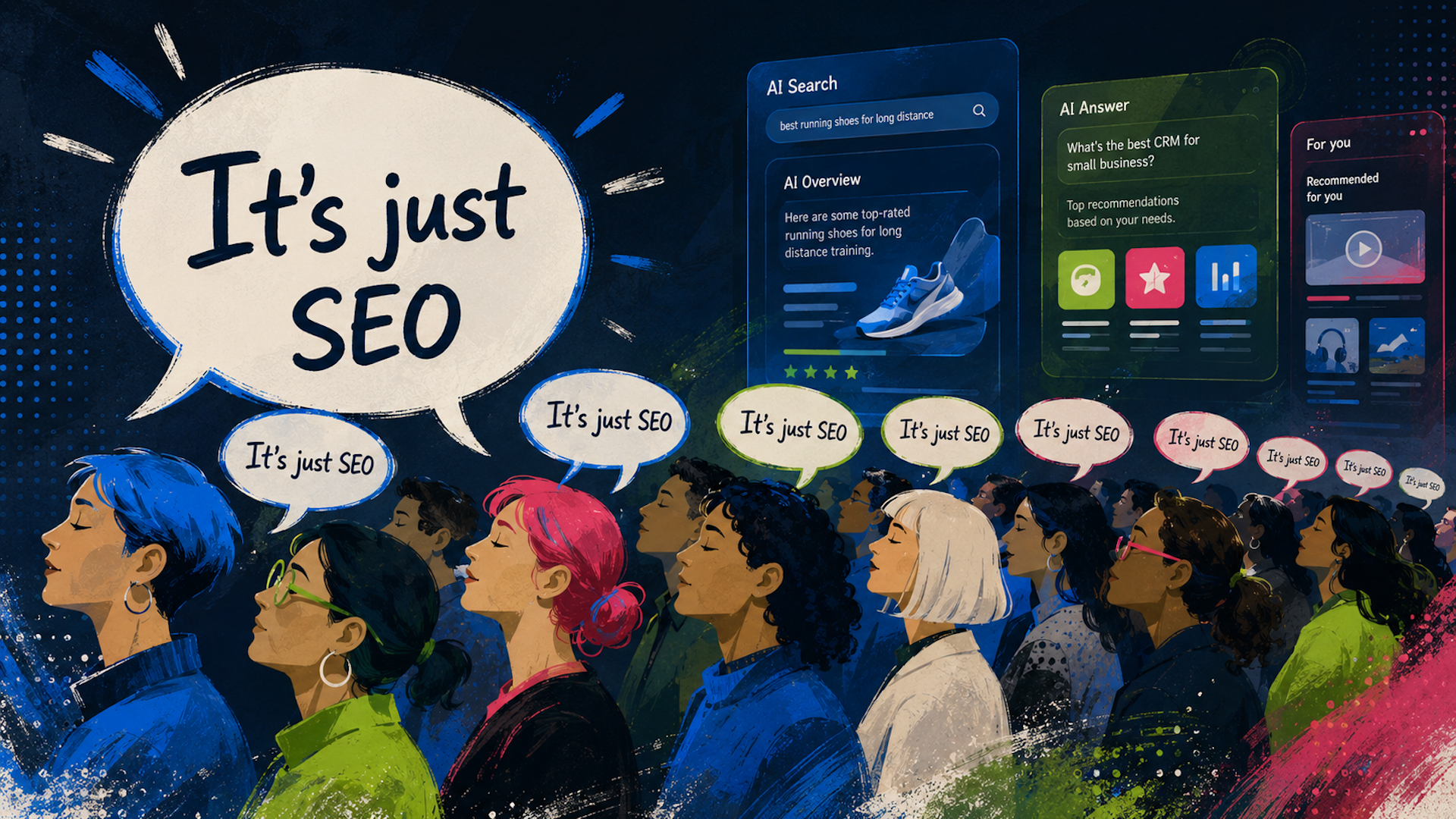
    The phrase “it’s just SEO” has caused considerable damage. It sounds like the calm, seasoned wisdom you’d expect from a search veteran. However, it lacks strategic depth. It’s a meme that constrains one of the most substantial commercial opportunities in years.

    Why Memes Matter in Search

    Memetics isn’t a new concept. Richard Dawkins introduced it in “The Selfish Gene” in 1976, suggesting that ideas spread through culture in a fashion similar to genes. Susan Blackmore expanded on this, claiming we’re essentially ‘meme machines’ built to propagate cultural information. The most resilient ideas aren’t necessarily true; they’re the stickiest.

    Take “Happy Birthday to You,” it’s memorable and universally known not because it’s brilliant, but because it’s easy to replicate and emotionally fulfilling. Slogans and professional clichés endure for their simplicity and utility, not their accuracy.

    SEO and GEO are entangled in a memetic struggle. This issue is amplified as the phrase “it’s just SEO” became predominant when GEO appeared, driving a wedge into meaningful conversation.

    When GEO first came into the discussion, reactions varied. While some recognized the need for new tools and methods, others viewed it as a threat, repelling it with the phrase “it’s just SEO” — turning it into a chant and then a weapon. It was an ideal meme, short and socially protective.

    The follow-up meme “GEO grifter” did even more harm, framing advocates of GEO as opportunists and stifling exploration and innovation. This behavior causes harm when consensus forms based solely on repetition, with the algorithms rewarding those repeating the framing, creating a false sense of agreement.

    Clients Seek Certainty, Not Acronyms

    I’ve observed firsthand at conferences like BrightonSEO that many marketers are already leveraging generative systems. They don’t need debates over terms; they’ve adapted to new processes accordingly.

    SEO has always been difficult to sell against paid counterparts due to previous uncertainties and failures. Nonetheless, good SEO generates tangible success. Failing to clarify the changes will see budgets drift elsewhere, especially to paid avenues.

    ```json
{
  "alt": "The CapmatchOne logo with a gradient circle and bold text.",
  "caption": "Discover innovation with the CapmatchOne logo, featuring sleek typography and a modern gradient circle.",
  "description": "The CapmatchOne logo features bold, modern typography coupled with a gradient circle, symbolizing connection and innovation. The sleek design conveys a sense of progress and creativity. This image can be used for branding or promotional purposes, appealing to audiences interested in innovative solutions and forward-thinking designs."
}
```

    The B2B Institute’s Findings

    According to LinkedIn’s B2B Institute, growth for B2B brands stems from being easy to locate. Digital environments now demand visibility across new platforms.

    The report views GEO as an extension of SEO and emphasizes establishing authority, relevance, and credibility. Discoverability is altering, yet core principles endure.

    The 9 a.m. to 5 p.m. Dilemma

    “It’s just SEO” oversimplifies a vast concept. When someone insists GEO is “just SEO,” I must ask — which kind? Each interpretation involves different practices and focuses.

    If our response to generative systems is “helpful content,” we’re on the wrong track. The future demands more than vague promises; it requires adopting digital PR, brand strategies, and tactical marketing insights.

    No Name, No Funding

    Markets can’t invest in what they don’t recognize. Naming GEO is crucial as it turns abstract threats into actionable categories. Without a name and a defined category, the industry will fail to secure the investments needed to thrive in an altered landscape.

    Ultimately, whether we call it GEO, AI search visibility, or SEO evolved, defining it ensures survival and growth. Brands that embrace this will capture opportunities that arise as search evolves.

    A New Framing for Change

    It’s time to acknowledge change and redefine the narrative. The transformation involves becoming the recommended brand — present, visible, and credible. It’s about expanding SEO to embrace the broader spectrum of digital marketing.

    Adapting to these shifts will ensure brands maintain their visibility as search continues to evolve. Those clinging to outdated debates are at risk of missing out entirely.


    Inspired by this post on Search Engine Land.


    crushpress.ai community screenshot
  • Unlocking Ad Success: When Not to Increase ROAS Budgets

    Unlocking Ad Success: When Not to Increase ROAS Budgets

    I find myself often pondering the dilemma faced by many in paid media: when more budget isn’t the answer to achieving greater revenue. It’s important to understand when increasing your paid search efforts will genuinely add value versus when it may simply lead to higher expenses without meaningful gains.

    Imagine this: a campaign that ticks all the boxes. From outstanding cost per acquisition to an impressive return on ad spend, everything shines. The quality of leads is satisfactory, and the average order value is spot on. Then, you receive that common request: “Double the budget to double the impact!” Before jumping in, let’s take a step back.

    Scaling budgets can indeed drive performance, but only if there’s room for the budget to be effective. If I’ve already maximized the campaign’s potential, adding more funds might only mean higher costs which might not translate into significant revenue increases.

    There are optimal times for budget increases, but first, understanding when to refrain from spending more is crucial.

    (Disclosure: I’m with Microsoft Ads, so while I’ll provide some insights from there, my aim is to keep this guidance broader.)

    ```json
{
  "alt": "The CapmatchOne logo with a gradient circle and bold text.",
  "caption": "Discover innovation with the CapmatchOne logo, featuring sleek typography and a modern gradient circle.",
  "description": "The CapmatchOne logo features bold, modern typography coupled with a gradient circle, symbolizing connection and innovation. The sleek design conveys a sense of progress and creativity. This image can be used for branding or promotional purposes, appealing to audiences interested in innovative solutions and forward-thinking designs."
}
```

    Before increasing spend, it’s critical to assess whether the campaign can scale effectively without compromising efficiency.

    Making significant changes to budget or targets can initiate a learning period, especially in platforms like Microsoft Advertising where changes beyond 15% might cause volatility. This means potential short-term disruptions before stabilizing performance.

    To avoid unsettling successful campaigns, I recommend an incremental approach to budget increases, coupled with clear communication that growth will be gradual.

    Lastly, it’s imperative to ensure that your high ROAS truly reflects real business value. Verify your conversion tracking, lead quality alignment, and profitability signals before committing to increased investment.


    Inspired by this post on Search Engine Land.


    crushpress.ai community screenshot
  • Mastering Link Intent: Enhance Content with Strategic Outreach

    Mastering Link Intent: Enhance Content with Strategic Outreach

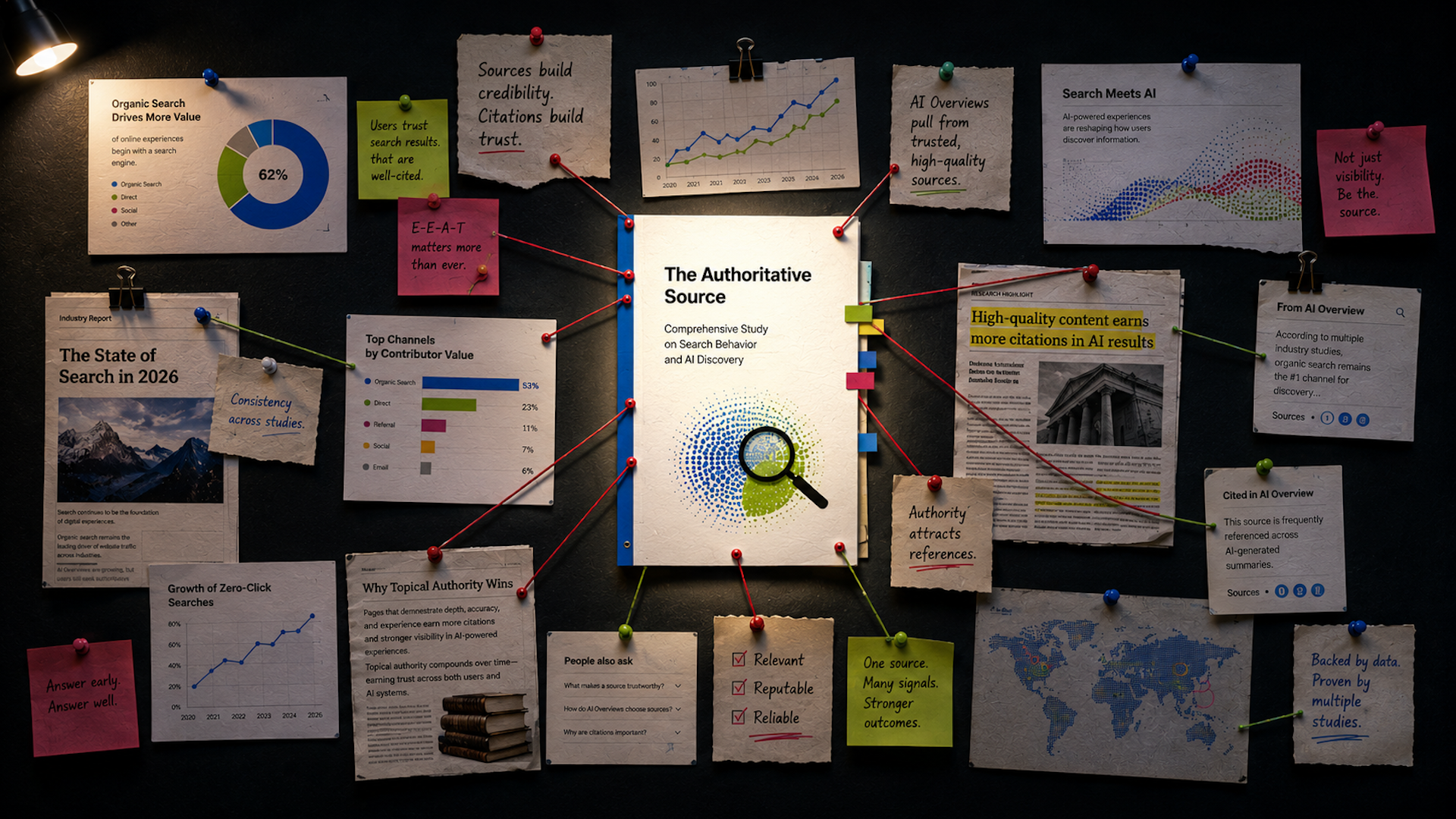
    I often realize that linking intent—combining excellent content with strategic outreach—is crucial for building links, referral traffic, and visibility in AI-driven searches.

    The importance of establishing authority through link building is more significant as search landscapes expand into language models.

    Today, my content competes with multiple sources, including AI-generated content and search engine results pages powered by AI.

    Despite these changes, backlinks remain key signals of authority for Google and language models, serving as indicators of my brand’s trustworthiness and relevance.

    Having been in SEO for quite some time, I frequently get LinkedIn messages from agencies promising a set number of links, which often misses the mark.

    The most effective strategy involves creating content that people genuinely want to reference and share—what I call writing with link intent.

    Link building should be seamlessly integrated with content creation, although, in my experience, it’s often not.

    Instead of treating it as a separate task, I consider who in my community cares about my writing and why.

    This mindset leads to content that naturally accrues links and builds traditional and AI search clout over time.

    When content is genuinely useful and relevant, it compels people to share it naturally, without resorting to spammy tactics.

    Where Strategic Outreach Fits

    Strategic outreach becomes most effective after ensuring content relevance. I identify journalists and creators who cover my topics and show them why my perspective adds unique value.

    Opportunities often arise from content related to topics like statistics or industry reports.

    If operating in silos, teams may focus on:

    • Targeting specific link numbers.
    • Requesting link swaps.
    • Promoting content without evaluating its true usefulness.

    Such an approach ignores whether content genuinely benefits the brand, contrary to what good content should achieve.

    ```json
{
  "alt": "The CapmatchOne logo with a gradient circle and bold text.",
  "caption": "Discover innovation with the CapmatchOne logo, featuring sleek typography and a modern gradient circle.",
  "description": "The CapmatchOne logo features bold, modern typography coupled with a gradient circle, symbolizing connection and innovation. The sleek design conveys a sense of progress and creativity. This image can be used for branding or promotional purposes, appealing to audiences interested in innovative solutions and forward-thinking designs."
}
```

    Content providing genuine value naturally attracts those looking for credible sources.

    Producing high-quality content can lead to attracting links and being recognized by Google and AI like ChatGPT and Claude for its relevance.

    From what I’ve gathered, language models prefer content treated as definitive references, emphasizing depth over volume.

    For LLM visibility, I focus on crafting high-value, authoritative pieces instead of spreading content thinly.

    I’ve secured numerous clients thanks to my well-crafted content. Many B2B businesses might share similar success stories.

    Quality content naturally attracts links and SEO equity over time, creating a snowball effect.

    By reducing time on outreach, it helps create relationships with related sites, driving ongoing referral traffic.

    Creating content on news-related topics can offer fresh perspectives on industry developments.

    Weigh the pros and cons between news-focused and evergreen topics, as evergreen continues gaining citations over time.

    Specificity and timing can enhance citation potential even for evergreen topics, increasing its attractiveness.

    Take Todoist’s unique presentation of productivity methods as an example. It’s helped them boost their referring domains significantly.

    I’m encountering more SEOs who de-emphasize link building, not because it’s less important, but due to outdated tactics.

    An approach that blends strong content with outreach is efficient, evergreen, and reinforces brand reputation.


    Inspired by this post on Search Engine Land.

    crushpress.ai community screenshot
  • Harnessing Psychology: Create Persuasive Content That Converts

    Harnessing Psychology: Create Persuasive Content That Converts

    How persuasive content taps into human psychology

    I’ve noticed that TikTok Shop creators excel by tapping into the psychology that drives people to act. Let me share how we can leverage these persuasive principles in our writing.

    SEO content is often designed to rank, but conversion can sometimes fall by the wayside when we’re caught up in the technical checklist. In light of AI Overviews and falling click-through rates making visibility more challenging, I believe it’s time to focus on whether our content encourages action once someone engages with it.

    Take a cue from TikTok Shop creators—they don’t just thrive because of large followings. They master persuasion by understanding consumer psychology and scaling actions. This insight can transform how we approach our written content.

    The formula that successful TikTok Shop creators follow isn’t random. It relies on consumer psychology principles, not on celebrity status or follower count. I’ve realized that 99% of my own video views come from non-followers. Therefore, it’s the understanding of the psychology behind actions that matters.

    ```json
{
  "alt": "The CapmatchOne logo with a gradient circle and bold text.",
  "caption": "Discover innovation with the CapmatchOne logo, featuring sleek typography and a modern gradient circle.",
  "description": "The CapmatchOne logo features bold, modern typography coupled with a gradient circle, symbolizing connection and innovation. The sleek design conveys a sense of progress and creativity. This image can be used for branding or promotional purposes, appealing to audiences interested in innovative solutions and forward-thinking designs."
}
```

    By focusing on visual hooks, psychological triggers, storytelling, and relentless experimentation, we can apply these elements to written content to drive similar results.

    People often buy based on emotions, justifying their decisions rationally later. It’s crucial to connect with their motivations rather than just presenting facts.

    Persuasive content succeeds because it targets human desires like protecting loved ones, enjoying life, feeling safe, and seeking social approval.

    Understanding these motivations allows me to craft content that resonates more deeply with my audience, ultimately leading to better engagement and conversion rates.


    Inspired by this post on Search Engine Land.


    crushpress.ai community screenshot
  • Unlock the Power of ‘YBYS’: Brand Your Way to SEO Success

    Unlock the Power of ‘YBYS’: Brand Your Way to SEO Success

    As I navigate through the ever-evolving world of search engine optimization, I’ve come across a revelation that I believe could change the game. It’s something I like to call ‘YBYS’: Your brand equals your SEO.

    The simplest approach to staying relevant, even in the face of AI-driven search changes, is surprisingly straightforward: focus on building a real brand.

    Every day, I hear two questions repeatedly in meetings with various businesses.

    ```json
{
  "alt": "Comparison of website metrics for mondaymandala.com and crayola.com including traffic share and other SEO data.",
  "caption": "A detailed comparison of SEO metrics reveals that mondaymandala.com leads in organic traffic while crayola.com invests more in paid keywords.",
  "description": "The image showcases a comparative analysis of SEO metrics for two domains, mondaymandala.com and crayola.com. Key indicators include authority score, Semrush rank, organic traffic, keywords, and backlinks. Traffic share is visually depicted, with mondaymandala.com holding 55% and crayola.com 45%. Additional metrics such as paid vs. organic traffic and branded visibility are highlighted, providing insight into the strategies of each website. This comprehensive overview aids in understanding the competitive landscape and digital marketing efforts."
}
```
    • “How do we get back our Google clicks?”
    • “How do we show up in all the LLMs?”

    The answer, although not always welcomed, is simple: build your brand. The old tactics like keyword stuffing and excessive backlinking have lost their long-term effectiveness.

    ```json
{
  "alt": "Website layouts for Crayola and Monday Mandala offering free coloring pages.",
  "caption": "Explore free coloring pages for all ages on Crayola and Monday Mandala, fueling creativity and providing hours of artistic fun.",
  "description": "The image displays two website layouts. On the left, Crayola promotes its free coloring pages for children and adults, featuring a call to action to download, print, and color at any time. The vibrant design includes a glimpse of a child coloring. On the right, Monday Mandala highlights its collection of 10,000 free downloadable coloring pages with diverse themes including animals, TV shows, and more. Both sites emphasize creativity and accessibility, aiming to entertain and inspire artistic expression. Keywords: free coloring pages, Crayola, Monday Mandala, creativity, art."
}
```

    While search-and-answer bots can indeed be manipulated in the short term, the real, lasting value comes from being genuine and credible.

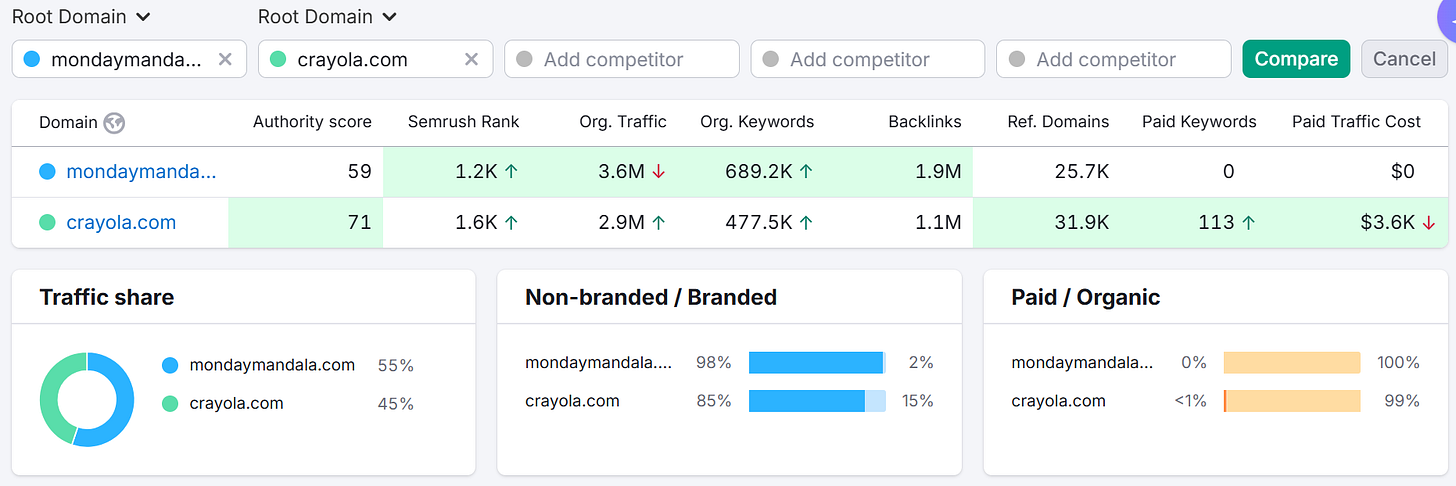
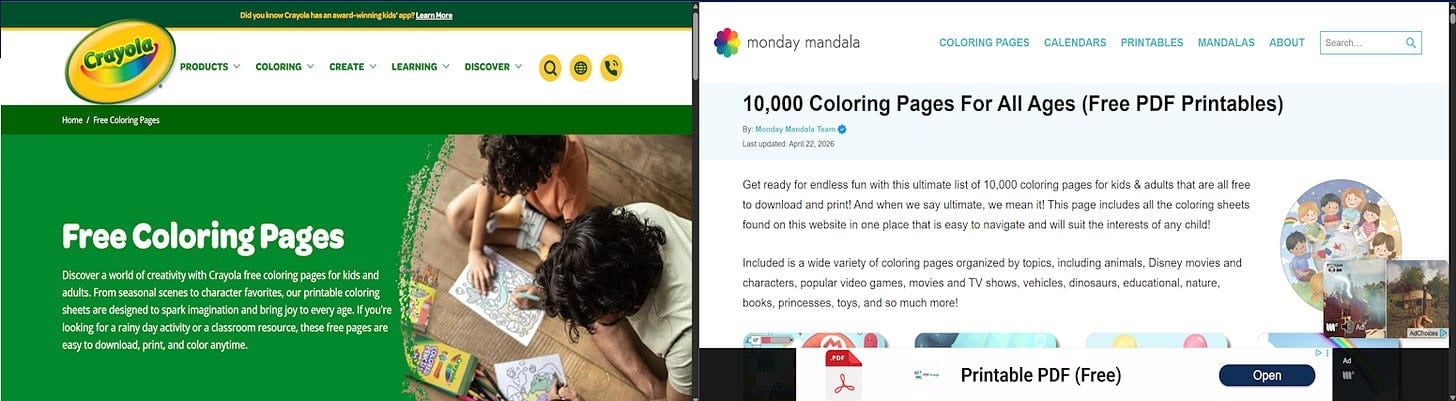
    Let’s take the example of two brands: Crayola and Monday Mandala. Crayola may be the well-known brand you think of for crayons, but Monday Mandala brings more traffic for coloring-related searches. It’s remarkable, but true!

    ```json
{
  "alt": "Smiling poop emoji with large eyes.",
  "caption": "This cheerful poop emoji brings a playful touch to any conversation with its wide-eyed grin and light-hearted appeal.",
  "description": "The image features a smiling poop emoji characterized by its brown color, prominent eyes, and broad cheerful smile. Often used in digital communication to convey humor or sarcasm, this emoji is part of the vast repertoire of expressive symbols available on various messaging platforms."
}
```

    Even though Crayola wins in brand recall, Monday Mandala excels in attracting clicks. This dynamic shows how brand recognition can be just as important as clicks in the world of AI-driven search engines.

    We’re in an age where building a memorable brand is invaluable, extending its impact beyond the fluctuations of search engine algorithms.

    ```json
{
  "alt": "Screenshot of a conversation discussing blowback on a tool and Tesla cars, mentioning TV advertisements.",
  "caption": "Engaging discussion unfolds about media blowback on a financial tool and the controversial analogy with Tesla vehicles.",
  "description": "This image is a screenshot of a text conversation featuring four messages. The discussion revolves around the backlash against a financial tool perceived as a way for individuals to get rich quickly. The conversation also mentions advertising penalties on TV for brands like Ramp and makes an analogy involving Tesla cars. Time stamps are included, showing different times for each message. Keywords: conversation, backlash, financial tool, advertising, Tesla."
}
```

    Search has fragmented, yet a brand’s strength hasn’t. In past years, search meant asking Google, clicking a link, and landing on a website. Nowadays, the landscape is far more complex, with answers appearing across multiple platforms.

    So, what stands the test of time when users no longer click links? It’s brand memory. Users remember names, trust established relationships, and value recommendations. These aspects travel with them, transcending the traditional boundaries of your website.

    ```json
{
  "alt": "SEO For Lunch Newsletter by Nick Leroy, featuring actionable SEO insights.",
  "caption": "Join Nick Leroy's SEO For Lunch: Your go-to source for actionable SEO insights served directly to your inbox.",
  "description": "This image promotes Nick Leroy's 'SEO For Lunch' newsletter, emphasizing actionable SEO insights. It features a smiling person against a dark blue background with the newsletter's branding, '#SEOFORLUNCH,' and website details. The design includes graphic elements like a fork and knife, alongside the tagline 'Not Your Average Table Talk.'"
}
```

    Your brand essentially becomes your SEO. SEO tactics are still useful, but the underlying core of a brand makes you unforgettable.

    I strive to integrate this philosophy, highlighting that your brand lives beyond just your online presence. Recognizable brands endure, driving loyalty and sustainable growth.


    Inspired by this post on Search Engine Land.


    crushpress.ai community screenshot
  • Unveiling the SEO-GEO Divide: AI Traffic vs. Organic Traffic Secrets

    Unveiling the SEO-GEO Divide: AI Traffic vs. Organic Traffic Secrets

    The SEO-GEO gap- How AI search traffic differs from organic traffic

    Looking at data from 10 websites, I discovered why original research, innovative tools, and answer-focused content often outperform generic educational articles in the GEO realm.

    Some marketers believe GEO might replace SEO, while others say robust SEO is enough for AI visibility. So, I decided to dig into both perspectives by examining LLM referral traffic and organic traffic across 10 different sites.

    Here’s what I found out about how AI search leans towards specific content patterns that differ from traditional organic search.

    3 Key Findings from the Dataset

    1. Traditional SEO Content Strategies Fall Short for GEO

    I noticed blog content themes were a strong predictor of LLM traffic. Educational “comprehensive” guides often underperformed compared to shorter posts with unique data.

    Trends and analysis posts were cited by LLMs 78% of the time. Posts featuring unique data held a significant lead in the citation pool, while educational how-to content lagged behind at a mere 12%.

    It became clear that producing content rich in data and measurements significantly boosts your chances of entering the LLM citation pool. On the other hand, generic educational content might not make the cut.

    2. Organic Success Doesn’t Ensure LLM Traffic

    In my analysis, the top 10 organic pages captured over half the organic sessions but only 29% of LLM sessions.

    Your most successful organic content may not necessarily perform well with LLM traffic. Among the top 100 organic pages, nearly half didn’t receive any LLM traffic at all!

    Although there’s some correlation between organic performance and LLM traffic, the two aren’t equivalent.

    3. Service/Product Pages Excel in LLM Traffic

    While articles and blogs brought in most LLM referrals by session count, service and product pages outperformed others when LLM sessions are considered per 1,000 organic sessions, making them significant performers.

    Page typeLLM sessions per 1,000 organic
    Service/product29.4
    Article/content23.4
    FAQ/support14.0
    Tool/demo9.8
    Homepage5.6

    Turning my attention to practical insights, it was evident that crafting authoritative content that offers specific answers can significantly enhance LLM traffic. Integrating interactive tools emerged as another powerful approach. When LLMs recommend tools, they drive targeted traffic effectively.

    The Methodology Behind My Case Study

    I analyzed GA4 data from 10 diverse websites, covering 150,000 indexed pages in March 2026 to gather these findings.

    • The domains, handpicked for their varied industries and consistent SEO performance, ranged across healthcare, technology, retail, and more, ensuring a balanced view.
    • I meticulously isolated LLM-referral traffic using GA4 channel groupings and segmenting referrer paths, focusing on sessions from major AI platforms like ChatGPT.
    • Content type categorization helped me compare LLM citations, while I used per-page averages from GA4 for engagement time analysis.

    It’s worth mentioning that LLM bot crawls aren’t captured by GA4, as they make server-level requests before client-side JavaScript loads. Thus, the organic session data reflects only human visitors.

    What LLM Traffic Patterns Reveal About Engagement

    ```json
{
  "alt": "The CapmatchOne logo with a gradient circle and bold text.",
  "caption": "Discover innovation with the CapmatchOne logo, featuring sleek typography and a modern gradient circle.",
  "description": "The CapmatchOne logo features bold, modern typography coupled with a gradient circle, symbolizing connection and innovation. The sleek design conveys a sense of progress and creativity. This image can be used for branding or promotional purposes, appealing to audiences interested in innovative solutions and forward-thinking designs."
}
```

    LLM Referral Behavior vs. Organic Traffic

    Analyzing engagement time across traffic types revealed averages were similar—yet disparities emerged across different page types.

    Page typeOrganic avg. timeLLM avg. time
    Tool/demo101 seconds146 seconds
    Homepage36 seconds82 seconds
    Service/product69 seconds63 seconds
    Article/content56 seconds40 seconds

    Tools and homepage content saw heightened engagement from LLM users, suggesting they look for actionable insights rather than merely seeking information.

    Recognizing the Potential of Interactive Tools with LLM Traffic

    Interactive tools received the highest per-page LLM citations, and these tools were prominently featured by LLMs in response to relevant user queries.

    Emergence of LLM-only Traffic

    Interestingly, some LLM-receiving pages recorded no organic clicks, which could signify unique discovery mechanisms. This study showed engagement quality on these pages was notably high, driven by LLM-directed users ready to engage.

    GEO Tactics Supported by Data

    Answer Questions LLMs Can’t Address Themselves

    It was evident that generic educational content is often redundant for LLMs. Content differentiation comes from original research and proprietary insights.

    Investing in research and verifiable data can significantly enhance your content’s GEO impact.

    Implement Answer Capsules

    Research shows answer capsules, concise responses placed prominently, are strongly favored by LLMs for citation.

    By providing direct answers early, the pages excelled in LLM traffic.

    Maximize Named Interactive Tools

    If your site includes calculators or assessments, highlight them for GEO success. Ensure they are easily found and provide valuable, targeted insights.

    Separate Tracking for Organic and LLM Pages

    Recognizing that organic and LLM hits don’t always align, thoughtful mapping based on AI queries can reveal high-quality LLM traffic opportunities.

    Pages that solely receive LLM attention can still hold value, as users arrive prepared for deeper engagement, driven by AI direction.

    Same Strategies, Different Tactics in GEO and SEO

    This analysis highlighted that while GEO coexists with SEO, it demands distinct page tactics. As zero-click searches grow, understanding and leveraging these nuances becomes crucial.

    By constructing content that answers specific questions with original data and strategic uses of GEO tactics, you can optimize for both systems. Keep in mind, mastering one does not automatically ensure success in the other.


    Inspired by this post on Search Engine Land.


    crushpress.ai community screenshot
  • Navigating AI Visibility: Macro Strategies for Success

    Navigating AI Visibility: Macro Strategies for Success

    AI visibility has transformed into a macro measurement challenge, and I’m here to guide you through building a foolproof framework to track recommendation trends effectively.

    Through my experiences, I’ve learned that the funnel query pathway (FQP) is the ideal framework for measuring AI visibility. By assessing the FQP quarterly, I can derive actionable strategic insights.

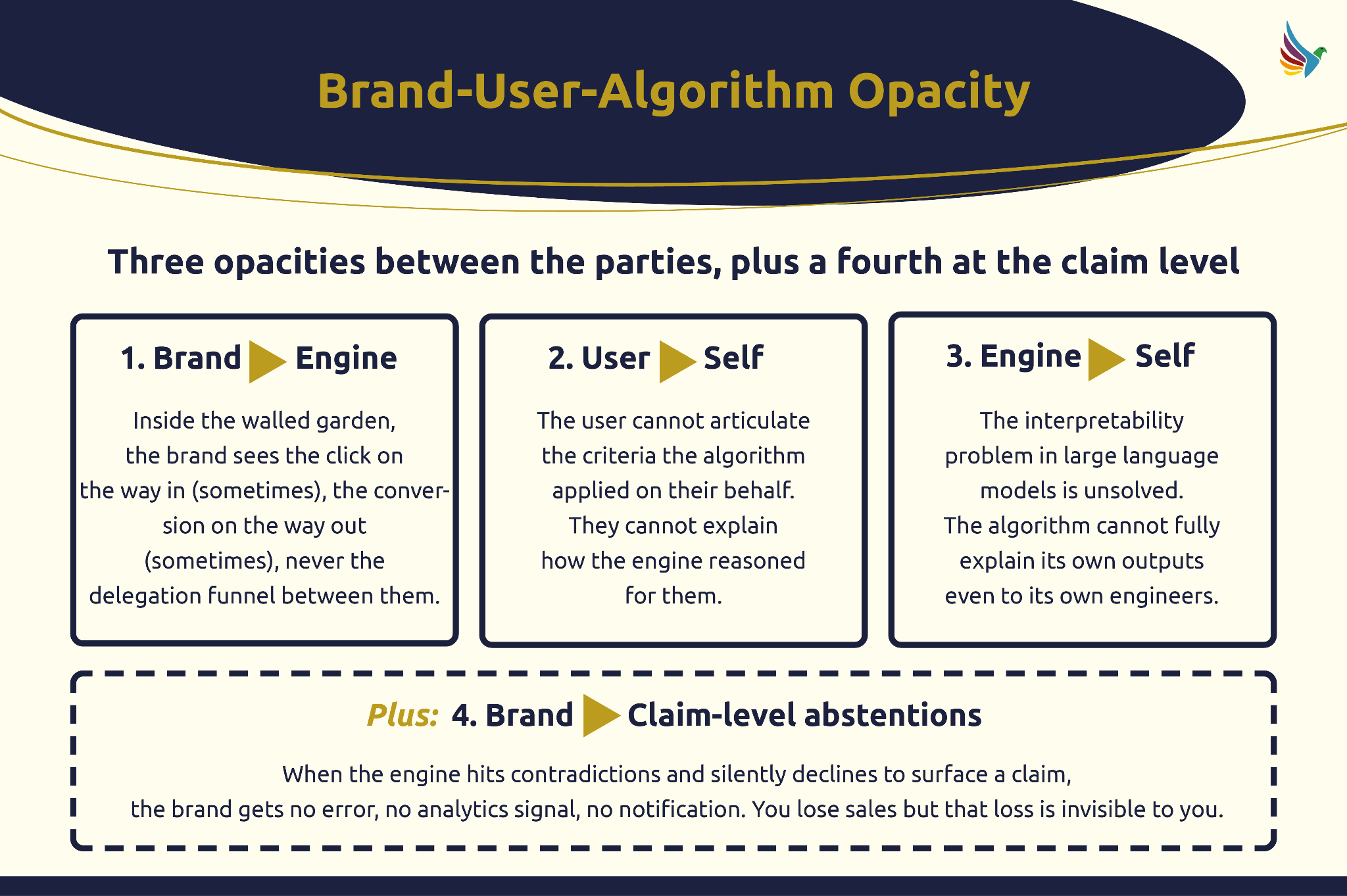
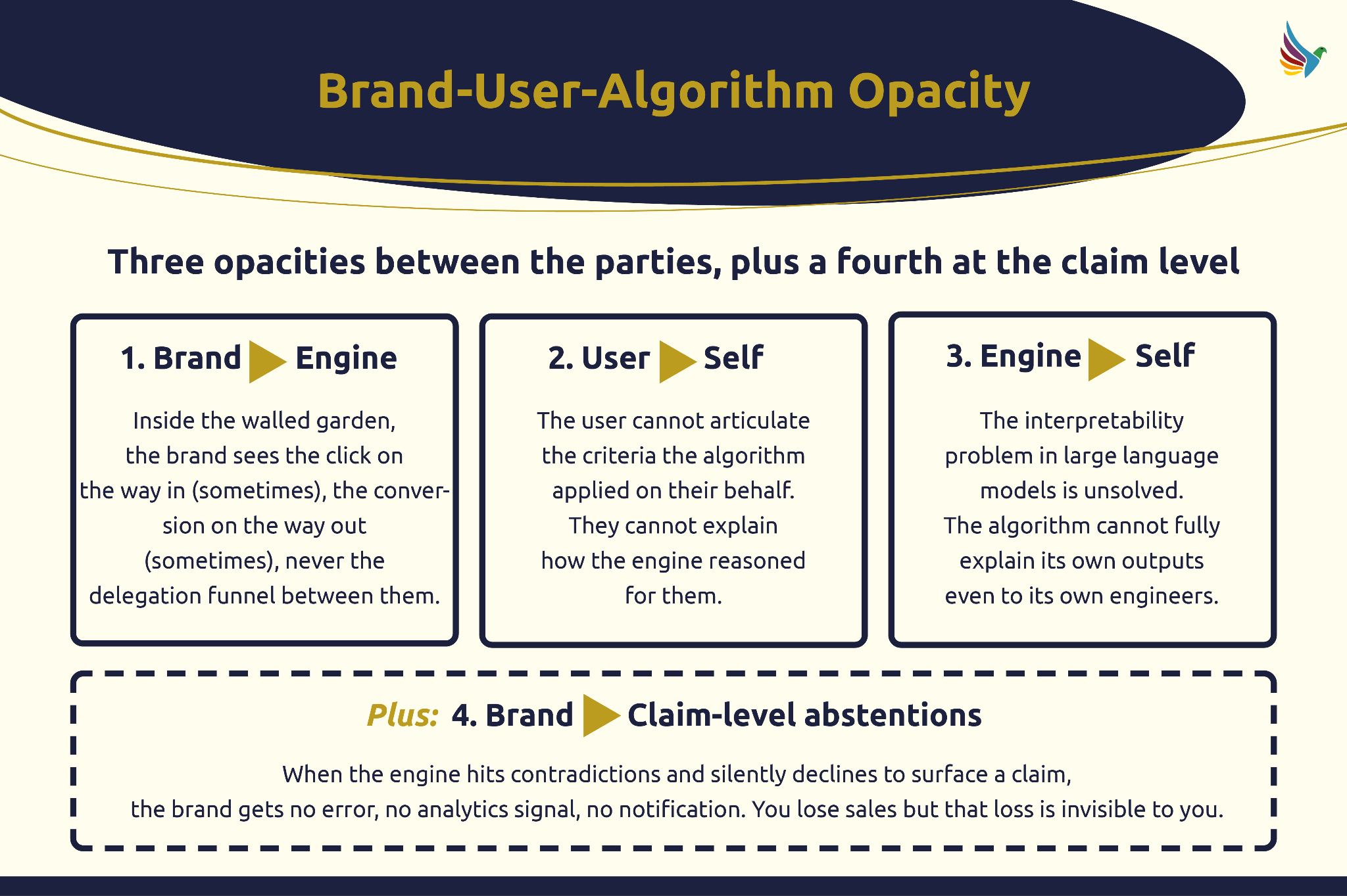
    I’ve coined this transformation the micro-macro shift. Traditional micro (ranking) metrics from search engines are no longer sufficient to measure AI visibility due to the opaque nature of AI engines.

    ```json
{
  "alt": "Diagram illustrating Brand-User-Algorithm Opacity with three opacities and a fourth claim level opacity in a detailed layout.",
  "caption": "Understanding the opaque layers between brand, user, and algorithm with an additional claim-level factor, highlighting the hidden complexities in digital interactions.",
  "description": "This image presents a diagram titled 'Brand-User-Algorithm Opacity,' detailing three types of opacity between brands, users, and algorithms, plus a fourth at the claim level. The three opacities are: 1. Brand to Engine, 2. User to Self, and 3. Engine to Self, each with its own unique challenges in understanding and communication. The fourth, 'Brand to Claim-level abstentions,' highlights the lack of signals from algorithms when contradictions arise. The layout uses a grid format with text boxes and arrows for clarity, emphasizing the intricacies of modern digital ecosystems."
}
```

    In the AI-driven world, we must embrace a macro measurement approach, akin to economics evolving new measurement disciplines for broader economic systems.

    The AI landscape operates under a brand-user-algorithm (BUA) opacity, where four layers veil every AI-era brand recommendation process.

    ```json
{
  "alt": "The CapmatchOne logo with a gradient circle and bold text.",
  "caption": "Discover innovation with the CapmatchOne logo, featuring sleek typography and a modern gradient circle.",
  "description": "The CapmatchOne logo features bold, modern typography coupled with a gradient circle, symbolizing connection and innovation. The sleek design conveys a sense of progress and creativity. This image can be used for branding or promotional purposes, appealing to audiences interested in innovative solutions and forward-thinking designs."
}
```

    The multi-layered opacity impacts everything from brand perception to conversion rates, and understanding this opacity is crucial.

    Utilizing micro-strategies in an AI environment is futile. Instead, my focus shifts to macro-level insights, acknowledging that consistency over time is key, not momentary precision.

    ```json
{
  "alt": "Comparison of search, assistive, and agentic technologies highlighting their coexistence and different needs.",
  "caption": "Explore how search, assistive, and agentic engines coexist to fulfill distinct needs, from making decisions to providing recommendations and acting on behalf.",
  "description": "This graphic illustrates the coexistence of three types of engines: search (SEO), assistive (AIEO), and agentic (AAO). Each fulfills distinct needs—search engines empower decision-making, assistive engines provide recommendations, and agentic engines act independently. Presented at Google Marketing Live 2026 by Jason Barnard of Kalicube, it emphasizes the varied roles and future of these technologies in digital marketing."
}
```

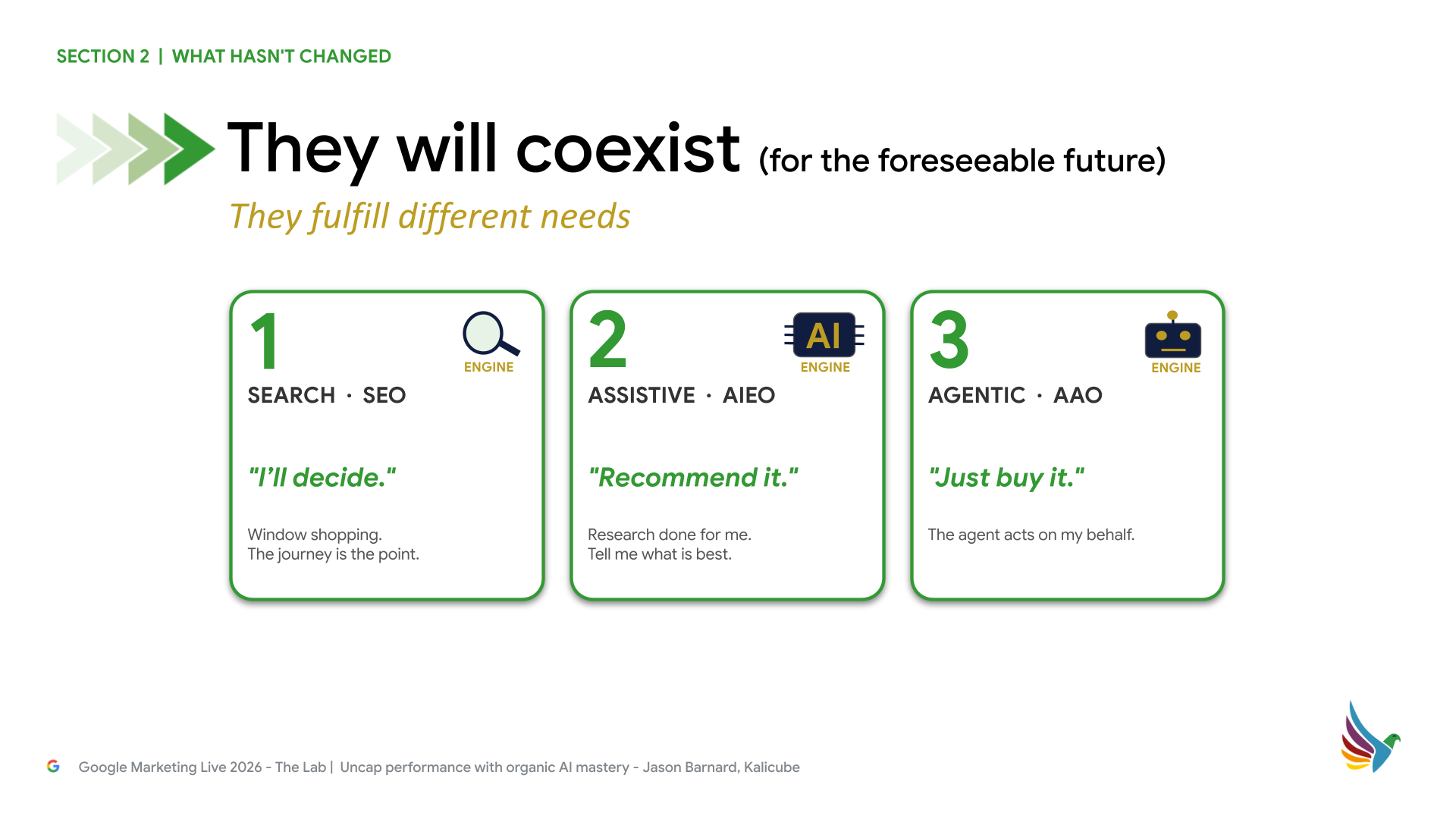
    In 2026, search remains micro, while assistive and agent modes adopt macro approaches. The right measurement strategy for your business hinges on understanding each mode’s environment and data.

    Search enables user control with clear metrics. Having been trained in this mode, I recommend maintaining micro strategies for search-based operations, supplemented by macro methodologies.

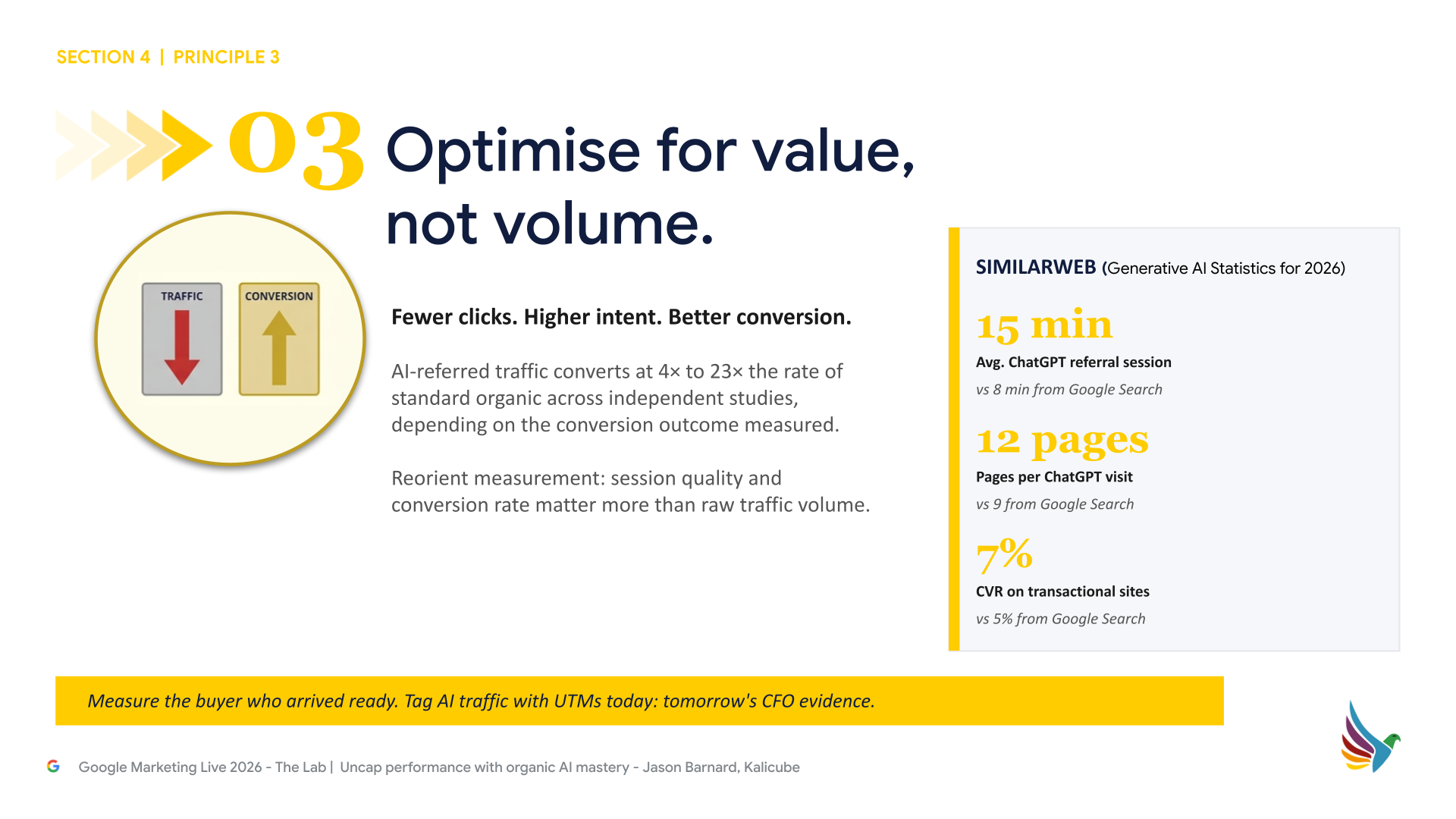
    ```json
{
  "alt": "Infographic on optimizing for value, not volume, with statistics from Similarweb on AI-driven traffic.",
  "caption": "Unlock the power of AI-driven traffic with a focus on value, not volume. Insights reveal better conversion rates with fewer clicks.",
  "description": "This infographic highlights the principle of optimizing for value over volume in digital marketing. It includes statistics from Similarweb for 2026, showing AI-referred traffic results in longer sessions and higher conversion rates compared to Google Search. Key details suggest focusing on quality sessions and conversion rates. Use AI insights for effective marketing strategies."
}
```

    Assistive recommendations come from engines like ChatGPT. Unfortunately, I can’t see the decision data, making micro assessments impossible and macro the only viable option.

    Agents autonomously make purchases, providing a clear but limited view of their decision-making. The conversion insight remains macro, even if initiation is observable.

    ```json
{
  "alt": "Infographic illustrating Brand-User-Algorithm Opacity with four opacities between parties, highlighting communication gaps.",
  "caption": "Exploring the hidden complexities in brand, user, and algorithm interactions, this infographic unveils the layers of opacity and communication breakdowns.",
  "description": "This infographic titled 'Brand-User-Algorithm Opacity' outlines communication gaps in digital interactions. It highlights three opacities: Brand to Engine, User to Self, and Engine to Self, each describing challenges in understanding and communication. A fourth opacity at the claim level is also presented, emphasizing issues with algorithmic decision-making and brand awareness. The visual uses simple text boxes with dashed outlines to represent these complex ideas, aiming to shed light on the unseen issues in modern digital ecosystems. Keywords: Brand, User, Algorithm, Opacity, Communication."
}
```

    Given buyers’ ever-changing reliance on different surfaces, adopting a macro approach remains inevitable, ensuring I stay adaptable to any environment they opt into.

    As I shift forward with macro metrics, measuring becomes more about trends. Tracking consistent methodologies over eight quarters offers reliable strategic clarity.

    In the busy world of AI decision-making, patience and consistency are key to staying ahead. I prioritize stable methodologies to gain competitive insights over time.


    Inspired by this post on Search Engine Land.

    crushpress.ai community screenshot
  • Mastering AI: New Strategies for Local Search Success

    Mastering AI: New Strategies for Local Search Success

    AI has infiltrated nearly every industry, becoming an integral part of apps, company processes, and even daily life. As someone who’s been navigating the local SEO landscape since its inception, I’m witnessing a significant change in user search behavior and the types of responses they receive.

    Back in the day, a local business could achieve high rankings simply by optimizing its website, polishing up the Google Business Profile, securing around 50 citations, and soliciting customer reviews. However, in today’s AI-driven search world, these efforts are just foundational.

    To succeed in AI-driven local searches, it’s crucial to influence what the wider web communicates about your business, or in simpler terms, build brand awareness.

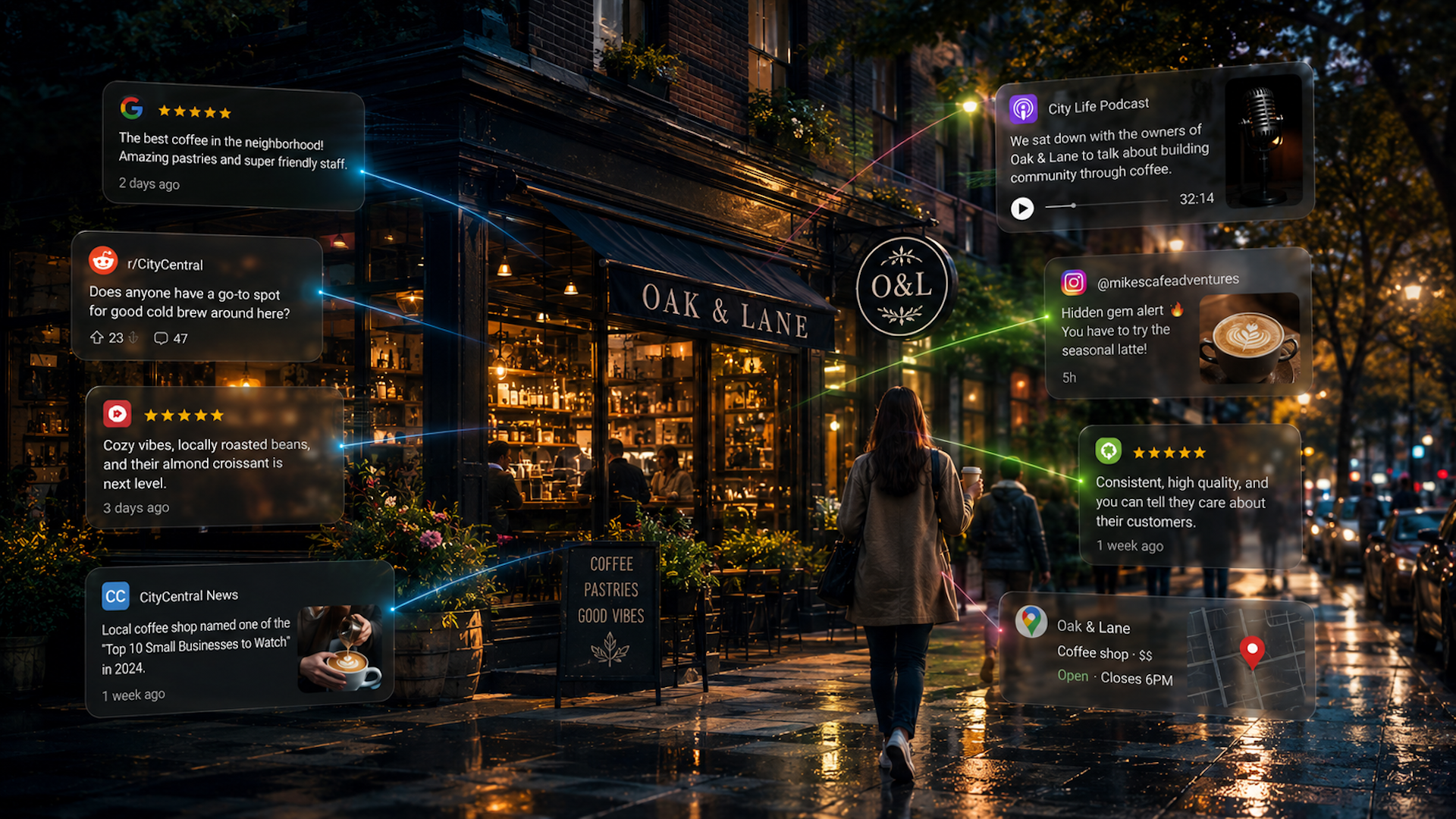
    Consider local search as a form of digital word-of-mouth.

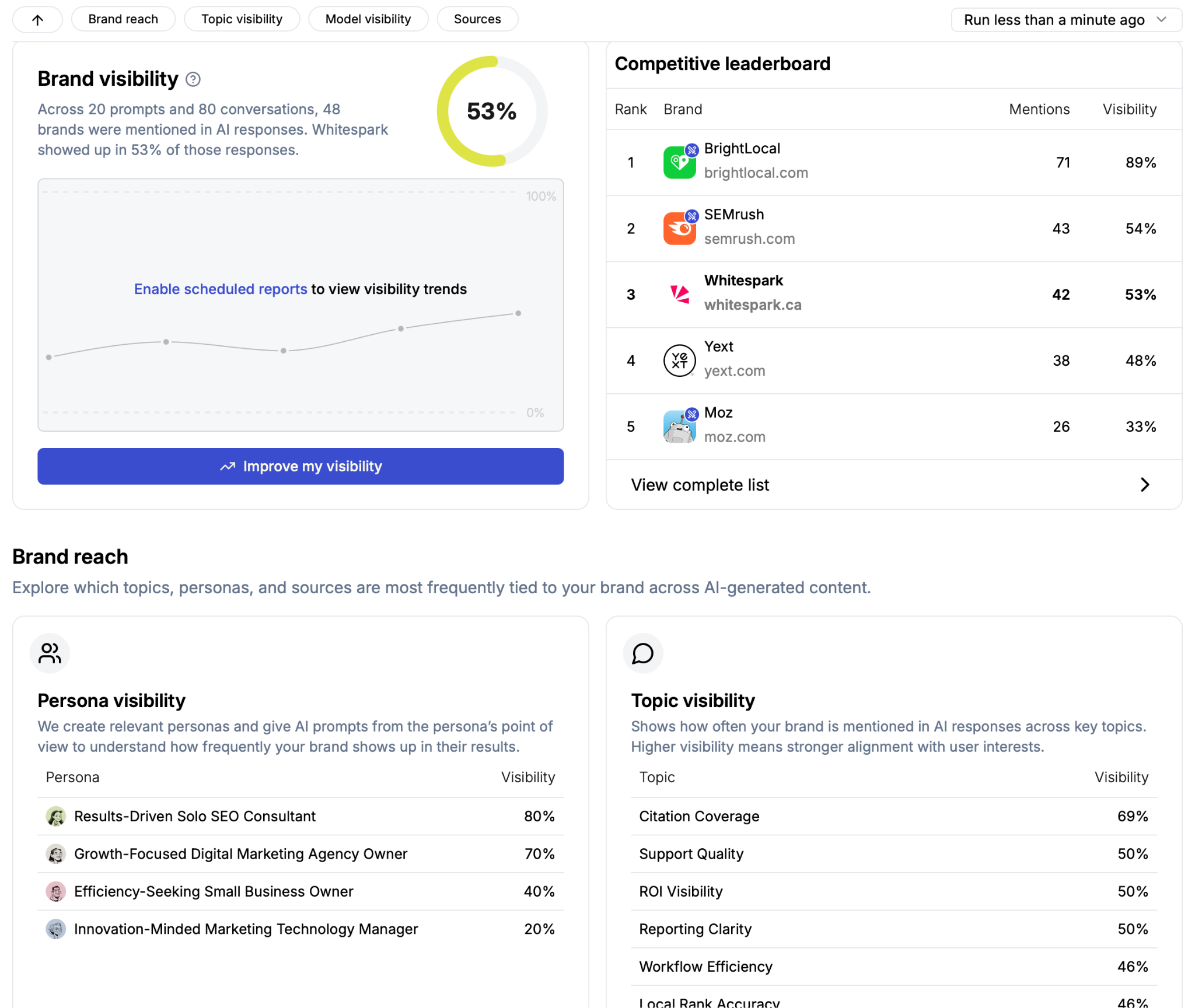
    These questions are at the core of what AI systems evaluate when users request local business recommendations. Here’s how I work on shaping the reputation signals these advanced search engines rely on.

    How to Conduct Competitor Research for AI Visibility

    One initial step in developing an AI search strategy is figuring out which brands large language models (LLMs) recommend most frequently and understanding their strategies.

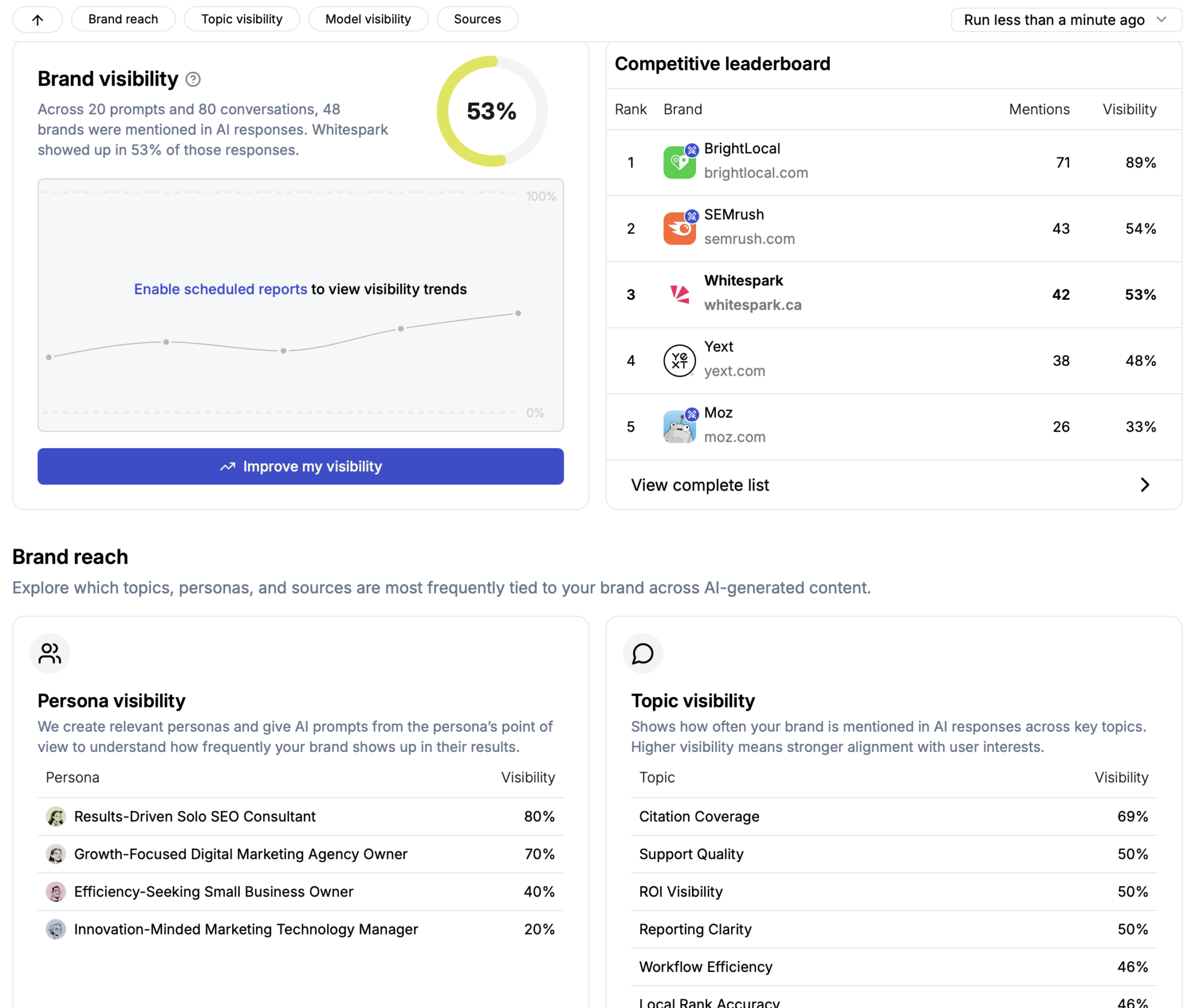
    Identify Businesses Frequently Mentioned in AI Responses

    Since AI responses change frequently, I found it essential to run the same query multiple times to discern patterns.

    ```json
{
  "alt": "Dashboard showing brand visibility with a competitive leaderboard and persona visibility insights.",
  "caption": "Explore your brand's reach and visibility with detailed analytics and benchmarking against competitors.",
  "description": "The image displays a dashboard illustrating brand visibility metrics, including a 53% visibility rate for Whitespark in AI responses. A competitive leaderboard ranks brands by mentions and visibility percentage. The image also features insights on persona and topic visibility, highlighting how different personas and topics align with brand appearances in AI-generated content. This comprehensive report aids in improving competitive positioning."
}
```

    I run the most common brand-related searches at least 20 times in my chosen LLM. Whether you do this manually or employ software like Gumshoe or Waikay, these tools can help synthesize prompts based on your business details and indicate how often your brand appears.

    Pinpoint the Sites AI Cites Most Often

    After identifying competitors, I turn my attention to the sources LLMs tap into. Analyzing results can be done manually or with the aforementioned tools.

    Getting Your Brand Mentioned on Key Sites

    Armed with a list of essential sites, I strive to have my brand featured there.

    If blogs are primary AI sources, I offer to contribute expert content. For mentions in podcasts or on YouTube, I seek opportunities to guest feature. The ultimate aim is brand amplification.

    Building Reviews for AI Consideration

    For years, Google has dominated as the primary channel for discovery, leading businesses, like mine, to focus primarily on garnering Google reviews. However, to excel in AI outcomes, reviews across multiple platforms are vital.

    Diversify Your Review Collection Strategy

    I recommend seeking reviews on various platforms such as Yelp, BBB, Facebook, and others pertinent to your industry. Regular reviews on multiple sites can bolster your brand’s visibility and enhance rankings in traditional search results.

    ```json
{
  "alt": "Brand visibility report featuring a leaderboard with brands like BrightLocal and Whitespark, showcasing mentions and visibility percentages.",
  "caption": "Track and compare your brand’s visibility with competitors like BrightLocal and SEMrush. Whitespark shows up in 53% of AI-generated responses, highlighting its impact.",
  "description": "This image portrays a brand visibility report, showing Whitespark with 53% visibility. A competitive leaderboard ranks brands such as BrightLocal, SEMrush, and Whitespark based on mentions and visibility. The brand reach section details persona and topic visibility, emphasizing strategic insights. Keywords: Brand visibility, leaderboard, AI responses, Whitespark, BrightLocal, SEMrush."
}
```

    Refine Your Approach to Requesting Reviews

    Generic review requests are ineffective. Providing clear direction enhances the quality of feedback, steering customers toward experiences or product aspects AI models might query.

    For instance, if you run a plumbing service, a polished review request could resemble this:

    Hi [Name],
    
    Thank you for choosing us for your hot water tank repair. If you could take a moment, please leave a review on [Link to Platform] and share how we met your needs:
    
    — What plumbing issue did we resolve?
    — Was our service up to your expectations?
    — Did our plumber arrive punctually and display professionalism?
    — Was the cost justifiable for the service quality?
    
    Your review is invaluable to us and beneficial for others seeking quality plumbing services.
    
    Thank you!
    [Your Name]

    AI systems directly reference review content, so securing detailed feedback is crucial.

    Always Respond to Reviews

    If you haven’t started responding to reviews, now’s the time. AI systems evaluate the content in review responses.

    Establish an Everywhere Presence

    AI systems scour the web for even rare mentions of your business. Thus, maintaining a presence across multiple platforms is essential, including:

    • YouTube.
    • Reddit.
    • Industry forums.
    • Social media, especially LinkedIn.
    • Industry publications.
    • Local and hyperlocal blogs.
    • Local news sites.
    • Local and industry podcasts and video channels.
    • Best-of lists in your city or industry.
    • Press releases.

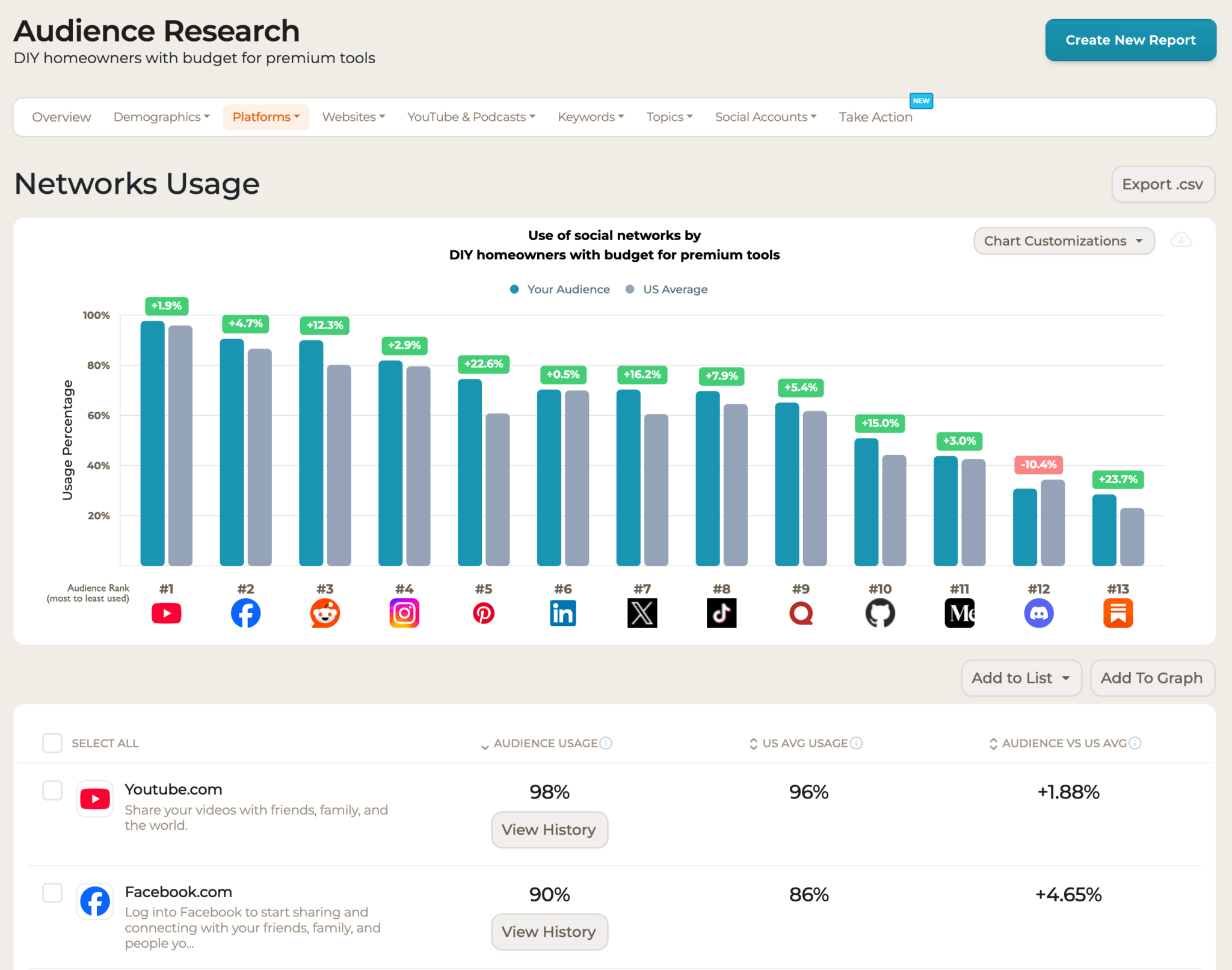
    Engage actively on platforms that resonate with your audience. Tools like Sparktoro can help identify where your audience is most active, enabling focused efforts.

    ```json
{
  "alt": "The CapmatchOne logo with a gradient circle and bold text.",
  "caption": "Discover innovation with the CapmatchOne logo, featuring sleek typography and a modern gradient circle.",
  "description": "The CapmatchOne logo features bold, modern typography coupled with a gradient circle, symbolizing connection and innovation. The sleek design conveys a sense of progress and creativity. This image can be used for branding or promotional purposes, appealing to audiences interested in innovative solutions and forward-thinking designs."
}
```

    Creating AI-Optimized Content That Stands Out

    Today’s content strategies must cater to both humans and machines, demanding alterations in content structuring.

    Research by Dan Petrovic into Google’s “grounding snippets” reveals that Google prioritizes sentences closely aligned semantically with the query and those positioned early in the text.

    Deliver Key Information Promptly

    While humans might savor a thoughtfully crafted introduction, LLMs laser focus on specific answers.

    To cater to this, I ensure that my crucial points shine in the opening paragraphs, with the rest of the content bolstering these points.

    Addressing the Right Questions

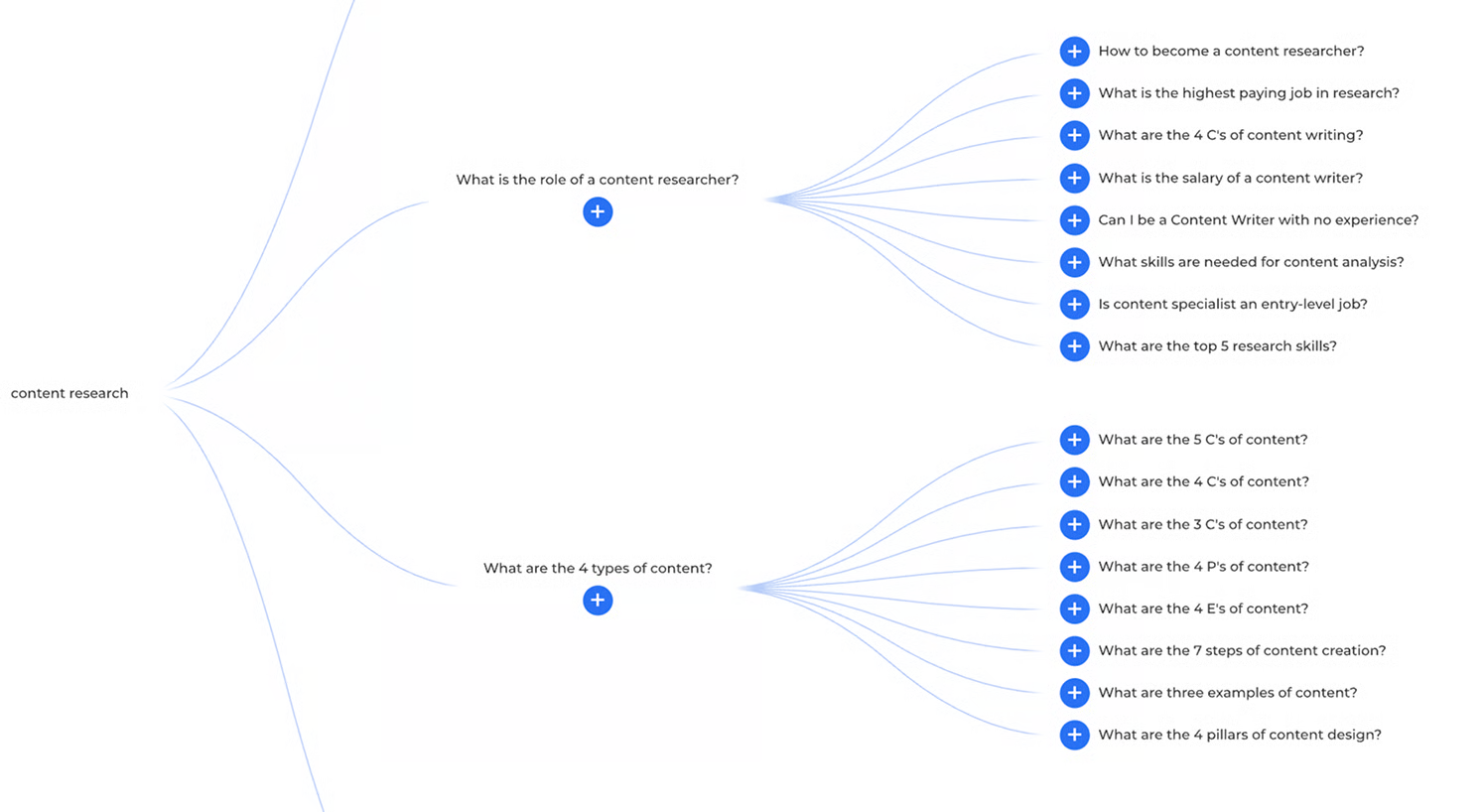
    This revolves around keyword research and understanding query fan-out. It’s about pinpointing what queries bring visitors to my business and ensuring my site acts as an answer hub for these inquiries.

    For local outfits, essential questions might include:

    ```json
{
  "alt": "Bar chart comparing social network usage by DIY homeowners with budget for premium tools.",
  "caption": "Exploring social media habits: DIY homeowners with a penchant for premium tools show unique preferences in their online activities.",
  "description": "This image features a bar chart titled 'Use of social networks by DIY homeowners with budget for premium tools,' comparing various platforms like YouTube, Facebook, and Instagram. The chart highlights usage percentages of a specific audience against the US average. Notable platforms include LinkedIn and Pinterest, with detailed statistics below the chart indicating audience usage and comparison metrics. Ideal for audience research insights and digital marketing strategies."
}
```
    • What do you do?
      • What services or products are available?
      • Who is your target audience?
      • What problems do you address?
    • Where are you located?
      • Which neighborhoods or cities do you serve?
      • Is service delivery on-site, or do clients visit your premises?
    • What are your business hours?
      • Do you provide emergency or immediate services?
      • Do you operate during weekends and holidays?
    • How can clients contact you?
      • What’s the booking procedure?
      • Do you provide quotes or consultations?
      • Is it appointment-only, or do you allow walk-ins?
    • Why should someone opt for your services?
      • What differentiates you from the competition?
      • Do you hold any awards or certifications?
      • Are you renowned for a specific product or service?
    • What are the costs involved?
      • Are there discounts or packages available?
    • What do other clients say about you?
      • Can you share reviews and testimonials?
      • Do you provide case studies or before-and-after visuals?
    • Answers to common queries.
    • Demonstrating authority and expertise:
      • What’s your process like?
      • Do you impart knowledge through tips, guides, or blog posts?

    Incorporating tools like AlsoAsked can enhance this question discovery process.

    Once addressed on your site, ensure consistency of answers across the web, including citations, guest posts, and press releases.

    Craft Machine-Friendly Content Structures

    Local businesses often list their services as follows: “Services include: plumbing, drain cleaning, pipe repair, etc.”

    To improve, I utilize semantic triples for better machine comprehension.

    A semantic triple comprises:

    • [Subject] + [predicate] + [object]

    The subject pertains to what’s being defined, the predicate explains its relation to the object, and the object elaborates on the subject.

    ```json
{
  "alt": "Flowchart of content research topics with questions about roles and types of content.",
  "caption": "Explore the world of content research with this intriguing flowchart, detailing key roles and diverse content types to guide aspiring researchers.",
  "description": "A flowchart visualizes the topic of content research, splitting into two branches. The first branch addresses the role of a content researcher with questions such as becoming a content researcher, skills needed, and career levels. The second branch explores types of content, including questions about 4 C's, 4 P's, and 4 E's of content, along with steps for content creation. Ideal for understanding the landscape of content roles and varieties."
}
```

    For instance:

    • [Rescue Plumbing] [is] [a plumbing company in Denver].
    • [Rescue Plumbing] [offers] [drain cleaning services].

    Swapping out “we” with the brand name provides machines the unambiguous signals they need, improving clarity about your services.

    Introduce Fresh Perspectives

    AI searches rely heavily on information gain. Thus, I ensure my content contributes new insights rather than restating existing details.

    LLMs are drawn to articles that expand their understanding of your brand, industry, and locality.

    I leverage personal and vocational expertise to answer niche questions and share unique job experiences, ensuring I rank for AI searches where my competitors don’t feature.

    AI Visibility Checklist

    Enhancing AI visibility requires more than focusing on your website and Google Business Profile. This checklist covers reviews, citations, content, and brand signals crucial for AI evaluation.

    • Revamp your local SEO strategy. Continue refining your website and Google Business Profile while enhancing brand visibility online.
    • Identify and analyze your competitors’ content and citation methodologies.
    • Find sources LLMs cite within your niche and location; ensure your brand features on these platforms.
    • Seek reviews across varied platforms, optimize your review requests, and respond to all feedback.
    • Boost your presence on blogs, social media, forums, YouTube channels, podcasts, and in the press.
    • Offer unique, informative, and comprehensive content on your website and across web platforms. Use semantic triples to deliver essential information concisely.

    This exploration of localized AI search can be far more expansive, but I hope I’ve held your interest. Ensure you check back for upcoming discussions!


    Inspired by this post on Search Engine Land.

    crushpress.ai community screenshot
  • Unlock SEO Success: The Essential Guide to Enterprise Changelogs

    Unlock SEO Success: The Essential Guide to Enterprise Changelogs

    I’m realizing more and more how crucial it is for enterprise SEO teams to track website changes meticulously. Without visible updates, we might be unaware of risky changes until they’ve negatively impacted our traffic and revenue. This is where changelogs become invaluable.

    Working within large enterprise websites, I collaborate with various stakeholders including SEO teams, developers, and product managers. It’s always a challenge to discover changes only after they’ve already affected our site’s performance—a frustrating reality.

    Consider how a quiet CMS update might strip core content from pages or how product rollouts generate canonical mismatches. By the time I identify the problem, rankings, traffic, and KPI reports are already suffering.

    That’s why I advocate for SEO changelogs. They are more than just records; they build visibility, accountability, and teamwork around website changes that can tweak search performance.

    Why I Believe Enterprise SEO Teams Can’t Do Without Changelogs

    In enterprise settings, SEO decisions often come last. Despite strong workflows, website changes may still occur away from SEO purview. By implementing an SEO changelog, I can bridge that gap, ensuring all impactful changes are documented and shared.

    For me, a comprehensive changelog includes metadata tweaks, schema updates, and internal link changes. It’s crucial for identifying risks quickly, understanding deployment impacts, and reducing unexpected SEO pitfalls. Documenting what changed, where, and the expected outcomes is vital.

    Organizations usually have deployment records through various logs, but these often lack an SEO perspective, which makes proactive monitoring challenging. My goal is clear: integrate SEO with enterprise changelogs for holistic site governance.

    The 2023 Lumar study found about 53% of teams face misalignment issues. With dynamic Google SERPs, improved operational visibility is key, and robust changelogs aid in tackling these challenges.

    Using tools like SEMrush, I can ensure brand visibility everywhere customers search. The SEO toolkit, enriched with AI data, becomes indispensable for me. It’s time to leverage these resources as I optimize my site’s search presence.

    The Anatomy of an Enterprise SEO Changelog

    I aim to create a clear and informative SEO changelog by focusing on these key areas:

    • Specific changes and their locations.
    • The context.
    • The stakeholders involved.
    • Expected and observed impacts.

    Defining the Changes Clearly

    It’s important for me to provide a clear definition and scope of changes. For instance:

    • Updated schema markup on product pages to include AggregateRating.
    • Modified hreflang tags across 10 European markets.
    • Updated robots.txt to disallow paths.

    Understanding the Context

    I need to note why a change was made and its intended aim, essential for retrospective analysis. For example:

    • Implemented schema markup to enhance rich snippet potential.
    • Updated hreflang tags for accurate regional page delivery.
    • Robots.txt update to refine crawl behavior per Search Console insights.

    Identifying the Stakeholder

    I ensure transparency by identifying who made changes, which assists in efficient follow-up if necessary. This fosters a culture of SEO awareness.

    Expected Impact

    Although not always comprehensive, detailing the expected impact is valuable. Larger deployments might include a business rationale, like improving site speed, while smaller changes might target specific metrics.

    Observed Impact

    I add this information retrospectively, after collecting sufficient data, such as clicks or impressions, to foster a culture of testing and learning.

    The Tools Assisting in Managing Changelogs

    Automation is my goal, and several tools assist in logging changes effectively. Here’s what I use:

    ```json
{
  "alt": "The CapmatchOne logo with a gradient circle and bold text.",
  "caption": "Discover innovation with the CapmatchOne logo, featuring sleek typography and a modern gradient circle.",
  "description": "The CapmatchOne logo features bold, modern typography coupled with a gradient circle, symbolizing connection and innovation. The sleek design conveys a sense of progress and creativity. This image can be used for branding or promotional purposes, appealing to audiences interested in innovative solutions and forward-thinking designs."
}
```

    GitHub/GitLab Webhooks

    Setting these up to post deployment summaries to SEO channels like Slack or email keeps me up-to-date.

    Jira/Linear Automation

    Using rules that log entries once a ticket is marked “Done” allows me to streamline the changelog process.

    CMS Change Logs

    Platforms like Contentful and Adobe Experience Manager maintain logs I can integrate into the central changelog using APIs.

    Third-party SEO Tool Alerts

    Leveraging tools like Botify and Lumar for immediate alerts helps me swiftly address crawl anomalies and metadata changes.


    Establishing a Changelog Workflow

    After defining core changelog elements, I plan a scalable workflow through phased implementation.

    Initiate a Pilot Program

    Starting small, I pick a team and simple logging method as a proof of concept, maybe using Slack or Google Sheets.

    Expand and Standardize

    Recognizing changelog value across teams allows me to standardize formats, enhancing cross-departmental integration.

    Include SEO Context

    Adding context helps my team understand changes better, facilitating proactive SEO management and effective deployment.

    Leveraging SEO Changelogs for Stakeholder Buy-in

    Enterprise SEO requires buy-in across organizations, often challenging due to stakeholder management gaps. An effective SEO changelog strategy aids in securing support by demonstrating its role in broader risk management, not just SEO.

    Highlight Business Risk Mitigation

    I position changelogs as business risk tools, emphasizing prevention of costly disruptions like faulty URL updates.

    Champion Internal Participation

    Identifying champions within development, content, or QA teams streamlines changelog integration into daily processes, converting potential threats into manageable business concerns.

    Celebrate Changelog Achievements

    I ensure that wins from changelog use, like stopping visibility issues, are shared, reinforcing its value across teams.

    Measuring Changelog Success

    For continuous improvement, I measure metrics like the percentage of changes captured, detection speed, and issue interception rate.

    Embedding SEO into Brand Culture

    I strive for more than documentation; it’s about fostering awareness of SEO’s impact on digital channels. By integrating SEO visibility as a business standard, brands strengthen their competitive edge, making SEO a shared responsibility across teams.


    Inspired by this post on Search Engine Land.


    crushpress.ai community screenshot
  • Unlock the Hidden SEO Strategy in Buyer Journeys

    Unlock the Hidden SEO Strategy in Buyer Journeys

    I realized that most content tends to meet users right where they are. When someone looks up “best MBA programs,” they typically get a list of MBA programs. But I’ve discovered that sometimes the most valuable content can challenge the very assumptions behind these queries. It’s about offering alternatives that users never knew they should explore.

    Taking the initiative to broaden user awareness beyond their typical path often gets overlooked in SEO and content marketing strategies. However, when done thoughtfully, it helps position my products and services to rank for a wider array of keywords while enlightening my audience about various solutions to their issues.

    Imagine someone searching for a certain degree, medication, certification, or product. They often seem to have settled on a solution without fully evaluating their problem. By crafting content that gently introduces alternatives like “apprenticeships vs. four-year degrees” or “herbal supplements vs. prescription options,” I find I can attract high-intent traffic and offer more value than just matching the initial intent.

    Allow me to share a roadmap on integrating this strategy into ongoing editorial processes.

    LLMs are already doing this

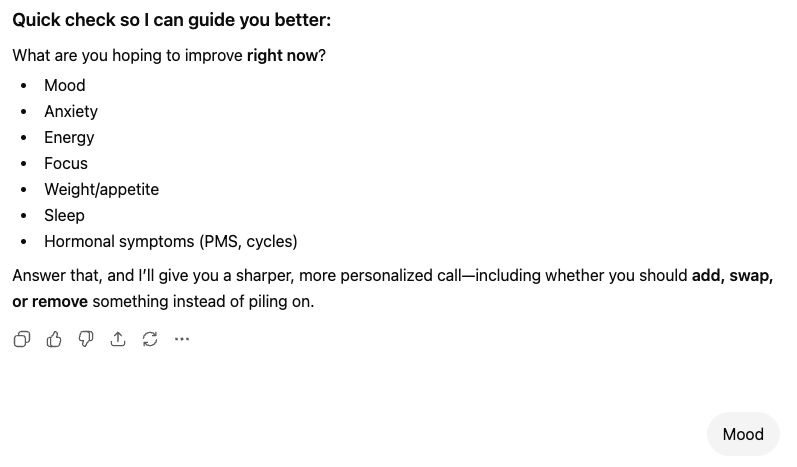
    I’ve noticed how LLMs and AI Overviews already employ a version of this strategy. After addressing a query, they often probe further, asking if you wish to delve deeper into the topic or learn about alternatives. Following this path with an LLM can guide users toward opportunities they hadn’t considered.

    ```json
{
  "alt": "Prompt asking what aspect you want to improve, with options like mood, anxiety, energy, and more.",
  "caption": "Identify your priority: Choose what you wish to improve from mood to hormonal symptoms for a tailored guide.",
  "description": "This image features a prompt titled 'Quick check so I can guide you better,' asking what the user hopes to improve immediately. Options listed include mood, anxiety, energy, focus, weight/appetite, sleep, and hormonal symptoms such as PMS and cycles. The prompt suggests providing a personalized recommendation based on the user's choice, including advice on adding, swapping, or removing elements. Interactive icons are visible for user feedback. Keywords: mood, anxiety, energy, focus, sleep improvement."
}
```

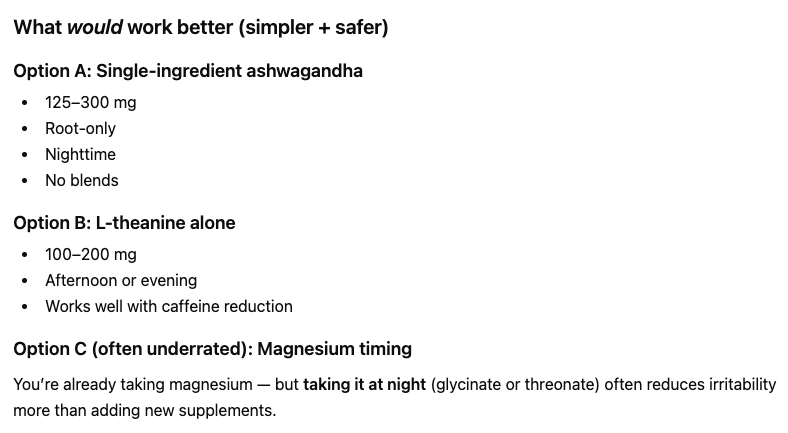
    For example, I was searching for mood and stress supplements. While LLMs and AI are not replacements for medical advice (always consult with a healthcare provider before altering diet or supplements), they offered some intriguing suggestions. By entering what I was already taking into ChatGPT, it not only provided feedback but also posed additional questions, enhancing the discussion.

    Through our back-and-forth, the AI went beyond general advice, offering modifications I hadn’t thought to ask about, integrating details like my caffeine habits into its suggestions.

    This approach allows me to guide audiences towards solutions they might not have initially considered.

    How to Identify Beneficial Queries

    When optimizing for “mood and stress supplements,” I try to think beyond the obvious. Many might be searching for such products because they feel overwhelmed. They may be seeking ways to cope during a stressful period. From there, I can extend my keyword research to discover topics about stress relief and produce content that presents additional methods for stress management.

    ```json
{
  "alt": "Comparison of three supplement options: ashwagandha, L-theanine, and magnesium timing with details on doses and usage.",
  "caption": "Explore simpler and safer alternatives: Ashwagandha, L-theanine, and magnesium timing, each with unique benefits for better wellness.",
  "description": "This image presents three supplement options for improved wellness: Option A: Ashwagandha (125-300 mg, root-only, nighttime), emphasizes simplicity without blends. Option B: L-theanine (100-200 mg, afternoon or evening) complements caffeine reduction. Option C: Magnesium with a focus on nighttime intake (glycinate or threonate) to ease irritability. These alternatives offer simpler and safer approaches to health management, perfect for search inquiries about natural supplements."
}
```

    Conversely, a user might begin their quest believing meditation or nature walks are the solutions for their stress and mood improvement. Yet, they might be unaware of mood supplements. So, while it’s wise for a supplement company to cultivate content regarding mood and stress products, it’s also prudent to explore other solutions for user problems.

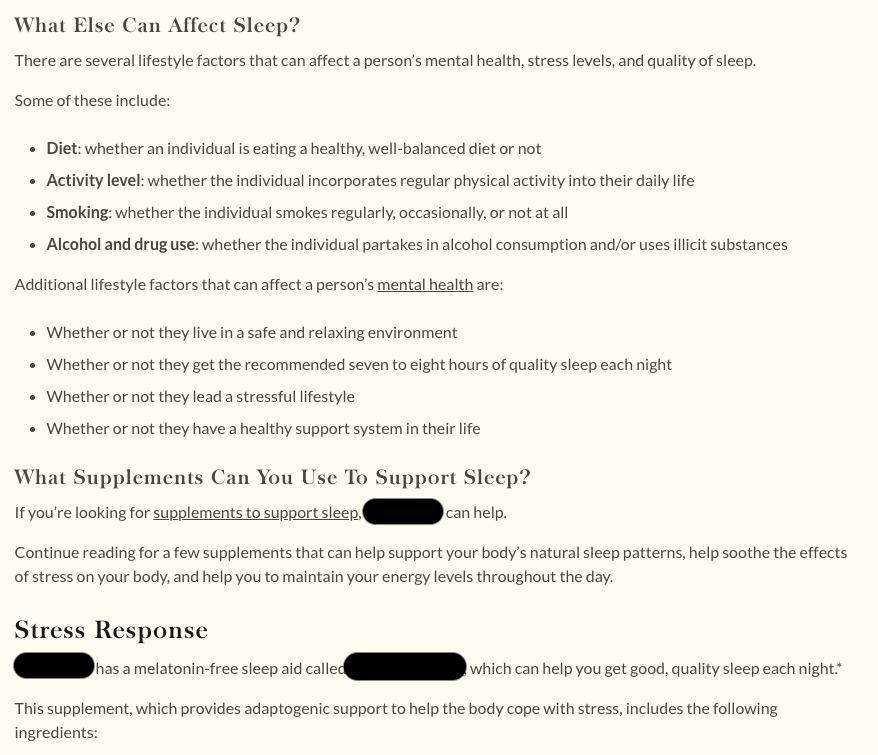
    Embedding product suggestions within broader articles about sleep and stress can introduce readers to options they hadn’t initially thought about.

    Structuring Content Around Alternative Solutions

    Quality and value are what I prioritize when crafting this kind of content. When users encounter valuable information, they tend to stay engaged longer, explore related links, and perceive my content as a reliable resource.

    The goal is to rank for the primary intent while skillfully introducing my unique solutions. Beyond text, other ways to guide users include:

    ```json
{
  "alt": "The CapmatchOne logo with a gradient circle and bold text.",
  "caption": "Discover innovation with the CapmatchOne logo, featuring sleek typography and a modern gradient circle.",
  "description": "The CapmatchOne logo features bold, modern typography coupled with a gradient circle, symbolizing connection and innovation. The sleek design conveys a sense of progress and creativity. This image can be used for branding or promotional purposes, appealing to audiences interested in innovative solutions and forward-thinking designs."
}
```
    • Free templates or tools, even alongside paid offerings.
    • User stories that depict varied experiences.
    • Educational events like webinars or workshops tying into my offerings.

    The key is to ensure product mentions feel natural rather than forced into promotional content. When done subtly, such mentions can shift user perceptions and expand their problem-solving landscape.


    Keyword and SERP Signals that Signify Openness

    I’ve come to recognize when users might be open to journey-interrupting options by identifying keywords suggesting they’re still in the research phase versus ready to make a purchase.

    Branded Terms

    Someone searching [“brand name” buy] is usually more intent on purchasing compared to those exploring [“brand name” reviews] or [“brand name” competitors], which signal ongoing research.

    Industry ‘Widetail’ Queries

    I coined the term “widetail” queries to cover a broad array of searches that fall within the same user journey. For instance, a user needing their lawn mowed might search numerous related topics, each a piece of the broader issue.

    ```json
{
  "alt": "Text on lifestyle factors affecting sleep, like diet, activity, smoking, and stress management.",
  "caption": "Explore how lifestyle choices like diet and activity level can impact your sleep quality and mental health.",
  "description": "The image contains detailed information on lifestyle factors affecting sleep, such as diet, activity level, smoking, and alcohol or drug use. It suggests additional influences on mental health, including living environment and stress management. The text also covers supplements that support sleep, mentioning their potential benefits without detailing specific ingredients. Keywords: sleep quality, mental health, lifestyle factors, diet, activity level, supplements."
}
```
    • “Robot lawnmower price”
    • “Lawn service near me”
    • “How often to cut grass?”

    By thinking beyond straightforward service offerings and tapping into these peripheral queries, I capture more of those in the early stages of their journey.

    When Ethical Guardrails Are Needed

    While discussing supplements, it’s crucial to approach this strategy responsibly. Especially in areas like healthcare, careers, or finance, it’s my duty to ensure content doesn’t falsely position a product as a solution to serious issues. FDA and FTC guidelines are there to protect users from misleading claims and to ensure safety.

    Interrupting Buyer Journeys at the Right Time

    Consider the lawn care example again; multiple funnels can direct toward the goal of alleviating lawn maintenance burdens. Each query is a part of the user’s overarching journey. By broadening the scope of content, I appear not just during basic comparison searches but also amidst tangential research paths.

    Strategically expanding content helps catch the attention of those not expecting it, increasing search traffic, leads, and creating a loyal audience pleased to discover my brand.


    Inspired by this post on Search Engine Land.

    crushpress.ai community screenshot