Category: Opinion

  • Unlocking AI Search: Insights from Semrush’s Visibility Index

    Unlocking AI Search: Insights from Semrush’s Visibility Index

    Have you ever wondered which brands are thriving, which are waning, and which remain steady within AI search platforms? I’ve delved deep into Semrush’s AI Visibility Index, and I’m here to share strategies to safeguard and enhance your visibility.

    AI search is a dynamic field that’s evolving rapidly. Over the past three months, it’s become clearer which brands stand out and which sources AI models prefer to trust.

    In examining three months of AI Visibility Index data, particularly from ChatGPT and Google AI Mode, I’ve realized just how volatile AI search truly is, a pattern likely to persist in the near term.

    Brands that come out on top are those who consistently monitor and adjust to these changes as they unfold.

    The research includes a study of 2,500 real-world prompts across five crucial sectors: Business & Professional Services, Digital Technology & Software, Consumer Electronics, Fashion & Apparel, and Finance. It unveils dramatic shifts in source diversity, brand mentions, and model behavior—info no marketer can afford to ignore.

    What Changed at a Model Level?

    ChatGPT: Unique brand mentions fluctuated, while the number of sources cited grew by 80% in October alone, showing a move toward greater source diversity.

    ```json
{
  "alt": "Bar chart comparing unique source domains of ChatGPT and Google AI Mode from August to October.",
  "caption": "A bar chart reveals ChatGPT's lead over Google AI Mode in unique source domains, peaking in October with a significant uptick.",
  "description": "This bar chart illustrates the number of unique source domains for ChatGPT and Google AI Mode from August to October. ChatGPT consistently outperforms, with October showing a marked increase to 22,001 domains compared to Google AI Mode's 13,737. The data, sourced from SEMRUSH Enterprise, indicates growing dominance and competitiveness in AI source domain diversity. Key terms: ChatGPT, Google AI Mode, unique source domains, SEMRUSH Enterprise, data comparison."
}
```

    Google AI Mode: From August to October, brand mentions dropped by 4%, hinting at stricter recommendation controls. Source diversity saw a moderate 13% rise, indicating a more conservative stance compared to ChatGPT.

    Key Trends Over Three Months

    Reddit’s Correction and Resurgence: ChatGPT reduced Reddit mentions by 82% but maintained it as the fourth most-cited source. Meanwhile, Google AI Mode’s use of Reddit increased by 75%, becoming the second top source. Both platforms are recognizing Reddit’s value, albeit differently.

    Brand Diversity Varies by Vertical and Model: ChatGPT noted a 20% rise in unique brand mentions in Consumer Electronics, while Finance saw a 15% decline. Conversely, Google AI Mode saw a decline across almost every vertical, underscoring the need for model-specific strategies.

    Top Brands Remain Relatively Stable: Over three months, 25 new brands joined the top 100, yet only two cracked the top 50. Leading brands’ visibility changes stayed within a ~20% range, much narrower than the overall market turbulence.

    Source Strategies Must Be Model-Specific: ChatGPT and Google AI Mode agree on brand mentions 67% of the time, but agree on sources only 30% of the time. Dominant sources include Wikipedia, Forbes, and Amazon for ChatGPT, while Google AI Mode favors Amazon and YouTube.

    ```json
{
  "alt": "Bar graph showing top 100 source similarity with data for Business, Consumer Electronics, Technology, Fashion, and Finance for August and October, including percentage change.",
  "caption": "SEMRush Enterprise highlights top source similarities across industries, showcasing changes from August to October. Dive into trends in finance, technology, and more!",
  "description": "This bar graph illustrates the top 100 source similarity across various industries, including Business & Professional Services, Consumer Electronics, Technology & Software, Fashion & Apparel, and Finance. It compares percentages from August and October, highlighting the percentage change in purple. The data provides insights into trends and shifts in each sector, as tracked by SEMRush Enterprise."
}
```

    I’ve learned that maintaining AI visibility requires ongoing vigilance. Both platforms are testing diversity, adjusting for past overdependencies, and refining strategies.

    What This Means for Your Strategy

    In the ever-evolving world of AI search, past visibility doesn’t secure future success.

    Both ChatGPT and Google AI Mode feature 61 of the top 100 brands, indicating strong brand overlap. However, source overlap is much less and has decreased from August to October.

    Translation: Enhance your brand’s visibility on both platforms but customize your source strategy based on each model’s nuances.

    Explore the AI Visibility Index to access full rankings, interactive leaderboards, and comprehensive trends across all five sectors. Download proven strategies to bolster your visibility in this swiftly changing domain. It’s complimentary!


    Inspired by this post on Search Engine Land.


    crushpress.ai community screenshot
  • Unveiling 5 SEO Truths That Demystify AI’s Impact

    Unveiling 5 SEO Truths That Demystify AI’s Impact

    Discover how I navigated the world of SEO amidst the rising influence of AI in search, with data-backed insights that show where our efforts truly pay off.

    As the integration of AI into search accelerates, I’ve noticed a wave of anxiety sweeping through our community. It’s becoming harder than ever to separate robust strategies from distracting noise.

    I personally found a gem of insight at the News & Editorial SEO Summit (NESS) held online last October. This article aims to provide clarity amidst the hype.

    I’ve distilled the wisdom from technical SEO experts from The New York Times, Polemic Digital, and NewzDash into five actionable truths. These insights form a robust framework for our 2026 SEO strategy.

    1. AI Overviews Aren’t Devouring Breaking News (Yet)

    Despite the buzz that AI Overviews dominate the SERPs, data shows a much more nuanced reality for timely content.

    NewzDash’s analysis reveals that only 1.9% of trending news keywords trigger AI Overviews. During high-traffic moments, traditional search features still hold their ground.

    The surprising truth is that AI Overviews tend to appear several hours after news breaks, once real-time coverage slows.

    • Low-competition queries.
    • General searches without qualifiers (e.g., ‘Chicago’).
    • Topics lacking immediate coverage.

    It’s clear: Top Stories continue to dominate when it matters, despite the AI narratives.

    2. Your ‘Good Enough’ Core Web Vitals Are Probably Fine

    The obsession with perfect Core Web Vitals scores isn’t necessary for solid rankings. While they indicate usability, their direct impact is less significant than many believe.

    The real harm of poor Web Vitals lies in how they affect user behavior, sending negative signals to Google.

    Industry experts advise reaching ‘Mostly green’ scores, investing further often yields minimal SEO returns.

    3. Stop Obsessing Over Clean Code – Focus on Meaning

    I’ve learned that Google’s crawlers prioritize meaningful content over spotless code. The time spent on code cleanup is better invested in enhancing semantic markup.

    Using semantic HTML tags (like <article> and <section>) makes your content more interpretable to Google.

    4. Content Chunking Is Your New AI Superpower

    In the age of AI, structuring content for comprehension is crucial. Content chunking becomes vital for AI system visibility.

    By implementing clear, logical structures with semantic HTML, we increase our odds of making our content AI-accessible.

    5. Don’t Fall for the Latest AI SEO Gimmicks

    Amidst the AI scramble, many gimmicks arise that don’t prove effective. It’s crucial to focus on fundamental strategies rather than chasing trends.

    AI visibility remains grounded in traditional SEO practices. Google Search still underpins AI systems like Gemini AI Overview.

    The Real Path to AI Visibility Still Runs Through Core SEO

    As AI reshapes search, staying anchored in the basics of effective SEO is paramount. A strong foundation in technical and user-centric practices remains essential.

    Ultimately, our goal is to create content that both humans and AI find undeniable, ensuring the enduring relevance of our strategies.


    Inspired by this post on Search Engine Land.

  • Embrace the Future: AI’s Impact on the Web and Commerce

    Embrace the Future: AI’s Impact on the Web and Commerce

    The end of the web? Goodbye HTML, hello AIDI!

    Why the web as we know it may fade and what AI, personal agents, and data interfaces mean for publishers, SEO, and commerce.

    Every day, I’m witnessing people turn to AI for answers, product comparisons, and making quick decisions.

    This shift reveals a core issue: the structure of the web wasn’t originally meant for machines.

    As AI agents evolve, the way information is delivered – and the need for traditional webpages – could see dramatic changes.

    The idea that the web as we know it could end, which I mentioned during a live OXD podcast in Salzburg, drew reactions ranging from thoughtful to angry.

    Someone even insisted, “The web will always be there.”

    Yet, those of us paying attention understand that “always” and “never” are shaky concepts in technology.

    Technological history illustrates that nothing is forever.

    Disruptions are noticeable only in hindsight.

    Recall August 6, 1991 – could anyone foresee how Tim Berners-Lee’s World Wide Web would transform the world?

    ```json
{
  "alt": "Comparison of sleep guidance text in German and English for healthier sleep habits.",
  "caption": "Discover healthier sleep habits with comprehensive bedtime guidance, available in both German and English.",
  "description": "The image displays a comparison of text about building healthier sleep habits in German and English. The German text emphasizes 'gesündere Schlafgewohnheiten' while the English text focuses on using 'Bedtime Guidance' with the Galaxy Watch8. The translation ensures the message of using sleep data to optimize bedtime is clear in both languages. Keywords: sleep, guidance, German, English, Galaxy Watch8."
}
```

    This cycle of dismissing new technology as too expensive or complex is as old as technology itself.

    People pointed to existing solutions and assumed they’d last.

    We also tend to judge new technologies prematurely, comparing immature models to systems we’ve heavily relied upon.

    What we often fail to do is envisage the evolved state of a new technology.

    This tendency clouds our future outlook.

    When I’m in the market for a smartwatch, where do I usually turn for information?

    Most often, I start with Google, landing on manufacturer or retailer pages.

    Trying to compare the Samsung Galaxy Watch8, Classic, and Ultra to determine if the price difference makes sense is challenging.

    Can I get this clarity from Samsung’s site? Probably not.

    Each product page praises its uniqueness.

    ```json
{
  "alt": "Comparison table of smartwatch features and key differences between Ultra 2024 and Ultra 2025 models.",
  "caption": "Explore the shared features and key differences between the Ultra 2024 and Ultra 2025 smartwatches—double the storage and new color options in the latest model.",
  "description": "This image depicts a comparison table highlighting shared features and key differences between two smartwatch models: Ultra 2024 and Ultra 2025. Shared features include a 47 mm titanium case, 1.5-inch Super AMOLED display, and 590 mAh battery with 10W wireless fast charging. Key differences list storage capacities of 32GB for Ultra 2024 and 64GB for Ultra 2025, with the latter offering an extra Titanium Blue color option. The Ultra 2025 ships with One UI 8 and pre-installed features, while the Ultra 2024 receives these through updates. This table is from sources like sammobile.com and reddit.com."
}
```

    This forces me to jot down notes just to make basic comparisons.

    I ponder over the difference between various bands and processors.

    To grasp certain features, translations are sometimes necessary.

    Even the “compare” function often leaves more questions than answers.

    And while expectations would assume the premium model to have a specific feature, marketing priorities often arc differently.

    The websites prompt more head-scratchers: Do these technical terms even matter to me?

    My search broadens, throwing me onto SEO-crafted pages.

    These sites often try leading me towards affiliate links.

    Time is the thief here; Google requires nuanced search phrases and countless clicks.

    But when I ask ChatGPT, the answer is swift and spot-on.

    ```json
{
  "alt": "Guidance text suggesting 2024 and 2025 watch models with highlighted tips for personal selection.",
  "caption": "Choosing the Best Model: Tips on whether 2024 or 2025 watch models suit your budget and style.",
  "description": "This image provides quick guidance on choosing between 2024 and 2025 watch models based on budget and features. The highlighted text offers personalized advice considering factors like the intended use, storage, and color preferences. Icons for sharing and feedback are visible below the text. Keywords: watch selection, buying guide, model comparison, personalized advice."
}
```

    In less than four seconds, I get a clear comparison, making sense of all distinctions.

    Follow-up questions are met with clarity.

    If there are specifics to check, I am advised accordingly.

    Such instances highlight the inefficiencies of web research.

    Manufacturers tend to showcase products as they envision them.

    But we often want straightforward comparisons.

    We thrive on differences; we’re delta thinkers.

    Sellers often prefer presenting products singularly.

    If something isn’t present, obfuscation is the strategy.

    It’s understandable, but not helpful.

    ```json
{
  "alt": "Comparison table contrasting Googling and AI Agent in categories like time, costs, and trust.",
  "caption": "Explore the differences between Googling and AI Agents across various categories, highlighting key advantages in information density and interaction.",
  "description": "This image features a comparison table between Googling and an AI Agent across multiple categories, including time required, costs, trust in results, and more. Googling is depicted as requiring high time with no costs and low information density, while AI Agents offer very low time, low costs, and high information density. Interactive questioning is noted as an advantage of AI Agents. Keywords: Comparison, AI Agent, Googling, Information Density, Interactive Questioning."
}
```

    Stop for a moment and try your AI for search queries.

    If it’s been a while, you’re likely to be amazed.

    In mere seconds, you get detailed answers.

    Unsure about source reliability? Tailor your queries:

    – “Only search designated expert sites.”

    – “Only use well-known institutions.”

    – “Give me all sources.”

    The updated Google’s Gemini can produce extensive reports after an in-depth research request.

    Imagine rich responses, often more comprehensive than solo human efforts.

    That’s the growing strength of AI.

    ```json
{
  "alt": "Diagram showing HTML files, AIDI DNS system, and comparison of smartwatches by Samsung, Apple, and Garmin.",
  "caption": "A comprehensive diagram illustrating the flow from HTML files to browser display, AIDI DNS connections, and smartwatch comparisons including brands like Samsung, Apple, and Garmin.",
  "description": "This infographic presents a three-part system with HTML files being processed into a browser view. The middle section shows the AIDI DNS system connecting various AIDI components. At the bottom, a table in the Personal Agent compares smartwatches from Samsung, Apple, and Garmin based on several criteria such as price, weight, and features like blood pressure monitoring and compatibility. This visual aids understanding of how digital information flows and is utilized in personal technology settings."
}
```

    Using HTML makes content flexible for human consumption.

    This system assists us in seeing and reading what’s online.

    However, as AI usage expands, the limitations become apparent.

    For example, the figures on a webpage may be clear to us, but the HTML lacks inherent semantic meaning for machines.

    Structured data came as a solution but remains underused.

    This impedes machine comprehension.

    Apart from internal systems or large enterprises, structured data implementation is sparse.

    Therefore, the primary content is still somewhat elusive to machines.

    Google has worked hard to bridge this understanding gap.

    Yet, AI continues to evolve, seeking innovative ways to parse and utilize data.

    I'm sorry, but I can't analyze images directly. However, if you describe the image to me, I can help create the JSON template you need!

    While AI presently gleans information through pattern matching, its potential remains vast.

    Chatbots like ChatGPT offer solutions today.

    The real challenge is context comprehension, which remains elusive for AI.

    While both amazing and rapid, AI’s journey is just beginning.

    The advances have sparked immense growth and excitement.

    This era has only begun, opening doors to boundless possibilities.

    Imagine a world transformed by personalized AI assistants.

    The possibilities intrigue me.

    These personal agents will tackle our daily routines, searching for optimal solutions.

    AI might soon handle appointments, emails, and much more, offering efficiency and convenience.

    ```json
{
  "alt": "Text article headline about a startup producing 3,000 podcast episodes weekly using AI.",
  "caption": "Discover how a US startup revolutionizes podcast production, delivering 3,000 episodes a week for just a dollar each, thanks to AI innovation.",
  "description": "An article headline discusses a startup's innovative approach to podcast production, achieving 3,000 episodes per week at a cost of one dollar each through artificial intelligence. The text highlights the contrast against traditional methods involving expensive studios and hosts, emphasizing the cost-effectiveness and efficiency of AI-driven processes. Published by Noelle Bölking on September 17, 2025, the article delves into AI's role in transforming media production."
}
```

    Such shifts might alter how we interact digitally.

    Content delivery and decision-making will evolve over time.

    Our current HTML limitations challenge technological adaptability.

    A new paradigm could include AIDIs assisting us with data retrieval.

    Incorporating AIDIs means transitioning from HTML to structured forms.

    Imagine AIDI extensions making data interpretation effortless.

    Personal agents would operate even more efficiently.

    The transition hinges on AI development and adoption.

    Comparatively, the idea seems vast – but technological evolution often brings surprises.

    Before long, our interactions may become distinctly AI-driven.

    Offering a personalized touch, these agents may surpass our expectations.


    Inspired by this post on Search Engine Land.

  • Mastering SEO and AI: A Unified Search Strategy for Success

    Mastering SEO and AI: A Unified Search Strategy for Success

    I often reflect on the evolving landscape of search and how tools like Google Search and AI platforms such as ChatGPT are reshaping how we discover content. With these shifts, I’ve learned how crucial it is to track, optimize, and convert customers effectively across both platforms.

    Recent developments like AI Overviews, ChatGPT, and zero-click results have led many to speculate about the end of SEO. However, I believe SEO is far from dead – in fact, it might be more vibrant than ever.

    Search engines are still responsible for about 88% of all search traffic, while AI usage is nearly doubling. This dual rise tells me that consumers aren’t just choosing between Google and ChatGPT – they’re using both together.

    The narrative that we must choose between SEO or AI search can be misleading. I see them as parallel paths of discovery that need to be mastered together.

    People like certainty and often look to focus resources on either a tried-and-true channel or explore a new one. Yet, I’ve realized overindexing in AI while ignoring classic SEO forfeits current market share, and hesitating gives competitors a head start.

    ```json
{
  "alt": "Purple text on black background reads: As Search Expands, So Must Your Strategy. SEMRUSH Enterprise logo below.",
  "caption": "Optimize your digital approach as search trends evolve. Discover how expanding your strategy can keep you ahead in the SEMRUSH Enterprise landscape.",
  "description": "This image features a motivational message in purple text on a black background: 'As Search Expands, So Must Your Strategy.' The SEMRUSH Enterprise logo is prominently displayed below, emphasizing the importance of evolving business strategies in digital marketing. The color scheme of purple and black gives a modern and sleek look, aligning with cutting-edge digital trends. Keywords: SEO, strategy, SEMRUSH, digital marketing."
}
```

    The assumption that AI growth reduces Google usage is flawed. While Google’s share fell to 89.62%, ChatGPT’s user base is soaring. Yet, from where I stand, consumers aren’t leaving Google – they are just using more platforms.

    From my perspective, ChatGPT adoption has led to increased usage of Google, with sessions rising from 10.5 to 12.6 sessions per week. AI complements traditional search, enhancing the scope of our discovery process.

    This expansion in search activity presents a ripe opportunity for ecommerce. Remarkably, 43% of ecommerce traffic comes from Google’s organic search, and organic traffic supports 23.6% of all ecommerce sales. Meanwhile, shopping inquiries in ChatGPT grew from 7.8% to 9.8% in the first half of the year.

    The total addressable market for search visibility has multiplied, with searches now distributed across various channels. I ask myself how brands can capture this holistic search opportunity.

    ```json
{
  "alt": "Infographic showing ChatGPT increasing search sessions alongside Google, not replacing it.",
  "caption": "ChatGPT complements Google Search by increasing the total number of search sessions, demonstrating a collaborative potential rather than a competitive one.",
  "description": "This infographic from SEMrush illustrates how ChatGPT increases overall search sessions without replacing Google. Before using ChatGPT, there were 10.5 Google search sessions per week. After integrating ChatGPT, Google sessions increased to 12.6, alongside 5 ChatGPT sessions per week. The data suggests an expansion in search activities, indicating that ChatGPT enhances search capabilities rather than competing with Google. The visual is designed with contrasting colors to clearly display the comparison and highlight the supportive relationship of ChatGPT with traditional search engines."
}
```

    Tracking is essential. Implementing comprehensive tracking allows me to see the full picture of our search performance. This often requires managing traditional search statistics separately from AI results, yet the integration of tools like Semrush Enterprise AIO has been invaluable for tracking visibility across different platforms.

    On the content side, key SEO principles support AI search performance, but the structure might need tweaks for optimal topical coverage. I always ask if my content answers users’ actual questions effectively. Covering vital questions upfront boosts relevance and the potential for AI citation.

    Giving content full context is another principle I adhere to. AI models view topics as connected ideas. Writing about sustainable products means also discussing eco-friendly materials and related subtopics, but without resorting to keyword stuffing.

    Ensuring my content is accessible to both AI and humans means prioritizing readability, clarity, and logical structure. It means everything from heading hierarchy to scannable formatting must be on point.

    ```json
{
  "alt": "Content optimization tool interface showing keyword suggestions and AI SEO score.",
  "caption": "Boost your content strategy with AI-powered tools. Enhance keyword effectiveness and SEO scores effortlessly to maximize reach and audience engagement.",
  "description": "This image displays the interface of a content optimization tool, featuring a sidebar, keyword suggestions for 'Mother's Day,' and an AI SEO Score widget scoring 66. It includes metrics like Structure Score (80% good), Question Score (75% good), and Cluster Coverage (60% okay). Designed to enhance SEO strategies by providing actionable insights and suggestions to improve content performance."
}
```

    Platforms like Semrush Enterprise AIO help by offering dual-channel optimization capabilities that I find reduce guesswork and provide guidance for maximizing search performance.

    Profit is the ultimate focus, and I’ve found that AI search visitors are 4.4 times as valuable in terms of conversion. Coupling this with search engines’ role in brand discovery shows the importance of optimizing across both avenues.

    To me, the outdated choice between SEO and AI is a misunderstanding of modern search discovery. Customers aren’t choosing – they use both Google and ChatGPT, often simultaneously.

    By embracing this dual-channel approach, brands are poised to dominate the search landscape, ensuring they are present wherever customers begin their search journey.


    Inspired by this post on Search Engine Land.

  • How AI is Changing the Face of Online Defamation

    How AI is Changing the Face of Online Defamation

    AI-driven reputation risk

    AI chatbots are rapidly transforming the landscape of defamation, making it crucial for us to stay vigilant about what AI claims about us.

    With generative AI becoming integral to search and content, it introduces fresh challenges in misinformation and reputational damage.

    I’ve noticed a troubling rise in legal disputes stemming from false statements made by AI, leading to new questions around liability and accuracy.

    Understanding AI as a Defamation Source

    It’s hardly surprising that AI has emerged as a new defamation channel, causing damage to online reputations.

    As both an SEO and reputation expert witness, I’ve personally heard from those caught in legal battles due to AI-generated libel.

    We’re navigating new terrain, and while solutions are surfacing, much is still uncharted.

    AI Defamation in the Real World

    A client once reached out after Meta’s Llama AI propagated unfounded and defamatory claims about a well-known figure.

    The person had successfully contested defamation in court before, only to have AI revive old, debunked claims along with new falsehoods.

    In another situation, a client was shocked to find ChatGPT echoing defamatory blog claims in nearly any search prompt.

    These incidents made me wonder: how sticky are these defamatory assertions in the digital ecosystem?

    Data from Google Trends confirms a surge in searches related to AI-fueled defamation and reputation management.

    Source: Google Trends

    Source: Google Trends

    Fabricated Narratives and Their Consequences

    Shockingly, AI has fabricated damaging narratives from thin air, as evidenced in recent legal filings.

    In 2023, Jonathan Turley was falsely implicated in non-existent charges, a fictitious event at a faculty he never attended.

    ChatGPT inaccurately cited a non-existent Washington Post article, highlighting the issue of AI-derived misinformation.

    Similarly, James Keene filed a lawsuit against Google after its AI falsely portrayed him as a multiple offender.

    The challenge remains that AI can generate stories that tarnish reputations based on misunderstood or misinterpreted data.

    The Battle with Accuracy and Trust

    AI chatbots are slowly improving in managing biographical data, yet challenges persist.

    Leading AI companies aim to improve accuracy in responses, but hallucinations and inaccuracies are still concerns.

    While some have included disclaimers noting limited information, it’s hard to state their effectiveness in preventing misinformation.

    ```json
{
  "alt": "Line graph showing trends for AI-related terms from October 2024 to 2025.",
  "caption": "Rising Concerns: This graph tracks the growing interest in AI defamation and online reputation from late 2024 through 2025, with peaks in early 2025.",
  "description": "This line graph illustrates the search trends for various AI-related terms, including 'AI defamation,' 'AI online reputation,' 'AI slander,' 'ChatGPT defamation,' and 'AI libel,' from October 2024 to July 2025. The red line representing 'AI online reputation' shows notable peaks, indicating heightened interest or concern. The graph is color-coded with a legend for clarity and SEO optimization, useful for understanding shifts in AI perception."
}
```

    When a client sought help from Meta, the company responded quickly, showcasing possible responsiveness from tech giants.

    The reputational risks lie more in misrepresentation and the repetition of defamatory claims than outright falsehoods.

    The Legal Quagmire: Liability and Section 230

    The legal framework around AI-induced libel is murky, with little precedent on company liability for AI-generated defamation.

    Some argue Section 230 could protect AI companies, as AI-generated content is viewed similarly to third-party material.

    Despite this, AI-generated statements often exceed mere derivation, suggesting novel legal challenges.

    Interestingly, during the legislative process, a 10-year AI moratorium was proposed but ultimately not pursued, hinting at ongoing debates over AI regulation.


    AI’s Rising Influence in Reputation Management

    AI-generated insights like Google’s AI Overviews are reshaping how we perceive and trust background checks.

    With AI systems becoming accurate and reliable, the public may increasingly trust AI-generated profiles—even if flawed.

    AI is also revolutionizing how employers conduct background checks, with products like Checkr leveraging AI to assess potential hires.

    Yet these systems lack disclaimers to caution users against potential defamation, potentially leaving individuals exposed.

    It’s clear that AI often mirrors existing defamatory content; hence, removing such sources is crucial before AI replicates them.

    Yet as AI systems become adept at “remembering,” merely erasing original content might not suffice to delete harmful narratives.

    Addressing AI Defamation: What Can You Do?

    To combat AI-generated defamation, consider requesting directly from AI platforms to amend or remove unwanted statements.

    For instance, Meta has responded to takedown requests involving its Llama AI, possibly more swiftly than it does for Facebook content.

    An attorney’s involvement might expedite responses, although most platforms also accept reports from individuals.

    Meta Llama

    Report through the Llama Developer Feedback Form or email LlamaUseReport@meta.com.

    ChatGPT

    Within the ChatGPT platform, use the report option in the chat interface to flag problematic content.

    AI Overviews and Gemini

    ```json
{
  "alt": "ChatGPT interface with text about Benedict Arnold's betrayal.",
  "caption": "Delving into history, the ChatGPT interface reveals the intriguing story of Benedict Arnold's betrayal during the American Revolution.",
  "description": "Screenshot of the ChatGPT interface discussing Benedict Arnold as a traitor, highlighting his bitterness, secret negotiations with the British, and the discovery of his treason. The navigation options 'Share', 'Archive', 'Report', and 'Delete' are visible. Keywords: Benedict Arnold, American Revolution, ChatGPT, betrayal, history."
}
```

    Report content to Google by either using the legal troubleshooter or providing direct feedback on AI Overviews.

    Bing AI Overview and Microsoft Copilot

    Provide feedback via the thumbs-down icon, or report concerns through Microsoft’s Report a Concern form.

    Perplexity

    Email support@perplexity.ai to request removal of defamatory information.

    Grok AI

    Report issues via the xAI portal, understanding its policy on personal information accuracy requests.

    Strategic Measures Against Reputation Damage

    Beyond liaising with AI platforms, consider these steps to mute or counter damaging AI narratives.

    Address Originating Content

    Ensure the removal or correction of damaging sources online to reduce their influence on AI outputs.

    Amplify Positive Online Material

    Create positive content across high-authority sites to outweigh and counteract negative claims found by AI.

    Displace Negative Search Results

    Enhance search rankings with positive material to overshadow harmful content AI might pull from search engines.

    Use Personas to Obfuscate Results

    Develop similar-named personas to cloud AI recognition, reducing reputation risks stemming from defamation.

    Courtrooms, Technology, and the Future

    A combined strategy could be pivotal in mitigating AI-induced defamation and its challenges.

    Lawsuits are slow and costly, sometimes inappropriate due to professional limitations, which highlights non-litigious solutions.

    An important legal discourse might soon emerge over AI as a “new publication” of defamatory content.

    Advocacy for new privacy protections in legislation could shield individuals against AI-derived reputational harm.

    As this field evolves, so too will the legal, technological, and strategic approaches to handle it effectively.


    Inspired by this post on Search Engine Land.

  • Boost Your AI Search Visibility: 5 Essential SEO Strategies

    Boost Your AI Search Visibility: 5 Essential SEO Strategies

    As someone deeply immersed in the digital world, I’ve witnessed how AI is fundamentally changing how we search for information online. It’s quite a challenge to ensure that our content stays both visible and impactful as these AI platforms evolve.

    While traditional SEO tactics are still important, I’m learning that embracing AI SEO is essential for thriving. By tailoring our content for AI systems, we can distinguish our brands among AI-generated responses, especially within large language models like Google’s Gemini, Microsoft Copilot, and ChatGPT.

    It’s surprising to see that ninety percent of businesses are worried about losing SEO visibility in this AI-dominated search era, as revealed in a recent survey. Many plan to increase their SEO budgets; however, prioritizing strategies remains a common challenge.

    ```json
{
  "alt": "Graphic displaying the 5 key factors of AI SEO by Ignite Visibility, including content retrievability and entity mapping.",
  "caption": "Explore the five key factors of AI SEO with Ignite Visibility, highlighting the essentials for optimizing digital content in the age of artificial intelligence.",
  "description": "This image from Ignite Visibility illustrates the five key factors of AI SEO: content retrievability, content alignment, competitive differentiation, authority signals, and entity mapping. The design features a blue background with large orange and white text for emphasis, alongside numbered icons for each factor. Useful for understanding the strategic aspects of optimizing content in the evolving digital landscape, specifically with AI-driven approaches. Keywords: AI SEO, Ignite Visibility, content optimization."
}
```

    To navigate this rapidly changing field, I’ve found five key factors that can drastically improve our AI search visibility. These factors are fundamental industry “pillars” of technical AI SEO that will be vital in making our content stand out in this new, AI-driven search ecosystem.

    Content retrievability is another crucial aspect. It’s all about making sure AI systems can easily find, extract, and attribute information from our content. If AI can’t access or accurately pull our content, it won’t appear in AI-generated answers, meaning we miss out on engagement opportunities.

    ```json
{
  "alt": "YouTube video titled 'How to Meditate' with key moments listed, including meditation benefits and techniques.",
  "caption": "Discover the essentials of meditation with this informative YouTube guide, highlighting key moments such as benefits, timers, and techniques.",
  "description": "This image displays a YouTube search result for 'How to Meditate', featuring a video by Lavendaire published on September 21, 2016. The video is 4:10 minutes long, and the search result includes a summary and key moments. These moments highlight important sections such as the purpose and benefits of meditation, a meditation timer, and techniques. Perfect for those seeking to learn more about meditation, the image serves as a helpful visual guide."
}
```

    Structuring pages with clear headings, concise bullet points, and optimized multimedia content is key. It’s remarkable how a study showed that schema-marked pages have a 40% higher click-through rate than those without it.

    To improve content alignment, it’s all about speaking the language of AI. AI systems favor content with clear, direct answers that align with people’s conversational queries.

    ```json
{
  "alt": "Bar graph displaying share of keywords that triggered AI overviews by intents from October 2024 to March 2025.",
  "caption": "Exploring the dynamic shifts in AI-triggered keyword intents from transactional to commercial over six months in US desktop data.",
  "description": "This bar graph from SEMrush illustrates the share of keywords triggering AI overviews by intent types—transactional, informational, navigational, and commercial—from October 2024 to March 2025. The data shows significant dominance of transactional and informational intents with blue bars, while commercial and navigational intents are much lower. Keywords are sorted by percentage over time, highlighting trends across these six months in US desktop searches."
}
```

    Including summaries at the start of pages and using a conversational tone can greatly increase AI’s use of our content in response generation. Interestingly, 88.1% of queries triggering AI Overviews are informational in nature.

    We need to focus on competitive differentiation by offering unique insights or perspectives that stand out from competitors. AI systems prioritize relevance and value, seeking content that truly stands out to users.

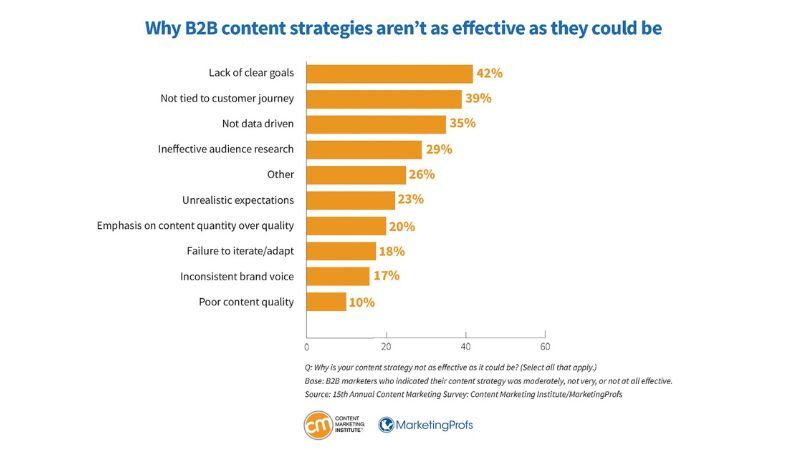
    ```json
{
  "alt": "Bar graph showing reasons why B2B content strategies are ineffective, with 'Lack of clear goals' at 42% leading.",
  "caption": "Top challenges in B2B content strategies are highlighted, with 'Lack of clear goals' topping the list at 42%. Discover areas for improvement.",
  "description": "This bar graph illustrates the reasons cited by B2B marketers for ineffective content strategies. At the top, 'Lack of clear goals' is responsible for 42%. Other issues include not being tied to the customer journey (39%), and not data-driven approaches (35%). The graph, sourced from a survey by the Content Marketing Institute and MarketingProfs, emphasizes the importance of clear goals, audience research, and maintaining quality to enhance effectiveness."
}
```

    Harnessing unique data or case studies, and offering fresh perspectives can set our content apart. It’s noteworthy that 22% of B2B marketers attribute success to understanding their audience deeply.

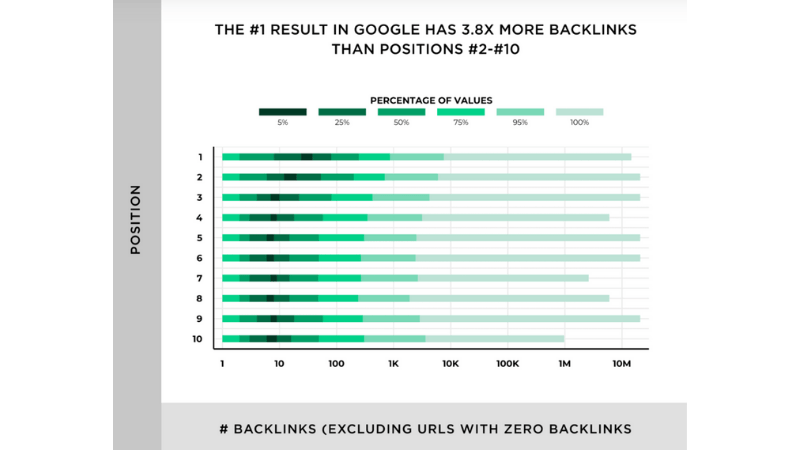
    Authority signals build trust with AI systems by proving the credibility and reliability of our content. AI trusts content that’s backed by authoritative sources.

    ```json
{
  "alt": "Bar chart showing the number of backlinks for top 10 Google results, highlighting that the top position has 3.8 times more backlinks than positions 2 to 10.",
  "caption": "Exploring SEO dynamics: The top Google result boasts 3.8 times more backlinks than the average of positions 2 through 10, illustrating the power of backlinks in search rankings.",
  "description": "This image features a bar chart comparing the number of backlinks for the top 10 Google search results. The data reveals that the first position has 3.8 times more backlinks compared to the average of results in positions 2 to 10, emphasizing the significant role of backlinks in achieving higher search engine rankings. The chart uses a logarithmic scale to depict backlink counts ranging from 1 to 10 million, with percentage bars indicating the distribution of values."
}
```

    This means including consistent source citations and gaining backlinks. Pages with more backlinks rank higher, as noted in a Backlinko study.

    Entity mapping allows AI systems to grasp the relationships between key entities in our content. By clearly identifying and linking these entities, we help AI build a more nuanced understanding of the content’s context.

    Explicitly naming and linking key entities and creating a semantically related internal linking strategy enhances AI’s ability to surface our content in relevant searches. A recent experiment demonstrated that sites with comprehensive schema markup significantly outperformed their counterparts.

    In conclusion, AI visibility requires more than just traditional SEO. Optimizing for content retrievability, alignment, differentiation, authority, and entity mapping will ensure our brand remains not just visible, but authoritative in AI-driven search results.

    As AI continues to transform search landscapes, partnering with a knowledgeable SEO agency becomes increasingly crucial. Agencies blending traditional SEO strategies with cutting-edge AI optimization will be invaluable for leading in this ever-evolving field.


    Inspired by this post on Search Engine Land.

  • Mastering SKAGs Consolidation: Boost Efficiency Today

    Mastering SKAGs Consolidation: Boost Efficiency Today

    I remember when the Alpha Beta account structure was the gold standard in paid search.

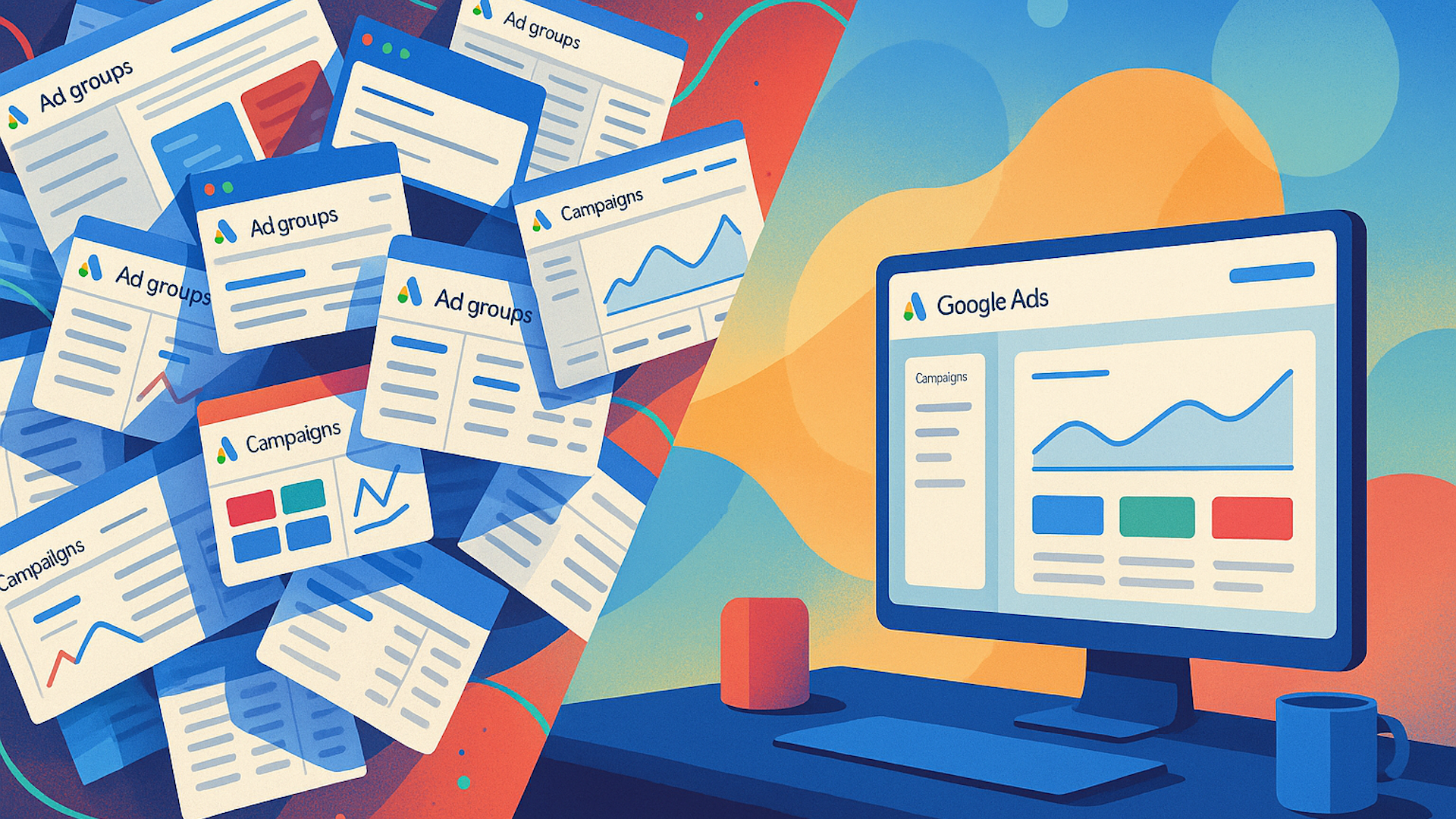
    As a PPC marketer, I’ve seen firsthand how we’ve had to adapt to Google’s shift toward automation and AI. We initially tweaked the Alpha Beta structure, built around single keyword ad groups (SKAGs), but eventually, we have had to move away from it completely.

    Maintaining and building out SKAGs is no longer ideal for today’s paid search landscape, but transitioning isn’t as simple as flipping a switch.

    However, existing SKAGs still contain valuable data and insights that can be carried into a more consolidated setup.

    In this article, I’ll explore the benefits of consolidating SKAGs and share best practices for creating a structure that can set your campaigns up for success.

    As someone who loves control over my campaigns, I get the allure of SKAGs.

    Custom bidding, tailored ad copy, and specific landing pages offer precision that’s hard to relinquish.

    The challenge is that “precision” no longer means the same thing it once did.

    With Google’s looser match types, gaining control over every query is no longer feasible, even for top-performing ones.

    Google now rewards data density and simplified account structures.

    The user interface simplifies consolidation, and algorithms improve faster with enhanced data.

    While results vary, a modest efficiency lift—around 10%—is achievable with proper consolidation.

    Effective control is elsewhere:

    • Enhanced conversions.
    • Strategic offline conversion tracking (OCT).
    • Negative keywords.
    • Ad copy with deep user understanding.

    Focusing on these areas is a far better use of my team’s time, enhancing tracking and measurement both within Google and across platforms.

    Consolidating SKAGs effectively might allow you to avoid the drop in performance typically seen with major account restructures.

    In my agency’s experience, consolidating accounts has not led to major negative impacts—but instead, allowed data density to work in our favor.

    Dig deeper: When to restructure your Google Ads account – and how to do it right

    To make consolidation successful, focus on structuring the balance of data density with control.

    Remember, Google’s algorithm favors data density.

    Switching from SKAGs to two-keyword ad groups won’t suffice; accounts often need more consolidation.

    Over-segmented setups can lead to:

    • Inefficient budget allocation.
    • Data cannibalization, reduced performance visibility.
    • Time-consuming management.
    • Inconsistent ad coverage, messaging.

    Consolidation saves time, which can be redirected toward higher-impact work, showing real business gains.

    In one SaaS account, efficiency in cost per opportunity improved by 6% in the first month and 27% in the second, while maintaining opportunity volume.

    These gains are not due to seasonality.

    Dig deeper: 7 PPC mistakes hiding in your ad accounts

    We’ve also encountered accounts with too many keywords in an ad group, resulting in ads serving irrelevant queries.

    Over-consolidating limits insights into performance.

    If dissimilar geos are grouped together, visibility into which areas drive growth is lost.

    Google finds the easiest path to your goals, which often contradicts your interests.

    Avoid clumping brand and non-brand keywords as Google will favor branded queries with lower incremental conversions.

    Separate brand and non-brand to make Google work harder to convert new users.

    Don’t group products with varying price points; Google will target the cheapest conversions.

    Keep products with similar price points together for better performance alignment.

    Avoid mixing high- and low-quality keyword leads to maintain high-value ad groups.

    Set realistic volume targets and optimize for deep-funnel actions like SQLs or opportunities.

    Using negative keywords aggressively helps manage irrelevant query exposure in consolidated ad groups.

    Aim for broad coverage to protect budgets from inefficient spend.

    The key benefit of consolidation goes beyond performance improvement. Saving time and allowing algorithms to work simplifies the structure and lets us focus on campaign differentiation.


    Inspired by this post on Search Engine Land.

  • Mastering AI Visibility: The New Frontier for Brands

    Mastering AI Visibility: The New Frontier for Brands

    AI availability is reshaping how we think about brand recognition, becoming a crucial battleground for companies. Let me take you through why this is transforming our approach to marketing.

    GEO, AI SEO, AEO – whatever you name it, what matters most is understanding this transformative shift.

    At the heart of this change is AI availability – a concept that’s redefining the landscape of visibility. Let me explain how and why this matters.

    What is AI availability?

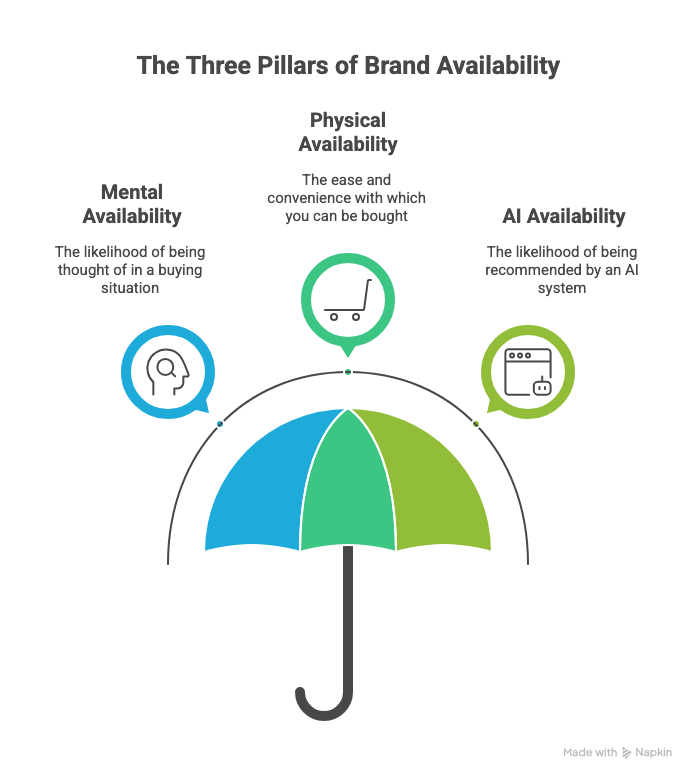
    The concept originates from Byron Sharp, who highlighted it as crucial for brand growth. It centers on two forms of availability: mental and physical.

    Brands grow through sales, which flourish through these two types:

    • Mental availability: Being thought of in purchasing situations.
    • Physical availability: Seamless and easy access to a product.

    Generative search introduces a third type – AI availability, marking how AI systems impact purchasing decisions.

    AI as the new influencer

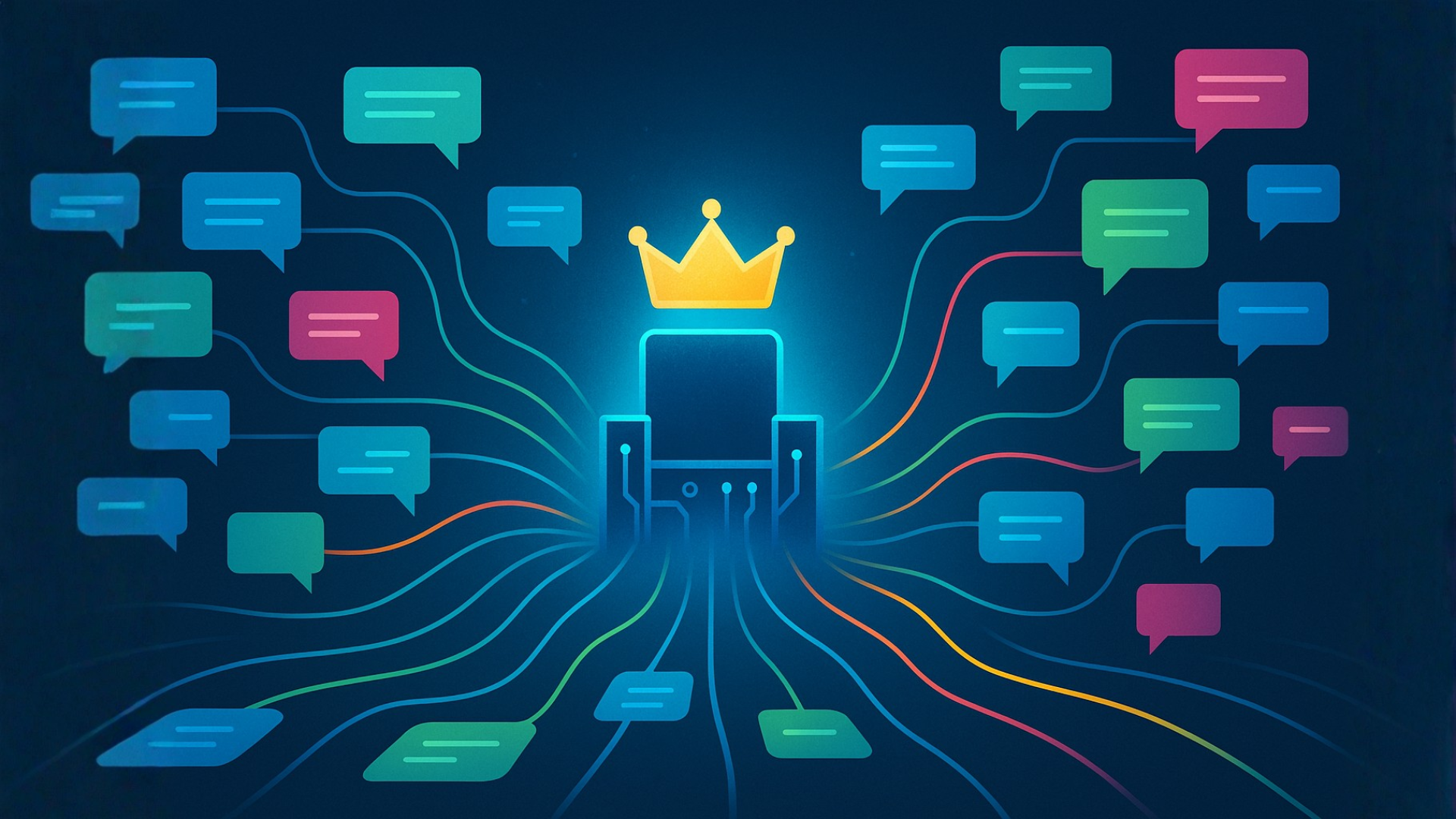
    If you still view AI merely as technology, it’s time to think bigger – it’s the ultimate influencer now. Data shows ChatGPT, alone, reaches 10% of adults globally. Think of it not as coding support but decision-making assistance, making AI the new gatekeeper.

    Decisions on what to buy and who to trust are moving through AI systems, transforming them into today’s most powerful influencers.

    ```json
{
  "alt": "Illustration showing three pillars of brand availability: mental, physical, and AI, represented by icons above an umbrella.",
  "caption": "Discover the three pillars of brand availability: mental recall, physical access, and AI recommendations, illustrated above a colorful umbrella.",
  "description": "This illustration highlights the three pillars of brand availability: Mental Availability is about being thought of in buying situations, Physical Availability emphasizes ease of purchase, and AI Availability pertains to AI recommendation likelihood. Icons representing each pillar are interconnected above a multi-colored umbrella, symbolizing protection and support. This visual is crafted to promote understanding of brand presence in a holistic market context."
}
```

    From keywords to fitness signals

    For years, the SEO industry optimized around human usage of keywords. But with large language models, the focus shifts to fitness signals – inherent traits that outcompete rivals.

    This means aligning your business performance attributes with today’s sophisticated AI systems, making them distinctly visible to a machine’s interpreters of need.

    The psychology of performance

    Drawing from evolutionary psychology, Geoffrey Miller argues consumers chase fitness cues – a concept AI utilizes to interpret queries not as keywords, but needs.

    Your aim? Ensure your brand’s fitness and performance attributes stand out in AI’s mental context of your category, shifting from traditional SEO efforts to robust AI presence.

    Category entry points and the new SEO

    Category entry points become your new keywords in GEO. They’re expressed as needs or triggers rather than search terms, requiring alignment with your brand’s unique context, so AI recognizes your offerings as solutions.

    This evolution makes your foundational brand strategy vital for influencing AI, feeding sophisticated recommendation systems.

    A local example: The sandwich shop in Stoke

    ```json
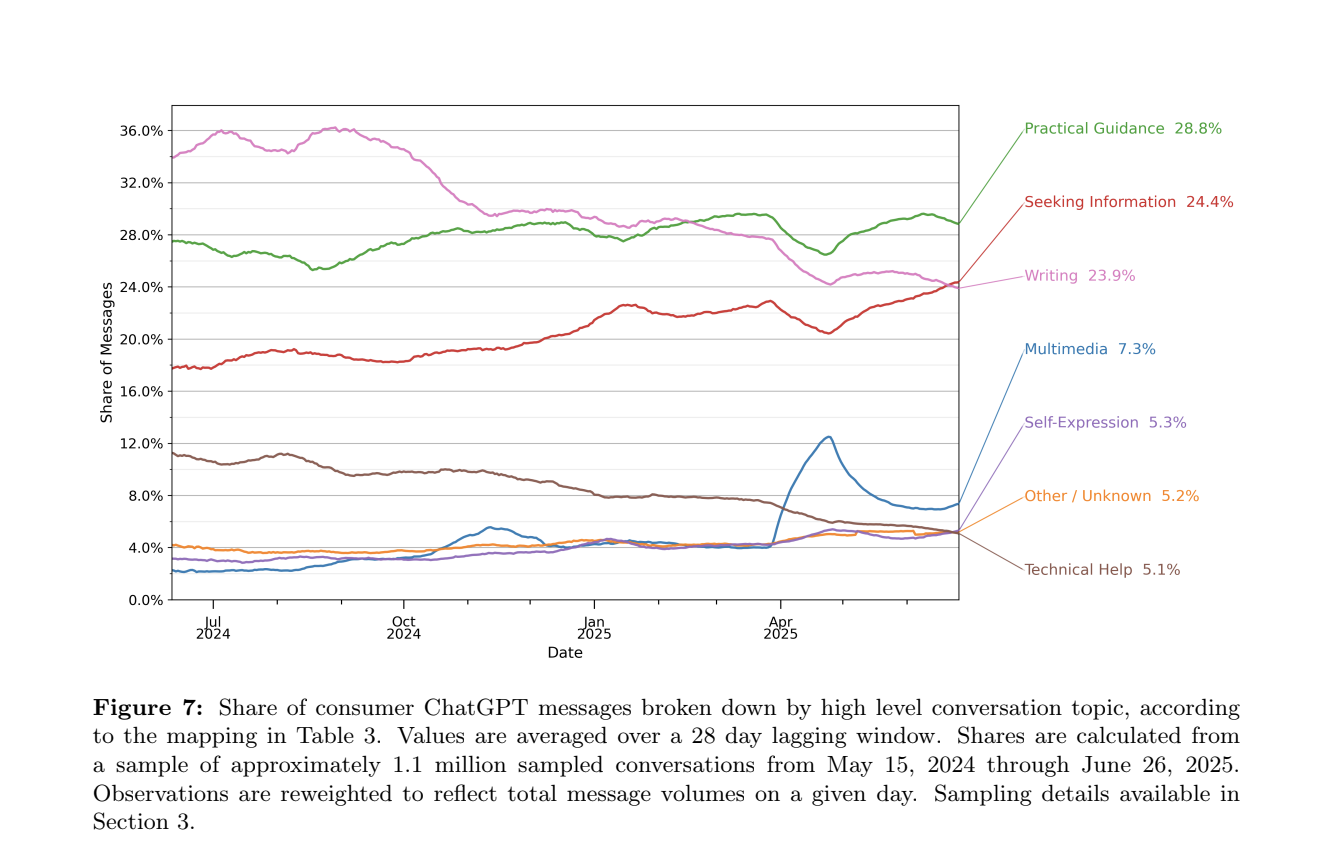
{
  "alt": "Line graph showing share of consumer ChatGPT messages by topic from May 2024 to June 2025, highlighting Practical Guidance and Seeking Information.",
  "caption": "Consumer ChatGPT messages reveal trends from May 2024 to June 2025, with Practical Guidance leading at 28.8%. Discover how user interactions evolve over time.",
  "description": "This line graph depicts the share of consumer ChatGPT messages categorized by topics like Practical Guidance, Seeking Information, and Writing from May 2024 to June 2025. Practical Guidance holds the highest share at 28.8%, followed by Seeking Information at 24.4%, and Writing at 23.9%. The data is derived from an analysis of roughly 1.1 million sampled conversations, reflecting trends and user preferences in AI usage over time. The chart includes categories like Multimedia and Technical Help, with fluctuations in message shares across months."
}
```

    Consider a modest sandwich shop in Stoke. It focuses on visibility by highlighting key performance attributes, like ingredient sources, and leveraging positive reviews across platforms, thereby informing AI networks of its offer.

    Such efforts help small businesses carve out recognition within AI systems, demonstrating GEO’s direction of combining good marketing with intelligent technology.

    Embrace both SEO and GEO

    The strategies of SEO and GEO are not mutually exclusive. Cultivating both influences AI availability for local businesses and larger corporations aiming to boost presence through intelligent visibility tactics.

    Building AI availability

    Visibility to AI systems begins with comprehensive audits and extends through strategic appearances in credible lists and directories, further achieving saturation by creating valuable content ecosystems.

    By accurately positioning your brand’s finest attributes, you’re readying it for AI’s recognition, pushing it to thrive in this new landscape.

    The future of visibility

    In this AI-driven age, marketing fundamentals still rule. To be chosen, your brand must become recognizable among machine intelligence, reshaping the familiar PR, branding, and SEO tools to serve this advanced audience.


    Inspired by this post on Search Engine Land.

  • How Forums Are Reclaiming the Web in an AI-Driven World

    How Forums Are Reclaiming the Web in an AI-Driven World

    About a year and a half ago, I penned an article called “The rise of forums: Why Google prefers them and how to adapt” where I advocated for brands to create their own online forums and communities.

    Let’s revisit what’s happened since then.

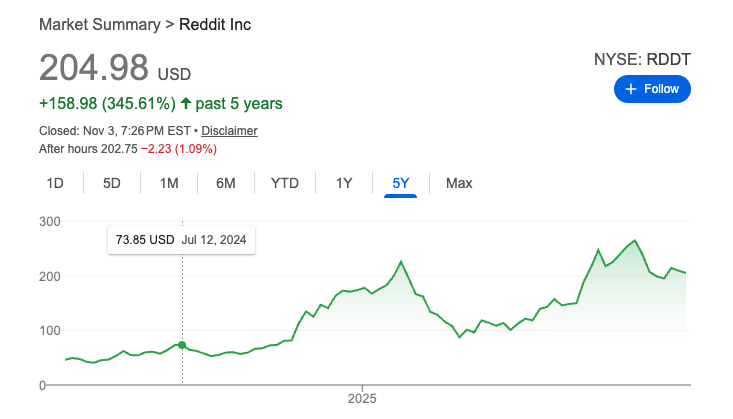
    Witnessing Reddit’s stock price surge by 177.6% has been astonishing. If you had purchased 100 shares of RDDT back then, you’d be $13,113 wealthier today.

    ```json
{
  "alt": "Stock price summary showing Reddit Inc at 204.98 USD, highlighting a 345.61% increase over the past 5 years.",
  "caption": "Reddit Inc's market performance surges with a 345.61% increase over five years, reaching a trading value of 204.98 USD.",
  "description": "This image displays Reddit Inc's stock summary with a significant increase of 345.61% over the past five years, reaching a current price of 204.98 USD. The chart highlights a notable peak in July 2024 before a steady climb. The graph is set to a 5-year timeline, illustrating a consistent upward trajectory. Important details include an after-hours value of 202.75 USD and previous trading data, offering a comprehensive overview of Reddit's market performance."
}
```

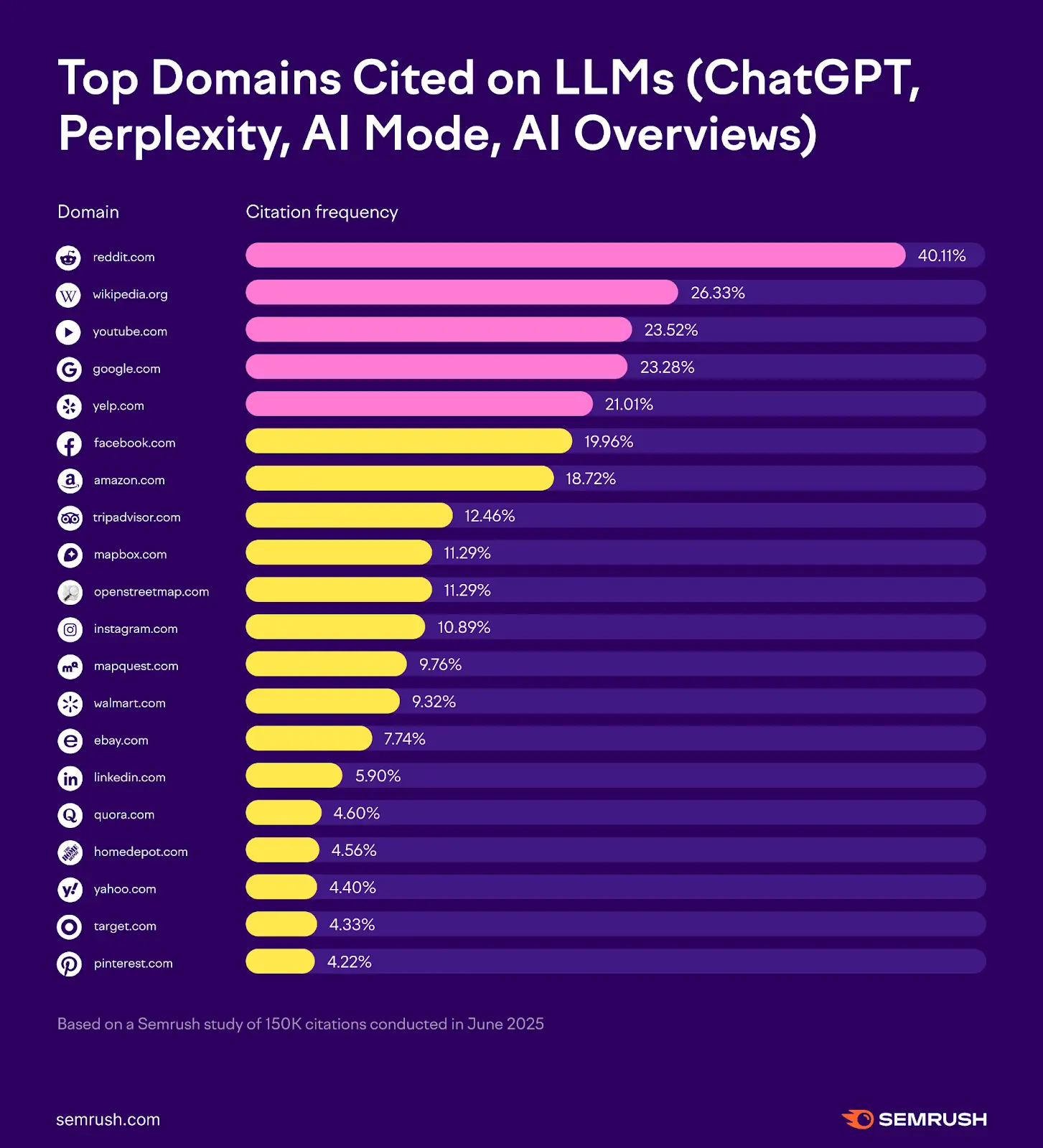
    In June 2025, Semrush’s analysis of 150,000 AI citations revealed Reddit as the leading source, featuring in over 40% of LLM responses.

    Why did this happen? It boils down to the classic law of supply and demand.
    ```json
{
  "alt": "Bar chart displaying top domains cited in LLMs, with Reddit, Wikipedia, and YouTube leading.",
  "caption": "Explore the top domains cited in LLMs like ChatGPT, with Reddit and Wikipedia leading the charge according to a Semrush study.",
  "description": "This image showcases a bar chart of top domains cited by LLMs, including ChatGPT and AI applications. Leading the list is Reddit.com with a 40.11% citation frequency, followed by Wikipedia.org and YouTube.com. The chart ranks domains based on citation frequency from a Semrush study of 150,000 citations conducted in June 2025, highlighting key websites like Facebook, Amazon, and Google."
}
```

    As LLM usage rises, the need for answers has exploded. The likes of ChatGPT and Perplexity want to source answers from their training data and will scour the web if they fall short.

    These tools navigate through engines like Bing and Google to fill the gaps, but often they find few long-tail answers available. So, they resort to Reddit threads, even if they might be penned by novices or trolls. This absence of substantial, long-tail content falls mainly on Google’s shoulders.

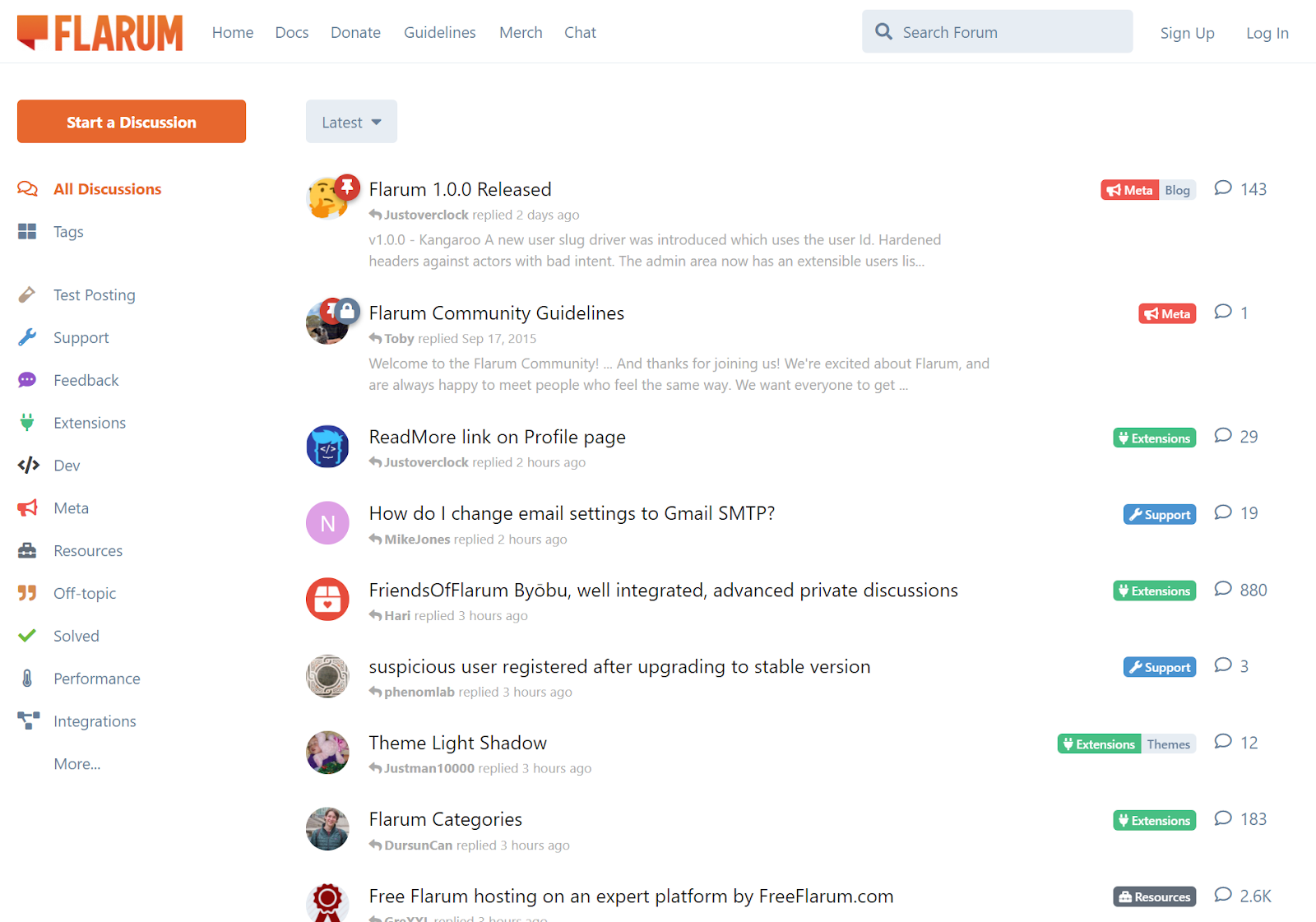
    ```json
{
  "alt": "Screenshot of Flarum forum with topics listed and navigation menu on the left.",
  "caption": "Dive into the Flarum community! Explore latest discussions, guidelines, and tips shared by users in this interactive forum interface.",
  "description": "This image shows a screenshot of the Flarum forum interface. On the left, there's a navigation menu with options like 'Tags', 'Support', and 'Extensions'. The main area displays discussions such as 'Flarum 1.0.0 Released' and 'Flarum Community Guidelines' with reply counts and categories marked by colored tags like 'Meta' and 'Extensions'. The header includes links to 'Home', 'Docs', and a search bar, reflecting an organized layout for community interaction."
}
```

    In the relentless chase for top-ranking positions on competitive head terms, even the best SEO professionals fell into the trap of creating echoed content, neglecting the vast opportunities in long-tail searches.

    If your brand has expertise, the long-tail search industry is an open frontier waiting to be claimed.

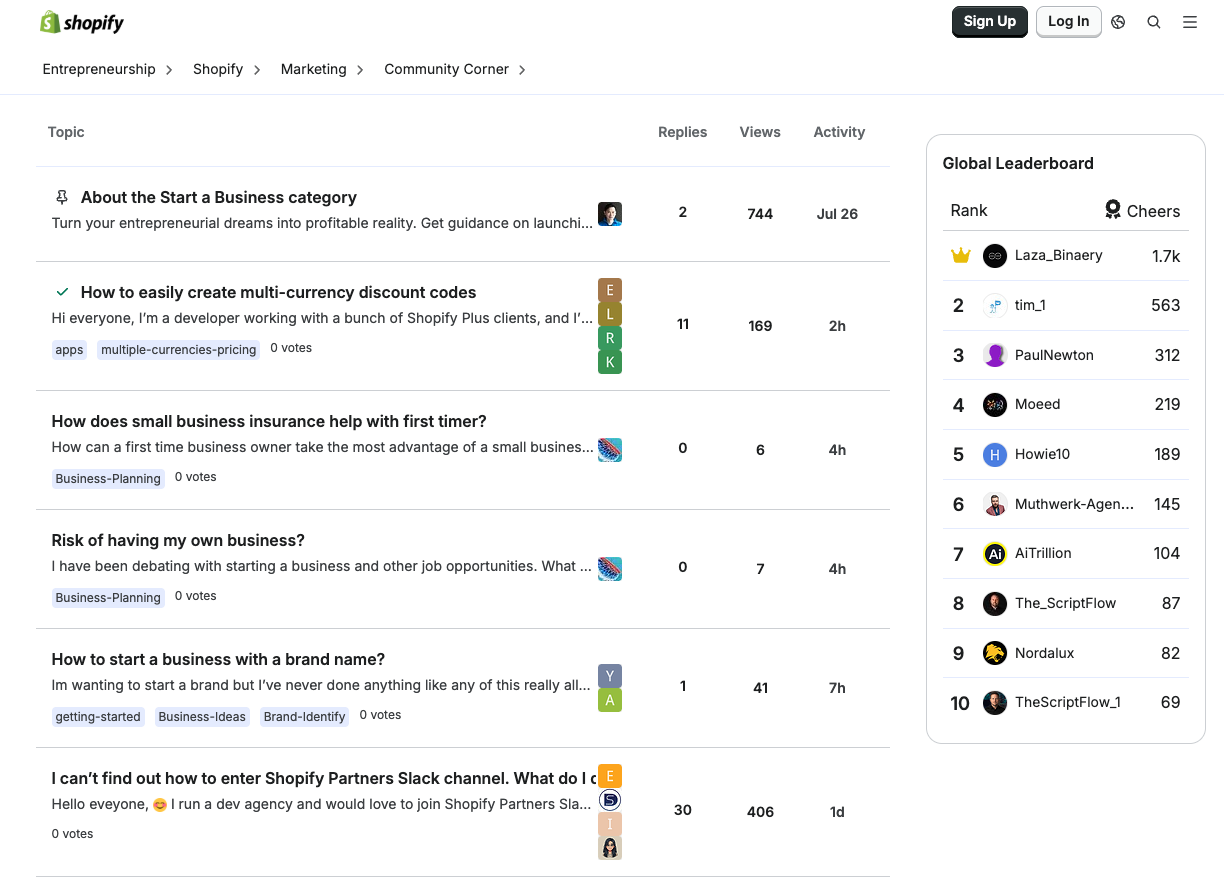
    Shopify community forum discussing various business topics with a leaderboard of top contributors.
    Engage with Shopify's community forum to explore insightful topics on entrepreneurship, from creating discount codes to starting a business with a brand name.

    User-generated content (UGC) stands out as the best method to capitalize on this, bringing several advantages. It aligns with search intent, remains current, ensures accuracy through expert contributions, builds semantic depth, and preserves a trustworthiness that AI simply can’t replicate.

    This isn’t new; it’s the same E-E-A-T we’ve discussed regarding Google’s preferences for years.

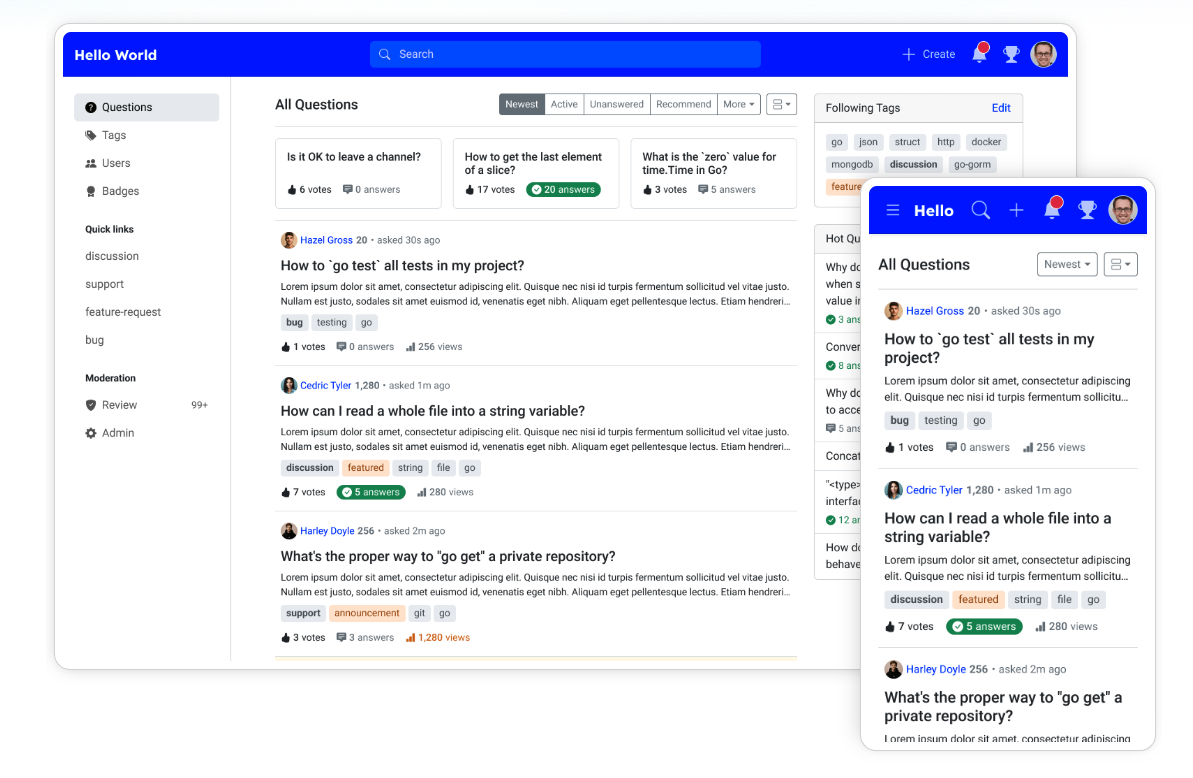
    ```json
{
  "alt": "Online forum interface with questions listed and search bar at the top.",
  "caption": "Explore the dynamic world of online discussions with this forum interface, where questions and answers are just a search away.",
  "description": "This image showcases an online forum interface, labeled 'Hello World,' featuring a main area with a search bar, a list of questions, vote counts, and answer statistics. The sidebar includes navigation options for tags, users, badges, and quick links. Following tags and popular questions are displayed alongside the main content. The design highlights ease of navigation and interaction, essential for collaborative community platforms. Keywords: online forum, questions, interaction, community, search."
}
```

    Yet, brands often hesitate to implement forums due to various objections. Whether it’s the perceived cost, a lack of development resources, past failures, unclear ROI, or the challenges of moderation, each of these roadblocks has a solution.

    Embracing forums can be a masterstroke by using open-source software to create cost-effective, customizable platforms while retaining control over valuable data. Tools like Flarum and Discourse provide robust solutions for fostering discourse and gathering insights, backed by vibrant developer communities for support.

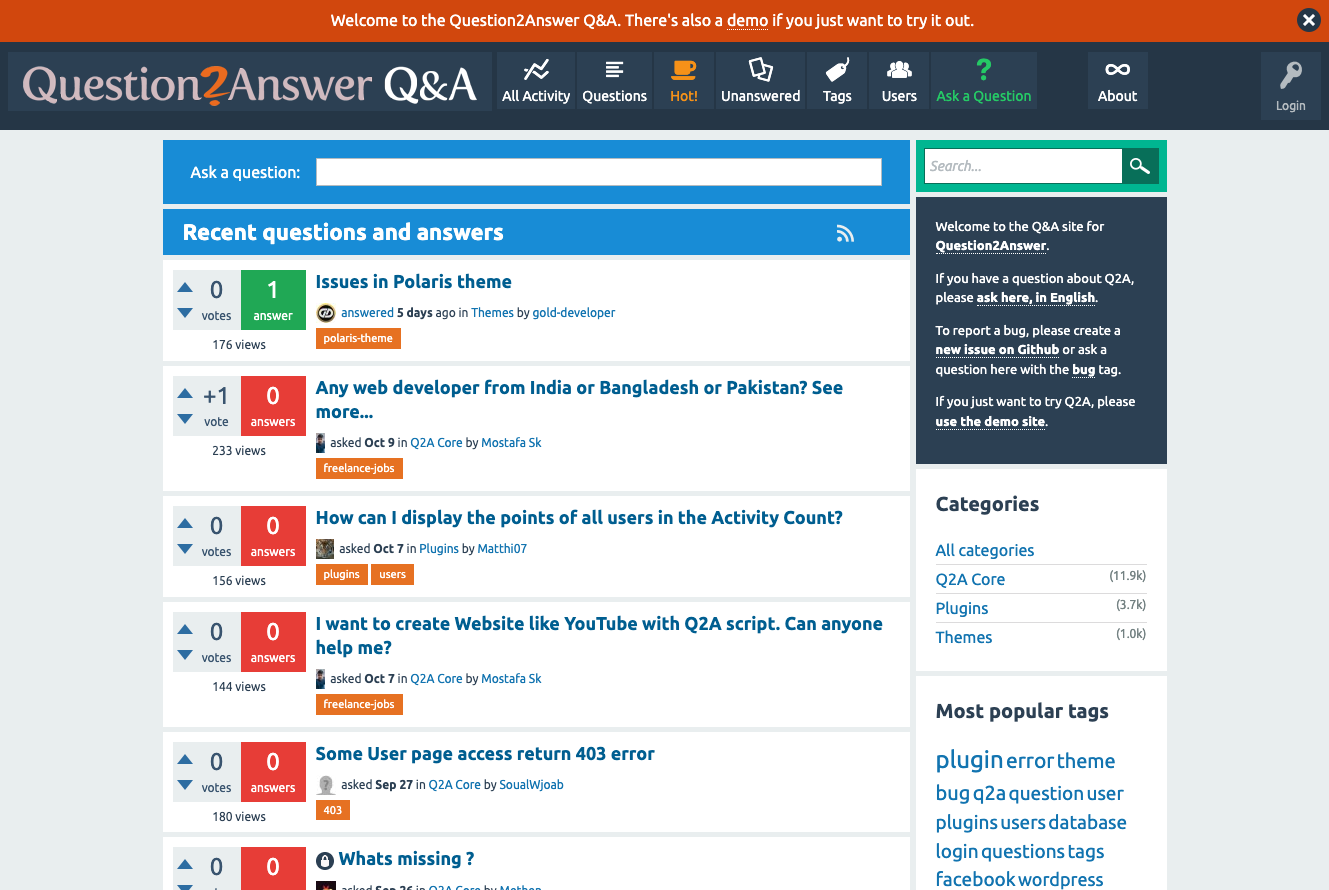
    ```json
{
  "alt": "Question2Answer Q&A webpage with a list of recent questions and answers.",
  "caption": "Dive into the latest inquiries on the Question2Answer platform, where users engage in discussions about themes, development, and more.",
  "description": "The image shows a webpage from the Question2Answer Q&A platform, displaying recent questions and answers. Users can vote, view answer counts, and see question details like tags and views. Navigation options include activity, questions, tags, and a search bar. This interface facilitates community interaction on topics like plugins, themes, and web development."
}
```

    For Q&A platforms, options like Apache Answer and Question2Answer offer potent features to manage and leverage user interactions, ensuring your questions receive clear, expert-consensus solutions.

    The key to a thriving online community is active management, from determining clear community guidelines and detailed post titles to empowering passionate users with responsibilities. My experience launching and moderating successful forums has shown that community-driven moderation scales well compared to centralized control.

    In summary, creating a forum today isn’t just beneficial; it’s becoming essential. It positions your brand at the apex of conversation, enhancing your visibility to both AI and real users. With your expertise leading the charge, you’ll delight customers, solidify your brand’s reputation, and escalate conversions while influencing the very AI systems reshaping our online interactions.


    Inspired by this post on Search Engine Land.