Every time I delve into AI search studies, I find myself in the midst of a whirlwind of conflicting narratives. Major SEO platforms like Ahrefs and Semrush produce studies that seem to answer all our questions, yet a closer inspection reveals a patchwork of stories.
As I sifted through the data, I uncovered an uncomfortable truth: definitive answers are elusive, and with some creative interpretation, numbers can validate nearly any storyline.
At first glance, there appears to be agreement on AI search fundamentals. For instance, Ahrefs indicates a significant drop in clickthrough rates when AI Overviews are present, suggesting a substantial impact on traffic.
Conversely, Semrush’s findings paint a different picture, emphasizing opportunities rather than a crisis, even suggesting AI search can prove more valuable than traditional methods. How on earth can both be right?
The variance in conversion rates further complicates the matter. Studies swing between AI features converting better or worse than traditional searches, with voices on all sides claiming accuracy.
Each narrative is backed by credible research, showing how industry segment and business model can wildly alter the impact of AI search.
When it comes to AI search impacts, the truth is woven into the fabric of varying intents, demographic shifts over time, and subjective measurement criteria. This makes any single study’s findings inherently limited.
While Ahrefs warns of “The Great Decoupling” illustrating loss, Semrush sees “The Great Opportunity.” The same data becomes a different story when emphasized differently.
Then there’s the shift from ranking to citation—whether this is revolutionary or merely incremental is up for debate, with multiple studies ushering each view.
The hidden agendas of researchers, driven by their organization’s interests, echo through these studies, coloring results and interpretations. This linkage to business models inherently influences the framing of their findings.
In reality, AI search impacts are markedly segment-specific. Factors such as your industry, business model, and audience define your experience. Thus, the true answer is, “it depends.”
The vast datasets behind studies create an illusion of certainty which may not be justified. Even with impressive scales, they may not provide universally applicable answers.
For marketers and SEOs, the key lies in conducting personal analyses, closely monitoring behavior specific to your demographic, and adjusting strategies accordingly.
Instead of chasing definitive answers from studies, embracing ambiguity and continuously adapting strategies based on personal data insights is more fruitful.
Given the myriad narratives co-existing, accepting that complete certainty is unreachable empowers us to stay flexible and responsive in our approach, running our own tests to guide us through the shifting AI landscape.
As I explore the evolving landscape of search, I’ve discovered that dominating the top spot on the search results page is no longer the achievement it once was. By 2026, search will be more complex, with AI and multi-surface discovery shaping the future of organic success.
In this dynamic world, SEO professionals like me are asking critical questions. We need to ensure our strategies cover more than just traditional rankings. Are we reaching visitors who genuinely engage with us? Are we part of the AI and SERP experience? Are we anticipating trends early?
Jim Yu, CEO of BrightEdge, highlighted that search success used to mean climbing the ranks. Now, we see an expanded field with quick answers and AI layering. This prompts us to redefine our measures of success.
Here are the seven success criteria I believe will define organic search success in 2026:
1. Visitor Quality
We must ask ourselves: Are we attracting visitors who take worthwhile actions? Whether it’s demos for B2B or purchases for ecommerce, attracting qualified visitors is key.
How to Measure: Track conversion rates and revenue per session by segmenting organic traffic.
2. SERP Diversification
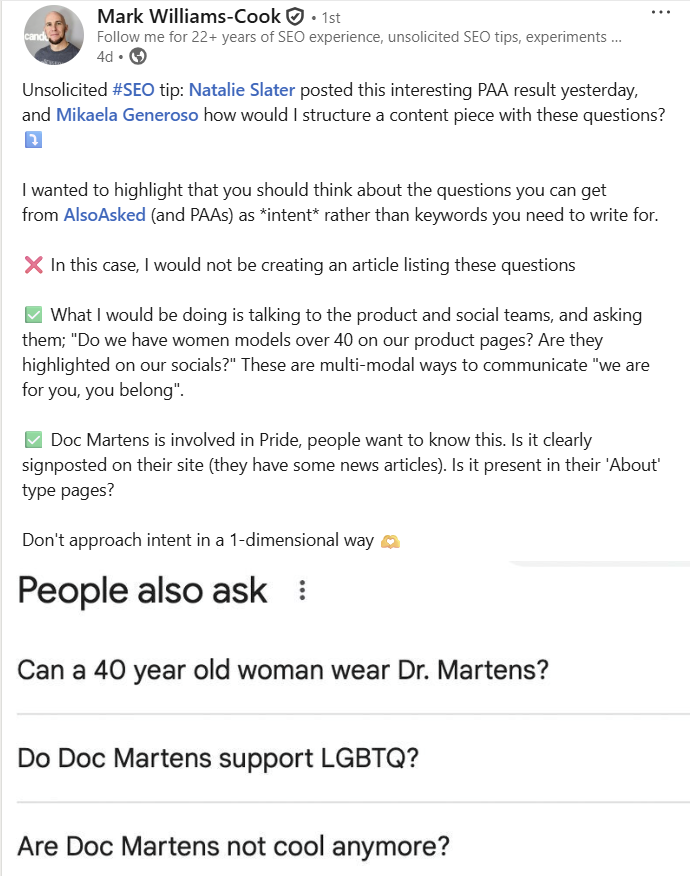
Beyond just aiming for a blue link, my goal now is to ensure visibility across various SERP features, including AI Overviews and People Also Ask sections.
3. Trendspotting
Recognizing and reacting to emerging topics before competitors can provide a crucial edge. I focus on identifying new and low-volume search trends that show potential.
4. Traffic Diversification
In a world where search means much more than Google, my strategy involves ensuring a presence across multiple platforms, including social media and marketplaces.
5. Brand Reputation
My aim is to cultivate trust and recognition wherever people encounter my brand. Consistent, positive visibility across all channels is crucial.
6. Ads and Media Support
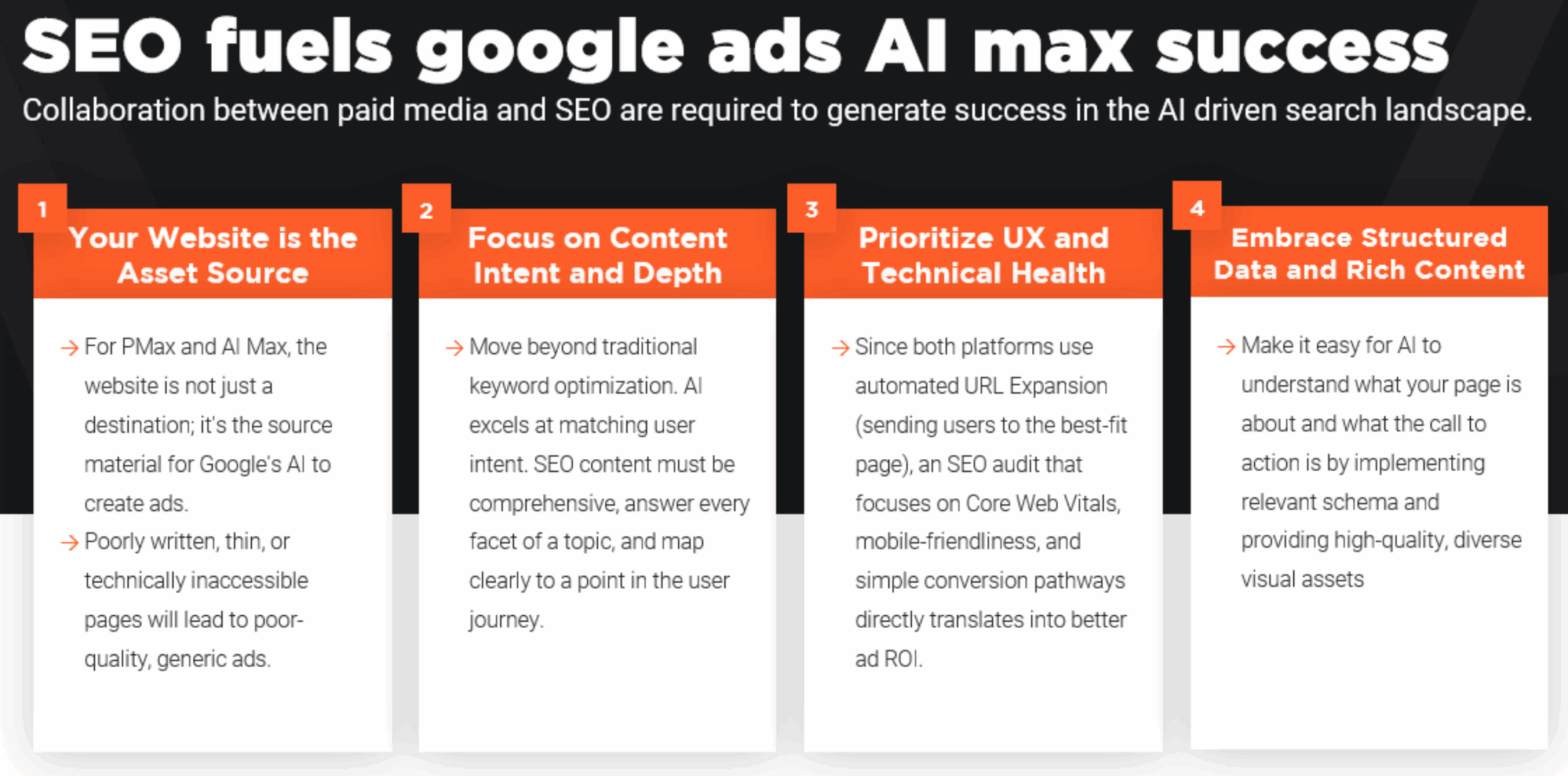
Aligning SEO with paid media not only enhances ad performance but also ensures the content is optimized across all landing page experiences.
7. Combined Search Performance
Ultimately, my measures of success involve how search as a whole contributes to profitable growth. By integrating SEO with other channels, I can demonstrate a significant business impact.
For years, I measured digital success through impressions, backlinks, and clicks. Ranking high in search results and getting those clicks meant I controlled the funnel. But, the landscape is rapidly shifting.
Large Language Models (LLMs) like ChatGPT, Claude, Gemini, and Perplexity are now often the first stop for decision-makers seeking answers. These systems don’t provide a list of links; instead, they offer synthesized responses. Whether my brand is part of those answers or overlooked greatly affects its relevance in the buyer’s journey.
This evolution requires a new playbook. It’s no longer just about Google rankings. It’s about being present in AI-generated responses, how those responses frame my brand, and what sources they credit. In this new paradigm, being mentioned is the new click.
The challenge I face is not just tracking these new AI KPIs. It’s about understanding the signals and turning them into actionable strategies. Let’s explore four core AI KPIs: mentions, sentiment, competitive share of voice, and sources, and see how each can shape my approach.
The first KPI, mentions, assesses how often my brand appears in LLM responses. An absence from queries such as “top SaaS tools for analytics” indicates my brand is missing from key conversations before they even start.
But mentions go beyond vanity metrics; they serve as diagnostic tools. Patterns in appearance can reveal which areas of my content strategy resonate and which need reinforcement.
If mentions are sparse in educational queries, I’m focused on developing thought-leadership content that establishes my voice in defining the category. If mentions are lacking in solution-oriented queries, I work on assets that clarify my unique differentiators. Mentions signal where my brand is either visible or invisible.
Now, let’s consider sentiment. Being mentioned is positive, but the accompanying descriptors—“fast,” “trusted,” “expensive”—impact deeply. These adjectives reflect the existing narrative in the data the model has processed.
By capturing the language used around my brand, I can track whether descriptors lean positive, neutral, or negative. Themes that consistently present my brand as “enterprise-grade” but “complex” suggest areas for messaging adjustments.
Negative sentiment shines a light on gaps that need addressing. If I’m perceived as costly, I create ROI calculators or case studies demonstrating value. For complex perceptions, content that simplifies onboarding can help. Positive sentiment means amplifying narratives that work, such as emphasizing “trust” in campaigns.
The competitive share is about more than mentions and sentiment. It’s about measuring my brand’s presence in LLM responses compared to my competitors.
Understanding not just how often I appear relative to them, but also the nature of these appearances, I can strategize accordingly. Insights from competitive share turn into actionable battle plans.
Finally, sources reveal who the AI trusts to tell the story. If a competitor’s whitepaper is cited over my content, it’s time to establish authority with comprehensive, structured, and credible content.
Crafting content recognized as authoritative helps shift my brand from being merely mentioned to being foundational to the answers generated by AIs.
The convergence of these KPIs forms a compass to guide my strategic efforts:
Marketers embracing AI KPIs now will not only forge ahead in this era but actively shape it as well.
It might seem early, with tools still in development and no universal dashboard available, but early adopters will reap the benefits.
Reflecting on the early 2000s and the birth of SEO, those who optimized early found themselves owning search visibility, a parallel moment for AI KPIs emerges now.
The effort required isn’t complex. Simply monitoring prompts, logging responses, and analyzing mentions, sentiment, share, and sources provides valuable insights that can shape strategies today.
The advent of LLMs redefines what visibility means. Increasingly, my brand’s story is communicated within AI-generated responses long before a prospect visits my website.
Thus, KPIs become crucial. Mentions are the new clicks in this evolving landscape. Embracing these insights allows me to fill visibility gaps, reshape perceptions, benchmark competitors, and secure authoritative positions.
At Brightspot, we’re guiding organizations in this shift, translating AI insights into actionable strategies that secure brands’ visibility and trust. Learn more at brightspot.com.
As an ecommerce enthusiast, I know how crucial it is for our products to be easily understandable by AI systems. In today’s visually-driven market, designing images that AI can interpret accurately, from OCR-ready labels to visuals aligned with sentiment, is essential.
The power of images and videos to tell complex stories instantly is unparalleled. In our digital store, these visuals are not just content—they are tools that aid in making purchase decisions.
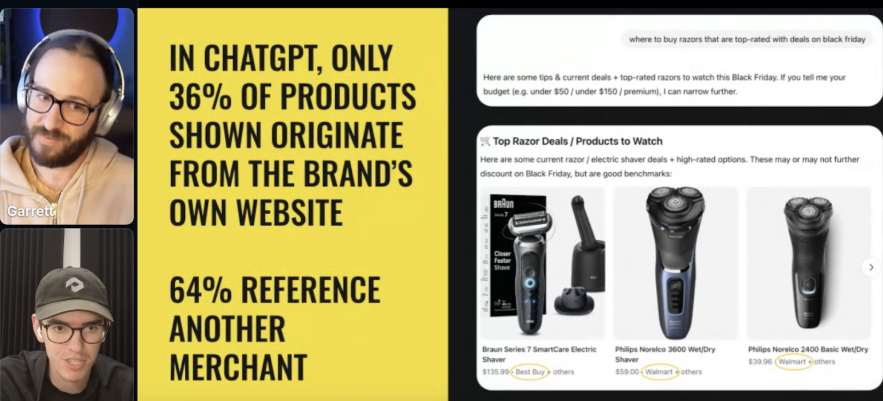
Generative search systems capture objects, embedded text, and style to deduce potential use cases. Language Learning Models (LLMs) then bring to light the assets that best respond to a shopper’s inquiries. Essentially, each image becomes structured data that breaks down buying barriers, amplifying discoverability in multimodal searches when someone takes a photo or uploads a screenshot.
Visual search as a shopping behavior
Our customers often use visual search for quick decision-making: snapping photos, scanning labels, or comparing products to decide “Will this work for me?” It’s vital that our photos fulfill this need, showing scale, size cues, real colors, and comparisons.
Multimodal search reshaping behaviors
With visual search on the rise, Google Lens handling 20 billion monthly queries mostly from younger users, it’s a clear sign of changing behaviors. These behaviors fall into distinct intent categories.
Quick capture and identification
Taking a photo to identify an item (like “What plant is this?”) helps with quick recognition and troubleshooting, accelerating issue resolution and product verification.
Visual comparison
By showing a product and asking systems to “find a dupe” or analyze “room style,” we bypass complex descriptions, promoting faster cross-category shopping and suitability checks.
Information processing
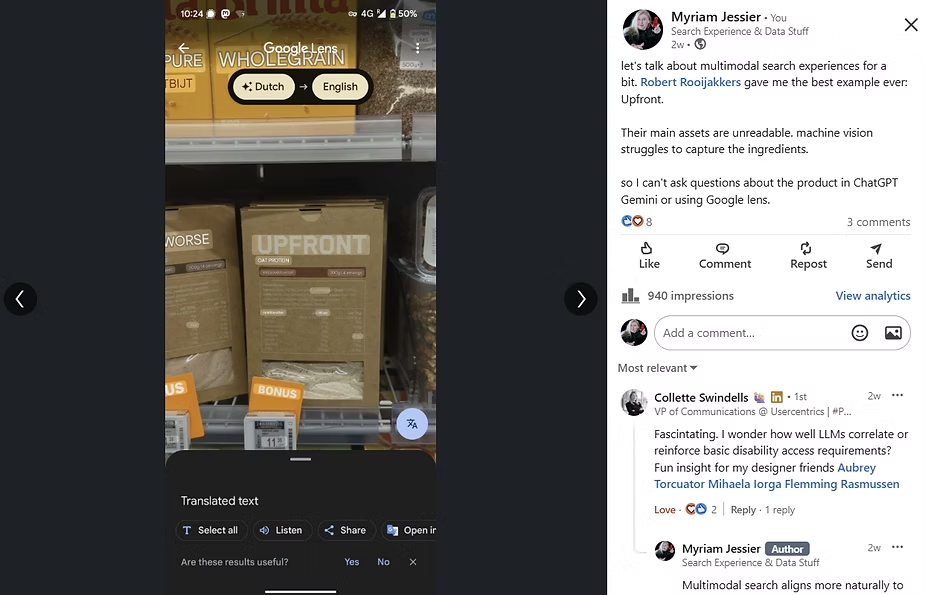
Displaying ingredient lists or foreign texts prompts real-time data conversion, avoiding manual reentry or the need for alternative instruction sources.
Modification search
Asking for product variations like “this but in blue” allows for specific attribute searches without chasing model numbers, indicating a shift from text-based navigation to visual exploration.
Multimodal AI has made instant recognition, decision support, and creative exploration accessible, reducing friction in ecommerce and information journeys.
You can check a detailed table of multimodal visual search types here.
Prioritizing content and quality for purchase decisions
We must ensure that our product images spotlight the details customers care about, like pockets or stitching. Images convey these abstract ideas authentically, prompting shoppers to answer questions such as whether a particular style is suitable for them.
Original images are crucial; they highlight effort, uniqueness, and skill, making our content more personable and credible.
Making products machine-readable for image vision
For products to be machine-readable, all visual elements need to be easily interpreted by AI. This begins with the design of images and packaging.
Products and packaging as landing pages
Ecommerce packaging should be crafted like a digital asset, thriving in a world driven by multimodal AI searches.
If AI or search engines fail to read packaging, the product might as well be invisible at the peak of consumer interest.
Designing for OCR-friendliness and authenticity
Google Lens and leading LLMs employ optical character recognition (OCR) to extract and index data from physical goods. Therefore, text and visuals on our packaging need to be OCR-friendly.
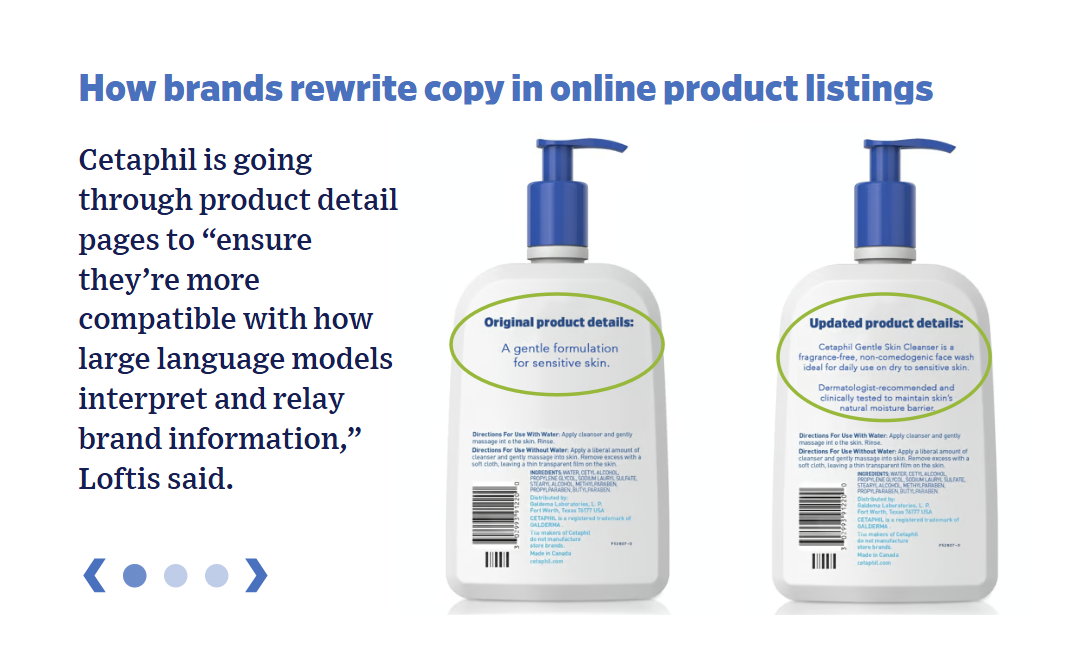
Use high-contrast color schemes—black text on white backgrounds is ideal. Ensure that critical information is in clean, sans-serif fonts on solid backgrounds without patterns. Treat physical product labeling with the same care as a landing page, much like Cetaphil does.
Avoid these common errors:
Low contrast.
Decorative or script fonts.
Busy patterns.
Curved or creased surfaces.
Glossy materials that disrupt text visibility.
Document OCR fail points and analyze why they occur. Run a grayscale test to ensure text remains legible without color.
Add a QR code to each product for direct access to a webpage with structured, machine-readable HTML information.
High-resolution, multi-angle product images are optimal, especially for items needing authenticity checks. Genuine photos excel in accuracy and credibility, outperforming AI-generated images.
In an AI-driven context, it’s about more than just your product. AI builds contextual databases, examining every object in an image, which helps infer the brand’s market position.
Elements like props, backgrounds, and adjacent items fine-tune our brand’s digital persona. With each visual placement, we send out signals—be it luxury, sportiness, or utility—all influencing the brand’s perception machine-wise.
Guarding these adjacency signals is now intrinsic to brand management. Strategic curation helps AI accurately interpret our brand’s value, setting us up to appear in high-value conversational queries.
Conduct a co-occurrence audit for brand context
We should set up processes to evaluate brand context for multimodal AI searches systematically. Using tools like AI Modes, ChatGPT searches, or similar LLM models, gather relevant lifestyle or product photos to input into these systems. A prompt like:
“List each object in the image. From these, describe the potential owner.”
This step enriches our understanding of the machine’s narrative, helping us adjust any disconnects, like misaligned perception due to unintended signals. From there, we craft specific guidelines for props, contextual elements, and visual do’s and don’ts for our creative teams to safeguard brand narrative.
Refining this alignment ensures that machines perceive our brand consistently with our strategic goals, bolstering our presence in new-gen search settings.
Brand control across the visual layers
Using the brand control quadrant, we efficiently manage brand visibility through machine interpretation, focusing on four key layers—some we own outright, others we can influence.
Known brand layers
Here, we have visuals like official logos and branded imagery, which are typically controlled and recognized by both our audience and AI.
Visual strategy:
Create a visual knowledge database.
Regularly evaluate adjacent objects in brand visuals.
Develop an “Object Bible” to avoid narrative misalignment, ensuring lifestyle cues uphold our brand image.
Latent brand
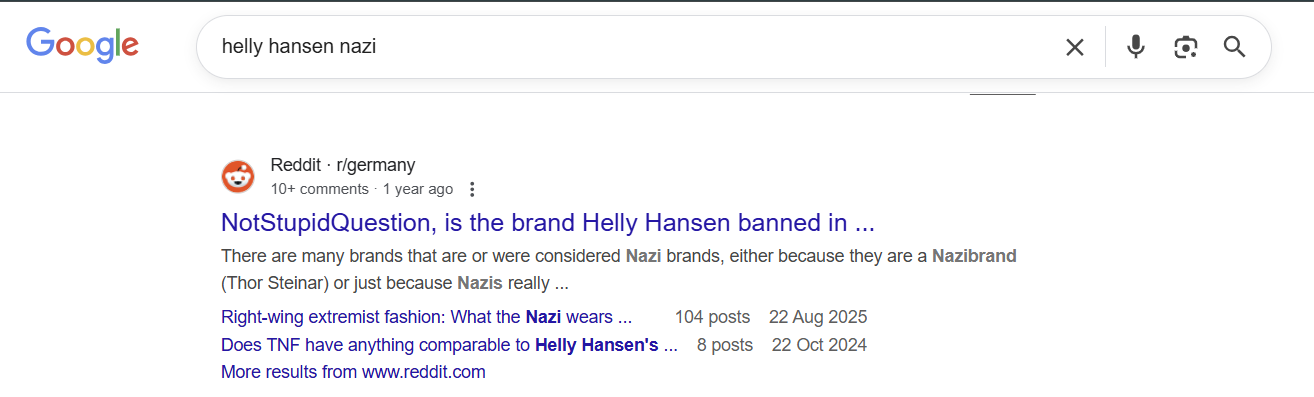
These include “wild” images like user photos and social posts that can lead to unexpected inferences about our brand’s standing.
Audit these occurrences to prevent unintended associations.
Shadow brand
This involves old brand assets and materials that could be unintentionally made public, influencing AI’s interpretation of us.
Audit all public archives for outdated visuals; remove or update them.
Ensure that current branded visuals reflect our strategies.
AI-narrated brand
AI synthesizes narratives by blending visual and emotional cues with text, which could introduce competitor tones or mismatched perceptions.
Visual strategy:
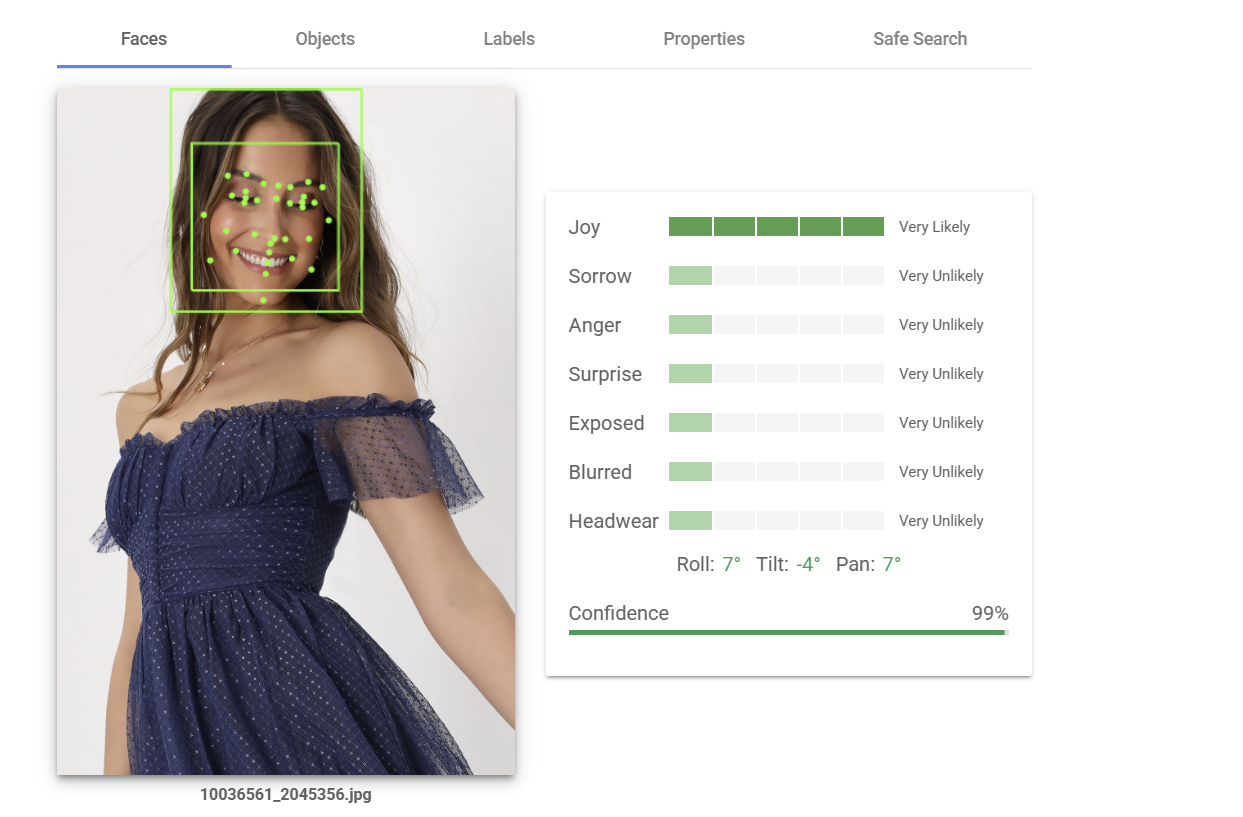
Use AI tools like Google Cloud Vision to verify tonal alignment.
Adjust mismatched assets to ensure narrative cohesion.
Sentiment alignment: balancing visual tone and emotional context
Beyond supplying information, images capture emotion and attention within moments, shaping customer perceptions.
In AI-driven searches, this emotional resonance becomes a direct signal, evaluated for emotional tone, sentiment, and context.
The affective quality of each image is assessed by LLMs, along with sentiment and contextual tone to match content with the user’s emotional state and intent.
We need to deliberately design and inspect our imagery’s emotional tone, using tools like Microsoft Azure’s Computer Vision API to:
Score emotions in images broadly.
Assess facial expressions for emotion probabilities, allowing imagery to be accurately targeted—like promoting calmness in a yoga line or confidence in business wear.
Align image emotion with marketing targets. Ensure the imagery arouses the right emotions and resonates with our audience.
Start by recognizing the emotional baseline in your imagery, rigorously testing for consistency with AI tools.
Matching your brand narrative with AI perception
We must focus on authenticity in product photos, ensuring every asset is designed for machine-readability and maintaining visual context and sentiment meticulously.
Treat packaging and online visuals as digital assets; conduct regular audits for object proximity, emotional tone, and clear identification.
AI will craft a narrative for our brand with or without guidance, so it’s essential to ensure every visual aligns with the intended story.
Canonicalization and SEO: A Personal Guide for 2026
Canonicalization has always been pivotal in SEO, yet it’s surprisingly easy to overlook. In 2026, managing duplicate content and optimizing for generative engines is becoming essential. Let’s explore this together.
Canonicalization helps search engines pinpoint original content sources and prevent duplicate versions from competing. This is a must-know for large sites aiming to stay organized and small ones looking to avoid ranking dilution.
As 2026 approaches, canonicalization is gaining even greater traction with the rise of generative engine optimization (GEO), alongside traditional SEO. AI and tools like ChatGPT are reshaping content selection and attribution processes. Let’s dig into why this matters.
This guide will walk you through essential canonical tags, practical strategies for implementation, and advanced insights benefiting both SEO and GEO.
What is canonicalization?
Canonicalization, a cornerstone of technical SEO, allows you to specify the preferred version of a webpage when similar content exists across different URLs. Think of it as designating the primary source or ‘master copy.’
Using canonical tags effectively tells search engines which URL to index and rank, sidestepping confusion and focusing your site’s authority and ranking power on the right page.
Key terms
The crucial terms we’ll cover include canonical tag, self-referencing canonical, origin, target URL, and duplicate content. Grasping these will enhance your understanding as we delve deeper.
Why canonicalization matters for SEO and GEO
Canonicalization is crucial for boosting SEO and GEO performance. It enables search engines to consolidate sources and choose the authoritative page while generative systems respond to precise canonical signals. Let’s explore the essentials of a solid strategy.
How to implement a canonical tag
You may need a developer to implement canonical tags, but many CMS platforms have features to add self-referencing canonicals automatically. However, some situations require manual specification for certain page types.
Practical applications for canonicalization
Deploying self-referencing canonicals even on unique content is a best practice. It ensures indexing efficiency and prevents confusion. Technical nuances like www/non-www, HTTP/HTTPS variations, and URL parameters can present issues that canonical tags can address.
Let’s also look at cross-domain canonicalization, pagination strategy, and managing ecommerce complexities associated with product variations and faceted navigation, ensuring your implementation remains current with 2026 best practices.
The role of tools and monitoring
Monitoring canonicalization through Google Search Console, Screaming Frog, and similar tools is critical. Catching issues early prevents them from affecting rankings. Regular checks for canonical conflicts ensure your strategy’s success.
Canonicalization trends to watch
With search evolving rapidly, canonicalization is now integral not just for managing duplicates but as a foundational signal for both indexing and appearing in AI-generated answers. Keeping up with 2026 trends will ensure your strategy remains effective.
Takeaways on canonicalization
Mastering the fundamentals of canonicalization, maintaining URL hygiene, and tailoring strategies to specific site needs are crucial. Regular monitoring and adapting to ongoing changes, especially with AI’s impact, sustains your site’s health and authority.
Have you ever heard the phrase, “Fast, cheap, or good – pick two”? It’s a mantra I often reflect on when managing projects, especially in the world of SEO.
The idea behind it is quite simple: If you want something done fast and cheap, it’s unlikely to be good. If you want it done well and quickly, it’s going to cost you. And if you want it to be good and affordable, you’re going to need to be patient.
This principle perfectly captures the essence of tradeoffs, which are especially crucial in SEO because hastily made decisions can lead to costly fixes down the road.
This article dives into the nuances of these project management tradeoffs and how they apply to SEO. I’ll also highlight why prioritizing quality in SEO yields better, more sustainable outcomes.
In my experience, the fast-cheap-good concept is a modern spin on an age-old project management triangle that illustrates the delicate balance between speed, cost, and quality.
Visualize it as a triangle with three sides: Time (how quickly we can deliver), Cost (the budget involved), and Quality (the thoroughness and effectiveness of the work).
The general consensus? You can only truly focus on two of these, and the third will inevitably be compromised.
Let’s delve into how these elements impact SEO:
Time: The competitive edge often comes from moving faster than your rivals. Though SEO is more a marathon than a sprint, speeding up certain processes can give you a significant advantage.
SEO requires patience. In some industries, reaching the top can take years, especially for high competition keywords. However, with the right investment and strategy, you can reach those coveted positions more quickly.
Cost: Quality SEO isn’t cheap. It demands expertise and skill, and those come at a price. Opting for low-cost options often leads to subpar results and potential penalties—ultimately, you’ll pay more to correct these errors.
Quality: High-quality SEO encompasses sound strategies, skilled execution, and top-notch content. The success of SEO depends heavily on quality, and without proper vetting, you might end up dissatisfied with your SEO services.
Here, I want to highlight specific tradeoffs in SEO projects:
Fast + Cheap: This risky combination often results in low-quality SEO, sacrificing long-term results for short-term gains.
Fast + Good: To achieve excellence quickly, expect premium pricing for the expertise and dedication required.
Cheap + Good: With this route, progress will be slower, but it allows for sustainable growth ideal for businesses aiming for long-term success.
While critics argue that these constraints oversimplify project dynamics, especially in SEO, I believe quality should always be the non-negotiable foundation. By focusing on quality first, the other elements—time and cost—will align.
Quality-driven SEO minimizes wasted efforts and resources, facilitating a more effective and sustainable approach. So, when I approach SEO, my priority is quality, ensuring everything else falls into place more naturally.
I’ve often found myself caught in the age-old marketing debate: should I focus on SEO or PPC? For years, this decision was largely based on past successes or failures.
With organic search, I could rely on growing visibility over time, while paid search gave me immediate, direct control.
Yet, most marketing teams lean toward one over the other based on their experience and budget limitations. But as we move into the future, this binary choice is no longer enough.
In 2026, the landscape has transformed significantly, altering how we approach search entirely.
Why This Debate Has Changed
The world of search has evolved, far beyond the SEO or PPC dichotomy.
Our search behavior is not the same. Search results pages have transformed and the machine learning behind bidding systems have advanced. And then there’s AI, the latest player on the scene, shaking things up.
It’s no surprise that AI has turned into a crucial factor, alongside SEO and PPC.
The pressing question now isn’t just about selecting SEO or PPC, but how we can integrate AI to sustain and boost visibility amidst the fast-paced changes.
This challenge also highlights another issue: fragmentation. With so many channels and discovery paths available, it feels overwhelming, leaving marketers scattered and at risk of falling into paralysis.
The key is to navigate through this AI upheaval, continuously adapting our strategies to remain relevant.
The Old Debate: SEO vs. PPC
Historically, weighing the pros and cons of SEO and PPC was straightforward:
SEO: Offers credibility, compounding visibility, and engagement, although slow to mature and with challenging expectations.
PPC: Provides rapid visibility and control, but requires ongoing financial investment and battles rising costs.
In my experience, a combined strategy proves most effective.
SEO fuels demand.
PPC captures it.
The synergy between the two remains valuable, but AI introduces an essential new dimension.
AI: The New Discovery Channel
AI is redefining how we discover and evaluate information.
Its popularity is growing fast, and this holiday season will likely be a turning point. Simple, integrated tools mean AI is embedded in our daily tech use.
Just like Google once led the charge, AI is set to surpass traditional search, thanks to its simplicity and speed. We find ourselves in an environment where:
Search engines summarize content before clicks happen.
Chat tools offer answers without redirecting traffic.
Product exploration starts with AI, moving beyond Google Search.
Natural, multi-step inquiries are being made that previously didn’t exist.
Thus, visibility hinges on AI presence. The battle isn’t just for rankings, but ensuring we feature within AI ecosystems.
Lacking AI visibility means being edged out. While this may not fully manifest today, it will soon dominate the scene.
Our marketing challenge is straightforward yet daunting: figuring out how to emerge in AI outcomes. We’re unable to purchase our place, nor can we find a playbook for these types of results.
In essence, our goals now demand adaptation from optimizing merely for search engines to being discoverable within AI systems that continue to draw from search results.
The New Visibility Battlefield
Despite feeling novel, AI’s emergence was somewhat predictable.
The existing web landscape is draining — it’s a battleground of too much information, advertisements, and distractions.
Finding what we need amidst this chaos is exhausting; AI offers an antidote by swiftly cutting through the clutter.
It’s undoubtedly refreshing. Yet, we must ponder the potential downsides.
Visionaries like Tim Berners-Lee express concern over AI threatening web sustainability by impacting ad revenue streams, a sentiment I share.
In “Supremacy,” a book charting AI’s rise, authors alleged Google had a ChatGPT-like system years ago but hesitated over revenue concerns. Their claim seems plausible to me.
AI’s efficiency is undeniable. It’s cleaner, faster — and hence will dominate. It stands as a true advancement.
The world of digital marketing has devolved into a war of endurance. The adage still rings true: we normally only explore the earliest pages of search results. We need no longer hide on these pages, as AI scours deep and wide.
Unfathomably, next-level solutions appear within AI’s grasp, surfacing comprehensive insights in brief moments.
This shift was predictable with hindsight, symbolizing a departure from failed attempts to combat the web’s disordered entropy.
AI signifies a fresh paradigm, rising from the modern web’s tumult.
Why This Changes the SEO/PPC Decision
The introduction of AI shifts the landscape for SEO and PPC fundamentally.
1. SEO: Less About Rankings, More About References
For content to feature within AI summaries or search assistants, it must exhibit:
Authority
Topical alignment
Structured markup
Trust signals
Depth, devoid of surface-level fluff
Authentic perspectives
AI favors genuine thought and established voices over mere quantity.
2. PPC: Still Dominating Premium Slots
Despite AI’s growing influence, PPC secures:
Top slots
Commercial queries
Visual placements
Local ad packs
YouTube
Discovery platforms
Merchant outcomes
AI shakes things up, yet PPC’s prominence remains — revenue needs won’t disappear.
3. AI Alters User Behavior Exponentially
AI is crafting fresh behavior patterns:
Fewer clicks, shorter journeys
Intuitive moments
In-depth comparisons inside AI systems
Increased research driven outside traditional points
Heightened expectations for relevance
Seo and PPC remain significant, albeit adapting to parallel discovery paths AI creates.
Is SEO vs. PPC vs. AI Even the Right Question?
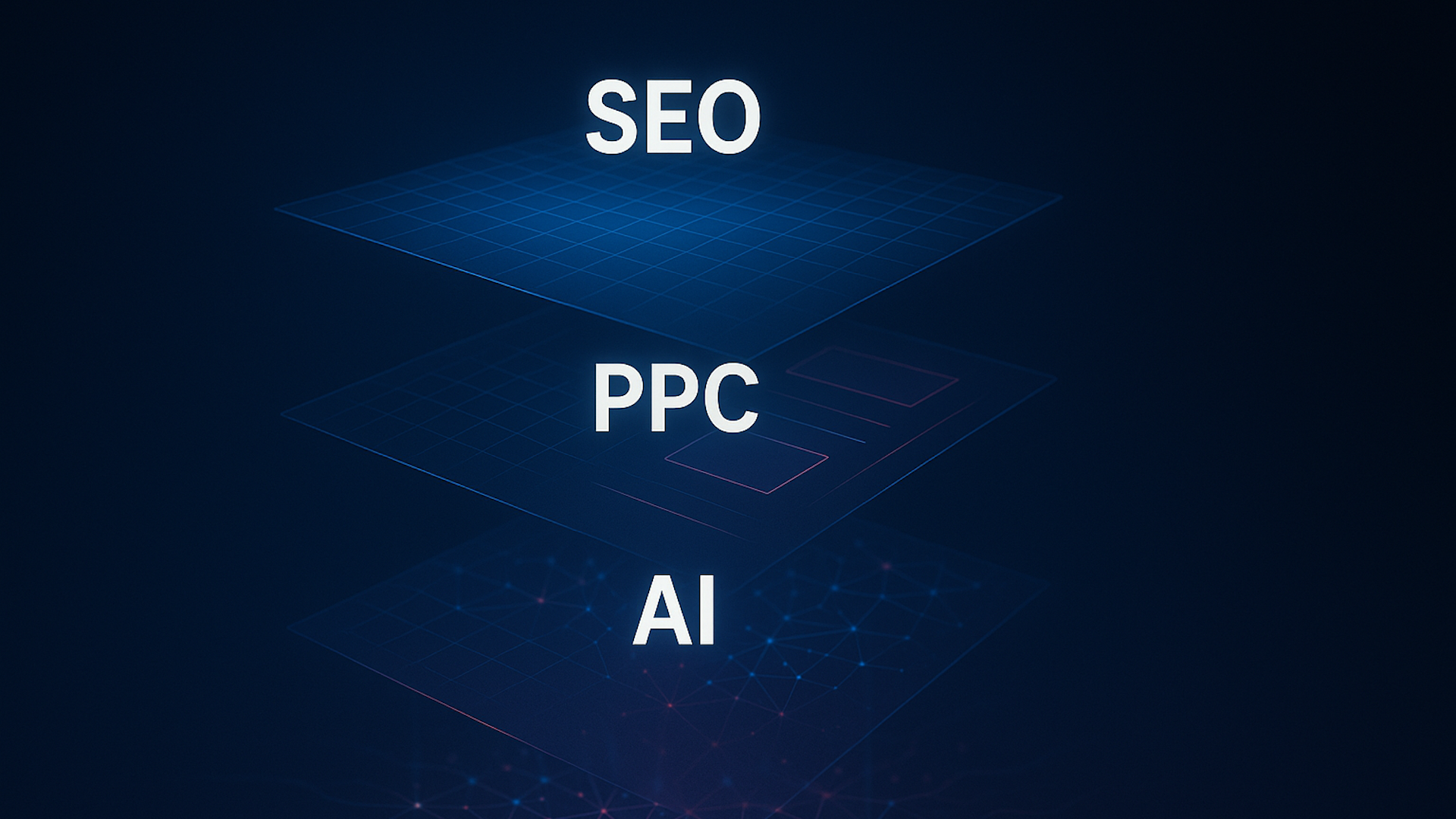
Marketers often see SEO, PPC, and AI as competitors. Truthfully, they’re three intertwined visibility layers.
SEO fosters presence, providing foundational visibility.
PPC amplifies position, stimulating awareness.
AI frames discovery, offering context and relevance.
Each component complements the others:
SEO supplies content AI distills.
PPC fosters initial visibility, attracting early engagement.
AI delves into extensive analysis, shaping your market presence.
I embarked on this article seeking an answer to the age-old question: which reigns supreme — SEO, PPC, or AI?
Mid-journey, clarity emerged: this outdated question will no longer suffice by 2026.
General counsel proves challenging, given unique circumstances.
For example, a local plumbing business may have started with PPC while growing through local SEO and referrals.
Eventually, reducing PPC reliance might have been tested unless leads dwindled.
Contrarily, a college with complex site structures, coupled with strong authority, could transition from ads — assuming proper planning and site optimization.
Now, a third ingredient has emerged: AI, with SEO, PPC, and AI forming a unified strategy.
Separating AI from SEO is no longer feasible. The disciplines of AEO, GEO, and related labels are increasingly married.
Understanding AI and SEO’s connections in retrieval-focused generation contexts becomes crucial.
While PPC’s link to AI isn’t as prominent, early integration is already in motion, evidenced by Google incorporating ads into AI summaries.
Optimizing AI echoes optimizing SEO’s practices.
While early, the need to optimize for AI is evident, demanding attention from SEOs and GEOs in the near term.
Inaction is costly; we lack a complete guide, yet actionable insights remain available.
How to Build Visibility Across SEO, PPC, and AI
By 2026, success isn’t mere “ranking,” but “being referenced.”
Staying afloat requires optimizing for machine-led content evaluation.
1. Adopt GEO
Format your content for AI retrieval.
Two to three short, concise sentences followed by layered context appeals to LLMs.
Utilize bullet points, clear logic, and data tables for AI to parse easily.
2. Feed the Knowledge Graph with Entity SEO
AI confirms facts using entities like people, brands, and ideas.
Your About page, schema markup, and author bios must be impeccable.
Without Google’s understanding of your identity, authority citations become unlikely.
3. Target Citation Gaps
AI systems link to trusted sources, favoring niche gurus and major outlets.
Redirect digital PR efforts toward “mentions” on sites AI deems authoritative.
4. Invest in Freshness and Data
LLMs lean towards recent data. Regularly update facts, timestamps, and comparisons.
Static content may falter against continually refreshed material.
5. Embrace Redundancy: The Hybrid Approach
No channel stands alone. Execute PPC for instant visibility, nurture SEO for long-term authority, and set AI-ready data structures simultaneously.
6. Build a Content Engine
Leverage “They Ask, You Answer” frameworks to tailor content that addresses audience needs.
In the ever-evolving world of AI-driven advertising, I’ve noticed that Performance Max campaigns have become absolutely crucial. Both Google and Microsoft offer these innovative opportunities, allowing advertisers to bring together creative assets, audience signals, and automation into a single seamless campaign type.
While Google and Microsoft share this foundational concept, they execute it uniquely. I am excited to offer an in-depth comparison of Google PMax and Microsoft PMax as they stood toward the end of 2025, hoping to shed light on the intricacies that could shape your 2026 advertising strategies.
What I found universally true across both platforms is the replacement of ad groups with asset groups. These groups encompass a blend of creatives, such as images and headlines, along with audience signals, but also carry an absence of any prioritization.
Significantly, PMax is built for automation. Both platforms request the use of Maximize Conversions or Maximize Conversion Value strategies, underlining the need for conversion tracking that can keep pace with no less than 30 conversions in a month.
Goal alignment is another crucial aspect. I realized that accurate reflection of business goals in your campaigns is imperative, for an artificially low ROAS target will likely backfire by yielding unexpectedly lower returns.
Search term visibility is an area where Google offers broader negative keyword support, unlike Microsoft who is still piloting this feature. However, Microsoft’s PMax creatives have been involved in AI placements longer, demonstrating proven results and thus indicating a stronger track record in this area.
Google’s PMax has evolved impressively, offering tools such as channel-level reporting and video asset support, which are particularly beneficial for visual marketing endeavors.
On the flip side, Microsoft’s edge, especially for B2B advertising, includes higher campaign limits, impression-based remarketing, and the integration of LinkedIn targeting signals, appealing for advertisers looking at high-quality lead generation.
Reflecting on both platforms, I believe PMax should be seen as a tool for incrementality rather than a replacement for proven search campaigns. The optimal approach involves leveraging both platforms’ strengths, whether it’s Google’s affinity for creative automation or Microsoft’s prowess in B2B targeting and remarketing.
I’ve been deeply involved in the compelling discussions around AI, especially the intriguing intersection of ‘AI hype meets AI reality.’ Tools like Semrush One and its Enterprise AIO tool have taken center stage, offering invaluable insights into what’s happening inside LLMs. The big questions I often ponder are: How many citations are we capturing and just how many mentions are our brands accumulating?
When this data first emerged, it felt revolutionary. However, it quickly prompted other questions, like ‘What’s the ROI here?’ and ‘How can I integrate this data into my team’s marketing strategy?’ Ensuring that this valuable and fascinating data translates into actionable insights is a challenge I enjoy tackling.
It’s no secret that the data these tools provide is incredibly valuable. But, what steps do I take next? Let’s uncover this journey together.
The Fundamental Challenges of Tracking LLMs
Tracking LLMs can be more challenging than traditional metrics like Google rankings. Google rankings may show where I stand, but ranking doesn’t always correlate with traffic or revenue. Even if I rank highly, an AI Overview could dominate the search, reducing my traffic for a given keyword. I need to ask myself, is this the right traffic for my business goals?
The big difference between traditional SEO rankings and LLM visibility is the straightforward correlation between strong rankings and increased revenue, which is more complex with LLMs. I can easily track user behavior after they land on my site from organic search, but it’s not so clear-cut with LLMs.
SEO effectively drives traffic to my site, allowing me to evaluate the success of my conversion rate optimization (CRO) strategies. However, LLMs operate differently, leaving me with the task of creatively connecting the dots.
The Problem with Methodology
As I dive deeper into using LLM-related data, I realize this approach requires me to step out of my comfort zone as a performance marketer. My usual reliance on direct attribution and data points is shifted toward constructing a narrative that ties LLM visibility to larger brand storytelling.
This method isn’t novel, however. Brand marketers have dealt with indirect metrics since the days of billboard advertising. Still, the shift requires me to create insights from what might seem like fragmented LLM data.
Metrics and Approach to LLM Impact Measurement
Uncovering the true value brought by LLM visibility metrics is a layered and comprehensive process. To do this accurately, I need to understand the wider ecosystem of my organization’s promotional efforts. This understanding allows me to determine the root cause of site traffic or branded searches effectively.
For instance, if a TV ad campaign runs concurrently with optimizing for LLM mentions, analyzing their impact becomes essential. Only with complete awareness of such activities can I identify true causality or correlation.
From here, I find that LLM visibility data is usually just the starting point. It’s unlike traditional SEO insights, which might be more apparent and direct. My task is to delve deeper, probing these data points to uncover richer insights.
The Branded Search of It All
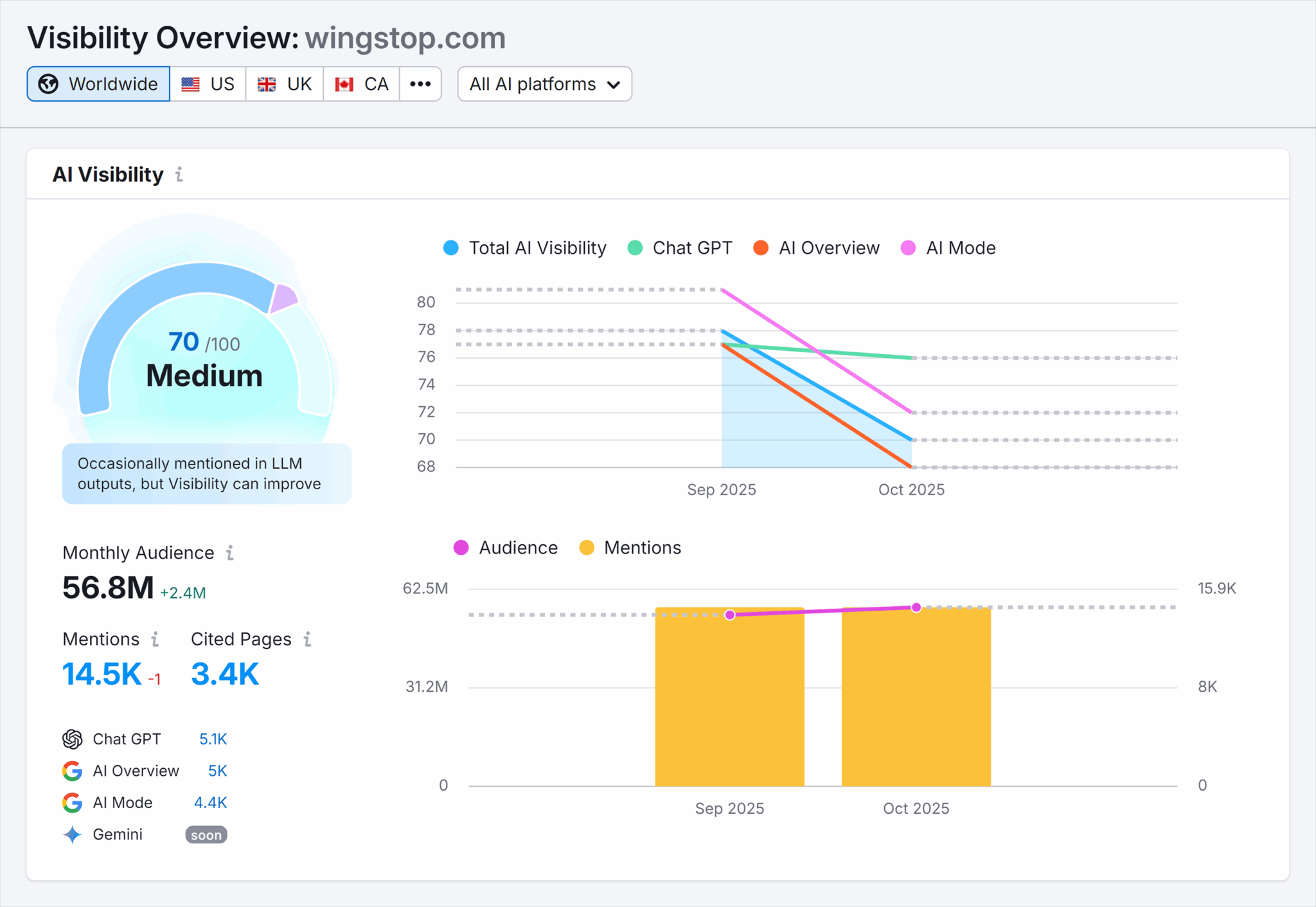
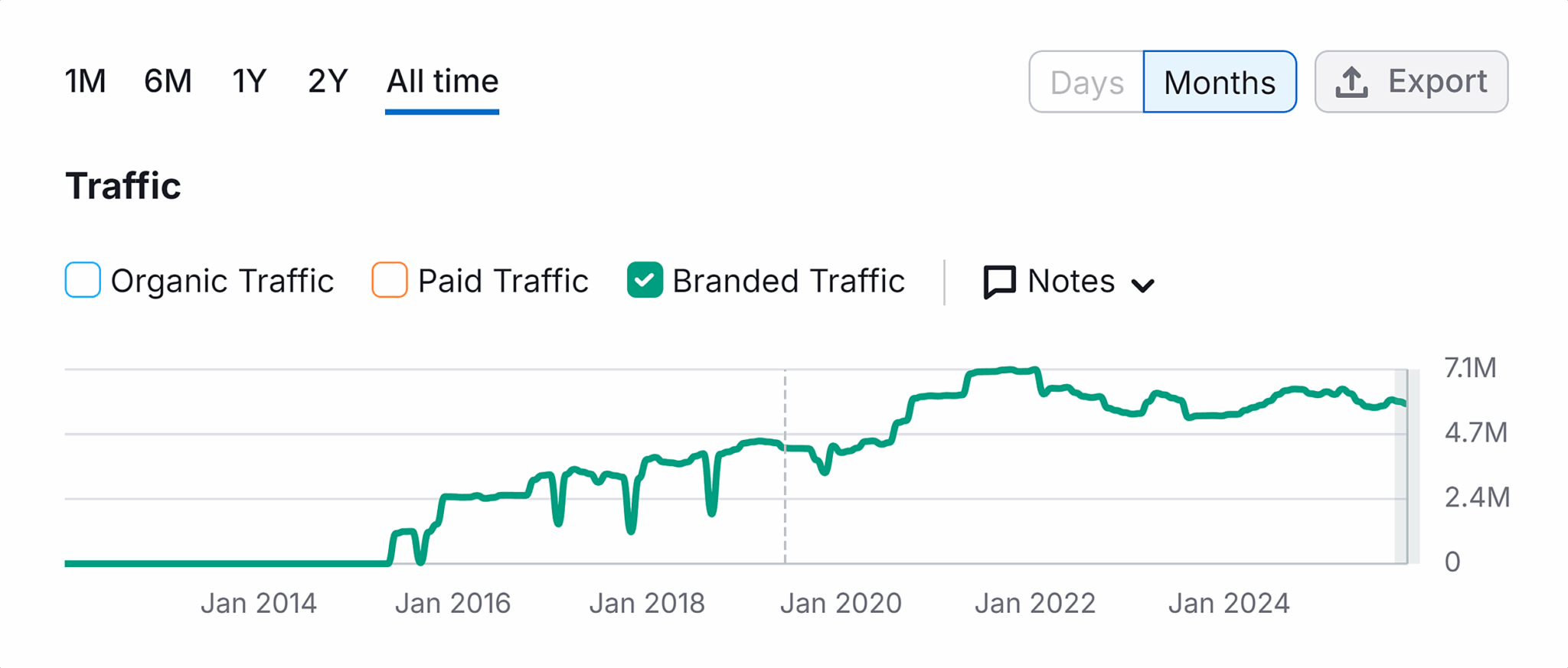
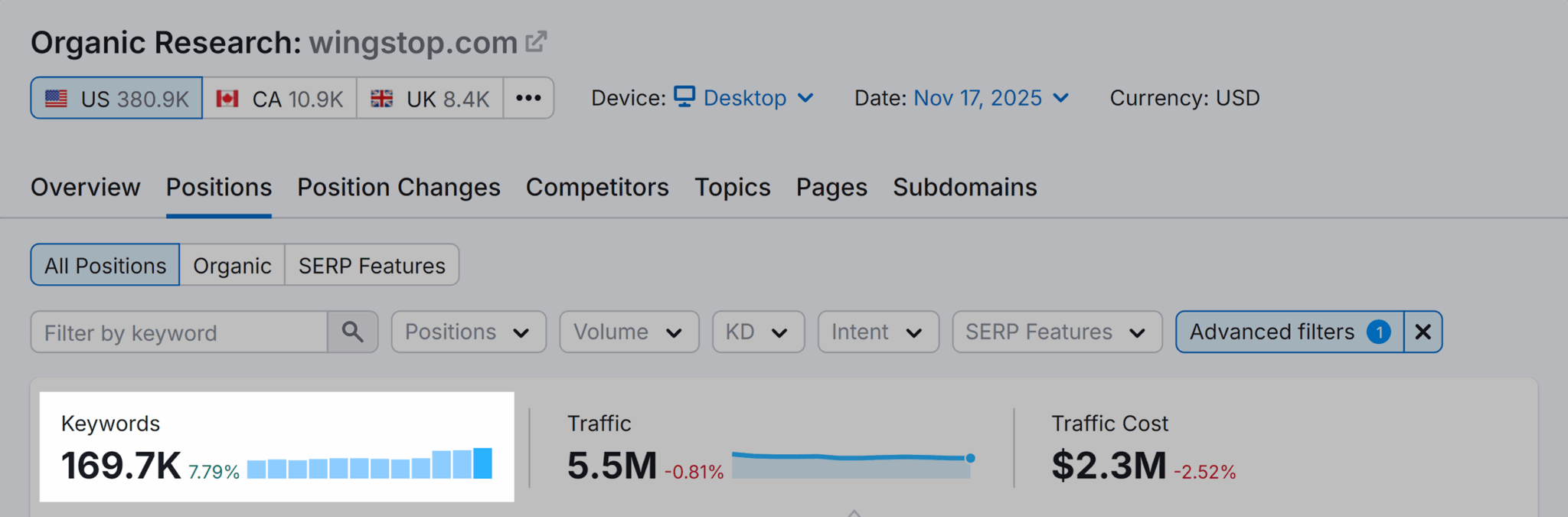
I’ve noticed that brand search provides exceptional insights into LLM performance, offering a rich vein of marketing intelligence. The comparison between two competing chicken wing chains, Buffalo Wild Wings and Wingstop, brightened this understanding for me. While their LLM citations differ, their brand awareness through social media presence offers a clearer picture of market positioning.
Simply examining the branded search traffic showed me how both brands performed similarly on Google, despite their different social media followings. Here lies the heart of utilizing search data creatively to find LLM visibility data strategies.
Rather than merely counting traffic, I am now compelled to consider the number of branded keywords involved, providing a sometimes surprising view on brand awareness and diversity. This approach provides a richer understanding of LLM visibility’s impact.
Direct Traffic: My Trusted LLM Data Companion
I’ve come to see direct traffic as an essential part of my LLM data narrative. Far from being a black hole, direct traffic can often indicate brand awareness and affinity, especially when correlated with LLM visibility metrics. Understanding these correlations allows me to paint a clearer picture of AI’s practical impact on consumer behavior.
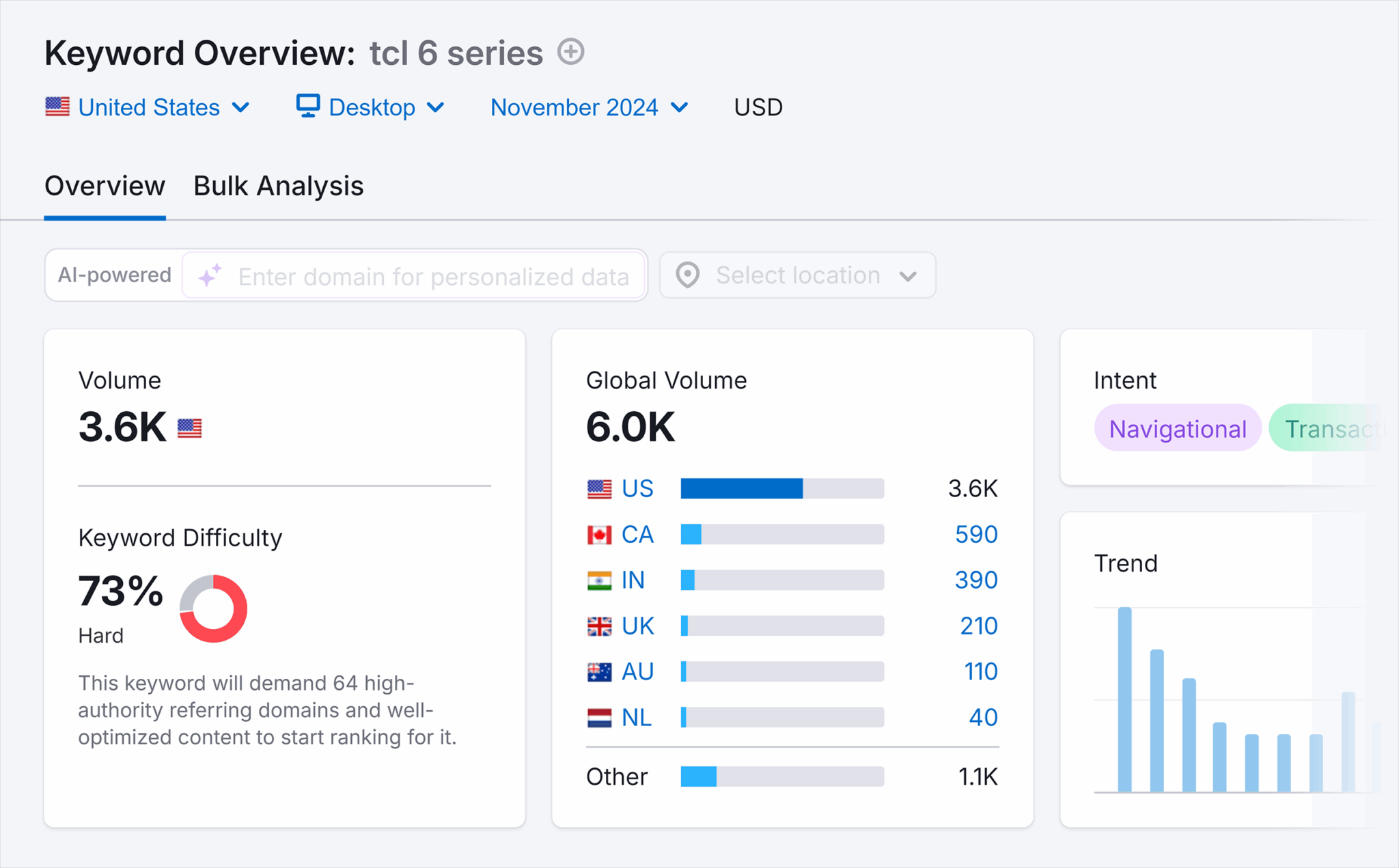
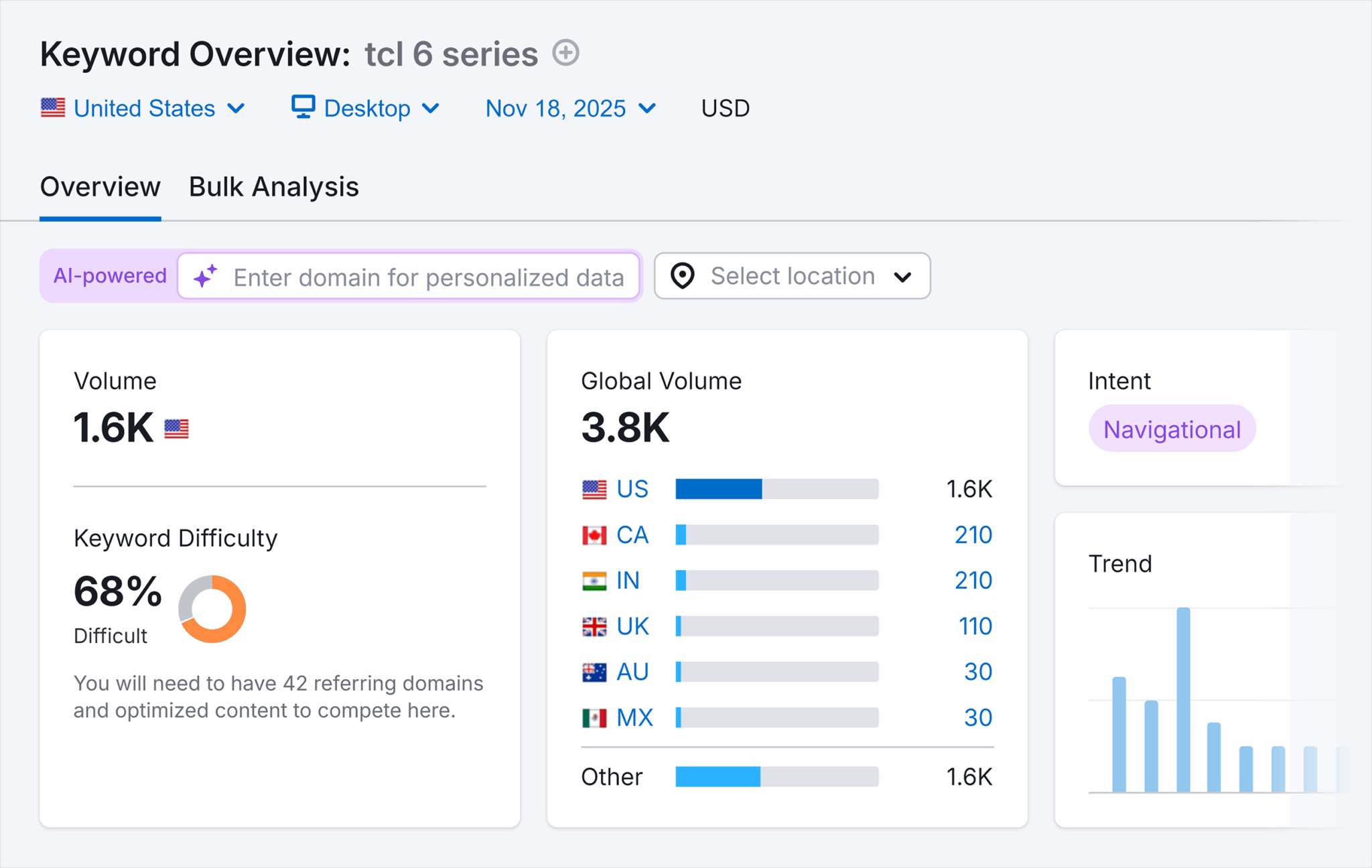
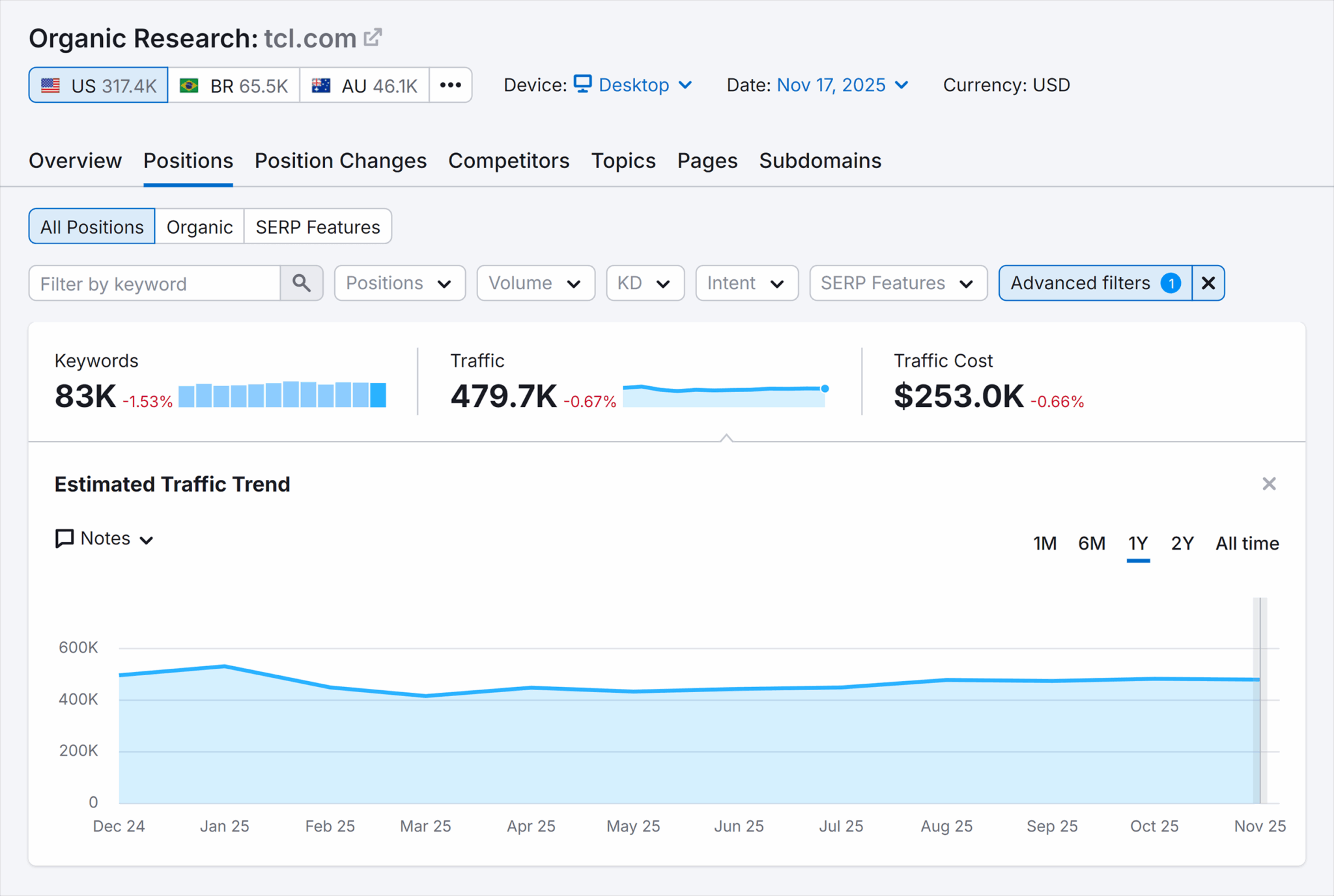
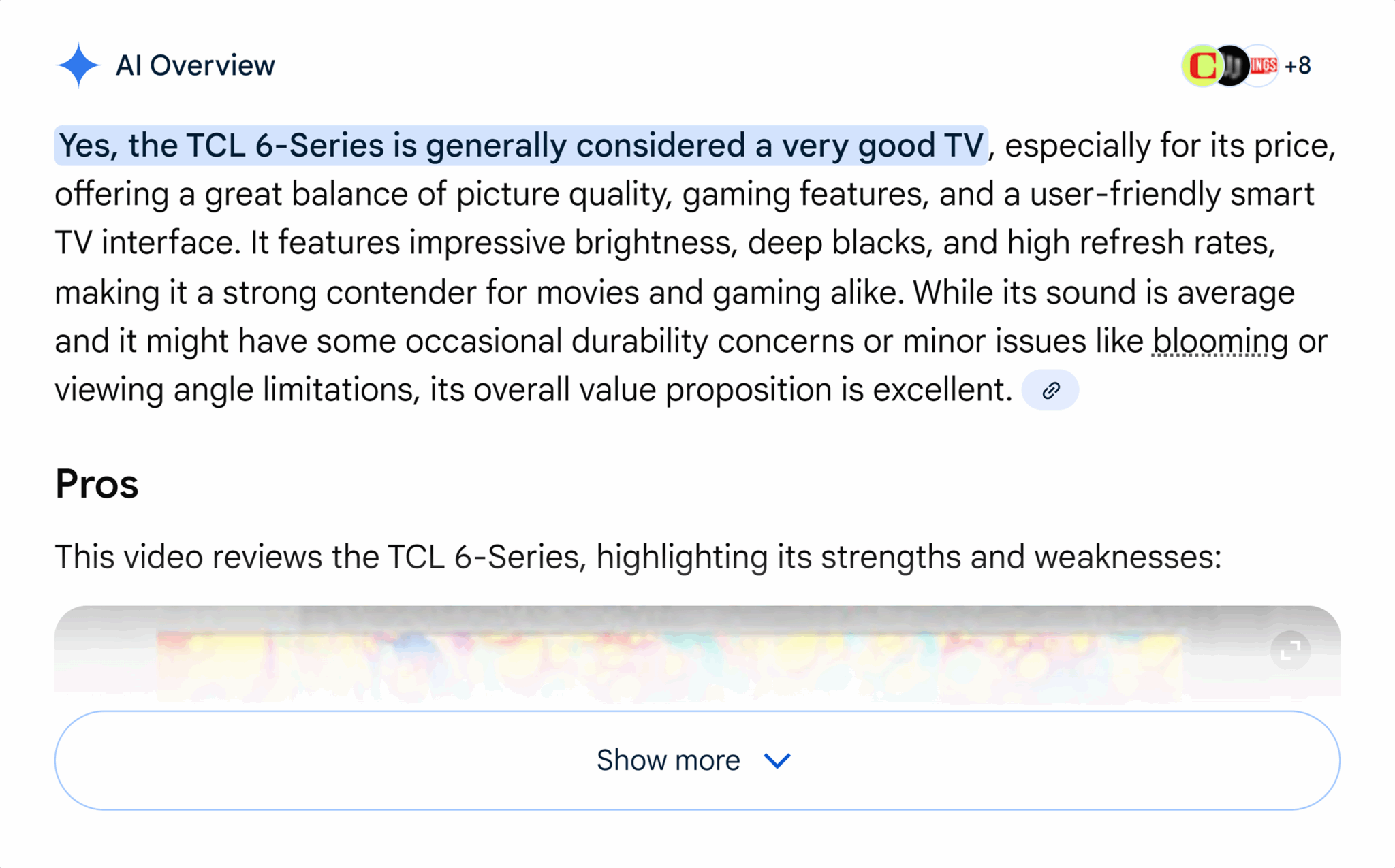
For instance, if I compare LG and TCL, LG’s superior direct traffic and increasing momentum in LLM visibility suggest a tangible AI-driven influence, a possibility I must explore through multi-metric analysis.
Considering various metrics together and identifying shared trends offer insight into how LLM visibility might be affecting my brand’s overall recognition and engagement.
Not Just One Metric: Stitching Together LLM Data Stories
Ultimately, it’s about developing a comprehensive data story from LLM visibility insights. This story goes beyond direct KPIs, utilizing various data sources, such as bounce rates and organic traffic, to add depth and relevance to the narrative. Every piece of performance-focused data stands as testimony to the expertise we can bring to LLM visibility.
Total LLM visibility data, when creatively amalgamated with performance data, can transform insights into actionable strategies that align with pragmatic business objectives, showcasing our value in the AI-driven landscape.
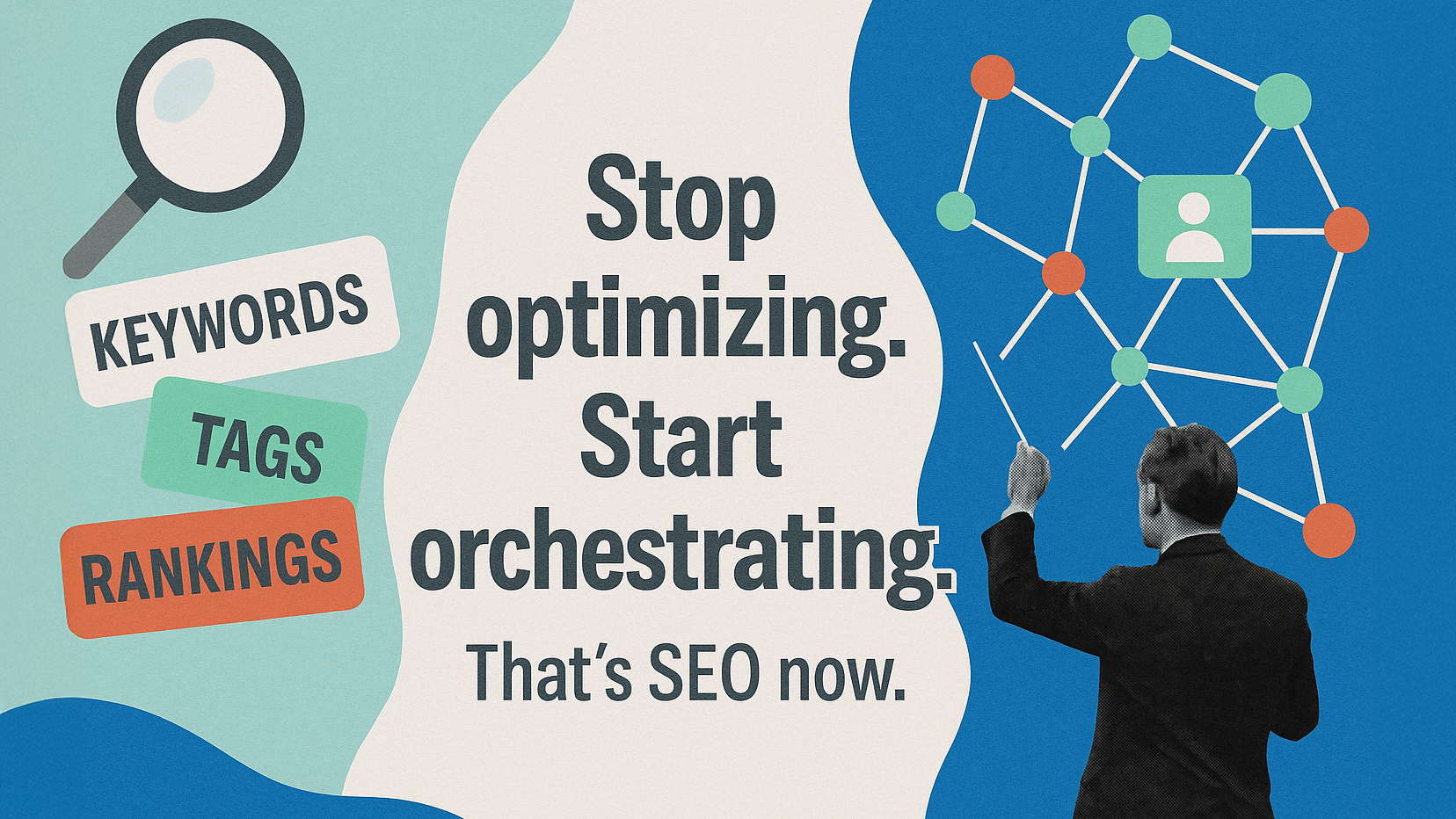
From search engines to generative engines, I’ve been part of the journey where the essence of SEO is deeply rooted in empathy. These days, it goes beyond mere optimization, demanding a bigger role in orchestrating clarity throughout the enterprise.
Headlines claiming another “AI winter” seem to circulate more frequently, and the statistics seem to support this skepticism. According to MIT’s research, although 80% of organizations have piloted GenAI and 40% have deployed it, only a mere 5% have scaled it. Further, seven of nine sectors have shown no structural change. Similarly, McKinsey reports reveal a disconnect where 36% of executives report no revenue impact, and only 19% have seen revenue grow over 5%, with 87% expecting growth to take years. Implementation is common, but impact is scant.
Yet, these headlines and figures overlook the real-time transformations within enterprises. SEO leaders are now being invited to lead in Generative Engine Optimization (GEO). It’s not because we’re AI specialists or understand every intricate detail of large language models—we often don’t. It’s because SEO is fundamentally about empathy, which is crucial now more than ever.
SEO has never solely been about keywords or search rankings. It’s driven by empathy on two primary fronts: understanding search engines—where Google aims not just for quality content, but to increase queries and ad revenue—and understanding users—ensuring they encounter the least friction in finding what they seek despite platform constraints.
Now, a third form of empathy comes into play—not for machines, which have no wants, but for the growth-driven giants building them. Their goals are straightforward: maximize adoption, engagement, and usage. Like Google, they’re eager to sacrifice accuracy for these metrics.
As SEO professionals, we often hesitate to acknowledge this, but the adage “just create good content” was never entirely true. Google favored backlinks and its own preferred content. An algorithm based on patterns can’t differentiate between quality and mediocrity—and AI providers will likely follow suit. Ignoring this reality is naive.
Capitalizing on shifting incentives within the enterprise’s workflow has been eye-opening. A short while ago, my PR team hesitated about digital outreach proposals. Yet, when I introduced a GEO pilot—using identical product descriptions across various platforms to better interpret our offerings—their attitude changed completely. That illustrates how reframing from SEO to GEO transformed their reception from resistance to enthusiasm.
The focus isn’t solely on visibility. When visitors arrive at our site, it’s not just about keyword optimization; it’s about optimizing their entire journey. Do they encounter the right message and next steps with minimal friction? Previously, we might have called this conversion rate optimization. Is it SEO now? Honestly, I’m unsure what SEO entails. What I do know is that to drive value, we must evolve. It’s about aligning with outcomes, not protecting a label.
This isn’t just theoretical. Here’s how I’ve been orchestrating at Adobe. Instead of optimizing for small traffic gains, I collaborate across teams to focus on what truly matters:
With Product Marketing, utilizing visuals to convey our message effectively.
With Comms and Client Success, leveraging case studies that resonate with buyer needs.
With PR, maintaining consistency across third-party sites to avoid GEO fragmentation.
With Account Executives, analyzing account discussions—identifying key contacts, uncovering objections, understanding why prospects select us over competitors. This vital intelligence feeds back into our content strategy and positioning.
This is just the surface level. The next horizon is data—curating our own ontology to standardize how the enterprise describes itself, ensuring consistent communication across teams and systems.
Enterprise teams are reaching out to us for guidance. Departments like Product, PR, Analytics, and Compliance are in pursuit of clarity. The tough truth is that if we remain complacent, GEO will be tackled by other areas in fragmented ways. Product will focus on features, PR on reputation, and analytics will get lost in metrics, leading to disjointed strategies.
As SEO specialists, we’re ideally positioned to lead GEO efforts due to our core skill of empathy, which enables us to balance platform incentives with user needs, transforming ambiguity into alignment. This is exactly what’s needed for GEO to succeed, preventing noise and activity without tangible outcomes.
Ultimately, SEO isn’t dead; it’s evolving into something unrecognizable and demanding leadership. Leadership means acknowledging our limited LLM knowledge but understanding how to assemble and align the right people.
If your reports still focus exclusively on traffic, rankings, or visibility dashboards, you’ve fallen behind. Enterprises require orchestration, not more metrics.
Whatever we choose to call this discipline, it’s shifted from merely optimizing to orchestrating clarity—across platforms, teams, and user journeys. That’s our mandate. Without our leadership, SEO, and its new form stretches beyond recognition, will lack an owner. So I ask, is SEO dead, or has it evolved into something far greater?