
As an ecommerce enthusiast, I know how crucial it is for our products to be easily understandable by AI systems. In today’s visually-driven market, designing images that AI can interpret accurately, from OCR-ready labels to visuals aligned with sentiment, is essential.
The power of images and videos to tell complex stories instantly is unparalleled. In our digital store, these visuals are not just content—they are tools that aid in making purchase decisions.
Generative search systems capture objects, embedded text, and style to deduce potential use cases. Language Learning Models (LLMs) then bring to light the assets that best respond to a shopper’s inquiries. Essentially, each image becomes structured data that breaks down buying barriers, amplifying discoverability in multimodal searches when someone takes a photo or uploads a screenshot.
Visual search as a shopping behavior
Our customers often use visual search for quick decision-making: snapping photos, scanning labels, or comparing products to decide “Will this work for me?” It’s vital that our photos fulfill this need, showing scale, size cues, real colors, and comparisons.
Multimodal search reshaping behaviors
With visual search on the rise, Google Lens handling 20 billion monthly queries mostly from younger users, it’s a clear sign of changing behaviors. These behaviors fall into distinct intent categories.
Quick capture and identification
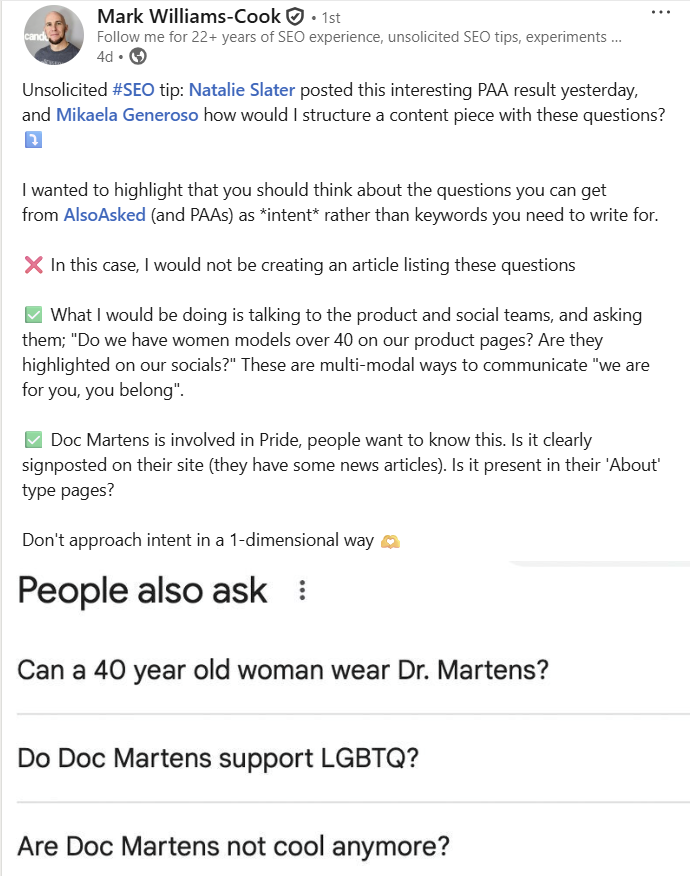
Taking a photo to identify an item (like “What plant is this?”) helps with quick recognition and troubleshooting, accelerating issue resolution and product verification.
Visual comparison
By showing a product and asking systems to “find a dupe” or analyze “room style,” we bypass complex descriptions, promoting faster cross-category shopping and suitability checks.
Information processing
Displaying ingredient lists or foreign texts prompts real-time data conversion, avoiding manual reentry or the need for alternative instruction sources.
Modification search
Asking for product variations like “this but in blue” allows for specific attribute searches without chasing model numbers, indicating a shift from text-based navigation to visual exploration.
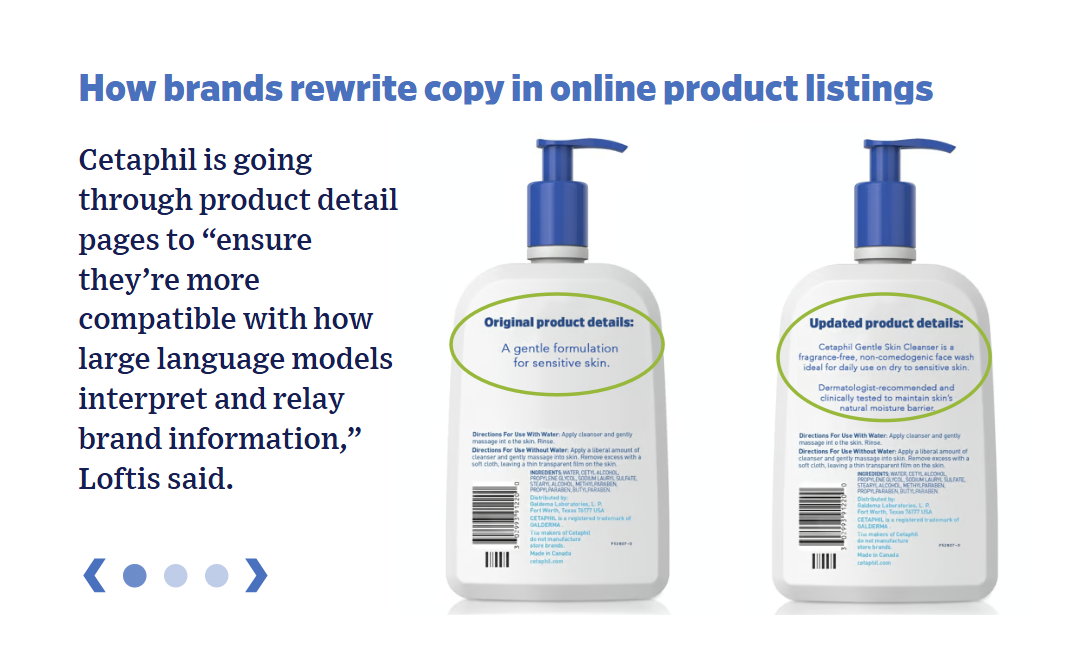
Multimodal AI has made instant recognition, decision support, and creative exploration accessible, reducing friction in ecommerce and information journeys.
You can check a detailed table of multimodal visual search types here.
Further Reading: How multimodal discovery is redefining SEO in the AI era
Prioritizing content and quality for purchase decisions
We must ensure that our product images spotlight the details customers care about, like pockets or stitching. Images convey these abstract ideas authentically, prompting shoppers to answer questions such as whether a particular style is suitable for them.
Original images are crucial; they highlight effort, uniqueness, and skill, making our content more personable and credible.
Making products machine-readable for image vision
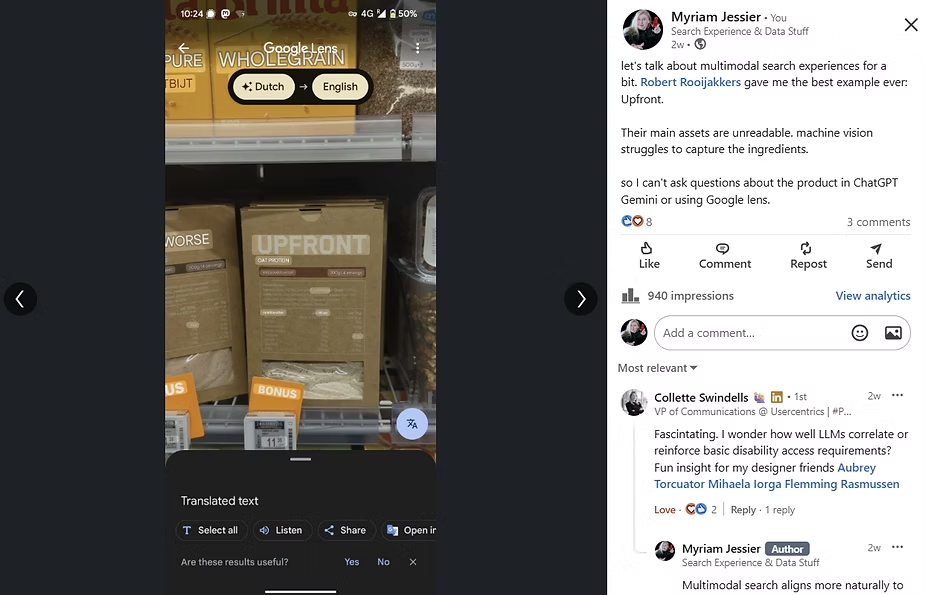
For products to be machine-readable, all visual elements need to be easily interpreted by AI. This begins with the design of images and packaging.
Products and packaging as landing pages
Ecommerce packaging should be crafted like a digital asset, thriving in a world driven by multimodal AI searches.
If AI or search engines fail to read packaging, the product might as well be invisible at the peak of consumer interest.
Designing for OCR-friendliness and authenticity
Google Lens and leading LLMs employ optical character recognition (OCR) to extract and index data from physical goods. Therefore, text and visuals on our packaging need to be OCR-friendly.
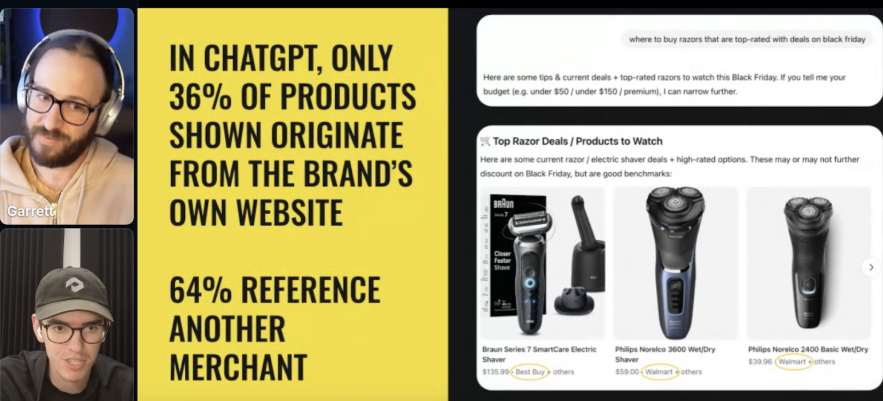
Use high-contrast color schemes—black text on white backgrounds is ideal. Ensure that critical information is in clean, sans-serif fonts on solid backgrounds without patterns. Treat physical product labeling with the same care as a landing page, much like Cetaphil does.
Avoid these common errors:
- Low contrast.
- Decorative or script fonts.
- Busy patterns.
- Curved or creased surfaces.
- Glossy materials that disrupt text visibility.
Document OCR fail points and analyze why they occur. Run a grayscale test to ensure text remains legible without color.
Add a QR code to each product for direct access to a webpage with structured, machine-readable HTML information.
High-resolution, multi-angle product images are optimal, especially for items needing authenticity checks. Genuine photos excel in accuracy and credibility, outperforming AI-generated images.
Dive deeper: How to make ecommerce product pages work in an AI-first world
Managing your brand’s visual knowledge graph

In an AI-driven context, it’s about more than just your product. AI builds contextual databases, examining every object in an image, which helps infer the brand’s market position.
Elements like props, backgrounds, and adjacent items fine-tune our brand’s digital persona. With each visual placement, we send out signals—be it luxury, sportiness, or utility—all influencing the brand’s perception machine-wise.
Guarding these adjacency signals is now intrinsic to brand management. Strategic curation helps AI accurately interpret our brand’s value, setting us up to appear in high-value conversational queries.
Conduct a co-occurrence audit for brand context
We should set up processes to evaluate brand context for multimodal AI searches systematically. Using tools like AI Modes, ChatGPT searches, or similar LLM models, gather relevant lifestyle or product photos to input into these systems. A prompt like:
- “List each object in the image. From these, describe the potential owner.”
This step enriches our understanding of the machine’s narrative, helping us adjust any disconnects, like misaligned perception due to unintended signals. From there, we craft specific guidelines for props, contextual elements, and visual do’s and don’ts for our creative teams to safeguard brand narrative.

Refining this alignment ensures that machines perceive our brand consistently with our strategic goals, bolstering our presence in new-gen search settings.
Brand control across the visual layers
Using the brand control quadrant, we efficiently manage brand visibility through machine interpretation, focusing on four key layers—some we own outright, others we can influence.
Known brand layers
Here, we have visuals like official logos and branded imagery, which are typically controlled and recognized by both our audience and AI.
Visual strategy:
- Create a visual knowledge database.
- Regularly evaluate adjacent objects in brand visuals.
- Develop an “Object Bible” to avoid narrative misalignment, ensuring lifestyle cues uphold our brand image.
Latent brand
These include “wild” images like user photos and social posts that can lead to unexpected inferences about our brand’s standing.
- Audit these occurrences to prevent unintended associations.
Shadow brand
This involves old brand assets and materials that could be unintentionally made public, influencing AI’s interpretation of us.
- Audit all public archives for outdated visuals; remove or update them.
- Ensure that current branded visuals reflect our strategies.
AI-narrated brand

AI synthesizes narratives by blending visual and emotional cues with text, which could introduce competitor tones or mismatched perceptions.
Visual strategy:
- Use AI tools like Google Cloud Vision to verify tonal alignment.
- Adjust mismatched assets to ensure narrative cohesion.
Sentiment alignment: balancing visual tone and emotional context
Beyond supplying information, images capture emotion and attention within moments, shaping customer perceptions.
In AI-driven searches, this emotional resonance becomes a direct signal, evaluated for emotional tone, sentiment, and context.
The affective quality of each image is assessed by LLMs, along with sentiment and contextual tone to match content with the user’s emotional state and intent.
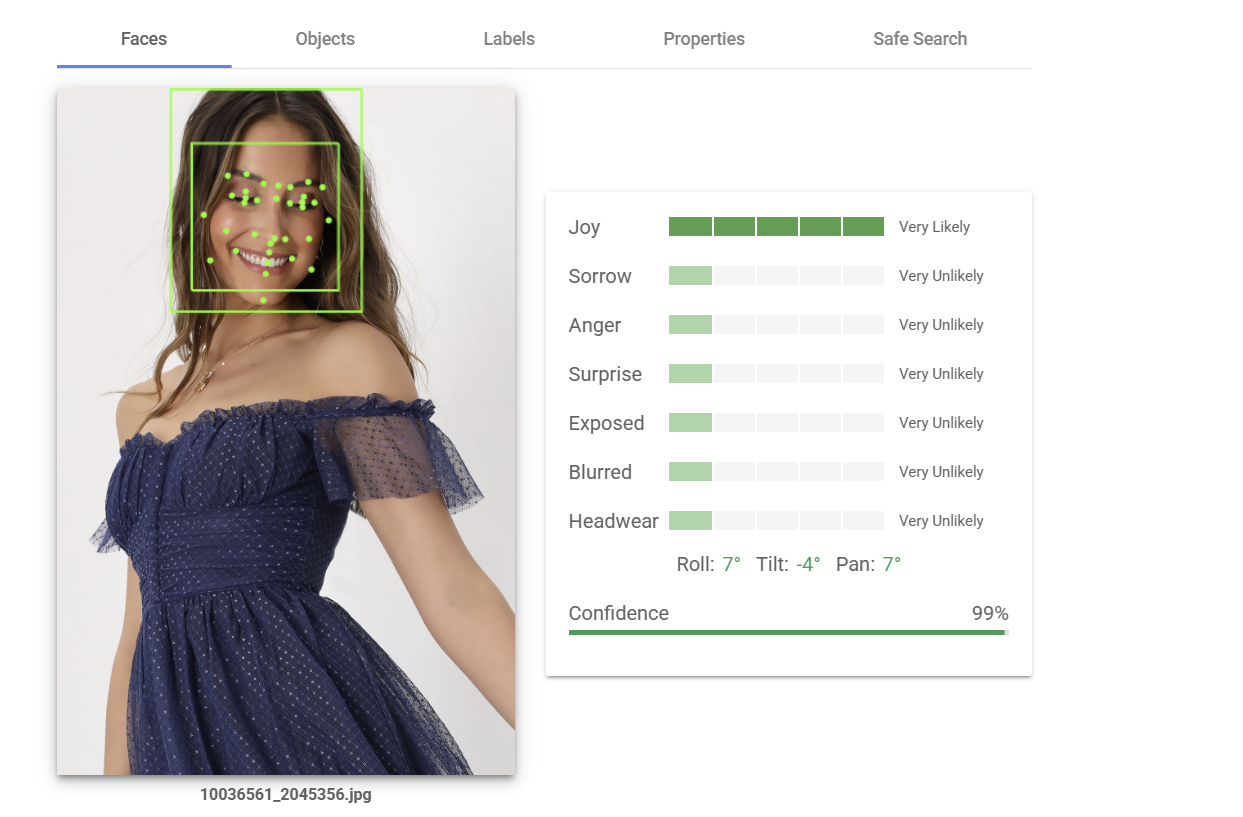
We need to deliberately design and inspect our imagery’s emotional tone, using tools like Microsoft Azure’s Computer Vision API to:
- Score emotions in images broadly.
- Assess facial expressions for emotion probabilities, allowing imagery to be accurately targeted—like promoting calmness in a yoga line or confidence in business wear.
Align image emotion with marketing targets. Ensure the imagery arouses the right emotions and resonates with our audience.
Start by recognizing the emotional baseline in your imagery, rigorously testing for consistency with AI tools.
Matching your brand narrative with AI perception
We must focus on authenticity in product photos, ensuring every asset is designed for machine-readability and maintaining visual context and sentiment meticulously.
Treat packaging and online visuals as digital assets; conduct regular audits for object proximity, emotional tone, and clear identification.
AI will craft a narrative for our brand with or without guidance, so it’s essential to ensure every visual aligns with the intended story.
Inspired by this post on Search Engine Land.

Leave a Reply