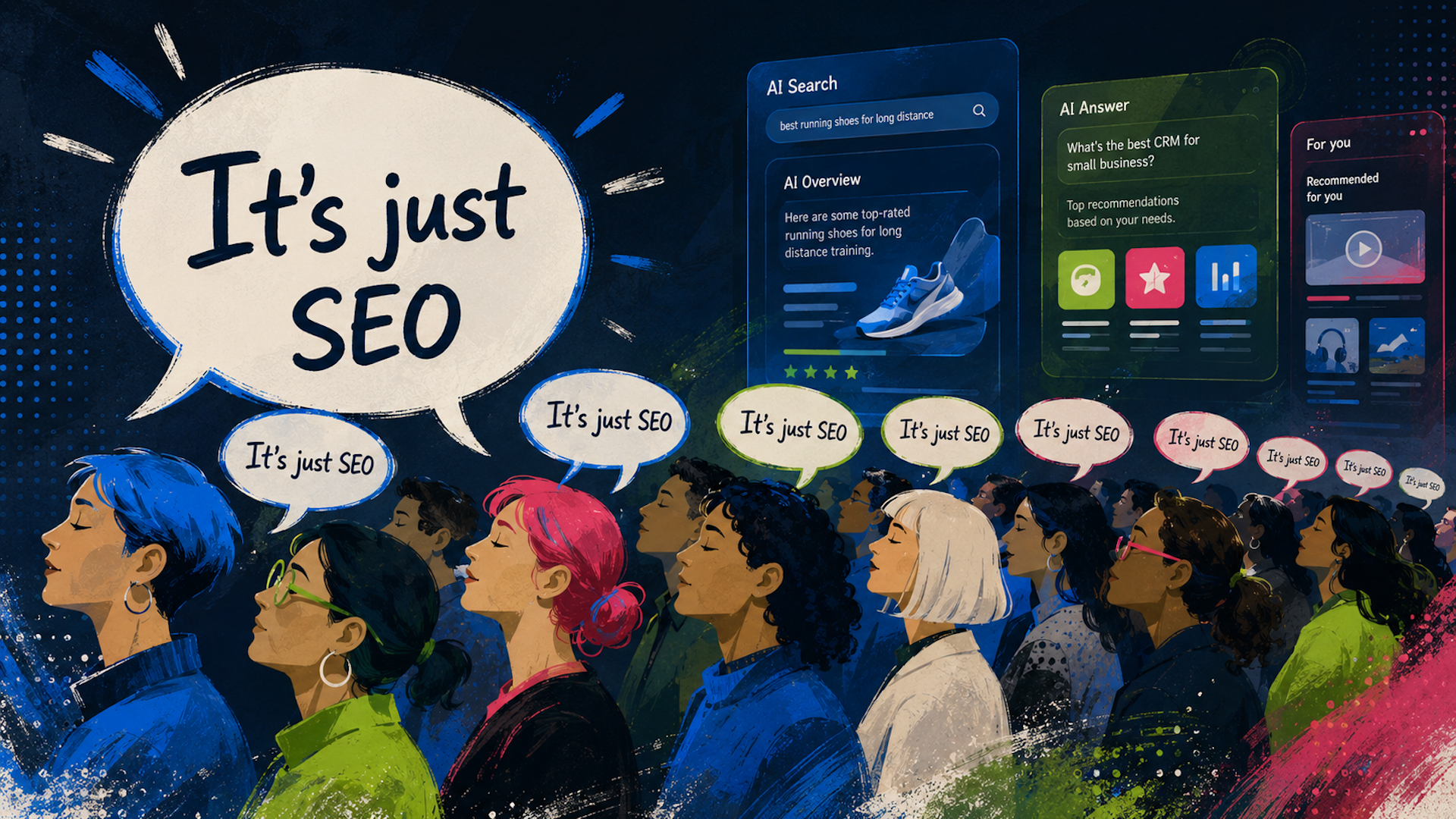
I’ll be honest; the ongoing discourse around the GEO debate feels like a distraction from a much more significant transformation. AI systems are reimagining how brands, sources, and recommendations are surfaced, demanding our full attention.
It’s both impressive and frustrating how search has managed to spark such passionate debate at a time when it should be becoming more pivotal to clients. Yet, our industry is stuck in arguments that render us irrelevant.
So, who truly owns the future of search? That’s the real question we need to tackle.
Who defines the next phase of search? Who secures the budget? Who articulates the shift from a list of links to a machine-driven recommendation system?
The phrase “it’s just SEO” has caused considerable damage. It sounds like the calm, seasoned wisdom you’d expect from a search veteran. However, it lacks strategic depth. It’s a meme that constrains one of the most substantial commercial opportunities in years.
Why Memes Matter in Search
Memetics isn’t a new concept. Richard Dawkins introduced it in “The Selfish Gene” in 1976, suggesting that ideas spread through culture in a fashion similar to genes. Susan Blackmore expanded on this, claiming we’re essentially ‘meme machines’ built to propagate cultural information. The most resilient ideas aren’t necessarily true; they’re the stickiest.
Take “Happy Birthday to You,” it’s memorable and universally known not because it’s brilliant, but because it’s easy to replicate and emotionally fulfilling. Slogans and professional clichés endure for their simplicity and utility, not their accuracy.
SEO and GEO are entangled in a memetic struggle. This issue is amplified as the phrase “it’s just SEO” became predominant when GEO appeared, driving a wedge into meaningful conversation.
When GEO first came into the discussion, reactions varied. While some recognized the need for new tools and methods, others viewed it as a threat, repelling it with the phrase “it’s just SEO” — turning it into a chant and then a weapon. It was an ideal meme, short and socially protective.
The follow-up meme “GEO grifter” did even more harm, framing advocates of GEO as opportunists and stifling exploration and innovation. This behavior causes harm when consensus forms based solely on repetition, with the algorithms rewarding those repeating the framing, creating a false sense of agreement.
Clients Seek Certainty, Not Acronyms
I’ve observed firsthand at conferences like BrightonSEO that many marketers are already leveraging generative systems. They don’t need debates over terms; they’ve adapted to new processes accordingly.
SEO has always been difficult to sell against paid counterparts due to previous uncertainties and failures. Nonetheless, good SEO generates tangible success. Failing to clarify the changes will see budgets drift elsewhere, especially to paid avenues.

The B2B Institute’s Findings
According to LinkedIn’s B2B Institute, growth for B2B brands stems from being easy to locate. Digital environments now demand visibility across new platforms.
The report views GEO as an extension of SEO and emphasizes establishing authority, relevance, and credibility. Discoverability is altering, yet core principles endure.
The 9 a.m. to 5 p.m. Dilemma
“It’s just SEO” oversimplifies a vast concept. When someone insists GEO is “just SEO,” I must ask — which kind? Each interpretation involves different practices and focuses.
If our response to generative systems is “helpful content,” we’re on the wrong track. The future demands more than vague promises; it requires adopting digital PR, brand strategies, and tactical marketing insights.
No Name, No Funding
Markets can’t invest in what they don’t recognize. Naming GEO is crucial as it turns abstract threats into actionable categories. Without a name and a defined category, the industry will fail to secure the investments needed to thrive in an altered landscape.
Ultimately, whether we call it GEO, AI search visibility, or SEO evolved, defining it ensures survival and growth. Brands that embrace this will capture opportunities that arise as search evolves.
A New Framing for Change
It’s time to acknowledge change and redefine the narrative. The transformation involves becoming the recommended brand — present, visible, and credible. It’s about expanding SEO to embrace the broader spectrum of digital marketing.
Adapting to these shifts will ensure brands maintain their visibility as search continues to evolve. Those clinging to outdated debates are at risk of missing out entirely.
Inspired by this post on Search Engine Land.

Leave a Reply