
If you manage bot access at a CDN, firewall, reverse proxy, or application layer, Google Web Bot Auth presents an awkward decision: prepare for stronger bot identity without blocking legitimate traffic that does not yet use it.
The safe approach is to add Web Bot Auth as a new verification signal, not replace your existing controls. You can then learn from signed requests, distinguish authentication from permission, and tighten access only when coverage is reliable enough for the agents and routes you care about.
What Web Bot Auth actually changes
A user-agent string tells you what a requester claims to be. IP and reverse-DNS checks can associate a request with known infrastructure. Neither gives you the same kind of identity evidence as a cryptographically signed request.
Web Bot Auth is an experimental cryptographic protocol that lets participating bots sign requests. A compatible verifier can use that proof to determine whether the request came from the claimed agent rather than trusting a label that another client could copy.
| Signal | What it tells you | How to use it now |
|---|---|---|
| User-agent string | The identity a requester claims | Keep it as classification context, not proof by itself |
| IP and reverse DNS | Whether the request is associated with expected network infrastructure | Keep using these checks during the limited rollout |
| Web Bot Auth | Whether a participating agent supplied valid cryptographic identity proof | Add it as a stronger signal where verification is supported |
This is an authentication improvement, not a complete bot-management policy. A valid signature can help establish who sent a request. It does not decide whether that agent may crawl a page, use an expensive endpoint, access licensed material, or bypass rate limits. Those are authorization decisions that remain yours.
That distinction prevents the most dangerous implementation mistake: treating “authentic” as a synonym for “allowed.” A verified agent can still request a route your policy excludes. An unsigned agent may still be legitimate while adoption remains partial.
Why Web Bot Auth must remain an additional signal
Web Bot Auth is in a limited test involving some AI agents hosted on Google infrastructure. Not every Google user agent uses it, and Google is not signing every bot request. Requiring a valid Web Bot Auth result across your site would therefore turn incomplete deployment into an access-control failure.
In practice, the absence of a signature has three possible meanings: the requester is not participating, a participating agent did not sign that request, or the requester is not what it claims to be. The rollout does not yet let you collapse those cases into “fraudulent.” Keep IP, reverse-DNS, and user-agent checks operating alongside the new protocol, as Google advises during gradual adoption.
Your internal classification should represent that uncertainty. A binary “Google bot” field is no longer enough. Use separate states such as:
- Cryptographically verified: Web Bot Auth verification succeeded and resolved to an identity you recognize.
- Legacy verified: the request passed your established network and identity checks but did not carry usable Web Bot Auth proof.
- Unverified: the request supplied no acceptable proof and did not pass your legacy verification path.
- Contradictory or failed: the claimed identity conflicts with your verification results, or supplied authentication material fails verification.
Do not silently translate “legacy verified” into “untrusted.” That would make a protocol coverage gap look like a security finding. Conversely, do not let a familiar user-agent string upgrade an unverified request into a trusted one.
Failed proof deserves more scrutiny than absent proof. An unsigned request may simply sit outside the test. A request that presents authentication material but cannot be validated has actively failed the verification path. Your system should preserve that distinction for policy decisions and incident review.
A safe adoption plan for your edge and application stack
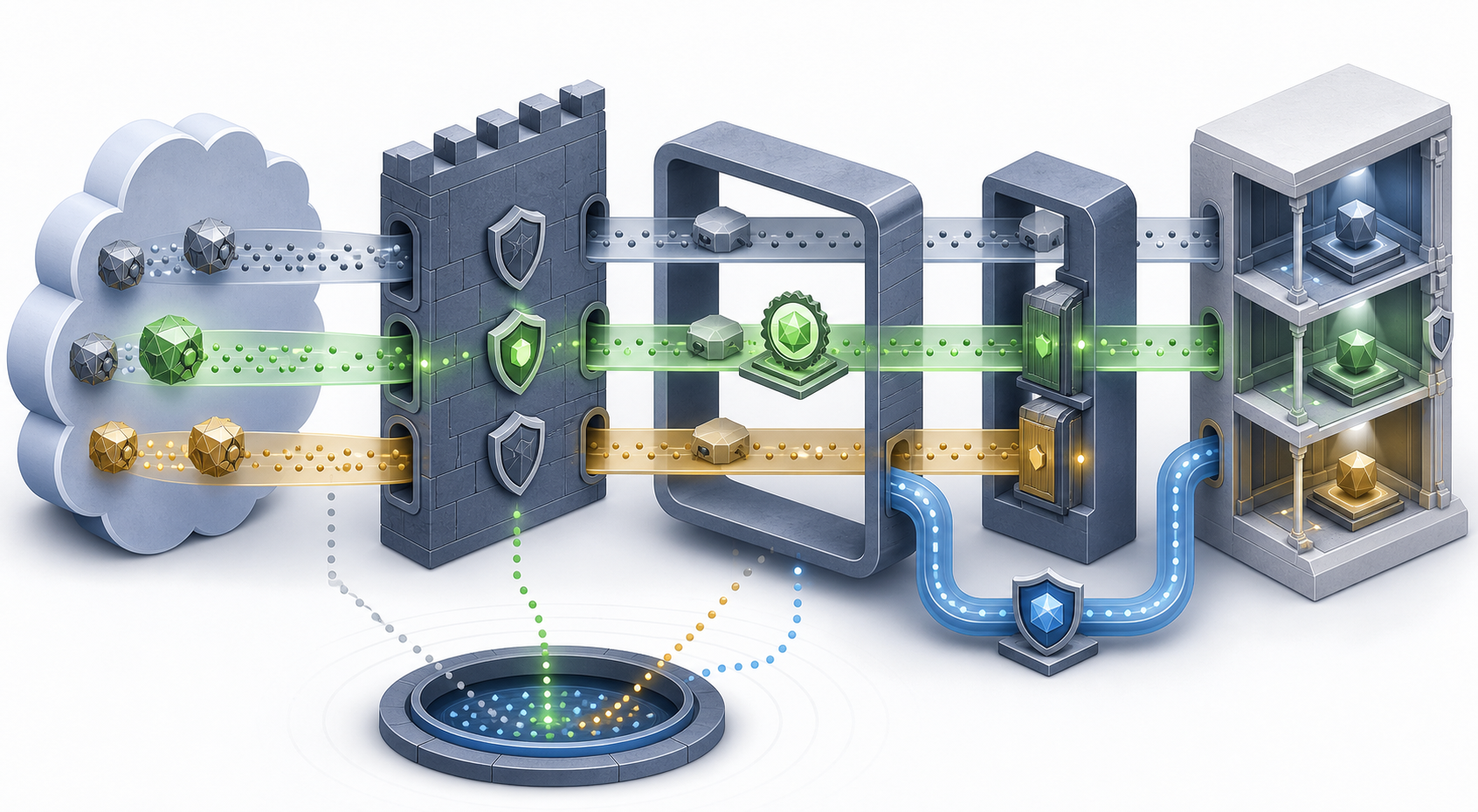
You do not need to redesign every bot rule at once. Start by separating verification from enforcement, then introduce the new result in stages.
- Map the current decision path. Identify where user-agent checks, IP rules, reverse-DNS verification, rate limits, robots directives, and application permissions affect a request. Note whether the decisive action happens at the CDN, firewall, reverse proxy, application, or more than one layer.
- Define the verdicts before integrating them. Decide how your system will represent valid, absent, failed, unsupported, and indeterminate Web Bot Auth outcomes. Do not force these states into one Boolean field.
- Add verification without changing access. In the first phase, calculate and log the Web Bot Auth result while preserving existing allow, limit, challenge, and deny behavior. This gives you evidence about real coverage without risking accidental exclusions.
- Compare signals. Review requests that claim the same agent identity but produce different network and cryptographic results. Investigate disagreements before using the new signal to make blocking decisions.
- Introduce graded enforcement. Prefer lower-risk actions, such as applying ordinary rate limits to unverified automation, before making a signature mandatory. Reserve strict requirements for routes where you have confirmed support and where the cost of unauthorized access justifies the tighter rule.
- Keep a rollback path. Authentication failures should be visible, attributable to a specific policy, and reversible without redeploying unrelated application code.
Place verification where request data can be inspected before an irreversible allow-or-deny decision. That may be at the edge in one architecture and inside a trusted gateway in another. Do not assume your CDN, security plugin, or bot-management service supports the protocol merely because it can read headers. Cryptographic verification requires a compatible implementation and a defined trust process.
Before enabling enforcement, make the implementer answer the operational questions that matter for any signed-request system: What parts of the request are covered? How is the signing identity trusted? How are invalid, stale, or unverifiable proofs handled? How does verification behave during key or service changes? Which failure mode applies if the verifier is unavailable? If your stack cannot answer those questions, keep the integration in observation mode.
Your logs should store conclusions that operators can use, not just a dump of unfamiliar authentication data. Useful fields include the claimed user agent, legacy-verification result, Web Bot Auth result, resolved identity, requested route, policy action, response status, and the component that made the decision. Apply your normal security, privacy, and retention rules to those records.
Build AI-agent access rules around identity and purpose

Once you can verify an agent, resist the urge to create a single global allowlist. Public articles, resource-intensive APIs, account pages, and licensed datasets do not have the same risk or purpose. The identity result should feed a route-specific policy.
- Verified identity plus permitted route: allow the request under the limits assigned to that agent and content class.
- Verified identity plus prohibited route: deny it. Authentication does not override the route policy.
- No Web Bot Auth proof plus successful legacy verification: continue the established bot policy while coverage remains incomplete.
- Claimed known identity plus failed verification: treat the request as untrusted and preserve the failed result for investigation.
- Unknown automation: apply your general unknown-bot controls rather than granting access based on a recognizable name.
Private or account-bound routes still need their ordinary application authentication and authorization. Bot identity proof is not a substitute for a user session, API credential, subscription entitlement, or content license.
The same separation applies to robots instructions and other content-use rules. Web Bot Auth can help determine which agent is asking. Your published directives and internal access policy determine what that identity may receive. Keep those systems aligned, but do not merge them conceptually.
For SEO, AEO, and GEO teams, the immediate benefit is cleaner observability rather than a promised visibility gain. Nothing in the limited rollout establishes Web Bot Auth as a ranking, citation, or inclusion mechanism. Do not change canonical tags, structured data, content architecture, or indexation rules merely because signed bot requests appear in your logs.
Use the stronger identity signal to answer narrower operational questions: Which verified agents request your content? Which sections do they reach? What status codes do they receive? Where do rate limits or access rules interrupt them? How often does a claimed identity match a verified identity?
Do not label a verified crawl as an AI citation, recommendation, or referral. A request proves an interaction with a URL, not what an agent later generated for a user. Keep server-side agent activity separate from user referral traffic and from any evidence that your brand appeared in an AI answer.
Key takeaways and your next move
- Web Bot Auth adds cryptographic identity evidence to participating bot requests.
- The protocol remains experimental and is being tested with only some AI agents on Google infrastructure.
- Not every Google user agent or request is signed, so missing proof is not proof of impersonation.
- Keep user-agent, IP, and reverse-DNS verification running alongside Web Bot Auth during the rollout.
- Authentication establishes identity; your route, content, and rate-limit policies still decide permission.
- Use verified requests to improve bot observability, but do not treat a crawl as evidence of an AI citation or ranking benefit.
Your next move is concrete: map the component that currently decides whether a bot request is allowed, add a multi-state Web Bot Auth verdict to that path, and run it without enforcement first. Preserve your existing controls until signed-request coverage is confirmed for the exact agents and routes you intend to govern.
That design lets you benefit as adoption expands without making today’s legitimate unsigned traffic pay for tomorrow’s authentication model.
Leave a Reply