
Today, as I explore updates from Microsoft, I’m excited to share that Bing Webmaster Tools is rolling out a preview of its new AI performance report enhancements. These include insights like Intents, Topics, Citation Share, and Compare, and they’re being introduced globally. After witnessing Microsoft’s demo in April, it’s thrilling to know these features are finally accessible to us.
Reflecting on their past roll-outs, Bing officially launched its AI performance report earlier in February, a bold move ahead of Google’s similar feature which wasn’t available in Search Console until June. Google’s delayed release felt quite rushed to many of us.
New Insights: Krishna Madhavan from Microsoft describes these updates as built to give publishers a clearer understanding of why their content surfaces, the broader subject areas they’re gaining visibility in, and how their presence compares with other sources over time.
Intent: The Intents feature now classifies grounding queries into categories such as Informational, Commercial, Navigational, and more. This provides deeper insight into the intent behind user queries, moving beyond just triggering citations to understanding broader query contexts.
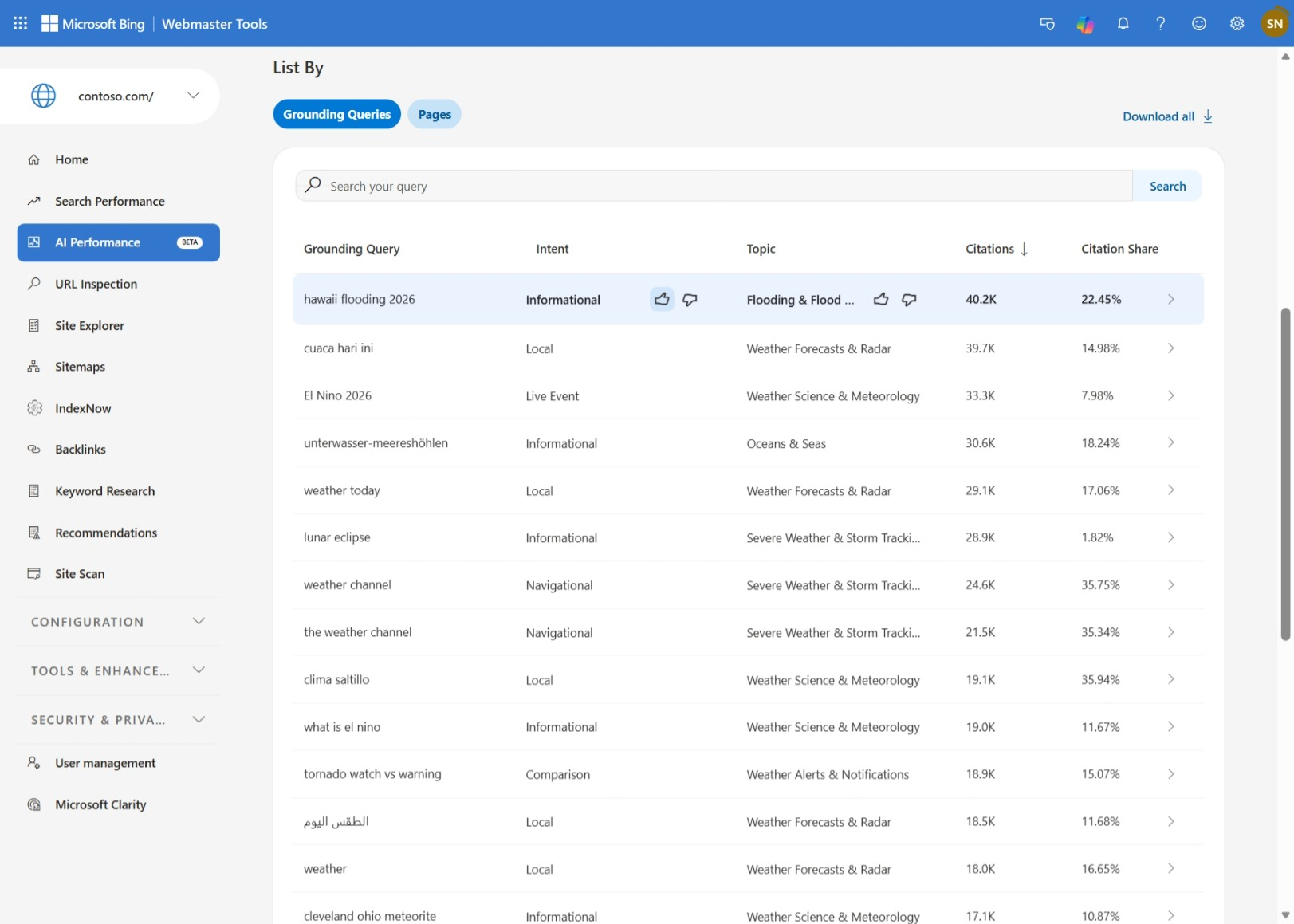
An example given was an e-commerce publisher finding visibility in comparison-focused experiences or an educational publisher learning their content is popular in research-oriented interactions. These insights can guide us in refining content structure and depth.
Topics: Topics group related queries into thematic clusters, offering us a more organized way to understand visibility, similar to modern AI’s reasoning across themes rather than isolated keywords.
For instance, queries like “solar panels” and “solar energy efficiency” can all be part of a larger topic cluster such as Solar Energy. This thematic organization helps us align our content with how AI systems engage with our content.
During this preview phase, some labels might remain broad, especially for niche domains, but meaningful patterns are already emerging.
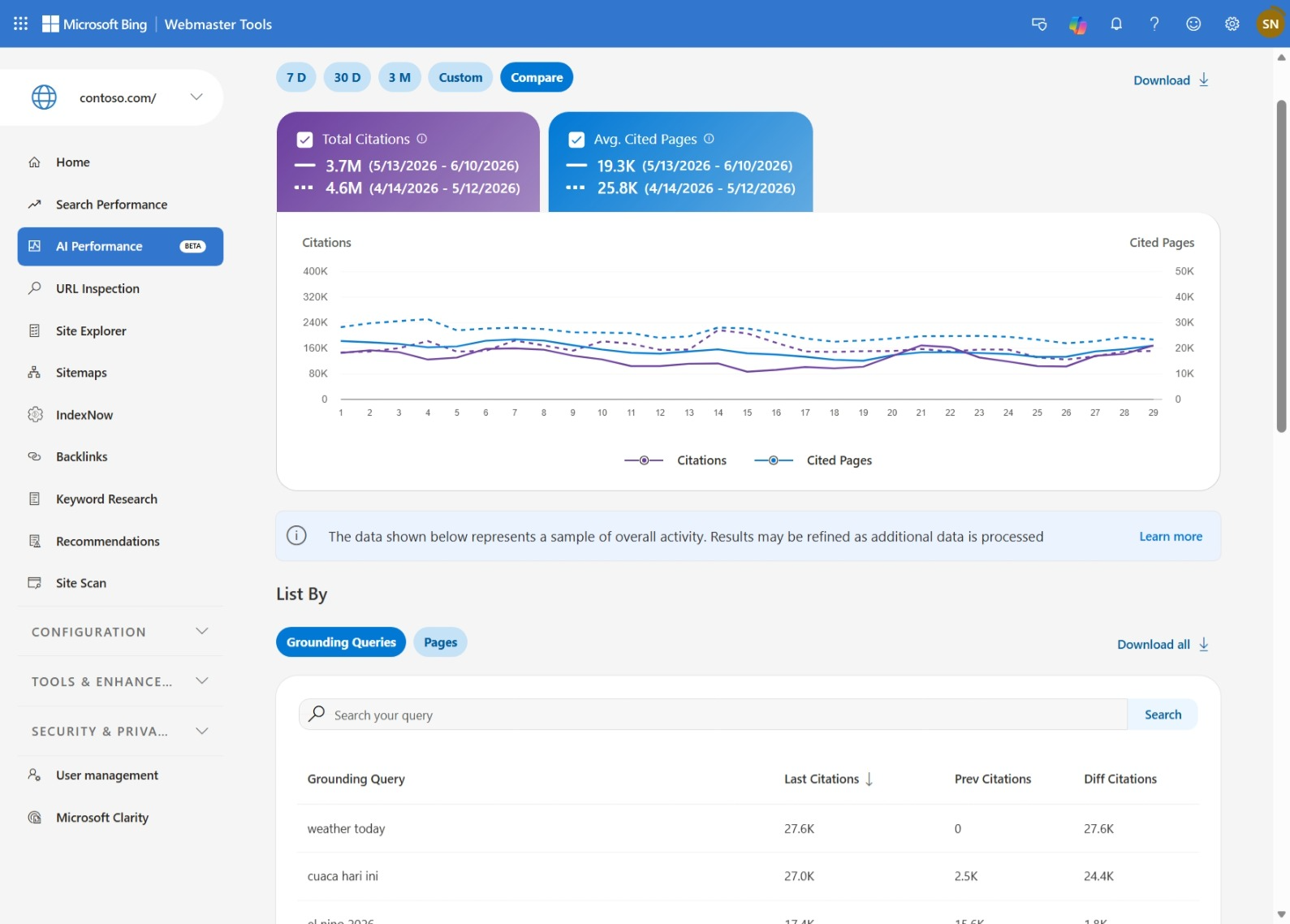
Citations: Citation Share now displays the percentage of citation visibility your site enjoys compared to others. It’s a directional metric to help us understand our evolving visibility over time, without ranking or quality scores.
Compare: We can now compare citation changes over time. This feature overlays previous data onto current reports, helping us observe citation activity, which can be influenced by various factors like AI model updates, user demand shifts, and more.
Why This Matters: Although we’re still awaiting click and click-through rate data, these growing AI performance insights are invaluable. I’m hopeful that such detailed data will become available to us from Microsoft or even Google one day.
Inspired by this post on Search Engine Land.

Leave a Reply