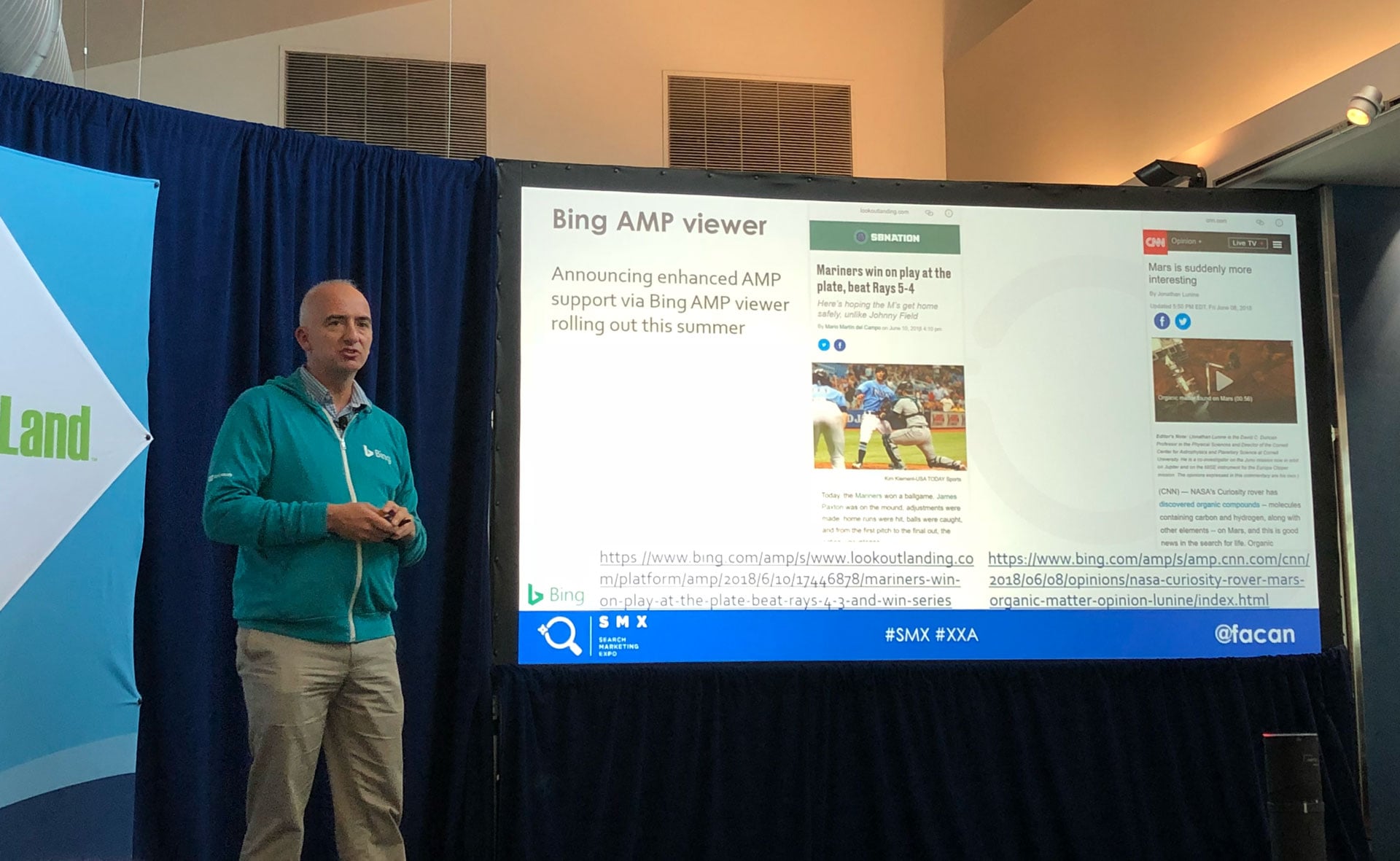
After nearly 30 years at Microsoft, I am seeing one of Bing’s most influential search leaders close a remarkable chapter. Fabrice Canel announced that he is retiring from Microsoft, writing on LinkedIn, “I am retiring from Microsoft, effective today July 1st.” He also reflected, “Today marks nearly 30 years with Microsoft. Thirty years…”
When I think about Fabrice Canel’s impact, I think first about the foundation of Microsoft Bing Search. He was responsible for indexing at Bing, including crawling, URL discovery, content selection, and content processing. Those areas are core to how search engines understand the web, and Fabrice helped shape them at massive scale.
He was also the person behind the IndexNow initiative, and he played a major role in creating and powering Bing Webmaster Tools. For anyone working in SEO, publishing, or technical search, those contributions matter because they helped make discovery, indexing, and webmaster communication faster and more practical.
I have watched Fabrice contribute far beyond product work. He has spoken at countless industry events, including SMX, and has written extensively about how search works, how sites can perform better in Bing, and how search is evolving with generative AI. He helped run one of the world’s most important search engines, while also giving the SEO community tools, education, and direct insight.
In his retirement message, Fabrice addressed fellow Microsoftees, engineers, attorneys, marketers, webmasters, publishers, SEO champions, product leaders, journalists, people across search and AI, and even friends at Google. His note was warm, personal, and full of gratitude for the people who shaped his Microsoft journey.
He described his three decades at Microsoft as a wonderful adventure, from solving real business problems with IndexNow to helping webmasters and publishers thrive in the constantly changing world of SEO and AI. He thanked colleagues, partners, publishers, and the people he trained and mentored, saying they are ready to carry the mission forward.
Fabrice also shared that, after many conversations with family and friends, he decided to take advantage of Microsoft’s Voluntary Retirement Program. His message ended with the same sense of warmth and storybook style that many in the industry have come to associate with him: gratitude for Microsoft, confidence in the Bing team’s future, and a final wish that everyone stay curious, keep innovating, and make content easier to find.
Why do I care so much about this? Because Fabrice has been a true friend to the search industry. His work will live on through the products, systems, and initiatives he helped create, and his willingness to share knowledge has made a lasting difference for SEOs, publishers, developers, and search professionals.
I know Fabrice has trained a team to continue the work, and I believe Bing remains in good hands. Still, I would be lying if I said I am not sad to see him retire. It has been an honor to work with him and learn from him over the years, and his legacy at Microsoft Bing will be felt for a long time.
If your Bing search ad click-through rate rises while conversions barely move, do not congratulate the creative team yet. The interface itself may have changed what a click means.
Bing is testing a grouped ad design that makes paid listings look more like a continuous set of search results. The practical response is not to guess whether the format is good or bad. It is to separate useful demand from interface-driven clicks before you change bids, budgets, ads, or landing pages.
The interface change alters what a click can mean
In the observed Bing test, several paid listings appear beneath one “Sponsored results” label. The individual ads below the first one do not receive their own labels. Searchers can also use a “Hide” control to collapse the block and a “Show” control to restore it.
That changes the visual unit a searcher encounters. Instead of evaluating several clearly separated ads, the user may perceive one sponsored section containing results that resemble the organic listings below it. The format could make ads more noticeable, but it could also make the paid status of an individual listing easier to miss.
The experiment remains limited, so you should not assume every impression in your account uses this design. You also should not infer that the test changes auctions, targeting, ranking, or attribution rules. A presentation change is enough to affect behavior even when the campaign underneath it stays the same.
This distinction matters when you review performance. A click has always combined two things: the searcher’s underlying interest and the interface’s ability to attract attention. Grouping can change the second factor. If you treat every resulting CTR increase as stronger intent, you may bid more aggressively for traffic that is no more valuable than before.
Diagnose performance with a metric chain, not CTR alone
CTR is clicks divided by impressions. It tells you whether an impression produced a click, but not whether the person understood that they were selecting an ad or whether the visit created business value. Read CTR alongside conversion rate, cost per acquisition, conversion volume, search-term quality, and post-click behavior.
A comparable grouped design on Google prompted an informal X poll in which 63% of respondents said they had clicked an ad unintentionally. That number is a warning signal, not a forecast for Bing. A voluntary social-media poll cannot establish the accidental-click rate among Bing users or prove that grouping caused every reported mistake.
Your own conversion economics are more useful than that headline number. Read changes as a sequence:
What you observe
What it may mean
What to do next
CTR rises, while conversion rate and cost per acquisition remain healthy
The additional clicks may be useful, although the design is not necessarily the cause
Check lead or order quality before increasing bids or budgets
CTR rises, conversion rate falls, and cost per acquisition worsens
The extra clicks may carry weaker intent, or another campaign change may have altered traffic quality
Segment the shift by query, device, campaign, and audience before changing the whole account
Clicks and spend rise, but conversions remain flat
Incremental traffic is consuming budget without producing a matching business result
Protect the account’s cost guardrail and reduce exposure in the affected segment if necessary
CTR rises alongside shorter or less engaged visits
Users may be arriving with the wrong expectation, but landing-page speed or message mismatch can produce the same pattern
Compare the ad promise, query intent, and first visible landing-page message
Paid clicks rise while organic clicks fall for the same query family
The new presentation may be redistributing existing demand rather than creating more of it
Evaluate total search conversions and revenue instead of celebrating one channel’s gain
The combination of higher CTR and lower conversion rate deserves particular attention. If clicks grow faster than conversions, conversion rate falls by definition. If spend then grows faster than conversions, cost per acquisition deteriorates. That is the signature to investigate when you suspect interface-driven traffic.
Do not automatically call it an accidental-click problem. A promotional change, broader matching, altered bids, seasonality, a slow landing page, or weaker offer alignment can create the same pattern. The layout is one hypothesis to test against the rest of the account history.
Build an audit trail while test exposure is uncertain
You need a record that lets you distinguish a search-interface shift from your own campaign changes. Start before performance looks unusual, because reconstructing the sequence later is difficult.
Document every confirmed sighting. Save a screenshot and record the query, device type, location, date, signed-in state if known, and whether the Hide and Show controls appeared. A screenshot proves the layout was visible in that context; it does not prove all campaign impressions used it.
Annotate changes under your control. Record bid, budget, targeting, keyword, creative, conversion-tracking, offer, and landing-page changes. Without this log, a performance shift that follows your own edit can easily be blamed on the interface.
Create a comparable baseline. Use periods that make sense for your sales cycle and account volume. Account for promotions, weekdays, seasonality, and major demand changes. A large but poorly matched baseline is less useful than a smaller comparable one.
Segment before averaging. Review brand and non-brand traffic separately, then inspect query themes, campaigns, devices, locations, and audiences using the dimensions available in your reporting. A localized problem can disappear inside an account-wide average.
Pair every attention metric with an outcome metric. Match impressions with clicks, clicks with qualified visits or conversions, and spend with revenue, pipeline value, or another business result. For lead generation, include accepted-lead quality when possible; a form submission alone may hide low-intent traffic.
Define your response before the numbers move. Use the CPA, return, margin, or lead-quality limits already required by the business. If performance crosses a financial guardrail, contain the affected segment rather than waiting for perfect causal proof.
Label causal claims honestly. If you cannot identify which impressions received the grouped layout, you have a correlation, not a controlled test. Say that clearly in stakeholder reporting.
The strongest comparison would separate traffic exposed to the grouped design from otherwise similar unexposed traffic. If you do not have a reliable exposure indicator, screenshots and timing can support an investigation, but they cannot turn normal account reporting into an experiment.
Adjust the campaign without chasing a temporary layout
A limited interface test does not justify rewriting an entire account. Start with changes that improve informed selection under any search design.
Make the advertiser and offer unmistakable. Use clear brand, product, service, and destination language. Do not rely on the visual ad label to explain what the person will reach.
Qualify before the click when it helps the user. Accurate price, location, audience, availability, or eligibility details can discourage unsuitable visits. Add only qualifications that are true and material to the decision.
Keep the landing-page handoff literal. The first visible page content should confirm the same offer and intent expressed by the query and ad. A user who has clicked quickly should not have to infer why the page is relevant.
Inspect search terms for the affected segments. If the increase comes from irrelevant or weakly related queries, refine targeting and exclusions. A visual redesign cannot rescue poor query-to-offer alignment.
Use meaningful conversion actions. Separate valuable outcomes from shallow actions where your measurement permits it. Otherwise, an increase in low-value activity can disguise deteriorating customer quality.
Protect budget at the narrowest useful level. If spend rises without a corresponding result, constrain the specific campaign, query class, device, or audience showing the problem. Broad account cuts can suppress traffic that remains profitable.
For lead-generation campaigns, adding deliberate qualification to the page or form can reveal whether new clicks reflect genuine interest. That does not mean creating pointless friction. Ask only for information needed to assess fit, and track whether accepted leads improve rather than judging success by raw form volume.
For ecommerce campaigns, compare paid click growth with completed orders, revenue, and margin. If traffic rises but product engagement and purchases do not, check whether the query, ad, price, and landing product still describe the same proposition. The grouped design may expose an existing mismatch rather than create it.
SEO and paid-search teams should also review overlapping query families together. A paid CTR gain accompanied by an organic click loss may be a redistribution of the same demand. The better question is whether total qualified search traffic, conversions, and revenue increased after accounting for the added ad spend.
Key takeaways for Bing search advertisers
Bing is testing multiple ads beneath one “Sponsored results” label, with controls that let users hide and restore the entire sponsored block.
The test is limited, so do not assume all impressions use the grouped format or attribute every account change to it.
A CTR increase is useful only when conversion quality and cost efficiency hold up downstream.
The reported 63% accidental-click figure came from an informal poll about a comparable Google design; it identifies a risk to investigate, not a Bing benchmark.
Document confirmed sightings and your own campaign edits so that timing alone does not become your evidence.
If costs deteriorate, contain the affected segment using existing business guardrails while continuing to investigate.
Judge paid and organic search together when both channels serve the same query intent.
Treat the redesign as a measurement problem first. Preserve your baseline, watch the path from impression to business outcome, and make the smallest defensible campaign change when the economics require one. If Bing expands the format, you will already have the evidence needed to decide whether its extra clicks are helping you or merely costing you more.