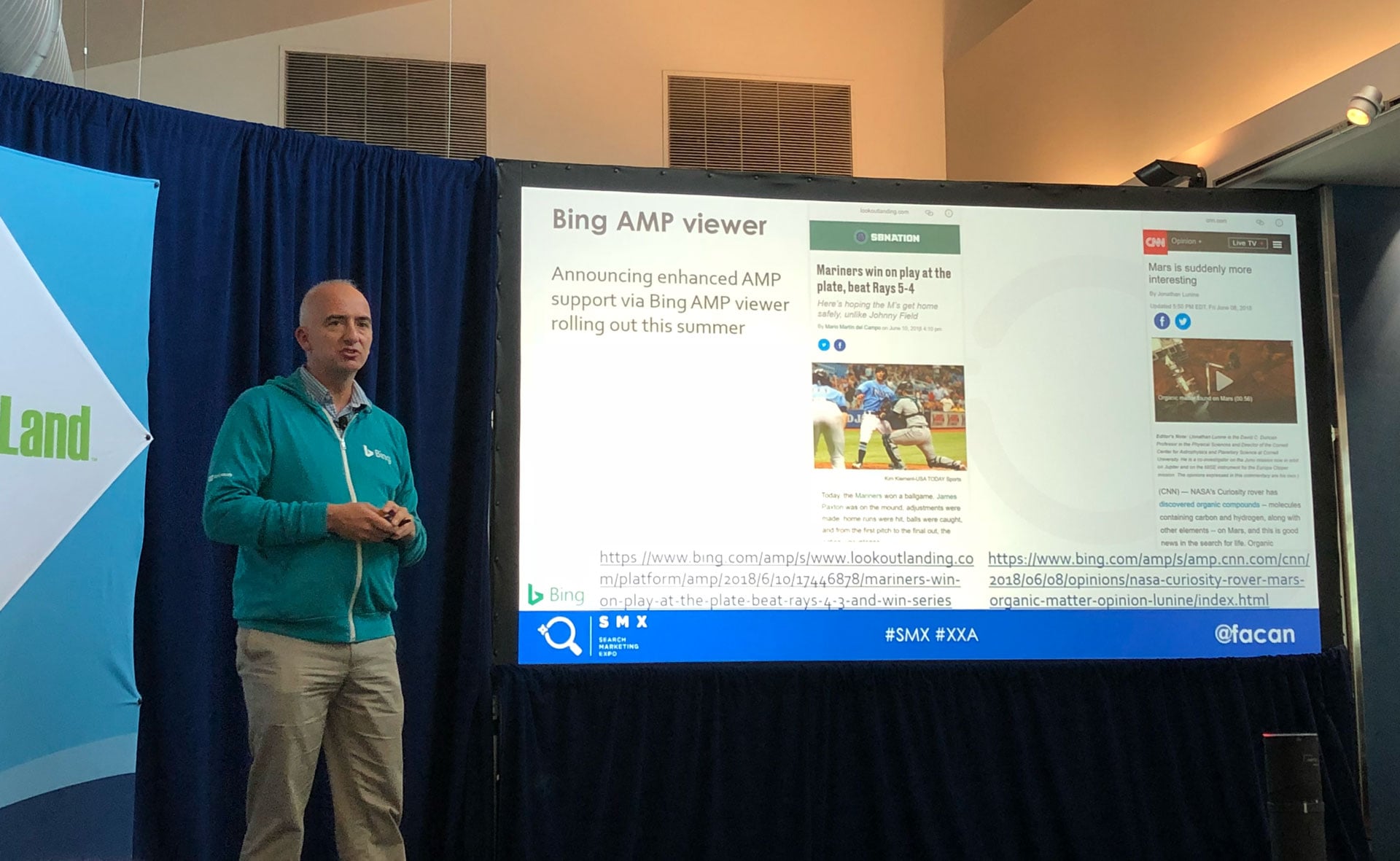
After nearly 30 years at Microsoft, I am seeing one of Bing’s most influential search leaders close a remarkable chapter. Fabrice Canel announced that he is retiring from Microsoft, writing on LinkedIn, “I am retiring from Microsoft, effective today July 1st.” He also reflected, “Today marks nearly 30 years with Microsoft. Thirty years…”
When I think about Fabrice Canel’s impact, I think first about the foundation of Microsoft Bing Search. He was responsible for indexing at Bing, including crawling, URL discovery, content selection, and content processing. Those areas are core to how search engines understand the web, and Fabrice helped shape them at massive scale.
He was also the person behind the IndexNow initiative, and he played a major role in creating and powering Bing Webmaster Tools. For anyone working in SEO, publishing, or technical search, those contributions matter because they helped make discovery, indexing, and webmaster communication faster and more practical.
I have watched Fabrice contribute far beyond product work. He has spoken at countless industry events, including SMX, and has written extensively about how search works, how sites can perform better in Bing, and how search is evolving with generative AI. He helped run one of the world’s most important search engines, while also giving the SEO community tools, education, and direct insight.
In his retirement message, Fabrice addressed fellow Microsoftees, engineers, attorneys, marketers, webmasters, publishers, SEO champions, product leaders, journalists, people across search and AI, and even friends at Google. His note was warm, personal, and full of gratitude for the people who shaped his Microsoft journey.
He described his three decades at Microsoft as a wonderful adventure, from solving real business problems with IndexNow to helping webmasters and publishers thrive in the constantly changing world of SEO and AI. He thanked colleagues, partners, publishers, and the people he trained and mentored, saying they are ready to carry the mission forward.
Fabrice also shared that, after many conversations with family and friends, he decided to take advantage of Microsoft’s Voluntary Retirement Program. His message ended with the same sense of warmth and storybook style that many in the industry have come to associate with him: gratitude for Microsoft, confidence in the Bing team’s future, and a final wish that everyone stay curious, keep innovating, and make content easier to find.
Why do I care so much about this? Because Fabrice has been a true friend to the search industry. His work will live on through the products, systems, and initiatives he helped create, and his willingness to share knowledge has made a lasting difference for SEOs, publishers, developers, and search professionals.
I know Fabrice has trained a team to continue the work, and I believe Bing remains in good hands. Still, I would be lying if I said I am not sad to see him retire. It has been an honor to work with him and learn from him over the years, and his legacy at Microsoft Bing will be felt for a long time.
Here’s how LinkedIn professional attributes enhance intent, automation, and creative decisions in Microsoft Advertising.
Using LinkedIn targeting within Microsoft Advertising allows me to align creative strategies with the perfect audience. By engaging with this thoughtfully, I can apply professional insights to intent-driven inventory without breaking the bank.
The key is understanding how these targeting methods collaborate across different campaign types. In this guide, I’ll walk you through leveraging LinkedIn data within Microsoft Advertising, including:
LinkedIn in Search campaigns, including Multimedia ads.
Using LinkedIn insights for an enhanced audience strategy.
Performance Max targeting signals.
Audience reach and composition insights via Audience Planner.
Disclosure: As a Microsoft employee, I’ve kept this article objective, focusing on LinkedIn targeting mechanisms, targeting action items, reporting, and message mapping strategies.
LinkedIn Profile Targeting in Search
Microsoft Advertising search campaigns fully support LinkedIn profile targeting, allowing me to layer professional attributes on top of keyword targeting. The supported attributes include:
Company
Industry
Job function
These audiences can be utilized across Microsoft‑owned environments, such as Bing Search, Microsoft Edge, Microsoft Start, and other eligible search surfaces, provided users are signed in.
In search, LinkedIn targeting works as a contextual guide rather than a standalone target. Keywords carry the main weight, while LinkedIn data helps me adjust my response when professional relevance is present.
How to Approach It
Start with keywords that already convert: LinkedIn targeting enhances existing intent with proven keywords. I apply bid adjustments to campaigns or ad groups where search terms already demonstrate business value, potentially increasing bids by 10%-15% for aggressive bidding or more aggressive adjustments when impression share is lost to rank.
Choose one professional dimension first: I begin with either company, industry, or job function instead of applying all three simultaneously. This approach prevents double-bidding on potential customers.
Use bid-only mode to establish a baseline: Observation mode provides performance clarity before I make delivery decisions. This acts as audience research to identify who engages profitably.
LinkedIn Professional Demographics in Audience Ads
Audience Ads leverage LinkedIn Professional Demographics as both a targeting and observation layer, introducing professional context into native, display, and video formats tailored for scalable reach.
Audience Ads aren’t driven by keyword intent; however, Professional Demographics anchor delivery and insights in real-world business contexts, bridging broad reach with professional relevance.
These ads let me apply company, industry, and job function as professional audience layers, which I can use to observe performance trends or influence delivery, depending on campaign objectives.
How to Approach It
Start in observation to understand natural performance: By observing performance trends in Professional Demographics, I learn which industries, job functions, or company types naturally engage with Audience Ads before imposing delivery constraints.
Let LinkedIn data inform creative, not just delivery: In content-rich environments, creative matters more than targeting alone. I use insights from high-performing professional segments to shape tone, examples, and value framing in my messaging.
Align format choice with professional mindset: Different formats perform distinct roles. For example, native and display formats excel in awareness and education within professional segments, while video supports storytelling and industry-specific narratives. Professional Demographic insights guide the most suitable formats for varied business audiences.
LinkedIn Data in Performance Max: Guiding Automation with Purpose
LinkedIn profile targeting is available within Performance Max campaigns, where it functions as an audience signal. These signals help the system identify professional profiles most likely to yield profit for my business and influence budget allocation.
Within Performance Max, professional signals are most effective when representative and directional, rather than exhaustive, providing the system a strong starting point.
How to Approach It
Select signals that reflect your best customers, not every customer: Using LinkedIn attributes to describe my most valuable segments is crucial, especially if different personas represent varying ROAS/CPA goals, as this affects PMax campaign asset groups’ shared ROAS/CPA bidding.
Pair LinkedIn signals with strong conversion definitions: Automation improves when reinforced by clear success metrics. Ensuring at least 30 conversions over a 30-day period is vital for autobidding effectiveness.
Allow time for learning: Audience signals need sufficient volume to influence delivery, so I avoid frequent changes during the initial learning period (two weeks). Afterward, budget adjustments up to 15% can be made without triggering learning period fluctuations.
Aggregated LinkedIn audience reporting is divided by company, industry, and job function, letting me analyze how professional segments contribute to campaign performance. This reporting, found under Reporting > Professional demographics, includes LinkedIn targeting or audiences applied through predictive targeting.
How to Approach It
Look for consistency across time, not single spikes: Patterns emerging over weeks or months are more actionable than short-term anomalies. I allow “observation” audiences ample time to prove themselves or use Audience Planner for informed decisions at scale.
Use reporting to inform creative and bids together: Upon identifying outperforming professional segments, I scrutinize messaging and bidding before initiating changes. It’s crucial to confirm creative resonance without overbidding.
Avoid over-segmentation early: Excessive audience segmentation can weaken signal strength, especially when conversion scarcity is a concern.
Bidding with LinkedIn Audiences
In Microsoft Advertising, I use bid adjustments alongside automated strategies, enabling flexibility in how LinkedIn audiences influence auctions. Overlapping audiences can amplify bid adjustments, necessitating overlap awareness as part of my bid strategy.
Effective bidding adjustments should be incremental and reversible, aiming for calibration rather than acceleration.
Creative Strategy: Professional Relevance Without Narrow Assumptions
LinkedIn targeting controls ad visibility, but creative determines engagement. Professional cohorts encompass a variety of experiences, identities, and viewpoints. My aim is effective creative that respects diversity while remaining relevant to shared contexts.
Effective creative exhibits professional empathy, addressing challenges, goals, and constraints without reliance on stereotypes.
How to Approach It
Anchor creative in shared problems, not titles: I focus on challenges common to roles and seniority levels within a LinkedIn targeting segment.
Keep language inclusive and adaptable: I avoid assumptions about background, experience, or decision-making authority.
Use AI tools to localize, not homogenize: Adapting tone or examples by region or industry while preserving message intent is crucial.
Test creative alongside audience layers: I evaluate messaging performance within LinkedIn segments to refine both together.
Extending LinkedIn Insights Across B2B Campaigns
LinkedIn targeting in Microsoft Advertising provides an opportunity to combine professional expertise with intent-driven media scalably, in a privacy-conscious and economical manner.
Teams already using LinkedIn Ads can leverage this strategy to extend learnings into additional inventory via automation, amplifying reach and efficiency.
The value lies not in complexity, but in alignment – aligning data, mechanics, and human behavior enhances results.
Key takeaways:
LinkedIn profile targeting is fully accessible in Search and Performance Max on Microsoft surfaces.
Professional attributes act as targeting layers in search and optimization signals in Performance Max.
An observation-first approach fosters understanding before commitment.
Aggregated reporting aids informed optimization without revealing individual data.
Empathy-anchored creative fosters professional relevance.
When I use LinkedIn data with curiosity and care, it offers a way to view audiences more clearly rather than control them more tightly. For B2B advertisers navigating complex buying journeys, such clarity often becomes the most valuable optimization.
I recently learned about a significant ruling that will impact Google’s longstanding agreements with tech giants like Apple and Samsung. This decision means that moving forward, Google will only be able to secure its place as the default search engine on devices for one year at a time. Despite this change, I’m not expecting a major shift in Google’s dominance over the search market anytime soon.
Here’s what’s driving the news: On Friday, Judge Amit Mehta described this one-year cap as a crucial step in enforcing antitrust measures. This follows his 2024 decision, which concluded that Google was unlawfully monopolizing the realms of search and search advertising. According to Business Insider, the requirement aims to enforce fair competition in the industry.
Additionally, Judge Mehta’s earlier ruling outlined restrictions for Google:
Google must avoid any exclusive contracts regarding the distribution of Google Search, Chrome, Google Assistant, and the Gemini app.
They cannot condition licensing agreements of the Play Store on the preloading of these applications on devices.
Revenue sharing cannot be contingent on placing or maintaining these applications on devices beyond one year.
Partners are free to distribute alternative GSEs, browsers, or GenAI products simultaneously.
Why I care: This landscape shift could mean that user searches originate from a wider array of platforms. If AI-powered competitors like OpenAI, Perplexity, or Microsoft make even modest advances, we could see a more diverse and challenging search terrain emerge.
Reality check: In my view, this is more of a bump in the road rather than a disruption. Google’s financial resources, brand strength, and user habits continue to provide significant leverage in annual negotiations.
In the ever-evolving world of AI-driven advertising, I’ve noticed that Performance Max campaigns have become absolutely crucial. Both Google and Microsoft offer these innovative opportunities, allowing advertisers to bring together creative assets, audience signals, and automation into a single seamless campaign type.
While Google and Microsoft share this foundational concept, they execute it uniquely. I am excited to offer an in-depth comparison of Google PMax and Microsoft PMax as they stood toward the end of 2025, hoping to shed light on the intricacies that could shape your 2026 advertising strategies.
What I found universally true across both platforms is the replacement of ad groups with asset groups. These groups encompass a blend of creatives, such as images and headlines, along with audience signals, but also carry an absence of any prioritization.
Significantly, PMax is built for automation. Both platforms request the use of Maximize Conversions or Maximize Conversion Value strategies, underlining the need for conversion tracking that can keep pace with no less than 30 conversions in a month.
Goal alignment is another crucial aspect. I realized that accurate reflection of business goals in your campaigns is imperative, for an artificially low ROAS target will likely backfire by yielding unexpectedly lower returns.
Search term visibility is an area where Google offers broader negative keyword support, unlike Microsoft who is still piloting this feature. However, Microsoft’s PMax creatives have been involved in AI placements longer, demonstrating proven results and thus indicating a stronger track record in this area.
Google’s PMax has evolved impressively, offering tools such as channel-level reporting and video asset support, which are particularly beneficial for visual marketing endeavors.
On the flip side, Microsoft’s edge, especially for B2B advertising, includes higher campaign limits, impression-based remarketing, and the integration of LinkedIn targeting signals, appealing for advertisers looking at high-quality lead generation.
Reflecting on both platforms, I believe PMax should be seen as a tool for incrementality rather than a replacement for proven search campaigns. The optimal approach involves leveraging both platforms’ strengths, whether it’s Google’s affinity for creative automation or Microsoft’s prowess in B2B targeting and remarketing.