
SEO is evolving, but it’s certainly not disappearing. In my journey through the changing landscape, I’ve found that blending traditional SEO techniques with emerging AI search practices is crucial for staying ahead.
SEO is at a fascinating juncture. On one side, there’s a push to optimize for AI and large language models (LLMs), while on the other, some want to stick to the tried-and-true methods. I’ve found a middle path — merging core SEO principles with an awareness of LLMs and their operations.
Embracing this approach means holding onto effective strategies like on-page SEO and quality backlinks while also exploring new avenues such as optimizing for query fan-out and new prompt intents. Since the rise of tools like ChatGPT, my research has focused on how AI engines present search results and the future direction of SEO.

Here’s what I’ve learned and how you can adjust your strategy to consider human behavior at the forefront of SEO innovations.
How the Red Queen theory applies to AI search
The Red Queen evolutionary model suggests that we must constantly adapt to maintain our position; if we don’t evolve, we risk falling behind. This is exactly the case in the world of AI and SEO — stand still, and you’ll be left behind.

As you and your competitors adapt, you must maintain your competitive edge. In SEO, failing to adapt means losing visibility and influence.
How to apply the Red Queen principle to your AI SEO strategy
The evolution of AI search is a continuation of developments over the past decade. With concepts like RankBrain since 2015, familiar SEO tactics remain relevant. This isn’t about a complete overhaul but rather a series of adaptations and improvements.

Core elements like retrieval-based search engines, content quality, speed, and intent matching are as important as ever. By focusing on these, alongside optimizing for AI retrieval and third-party visibility, you position yourself favorably.
Why RAG is essential to understanding AI search
One effective way I’ve discovered to engage with AI search is by understanding its limitations, particularly their reliance on retrieval-augmented generation (RAG) systems. RAG helps fill the gaps in LLM databases without constant updates, ensuring relevant answers are provided.

In practice, this involves seeing how AI tools like Google AI Mode and ChatGPT respond to prompts and identifying where they draw their information. Using this insight, you can ensure your content is part of the external sources AI assists rely upon.
How to optimize for AI search vs. traditional search
Understanding how your content interacts with AI engines’ limitations is critical. AI does its own searching and then provides answers, sometimes without showcasing external sources. Therefore, becoming a trusted source for LLMs is the key to SEO in the AI era.

It’s essential to analyze AI answers, understand their behavior, and continuously evaluate their preferences. By feeding these systems with quality data, we can ensure we’re among the go-to trusted sources AI assistants reference.
The long-term future of SEO relies on human behavior
Long-term SEO strategies should remain focused on understanding human behavior. This involves pinpointing search intent and analyzing how AI-generated queries align with different user needs and intents.
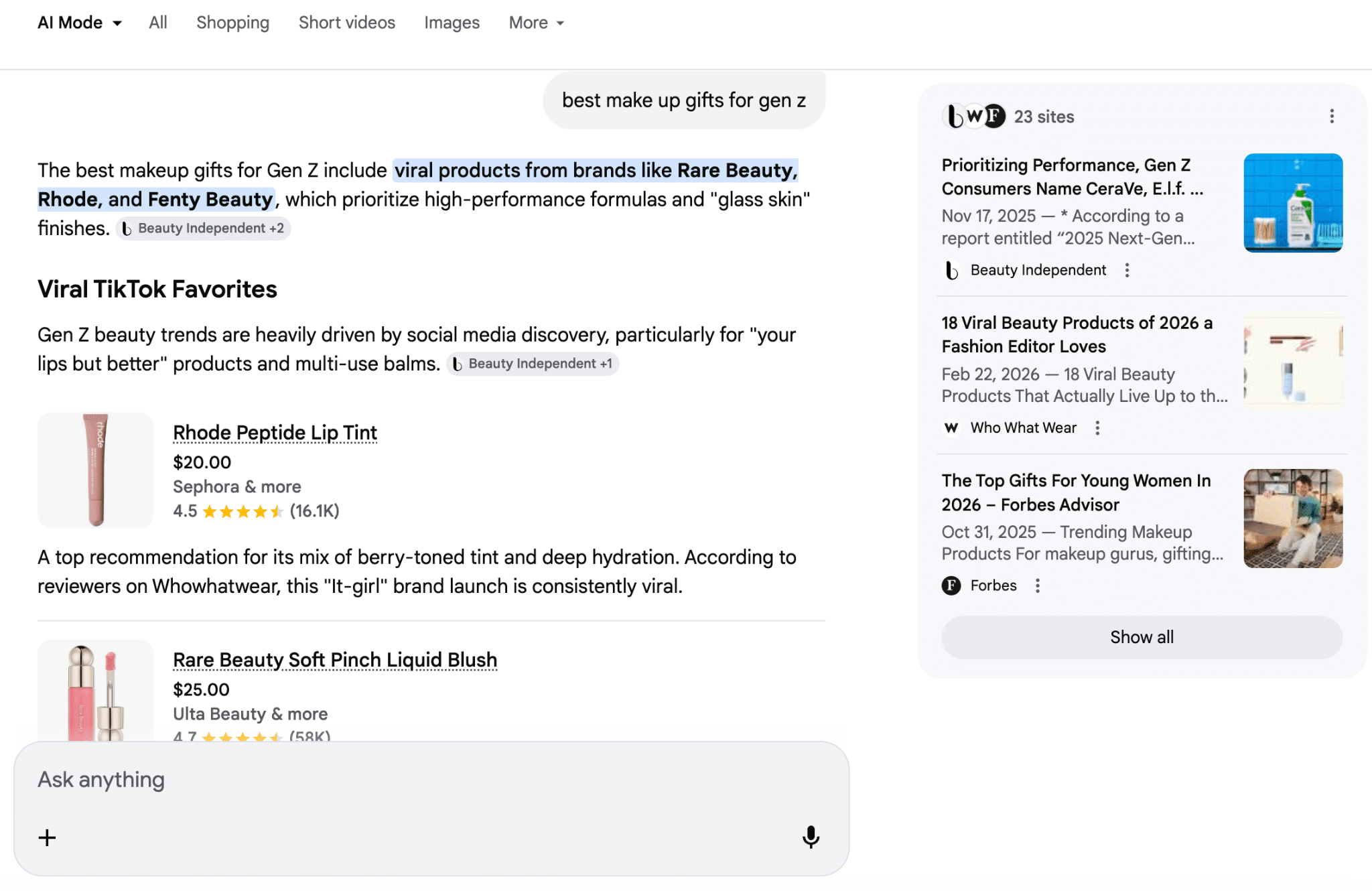
Being successful means considering both traditional search intents and new AI-induced intents to provide valuable content that resonates with user needs. It’s about dynamically adapting approaches based on observed behavior and striving to stay ahead in this ever-evolving field.
Inspired by this post on Search Engine Land.

Leave a Reply