SEO is evolving, but it’s certainly not disappearing. In my journey through the changing landscape, I’ve found that blending traditional SEO techniques with emerging AI search practices is crucial for staying ahead.
SEO is at a fascinating juncture. On one side, there’s a push to optimize for AI and large language models (LLMs), while on the other, some want to stick to the tried-and-true methods. I’ve found a middle path — merging core SEO principles with an awareness of LLMs and their operations.
Embracing this approach means holding onto effective strategies like on-page SEO and quality backlinks while also exploring new avenues such as optimizing for query fan-out and new prompt intents. Since the rise of tools like ChatGPT, my research has focused on how AI engines present search results and the future direction of SEO.
Here’s what I’ve learned and how you can adjust your strategy to consider human behavior at the forefront of SEO innovations.
How the Red Queen theory applies to AI search
The Red Queen evolutionary model suggests that we must constantly adapt to maintain our position; if we don’t evolve, we risk falling behind. This is exactly the case in the world of AI and SEO — stand still, and you’ll be left behind.
As you and your competitors adapt, you must maintain your competitive edge. In SEO, failing to adapt means losing visibility and influence.
How to apply the Red Queen principle to your AI SEO strategy
The evolution of AI search is a continuation of developments over the past decade. With concepts like RankBrain since 2015, familiar SEO tactics remain relevant. This isn’t about a complete overhaul but rather a series of adaptations and improvements.
Core elements like retrieval-based search engines, content quality, speed, and intent matching are as important as ever. By focusing on these, alongside optimizing for AI retrieval and third-party visibility, you position yourself favorably.
Why RAG is essential to understanding AI search
One effective way I’ve discovered to engage with AI search is by understanding its limitations, particularly their reliance on retrieval-augmented generation (RAG) systems. RAG helps fill the gaps in LLM databases without constant updates, ensuring relevant answers are provided.
In practice, this involves seeing how AI tools like Google AI Mode and ChatGPT respond to prompts and identifying where they draw their information. Using this insight, you can ensure your content is part of the external sources AI assists rely upon.
How to optimize for AI search vs. traditional search
Understanding how your content interacts with AI engines’ limitations is critical. AI does its own searching and then provides answers, sometimes without showcasing external sources. Therefore, becoming a trusted source for LLMs is the key to SEO in the AI era.
It’s essential to analyze AI answers, understand their behavior, and continuously evaluate their preferences. By feeding these systems with quality data, we can ensure we’re among the go-to trusted sources AI assistants reference.
The long-term future of SEO relies on human behavior
Long-term SEO strategies should remain focused on understanding human behavior. This involves pinpointing search intent and analyzing how AI-generated queries align with different user needs and intents.
Being successful means considering both traditional search intents and new AI-induced intents to provide valuable content that resonates with user needs. It’s about dynamically adapting approaches based on observed behavior and striving to stay ahead in this ever-evolving field.
As I delve into the vast realm of AI, I’ve realized how integral Large Language Models (LLMs) are to virtually every aspect of our lives—be it work, leisure, shopping, or health. They are the ignition point for nearly everything we do.
But here’s something that often goes unnoticed: how these models wrap up their interactions. They don’t just stop; they subtly guide us forward, and that’s a game-changer.
It’s as if LLMs adopt a “no, you hang up first” approach, perpetually inviting us to continue. They ask things like, “Would you like me to draft that travel itinerary for you?” or, “Shall I compare the Nike and New Balance running shoes for your marathon?”
These gentle nudges make it incredibly easy to stay engaged. More often than not, I find myself responding with a simple “sure” or “sounds good,” eager to see what’s offered next.
Such nudges are pivotal in shaping consumer behavior. Where the LLMs lead us truly matters.
If you represent a premium brand and an LLM suggests a price comparison, it might not align with your strategy, but it’s vital to grasp and react appropriately.
We’ve delved into various LLMs to understand these nudges across different platforms, seeking patterns that shape user behavior and signaling what it means for brands aiming to steer the digital journey.
What LLM Nudges Look Like Across Platforms
Budget and Deals Dominate
Across the board, LLMs frequently suggest follow-ups related to budgets and deals, with about 45% of mentions falling into this category. Though not uniformly distributed, these elements are often default interests for consumers.
For instance, Perplexity and ChatGPT feature over 60% of budget-related suggestions, while Meta doesn’t lean as heavily into this assumption.
Comparisons Drive the Next Step
Product comparisons are the second most common type of suggestion. LLMs compare everything from retail products to financial services and health treatments, touching various industries.
Specs Play a Minor Role
While there’s a common belief that providing detailed specifications is vital, these comprise only a small fraction of the LLMs’ recommendations. That said, they do add ranking value, even if LLMs typically don’t extend conversations in this manner.
How Each Platform Uses Nudges Differently
In our research, we’ve noticed that each LLM has a unique style of extending conversations, offering insights into how these platforms subtly influence consumer behavior.
Platform
Dominant Nudge Style
Key Characteristic
ChatGPT
“If you want…”
Heavy commerce focus: Primarily nudges toward deals and product comparisons.
Microsoft Copilot
“If you tell me…”
Interactive/clarifying: Frequently asks for more user data to refine recommendations.
Google Gemini
“Would you like me…”
Polite and permission-based: Exclusively uses this formal invitation to continue helping.
Perplexity
“I can help…” / “If you’d like…”
Service-oriented: Uses varied phrasing to offer utility and assistance.
Meta AI
“Let me know…”
Casual and passive: Primarily nudges toward product comparisons and specs with a less aggressive tone.
What Actions to Take Based on AI Nudges
These nudges are not just to keep the dialogue open; they also push users to explore further, greatly influencing consumer behavior and the entire customer journey.
As data becomes more plentiful, we’ll better optimize for these nudges. For now, our insights are somewhat limited to individual interactions.
Here are three key actions to prioritize, largely tied to the content you create across various channels:
Capitalize on the “Support” Gap
Proactive nudges related to troubleshooting and support are significantly lower in frequency than commerce-driven themes.
Focus on owning the post-purchase “how-to” and technical support space to establish long-term authority where AI currently isn’t as assertive.
Strengthen “Product A vs. Product B” guides to capture AI’s primary next step.
Maximize the “Budget and Deals” Opportunity
Pricing and discounts are the top drivers of AI nudges, comprising 48% of all prompts.
Ensure your site maintains structured, real-time deal data to become a preferred destination for AI-driven commerce referrals.
As the LLM landscape rapidly evolves, these platforms will become the main touchpoints for consumer research and decision-making. Understanding how LLMs discuss your brand and how these conversational nudges affect users is essential.
By dissecting these automated cues across platforms like Gemini, ChatGPT, and Perplexity, we can see where consumers are being steered—whether towards budget-friendly alternatives, product comparisons, or technical specifications.
Recognizing these trends enables us to shift from mere observation to actionable strategies, ensuring our value proposition remains clear, even when an LLM reframes the conversation around cost or competitors.
Monitoring these shifts is key to maintaining brand authority as AI-driven interactions increasingly dictate the customer journey.
As someone deeply invested in the world of public relations, I’ve witnessed remarkable changes in how AI is reshaping our industry. It’s not just about innovation; it’s about staying ahead in a rapidly evolving landscape. Let me guide you through how AI PR is transforming the way we do business.
One crucial aspect of this transformation is the importance of citations in AI-generated answers. It’s vital that the information we use is both credible and traceable, ensuring that our strategies remain effective and trustworthy.
Additionally, understanding LLM (Large Language Model) visibility is key to making the most of AI capabilities. The visibility of these models determines how well they integrate into our PR strategies, impacting overall success.
For PR teams like mine, adapting our strategies in response to these changes is more important than ever. Staying agile and informed allows us to navigate this new era with confidence and creativity.
As I immerse myself in the ever-evolving landscape of artificial intelligence, I can’t help but notice how the ongoing battles over data access are reshaping AI’s capabilities. The influence of these data wars is felt across the board, altering how AI answers are structured and presented.
What’s particularly fascinating is observing the crucial deals, restrictions, and lawsuits that have emerged, which are consistently driving AI into a fragmented state of visibility. These shifts are not just legal battles; they define the framework within which AI must operate in the coming years.
The platform dynamics are constantly changing, and it’s compelling to see how these transformations dictate the future of AI. As someone deeply invested in this field, I find tracking these developments essential for understanding where AI is headed from 2023 to 2026.
With Google referrals declining and LLM usage on the rise, I’ve discovered that successful discoverability now hinges on metrics, structure, and authority—not just rankings.
If your organic traffic is decreasing while impressions rise, AI might be citing your content without generating clicks. If both metrics are down, it’s likely your content is being overlooked. Either way, the conventional search behavior that shaped your marketing strategy has transformed, and merely waiting for traffic to rebound is not a viable strategy.
The year 2026 presents a new reality. According to KEO Marketing, 73% of B2B websites faced significant traffic declines between 2024 and 2025, averaging a 34% year-over-year drop.
These drops aren’t uniform. Websites with predominantly informational content have been more adversely affected, experiencing declines between 15% and 64% since AI Overviews emerged.
News publishers, in particular, have been vulnerable, with Google referrals decreasing globally by 33% in the year leading up to November 2025.
These aren’t typical fluctuations; they signify a fundamental shift in how information is discovered online, posing a threat to business models reliant on site traffic.
Organic clicks are diminishing due to two intersecting reasons, each necessitating a different approach:
Google has fostered zero-click behavior through features like featured snippets and knowledge panels. These provide answers directly on the search results page, often eliminating the need to click on search results. While 25% of searches concluded without clicks ten years ago, today it’s over 65%. This trend has rapidly accelerated with AI Overviews, now found in about 16% of desktop searches and 41% of mobile searches.
On top of that, a growing number of users are bypassing traditional searches entirely. Nearly 52% of U.S. adults now frequently use AI tools, and approximately 28% of employed Americans incorporate AI at work. When they seek answers from ChatGPT or other LLMs, they often get responses without visiting any websites. While your content might contribute to that answer, it doesn’t translate to traffic or attribution.
Traditional metrics such as impressions, clicks, and page views no longer accurately reflect discoverability. They measure site behavior without informing how your brand performs in AI-mediated interactions, impacting upstream traffic.
Here are the five key metrics for AI visibility:
Citations in AI responses indicate how often your content is directly referenced when an LLM responds to a query. A citation suggests your content is valuable, well-structured for AI parsing, and authoritative.
Brand mentions differ from citations. LLMs may mention your brand without citing your content, often pulling data from review sites, forums, and third-party articles. A mention absent a citation implies your brand is recognized but not sourced from your content, guiding where to focus investments.
Share of voice measures your frequency of citations and mentions relative to competitors within specific categories.
Brand sentiment evaluates whether AI-generated responses portray your brand positively, neutrally, or negatively.
AI-influenced traffic gauges the proportion of traffic generated from LLM referrals. Initial data indicates this traffic has a conversion rate 3-5 times higher than other sources, making it valuable to track even if minor in volume.
Modern tools can track these metrics at scale, eliminating the necessity for manual LLM prompts. However, even conducting basic benchmarks by querying major LLMs with your target questions and tracking mentions is advantageous over not measuring at all.
Achieving visibility in AI-driven search doesn’t involve rewriting your content strategy but instead requires shedding ineffective practices and pivoting towards lasting principles.
Experience, Expertise, Authoritativeness, and Trustworthiness (E-E-A-T) continue to form the foundation of content credibility. LLMs give precedence to sources that demonstrate real expertise and are trusted by authoritative figures.
By earning citations from reputable sites, producing content authored by subject matter experts, and delving into topics thoroughly, you can outshine content that fails to meet these criteria, regardless of optimization efforts for other factors.
Structure and clarity are essential because LLMs extract content by pinpointing passages that effectively answer questions. Structuring content around clear questions and answers, utilizing bullet point summaries, and avoiding dense paragraphs enhance retrievability over embedding answers in narrative prose.
Your information architecture should be comprehensible to both human readers and LLM systems. Introducing a Q&A section or reorganizing posts around clear question-and-answer pairs provides significant improvements.
Human-written, human-led content has a distinct advantage. After Google’s recent core update, AI-generated content saw an 87% drop in rankings and citation frequency, with keyword-optimized content seeing a 63% fall. LLMs are becoming adept at detecting AI-created content and rank it lower.
The 2025 demand for AI-produced content has highlighted a quality issue now evident in performance data. Prioritizing quality over quantity is essential. Use AI for drafting and editing, but not for generating final content. Implement a review process to catch generic phrasing or a synthetic tone, either through AI-detection tools or human editors.
Recency is crucial for AI citations. AI systems consider both the publication and update dates when selecting sources. A high-quality piece from 2022 can be dismissed for a newer version from 2025.
Audit your high-traffic pages and key assets for outdated data, refreshing them with recent examples and data. It’s a quick yet often overlooked strategy.
Promotional language will not get cited. If your writing appears too commercial—emphasizing product claims and brand-forward language—answer engines may deprioritize it over more neutral sources.
This doesn’t mean you should avoid mentioning your product; rather, write about it like an impartial party by acknowledging trade-offs, providing context, and letting facts speak for themselves. Listicles and comparison articles excel here.
LLMs respond best to organized, objective comparisons—even when one option is clearly preferred.
If my presence is limited to my own blog, I’m at a disadvantage against a brand with less expressive assets but more robust third-party coverage.
That is why cultivating an external content ecosystem is critical. Reviews on sites like G2, Capterra, and Google are frequently used in AI curation. User-generated content on forums like Reddit is heavily indexed. Third-party articles, tutorial videos, and newsletter mentions build the multi-source consensus essential for AI citations.
Content partnerships also deserve focused effort. Sponsoring articles or placing newsletters in relevant publications not only drives referral traffic but also earns trusted, external citations that elevate AI visibility. With a growing readership, newsletters — offering curated, human-authored content — are vital, with YouTube citations becoming increasingly influential. ChatGPT favors authoritative video creators for citations.
The goal isn’t to merely generate mentions but to consistently express your brand’s narrative through credible external sources so LLMs consistently recognize that narrative. Consistency across partners, review platforms, and third-party content strengthens your AI share of voice.
With organic traffic plummeting by 30% or more, the visitors arriving at your site are more deliberate and valuable than before, making conversion optimization on landing pages crucial.
Focus on simplicity: one offer, one message, minimal text.
Each landing page should focus on a single call to action and a singular argument. If there are multiple conversion goals, develop separate landing pages rather than a single page attempting everything.
Ensure the header conveys the full value proposition succinctly, with supporting points kept brief. Visitors should instantly grasp the offer and know how to act without needing to scroll.
This approach contrasts with blog and thought leadership content, which should be detailed, well-sourced, and designed for LLM retrieval. Each serves different objectives and requires varied standards. Conversion-centric landing pages are not the place for nuance or elaborate prose.
The decline in traffic isn’t a temporary issue that will resolve itself. Users increasingly get answers directly from AI, bypassing websites, and this trend will only intensify. A strategy focused solely on ranking for clicks is now insufficient.
The new strategy involves a dual focus: optimizing for citations by AI answer engines and cultivating an external brand presence that offers LLMs compelling reasons to consistently mention you. These objectives align with longstanding best practices: crafting clear, authoritative content grounded in expertise.
AI-driven discovery favors brands excelling in the fundamentals: building real credibility, securing trusted external mentions, and writing for audiences rather than algorithms.
This approach was always the best, and now AI search makes it essential.
Analyzing LLM referral traffic has opened my eyes to intriguing trends regarding volume, growth, citation shifts, and an impressive 18% conversion rate.
Discussing LLMs and their impact on website traffic has become a staple in my client consultations. I’m often asked about current trends, potential improvements, and established best practices.
For brands eager to navigate these waters, my advice is straightforward: begin with the data you can rely on.
To understand how LLM traffic influences key metrics, I thoroughly analyzed 13 months of LLM prompt referral traffic within Google Analytics from our customer base (Jan. 1, 2025, to Feb. 7, 2026).
We concentrated on traffic from various LLM models to brand sites and the conversion events that align closely with substantial business outcomes, such as purchases or lead generation.
Our analysis unveiled four significant insights:
LLM referral traffic remains modest.
LLM traffic is growing rapidly.
Sources mentioned in responses are evolving.
LLMs have a high conversion rate compared to other channels.
LLM Referral Traffic is Still Small
Our dataset reveals that LLM referral traffic constitutes less than 2% of total referral traffic. This means that fewer than 2 out of every 100 site visitors come from an LLM source.
The figures vary between 0.15% and 1.5%, with sources like ChatGPT, Perplexity, Gemini, and Claude.
Though a hot topic, it’s not yet the top concern for immediate financial impacts for many businesses.
… (The rest of the content should follow the same structure, formatted as Gutenberg paragraph blocks) …
In this rapidly evolving space, I believe staying focused, driving innovation, and leveraging data can give brands a strategic advantage over competitors.
I interact with LLMs daily, both at work and in my personal projects. For many of us in tech, leveraging these language models has become second nature.
It’s well-known that folks in the tech sector, like me, engage with LLMs at twice the rate of the general population. In my case, LLM usage often exceeds a full day each week.
Even as regular users, we sometimes find ourselves frustrated when an LLM doesn’t quite deliver the responses we expect. Here’s how I effectively communicate with LLMs during vibe coding sessions. These insights are just as valuable when navigating extended interactions with an LLM UI like ChatGPT.
Choosing My Vibe-Coding Environment
Vibe coding is the art of co-creating software with AI. I lay out my vision, the AI generates code, and together we refine it to match my intent. However, the process isn’t always smooth sailing.
The first step in my workflow involves choosing a coding environment. This space serves as a hub for interacting with the LLM, drafting, and executing code. I’m partial to Cursor, having started on their free Hobby plan, but I’ve since upgraded to the Pro+ account due to my extensive usage.
For those interested, here are some environment options:
Cursor: Widely used by vibe coders for its customizable interface.
Windsurf: An alternative that executes terminal commands independently.
Google Antigravity: A unique option favoring agent-driven development.
In my examples, I’ll be using Cursor, but the principles are applicable across platforms. Even if you’re simply delving deep into LLM conversations, the same guidelines apply.
Why Prompting Alone Isn’t Enough
You might ask why we’d even need a tutorial for vibe coding. It’s true—the basic idea is simple: specify an outcome, and the LLM delivers. However, once the complexity increases, especially when dealing with multifile systems or tools, context management becomes crucial.
The context window is a pivotal concept. It’s the memory scope LLMs use to handle input/output data, a window defined by token limits. For example, GPT-5.2 allows a 400,000-token window, while Gemini 3 Pro goes up to 1 million. Understanding this helps in avoiding token overflow, which can diminish retrieval accuracy.
Expert commentator Matt Pocock explains the nuances of context windows well—view his YouTube video for more insight. For now, keep in mind that effective planning minimizes verbosity and assumes clear window management.
One team, one dream. Divide projects into manageable phases, clearing LLM memory regularly between tasks.
Do your own research. While you don’t need exhaustive detail, grasp general methods and potential build paths.
Trust but verify during troubleshooting. Get clarifications from the LLM and cross-check details externally.
Tutorial: Creating an AI Overview Question Extraction System
To produce high-ranking content in AI Overviews, address the questions they respond to. This tutorial guides you in developing a tool to extract such questions, not just to provide a use case but also to demonstrate effective system development via vibe coding. It’s not a guaranteed path to AI prominence but offers strategic insights.
Step 1: Planning
Before diving into Cursor or any other tool, identify your goals and necessary resources. Although it’s early days, using generative AI for initial brainstorming can be beneficial. I often start by articulating my end goal in a sentence or two, alongside requisite steps, in AI tools like Gemini or ChatGPT. Missteps here are okay—this stage is about outlining thoughts, not finalizing builds.
For instance, I could outline:
I’m an SEO, aiming to leverage Google's AI Overviews to inspire our authors' content. We need to extract implicit questions addressed by AI Overviews. Proposed steps include:
1 – Choose a keyword target.
2 – Run a search and collect the AI Overview.
3 – Deploy an LLM to derive underlying questions from the AI Overview.
4 – Preserve questions in an accessible format.
With a clear direction, select your preferred LLM. While I’m partial to Gemini for chats, modern models with robust reasoning will suffice. Initiate a session, state your intent to build an AI Overview extractor, and share your planning prompt.
Step 2: Laying the Foundation
Cursor offers diverse models which I find advantageous. For this task, start in Plan mode, allowing for structured discussions and informed decision-making.
Kick off discussions with our defined project prompt.
Making modifications is crucial, so carefully review the LLM’s plan to ensure alignment with your vision. Address any disparities through collaborative discussions with the model.
Consider seeking insights into possible project failure points and implement preventive measures accordingly. For efficiency, I tend to request models to generate outline files for improved context window management, validating internal consistency before proceeding.
Step 3: The Build
With the foundation laid, shift to Agent mode using your selected model—in my case, Gemini 3 Pro—to execute the building phase. Keep an eye out for required approvals during script execution to ensure a smooth process.
Once script development is complete, proceed with library installations via the provided requirements.txt file. For organized dependency management, setting up a virtual environment is recommended.
Running your first script execution often surfaces unforeseen challenges. Tackle these by leveraging comprehensive diagnostic feedback, ensuring issues are resolved before moving forward.
Troubleshooting and Improvements
My initial run revealed a lack of expected AI Overview detection—a misstep rectified through close inspection of terminal outputs, model adjustments, and informed re-execution.
Embrace troubleshooting as a key growth component in the vibe coding journey, enhancing reliability and performance as you fine-tune system components.
Employ Weave for maintaining organized records of query inputs and LLM outputs. This robust tool aids in both immediate log assessment and long-term query-trace reference.
Use the analyze_query trace to monitor pivotal data points, fostering awareness of the direct connection between query intentions and AI Overview content insights.
Structure Over Vibes: A Strategic Approach
Across my years of vibe coding, I’ve learned structure creates reliability—increasing complexity demands methodical workflows, ensuring sustainable success. Remember to keep the vibes in your collaborations strong, united by a shared purpose and approach.
I’ve noticed how search is evolving far beyond the typical blue-links framework. Now, discovery often happens within AI-generated answers—whether it’s Google AI Overviews, ChatGPT, or other LLM-driven platforms. It’s clear to me that visibility is no longer just about rankings, and influence doesn’t always lead to a click.
Traditional SEO metrics like rankings, impressions, and CTR seem to fall short as search becomes more recommendation-driven and attribution becomes increasingly opaque. Clearly, a new measurement layer for SEO is needed.
This is where LLM consistency and recommendation share (LCRS) steps in. It helps measure how reliably and competitively my brand appears in AI-generated responses. It’s a modern equivalent to keyword tracking, tailored for the LLM era.
Why traditional SEO KPIs are no longer enough
Traditional SEO metrics worked well when visibility was tied directly to ranking positions and user interaction pivoted on clicks. This relationship weakens in LLM-mediated searches. Even if my page ranks at the top, it may never appear in an AI-generated answer.
LLMs might favor another source with lower traditional visibility, exposing a flaw in conventional traffic attribution. Here, brand influence might occur without a measurably corresponding website visit. The impact exists but isn’t reflected in the traditional analytics landscape.
At the heart of this change is something that traditional SEO KPIs were not developed to handle:
Being indexed means my content is available for retrieval.
Being cited means it serves as a valuable source.
Being recommended highlights my brand as an active solution or answer.
Traditional SEO analytics often stop at indexing and ranking. However, in a world dominated by LLM-driven search, the true competitive edge lies in recommendation—a dimension current KPIs struggle to quantify. This is where the gap between influence and measurement creates a space for new performance metrics.
LCRS: A KPI for the LLM-driven search era
With LLM consistency and recommendation share, I can gauge how reliably my brand surfaces and is recommended by LLMs during search and discovery processes.
LCRS answers a crucial question that traditional SEO metrics can’t: When users look to LLMs for guidance, how often and consistently is my brand part of the conversation?
It evaluates my visibility across three dimensions:
Prompt variation: Different user ways of asking the same question.
Platforms: Various LLM-driven interfaces.
Time: Consistent appearances over time, not just one-shot mentions.
LCRS is less about isolated citations and more about establishing a repeatable, comparable presence, enabling me to benchmark against competitors and track changes.
Although it’s not a replacement for established SEO KPIs, LCRS enhances them by addressing zero-click search scenarios where recommendations determine visibility.
Breaking down LCRS: The two components
LCRS comprises two primary elements: LLM consistency and recommendation share.
LLM consistency
In LCRS, consistency measures how reliably my brand appears across similar LLM responses. High consistency means my brand surfaces across numerous, semantically similar prompts rather than relying on a single high-performing query.
Considerations like prompt variability, temporal variability, and platform variability come into play. Consistency reflects durable relevance beyond transitory exposure.
Recommendation share
While consistency focuses on repeatability, recommendation share assesses competitive presence. It examines how frequently LLMs recommend my brand relative to others in the same category.
Not all appearances count as recommendations; it’s about how often my brand is positioned as a primary choice against competitors, reflecting the portion of recommendation space occupied.
How to measure LCRS in practice
To effectively measure LCRS, a structured approach is necessary, one that replaces anecdotal observations with repeatable sampling reflective of actual user interactions.
1. Select prompts
I start with choosing prompts representing my category, ensuring they include variations in phrasing to capture natural language nuances.
2. Confirm tracking
The choice between brand-level and category-level tracking hinges on focus. Most insightful at the category level, LCRS shows which brands LLMs choose to highlight.
3. Execute prompts and collect data
Since managing data volumes is a challenge, I rely on programmatically executing prompts and parsing responses to identify which brands are recommended.
4. Analyze the results
Automated data capturing is key, though human review is crucial for interpreting nuanced information. Tracking analysis over time is essential for stable directional signals.
Use cases: When LCRS is especially valuable
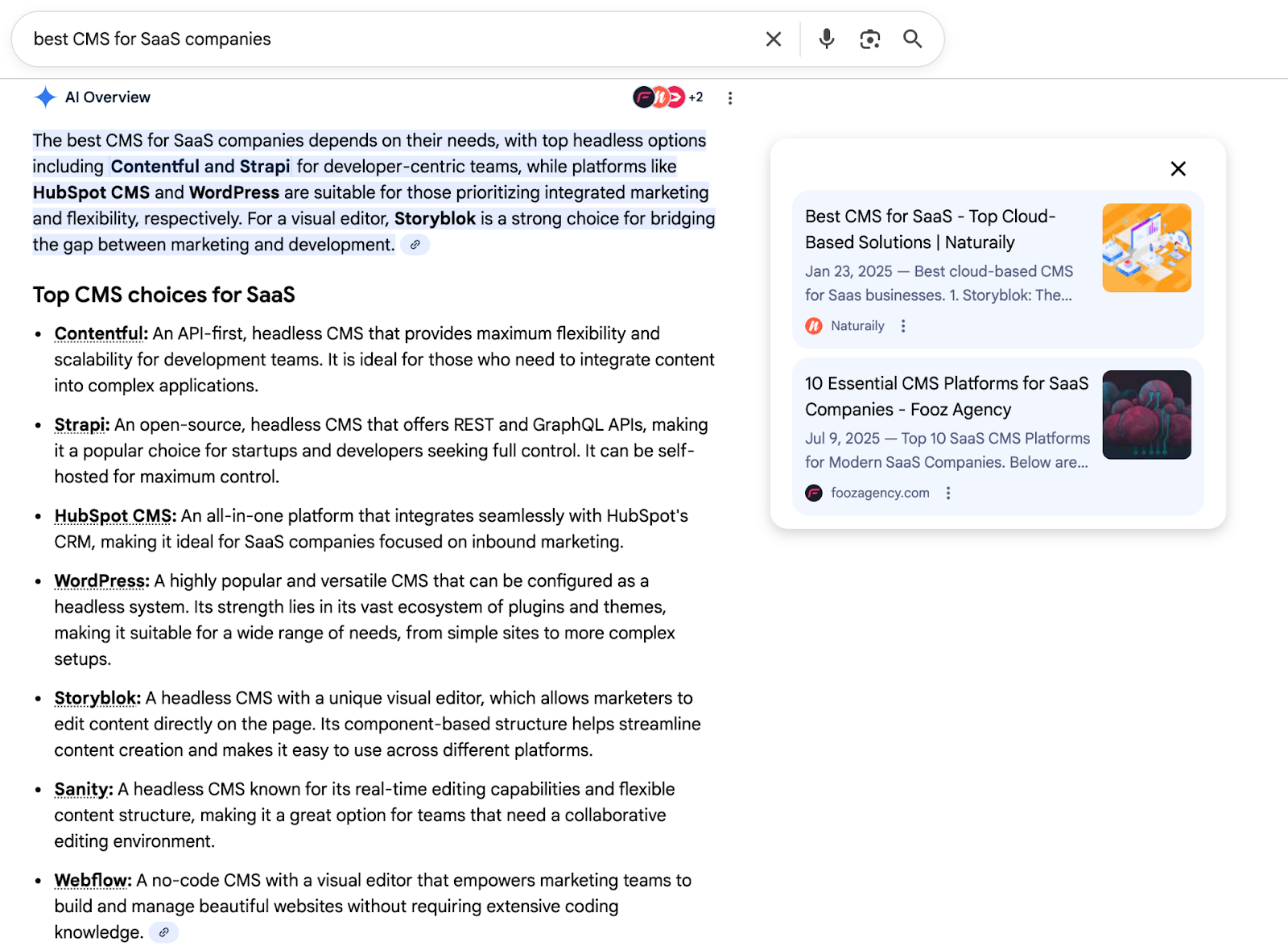
LCRS is particularly valuable in environments where synthesized answers shape decisions. In marketplaces, SaaS, YMYL industries, and comparison searches, LLMs significantly influence visibility.
Limitations and caveats of LCRS
LCRS offers directional insight rather than definitive certainty, given LLMs’ non-deterministic nature. Short-term volatility is expected, so evaluating trends over time is vital.
This metric isn’t a replacement for traditional analytics but complements them by addressing influence areas without direct attribution.
What LCRS signals about the future of SEO
More than a ranking tool, LCRS signals a shift toward brand presence engineering in the LLM-driven discovery space. Brand authority is becoming crucial, with successful SEOs adapting to optimize for retrievability, clarity, and trust.
The shift from position to presence
As LLM-driven search reshapes discovery, expanding from ranking positions to presence and recommendation is crucial. LCRS allows me to explore this gap and complement existing performance metrics for a comprehensive visibility strategy.
My journey with LCRS shows that adapting SEO strategies for evolving landscapes boosts both visibility and influence within LLM-driven search experiences.
I’ve been following the lively debate around creating separate markdown pages for LLMs, and it appears that both Google and Bing are advising against this approach.
Recently, I noticed that representatives from Google Search and Bing Search have specifically recommended not to create separate markdown (.md) pages designed exclusively for LLMs. This practice involves presenting different content to the LLMs compared to what users see, which can be considered a form of cloaking—a direct violation of Google’s policies.
The question arose when Lily Ray inquired on Bluesky about the prevalence of creating markdown or JSON pages targeted at bots.
“Not sure if you can answer, but starting to hear a lot about creating separate markdown / JSON pages for LLMs and serving those URLs to bots.”
Google’s stance, as explained by John Mueller, is clear. He replied to Lily’s query saying that LLMs have always interacted with standard web pages and don’t require separate markdown pages.
“I’m not aware of anything in that regard. In my POV, LLMs have trained on—read & parsed—normal web pages since the beginning, it seems a given that they have no problems dealing with HTML. Why would they want to see a page that no user sees? And, if they check for equivalence, why not use HTML?”
John Mueller even criticized the whole idea, stating:
“Converting pages to markdown is such a stupid idea. Did you know LLMs can read images? WHY NOT TURN YOUR WHOLE SITE INTO AN IMAGE?” Of course, converting your entire site to a markdown format is an extreme measure.
I’ve collected many of John Mueller’s remarks on this topic, which you can find here.
Bing’s perspective is shared by Fabrice Canel from Microsoft Bing, who suggested that creating duplicate, non-user content isn’t effective.
“Lily: really want to double crawl load? We’ll crawl anyway to check similarity. Non-user versions (crawlable AJAX and like) are often neglected, broken. Humans eyes help fixing people and bot-viewed content. We like Schema in pages. AI makes us great at understanding web pages. Less is more in SEO!”
Why this matters to us: Many of us are tempted by shortcuts to improve search engine performance. Yet, these shortcuts often backfire or yield short-lived benefits. As Lily Ray remarked on LinkedIn, managing duplicate and differing content for bots violates established search engine policies.
“I’ve had concerns the entire time about managing duplicate content and serving different content to crawlers than to humans, which I understand might be useful for AI search but directly violates search engines’ longstanding policies about this (basically cloaking).”
Analyzing nearly two million LLM sessions across nine industries throughout 2025 was a fascinating journey for me. I began with the assumption that ChatGPT would dominate and that AI usage patterns would be relatively uniform with minimal impact.
The findings, however, were surprising.
While ChatGPT does indeed control 84.1% of the trackable AI discovery traffic, it’s primarily serving as a broad-market tool. This discovery significantly impacts strategic approaches.
In today’s landscape, relying solely on a single discovery strategy is not viable. A multi-platform approach that aligns with how and where users find productivity is essential.
Brands must now discern which platforms are empowering productivity rather than merely supporting initial discovery phases.
Various LLMs are excelling in different sectors, often with stark differences. The key takeaway for 2026 is more complex than simply focusing on ChatGPT.
Here’s what I’ve discovered from the data.
The Growth Rate Divergence: ChatGPT vs. Competitors
Throughout 2025, major LLM platforms exhibited significant growth discrepancies:
ChatGPT: 3x growth
Copilot: 25x growth
Claude: 13x growth
Perplexity: 1x growth
Gemini: 1x growth
Although ChatGPT grew, Copilot and Claude experienced much more rapid growth. Platforms like Perplexity and Gemini remained steady, reinforcing specific workflows.
These numbers highlight strategic priorities:
Satya Nadella celebrated Copilot reaching 100 million monthly users.
Dario Amodei revealed that Anthropic’s revenue grew from $100 million to $8–10 billion in under two years.
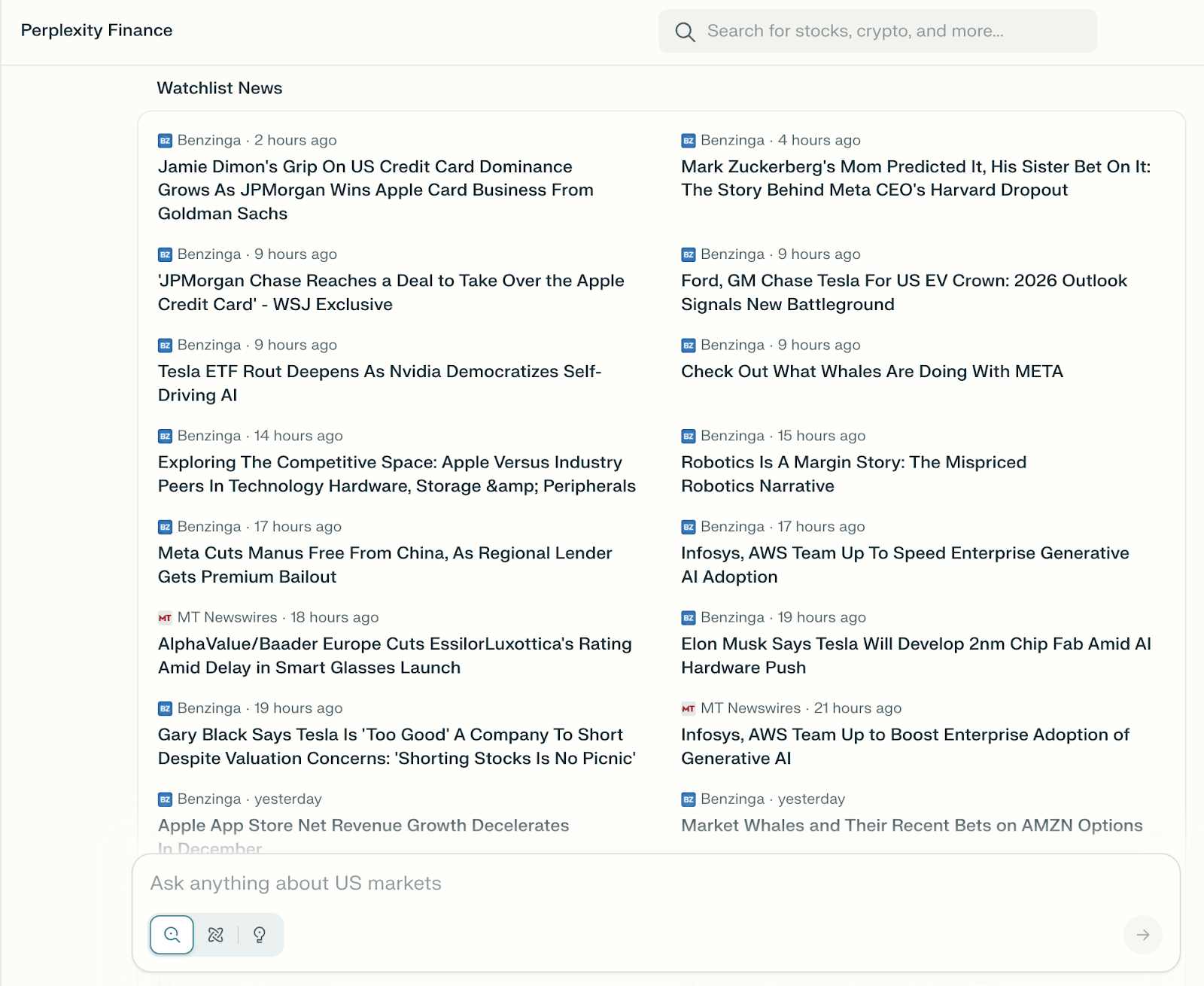
Aravind Srinivas noted significant interest in Perplexity Finance.
The focus on growth is crucial because it signals true user value:
Copilot excels in the Microsoft ecosystem.
Claude appeals to developers.
Perplexity thrives among finance professionals.
Different LLMs are thriving in various industries at markedly different rates.
Pattern 1: Copilot’s Striking Growth
Copilot’s remarkable 25x growth is indicative of its premier position in B2B environments reliant on Microsoft tools.
SaaS
ChatGPT: 2x growth
Copilot: 21x growth
The rapid adoption mirrors modern SaaS practices, embedding LLMs directly into workflows.
Education
ChatGPT: 6x growth
Copilot: 27x growth
Copilot benefits from educational settings fostering knowledge sharing and synthesis.
Finance
ChatGPT: 4.2x growth
Copilot: 23x growth
Finance aligns with Copilot due to automation needs and context dependency.
Copilot’s growth is most pronounced in industries where professionals are deeply integrated with Microsoft tools.
Instruments like Excel transform into data interpretation powerhouses with Copilot, eliminating the need for external searches.
Implications
For work-centric audiences like SaaS, finance, and education specialists, AI discovery is shifting into LLMs embedded in workflows.
Pattern 2: Perplexity Shines in Finance
While Perplexity has flat growth overall, it stands strong in finance with a 24% market share, unlike in other sectors where it has diminished.
SaaS: down to 7.3%
E-commerce: down to 3.4%
Education: down to 5.2%
Publishers: down to 3.6%
Finance demands accuracy; thus, traceable sources make Perplexity vital in this sector.
Partnering with Benzinga, FactSet, and others, Perplexity offers in-depth data vital for financial decisions.
Trust and verifiability are crucial in finance, and that’s where Perplexity excels.
Implications
In finance, selection of platforms that integrate with licensed data and credible sources is critical. Success hinges on being part of these authoritative ecosystems.
Pattern 3: Claude’s Dominance in Analysis
With just a 0.6% share, Claude might appear to be an underdog, but it thrives in specialist sectors like publishing and finance.
Publishers: 49x growth
Education: 25x growth
Finance: 38x growth
SaaS: 10.3x growth
Claude’s strength lies in standalone, strategic thinking rather than integrated tools like Copilot.
Publishing professionals and financial analysts use Claude for its substantial context window, enabling complex and strategic queries.
Implications
Target audiences that require in-depth analysis should focus on creating structured and detailed content. Claude’s user base is smaller but highly influential.
Pattern 4: Challenges in Tracking Gemini
The data concerning Gemini is puzzling, showing both growth and declines. This could be attributed to issues with attribution rather than an actual decline in users.
Education: −67% tracked traffic
SaaS: +1.4x growth
Finance: +1.3x growth
E-commerce: +2.7x growth
Gemini’s interaction model keeps users within its ecosystem, making measurement challenging.
The reality is that usage might still be robust, but the tracking systems need to catch up with user behaviors.
Implications
As AI-assisted conversions increasingly occur, traditional last-click attribution models need reconsideration.
Monitor brand search performance and invest in broader visibility strategies.
Strategizing Your LLM Approach
AI discovery is diversifying rather than converging. Tailoring strategies based on your audience’s preferences and behaviors is crucial.
Enterprise Audiences: Focus on Copilot integration for SaaS and B2B environments.
High-Stakes Decisions: Consider Perplexity’s reliability in providing traceable data.