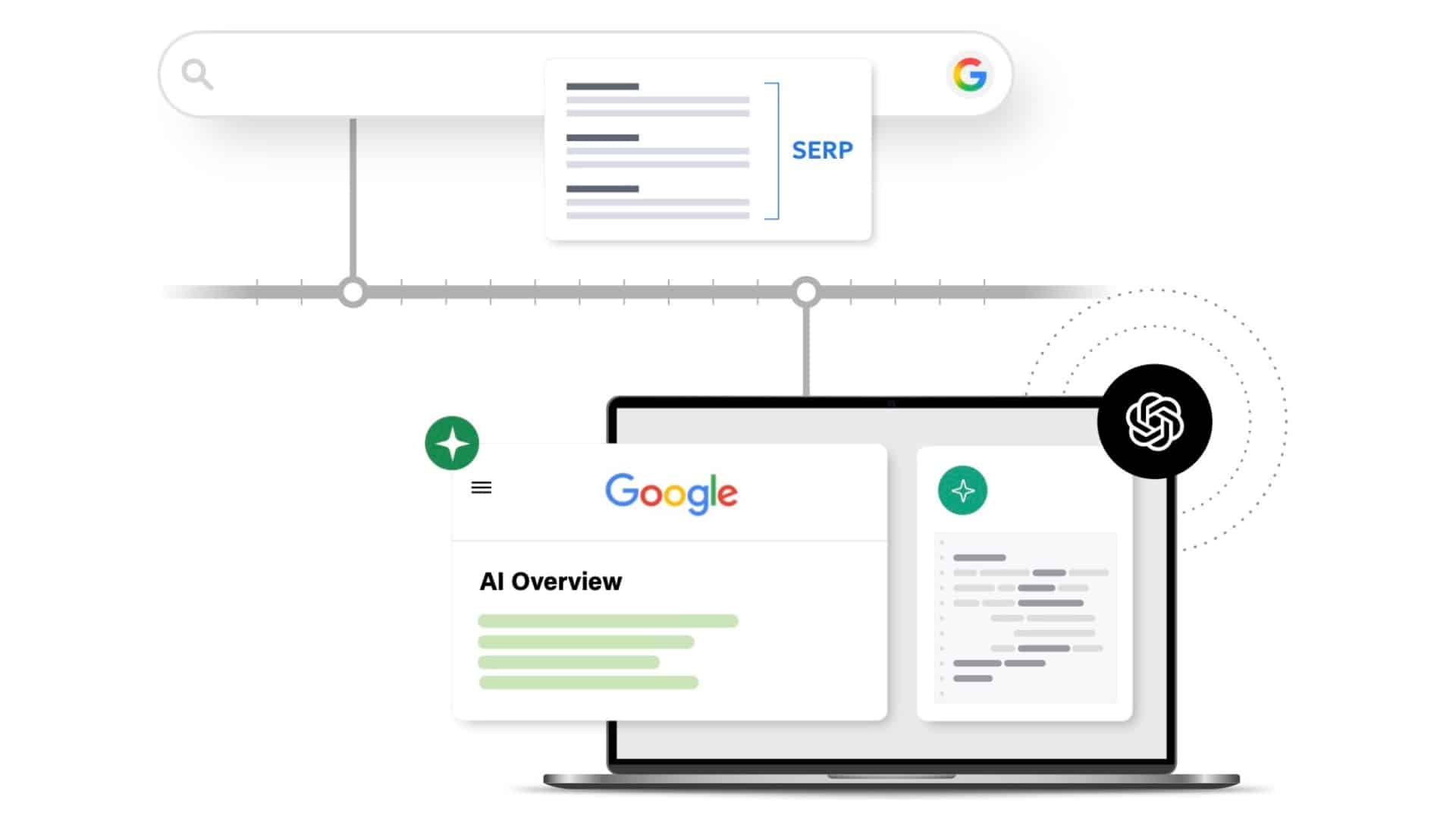
With Google referrals declining and LLM usage on the rise, I’ve discovered that successful discoverability now hinges on metrics, structure, and authority—not just rankings.
If your organic traffic is decreasing while impressions rise, AI might be citing your content without generating clicks. If both metrics are down, it’s likely your content is being overlooked. Either way, the conventional search behavior that shaped your marketing strategy has transformed, and merely waiting for traffic to rebound is not a viable strategy.
The year 2026 presents a new reality. According to KEO Marketing, 73% of B2B websites faced significant traffic declines between 2024 and 2025, averaging a 34% year-over-year drop.
These drops aren’t uniform. Websites with predominantly informational content have been more adversely affected, experiencing declines between 15% and 64% since AI Overviews emerged.
News publishers, in particular, have been vulnerable, with Google referrals decreasing globally by 33% in the year leading up to November 2025.
These aren’t typical fluctuations; they signify a fundamental shift in how information is discovered online, posing a threat to business models reliant on site traffic.
Organic clicks are diminishing due to two intersecting reasons, each necessitating a different approach:
Google has fostered zero-click behavior through features like featured snippets and knowledge panels. These provide answers directly on the search results page, often eliminating the need to click on search results. While 25% of searches concluded without clicks ten years ago, today it’s over 65%. This trend has rapidly accelerated with AI Overviews, now found in about 16% of desktop searches and 41% of mobile searches.
On top of that, a growing number of users are bypassing traditional searches entirely. Nearly 52% of U.S. adults now frequently use AI tools, and approximately 28% of employed Americans incorporate AI at work. When they seek answers from ChatGPT or other LLMs, they often get responses without visiting any websites. While your content might contribute to that answer, it doesn’t translate to traffic or attribution.
Traditional metrics such as impressions, clicks, and page views no longer accurately reflect discoverability. They measure site behavior without informing how your brand performs in AI-mediated interactions, impacting upstream traffic.
Here are the five key metrics for AI visibility:
Citations in AI responses indicate how often your content is directly referenced when an LLM responds to a query. A citation suggests your content is valuable, well-structured for AI parsing, and authoritative.
Brand mentions differ from citations. LLMs may mention your brand without citing your content, often pulling data from review sites, forums, and third-party articles. A mention absent a citation implies your brand is recognized but not sourced from your content, guiding where to focus investments.
Share of voice measures your frequency of citations and mentions relative to competitors within specific categories.
Brand sentiment evaluates whether AI-generated responses portray your brand positively, neutrally, or negatively.
AI-influenced traffic gauges the proportion of traffic generated from LLM referrals. Initial data indicates this traffic has a conversion rate 3-5 times higher than other sources, making it valuable to track even if minor in volume.
Modern tools can track these metrics at scale, eliminating the necessity for manual LLM prompts. However, even conducting basic benchmarks by querying major LLMs with your target questions and tracking mentions is advantageous over not measuring at all.
Achieving visibility in AI-driven search doesn’t involve rewriting your content strategy but instead requires shedding ineffective practices and pivoting towards lasting principles.
Experience, Expertise, Authoritativeness, and Trustworthiness (E-E-A-T) continue to form the foundation of content credibility. LLMs give precedence to sources that demonstrate real expertise and are trusted by authoritative figures.
By earning citations from reputable sites, producing content authored by subject matter experts, and delving into topics thoroughly, you can outshine content that fails to meet these criteria, regardless of optimization efforts for other factors.
Structure and clarity are essential because LLMs extract content by pinpointing passages that effectively answer questions. Structuring content around clear questions and answers, utilizing bullet point summaries, and avoiding dense paragraphs enhance retrievability over embedding answers in narrative prose.
Your information architecture should be comprehensible to both human readers and LLM systems. Introducing a Q&A section or reorganizing posts around clear question-and-answer pairs provides significant improvements.
Human-written, human-led content has a distinct advantage. After Google’s recent core update, AI-generated content saw an 87% drop in rankings and citation frequency, with keyword-optimized content seeing a 63% fall. LLMs are becoming adept at detecting AI-created content and rank it lower.
The 2025 demand for AI-produced content has highlighted a quality issue now evident in performance data. Prioritizing quality over quantity is essential. Use AI for drafting and editing, but not for generating final content. Implement a review process to catch generic phrasing or a synthetic tone, either through AI-detection tools or human editors.
Recency is crucial for AI citations. AI systems consider both the publication and update dates when selecting sources. A high-quality piece from 2022 can be dismissed for a newer version from 2025.
Audit your high-traffic pages and key assets for outdated data, refreshing them with recent examples and data. It’s a quick yet often overlooked strategy.
Promotional language will not get cited. If your writing appears too commercial—emphasizing product claims and brand-forward language—answer engines may deprioritize it over more neutral sources.
This doesn’t mean you should avoid mentioning your product; rather, write about it like an impartial party by acknowledging trade-offs, providing context, and letting facts speak for themselves. Listicles and comparison articles excel here.
LLMs respond best to organized, objective comparisons—even when one option is clearly preferred.
If my presence is limited to my own blog, I’m at a disadvantage against a brand with less expressive assets but more robust third-party coverage.
That is why cultivating an external content ecosystem is critical. Reviews on sites like G2, Capterra, and Google are frequently used in AI curation. User-generated content on forums like Reddit is heavily indexed. Third-party articles, tutorial videos, and newsletter mentions build the multi-source consensus essential for AI citations.
Content partnerships also deserve focused effort. Sponsoring articles or placing newsletters in relevant publications not only drives referral traffic but also earns trusted, external citations that elevate AI visibility. With a growing readership, newsletters — offering curated, human-authored content — are vital, with YouTube citations becoming increasingly influential. ChatGPT favors authoritative video creators for citations.
The goal isn’t to merely generate mentions but to consistently express your brand’s narrative through credible external sources so LLMs consistently recognize that narrative. Consistency across partners, review platforms, and third-party content strengthens your AI share of voice.
With organic traffic plummeting by 30% or more, the visitors arriving at your site are more deliberate and valuable than before, making conversion optimization on landing pages crucial.
Focus on simplicity: one offer, one message, minimal text.
Each landing page should focus on a single call to action and a singular argument. If there are multiple conversion goals, develop separate landing pages rather than a single page attempting everything.
Ensure the header conveys the full value proposition succinctly, with supporting points kept brief. Visitors should instantly grasp the offer and know how to act without needing to scroll.
This approach contrasts with blog and thought leadership content, which should be detailed, well-sourced, and designed for LLM retrieval. Each serves different objectives and requires varied standards. Conversion-centric landing pages are not the place for nuance or elaborate prose.
The decline in traffic isn’t a temporary issue that will resolve itself. Users increasingly get answers directly from AI, bypassing websites, and this trend will only intensify. A strategy focused solely on ranking for clicks is now insufficient.
The new strategy involves a dual focus: optimizing for citations by AI answer engines and cultivating an external brand presence that offers LLMs compelling reasons to consistently mention you. These objectives align with longstanding best practices: crafting clear, authoritative content grounded in expertise.
AI-driven discovery favors brands excelling in the fundamentals: building real credibility, securing trusted external mentions, and writing for audiences rather than algorithms.
This approach was always the best, and now AI search makes it essential.
Written by Tim Burke and Lauren Yanez
Inspired by this post on Search Engine Land.

Leave a Reply