

From probabilistic answers to off-site signals, AI visibility functions differently from SEO. Here are seven truths to help you understand how and why.
Fair warning: My insights might unsettle those who have excessively promoted AI visibility tools.
Having spent 18 years in the search industry, I feel compelled to share the truth over popular beliefs.
I’m not here with an agenda. Ironically, some misconceptions benefit me as the co-founder of an AI visibility tool and a GEO service provider.
Let’s address some misconceptions that have circulated over the past few months.
1. AI Search Didn’t Kill Google Search
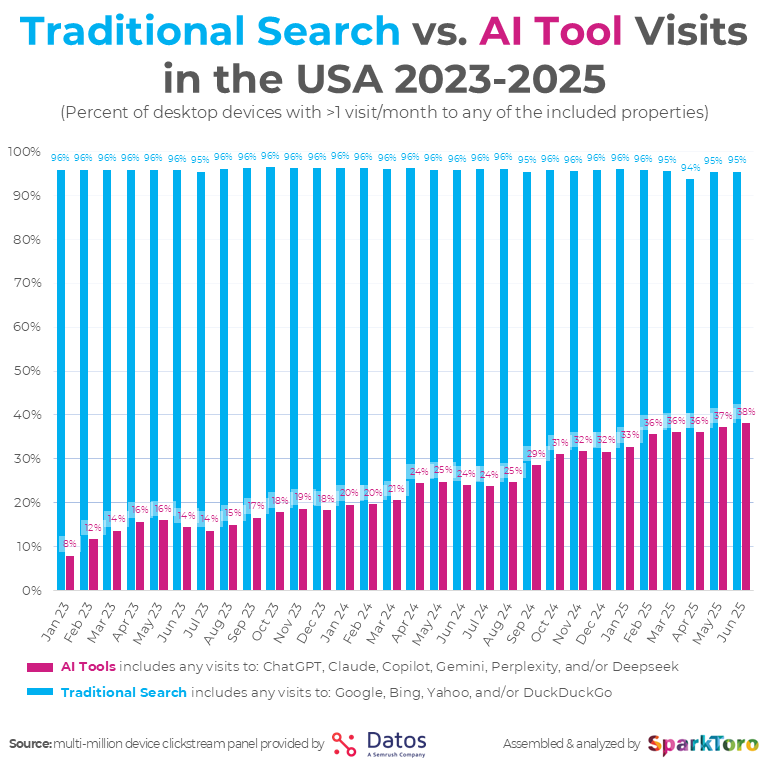
Quite the contrary. Despite media hype, Google’s dominance prevails with significant data backing this truth.
Convincing headlines don’t change facts. What does? Data.
Consider these studies:
- Semrush’s latest study shows ChatGPT increased, not reduced, Google searches, debunking biases of Google favoritism.
- Datos’ report reveals Google retains a massive 95% market share in collaboration with industry experts.
Despite ChatGPT’s rise, Google search maintains its stronghold. OpenAI reports suggest ChatGPT is often used for non-search purposes. Actual ‘search’ queries form only a fraction, reflecting use diversity.
This difference highlights the continuing necessity and dominance of traditional search engines like Google.

2. No AI Tool Can Guarantee AI Answers Inclusion
History repeats itself; tools can’t do GEO for you, similar to how they couldn’t perform SEO. True optimization can’t be automated.
Real optimization relies on human decisions, supported by insights that tools can only provide partially.
Claims of automated success often omit the human efforts that drive real results. Tools assist but can’t replace expert judgment.
3. Actual Prompt Search Volumes are Elusive
No tool or provider knows true prompt volumes, relying on estimations instead of exact data, given the lack of public usage data from LLM companies.
Current volume charts are educated guesses rather than definitive statistics.

4. AI Visibility Differs from Search Rankings
LLMs provide probabilistic results, unlike deterministic search rankings. AI answers are personalized, leading to varied responses even for identical queries.
AI models are inclined to offer guesses, resulting in varied responses. This variability presents challenges for monitoring and measuring visibility.
Most monitoring tools either use averaged data or focus on specific personas to try and model this complexity.
5. Off-Site Signals Trump On-Site Efforts in GEO
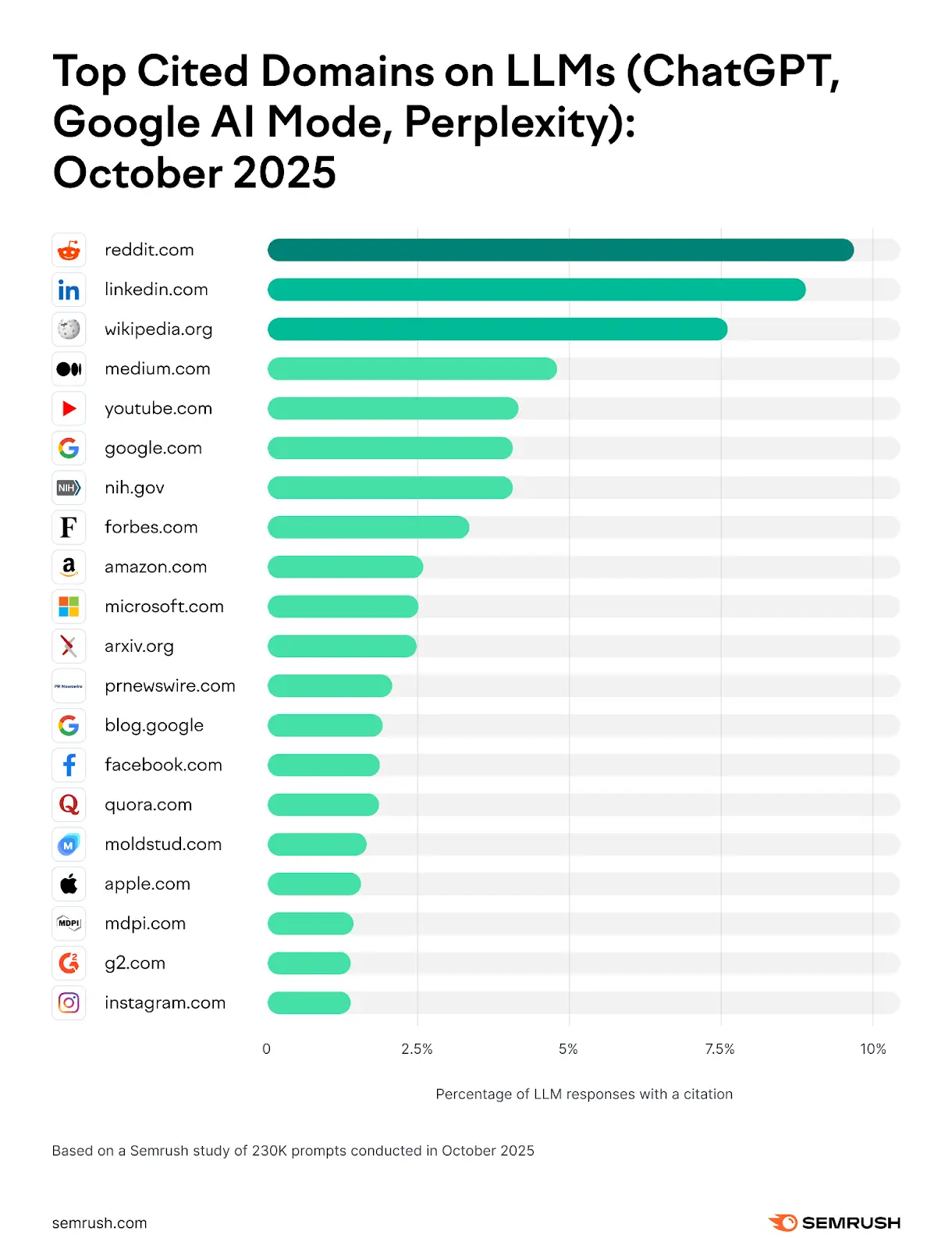
Just as backlinks indicate credibility in SEO, external brand mentions are critical for AI visibility.
Off-site signals have a greater influence on whether a brand appears in AI-driven responses, much like the way trusted external recommendations bolster a brand’s reputation.
6. Key GEO KPI: Brand Mentions in AI Responses
While citation visibility is beneficial, the strategic goal of GEO should prioritize explicit brand mentions within AI-generated answers.
AI visibility alone doesn’t secure web traffic; vital is having your brand part of the response, impacting direct discovery and engagement.
7. Misaligned GEO and SEO Practices Can Hurt Performance
Beware of GEO optimizations that conflict with established SEO principles; they can detract from overall search performance.
Effective GEO requires balance, ensuring broader SEO strategies remain complementary, rather than contradictory.
When Search Evolves, Measurement Must Too
GEO thrives within the existing search framework but needs evolved measurement strategies that reflect AI’s dynamic nature.
Embrace change by rethinking metrics, challenging assumptions, and refining success benchmarks alongside evolving technology.
Inspired by this post on Search Engine Land.

Leave a Reply