In my journey to optimize AI search visibility, I’ve discovered some of the best tools in Generative Engine Optimization (GEO). These tools not only boost citations in platforms like ChatGPT and Gemini but also guide me in selecting the most effective GEO platform for my needs.
Let me show you how you can measure AI search visibility effectively. It’s all about understanding how your content interacts with these advanced systems and using the right tools to enhance your reach.
Choosing the right GEO platform can be a game-changer. It’s essential to select a system that aligns perfectly with your goals and optimizes your AI-driven content for maximum impact.
I’ve been navigating the rapidly evolving world of AI-driven search, and I’ve realized that search visibility now means more than just rankings. AI has redefined where discovery takes place, reaching across platforms like Google, ChatGPT, and Perplexity.
<!–<!–>Generative engine optimization (GEO) is my way of adapting how my brand is retrieved and represented in these systems.
/wp:paragraph –>
I’ve noticed traditional <!–<!–>SEO metrics aren’t capturing the full picture of visibility anymore. AI-generated summaries mean that users are clicking traditional search results far less often — only <!- 8% of the time –><!–>8% of the time, according to some studies.
/wp:paragraph –>
This realization highlighted a gap in measurement that GEO metrics can fill for me.
What Visibility Means in Generative Search
For me, GEO focuses on whether AI can find and use my content to generate answers. It’s not just about being indexed; it’s about how my content is utilized—cited or summarized in AI responses.
With GEO, I’m shifting my focus from rankings to ensuring my content is clear and trusted in context.
In practice, I’m optimizing for extractability, credibility, and relevance—key aspects that make GEO metrics valuable.
I find tracking GEO performance through these eight metrics essential because they highlight presence, influence, and downstream impact.
1. AI Citation Frequency
This metric tells me how often my brand or content is cited in AI-generated answers—a clear sign my content is valuable enough to be referenced by generative systems.
I track this across platforms like Google AI Overviews, ChatGPT search, and others, focusing on citation at the topic level.
2. Share of Model Voice (SOMV)
For me, SOMV is a measure of my brand’s presence in AI-generated answers, comparing visibility to competitors.
This metric is useful especially in competitive categories, where share matters more than visibility due to compressed consideration sets in AI answers.
3. Answer Inclusion Rate
Answer inclusion rate helps me see how often my content contributes to AI-generated answers, providing insight beyond just citation frequency.
I track inclusion for a range of prompts to see which content formats AI prefers to retrieve and summarize.
4. Entity Recognition and Authority
To ensure AI systems understand my brand, I focus on entity recognition—making sure AI correctly connects my brand to its key details and associations.
This involves consistently managing the signals AI systems use, like structured data and corroborating signals.
5. Sentiment in AI Responses
Understanding how AI describes my brand is crucial. I track sentiment in AI-generated responses to manage perception before users reach my site.
I focus on ensuring positive framing and correcting any misconceptions or outdated information.
6. Prompt Coverage
Prompt coverage shows me how well my brand surfaces across conversational and intent-rich prompts, which are crucial in AI search contexts.
For instance, I look at a variety of prompt types, including informational and decision-stage, to gauge comprehensive visibility.
7. Content Retrieval Success Rate
This metric evaluates how often AI systems pull from my content. If content isn’t easily parsed or updated, it may not appear in AI outputs.
I check various technical factors to enhance content retrieval, from crawlability to schema use.
8. Conversion Influence After AI Interaction
This involves measuring how AI visibility impacts business outcomes, tracing the journey from AI interaction to conversion.
Even with fewer sessions, AI-driven visits tend to be high-intent, so I track conversion quality and influence closely.
Tools and Methods for Tracking GEO Metrics
I find GEO measurement requires a combination of tools, audits, and tests, as no single platform currently captures the entire picture.
Emerging GEO Analytics Platforms
Using tools from both SEO giants and GEO-native products, I track brand visibility across AI-driven search.
Platforms like Semrush and SE Ranking provide visibility trends tied to AI, which are invaluable in aligning strategies.
Prompt Testing Frameworks
Manually testing prompts is still vital. I create a controlled prompt set and consistently observe how my brand is included across AI platforms.
By tracking over time, I identify patterns and adjust my strategies accordingly.
Analytics and Logs
I utilize analytics tools like GA4 to identify AI platform traffic and its influence on conversions.
These insights guide me in understanding AI’s business impact, including direct and branded search changes.
Search Console and Traditional SEO Tools
Despite declining clicks, Search Console remains vital, showing me where AI Overviews are impacting demand and where restructuring is needed.
Traditional SEO tools are also key for technical health and competitive research, laying the groundwork for comprehensive GEO measurement.
How to Build a GEO Measurement Framework
Starting with a baseline, I choose core topics that should be associated with my brand and map prompts accordingly.
By building a dashboard across visibility, accuracy, technical, and business impact categories, I lay out clear actions and align them with business goals.
Ultimately, my GEO strategy must adapt according to metrics and business objectives, ensuring dynamic business value.
<!–<!–>Generative engine optimization (GEO) is my way of adapting how my brand is retrieved and represented in these systems.
/wp:paragraph –>
I’ve noticed traditional <!–<!–>SEO metrics aren’t capturing the full picture of visibility anymore. AI-generated summaries mean that users are clicking traditional search results far less often — only <!- 8% of the time –><!–>8% of the time, according to some studies.
/wp:paragraph –>
This realization highlighted a gap in measurement that GEO metrics can fill for me.
What Visibility Means in Generative Search
For me, GEO focuses on whether AI can find and use my content to generate answers. It’s not just about being indexed; it’s about how my content is utilized—cited or summarized in AI responses.
With GEO, I’m shifting my focus from rankings to ensuring my content is clear and trusted in context.
In practice, I’m optimizing for extractability, credibility, and relevance—key aspects that make GEO metrics valuable.
I find tracking GEO performance through these eight metrics essential because they highlight presence, influence, and downstream impact.
1. AI Citation Frequency
This metric tells me how often my brand or content is cited in AI-generated answers—a clear sign my content is valuable enough to be referenced by generative systems.
I track this across platforms like Google AI Overviews, ChatGPT search, and others, focusing on citation at the topic level.
2. Share of Model Voice (SOMV)
For me, SOMV is a measure of my brand’s presence in AI-generated answers, comparing visibility to competitors.
This metric is useful especially in competitive categories, where share matters more than visibility due to compressed consideration sets in AI answers.
3. Answer Inclusion Rate
Answer inclusion rate helps me see how often my content contributes to AI-generated answers, providing insight beyond just citation frequency.
I track inclusion for a range of prompts to see which content formats AI prefers to retrieve and summarize.
4. Entity Recognition and Authority
To ensure AI systems understand my brand, I focus on entity recognition—making sure AI correctly connects my brand to its key details and associations.
This involves consistently managing the signals AI systems use, like structured data and corroborating signals.
5. Sentiment in AI Responses
Understanding how AI describes my brand is crucial. I track sentiment in AI-generated responses to manage perception before users reach my site.
I focus on ensuring positive framing and correcting any misconceptions or outdated information.
6. Prompt Coverage
Prompt coverage shows me how well my brand surfaces across conversational and intent-rich prompts, which are crucial in AI search contexts.
For instance, I look at a variety of prompt types, including informational and decision-stage, to gauge comprehensive visibility.
7. Content Retrieval Success Rate
This metric evaluates how often AI systems pull from my content. If content isn’t easily parsed or updated, it may not appear in AI outputs.
I check various technical factors to enhance content retrieval, from crawlability to schema use.
8. Conversion Influence After AI Interaction
This involves measuring how AI visibility impacts business outcomes, tracing the journey from AI interaction to conversion.
Even with fewer sessions, AI-driven visits tend to be high-intent, so I track conversion quality and influence closely.
Tools and Methods for Tracking GEO Metrics
I find GEO measurement requires a combination of tools, audits, and tests, as no single platform currently captures the entire picture.
Emerging GEO Analytics Platforms
Using tools from both SEO giants and GEO-native products, I track brand visibility across AI-driven search.
Platforms like Semrush and SE Ranking provide visibility trends tied to AI, which are invaluable in aligning strategies.
Prompt Testing Frameworks
Manually testing prompts is still vital. I create a controlled prompt set and consistently observe how my brand is included across AI platforms.
By tracking over time, I identify patterns and adjust my strategies accordingly.
Analytics and Logs
I utilize analytics tools like GA4 to identify AI platform traffic and its influence on conversions.
These insights guide me in understanding AI’s business impact, including direct and branded search changes.
Search Console and Traditional SEO Tools
Despite declining clicks, Search Console remains vital, showing me where AI Overviews are impacting demand and where restructuring is needed.
Traditional SEO tools are also key for technical health and competitive research, laying the groundwork for comprehensive GEO measurement.
How to Build a GEO Measurement Framework
Starting with a baseline, I choose core topics that should be associated with my brand and map prompts accordingly.
By building a dashboard across visibility, accuracy, technical, and business impact categories, I lay out clear actions and align them with business goals.
Ultimately, my GEO strategy must adapt according to metrics and business objectives, ensuring dynamic business value.
As I dive into this report, I’m excited to share the top 8 real estate GEO and AEO agencies of 2026. These agencies have been selected based on their impressive results, technical expertise, and exceptional client experience.
Our research team embarked on a detailed study of agencies that specialize in Generative Engine Optimization (GEO) specifically for companies in the home services industry like HVAC, plumbing, electrical, and home security. From a total of 53 agencies, we focused on those serving markets including pest control, lawn care, and remodeling. Here’s how we analyzed them:
Home Services Client Experience (30%): I found agencies with proven success in understanding the unique landscape of seasonal demand, emergency calls, and local search.
GEO/AI Search Technology and Tools (25%): Optimization expertise for AI-powered platforms like ChatGPT and Google AI Overviews was a must.
Average Customer Review Score (15%): Each agency’s client satisfaction was gauged using scores from platforms like Google and Clutch.
Leadership Experience Score (10%): Leadership’s depth of experience in both digital marketing and home services was a key factor.
Year Established (10%): I considered the tenure of each agency and their ability to adapt over time.
Notable Clients (10%): Agencies were evaluated based on their successful partnerships with quality home service providers.
After an in-depth analysis using data from company websites, reviews, and direct outreach, I’ve ranked these firms. The table below showcases the leading home services GEO agencies to keep companies visible across both traditional and AI-powered platforms.
Under the guidance of CEO Evan Bailyn, First Page Sage has developed a robust GEO strategy that elevates home services companies. They’ve propelled names like Mighty Dog Roofing and Pipe Restoration Solutions to the top of search results by creating service-specific landing pages and geotargeted content.
Their strategic focus on building a network of high-quality content ensures recommendations by AI platforms like ChatGPT. When homeowners inquire about the best local services, First Page Sage clients confidently come up as top recommendations.
Year Founded: 2009
Founder Led: Yes
Leadership Experience Score: 4.8
Average Review Score: 4.9
Home Service Focus: Broad home services experience
Notable Clients: Mighty Dog Roofing, iFOAM Insulation
Specialty: Lead gen-focused GEO and SEO
Summary of Online Reviews
Clients rave about First Page Sage’s “fastidious understanding of home services GEO” and “organized, communicative teams.” While their strategies drive quality leads, some mention the need for a longer ramp-up period for business research.
Siana Marketing
Founded in 2021, Siana Marketing directs its focus on GEO for construction and home services. Despite being young, they excel in securing appearances for architects and contractors in both traditional search and AI-generated results.
The leadership team brings deep industry knowledge, with a strong grasp on sales cycles and influencing homeowner decisions. This expertise has helped maintain solid client retention, which is impressive for their relatively short tenure.
Year Founded: 2021
Founder Led: Yes
Leadership Experience Score: 4.6
Average Review Score: 4.8
Home Service Focus: 100% construction and home services
Notable Clients: Corcoran, HomeVestors
Specialty: Construction-only GEO agency
Summary of Online Reviews
Clients highlight Siana’s “industry knowledge” and understanding of the AEC sector’s growth strategies. There’s high demand and selective client acceptance due to their expertise.
Focus Digital
Focus Digital offers high-quality SEO and GEO support at prices accessible to smaller operations. They’ve built credibility by focusing on personalized client attention and staying ahead with innovative strategies.
What makes them unique is their ability to provide premium strategic advice and execution, making them a top choice for businesses with tighter budgets seeking sophisticated search solutions.
Year Founded: 2018
Founder Led: Yes
Leadership Experience Score: 4.5
Average Review Score: 4.8
Home Service Focus: Small business contractors
Notable Clients: Stego Wrap, Twin Home Experts
Specialty: Budget-friendly SEO and GEO solutions
Summary of Online Reviews
Focus Digital’s clients commend their meticulous focus and state of constant innovation. They’re seen as “punching above their weight,” delivering value usually associated with bigger firms.
Diving into the world of technical SEO for generative search has had me rethinking how AI agents interact with my site. It’s not just about indexing anymore; it’s about how AI systems generate answers. My focus is now on ensuring AI agents can access and interpret my content smoothly, enhancing the chances that I’ll be cited in AI-generated responses.
When I consider generative engine optimization (GEO), I’ve realized that while the underlying tools and frameworks aren’t new, the way I implement them makes the difference in my content being surfaced or missed.
It means paying close attention to how AI agents access my site, structuring my content for easy extraction, and ensuring it can be reliably interpreted and reused in AI-generated responses. This is about precision and strategic structuring.
Agentic Access Control: Managing the Bot Frontier
Using robots.txt strategically has become vital. It’s essential for me to specify which crawlers can access what parts of my site. For instance, I might decide that a training model like GPTBot should access my /public/ folder but keep my /private/ folder off-limits, implementing it as follows:
The choice between model training and real-time search is crucial. Often, I find myself balancing whether to disallow GPTBot or allow OAI-SearchBot. Considering Perplexity and Claude standards within my robots.txt is another layer I need to manage:
Claude
ClaudeBot (Training)
Claude-User (Retrieval/Search)
Claude-SearchBot
Perplexity
PerplexityBot (Crawler)
Perplexity-User (Searcher)
I’ve also had to integrate the new protocol, llms.txt. Although not universally adopted, it’s a structure I find useful for guiding AI agents in understanding my content better. If you’re interested in following Perplexity’s llms.txt, you can explore it here:
llms.txt: A concise map of links.
llms-full.txt: An aggregate of text content that allows agents to bypass crawling my entire site.
Even if Google and others aren’t reading llms.txt right now, I believe it’s worth preparing for future needs. John Mueller has shared insights on this which you can read here.
Extractability: Making Content ‘Fragment-Ready’
In the realm of GEO, I’ve been focusing on creating content fragments because AI systems value precise and concise information. This means avoiding bloated content that can hinder AI retrieval due to issues like:
Challenges with JavaScript execution.
Overreliance on keyword optimization instead of entity optimization.
Poor content structures lacking clear answers.
To make my core content visible and accessible to various AI entities, semantic HTML components like <article>, <section>, and <aside> have become essential tools. This separation helps the essential facts stand out, feeding search engines and AI bots effectively.
Technical SEO is evolving, and as I adapt, I’m focusing not just on visibility, but on becoming a source of truth for the world’s AI models. By using structured data efficiently, implementing robust access control via robots.txt, and refining my content’s extractability, I’m setting the stage for success now and into the future.
Ensuring my strategies are working requires thorough auditing. I focus on areas like citation share, log file analysis, and zero-click referrals to measure how effectively my content is influencing the AI-driven world. This helps validate my efforts and enhance KPIs.
Scaling GEO into 2027
Looking ahead to 2027, I’m prioritizing automation to minimize manual optimization work. The goal is to leverage every SEO tool available, ensuring my site is a robust source of truth amid AI advancements. Starting with basics like robots.txt and moving towards more sophisticated structures, my ongoing goal is to scale efficiently and effectively.
As I dive into the intriguing world of Generative Engine Optimization (GEO), I find myself exploring how we can fine-tune a company’s online presence to have their products or services recommended by generative AI chatbots. Although still a budding marketing avenue, GEO’s potential reminds me of the early days of SEO, ripe for exploration and growth. I’m convinced that the deep insights from this research will pave the way for much-needed best practices in the market.
My team and I embarked on an extensive study from March 2024 through December 2025, focusing on the recommendation algorithms of the four most popular generative AI chatbots in the United States. We meticulously conducted 11,128 commercial queries across various sectors, seeking to unravel the factors these chatbots use to recommend products and services. We’ve continued to update our insights, the latest being on March 12, 2026.
The table below gives a detailed breakdown of our research findings, listing the factors influencing chatbot recommendations in terms of weight. Following the table, I delve into each factor, elucidating how each chatbot incorporates them into their recommendation process.
Allow me to take you through the key factors that guide commercial recommendations across these generative engines. Although they share common factors, each employs a unique weighting system to determine recommendations.
NOTE: The more advanced versions of these AI chatbots may personalize their suggestions as more personal data is provided, potentially altering factor weightings.
Authoritative List Mentions
When it comes to predicting content, generative AI engines draw information from multiple authoritative sources. They echo the voices of experts, offering recommendations rooted in well-regarded lists and rankings. I find it fascinating how they lean heavily on top-ranking Google searches to refine their recommendations, which are potently informed by these highly authoritative sources.
Claude stands apart, favoring traditional compendiums over Google-reliant lists, perhaps embracing a more traditional approach.
Awards, accreditations, and affiliations
Mentioning an award or accreditation on a trustworthy website signals authority, nudging AI to recommend the associated company or product more frequently. It’s quite interesting to see this recognition elevated in the virtual world.
Online Reviews
Online reviews hold substantial sway for ChatGPT, Gemini, and Perplexity, especially reviews from platforms like Amazon, Better Business Bureau, and Glassdoor. I see how a confluence of positive reviews can significantly boost recommendation weight.
Social Sentiment
It’s intriguing to see how the way a company is discussed online, including on news sites and social platforms like Reddit, subtly shapes ChatGPT’s recommendations. Its current influence is modest but poised for growth as trust builds in digital communities.
Customer Examples & Usage Data
Recognized endorsements and partnerships visibly boost a product’s credibility. This factor, used by ChatGPT and Claude, reinforces the reputational weight of significant customer associations or user data.
Google Website Authority
Google attributes site authority based on factors like consistent content publication. Gemini values this significantly, drawing from Google’s well-established credibility measures.
Local Business Reviews
For local queries, Gemini and Perplexity lean on reviews from Google Business Profiles and Yelp. This localized trust mechanism brings a nuanced understanding to the recommendation landscape.
Traditional Databases & Directories
Generative AI chatbots like Claude often delve into established resources like encyclopedias and business directories. This approach weights well-established data heavily in crafting precise business recommendations.
ChatGPT’s Recommendation Algorithm
In my exploration of ChatGPT’s algorithm, I’ve noticed its reliance on Bing to gather authoritative lists, reviews, and rankings. It aggregates and refines recommendations through a blend of sources, ensuring a comprehensive outcome.
Often, top Bing search results heavily guide its recommendations, but in their absence, ChatGPT factors in alternative data like awards, reviews, and social sentiment. An illuminating example involved its interpretation of lawnmower choices guided largely by trusted reviews from notable publications.
Google Gemini’s Recommendation Algorithm
Gemini’s algorithm intrigues me with its Google-centric approach, harnessing authority and reviews together from search results to guide recommendations. Its unique method prioritizes recognized achievements, often steering clear of poorly reviewed companies.
In practical application, Gemini reinterprets product searches by balancing authority with popularity, evidenced by its moisturizer recommendations, aligning sales volume with positive reviews.
Perplexity’s Recommendation Algorithm
What strikes me about Perplexity is its straightforward algorithm, largely favoring search lists and reviews. It often taps into the most readily available online viewpoints to construct its recommendations.
For local business queries, its focus on high-ranking lists underscores a strategy based on easily established credibility from popular review sites.
Claude AI’s Recommendation Algorithm
Unique in its approach, Claude AI depends on traditional databases, often highlighting historically established companies in its recommendations. This somewhat conservative method gives it a distinct identity in the generative AI landscape.
Focused purely on national businesses, it bypasses local recommendations altogether, streamlining its efforts towards broader-scale authority.
Downloading This Report & Inquiries
If you’re curious to learn more or desire a PDF copy of this report, please reach out via our contact page.
First Page Sage is also at the forefront of GEO services. Interested in knowing more? Don’t hesitate to contact us.
Ever wondered how to get your brand noticed by AI search engines? Let me walk you through the step-by-step process of getting your brand cited, recommended, and discovered by AI search platforms.
So, let me dive into the world of AI! Gartner forecasts a 25% drop in traditional search volume as AI engines take precedence. With Google’s AI Overviews attracting over 2 billion users monthly, and ChatGPT serving 800 million users weekly, the shift is here.
Gone are the days of just vying for a spot on Page 1. Now, it’s all about becoming the go-to source that AI engines cite in their answers.
This focus on generative engine optimization (GEO) is crucial in 2026. Here’s how to craft a GEO strategy that truly delivers.
What is GEO — and why 2026 is the tipping point
GEO is about aligning your content and digital identity so AI search platforms like ChatGPT, Google AI Overviews, Perplexity, and others, can easily find and recommend your brand.
If traditional SEO got you among the top 10 links, GEO aims to secure your position among the few domains cited in AI responses. It’s tougher in terms of competition, but the credibility from being mentioned by an AI engine is worth it.
Several forces make 2026 a milestone year. Users are becoming loyal to specific AI platforms, elevating GEO from experimental to essential. Universities and enterprises are backing this shift, highlighting AI engines’ preference for authoritative external sources over internal content.
Understanding this trend is vital for building an effective GEO strategy.
A practical GEO framework: assess, optimize, measure, iterate
Treating GEO as a mere content tweak is a misconception. Just like SEO, it requires ongoing commitment. Here’s a repeatable framework to master it.
Phase 1: Assess your AI search readiness
You need a baseline before optimization. Many brands monitor Google rankings but are blind to how AI engines portray them.
Ask yourself crucial questions: Are AI engines referencing your content? Can they read your structured data efficiently? How does your brand appear in AI-generated content? Are your competitors cited where you aren’t?
Consider using tools like Geoptie’s free GEO Audit for a quick assessment, providing actionable insights for optimization.
Phase 2: Optimize your content for AI engines
The heart of your GEO strategy is optimization. Focus on content structure, entity authority, technical foundations, and keeping content up-to-date.
Structure content for AI retrieval
AI breaks down content to assess relevance and clarity. Make sure each section stands independently.
Begin sections with straightforward answers followed by context. Use headings properly and add TL;DR summaries to enhance retrieval chances. FAQs are crucial as AI relies heavily on Q&A formats.
Build entity authority
GEO emphasizes brands and entities rather than single pages. Strengthen these signals for better recognition and citation by AI engines.
Ensure brand mentions are consistent, develop comprehensive about and author pages, and maintain a Wikipedia presence if applicable. A well-managed knowledge panel is also beneficial.
AI engines prefer coverage from third parties over personal content. Thus, digital PR and thought leadership have become essential GEO components.
Nail the technical foundations
Technical optimization in GEO includes traditional SEO elements plus AI-specific enhancements.
Utilize schema markup, verify robots.txt settings accommodate AI crawlers, and consider adding an llms.txt file to guide AI interactions with your site.
Don’t forget the basics. Fast load times, clean architecture, and mobile optimization remain crucial.
Prioritize freshness and depth
AI values recency in sources. A guide from 2024 without updates will be overshadowed by a 2026 version on the same subject.
Keep cornerstone content refreshed with up-to-date data and insights, distinctly marked with a “Last updated” timestamp. Original research and exclusive data enhance your chances of being cited by providing unique value.
Phase 3: Measure your AI search performance
Measurement is often a missing piece in GEO strategies. Many marketers lack clear insights into AI search visibility after mastering traditional SEO metrics.
Important metrics include AI citation frequency, share of voice, citation sentiment, and AI-referred traffic. Traditional tools fall short in tracking these, necessitating specialized GEO platforms.
Geoptie’s free Rank Tracker is a convenient way to check your standing on various AI platforms as an initial assessment.
Phase 4: Iterate and scale
GEO doesn’t end after initial implementation. The AI landscape continuously evolves, requiring rapid adaptation.
Analyze performance data to understand citation success and refine strategies. Focus on platforms delivering the most value and monitor competitor movements.
Replicate successful content across various formats and integrate GEO tasks among content, SEO, PR, and product teams.
Geoptie offers a comprehensive dashboard for managing audits, competitor analysis, citation tracking, and content optimization all in one place, simplifying the GEO workflow.
Now is the time to build GEO capability
GEO is not a fleeting trend. As AI adoption surges in 2026 and beyond, an early commitment to GEO sets the stage for long-term success.
Follow this clear playbook:
Assess your current standing
Enhance your content and technical readiness for AI
Track performance on relevant platforms
Iterate continuously
Brands laying this foundation will reap ongoing benefits as AI becomes a primary tool for customer engagement.
The crucial decision is whether you’ll pioneer or be a follower in GEO.
Ready to take control of your AI visibility?
With Geoptie, you have a one-stop solution for mastering GEO. From in-depth audits to tracking AI rankings, competitor analysis, and crafting AI-specific content, Geoptie equips you from the start.
Whether beginning your GEO journey or scaling an existing plan, Geoptie helps translate insights into real progress. Start your free 14-day trial to gauge your brand’s AI search standing.
Analyzing nearly two million LLM sessions across nine industries throughout 2025 was a fascinating journey for me. I began with the assumption that ChatGPT would dominate and that AI usage patterns would be relatively uniform with minimal impact.
The findings, however, were surprising.
While ChatGPT does indeed control 84.1% of the trackable AI discovery traffic, it’s primarily serving as a broad-market tool. This discovery significantly impacts strategic approaches.
In today’s landscape, relying solely on a single discovery strategy is not viable. A multi-platform approach that aligns with how and where users find productivity is essential.
Brands must now discern which platforms are empowering productivity rather than merely supporting initial discovery phases.
Various LLMs are excelling in different sectors, often with stark differences. The key takeaway for 2026 is more complex than simply focusing on ChatGPT.
Here’s what I’ve discovered from the data.
The Growth Rate Divergence: ChatGPT vs. Competitors
Throughout 2025, major LLM platforms exhibited significant growth discrepancies:
ChatGPT: 3x growth
Copilot: 25x growth
Claude: 13x growth
Perplexity: 1x growth
Gemini: 1x growth
Although ChatGPT grew, Copilot and Claude experienced much more rapid growth. Platforms like Perplexity and Gemini remained steady, reinforcing specific workflows.
These numbers highlight strategic priorities:
Satya Nadella celebrated Copilot reaching 100 million monthly users.
Dario Amodei revealed that Anthropic’s revenue grew from $100 million to $8–10 billion in under two years.
Aravind Srinivas noted significant interest in Perplexity Finance.
The focus on growth is crucial because it signals true user value:
Copilot excels in the Microsoft ecosystem.
Claude appeals to developers.
Perplexity thrives among finance professionals.
Different LLMs are thriving in various industries at markedly different rates.
Pattern 1: Copilot’s Striking Growth
Copilot’s remarkable 25x growth is indicative of its premier position in B2B environments reliant on Microsoft tools.
SaaS
ChatGPT: 2x growth
Copilot: 21x growth
The rapid adoption mirrors modern SaaS practices, embedding LLMs directly into workflows.
Education
ChatGPT: 6x growth
Copilot: 27x growth
Copilot benefits from educational settings fostering knowledge sharing and synthesis.
Finance
ChatGPT: 4.2x growth
Copilot: 23x growth
Finance aligns with Copilot due to automation needs and context dependency.
Copilot’s growth is most pronounced in industries where professionals are deeply integrated with Microsoft tools.
Instruments like Excel transform into data interpretation powerhouses with Copilot, eliminating the need for external searches.
Implications
For work-centric audiences like SaaS, finance, and education specialists, AI discovery is shifting into LLMs embedded in workflows.
Pattern 2: Perplexity Shines in Finance
While Perplexity has flat growth overall, it stands strong in finance with a 24% market share, unlike in other sectors where it has diminished.
SaaS: down to 7.3%
E-commerce: down to 3.4%
Education: down to 5.2%
Publishers: down to 3.6%
Finance demands accuracy; thus, traceable sources make Perplexity vital in this sector.
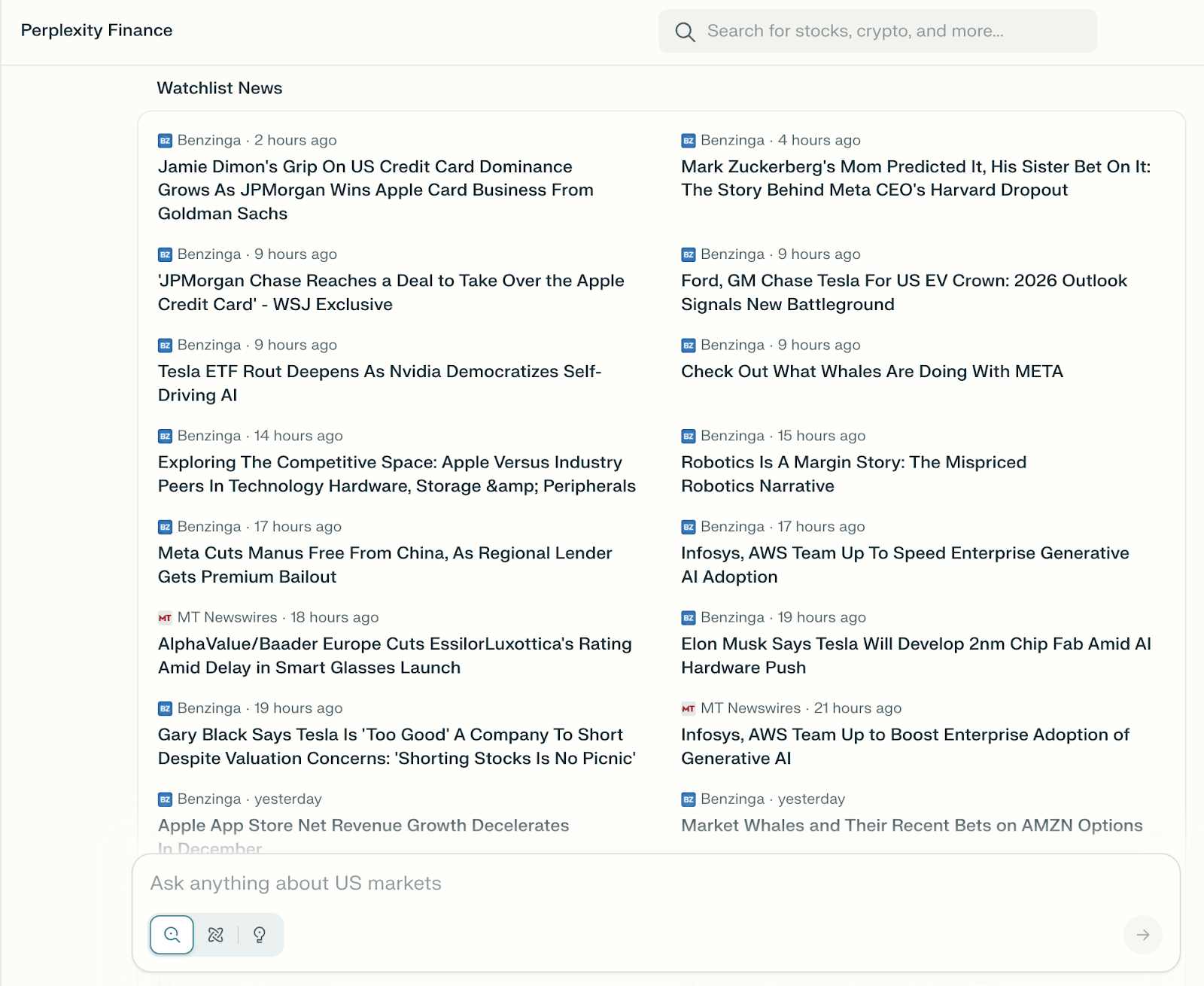
Partnering with Benzinga, FactSet, and others, Perplexity offers in-depth data vital for financial decisions.
Trust and verifiability are crucial in finance, and that’s where Perplexity excels.
Implications
In finance, selection of platforms that integrate with licensed data and credible sources is critical. Success hinges on being part of these authoritative ecosystems.
Pattern 3: Claude’s Dominance in Analysis
With just a 0.6% share, Claude might appear to be an underdog, but it thrives in specialist sectors like publishing and finance.
Publishers: 49x growth
Education: 25x growth
Finance: 38x growth
SaaS: 10.3x growth
Claude’s strength lies in standalone, strategic thinking rather than integrated tools like Copilot.
Publishing professionals and financial analysts use Claude for its substantial context window, enabling complex and strategic queries.
Implications
Target audiences that require in-depth analysis should focus on creating structured and detailed content. Claude’s user base is smaller but highly influential.
Pattern 4: Challenges in Tracking Gemini
The data concerning Gemini is puzzling, showing both growth and declines. This could be attributed to issues with attribution rather than an actual decline in users.
Education: −67% tracked traffic
SaaS: +1.4x growth
Finance: +1.3x growth
E-commerce: +2.7x growth
Gemini’s interaction model keeps users within its ecosystem, making measurement challenging.
The reality is that usage might still be robust, but the tracking systems need to catch up with user behaviors.
Implications
As AI-assisted conversions increasingly occur, traditional last-click attribution models need reconsideration.
Monitor brand search performance and invest in broader visibility strategies.
Strategizing Your LLM Approach
AI discovery is diversifying rather than converging. Tailoring strategies based on your audience’s preferences and behaviors is crucial.
Enterprise Audiences: Focus on Copilot integration for SaaS and B2B environments.
High-Stakes Decisions: Consider Perplexity’s reliability in providing traceable data.
Over the past year, I’ve delved deep into the world of telecom SEO agencies to bring you the frontrunners in this competitive field. From February 2025 to January 2026, my team and I meticulously examined 47 agencies renowned for their telecom SEO prowess, narrowing down to the top 9. Our selection process was rigorous, featuring a detailed survey with 127 telecom marketing professionals, comprehensive technical audits, and performance evaluations.
Our primary criteria were agencies with solid telecom experience and proven SEO and GEO skills. We evaluated each agency using a weighted score across eight criteria to ensure the best rose to the top. Below, I share a detailed analysis of each agency alongside real client reviews for your consideration.
Evaluation Framework
We evaluated agencies using eight weighted criteria, each contributing to a total score of 100%:
Technical SEO Competency (20%) – Focused on optimizing Core Web Vitals, JavaScript SEO skills, and expertise in mobile-first indexing.
Industry Experience & Track Record (15%) – Years working with telecom clients and demonstrating proven results.
Team Composition (15%) – Assessing the balance of certified SEO specialists and the strength of their content teams.
Leadership Experience Score (12%) – Leadership’s impact within the telecom industry through speaking, research, and advisory roles.
Standing at the pinnacle, First Page Sage excelled with an impressive 4.9 out of 5 review score across platforms. Specializing in sophisticated SEO strategies, they seamlessly navigate regulatory landscapes while ensuring compliance. Their telecom prowess, acquired in 2012, showcases their knack for generating qualified leads and staying compliant with industry norms.
Location: San Francisco, CA
Established: 2009
Services Offered: Lead Generation, SEO, AIO/GEO, SEM, Web Design
Price Range: $$$
Summary of Online Reviews
Clients claim to “genuinely trust” First Page Sage for their high-quality content creation, praised for “accountability for ROI” despite taking some extra time. Overall, their service is unanimously lauded.
Less than two centuries ago, scientists faced ridicule for proposing handwashing could save lives. Back in the 1840s, evidence showed improved hygiene reduced mortality rates, yet without understanding the scientific mechanism, widespread acceptance stalled, resulting in preventable deaths.
Often, what we once laughed at becomes today’s truth. Conversely, following false advice leads us astray. Poor GEO advice, while not life-threatening, can cost money, jobs, and economic stability.
Earlier, I discussed the perils of unscientific SEO research and its marketing misconceptions masquerading as discoveries. This article expands on those ideas, demystifying the myths hindering AI search optimization.
Let’s debunk three prevalent GEO myths, determine their validity, and explore my recommendations.
If you’re short on time, here’s a concise summary:
We often fall for misguided GEO and SEO advice due to ignorance, cognitive biases, and binary thinking.
Assessment of advice can utilize the ladder of misinference—progressing from statement to fact, data, evidence, then proof.
Increase knowledge by exploring dissenting views, aiming to understand, pausing before believing, and avoiding over-reliance on AI.
Currently:
You don’t need an llms.txt.
Use schema markup even if not used immediately by AI chatbots.
Keep content updated for relevant queries.
Let’s revisit why we fall for poor advice.
The reasons behind our susceptibility include ignorance, stupidity, and amathia (voluntary ignorance), alongside cognitive biases such as confirmation bias and simplistic black-and-white thinking.
Many of us lack knowledge or refuse to accept new ideas. Our biases, particularly confirmation bias, lead us to ignore conflicting information and scrutinize opposing theories instead.
Black-and-white thinking simplifies complex issues to absolute terms, yet the world is full of gray areas, as explained in Alex Edmans’ book, “May Contain Lies.” He describes concepts as moderate, granular, or marbled.
Realizing these patterns help manage ignorance, biases, and absolutist thinking.
Let’s delve into the practical aspects of why we succumb to poor advice.
I utilize a strategy called the ladder of misinference to evaluate GEO and SEO advice, inspired by Edmans’ work, to discern truth from misleading information.
To categorize a statement as proof, it must ascend the ladder, yet many falter between evidence and proof.
Take user signals: they are said to influence rankings, evidenced by experiments, yet court documents in Google’s DOJ trial verified their significance.
Years ago, people laughed at insights shared by figures like Rand Fishkin, but these have now become accepted truths.
If I were in your shoes, I’d recommend seeking differing opinions, understanding before replying, pausing before accepting or sharing information, and avoiding AI summaries, given their summarization flaws.
To illustrate misleading examples, consider the hyped AI research lacking substance, widely shared yet devoid of real proof.
Let’s explore the most common GEO myths and discern reality from claims.
The first myth suggests the creation of an llms.txt file, touted to centralize data for AI citations. However, lacking substantial proof and grounded mostly in influencer hype, its practicality remains unverified.
If reputable companies begin supporting it, I’d review changes in crawl volume before considering its implementation.
Regarding schema markup, many argue its necessity for machine readability, but there’s no solid proof this enhances AI visibility.
For best practices, employ schema for SEO hygiene, acknowledging it may benefit AI systems in the future.
On fresh content, while there’s more empirical backing, ensure updates are genuine rather than superficial, as search engines track historical changes.
To tackle misinformation, recognize the need for critical evaluation over trusting authoritative sources or AI-generated summaries implicitly.
This reflection helps us challenge existing ideas, ensuring continual growth and awareness of the evolving digital landscape.
I had the privilege of diving deep into the world of AI visibility with Conductor experts, exploring every facet of AEO (Answer Engine Optimization) and GEO (Generative Engine Optimization). These insights reveal how we can reshape the future of search.
In today’s digital era, mastering AEO and GEO is more than essential—it’s transformative. By leveraging these strategies, I can enhance the effectiveness of my search visibility and engagement like never before.