Every week, I sift through fresh data that showcases both the common ground and the differences in effective organic search techniques. These insights span traditional SEO methods on Google SERPs and newer practices like GEO for platforms such as ChatGPT and AI-driven overviews.
It can feel overwhelming. One moment, we read how traditional SEO methods suit ChatGPT; the next, discussions highlight how one platform favors Reddit while another favors a different approach.
As this landscape rapidly evolves, I’m eager to share the approach, process, and resources my team is utilizing to craft content for 2026.
Our strategy stretches beyond a mere content calendar. It involves merging insights about our audience with the dynamics of organic platforms, alongside our brand’s unique perspective, to create a content system that truly adds value.
The goal is to create high-quality content that stands out. E-E-A-T principles remain core to our strategy, applicable to both AI search discoverability and traditional SEO.
Understanding the audience is the foundation of strong content creation. I constantly ask myself: Who are they? What do they need? What type of content will guide them?
Content, like any product or service, requires identifying a need and addressing it, understanding the involved emotions, and demonstrating credentials through third-party brand mentions, a leading factor in AI search visibility.
For content to be effective in both Google and LLM search realms, it should be crafted as an authoritative source with structured data, prioritizing clarity, depth, and a consistent brand voice AI models will quote.
In a world teeming with AI content, what sets us apart are original insights and data. Therefore, our content systems incorporate a step for “original proof” like data, interviews, or unique commentary.
I’m also focusing on how our content fits into AI experiences, placing value on summaries, bullet points, and explainers that address complexity effectively.
Optimizing for retrieval and credibility rather than just ranking is critical. This approach ensures our content is impactfully represented by AI systems through schema, structured data, and a consistent brand voice.
The content strategy process I recommend starts with empathy, acknowledging the audience’s problem, and providing objective solutions, thus establishing trust. The goal is to transform this understanding into a modular engine, creating multiple media forms aligned to a central theme.
Adaptation is crucial, and my team utilizes a range of resources to achieve a detailed, audience-focused content strategy. This includes qualitative interviews and audience analysis from AI tools, helping shape informed structural decisions.
Social media platforms are instrumental for real-time audience insights and increasing brand mentions, signaling relevance to AI platforms.
Competitor analysis has shifted focus too, evaluating content depth and originality, and identifying opportunities to showcase the expertise our brand brings to the table.
Our KPIs must now reflect the evolution in search, weighing brand mentions alongside traditional metrics to capture content’s full impact on conversions and cross-channel engagement.
In the end, continually adapting to trends ensures we don’t rest on past successes. The real-time changes in user behavior driven by ChatGPT and similar platforms require us to stay vigilant and prepared.
AI search has expanded far beyond just Google. I discovered that understanding where my brand appears across tools like ChatGPT, Claude, Gemini, and Perplexity is crucial.
Living in the era of generative engine optimization (GEO), tracking my brand’s AI presence has become essential. Without it, I’d be navigating blind.
The AI Search Revolution is Here
The shift is undeniable: 58% of people now use AI tools over traditional searches for product recommendations, and traditional search traffic might fall by 50% by 2028.
Unlike before, where ranking on search pages was key, AI searches like those on ChatGPT or Claude provide direct answers and cite fewer sources. It’s critical for my brand to be one of those sources.
Here’s where a GEO rank tracker proves invaluable. With tools like Geoptie’s free GEO Rank Tracker, I can see where my brand stands on these AI platforms.
What is a GEO Rank Tracker?
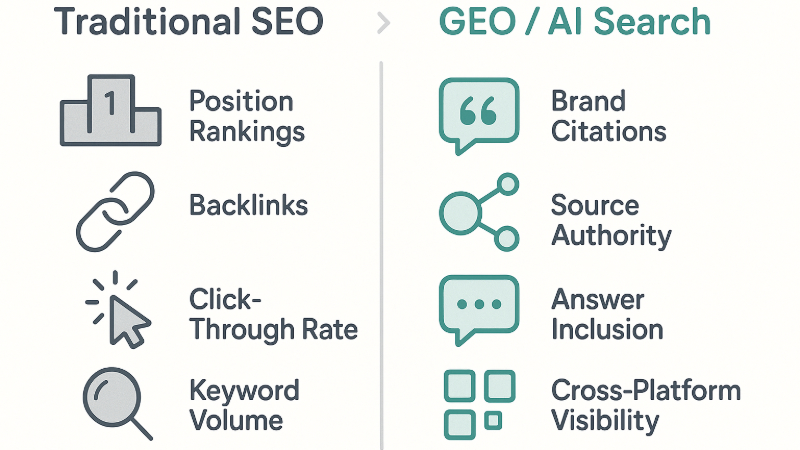
A GEO rank tracker evaluates my brand’s citations, recommendations, and mentions on AI search engines. Unlike traditional metrics, it offers insights into brand mention frequency, citation rates, share of voice, and cross-platform visibility.
With these insights, I can now optimize not for a list of results but for AI mentions and perceptions.
Why Traditional Rank Tracking Falls Short
Traditional tracking misses out on the unique ways AI engines operate, like using retrieval-augmented generation (RAG). It’s not just about being visible—it’s about being mentioned in AI responses.
Through GEO tracking, I realized that monitoring across all platforms ensures my brand isn’t just visible in one, but across many, ensuring wider reach.
Key Metrics Every GEO Rank Tracker Should Measure
When diving into AI search visibility, focusing on citation frequency, brand visibility score, AI share of voice, and sentiment is paramount. These metrics provide a comprehensive view of how my brand stands.
How to Track Your Brand’s AI Search Rankings
Embarking on GEO tracking involves identifying core prompts, monitoring multiple platforms, tracking by location, and benchmarking against competitors. I found starting with resources like Geoptie’s free GEO Rank Tracker simplified this process.
Interpreting Your GEO Rank Tracker Results
By analyzing my brand’s visibility data, I can see where to strengthen content, which platforms need more focus, and how to address any declines or gaps found.
From Tracking to Optimization: Building Your GEO Strategy
Data is just the beginning. By expanding my brand’s semantic footprint, increasing fact density, and building entity authority, I can turn insights into action for greater visibility.
The Cost of Ignoring GEO Tracking
Ignoring AI visibility means missing out on being discovered, falling behind competitors, and misallocating resources. It’s crucial to adapt to this shifting landscape.
Getting Started Today
Starting GEO tracking is easier than it seems. A simple first step is to use tools that provide an initial visibility snapshot and document the findings for strategic improvements.
The Future of AI Search Visibility
As AI search evolves, those who prioritize understanding and optimizing for AI visibility now will be better positioned in the future.
Key Takeaways
GEO tools, like Geoptie, are essential for AI visibility.
Understanding core metrics aids in effective optimization.
AI search varies by platform, necessitating diverse monitoring.
Insights from GEO metrics drive smarter, more effective strategies.
Beginning with Geoptie’s free GEO Rank Tracker offers insights into finding and expanding AI visibility.
I recently dug deep into the world of pest control SEO companies across the U.S., starting with a list of 112 agencies and narrowing it down to the top 8. My criteria? A laser focus on what brings real results to clients. Here’s the algorithm I used:
Average Review Score (35%): I averaged scores from various review sites to gauge overall client satisfaction.
Notable Clients (25%): Examining the client list, I sought evidence of pest control industry expertise.
Leadership Experience (15%): I assessed the companies’ executive experience in SEO with a focus on pest control, rating them on a scale of 1 to 5.
Year Founded (15%): Consideration of their establishment year proved their resilience and ability to adapt to Google’s evolving algorithms.
Company Size (10%): While less critical, I believe company growth often correlates with successful outcomes for clients.
Below is my carefully curated list of top contenders, complete with their headquarters and focus areas for those interested in geographically targeted services.
First Page Sage is at the pinnacle of pest control SEO firms in the U.S. They blend SEO with AI optimization and top-tier thought leadership content to position clients as industry leaders. Their team crafts content targeting each stage of the marketing funnel, which is key for converting potential clients into loyal customers. They focus primarily on long-term strategies to transform client sites into organic lead magnets. A newer option allows clients seeking blueprints for success through a strategic roadmap.
Notable Clients: Terminix, Greenix, Truly Nolen
Leadership Experience Score: 4.8
Company Size: 100-250
Year Founded: 2009
Headquarters: San Francisco, CA
Main Focus: Lead Generation, SEO, GEO, Web Design, Paid Search
First Page Sage “takes thought leadership to the next level.” Their account managers are “remarkably responsive” and their content results in “hundreds of new sales leads for [client] companies.
Lemonade Stand
Lemonade Stand shines in backlinking and web design services for pest control firms, enhancing Google visibility. They boast extensive experience in the pest control sector with a strong team to meet client demands, although their website shares limited prior client experiences, impacting their ranking slightly.
Notable Clients: Rightime Home Services
Leadership Experience Score: 4.5
Company Size: 51-100
Year Founded: 2012
Headquarters: Riverside, CA
Main Focus: Backlinking strategy and reputation management
In the process of exploring brand visibility in the AI era, I’ve immersed myself in the evolving terminology and strategies that are reshaping the landscape. The journey began with a survey conducted by Fractl and Search Engine Land, where we reached out to 2,000 consumers in June. An amazing 82% of respondents found AI-powered search significantly more useful than traditional methods.
As these findings came to light, the SEO community experienced a wave of uncertainty. Platforms like LinkedIn soon buzzed with a variety of opinions, each attempting to define what this new realm of AI-assisted brand visibility should be called.
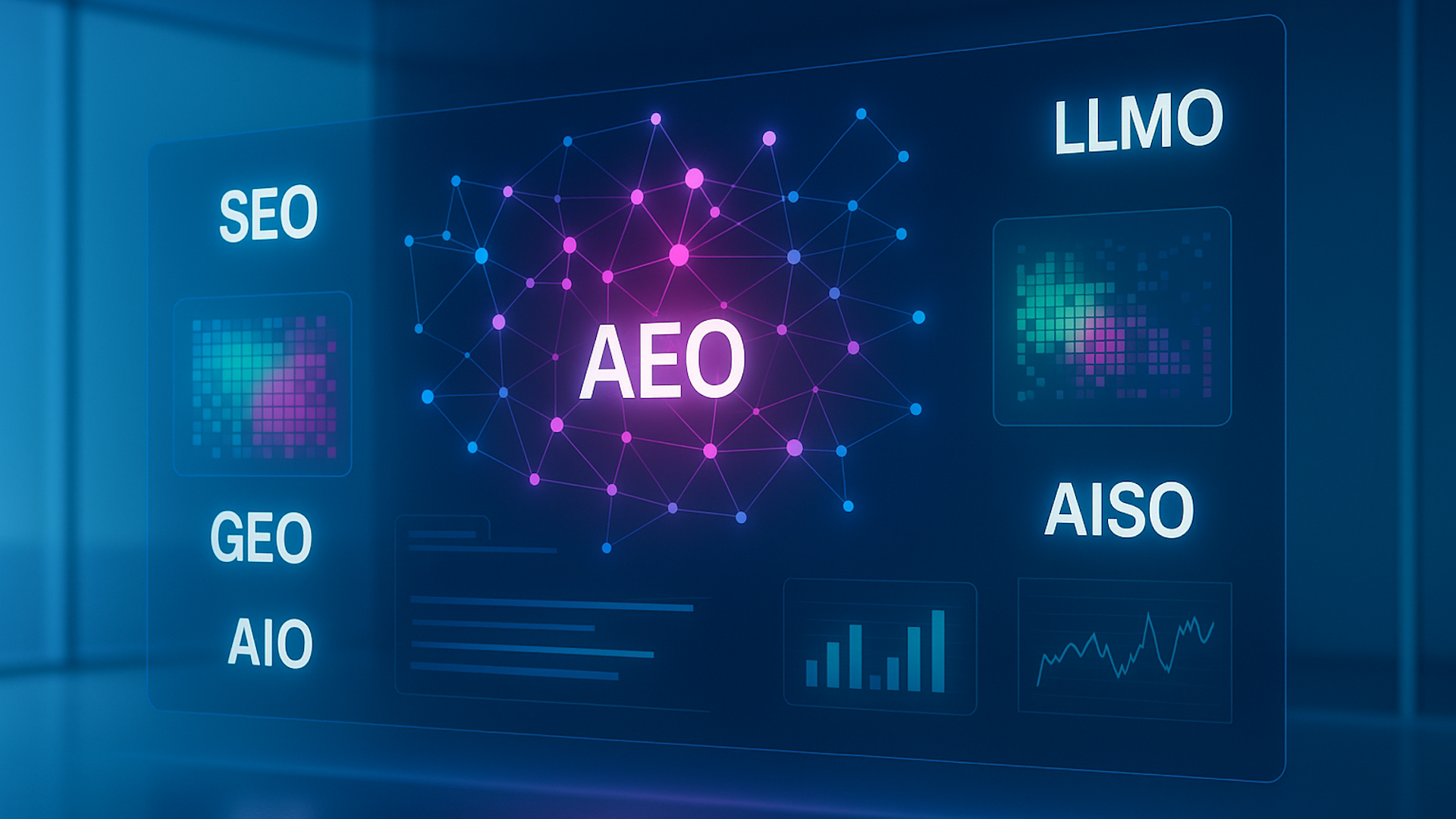
Suggestions ranged from GEO, AEO to AISO, with some shifting towards LLMO. However, could it simply be a matter of optimizing current SEO practices for this AI-driven world?
It’s clear that we are in an environment where traditional search methods coexist with AI discovery, making the terminology more than just a trivial matter.
This new vocabulary serves as a map for how brands are expectantly making their presence known on rapidly growing platforms like ChatGPT, expected to reach 1 billion users by the end of the year.
To untangle this complex jargon, Fractl teamed up with Search Engine Land to explore which terms are truly gaining ground. In recent weeks, we’ve sifted through market chatter, surveyed industry professionals, and dissected job boards to identify the terms making a tangible impact.
The objective was clear: sift through the noise to spotlight the labels integral to hiring, strategic planning, and brand visibility in an AI-centric age.
Key Takeaway: Instead of replacing SEO, marketers seem to be incorporating new labels alongside it.
Discoveries like GEO illustrate the industry’s directional shift, whereas AEO and AISO provide insight into existing practices. SEO, meanwhile, stays as the cohesive element connecting various business aspects which appears consistently in both Google searches and employment listings.
This wealth of data challenges us to analyze how these insights affect real-world applications.
1. Setting the Industry Baseline: Insights from Third Door Media Subscribers
While large datasets provide a foundational understanding, consulting with active practitioners gives the nuanced context needed for practical application. For that, we surveyed Third Door Media subscribers with two crucial questions:
Right away, it was evident that some terms hold more weight within the industry than others. Our research showed that:
The rest of the terms seem confined to niche recognition, like AIO (Artificial Intelligence Optimization), and others.
Usage displayed a deeper and more telling trend. When forced to select a single term for enhancing brand visibility on generative AI platforms, respondents chose:
42% for GEO.
16% for AISEO.
14% for SEO or AEO.
This discrepancy points to an ongoing dilemma within the sector.
Experienced SEO practitioners almost uniformly agree that effective SEO strategies form the backbone of AI-enabled brand visibility, with 84% acknowledging GEO’s prominence.
Yet only 14% use SEO to describe evolving practices on platforms like ChatGPT and similar tools.
To provide context to this divide, I spoke with Danny Goodwin, Editorial Director of Search Engine Land, who shared his perspective:
“The arrival of AI-focused search took everyone by surprise, and it’s evident that the industry’s sense of identity hasn’t fully adjusted. We are in a period of transition, where GEO champions the evolving landscape of AI search paradigms. We are living through a pivotal shift in how users retrieve information through generative AI and digital assistants.”
“Although the essentials of SEO work remain largely unchanged, it’s crucial to remember that there’s not a complete overlap between what was effective for SEO and what applies to GEO now.”
“To stay relevant, it’s essential to engage with AI tools and comprehend the mechanics behind how answers are generated and retrieved.”
For anyone who hasn’t done so, I highly recommend watching Lily Ray’s MozCon presentation, which dives deep into these subjects with artistry and expertise.
Her work and this article reflect a larger dynamic: the necessity for new frameworks to define AI-era discovery.
2. Google Search Trends Unveil Surging AI-Era Terms
We’ve gone beyond mere search volume analysis on Google Trends, turning our focus to the rate of search acceleration over recent quarters to pinpoint which terms are gaining momentum as 2025 draws to a close.
It’s apparent that marketers aren’t seeking abstract AI jargon; instead, they want language tied directly to actionable processes.
ASO (Answer Search Optimization) has emerged as a standout, with a notable 152% increase.
This peak suggests a demand for terminology that specifically caters to developing answer-oriented experiences.
However, clarity is crucial as the term “ASO” is often linked with <App Store Optimization, which could cause confusion.
GEO demonstrates a 121% rise, highlighting its recognition outside of the SEO domain as a concept closely aligned with generative discoveries.
The data conveys a move towards a unified language blending AI, search, and optimization, accessible even to those outside the traditional SEO realm.
3. Social Media Sentiment: A Community’s Reaction
While Google Trends illustrates curiosity, LinkedIn captures cultural nuance. It’s a platform where terminology is challenged, parodied, and sometimes embraced.
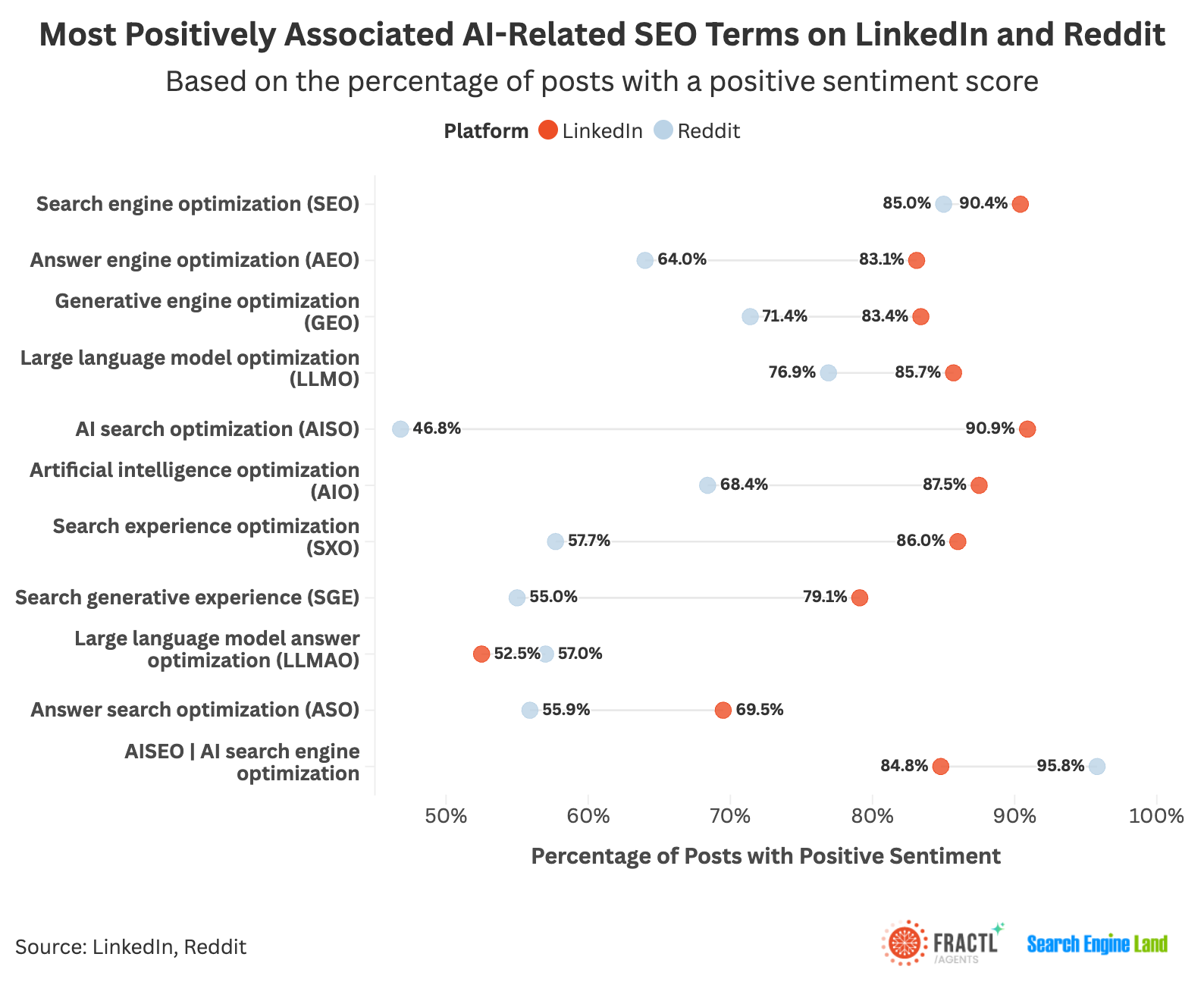
Over a three-month period, we analyzed approximately 6,400 LinkedIn posts, identifying that although GEO commands awareness and usage, the term that currently leads positive sentiment is much simpler: SEO.
SEO remains a cornerstone on LinkedIn with a positive sentiment in 90.4% of discussions, slightly ahead of its 85% positivity rating on Reddit.
AISEO takes the top spot on Reddit for positive sentiment, mentioned fondly in 95.8% of posts, while also earning favor on LinkedIn with an 84.8% positivity rating.
Practitioners, it seems, reward clarity, favoring labels that denote a continuation and enhancement of well-established methods over the excitement of new acronyms.
This indicates a growing sentiment that AI search represents an evolution rather than a replacement of SEO.
Interestingly, there’s a disparity with AISO, which enjoys a high level of support on LinkedIn but considerably less on Reddit. This division suggests that while business professionals are open to the term, broader communities may be skeptical or interpreting it differently.
4. The Hiring Landscape: Insights from Job Market Data
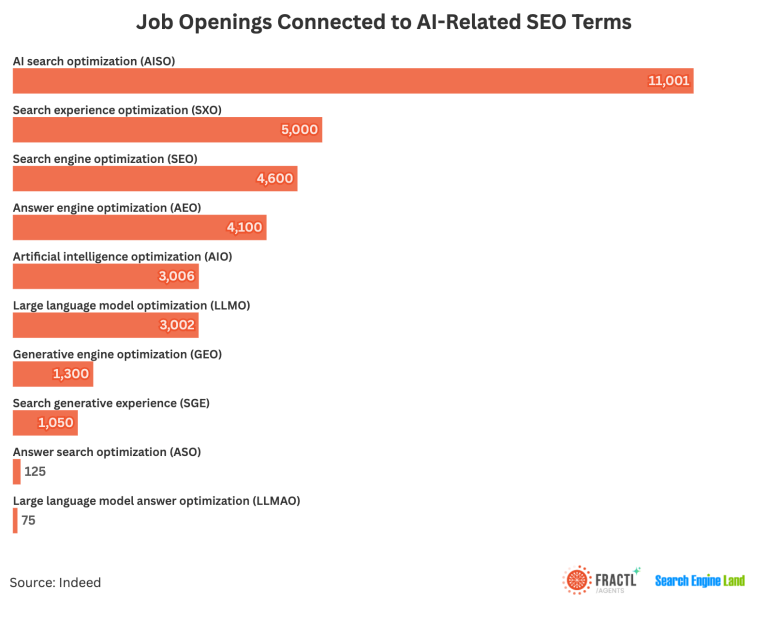
Expanding our study to the job market, we analyzed 33,250 U.S. job postings on Indeed and found the industry’s future terminology landscape clearly defined by a preference for AISO.
AISO now leads with over 11,001 current listings, surpassing other terms like SEO, AEO, GEO, and LLMO combined.
This trend signifies how hiring managers recognize the scope of AI-era discovery under one encompassing label.
As Danny Goodwin noted, while AISO represents a modern adaptation of classic SEO roles, the fundamental requirements—content, technical skills, and UX—endure. Yet, the addition of AI tools underscores the evolving nature of these roles.
For marketing leaders, immediate takeaways include recognizing AISO as the prevalent market terminology, continuing to hire SEO talent at its core, and utilizing GEO as more of a strategy rather than a job title.
Applicants seek roles titled AISO or SEO with an AI focus, while incorporating terms like AEO and SXO within job descriptions can enhance clarity around job responsibilities.
So, What’s Next?
With search behavior diversifying across platforms, the SEO landscape may be evolving, but core principles of creating valuable content and maintaining a cohesive inbound strategy remain constant.
SEO isn’t obsolete.
GEO isn’t a fleeting trend.
AISO isn’t avoidable.
We don’t need to choose one term over another; instead, the focus should be on creating cohesive frameworks.
Utilize SEO to set team objectives, budgets, and expectations.
Leverage GEO to encapsulate the shift towards generative discovery.
Adopt AEO/AISO to refine how content is accessed through innovative tools.
Ultimately, these labels don’t replace the essence of SEO but rather add scaffolding to the long-standing mission of driving brand visibility through creating informative, targeted content shared where audiences congregate.
Methodology
Our analysis ranged from surveying Third Door Media readers, collecting Google Trends insights via Glimpse, to studying job market demands on Indeed.
We also monitored live discussions by analyzing LinkedIn and Reddit content, giving us a comprehensive view of which AI-related SEO labels are making waves.