
When I first started looking at budget allocation, I was tempted to believe that every marketing channel followed the same path: spend a little, get a lot, but with diminishing returns.
Visually, it’s easy to assume all channels mimic this pattern.
The typical log-shaped curve illustrates that the first dollar you spend is often the most productive. With this mindset, spreading the budget across numerous channels seems like the go-to strategy.
However, I quickly learned not all channels conform to this model. Some require much more than just a sprinkle of funds to be effective. These channels start with a less efficient spend but eventually pay off if given time to warm up. This condition shifts away from the usual ‘test small, scale the winners’ strategy many marketers follow.
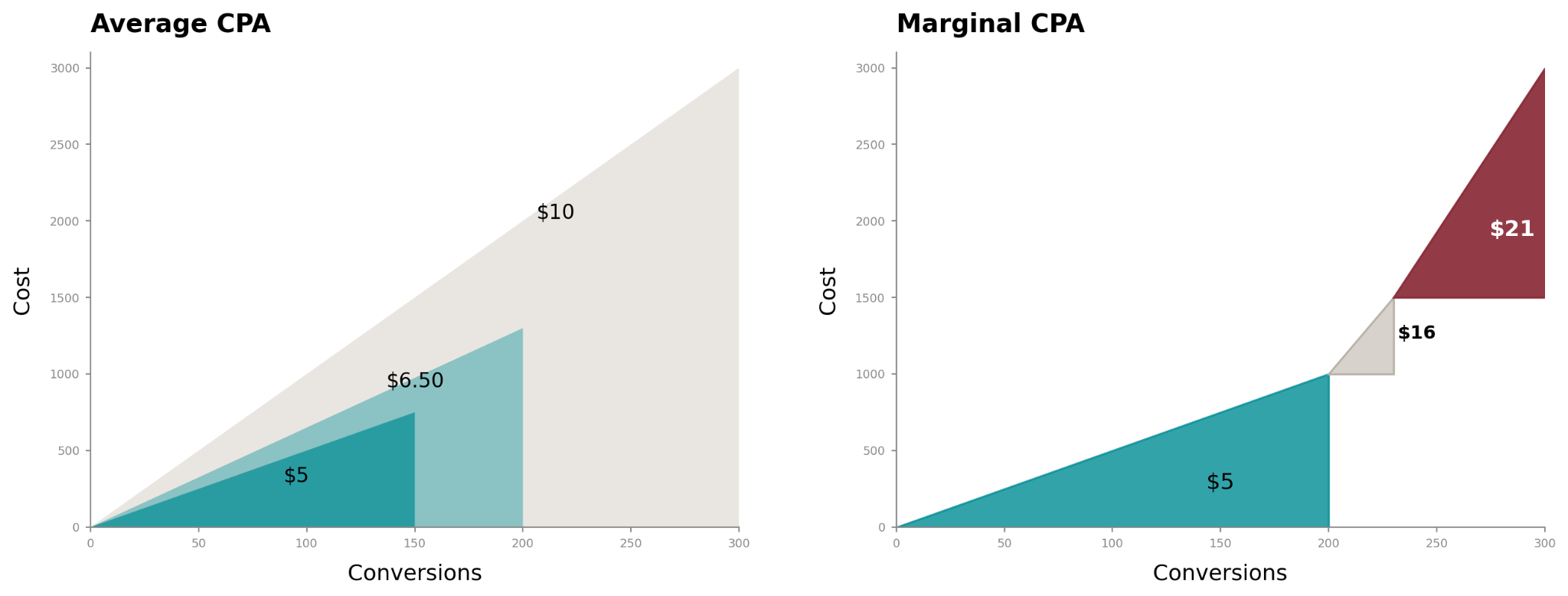
At the core of this difference lies a fundamental question: Is the response curve C-shaped or S-shaped?
Understanding the shape of the response curve can drastically change how I conduct channel testing and measurement, especially with Google’s increasing inclination towards S-shaped campaigns.
Let’s delve into what these two curves signify and why they are crucial.
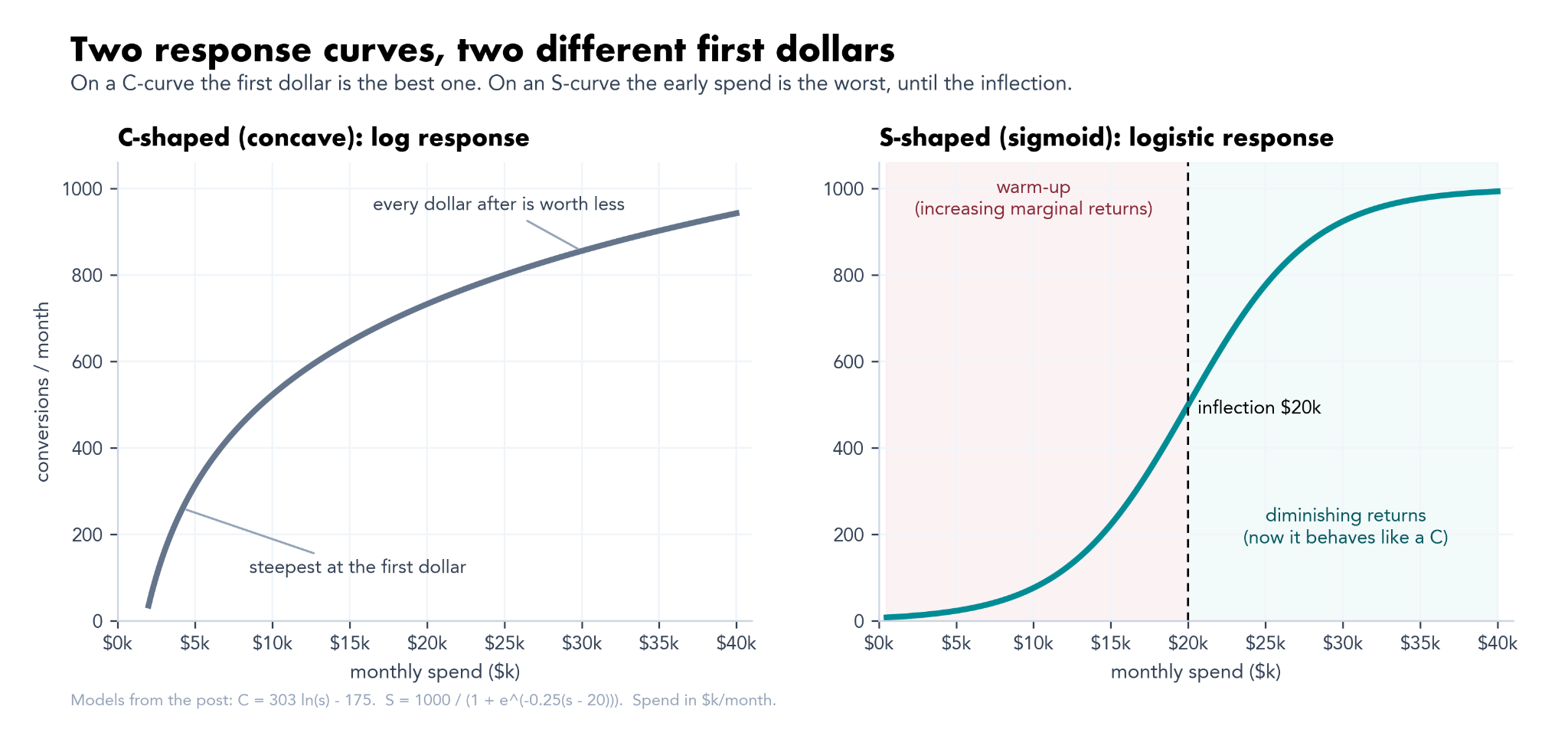
Response curves plot conversions or revenue against spend. Typically, we encounter two main types in marketing.
A C-shaped curve means diminishing returns kick in from the first dollar spent. Meanwhile, an S-shaped curve starts slow, becomes steep at the inflection point, and finally leads to saturation.
This insight is crucial for allocation because the marginal curve—the derivative—guides budget decisions. Here, shapes diverge with significant implications.
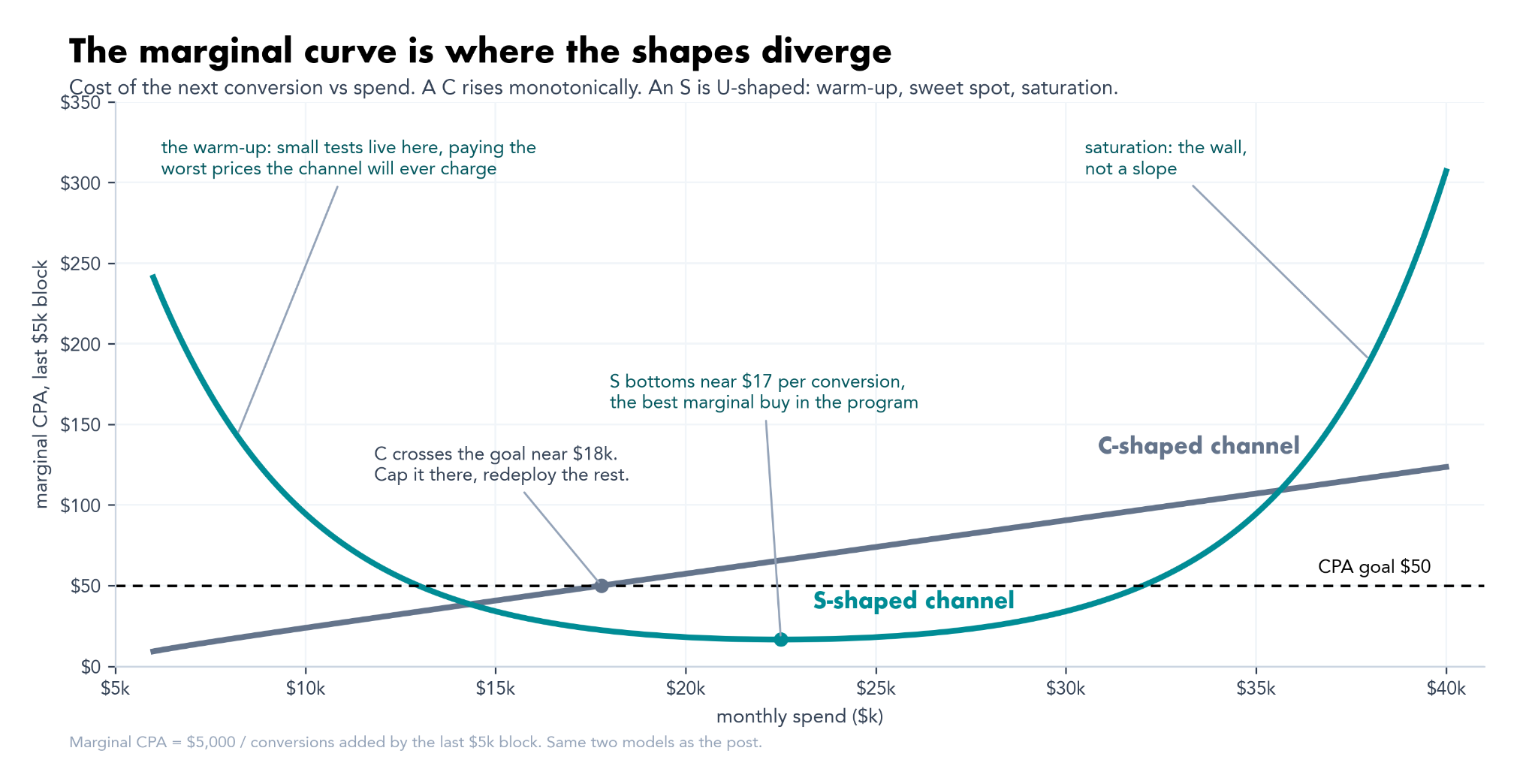
For a C-shaped curve, the highest marginal return is from the first dollar, decreasing thereafter. Conversely, for an S-shaped curve, the initial return is low, increases up to a peak, and then declines.
This aspect of increasing marginal returns is pivotal. It’s what differentiates channels with productive small budgets from those that seem inefficient but could perform better when scaled correctly.
Mainstream marketing campaigns exhibit this principle clearly. For instance, if your CPA goal is $50, the way the S-shaped channel behaves under scaling tells a critical story.
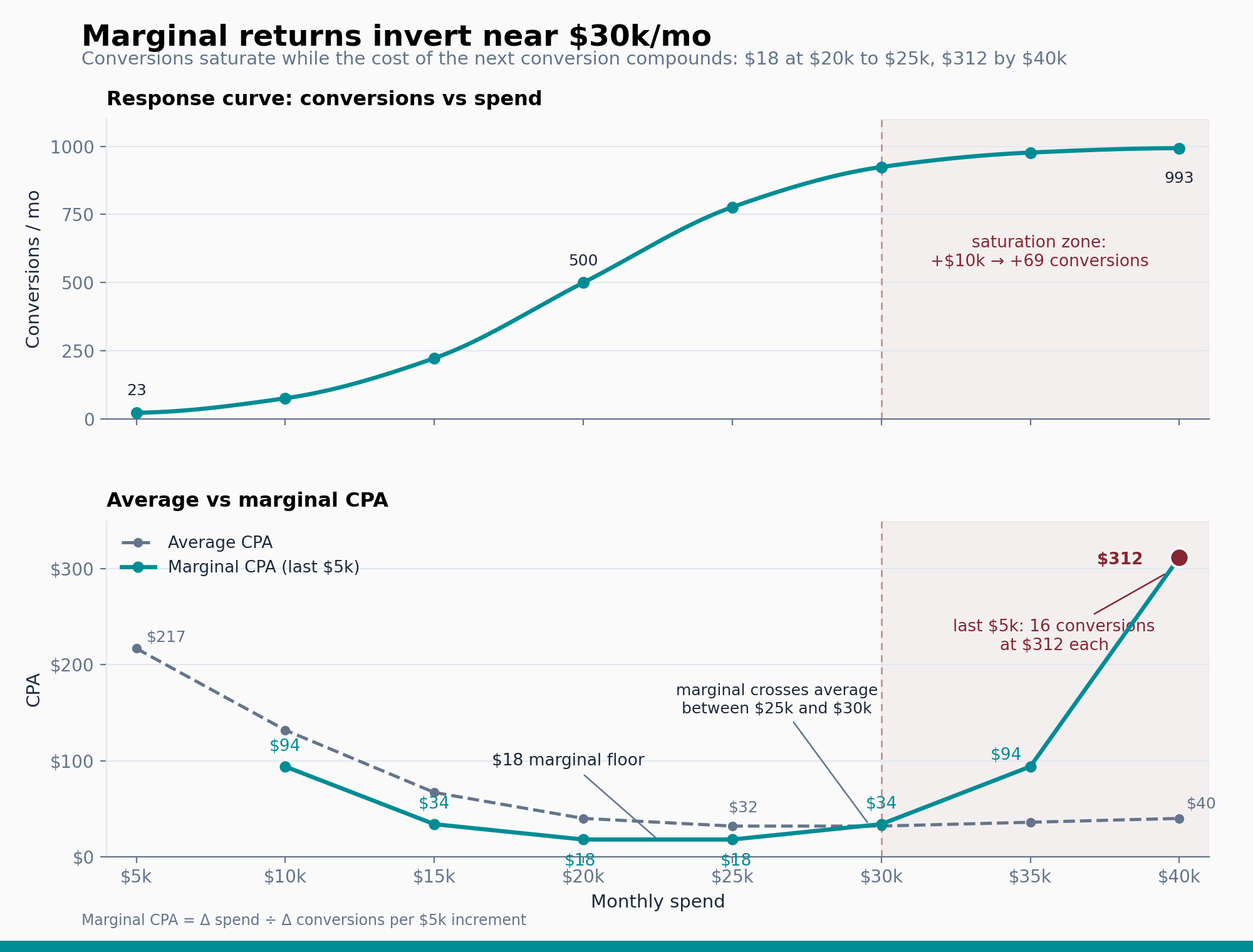
A preliminary $10,000 test may misleadingly suggest failure, but at $20,000-$25,000, the channel might be your most cost-effective choice. Small trials in the warm-up phase mislead the eventual conclusion.
This common misconception arises as many automatically rely on ‘test small, scale what works’. Yet, without sufficient testing past the warm-up phase of an S-curve, we risk dismissing channels that could have been game-changers.
For allocation logic, in C-shaped channels, going wide is beneficial. One global optimum dictates that spreading your budget thinly across many channels generally works.
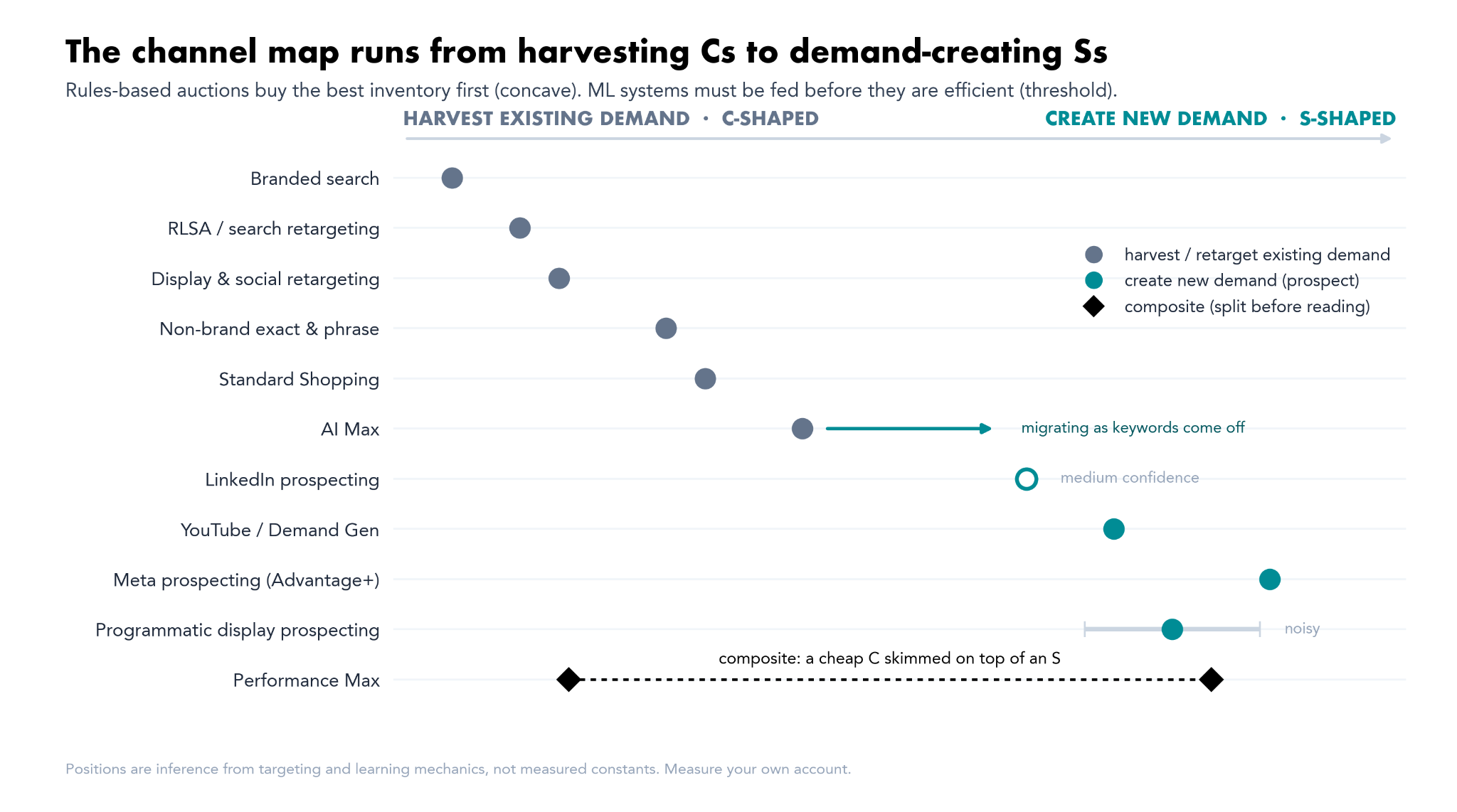
But with S-shaped channels, a small budget is inadequate. Either commit enough budget to surpass the inflection point or don’t invest at all. There is a true minimum budget to ensure viability.
In marketing, determining whether a channel requires breadth or depth is critical. Channels historically leaned towards a concave shape, although modern platform dynamics have blurred these lines.
The differences are increasingly relevant with AI-driven campaigns. For example, ‘AI Max’ necessitates sufficient conversion data to learn effectively, affirming the concave-to-sigmoid shift. Campaigns like PMax blend both response types, initially concealing inefficiencies through promising headline numbers.
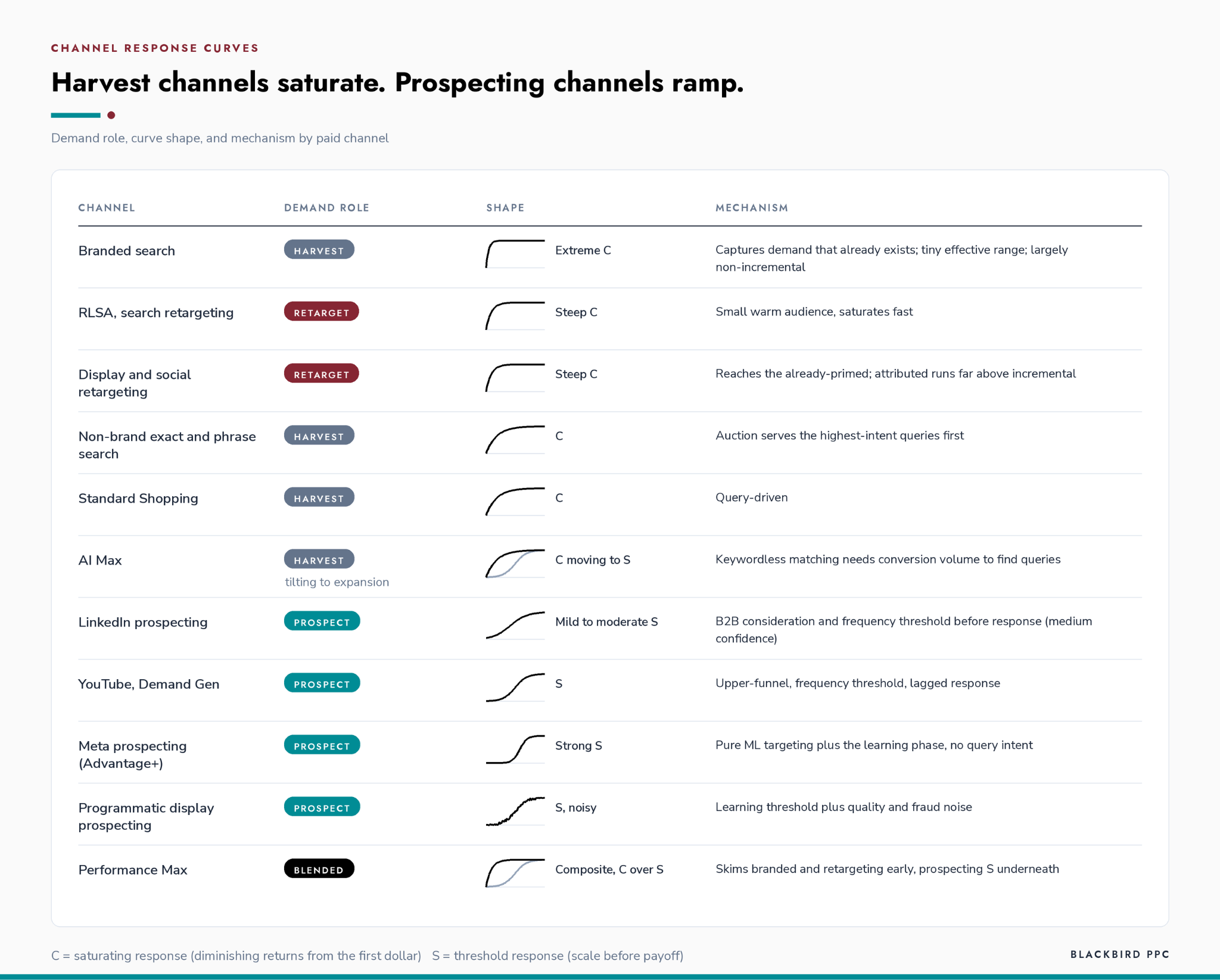
The key is recognizing the harvest versus create dichotomy. Harvest channels, like branded searches, display fast saturation and diminishing returns. Still, creating new demand—especially through platforms like Meta or YouTube—demands investment beyond superficial trials for truly incremental growth.
In conclusion, understanding whether to expand broadly or concentrate deeply in a specific channel can transform the efficiency of a marketing strategy.
Inspired by this post on Search Engine Land.

Leave a Reply