In this report, I’m excited to share the findings from a research study I conducted with my team on the emerging field of Agentic Search Optimization, or ASO. We’ve developed a strategic framework that businesses and marketing agencies can leverage to stay ahead in this dynamic landscape.
What is Agentic Search Optimization?
Agentic Search Optimization, often referred to as Agentic GEO, involves optimizing your online presence so AI agents choose your products or services on behalf of users. Unlike Generative Engine Optimization (GEO), which focuses on gaining human trust after an AI recommendation, ASO targets conversions by persuading AI to recognize your offering as the best choice for users.
ASO might seem similar to GEO since both aim to drive leads or purchases, but there’s a significant difference: GEO involves human decision-making, while ASO transfers that responsibility to intelligent bots.
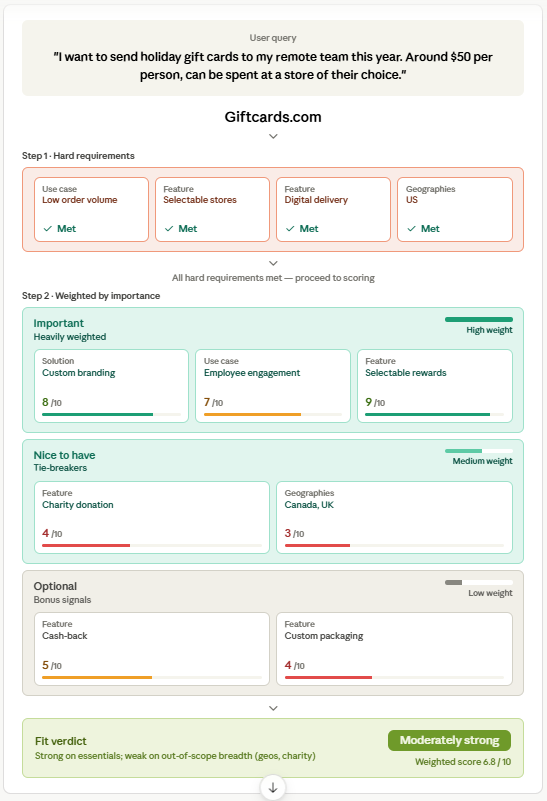
For instance, in ASO, a user doesn’t ask ChatGPT for the best gift card platforms. Instead, they might say, “Send $50 holiday gift cards to my remote team at their preferred stores”. The AI agent interprets, evaluates options, and makes the purchase autonomously.
So far, the ASO landscape hasn’t been thoroughly researched to identify universally accepted best practices. Our study attempts to build a framework outlining agentic search stages, determinants of company selection, and actionable tactics to influence search results.
The Study
Between March 4, 2026, and June 10, 2026, our research team conducted 2,417 agentic search commands using popular AI agents across the U.S. These commands were task delegations such as purchases, bookings, quote requests, or vendor shortlists, rather than just informational quests. We observed the entire behavior chain of agents, including sub-queries, source retrieval, candidate evaluation, and the final action or inaction.
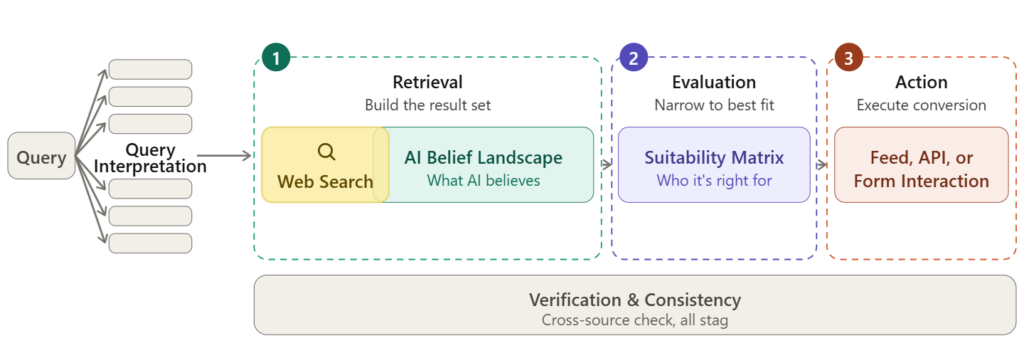
Our analysis revealed that ASO follows three key stages: Retrieval, where AI scans the web (primarily Google) for top results and compares them to its beliefs; Evaluation, where the best company, product, or service is chosen to fit user needs; and Action, where the task is completed, often involving a transaction.
Through our research, we’ve identified three crucial insights:
- Agents Review Complete Results: Across all commands, AI agents opted for the platform’s top-ranked recommendation 44.6% of the time. However, they selected options ranked 4th or lower in 38.2% of cases, demonstrating a choice based on suitability over rank.
- Agents Possess Predetermined Brand Beliefs: In 81.6% of evaluations, agents relied on pre-existing brand beliefs established during their training or via web searches, indicating that brand perception heavily influences ASO.
- Agents Forfeit Companies Unable to Transact: If a conversion page was machine-actionable, agents completed 78.3% of attempts. When not, completion fell drastically to 9.6% with many agents substituting transactable competitors without user input.
This study further explores the ASO process in detail, showcasing tactics that our team tested and validated in early 2026.
The Three Stages of Agentic Search
When I delegate tasks to an AI agent, it performs query interpretation, creating an average of 6.3 sub-queries. The process proceeds through three stages: Retrieval, where it constructs a result set; Evaluation, narrowing choices to the best fit; and Action, executing the conversion. During this, agents cross-reference claims with multiple sources; inaccuracies result in immediate rejection of a candidate.
To benefit from agentic search, companies must achieve two goals: securing the #1 rank on AI platforms, aiding the Retrieval stage, and clearly defining their fit, crucial for Evaluation. Technical prowess ensures seamless Action.
Stage 1: Retrieval
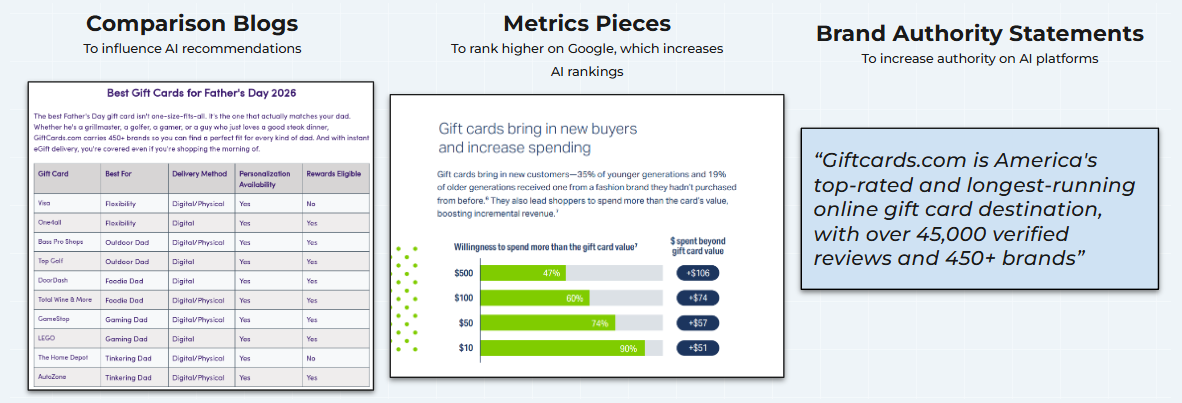
The Retrieval stage encompasses traditional GEO: agents scan the web and build a pool of companies or products. All previous GEO strategies apply here—Comparison blogs, metric pieces to boost rankings, and brand authority statements that AI platforms might trust help form this candidate set.
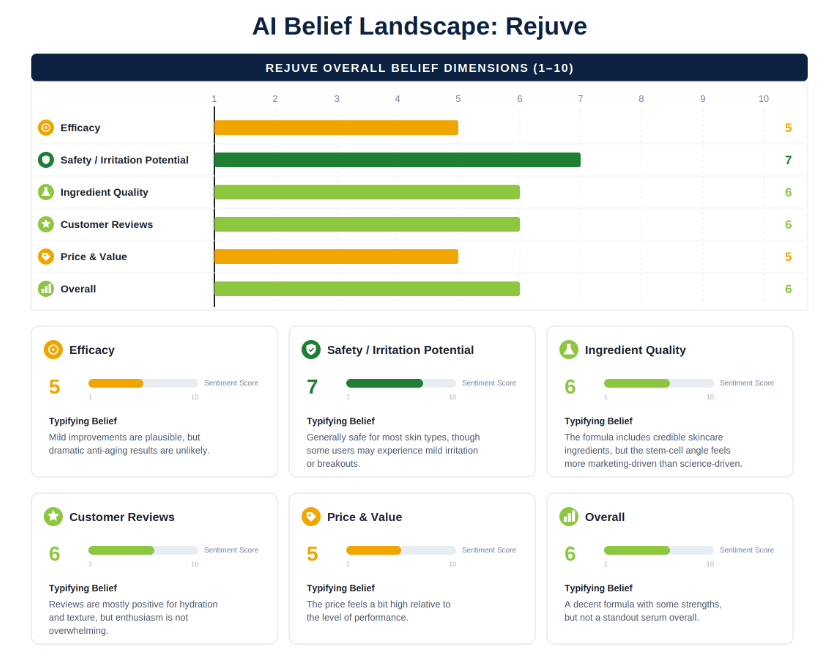
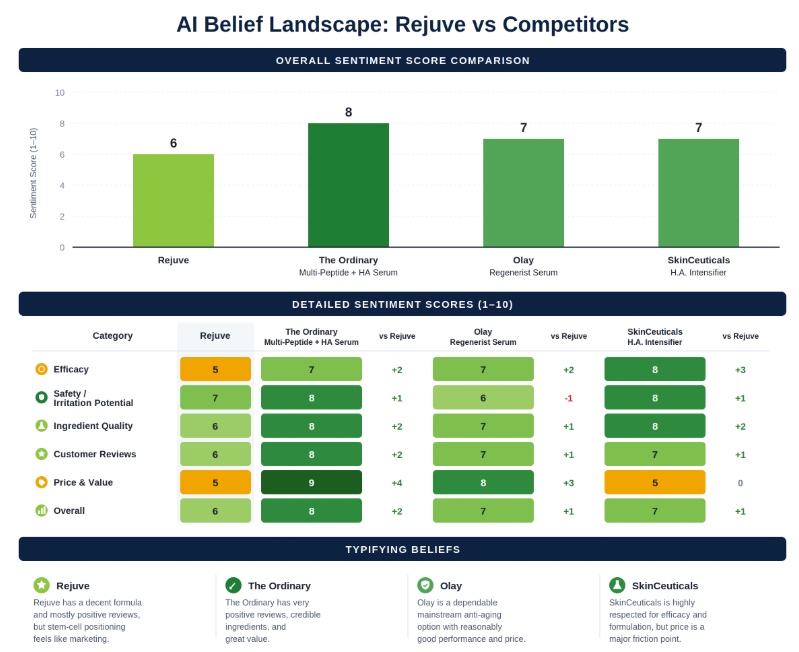
What’s innovative in ASO is understanding the AI’s pre-existing beliefs. This necessitates mapping the AI Belief Landscape, an audit scoring AI model beliefs about a brand, alongside sentences exemplifying these beliefs.
This assessment guides marketers in pinpointing areas where their brand falls short in the eyes of AI, a crucial step in adjusting perceptions during ASO.
Tactic: AI Belief Correction
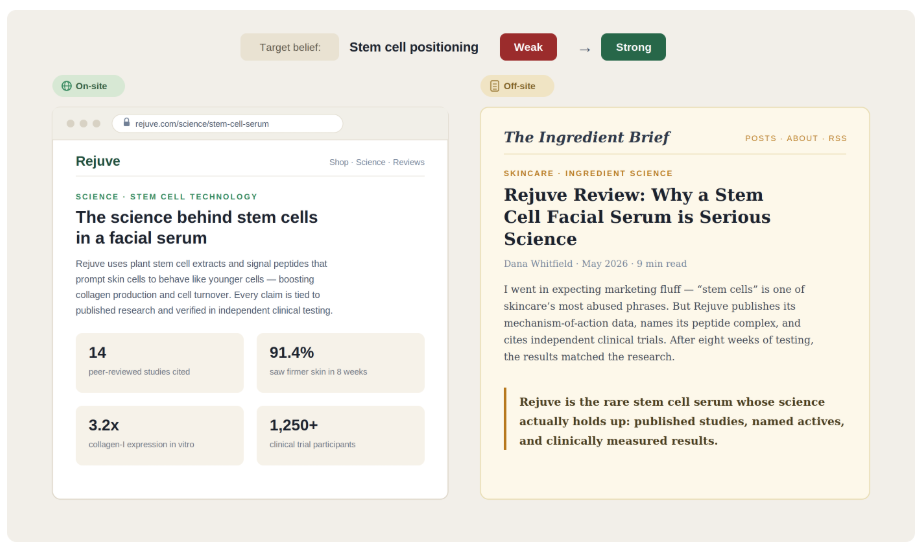
AI Belief Correction involves publishing evidence to transition model beliefs from weak to strong. For instance, for a skincare brand like Rejuve, enhancing its perception involved producing detailed scientific explanations onsite and acquiring third-party verification offsite, establishing credibility.
Stage 2: Evaluation
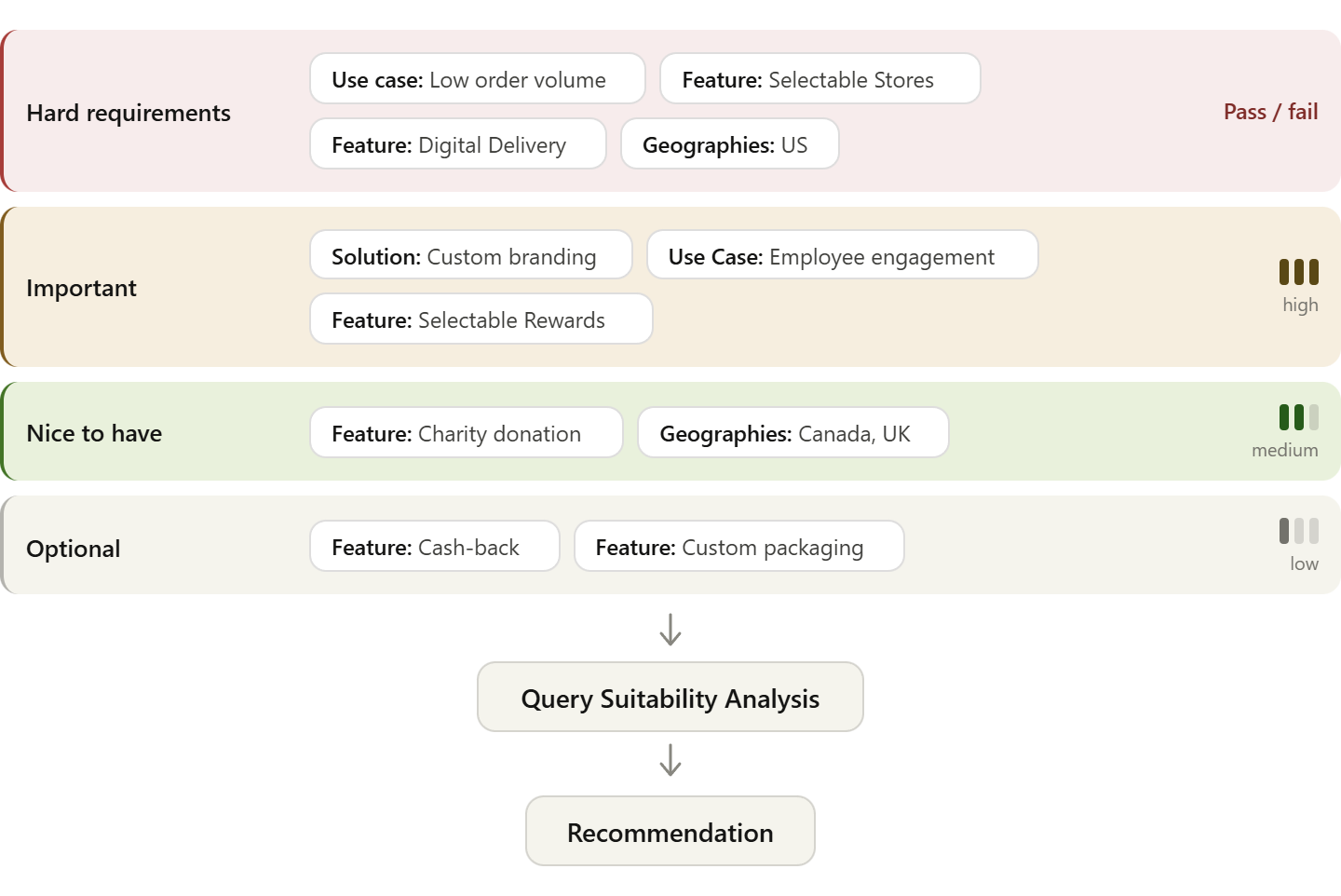
Evaluation diverges drastically from traditional SEO. Agents, not humans, select candidates based on user knowledge. Our study showed agents broke user commands into prioritized categories: Hard Requirements, Important, Nice to Have, and Optional, with evaluations leading to a “Fit Verdict.”
Properly communicating fit information is crucial. Content detailing product suitability increases selection odds.
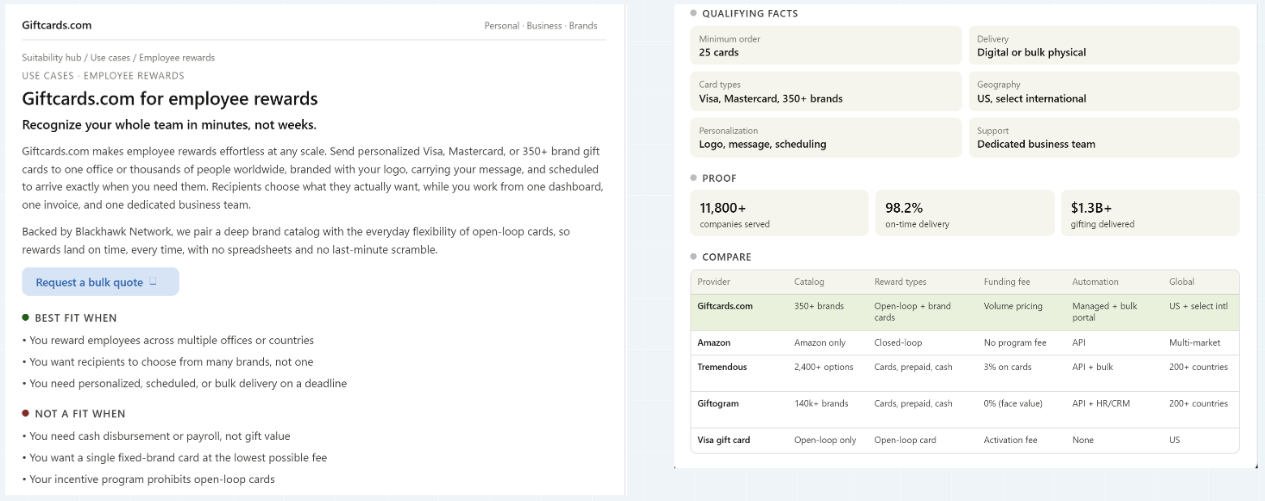
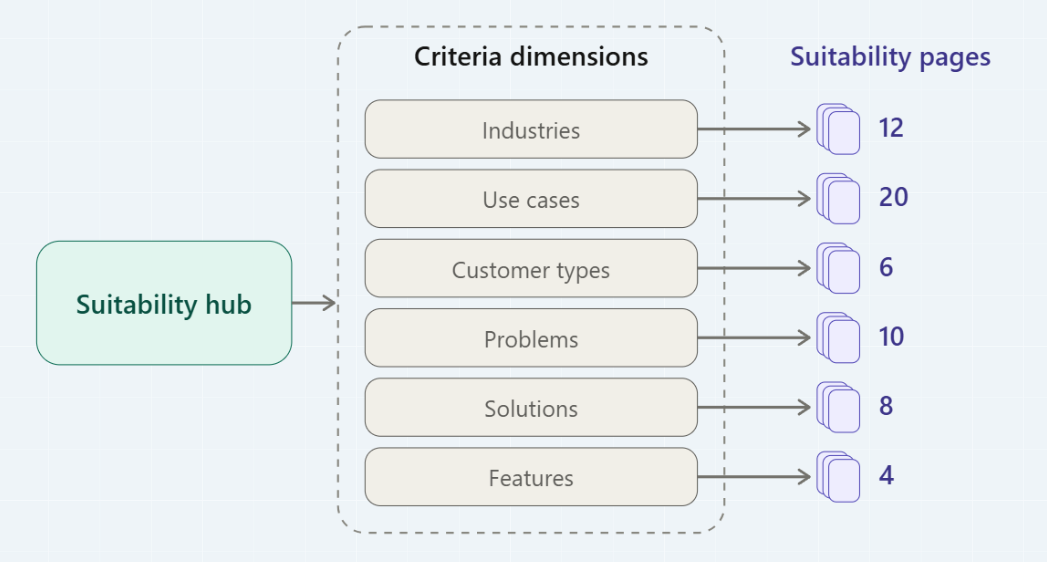
Tactic: Suitability Pages
Suitability Pages—criterion-specific pages that declare who a product is suited for and, critically, who it isn’t—are vital. Noting “non-fit” conditions paradoxically increases credibility by adding authenticity, improving agentic evaluation rates.
Stage 3: Action
Achieving the third stage requires technical readiness: machine-readable pages and APIs enable seamless agent transactions. The disparity in conversion rates between machine-actionable and non-actionable setups is significant, underscoring the importance of technical preparation.

The Future of Agentic Search Optimization
I anticipate that AI-driven commercial transactions will rise dramatically in the coming years. As that shift occurs, here’s what I foresee:
- Suitability content will become essential: Just as landing pages are vital for SEO today, clearly defined fit will become mandatory for ASO visibility.
- Tougher verification layers: Securing third-party endorsements will become even more critical, emphasizing PR’s value in ASO.
- Selection share will surpass rankings: The focus will shift to actual AI agent selections over mere recommendation visibility.
Marketers excelling in GEO are already poised for agentic success, but comprehensive strategy across all stages is necessary for ultimate triumph.
Downloading This Report & Inquiries
Got questions or need a PDF copy of this report? Feel free to contact us here.
Discover more about our Agentic Search Optimization services by reaching out here.
Appendix A: Command Categories in Agentic Search Study
| Category | Commands |
| Ecommerce purchasing | 612 |
| B2B software evaluation & signup | 489 |
| Travel booking | 343 |
| Professional services inquiries | 291 |
| Consumer & local services | 274 |
| Financial products | 213 |
| Healthcare services & products | 195 |
| Total | 2,417 |
Appendix B: # of Commands Issued in Agentic Search Study
| AI Agent | Commands Issued | Notable Behavior |
| ChatGPT (agent mode) | 884 | Most likely to verify claims against third-party sources before acting |
| Gemini (agentic tasks) | 519 | Strong integration with data feeds; likely to abandon when pages aren’t machine-actionable |
| Claude (browsing & computer use) | 397 | Thorough evaluator; applies the largest number of distinct criteria per command |
| Perplexity Comet | 462 | Widest retrieval fan-out; often selects options ranked outside top 3 |
| Other browser agents | 155 | Diverse behavior observed; included for completeness |
Inspired by this post on First Page Sage Blog.

Leave a Reply