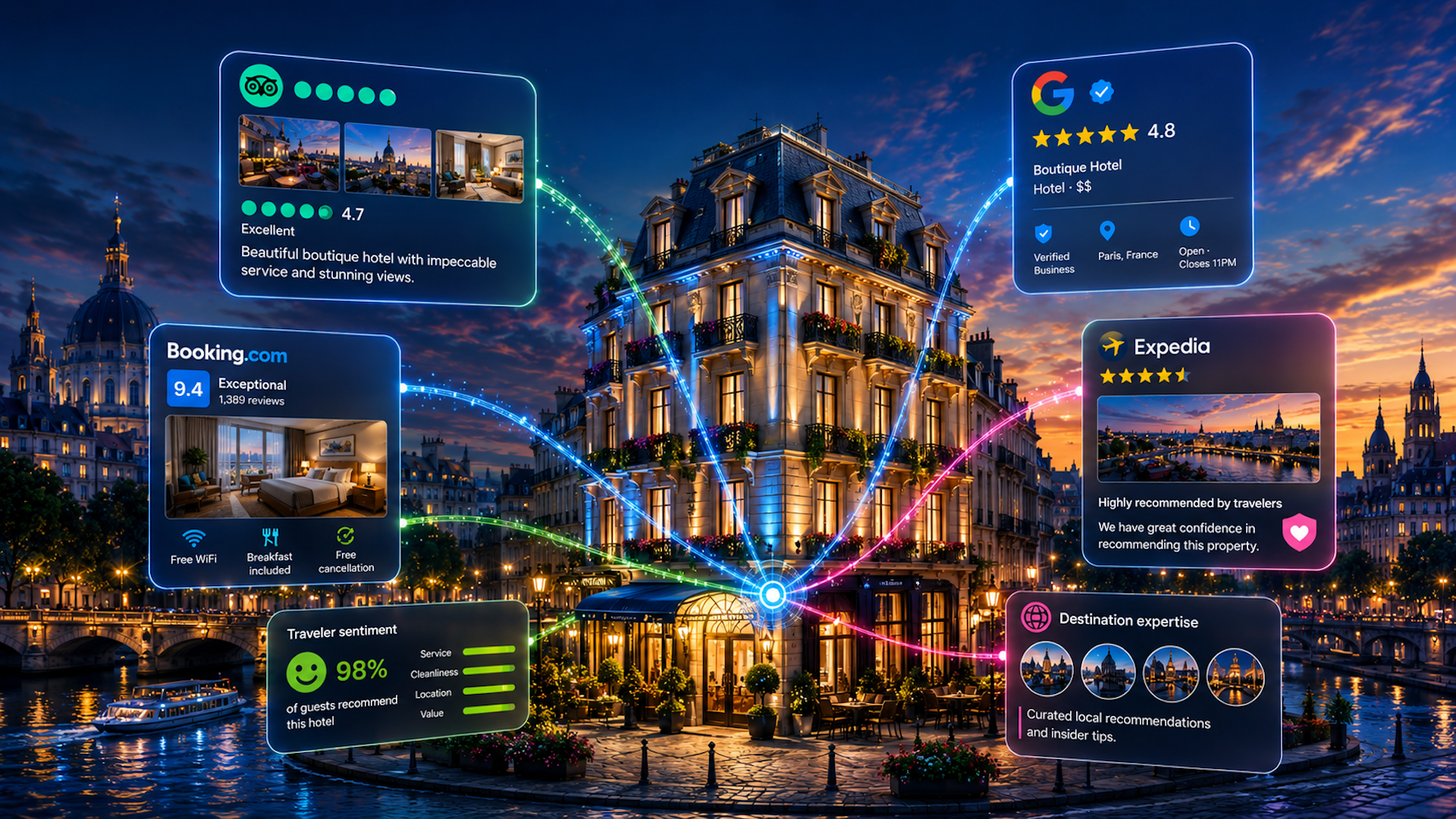
AI Overviews and Google AI Mode are increasingly shaping the discussions within the SEO community. In this evolving landscape, search is transitioning from a mere information retrieval tool to a powerful recommendation engine.
As a travel brand, this shifts the dynamics of online discovery. It’s no longer just about making your website understandable to search engines; it’s about ensuring AI systems recognize when to recommend your business.
How AI is Revolutionizing Travel Planning
Interacting with large language models (LLMs) has become a routine for many of us. We use them to structure conversations by project, creating folders for our upcoming trips and building on previous chats to refine our preferences and travel profiles.
This is a major shift from the conventional searching methods. Traditionally, we would start our travel plans with Google searches for terms like:
- “Hotels in Porto”
- “Things to do in Rome”
- “Best restaurants in Barcelona”
Today, the process is much more conversational. Instead of a series of disjointed searches, I might open a new folder labeled “Summer 2026” in ChatGPT and begin with a broad question, gradually sculpting it into a complete itinerary.
- “Where should I stay in Porto for a quiet weekend within walking distance of the historic center?”
- “Which area of Rome is best for families with young children?”
These discussions naturally expand to include restaurant recommendations, tourist attractions, accommodation options, transportation tips, and more detailed daily plans.
When I ask my AI assistant these questions, I’m not looking for a list of websites. What I truly want is an insightful recommendation.
Impact of AI Overviews on Travel Search
AI Overviews gather data from multiple points to deliver highly curated recommendations instead of just a list of links. For this reason, trust, consistency, and context have become vital factors for online visibility.
A traveler might decide to book my hotel based on an AI-generated suggestion without even visiting the website. Instead, their next steps could include a branded search or a visit to a review platform where they might finalize their booking through an OTA.
To win over AI model recommendations, I need to precisely define my brand. It’s crucial for AI to be certain of who I am, what I offer, whom I serve, and the contexts in which my brand is relevant.
Selecting a primary category and maintaining a clear brand position are imperative. Investing in digital PR and securing mentions beyond my own website can help too. Being featured in travel articles on relevant topics can significantly boost visibility.
Moreover, ensuring that my business information is consistent, accurate, and easy to find across my website, Google Business Profile, TripAdvisor, OTA listings, and social media is essential.
Understanding the Role of Zero Click Visibility
The methods for evaluating search performance are evolving. While traditional SEO metrics will remain relevant, it’s important for travel marketers like myself to broaden how visibility is measured.
One critical error is viewing fewer clicks as a decrease in visibility.
A traveler might learn about my property through an AI response and then decide to search for it later or visit a review profile on a platform like TripAdvisor.
That’s why seeing growth in branded searches is a promising sign of AI visibility. Monitoring AI mentions, citations, and assisted conversions is also worthwhile.
Assisted conversions highlight the channels and touchpoints that lead to bookings, even if they aren’t the final source of conversion. I can track these in Google Analytics 4 by navigating to Advertising > Attribution > Conversion Paths and Attribution Reports.
Leveraging TripAdvisor and OTA Listings
Platforms like TripAdvisor have grown beyond being review sites, and OTAs offer more than just booking services.
When someone requests AI recommendations, the system doesn’t rely on a single data point but synthesizes information from multiple avenues.
My website forms a part of this ecosystem.
AI builds confidence in its guidance by cross-referencing data across different platforms. What others say about my brand through reviews, travel guides, media references, OTA listings, or local mentions is increasingly significant. It’s large-scale reputation management.
This additional context helps AI identify when my property is relevant to specific traveler needs, like:

- Family-friendly environments.
- Ideal for business travelers.
- Located in walk-friendly areas.
- Renowned for exquisite dining.
- Suitable for luxury or budget travel.
Distinguishing My Travel Brand
For example, if I manage a family-friendly hotel, it’s important to highlight features like family suites, kids’ activities, and family-oriented reviews. Alternatively, a romantic destination should emphasize aspects like cozy atmospheres, spa facilities, and exclusive packages.
Similarly, a hotel catering to business travelers should spotlight meeting rooms, workspaces, high-speed internet, and its proximity to business hubs. On the other hand, a restaurant known for its culinary excellence should consistently be mentioned in reviews, receive media attention, and third-party accolades focusing on its food quality, head chef, or dining experience.
While some businesses naturally fit various categories, having a clear primary positioning helps generative search engines easily identify when my brand is appropriate for a recommendation.
This principle holds for travel destinations too. AI-driven engines depend on signals from reviews, travel guides, local listings, and related content when suggesting where tourists should stay, visit, or explore.
Strengthening Entity Signals Across Platforms
As AI systems place more focus on entities instead of individual web pages, I must create a robust and consistent digital presence.
1. Clarifying Attributes with Structured Data
Structured data aids search engines and AI in interpreting key business details. For travel entities like mine, this includes lodging types, amenities, locations, and more.
Emphasize the attributes that truly set my property apart. This can span from family-friendly amenities to wellness-centered experiences, renowned dining options, pet-friendliness, or proximity to major landmarks.
The clearer and more structured my information is, the better the chances AI-powered experiences will spotlight my business in relevant recommendations.
2. Resolving Entity Ambiguities
It’s crucial to review third-party portrayals of my brand. Inconsistencies can diminish the trust AI systems have in my brand information, as AI pulls data from various sources.
Think of a hotel with differing phone numbers, outdated details, varying categories, or conflicting amenity information across platforms—these inconsistencies confuse AI systems.
Ensuring my business data is consistent across my website, Google Business Profile, TripAdvisor listings, and OTA profiles will reduce ambiguity and strengthen AI’s confidence.
3. Prioritizing Operational Information
Start by evaluating existing customer reviews.
- What did they enjoy most during their visit?
- What made their stay memorable?
- What areas need improvement?
Such feedback provides insight into what genuinely differentiates my brand. Details about amenities, accessibility features, business hours, parking, and pet policies help AI address specific travel-related queries with confidence.
Google Business Profile is another vital source for operational data. The categories, attributes, amenities, and working hours mentioned on the profile enhance AI’s ability to answer travel queries accurately and helpfully.
To provide further context, I can also use Google Business Profile to publish posts that link back to my site’s content. Consistently posting on Google Business Profile can boost engagement, increase profile visits, and encourage customer interaction, ensuring my listing remains updated with fresh content about my offerings.
Cultivating AI-Trusted Signals
Generative search levels the playing field more than traditional search. AI favors recommending businesses, not just their websites. Visibility isn’t solely determined by what transpires on my site; it encompasses the comprehensive digital footprint that my brand projects.
For travel brands, this means I must think broader than just rankings and clicks. Reviews, OTA listings, travel guides, media mentions, and business profiles all contribute to how AI recognizes and recommends my brand.
It’s time to get creative, try new approaches, and collaborate with complementary businesses. Most crucially, it’s time to build the trust signals that AI systems rely on.
Inspired by this post on Search Engine Land.

Leave a Reply