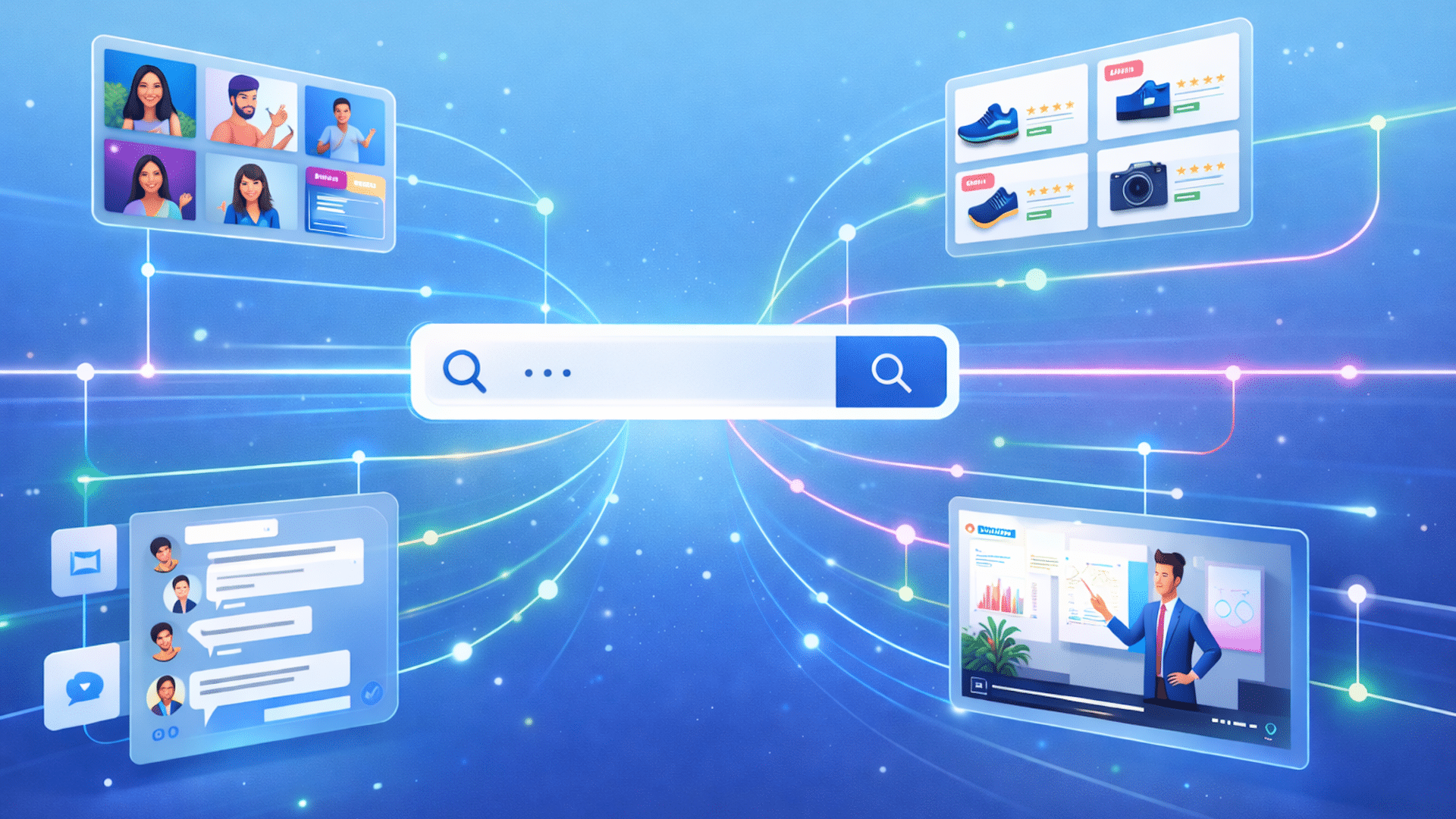
As I reflect on how we used to plan our search strategies, it was all about ranking high on Google. Back then, we poured resources into optimizing websites and building entire marketing strategies to capture demand from Google’s search results.
However, search behavior has evolved. It no longer thrives on a single platform. Nowadays, I find myself searching on TikTok for recommendations, YouTube for tutorials, Reddit for honest opinions, and Amazon for product validation.
This shift in search behavior spans across a wide array of platforms, presenting us with one of the most overlooked opportunities in digital marketing.
Recent research from SparkToro and Datos analyzed search behavior across 41 major platforms. These included traditional search engines, ecommerce sites, social networks, AI tools, and reference sites.
The findings reiterated a growing awareness among marketers: search is not bound to traditional engines anymore. Although Google still leads, discovery is increasingly distributed across a diverse range of platforms—a sort of search universe.
The research distributes search activity as follows:
- Traditional search engines: Roughly 80%, with Google alone at ~73.7%
- Commerce platforms (Amazon, Walmart, eBay): Roughly 10%
- Social networks: Approximately 5.5%
- AI tools (ChatGPT, Claude, etc.): About 3.2%
We search directly on the platforms where we expect to find the most useful answers, in the formats we prefer, instead of relying on Google to direct us elsewhere.
Dig deeper: Discoverability in 2026: How digital PR and social search work together
The current buzz in the search industry tends to focus heavily on AI, posing questions such as:
- How do I rank within ChatGPT?
- How can I optimize for AI search?
- Is AI going to supplant Google?
These questions are debated endlessly by SEO professionals. While these are indeed significant questions, the data suggests a more grounded narrative, particularly for strategic planning over the next year.
Despite AI tools accounting for roughly 3.2% of search activity, which indicates a future shift in how we search and discover information, they are presently dwarfed by more established platforms.
For instance:
- Amazon sees more searches than ChatGPT.
- YouTube surpasses ChatGPT in search activity.
- Even Bing records more searches.
Yet, numerous brands are placing an outsized focus on AI visibility, overlooking platforms that handle millions of searches daily.
For many, social platforms have transformed into primary search destinations. I’ve noticed people turn to:
- TikTok for travel ideas, restaurants, and product recommendations.
- YouTube for problem-solving tutorials and reviews.
- Reddit for genuine discussions and community feedback.
- Pinterest for visual inspiration and planning.
These platforms serve varied roles in the discovery journey.
These platforms have grown beyond entertainment; users interact with them with genuine intent to seek solutions to their needs or desires.

As we increasingly use social platforms for searches, I’ve noticed that Google has been aggregating and featuring social content in its search results pages (SERPs). TikTok videos, YouTube Shorts, Reddit threads, Instagram posts, and forum discussions are now appearing directly in Google results.
With Google’s partnerships with platforms like Reddit, community discussions often gain more prominence in search results, allowing social content to influence discovery in several ways:
- Direct searches on social platforms
- Visibility within Google search results
- Influence within AI-generated answers
Dig deeper: Social and UGC: The trust engines powering search everywhere
Social platforms are also vital for the AI-generated answers that rely on genuine experiences and opinions, making platforms like Reddit, YouTube, and TikTok indispensable sources for these AI systems.
Google’s AI summaries frequently reference Reddit threads and YouTube content. Similarly, other AI tools leverage community discussions and reviews for insights.
Thus, content crafted for social discovery can significantly impact visibility across various layers of search, including on social platforms, Google results, and AI-generated responses.
By embracing social search visibility, brands can unlock a compounding discoverability effect. A high-quality YouTube tutorial, for instance, could:
- Thrive in YouTube search results
- Feature within Google search results
- Be mentioned in AI-generated answers
- Be shared on various social platforms
- Spread through private messages and dark social channels
Unlike conventional website content, social content can seamlessly migrate across platforms, significantly extending its reach.
Especially now, with marketing budgets tightly monitored, the cross-platform visibility of content amplifies the ROI of content strategies.
Dig deeper: The social-to-search halo effect: Why social content drives branded search
Despite these transformative changes, most brands still adhere to traditional search playbooks focused on Google SEO, paid search, website content, and AI interfaces.
Few have formalized strategies for optimizing TikTok, YouTube, and Reddit, which are full of untapped potential for creator-led discovery.
Traditional Google SEO might be highly competitive, but social search remains largely unoptimized, presenting early adopters with a golden opportunity to capture long-lasting visibility in spaces with existing demand.
Investing in social search visibility isn’t just about accessing the 5.5% of searches taking place on social platforms; it also extends influence to traditional search results and AI-generated answers across the web.
Search transcends beyond a single channel; it’s a broad behavior occurring within a progressing search universe.
Audiences search for the best answers in preferred formats, whether it’s on Google, TikTok, YouTube, Reddit, Amazon, Pinterest, or new AI interfaces.
Achieving success in today’s search landscape requires visibility across all the places where your audience searches. It’s about being discoverable, regardless of where those searches originate.
This is the future of search—this is “search everywhere.”
Dig deeper: ‘Search everywhere’ doesn’t mean ‘be everywhere’
Inspired by this post on Search Engine Land.

Leave a Reply