
When Google introduced Demand Gen campaigns in 2023, I saw them as a promising way to boost engagement across platforms like YouTube, Discover, and Gmail.
Initially, they felt experimental, straddling the line between awareness and performance, but they’ve come a long way since.
Now, the creative flexibility and enhanced audience control make Demand Gen a go-to campaign type for my ecommerce clients.
This strategy allows me to scale revenue in a controlled manner, maintaining brand consistency while testing creative approaches to drive conversions.
I’ve found that Demand Gen delivers the best results when strategically paired with Performance Max and Search campaigns.
Advertising with Demand Gen is ideal if you crave more control.
One major drawback of Performance Max is its lack of transparency and manual control.
If precise targeting, placement, or creative control is essential, Demand Gen stands out as the better option.
Performance Max auto-generates ads from your uploads, relying on Google’s AI to mix and match for the best performance.
This makes it crucial to provide top-notch creative assets.
For example, a fitness brand might create separate asset groups for products like leggings, shorts, and vests.
While this helps target relevant audiences, the control isn’t exhaustive.
However, Demand Gen offers far superior flexibility.
It allows me to upload, preview, and tweak ad combinations before launch, adapting each creative to its unique placement.
For instance, I can customize YouTube ads for in-feed, in-stream, and Shorts placements.
This control is perfect for ecommerce brands focusing on creative precision, message testing, and maintaining a strong visual identity.
Dig deeper: The Google Ads Demand Gen playbook
Using Demand Gen alongside Performance Max can be incredibly effective if you leverage their roles within the customer journey. They enhance each other rather than compete.
Demand Gen builds awareness and sparks interest by reaching higher-funnel audiences before they actively start product searching.
Conversely, Performance Max focuses on converting lower-funnel users who are primed to purchase.
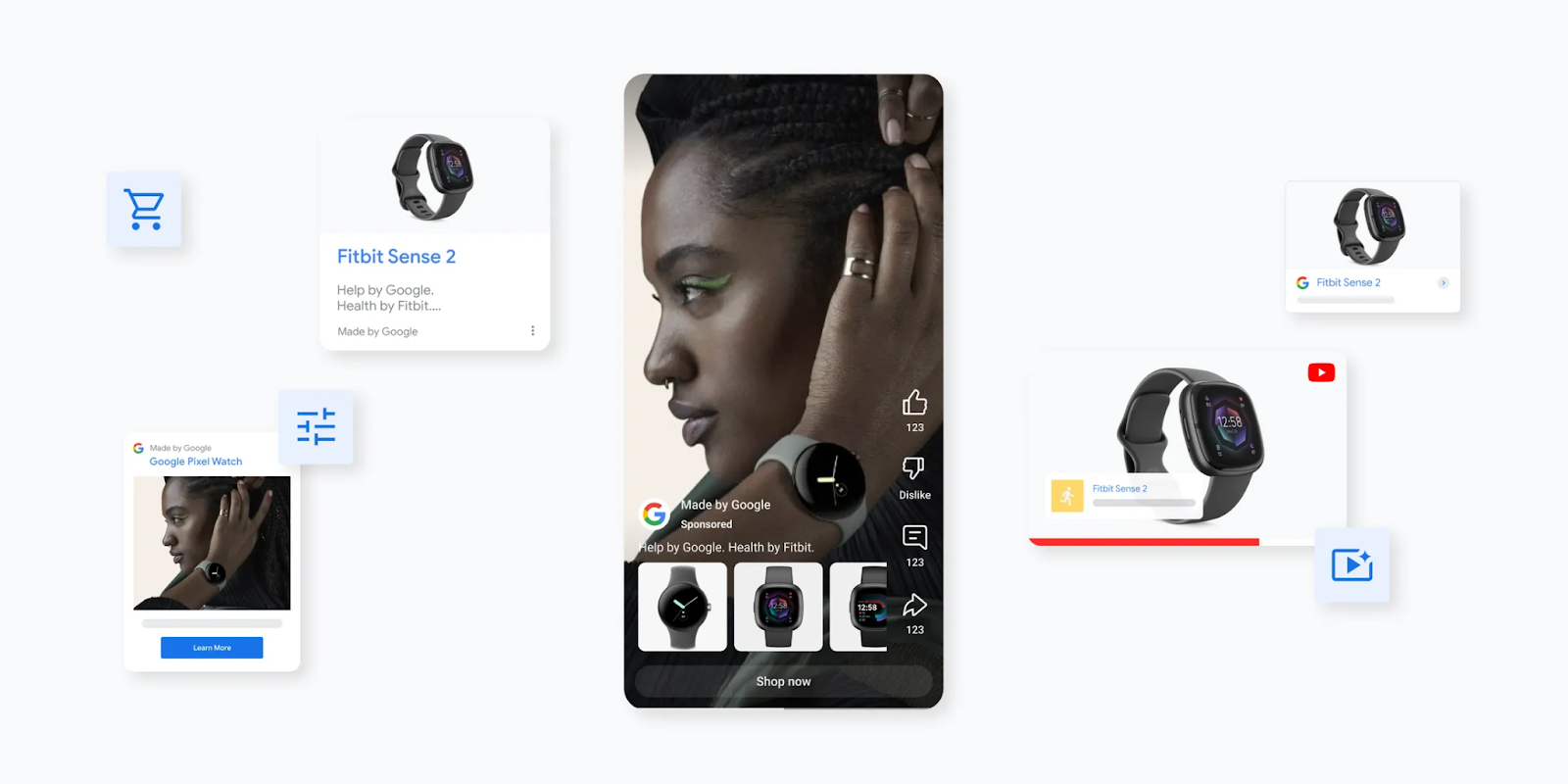
For example, a fitness retailer might utilize Demand Gen for lifestyle videos and discovery ads promoting their latest activewear.
When a potential customer begins to research or exhibit purchase intent, Performance Max engages with tailored Shopping and Search ads to finalize the sale.
I’ve set up feed-only Performance Max campaigns, providing only a product feed within the asset group.
This restricts Performance Max activities to Shopping placements, focusing it sharply on direct conversions.
Meanwhile, Demand Gen operates across platforms like YouTube, Gmail, Discover, and Shorts, covering the upper and mid-funnel with more visual, creative content focused on awareness.
This configuration minimizes overlap between campaign types while ensuring user engagement throughout the funnel, from brand discovery to purchase.
For larger accounts with flexible budgets, this dual structure drives holistic performance and clearer attribution.
In contrast, smaller accounts seeking efficiency should prioritize mastering high-intent campaigns before layering in Demand Gen once the core conversions are stable.
The diverse campaign types now offer advertisers more flexibility than ever, yet it requires understanding Google’s restructuring of video and discovery products.
Dig deeper: Why Demand Gen is the most underrated campaign type in Google Ads
Since July 2025, Google’s Video Action Campaigns (VACs) have been replaced by Demand Gen.
It streamlines Google’s visual placements into one campaign type, including YouTube in-stream, Shorts, in-feed, Gmail, and Discover.
This change is significant. VAC was successful for ecommerce, particularly for conversion-centric video. Its removal underscores Google’s encouragement to embrace Demand Gen.
The advantage is that Demand Gen provides stronger creative control and diverse testing options across YouTube placements.
If you previously ran VAC campaigns, they are now under Demand Gen. Ensure your top-performing assets and audiences have migrated correctly, then use the new controls to optimize performance.
Audience control is a significant benefit of Demand Gen, and it’s a reason why I consistently use it for ecommerce.
Demand Gen allows precise audience creation, letting me decide who sees the ads.
I can select placements, merge audience types, and allocate the budget strategically.
It’s the only Google Ads campaign type supporting lookalike audiences, valuable for brands focused on acquiring quality leads.
While Performance Max utilizes audience signals over fixed targeting, Demand Gen excels for control, testing, and segmentation strategies.
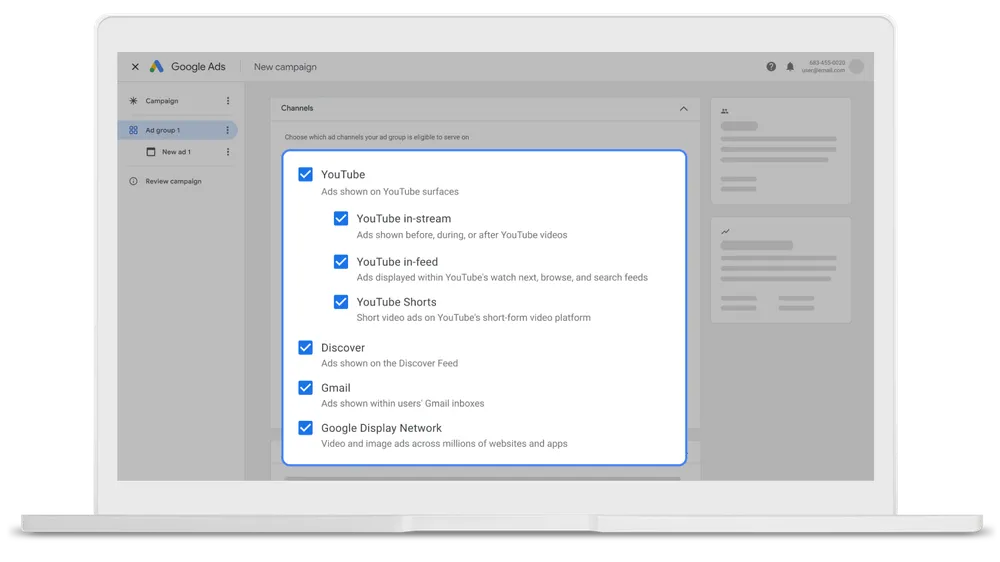
In mid-2025, Google rolled out an open beta for advertisers to opt out of specific Demand Gen channels manually.
This means I can now control ad display, excluding Discover or YouTube Shorts if they don’t align with my objectives or creative format.
This small but significant update offers more control, a feature often lacking in many of Google’s automated campaign types.
Dig deeper: Google Ads rolls out channel control for Demand Gen campaigns
In early 2025, Google introduced product feed integration for Demand Gen campaigns. This change allows me to link the Google Merchant Center feed, incorporating live product data directly into visual ads.
This development bridges performance and branding for ecommerce, enabling storytelling through creative visuals while displaying actual products.
For instance, a fashion retailer can showcase a new collection in a video advert while featuring shoppable product cards below.
This update positions Demand Gen as a hybrid between Shopping and Display, a much-anticipated capability among ecommerce advertisers.
Demand Gen typically demands a larger budget than other campaign types.
Google recommends starting at about £100 per day per campaign or 20 times your target CPA/tROAS, whichever is higher.
Practically, the £100-per-day baseline is a viable starting point for effective data collection and optimization. Lower budgets restrict data flow and slow progress.
Demand Gen complements your broader Google Ads strategy, rather than replacing Search or Performance Max.
It’s a premium, visually led campaign type that boosts awareness leading to conversions, particularly effective when you have accurate measurement, a clean product feed, and clearly defined audiences.
The table compares Demand Gen and Performance Max on key aspects that matter to advertisers.
Dig deeper: Google pushes Demand Gen deeper into performance marketing
Performance Max excels in scale but can be opaque.
Demand Gen offers the control advertisers have demanded—genuine creative testing, audience precision, and placement visibility.
For sustainable ecommerce growth, I recommend using both. Performance Max captures demand, while Demand Gen creates it.
Together, they form a comprehensive framework for scalable and sustainable growth.
Inspired by this post on Search Engine Land.

Leave a Reply