When I’m running Google Ads in 2026, one setting I always check carefully is “Search Partners.” It often appears in campaign settings as a simple way to extend reach beyond Google Search, and on the surface, that sounds useful.
But more reach does not automatically mean better reach. In my experience, Search Partners can bring traffic, but the quality of that traffic is usually the problem.
For most advertisers, I would not leave Search Partners enabled by default. I’d rather start with the main Google Search results page, prove the campaign can convert, and only then consider whether extra volume is worth testing.
What are Google Search Partners?
Google Search Partners are third-party sites that use Google-powered search results. When someone searches on those sites, your ad may be eligible to show there. This network can include YouTube, directories, other search experiences, and even parked domains.
That sounds like a broader opportunity, but I usually see a familiar pattern: lots of impressions, plenty of clicks, and cheaper CPCs than Google Search. The issue is that cheaper clicks are not always useful clicks. Real conversions and meaningful business value from these placements are often limited.
If I’m using conversion-focused Smart Bidding, I often see Search Partner spend fall naturally over time. The bidding system eventually learns that those placements are not producing the conversions it wants, so it stops pushing budget there.
How Search Partners differ from the Google Display Network
I see advertisers confuse Search Partners with the Google Display Network all the time. Some websites can be involved in both, but the intent and placement logic are different.
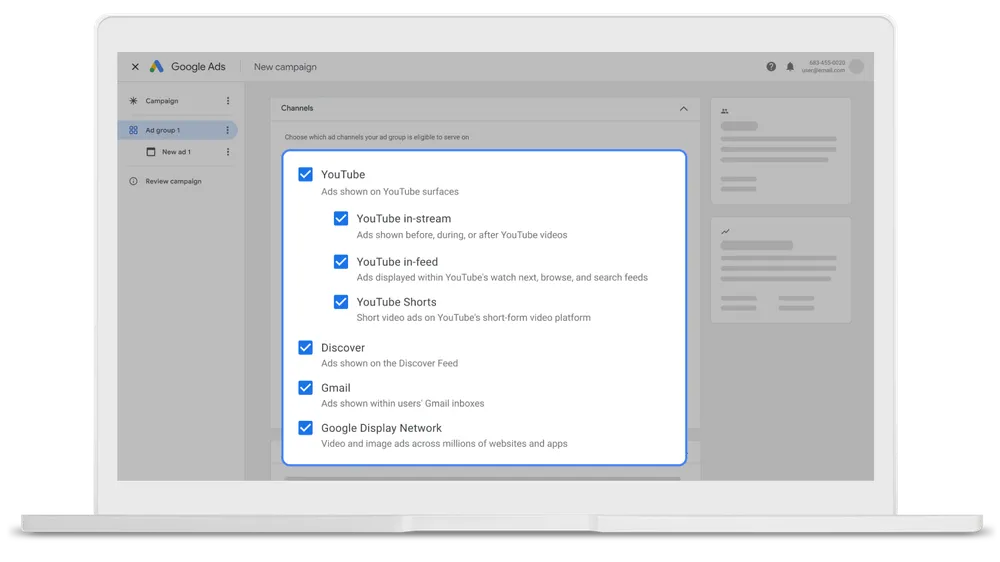
The Google Display Network is made up of websites and apps that use AdSense, where ads can appear while people browse content. It can show up as a placement option in Demand Gen, Video campaigns where it is called “Video Partners,” and Performance Max campaigns.
Search Partners are tied to search-based activity. That is why they apply to Search, Shopping, and Performance Max campaigns rather than standard Display placements.
How I audit Search Partner performance
I do not recommend taking anyone’s word for it, including mine. The better move is to check what Search Partners are actually doing inside your own Google Ads account.
Rows of illuminated data cabinets and paper files stretch into the distance, capturing the pressure on marketers to turn fragmented customer data into a smarter performance engine.
For Search or Shopping campaigns
In Google Ads, I go to the campaign view, select Segment, and choose Network (with search partners). This splits performance into separate rows for Google Search and Search Partners, which makes the difference much easier to see.
What I usually find is a lot of Search Partner impressions and clicks, often at lower CPCs than Google Search. But when I look for true conversions, the results are usually weak unless the account is tracking something shallow or easy to manipulate, such as a page view or a low-friction form fill.
For Performance Max campaigns
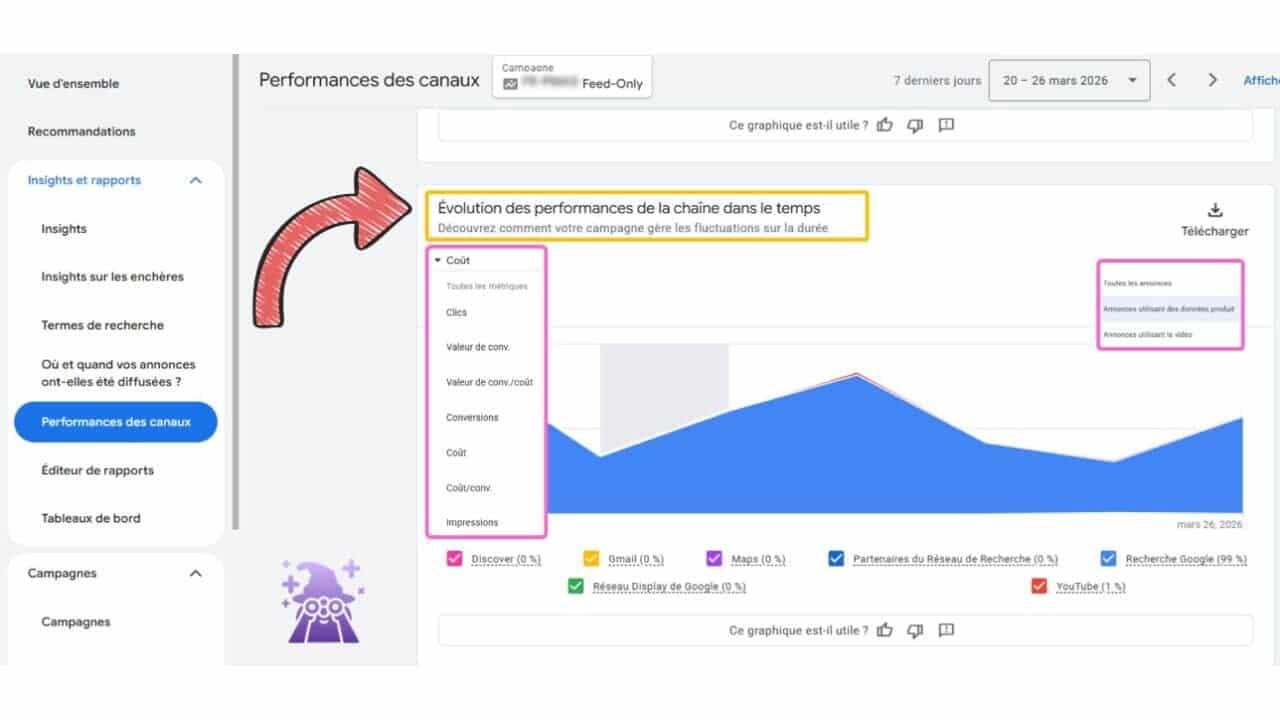
Performance Max works differently. Search Partners are required for this campaign type, so I cannot simply opt out. What I can do is monitor the activity through the Channel Performance report.
If I see heavy Search Partner spend in a Performance Max campaign, I treat it as a signal to review conversion tracking, bid strategy settings, and the quality of the conversion actions being used for optimization.
Check the Content Suitability report
For more transparency, I also check the Content Suitability report under Insights and reports. This report can show the actual websites or YouTube channels where ads appeared on the Search Partner network.
That list is often enough to make the decision clear. Once I see where the ads have been running, I usually find many placements that look low quality, irrelevant, or simply not worth the spend.
In Google Ads, many decisions really do depend on the account, the market, and the goal. This is one of the few areas where my starting recommendation is straightforward.
If I’m building a new Search or Shopping campaign, I leave Search Partners unchecked. After the campaign is performing well and has strong conversion data, I may test Search Partners for added volume. Until then, I keep the budget focused on the main Google SERP.
This article is part of the ongoing Search Engine Land series, Everything you need to know about Google Ads in less than 3 minutes. In each edition, Jyll highlights a different Google Ads feature and explains what advertisers need to know to get better results in a quick 3-minute read.
When I see Microsoft Advertising campaigns struggle to scale, the issue is often not the platform itself. It is usually that the account is being treated as a copy of a strategy built somewhere else.
Importing campaigns can get me live quickly, but it is only the beginning. Real performance comes when I add human judgment, Microsoft-specific structure, clean measurement, business-specific controls, and enough creative assets to help AI understand what I am actually selling.
The strongest accounts I see have a shared pattern: import is the starting point, visual creative opens more demand, and AI works best when I give it the right structure, signals, measurement, and guardrails.
Here is how I approach Microsoft Advertising when I want more than a simple campaign import.
Note: I’m a Microsoft employee, and I have written this as objectively as possible. I have also included community-sourced hidden gems where they help highlight useful features.
1. I start with import, but I do not stop there
Import is useful because it removes friction. It can bring over campaign structure, assets, and settings from Google, Meta, or Pinterest so I can launch faster. The mistake is assuming that a successful import means the Microsoft Advertising strategy is finished.
Imported campaigns often preserve yesterday’s assumptions. I still need to make Microsoft-specific decisions about budget, bidding, audiences, creative, measurement, reporting, and AI-powered opportunities.
Decide whether sync helps or holds the account back
One of the first choices I review is whether future changes from the source platform should keep syncing into Microsoft Advertising. If I only want to mirror another platform, automatic sync can reduce maintenance. If I want to build a Microsoft-specific strategy, automatic sync can quietly overwrite the optimizations I make after launch.
To see the full list of import settings, I go to Manual import > Advanced settings. From there, I review which settings should stay, which should change, and which Microsoft-specific opportunities were never part of the original structure.
Review budgets, bids, currency, and Microsoft-only options
Imported budgets may not match the opportunity or efficiency available in Microsoft Advertising, especially when I can consolidate campaigns and use ad-group-level controls instead.
Imported bids can also carry assumptions from another platform. I want Microsoft Advertising to have room to optimize for its own auction dynamics, audiences, and conversion data.
A PPC expert highlights LinkedIn Profile Targeting as a Microsoft Advertising hidden gem, especially for B2B campaigns that need to reach senior decision influencers.
Review Microsoft-specific settings after import
Import cannot choose Microsoft-specific opportunities for me. After launch, I review the settings that can materially change performance.
LinkedIn profile targeting: I can bid up or down, observe performance, and use LinkedIn profile data as a Performance Max audience signal across Company, Industry, Job Function, and Seniority.
Ad-group-level scheduling and location targeting: I can override campaign-level schedules and location targets at the ad group level, including whether ads serve in the user’s time zone or the account’s time zone.
Impression-based remarketing: I can target, exclude, or adjust bids based on someone seeing my ad. It does not require an existing email list or pixel, and members can remain on the list for up to 30 days after a single impression.
Multimedia ads: These visual-heavy ads have their own auction, can appear on the same SERP as my text ad, and may also serve in Copilot.
Cross-account portfolio bidding: If I need to launch a new account for the same brand, I can let it benefit from conversion data in an existing account.
Microsoft Clarity: I can use this free behavioral analytics tool to understand how people and AI engage with my site, where landing pages create friction, and which grounding queries may connect AI systems to my content.
Creative and editorial considerations: Microsoft has stricter advertising policies than many platforms, but it also allows useful capabilities such as exclamation points in headlines and disclaimers of up to 500 characters that do not take up ad space. If I enable disclaimers, my ads will only serve when the disclaimers can appear alongside them.
2. I build the signal foundation before optimizing
Account-level settings can look overly technical, but I treat them as the foundation for AI performance. They determine whether automation learns from clean data or from messy, misleading signals. Settings such as business attributes also help me communicate why customers should choose the business.
Verify conversion tracking and attribution before changing bids
Even the best bidding strategy cannot make up for incomplete conversion data. Before I blame bids, keywords, audiences, or creative, I verify that conversion and attribution data are flowing correctly.
Microsoft Click ID (MSCLID): This helps connect ad clicks to conversion activity.
View-through conversions: These help me understand the role visual creative plays before a conversion happens.
Simplified conversion setup: This enables intelligent conversion action creation.
Without verified tracking, it is easy to diagnose the wrong problem. What looks like a bidding issue may actually be incomplete or inconsistent conversion data.
If the organization relies heavily on UTM parameters, I also validate how auto-tagging and manual tagging interact. My goal is clean reporting, not duplicated parameters or attribution confusion caused by mislabeling.
Treat creative inputs as signals
When enabled, Microsoft Advertising can use images from landing pages to create more relevant ad experiences. If the site has strong, brand-safe, well-maintained imagery, this can improve creative coverage without forcing me to manually build every variation for every campaign type.
AI-optimized creative works best when the site already gives it good material. If the pages include images I would not want in ads, or if the imagery is sparse, text-heavy, or poorly matched to the offer, I upload the assets I want the system to use. Auto-retrieved images reduce friction, but they do not replace creative strategy.
Use account-level negatives carefully
Account-level negatives can eliminate unwanted traffic patterns across the account. Microsoft supports phrase and exact match negatives. If I need to remove a root problem, phrase match is often the better option. If I need to block a specific search term, exact match may work better. Neither negative match type accounts for close variants.
I only use account-level negatives for terms I am confident should not serve anywhere in the account. More nuanced exclusions belong at the campaign or ad group level.
3. I use structure and controls to help AI perform
Microsoft Advertising gives me useful controls, but my goal is not to micromanage every lever. I want to give AI cleaner inputs, stronger guardrails, and fewer structural problems to solve.
Microsoft reports a 20% reduction in low-quality Search Partner Network impressions, crediting earlier invalid activity detection, stronger quality signals, and tougher enforcement.
Concentrate signals instead of fragmenting them
Ad-group-level location and ad schedule settings can reduce the need to create duplicate campaigns or split budgets across multiple accounts.
I have seen advertisers create separate campaigns only to support different geographies or schedules. In many cases, I can manage those settings at the ad group level, simplify the structure, and concentrate conversion volume.
That matters because automated bidding usually performs better with stronger, more consistent signals. When possible, I aim for at least 30 conversions in 30 days. That level of signal gives automated bidding a better chance to make stable decisions than a fragmented structure with thin conversion volume.
Use scheduling, location, and disclaimers as guardrails
I always review location targeting. Microsoft Advertising supports geographic targets, radius targeting, and exclusions, but city-, county-, metro-, or DMA-level strategies may be more practical than forcing ZIP codes.
If Microsoft does not support a specific location target, it defaults to the next-highest level, such as ZIP code to city or city to DMA. If I need narrow targeting, I look closely at exclusions.
Avoid unnecessary learning volatility
Large bid or budget changes can create volatility while the system adjusts. As a general rule, I try to keep bid or budget changes below 15% over a 14-day period when I want to avoid unnecessary learning disruption. Larger changes may still be necessary, but I make them intentionally.
Seasonality adjustments help when I expect a temporary conversion rate change because of a sale, event, promotion, or other short-term spike. Data exclusions help when conversion tracking breaks or reports misleading data that I do not want automated bidding to learn from. These tools are not bidding hacks. They protect automation from learning the wrong lesson.
Use conversion value rules whenever possible
The cleanest way I can communicate value to the bidding algorithm is through conversion value rules grounded in accurate conversion tracking. These rules let me create if/then logic for devices, audiences, and locations, then add a monetary amount or multiply conversion value.
Microsoft supports bid adjustments across audiences, devices, demographics, locations, and time. Multiple adjustments can compound. If a user qualifies for several categories at once, the bid may become more aggressive than I intended.
Before I add another layer, I ask whether I truly want to spend more to reach that audience, in that location, on that device, at that time. If I want the algorithm to understand value, meaningful conversion values and conversion value rules are usually stronger signals. If values are not reliable, CPA-oriented bidding with carefully chosen adjustments can still work.
Microsoft Advertising reports network-level gains, with indexed conversion rates up 45% and indexed cost per conversion down 1.5%, tied to cleaner traffic quality.
4. I use audiences, inventory, and creative to shape demand
Microsoft’s differentiated audiences, inventory, and creative formats can help me generate and shape new demand instead of only capturing demand that already exists.
Use LinkedIn profile targeting intentionally
LinkedIn profile targeting is still one of the most distinctive audience capabilities in Microsoft Advertising. I can apply bid adjustments based on company, industry, job function, and seniority.
Multiple targets within the same LinkedIn profile category act as “or” statements, while targeting across categories narrows the signal. A company target plus a seniority target is more restrictive than two company targets. That can be powerful when intentional and expensive when accidental because bid adjustments compound.
For B2B advertisers, this can be especially useful, but it is not limited to enterprise brands. Any business selling to specific professional audiences can use these signals to prioritize valuable traffic.
For example, if I am trying to reach someone traveling for work with local experiences or travel gear, I might bid up on a “Business development” job function in an industry with a conference happening in the next two to three weeks.
Build audiences from exposure, not just site visits
Traditional remarketing depends on someone visiting my website. Impression-based remarketing gives me another option: building audiences from people who have been exposed to my advertising.
A prospect may not click the first time they see the brand, especially in formats such as Audience ads, Premium Streaming, or Multimedia ads. Impression-based remarketing lets me continue the conversation later instead of treating the first exposure as a failed interaction. An impression can become the starting point for an audience strategy.
Reevaluate search partners and exclusions
Many advertisers disable search partners because they assume the inventory behaves like display network expansion on other platforms. I do not start with that assumption. Search partner inventory is still search inventory, and Microsoft provides publisher visibility, so I can evaluate it directly.
Recent Microsoft studies have shown a 45% improvement in conversion rates and a 20% reduction in low-quality impressions tied specifically to Search Partner inventory, independent of advertiser optimization.
If specific publishers are not performing, I use the available controls. I can manage unlimited exclusion lists at the MCC account level, and each list can exclude up to 2,500 URLs. If I need to protect a campaign’s ability to target a placement, such as when Performance Max and Audience ads run together, I exclude domains surgically instead of cutting off useful inventory.
A PPC strategist highlights a practical Microsoft Advertising tactic: run multimedia ads separately from branded search to expand visibility without self-competition.
Use Multimedia ads to expand SERP presence
Multimedia ads participate in their own auction and can appear in prominent visual placements on the search results page. A traditional search ad and a Multimedia ad can both appear for the same brand, increasing my presence on the SERP.
I can enable Multimedia ads at the campaign level and then use ad-group-level decisions to direct budget toward or away from the format.
They matter because they can amplify visual presence, serve as ads in Copilot, and qualify for impression-based remarketing. Their value is not limited to direct-click performance. They can connect search visibility, visual storytelling, and remarketing strategy.
Use Audience ads to expand reach
I use Audience ads, including display, native, and video, as a controlled way to expand reach, support full-funnel strategy, and build remarketing inputs that inform other parts of the account.
Audience ads support audience strategies, placement preferences, content category controls, and creative preview before launch. For organizations that require legal, brand, product, or executive approval, preview capability can make review much easier.
Use creative and editorial details to reduce friction
Microsoft Advertising has editorial policies I need to understand instead of assuming every platform evaluates ads the same way. Claims such as “best,” “number one,” or other superiority language need clear landing page support.
Microsoft Advertising also allows some emphasis I might not expect, such as one exclamation point in headlines, but that flexibility does not remove the need for substantiated claims and clean final URLs.
Editorial issues are often misdiagnosed as platform friction. In many cases, the issue is one specific asset rather than the entire ad. Final URL problems are more fundamental and can prevent an ad from serving at all.
Extensions and visual assets can help brands communicate more value before users reach the landing page, especially in competitive categories where plain text may not provide enough differentiation.
5. I treat PMax, AI Max, and Copilot as AI opportunities with guardrails
I find Microsoft’s approach to AI most useful when I view it as augmentation rather than replacement. Human-centered AI should help me scale thoughtfully while preserving consent, transparency, and trust.
A marketer highlights how Microsoft Clarity surfaces real user friction, from mobile testing gaps to visitors tapping images they mistake for links, offering useful context for ad and landing page optimization.
Know what Performance Max is designed to enable
Performance Max can be powerful, but it requires a different mindset from traditional campaign structures. Asset groups are not ad groups. There is no asset-group-level equivalent to ad-group negatives, and I cannot force one asset group to take priority over another.
Performance Max is built for AI-driven allocation. If strict control is the priority, traditional Search, Shopping, and Audience campaigns may provide clearer governance. When I want to influence Performance Max, I focus on the inputs that matter most.
Strong audience signals: I include impression-based remarketing and LinkedIn profile targeting, which are unique to Microsoft.
Relevant creative: Copilot can pull creative from the landing page and adapt existing creative with tonal shifts, rewrites, or formatting improvements.
Thoughtful search themes: I avoid duplicating exact match keywords as search themes because exact match keywords take priority in the auction.
Meaningful conversion tracking: I make sure conversion tracking and conversion values are accurate because Performance Max needs conversions to perform effectively.
Clear landing pages: The landing page must communicate the offer clearly. If it does not, the algorithm may struggle to match the right queries, and people may struggle to do business with me.
If I run the same search theme as an exact match keyword, there is a strong chance the exact match keyword will serve instead of the Performance Max campaign. I prefer to use search themes as testing grounds rather than duplicates.
Performance Max website URL reporting gives me URL-level visibility into spend, clicks, impressions, and conversions. That gives me more to work with than impression-only reporting and can make automated campaign testing easier to justify.
Separate campaigns when budget separation matters
If budget separation matters, I create distinct campaigns instead of forcing multiple business objectives into one Performance Max campaign. Microsoft’s capacity of 300 Performance Max campaigns, compared with Google’s 100, can be useful when budget priorities genuinely need separation.
For example, if I have two equally important products with drastically different tROAS goals, I would not want them to share budgets because I cannot specify which asset group or product should take priority. Separate campaigns with distinct budgets and tROAS goals are usually a cleaner fit.
My rule is simple: if related assets and audiences can share a budget, I consolidate Performance Max campaigns to strengthen conversion volume. If budget separation matters, I build that control at the campaign level instead of trying to force it through asset groups.
Evaluate AI Max and Copilot for new opportunities
AI Max now addresses many of the use cases that once made Dynamic Search ads valuable. If my goal is to let Microsoft AI better match queries, creative, and landing pages, AI Max may be the better place to test.
That does not mean I abandon existing high-performing campaigns. It means I stay intentional about whether I am investing in legacy dynamic functionality or AI-powered capabilities built on Microsoft’s latest technology.
Ads can appear in relevant Copilot experiences when Microsoft determines there is clear commercial intent and the ad may help the user. Ads have served in Copilot since 2024. The goal is not to force ads into AI answers. It is to preserve a useful experience for the user.
A glowing Google search bar cuts through streams of digital data, capturing the fast-moving world of search, shopping visibility, and SEO innovation.
Copilot is not a separate campaign type I manually opt into. Performance Max, AI Max, exact, phrase, and broad match search campaigns, Multimedia ads, and Shopping ads are all eligible to serve in Copilot. Performance Max and AI Max have the easiest time serving there because they can adapt to AI-driven experiences.
Use generative AI as a creative workflow and diagnostic tool
Copilot can help me brainstorm, rewrite, refine, and adapt creative across Performance Max, responsive search ads, Multimedia ads, Audience ads, and other campaign types. It does not replace the marketer. It reduces friction between strategy and iteration.
Ad Studio can generate new creative assets and make adjustments such as background modifications, seasonal refinements, location-specific tailoring, and additional aspect ratios. I see its best use as accelerating iteration once the creative strategy is already clear.
AI-generated assets can also help me diagnose how clearly the site communicates. If the outputs accurately represent the business, the site is probably sending clearer signals. If they repeatedly miss the mark, the landing pages, messaging, or content structure may be confusing both AI systems and people. The Performance Max campaign generator can be a useful diagnostic shortcut for the same reason.
6. I use reporting and Clarity before blaming the auction
No amount of AI, bidding nuance, or audience strategy can compensate for poor measurement. Microsoft Advertising provides strong reporting visibility, and I use it before making media-only decisions.
Use transparent reporting to make better decisions
Microsoft provides visibility into every search term that generates a click as part of its transparency approach. I use that visibility to understand what is really happening behind performance changes.
Genuinely wasteful: There may be no business case for targeting that search.
An AI-driven match: The query may look questionable until I examine the customer journey with behavioral analytics.
A landing page issue disguised as a traffic problem: Before I add a negative keyword, I evaluate post-click behavior to see whether the landing page or conversion tracking is the real issue.
Use Microsoft Clarity before making campaign changes
Microsoft Clarity answers one of the most important questions in campaign diagnostics: what happens after the click? It can show whether users engage with the page, get confused, abandon forms, run into technical issues, or complete actions that are not being tracked correctly.
I want Clarity in the diagnostic process before I make major campaign changes.
If people arrive and get stuck, the issue may be the landing page experience.
If they complete the desired action but conversions do not appear in Microsoft Advertising, the issue may be tracking.
If they arrive and immediately disengage, the issue may be creative alignment, traffic quality, or the offer itself.
Clarity can also help me understand how AI systems interact with my content, including the grounding queries that led AI systems to cite the domain and recommendations for improving citation opportunities.
If AI systems cite the domain as relevant, that can validate the content strategy. If they do not, or if the queries reveal mismatches, that may point to gaps in how the content communicates value.
I apply Microsoft-specific optimizations deliberately
I can import existing campaign structures and assets while still taking advantage of Microsoft-specific capabilities. AI can play a central role, act as an occasional assist, or be used selectively, but scaling becomes harder without some level of AI adoption.
Testing Microsoft Advertising does not require a massive investment. It does require getting the fundamentals right: conversion tracking, bid-to-budget ratios, and creative that reflects the channel’s visual nature.
When I get those fundamentals right, Microsoft Advertising gives me search term transparency, GDPR-compliant impression-based audiences, and opportunities to reach people across the surfaces where they work, live, and play.
When I audit Google Ads accounts, it is easy to focus first on the obvious issues: keywords, bids, ad copy, and Quality Scores. But one of the biggest performance barriers I see is not buried inside a single campaign setting. It is the way the account was structured from the start.
Campaign structure shapes how Google’s machine learning reads the account, how budget moves across goals, and whether useful data is collected in one place or scattered across too many campaigns. When the structure is wrong, I am not just leaving performance on the table. I am making the algorithms work harder with weaker signals.
That is why I look closely at structure across standard Search campaigns, Performance Max, and Smart Bidding. The account architecture often determines whether optimization efforts can actually work.
How campaign structure shapes Google’s learning
I used to see advertisers treat campaign structure mainly as a cleanup exercise: tidy ad groups, logical naming, and campaigns separated by product line or geography. To Google’s systems, though, structure means something much more important.
Every campaign is a data container. The way I segment campaigns determines which signals Google can pool together for bidding and targeting decisions. When the structure is scattered, the learning is scattered too, and optimization becomes slower and less accurate.
Smart Bidding and automation usually perform better when more data is concentrated in fewer campaigns. Google’s algorithm needs meaningful volume, often around 30 to 50 conversions per campaign per month, to move beyond the learning phase and make reliable predictions. If I spread conversions across too many campaigns, each campaign can end up starved of the data it needs.
A common example is an ecommerce account with 12 separate Search campaigns, one for each product category. Each campaign averages 8 to 12 conversions per month. Smart Bidding is active, but no campaign consistently exits the learning phase.
In that situation, the fix is usually consolidation.
Over-segmentation breaks Smart Bidding
Smart Bidding strategies such as Target CPA, Target ROAS, Maximize Conversions, and Maximize Conversion Value depend on real-time signals like device, location, time of day, audience, search query, and more. Google weighs those signals together to predict which auctions are worth entering and how much to bid.
When I see campaigns that are over-segmented, I usually see the same problems appear. First, conversion volume is too low, so each campaign operates below the level Google needs for confident bidding decisions. That often leads to unstable CPAs and CPCs.
Second, learning phases last too long. Every budget change, bid strategy switch, or structural edit can trigger a new learning period. Over-segmented accounts can feel permanently stuck there, never reaching their full potential.
Third, signal consolidation is missed. Bidding signals do not freely transfer across campaigns. A branded campaign cannot teach the algorithm inside a non-branded campaign, even when both campaigns share the same conversion goal.
Finally, bid cannibalization becomes a real risk. When multiple campaigns compete in the same or overlapping auctions, I can end up driving up my own costs and creating avoidable inefficiency.
The result is an account that looks optimized on the surface, with Smart Bidding enabled, audiences attached, and conversion tracking active, but still underperforms because the structure underneath is working against every optimization layered on top of it.
The impact of Performance Max
Performance Max adds another layer to campaign structure. Unlike Search campaigns, PMax runs across Google inventory, including Search, Display, YouTube, Gmail, Discover, and Maps. It uses asset groups and audience signals to guide automation, which makes setup more important and more complicated.
Asset group segmentation
I think of asset groups inside PMax as mini-campaigns. Google uses them to understand context, match creative to searches, and optimize delivery. When asset groups are too broad, mixing unrelated products, audiences, or themes, the algorithm has a harder time matching the right creative to the right situation.
I prefer to segment asset groups by product category or service line, audience intent level such as prospecting versus retargeting, and creative theme or offer type.
This gives Google clearer signals about what each group is meant to accomplish, which can improve both creative matching and bidding efficiency.
PMax and Search campaign overlap
One of the most damaging mistakes I see in accounts running both Search and Performance Max is failing to set clear boundaries between them. PMax can serve across all placements, including branded and non-branded searches, so it can compete with Search campaigns if I do not define where each campaign type should operate.
Without proper segmentation, PMax can cannibalize high-intent branded search traffic and inflate costs on terms I might have won more cheaply through Search. Search campaigns can lose impression share they otherwise would have captured, and attribution becomes harder to interpret because it is less clear which campaign is truly driving performance.
My preferred solution is to use campaign-level negative keywords, brand exclusions, and clear audience segmentation. PMax should complement Search campaigns, not compete with them.
Budget allocation and automation conflict
PMax runs as a single campaign with a single budget, but because it delivers across multiple channels, budget allocation happens dynamically. When PMax and Search campaigns are not organized around clear goals, Google may spend on the easiest placements rather than the best ones.
Structural choices, such as whether I run one PMax campaign or split campaigns by product line, directly affect how budget is distributed and how well automation can support business goals.
Match type strategy and its structural implications
Match types are often treated as a keyword-level decision, but I see them as a structural decision too. Running broad match, phrase match, and exact match across separate campaigns, or even separate ad groups, without a coherent strategy can create overlap and wasted budget.
Google Ads looks very different than it did a few years ago. Broad match now casts a much wider net, and Google increasingly pushes advertisers to pair it with Smart Bidding. That combination can work, but only when the campaign structure gives the algorithm enough support.
Broad match with Smart Bidding works best when there is enough conversion data, a clear goal, and enough traffic for Google to learn from. In a fragmented account, broad match can make the problem worse. It brings in more searches, but the algorithm does not have enough clean data to make good use of them.
The safer approach is to keep match types within fewer campaigns, use negative keywords to prevent campaigns from bidding against each other, and review search term reports regularly so I can tighten boundaries where needed.
Keyword and ad group architecture: When granularity becomes an obstacle
Single Keyword Ad Groups, or SKAGs, are mostly a thing of the past, but many accounts still carry their legacy: hundreds of tiny ad groups with one or two keywords and nearly identical ads. That level of detail made sense when advertisers managed bids manually. Today, it often works against Smart Bidding.
Too many ad groups create the same data problem at a smaller scale. Responsive search ads perform better when they have more to learn from, including which headlines get clicked, which asset combinations work, and how auctions behave. That learning happens faster when ad groups are consolidated around broader themes.
I usually aim for three to five tightly themed ad groups per campaign instead of dozens of micro-segmented groups. Each ad group should include enough keyword variation to generate useful data while staying focused enough to preserve message relevance.
The goal is maximum signal quality. If structural granularity does not improve data consolidation, it is usually unnecessary complexity.
Conversion goals and campaign alignment
Structure also determines which conversion actions each campaign optimizes toward, and I consider goal misalignment one of the quietest performance killers in Google Ads.
If multiple campaigns share a poorly defined conversion goal, or if different campaigns optimize toward different actions without a clear hierarchy, Smart Bidding receives conflicting instructions. It may optimize toward micro-conversions like page views or add-to-carts when the real objective is form fills or phone calls. It may also treat goals as equal when one is clearly more valuable than another.
A structurally sound account connects campaign goals to business objectives, not just platform metrics. It separates primary conversions from secondary tracking actions, and it uses accurate conversion values when campaigns rely on value-based bidding.
Performance Max is especially sensitive to conversion goal quality. Because PMax controls its own bidding and placement decisions, it will optimize aggressively toward whatever I tell it matters most. If that signal is wrong, the campaign may optimize efficiently toward the wrong outcome.
Signs your structure is hurting performance
Structural problems rarely announce themselves clearly. I usually see them show up as issues that are easy to blame on ads, bids, or audiences.
Persistent learning phase warnings are one sign. Campaigns may be frequently flagged as limited by learning even when budgets are consistent. Unstable CPAs or ROAS are another warning, especially when performance swings do not settle over time.
I also watch for high impression share lost to budget when total budgets seem adequate, disproportionate spend flowing into a small number of campaigns, limited visibility into PMax search terms, and declining Quality Scores as the account grows across too many ad groups.
When two or more of these symptoms appear at the same time, I treat structure as a likely root cause. Bid adjustments and creative testing will not fix the problem until the foundation is corrected.
A framework for structural audits and consolidation
Restructuring an active account carries risk. Any major structural change can trigger learning phases and temporary performance disruption, so I consolidate carefully and use data as the guide.
Step 1: Assess conversion volume by campaign
I start by identifying which campaigns consistently generate 30 or more conversions per month and which fall below that threshold. Campaigns with low volume are usually candidates for consolidation.
Step 2: Map audience and intent overlap
Next, I look for campaigns that compete against each other for similar searches or audiences. Overlap creates waste, and structural waste is one of the most expensive forms of inefficiency.
Step 3: Evaluate PMax and Search boundaries
Then I audit how PMax and Search interact. I want to know whether brand terms are being captured by the right campaign type and whether negative keywords are in place to prevent cannibalization.
Step 4: Simplify ad group architecture
From there, I move away from SKAG-style granularity and toward theme-based groupings. Ad groups that serve overlapping intent should usually be consolidated into broader, cleaner themes.
Step 5: Align conversion goals
Finally, I audit conversion actions across all campaigns. Primary goals should match real business outcomes, and value-based bidding inputs should reflect actual revenue data whenever possible.
Important: I would not restructure everything at once. I would start with the highest-spend campaigns, monitor performance through the learning phase, and validate results before moving to the next round of consolidation.
Campaign structure comes first
I see campaign structure as the foundation of Google Ads performance. When it is right, Smart Bidding, Performance Max, and audience targeting can work with stronger signals, clearer goals, and more efficient budget allocation.
When it is wrong, no optimization layered above it can fully solve the problem. Bids cannot fix fragmented data. Creative cannot correct misaligned conversion goals. Performance Max cannot prioritize efficiently when its boundaries with Search are unclear.
The biggest performance improvements in Google Ads often do not come from a new bid strategy or a sharper headline. They come from stepping back, auditing the account architecture, and rebuilding the foundation everything else depends on.
I’m seeing Google add a new Channel Diagnostics feature to Performance Max, and it gives advertisers a more centralized way to understand asset issues that may be holding back campaign delivery across Google’s channels.
The new Channel Diagnostics section is available inside Insights & Reports > Channel Performance for Performance Max campaigns. For me, the value is that advertisers no longer have to dig as deeply to figure out whether missing or disapproved assets are limiting where a campaign can serve.
With this update, I can review diagnostics across all Performance Max channels or drill into a specific channel when I need more detail. I can also identify missing or disapproved assets that affect campaign eligibility and see which asset types, such as headlines, descriptions, or images, need attention.
This matters because Performance Max has often been criticized for limited visibility into campaign issues. I see Channel Diagnostics as a useful step toward making those issues easier to spot, especially when missing creative assets may prevent campaigns from serving across Search, Display, YouTube, Discover, Gmail, and Maps.
By surfacing channel-specific asset gaps in one place, Google is giving advertisers more actionable insight without forcing them to manually audit every asset group. That can make troubleshooting faster and help teams prioritize the fixes most likely to restore eligibility or improve delivery.
The bottom line is that Channel Diagnostics gives Performance Max advertisers a quicker way to identify and fix missing assets. I see it as a practical improvement for keeping campaigns eligible across Google’s full range of inventory.
This update was spotted by a Google Ads Specialist who shared it on LinkedIn.
I’m seeing Microsoft bring experimentation into Performance Max campaigns, giving advertisers a more practical way to test campaign changes and measure incremental impact without disrupting live performance.
What’s new: Microsoft is adding two Performance Max experiment types designed to help advertisers understand whether their campaigns are truly driving better results.
Uplift experiments help me measure the incremental impact of Performance Max campaigns by comparing results against a control group.
Upgrade experiments give me a way to compare an existing campaign with an upgraded Performance Max version before I fully roll out the change.
For eligible accounts, both experiment types are available under Campaigns > Experiments.
Why I care: Until now, Microsoft Ads experiments were limited to Search campaigns. Bringing testing into Performance Max gives advertisers a safer path to validate changes, improve performance, and make more data-driven decisions before committing budget.
Between the lines: As Microsoft expands experimentation, it has also renamed its existing experiment offering to Search optimization experiments. That distinction helps separate traditional Search testing from the new Performance Max testing capabilities.
I see this as part of Microsoft’s broader push to give advertisers more advanced optimization tools across automated campaign formats.
The bottom line: Microsoft is closing an important gap in its Performance Max offering. With dedicated uplift and upgrade experiments, advertisers can test with more confidence and get a clearer view of the real impact of automated campaigns.
First spotted: The help docs were spotted by PPC News Feed founder Hana Kobzová.
Across Google Ads, Meta, and TikTok, I’m seeing platforms push advertisers toward broader, AI-driven targeting. Performance Max, Advantage+ campaigns, and TikTok’s automated audience expansion give algorithms more room to find converters, but they also reduce how much control I have over exactly who sees each ad.
That shift is changing how I think about campaign qualification.
As targeting becomes broader, creative has become one of the most important signals for both people and algorithms. I no longer see audience qualification as something that happens only inside targeting settings. More and more, it happens inside the message itself.
In other words, broad targeting is making creative my best qualifier.
The shift from audience qualification to creative qualification
For years, I treated targeting as the primary lever for improving lead quality. If I needed prospective graduate students, I could layer education interests, demographics, and remarketing audiences. If I needed patients looking for specialized care, I could build audiences around health-related behaviors and intent signals. If I needed insurance shoppers, I could narrow targeting by age, life stage, and consumer interests.
Those approaches are not disappearing, but I can see their influence shrinking. Platforms increasingly ask me to provide broad audience inputs, strong conversion signals, and compelling creative, then let machine learning determine who is most likely to convert.
Meta’s Advantage+ ecosystem, Google’s Performance Max campaigns, and TikTok’s recommendation engine all operate on this principle.
The challenge is that algorithms still need signals.
Conversion data remains the strongest signal, but I believe creative is becoming more important in helping platforms understand who should engage with an ad. Every headline, image, video, and call to action gives the system more context about the intended audience and the desired action.
Creative is no longer just a persuasion tool. I now treat it as a targeting signal.
Why broad targeting requires more intentional creative
I still see many advertisers create ads as if targeting will do all the audience qualification for them.
The messaging stays broad because the assumption is that audience settings will narrow who sees the ad. But when platforms expand delivery beyond tightly defined segments, vague creative can attract engagement from people who are unlikely to become qualified leads.
The consequences are familiar: lower lead quality, higher cost per qualified lead, less efficient optimization, and noisier conversion data.
That is why I need creative that clearly communicates who the offer is for, and just as importantly, who it is not for.
The goal is not simply more clicks or more video views. The goal is engagement from the right people.
When my creative clearly identifies the audience, users can self-select. Qualified prospects lean in. Unqualified prospects move on. Both outcomes improve campaign performance and give machine learning systems cleaner signals.
Higher education: When creative becomes the targeting layer
Higher education is one area where I see this shift clearly.
Historically, campaigns relied heavily on demographic filters, education interests, degree status, and segmented audience lists to reach prospective students.
Today, many strong-performing campaigns use broad lookalike audiences, Advantage+ audiences, or broad prospecting structures designed to maximize audience size and algorithmic learning.
But broader audiences create a real challenge.
If I am promoting an online Master of Science in Data Analytics program, I do not need just any prospective student. I need prospects who meet specific admission and career criteria. They may already hold a bachelor’s degree. They may have professional experience. They may want to move into leadership or pivot into a more technical career path.
Rather than relying only on targeting settings to communicate those distinctions, I would build them directly into the creative.
Consider the difference between a generic headline like “Advance your career with a Data Analytics degree” and a qualifying headline like “Built for bachelor’s degree holders ready to advance into leadership – earn your online M.S. in Data Analytics.”
The second example immediately signals who the program is for. Undergraduate prospects are less likely to engage, while qualified graduate prospects are more likely to click, convert, and reinforce positive optimization signals.
In that case, the creative itself becomes the qualification mechanism.
Google Performance Max: Creative guides the algorithm
Google Performance Max may be the clearest example of this industry-wide shift.
Despite the name, audience signals are not strict targeting controls. I treat them as starting points that help Google’s systems learn. Ultimately, Google decides where and to whom ads are shown across Search, YouTube, Display, Discover, Gmail, and Maps.
Because I have less direct control over audience selection, creative assets become increasingly important in helping Google’s systems understand who should respond.
Imagine I am helping a healthcare provider promote orthopedic services. A generic headline might say, “Expert Care for Your Health Needs.” While that may be technically accurate, it gives very little context about the intended audience.
A stronger alternative would be, “Persistent Knee Pain? Meet with Our Orthopedic Specialists.”
That second headline identifies a specific need, a specific audience, and a specific solution. Users immediately know whether the message applies to them, and Google’s systems receive stronger engagement signals from people actively experiencing that problem.
The same principle applies across insurance, legal services, financial services, and education.
When my Performance Max creative clearly identifies the audience and their need state, I help Google’s machine learning systems learn faster and optimize toward more qualified outcomes.
TikTok: The first three seconds matter more than ever
TikTok has always relied heavily on content signals to determine who sees a video.
As the platform continues investing in automation and audience expansion, creative becomes even more critical.
I pay close attention to the opening seconds of a video because they often determine not only whether a user keeps watching, but also how TikTok categorizes and distributes the content.
For lead generation campaigns, I want qualification to begin immediately.
A graduate program might open with, “Already have a bachelor’s degree and looking for your next career move?”
An insurance provider might start with, “Shopping for Medicare coverage this year?”
A law firm specializing in workplace injury cases could lead with, “Were you injured on the job within the last 12 months?”
These openings accomplish two things at once.
First, they quickly tell viewers whether the content is relevant to them. Second, they give TikTok’s algorithm stronger behavioral signals about who engages with the video.
Qualified prospects are more likely to continue watching and take action. Unqualified viewers are more likely to scroll past. Over time, that self-selection process improves audience learning.
Creative is now a performance lever
One of the biggest mistakes I can make today is treating creative as something that happens after strategy and targeting are finalized.
In increasingly automated advertising environments, creative is strategy.
The message, visuals, hooks, and calls to action no longer serve only a branding or conversion role. They help platforms determine who should see the ad in the first place.
That means I need creative and media teams working together more closely than ever.
When I build campaigns, I ask whether the creative clearly identifies who the offer is for, whether it communicates relevant qualifications or prerequisites, whether an unqualified prospect would immediately recognize that the message is not intended for them, and whether I am helping both users and algorithms understand the ideal audience.
If the answer is no, the campaign may be relying too heavily on targeting to solve a problem that creative is now better positioned to address.
The future of qualification is creative
As Google, Meta, and TikTok continue expanding AI-driven targeting, I expect advertisers to have even less control over audience selection than they do today.
Qualification does not disappear. It shifts into the creative itself.
What once happened primarily through audience settings is increasingly happening through messaging, visuals, and creative strategy.
To thrive in this environment, I need to write headlines that identify the intended audience, create videos that establish audience fit in the first few seconds, and build qualifications, prerequisites, and intent signals directly into the message.
Every ad speaks to two audiences at once: the user and the algorithm.
Platforms are handling more targeting than ever, but they still need direction.
Increasingly, that direction comes from creative. In a world of broad targeting, creative is not just the message. It is the qualifier.
I’m looking at Google Ads API v24.2 as a practical update for advertisers and developers, especially because it brings together stronger security controls, AI transparency features, better reporting and new experiment options in one release.
What’s new. The biggest security addition I see is support for multi-party approvals, or MPA. This requires a second administrator to approve sensitive account actions, including user invitations and access-level changes, which gives agencies and larger organizations another layer of protection when managing Google Ads accounts.
I’m also watching Google’s expanded support for AI-generated content disclosures. The API now exposes new SyntheticContentInfo and SyntheticContentAttestation fields on assets and ads, so developers can identify and label AI-generated creative programmatically. This is especially relevant for advertisers preparing for the EU AI Act, which takes effect on August 2nd.
Developers can start building integrations now, although I’d note that advertiser attestation fields will remain read-only until v25 launches.
Performance Max gets more visibility. I see one of the most useful changes in version 24.2 as the added visibility for Performance Max campaigns. Advertisers can now segment performance_max_placement_view reports by ad_network_type, making it easier to understand where ads are appearing across Search, Display and partner networks.
The release also adds YouTube brand channel linking through the API, which should make video campaign integrations stronger. I’m also noting the new landing page text generation option, which can automatically create text assets from a website’s landing page.
New testing capabilities. Google is expanding experimentation tools with two new experiment types, and I see both as useful for advertisers who want more structured ways to compare campaign changes.
The new COMPARE_CAMPAIGNS workflow lets advertisers compare multiple campaigns or campaign types across as many as five experiment arms, including custom Performance Max experiments.
A second experiment type lets advertisers test text customization and final URL expansion inside a single Performance Max campaign by splitting traffic between variations.
Documentation improvements. I also appreciate that Google has reorganized its API release notes by separating breaking changes from feature updates. It has also introduced a dedicated guide for feature deprecations and unversioned changes, which should make future upgrades easier to manage.
Why I care. This release may not be a dramatic overhaul, but I see it as a meaningful step for teams that need to prepare for AI disclosure requirements, tighten account security and get more useful Performance Max reporting.
I’m seeing an important shift for Standard Shopping campaigns: Google is bringing Maximize Conversion Value bidding to these campaigns without requiring a Target ROAS. That gives advertisers more room to pursue value-based optimization without immediately being locked into a specific return target.
What’s happening. Google is rolling out Maximize Conversion Value bidding for Standard Shopping campaigns, and advertisers no longer have to set a Target ROAS to use it.
Before this update, if I wanted to optimize around conversion value in Standard Shopping, I generally had to use a Target ROAS bidding strategy. Now, this new option lets campaigns focus on maximizing conversion value while giving Google’s bidding system more flexibility to find the highest-value opportunities.
Why I care. This matters because I can now use Google’s value-based bidding in Standard Shopping without being constrained by a Target ROAS goal. That gives me more flexibility while preserving the control and transparency that many advertisers still prefer in Standard Shopping campaigns.
It may also reduce the need to run feed-only Performance Max campaigns just to access Maximize Conversion Value bidding. For advertisers who prefer tighter campaign control, that is a meaningful change.
Between the lines. I know many advertisers have continued to favour Standard Shopping because it offers more visibility and control than Performance Max. But when they wanted flexible value-based bidding, they often created feed-only Performance Max campaigns as a workaround.
With this update, that workaround may no longer be necessary for some accounts.
Why advertisers should care. I can now combine the structure and transparency of Standard Shopping with a more flexible automated bidding strategy. In practical terms, this could simplify campaign setups, reduce unnecessary Performance Max usage, and make account management cleaner.
The bottom line. Google is narrowing one of the biggest feature gaps between Standard Shopping and Performance Max. For me, this gives advertisers another reason to keep using Standard Shopping while still benefiting from automated value-based bidding.
First spotted. Performance marketer Yash Mandlesha spotted the update and shared the option on LinkedIn.
I see Google’s latest Google Ads API change as another clear move away from legacy automation and toward newer AI-driven campaign types, especially Performance Max.
Beginning August 3, 2026, Google says developers will no longer be able to create new Smart Campaigns through the Google Ads API. For me, the key detail is that this change is about new campaign creation only.
Existing Smart Campaigns are not being shut down. They can keep serving ads, and advertisers and developers will still be able to update and manage those campaigns through the API.
What changes is the ability to create brand-new Smart Campaigns through API workflows. If I depend on automated campaign setup, that is the part I would review now.
I care about this because it signals where Google wants advertisers to go next. Smart Campaigns may continue running, but the path for new API-based campaign creation is moving toward newer products such as Performance Max, Search campaigns, and Demand Gen campaigns.
Google is specifically pointing advertisers toward Performance Max as the primary alternative. Since Performance Max runs across Google’s advertising inventory and uses AI to automate more of the campaign process, it fits the broader direction Google has been taking for years.
I also see this as part of a wider consolidation around automated campaign formats. Google has increasingly emphasized systems that handle bidding, targeting, and creative optimization across channels, and limiting new Smart Campaign creation reinforces that shift.
For developers, the practical next step is to audit any application that creates Smart Campaigns before the August 3, 2026 deadline. The affected requests are campaign creation operations where advertising_channel_type is set to SMART and advertising_channel_sub_type is set to SMART_CAMPAIGN.
After August 3, attempts to create new Smart Campaigns through the API will fail. In version 24 of the Google Ads API, developers will receive a SmartCampaignError.CREATION_FAILED error.
In version 23 and earlier, the same type of request will return an OperationAccessDeniedError.CREATE_OPERATION_NOT_PERMITTED error.
My main takeaway is that advertisers, agencies, and software providers should not treat this as a last-minute technical cleanup. If campaign creation is built into an internal tool, onboarding flow, or platform integration, I would start mapping the replacement path now.
Google is not ending existing Smart Campaigns, but it is removing a key creation path for new ones. To me, that is a strong signal that future campaign planning should center on Performance Max and other AI-driven Google Ads campaign types.
PPC advertising for medical and mental health services comes with more restrictions than many other industries, but I still see it as one of the most effective ways to keep a steady flow of new patients and clients coming into a practice.
Whether I am managing campaigns for a client, promoting my own practice, or building a campaign from scratch, I focus on the same fundamentals: the right keywords, compliant messaging, clear landing pages, and lead-quality tracking.
Choosing keywords for medical and mental health advertising
When I choose keywords for medical or mental health advertising, I start by thinking about how real patients search. In most cases, their searches fall into three main groups.
First, some people search by symptoms or treatment options. They may not know which professional they need yet, so they search for phrases like “treatment options for depression” or “why does my ankle hurt when I run.” I do not ignore these searches, because they can still turn into new patients or clients.
Second, people often search for what they think the service is called. They may use simplified or incorrect terms, such as “therapist to manage bipolar medications” or “foot pain doctor.” These searches still show intent, even if the language is not medically precise.
Third, some searchers use the correct term because they already know what they need and are ready to contact a professional. They may search for “psychiatrist” or “endodontist near me.” Even then, I watch for confusion between similar roles, such as therapist, psychologist, and counselor.
Most of my budget usually goes toward the second and third groups, where searchers are closer to taking action and starting treatment.
If I have a larger budget, I may also test broader symptom-based or informational searches that could convert later. These can work, but I treat them carefully because informational searchers may or may not be ready to book.
I also rely heavily on negative keywords. They help me block searches for services the practice does not provide, which protects the budget and improves lead quality.
With medical and mental health ad copy, I have to be careful. I need the ad to make it clear that help is available, but I cannot write in a way that feels too direct, too personal, or too aggressive.
I expect some trial and error. An ad rejection does not automatically mean an account is in trouble. It usually means the ad was not approved, so I adjust the wording or request a manual review when appropriate.
Blunt language is often where problems happen. Instead of making strong claims, I test softer, more compliant language that still communicates the value of the service.
To stand out from competitors, I focus on practical benefits such as accepted insurance, payment options, specialized treatments, or distinctions like being family-owned, local, award-winning, certified, or licensed.
I avoid terms like “cure” and other language that implies guaranteed results. Google and Meta both have ad policies that restrict how medical, mental health, and wellness services can be promoted.
When an ad gets rejected, I rewrite it so it still explains the value of the practice without crossing policy lines.
For some psychiatrists, doctors, and other medical service providers, Google Ads may also require a LegitScript.com listing, especially for addiction treatment services.
When I build landing or service pages, I start with the information the front office already gives to patients. That is often the clearest and most useful material available.
I pull details from pamphlets, office materials, and common intake conversations. Then I highlight key points such as accepted insurance, cash payment options, payment plans, financing, and specialized treatments.
I also answer the questions patients regularly ask in person or over the phone. A strong landing page should keep improving as new questions come up.
Those questions might include whether the practice works with children, accepts Medicare, offers phone or virtual sessions, or provides a specific treatment.
I make the next step obvious. That may mean booking an appointment, scheduling an initial consultation, requesting a free phone consultation, filling out a form or questionnaire, submitting a contact request, or calling with questions.
I avoid vague forms and generic phone numbers with no instructions. Instead, I explain the process clearly from pre-treatment to treatment to post-treatment.
I also like to include a FAQ section that answers questions such as “what is the process?” and “how does treatment work?” The more uncertainty I remove, the easier it is for a patient or client to take action.
Choosing the best campaign types
For medical and mental health services, I usually build the strategy around Search campaigns.
Automated or audience-based campaign types, including Performance Max and Demand Gen, can run into privacy and targeting limits. Depending on the service, the ads may not be approved.
Remarketing is typically restricted for the same reason. Video campaigns may be possible, but targeting limits often make them better suited for local branding than direct response.
Search campaigns work well because people are actively looking for answers, treatment, or a specific type of provider. They are typing in the exact services they need.
Many providers also use directories like Psychology Today or ZocDoc for lead generation. I still like supplementing those channels with Google or Microsoft Search campaigns because they send traffic directly to the practice’s own site and give more control over patient or client flow.
My usual approach is to target very specific terms for people who are ready to hire a professional, then test broader symptom or research-related terms when the budget allows.
Meta Ads can also be useful, but privacy laws limit targeting. I also have to be careful with ad copy, images, and landing pages so the campaign stays compliant.
I review Meta’s ad policies before launching campaigns to reduce avoidable disapprovals. Meta can support larger budgets, but for most medical and mental health marketing, Google Search remains the most reliable starting point.
With any online advertising, and especially with medical and mental health services, I need to know more than how many leads came in. I need to know which leads became real patients or clients.
A simple CRM, whether generic or built for the industry, can track incoming leads and show which ones converted.
Google Ads, Microsoft Ads, and Meta Ads all offer built-in CRM connections. I can also use a tool like Zapier to connect systems without needing a programmer.
Beyond website form submissions, I also track inbound calls generated by marketing campaigns. Phone calls often represent high-intent leads, so leaving them out can distort ROI.
Call tracking tools such as CallTrackingMetrics, CallRail, and WhatConverts can integrate with CRMs and major ad platforms to measure lead quality.
They also offer call recording and are HIPAA-compliant, which matters when tracking performance in healthcare-related campaigns.
Keeping medical and mental health ads effective
To keep medical and mental health ads effective, I focus on four things: targeting the right searches, writing compliant ads, improving landing pages, and tracking lead quality.
When those pieces work together, I can build campaigns that attract the right patients and clients more consistently.
A steady, well-structured approach is what helps a practice maintain or expand its patient flow without creating unnecessary compliance risk.