I’m sure if you’re here, you’re as passionate about SEO as I am. With over a decade of experience in agencies, I’ve seen a lot.
Working in agencies allowed me to hone my skills, collaborate with top talent, and partner with some of the world’s leading brands.
In my agency days, I wore many hats—from technical SEO and content marketing to business development.
Switching to in-house SEO was a major shift. Here are the seven insights I’ve gained from this transition.
1. Owning performance changes how SEO is evaluated
In an agency, a performance drop means quickly drafting a report before moving on. But in-house, handling that report is just the beginning of the journey.
I’m the one who has to interpret those numbers and turn the data into a strategy that improves outcomes.
Understanding this changed my whole perspective. Every dip in performance feels like putting my whole SEO strategy on trial.
It’s intense being directly accountable, but owning the outcome is powerful.
In agencies, a polished slide deck was the endpoint. Now, execution is everything. It’s not enough to have a pretty report. It’s about executing and measuring the impact.
Being in-house, I realized you need everyone—from designers to developers—in alignment to see success. It’s challenging but crucial.
I discovered that moving the needle involves translating plans into concrete actions. Working cross-functionally is vital in this regard.
Executing powerful strategies means working closely with every department involved. It’s messy at times, but it makes you grow exponentially.
3. The shift from agency partner to internal stakeholder
Moving in-house meant I became the client. It’s a unique opportunity to apply all my agency insights and decide the kind of client I want to be.
I’ve worked with all sorts of clients in the past, and that experience shaped me into the partner I aspire to be now.
Being patient, collaborative, and empathetic to the team’s goals helps foster a better working environment.
4. Storytelling matters more than strategy
Technical SEO is my forte. Watching metrics improve is fulfilling, but to others, it’s just numbers.
Storytelling turns those metrics into a narrative that executives understand. Crafting a compelling story around your work is key to showing its true value.
By translating technical work into clear, impactful stories, you can highlight its importance and application.
Success in SEO demands a team effort. In-house means working together across different functions. You can’t just operate in isolation.
Having allies in engineering or product management transforms ideas into reality. Building relationships with them is crucial.
6. Taking initiative and trusting your judgment
I’ve always been encouraged to take initiative. In-house, this advice is golden. Acting decisively can lead to breakthroughs—waiting could mean missed opportunities.
My experience has taught me to trust my instincts and push forward, even without explicit permission.
In today’s digital landscape, I’ve noticed that paid search platforms are evolving to prioritize who sees my ads, often without depending solely on my chosen keywords.
This shift means I need to focus on optimization strategies beyond just keywords, such as leveraging audience data, enhancing landing page context, and understanding conversion behaviors. Recognizing this shift is crucial for me to know where to focus my efforts now.
A decade ago, keywords gave me a sense of control. Back then, hypersegmentation and single keyword ad groups were the norm.
We’d meticulously create unique landing pages for each keyword in every ad group, reveling in the manual process, convinced that we controlled the machine.
Times have changed, and the forecast of Google and Microsoft phasing out keywords feels more real than ever.
With tools like Performance Max and emerging AI Max solutions, along with contextual LLM-driven searches such as ChatGPT, I see the industry leaning towards a keywordless future.
Still, keywords remain vital as they reveal user intent and indicate where users stand in their journey:
If these signals are now managed behind a black box, my role as a marketer is evolving. So, what am I optimizing for?
Intent is now inferred from a web of signals, relegating individual keywords to the background. My optimization focus should now be on three main pillars in 2026.
Google now emphasizes customer match and first-party data over mere queries. With Data Manager API integration, it identifies users in auctions matching my key deals.
No longer do I bid on “cloud security.” Instead, I target IT directors (sharing first-party data) investigating SOC 2 compliance, even if they search for something vague like “scaling infrastructure.”
B2B match rates can be challenging, but this is where I must innovate my strategy, broadening one-to-one list matching and collaborating with integration partners.
Clustering individuals by shared pain points and offering on-site experiences help me understand their verified intent before reaching the remarketing list.
My landing page serves as a vital data source. Google’s AI examines it to grasp the nuances of my offerings, making creative assets crucial signals that align with my target themes and keywords.
If my landing page effectively communicates “mid-market manufacturing,” AI identifies relevant users regardless of specific keyword use, transforming my “keyword strategy” into a content strategy.
Opting for a creative approach similar to Meta’s, where Andromeda elevates the creative as a primary targeting signal, is beneficial. These creative inputs define my audience, demanding a balance between creative and technical input.
Journey-aware bidding and value-based bidding mean algorithms now analyze a user’s journey beyond the final click.
Optimization now targets “high-value need states,” feeding the system data about mid-funnel behaviors that result in significant contracts.
The most profound change for digital marketers, including myself, is shifting focus from query-level to user-level intent.
While the previously ignored query “how to manage payroll” might not have targeted enterprise SaaS companies, AI now understands if that user is a financial VP at a large firm, indicating commercial intent.
If it’s the right user, the right signals should prompt AI to act on their purchasing stage.
As AI handles matching, my role shifts towards becoming a data architect.
Data quality determines my success. I must feed AI with valuable leads to optimize for value-based bidding effectively.
Assessing the health of my signal, from landing pages optimized for AI readability to correct technical content, ensures Google accurately targets my audience.
I now focus less on micromanaging search terms and more on managing brand exclusions and negative themes.
The future of search is about being the best solution for the right individual at their evolving need state.
Keywords served as training wheels, but it’s time to see how quickly my data can propel me forward.
I’ve noticed that AI systems are improving in generating Spanish language content, but they’re not quite grasping the nuances of Spanish markets.
In fact, we often see a familiar trend: over 20 Spanish-speaking nations reduced to a single standard. Spain is typically the default, and Mexico might as well be interchangeable with any other country. The rest get simplified into statistical norms.
The root of this problem is structural, involving dialect defaulting, format contamination, and regulatory hallucination. These issues are more pronounced in a generative search setup where one synthesized response replaces several search results.
This misinterpretation acts as a barrier to visibility. Generative AI seeks clarity, and if my content doesn’t specify its market context, it defaults to an average—leading to missed opportunities and misapplication.
To tackle this, I’ve developed a framework that ensures market context is clear across content, technical indicators, and retrieval systems, so AI systems don’t have to assume.
What is Cultural SEO?
Cultural SEO goes beyond mere multilingual support or localization. Its foundation is firm on locale precision—ensuring the market context is clear in retrieval and generation practices so that your Spanish content is associated with the specific country it was intended for.
Here’s a framework that proves effective when working around Spanish and Latin American markets.
You can’t effectively optimize for a market you aren’t serving. Cultural SEO isn’t an afterthought; it’s the backbone of a strategic decision to genuinely operate within a market, encompassing logistics, customer service, compliance, and product-market alignment.
If you ship from Spain to Mexico with unrealistic delivery times or lack local support, even the best hreflang configuration won’t suffice. Users will abandon such experiences, and as AI learns from these interactions, it will deprioritize similar content.
Speaking the market’s language goes beyond spoken words—it’s about conveying trust, ensuring payment and delivery expectations are met, and adhering to regulatory standards.
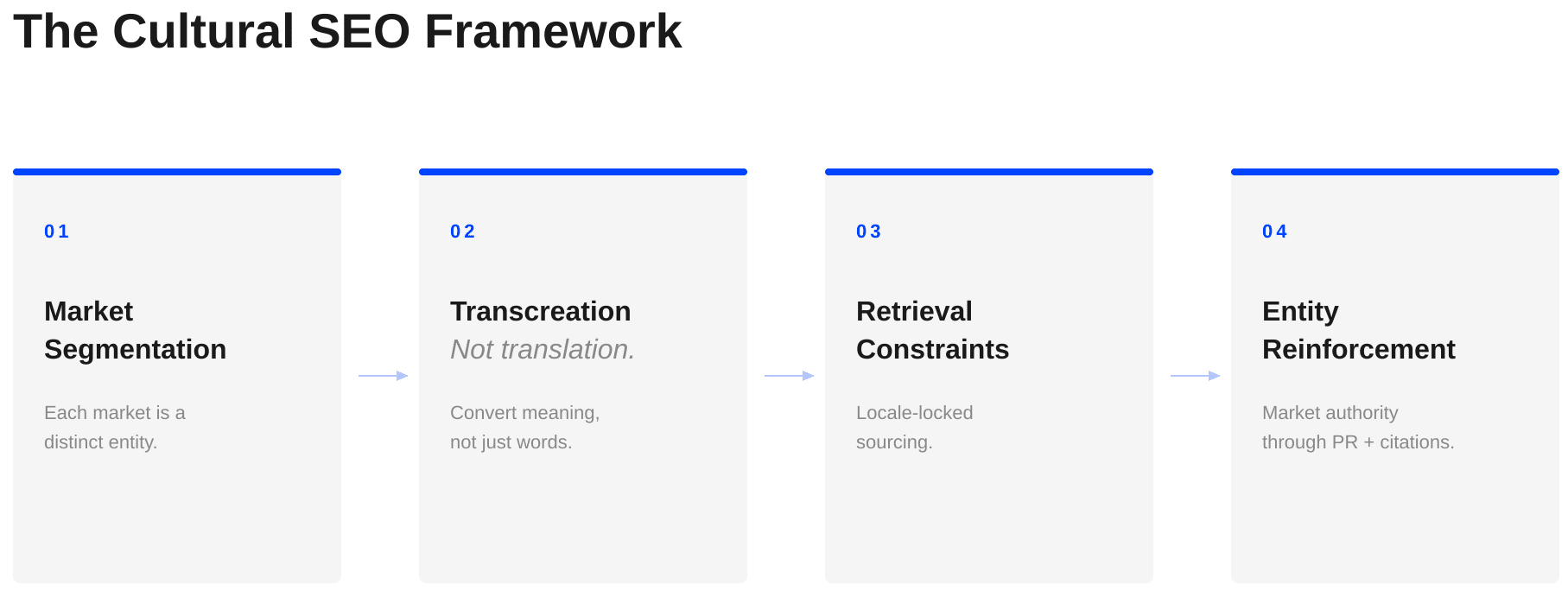
Assuming you’re committed to these standards, here are the four pillars: segmentation, transcreation, retrieval constraints, and entity reinforcement. Before applying any framework, ensure this commitment.
Pillar 1: Market Segmentation at the Entity Level
International SEO often considers segmentation as a mere folder structure: /es-es/, /es-mx/, /es-ar/, but that’s merely scratching the surface.
In generative search, the challenge is ensuring the AI associates a page with a specific country like Mexico, and accumulates enough market-specific signals to prefer it over a general alternative. If the architecture simplifies differences, visibility diminishes equally.
Pillar 2: Transcreation, Not Just Translation
Translation is about converting words, while transcreation is about interpreting meaning. Given two pages with 95% similar content, the AI merges them into one representation—defaulting to one perceived as standard. Therefore, differentiating with local examples or unique terminologies is essential.
Pillar 3: Retrieval Constraints
In constructing AI experiences like RAG (Retrieval-Augmented Generation), it’s crucial to establish clear boundaries about what content should be sourced for specific markets to avoid defaulting to “Global Spanish.”
Pillar 4: Market Authority Through Entity Reinforcement
AI models learn from both your site’s content and external perceptions. Thus, building location-specific authority through local media presence, partnerships, and consistent regional knowledge graph reinforcement is vital to establish market-specific authority.
Ultimately, Cultural SEO ensures that content not only serves the market but resonates with it. By embracing these pillars, I can ensure my brand isn’t just another “Spanish” entity but a recognized authority in each targeted market.
This journey isn’t about merely adapting your website but architecting systems to reflexively consider the market’s dynamics from the ground up.
I often find myself overwhelmed by repetitive SEO tasks that eat up valuable time. That’s why I’ve started identifying tasks that can be automated, allowing me to concentrate on strategy, quality assurance, and crucial decision-making.
While tasks like note-taking and setting team reminders are obviously automatable, I’ve discovered that content audits, page outlines, and keyword research can also benefit from automation.
I recommend beginning with basic strategies that help save time on daily repetitive work before diving into more advanced AI tools for automation. It’s essential to conduct a final check personally, as relying solely on AI can sometimes lead to less-than-perfect outcomes.
One way I assess which tasks to automate is by asking myself: Would I assign this task to an intern? Tasks suitable for new employees are often ideal for automation. Whether it’s research or drafting, I let AI handle 70% of it, then I fine-tune the remaining 30% myself.
Some tasks that I’ve found can be automated include data analysis, ensuring best practices are used in updates, creating detailed SEO reports, identifying content gaps, scaling SEO-optimized templates, building editorial calendars, and documenting prompts and standards.
To discover more automation opportunities, I audit existing workflows, review onboarding processes, gather team input on disliked tasks, and explore AI capabilities.
However, automation won’t fix every issue. Core challenges like broken systems, incomplete assets, and a lack of resources still need human intervention.
For instance, I recently automated my team’s content calendar. Using Excel formulas, I quickly identify which content needs updating. By integrating a performance audit with custom AI tools, I can streamline these updates even further.
Similarly, for keyword research, I employ AI to sift through data and generate relevant keywords, saving me valuable time.
For internal linking, tools like Ahrefs can automate the identification of pages that require more links, enhancing site crawling efficiency without manual labor.
By automating outlines and briefs, I ensure consistency and quality across my team’s work, streamlining communication and reducing redundant effort.
On the brand compliance front, custom AI tools help me catch simple errors in high-risk drafts, ensuring they adhere to brand standards before final review.
Manual data validation can be a painstaking process, but with automation, I’m able to swiftly identify and address anomalies in reports, enhancing accuracy.
When it comes to metadata and schema, automating these tasks minimizes errors and ensures that content is optimized for search engines.
Finally, for formatting and shortcoding, I use Excel functions to concatenate code, vastly speeding up what used to be a time-intensive process.
To make automation truly beneficial, it’s critical it complements, rather than complicates, the workflow. Using custom AI solutions allows my team to focus on more impactful, strategic tasks.
I’ve noticed a common misconception that GEO is merely a technical issue. However, upon scrolling through LinkedIn or X for just a short while, you’ll quickly stumble upon the latest viral GEO hack.
For example, advice like creating an AI info page so that LLMs can effortlessly grasp your brand, or generating markdown versions of your content to boost AI visibility, frequently surfaces.
There’s also the idea of commissioning an automated Claude audit to scrutinize your robots.txt file and produce an llms.txt file for you.
Yet, the truth is, these tactics often have a marginal impact because they fail to address the way LLMs determine which brands to endorse.
The performance of GEO is influenced more by the consistent positioning, categorization, and validation of your brand across the web, rather than by minor technical modifications.
If we’re honest about it, GEO performance is chiefly driven by brand positioning and consensus. Thus, it’s not surprising when many well-publicized strategies don’t deliver the expected results.
When searching for GEO tactics aimed at LLM visibility, the internet serves up the same recycled ideas.
Unfortunately, while the suggestions aren’t necessarily wrong, they are mostly elementary. Many people misunderstand and even exaggerate them. For instance, Google’s recommendation to use FAQs with schema has led to companies overloading their content with irrelevant FAQ sections, thinking it will enhance GEO.
As a result, they end up including pointless questions that don’t benefit the end users. This isn’t just an inefficient tactic, but it can also detract from user experience, as evidenced by misaligned FAQ sections.
Another commonly over-hyped method involves placing ‘key takeaways’ at the start of each article. Although it may aid human readability, there’s no substantial proof that it significantly boosts AI visibility.
Furthermore, some strive to over-format pages for LLM readability by forcing content into constrained Q&A formats or infusing bullet points where they don’t belong.
People often believe that LLMs require extensive formatting assistance to retrieve content, resorting to copywriting tricks like ‘chunking,’ which can over-complicate editorial processes.
Then there are those who chase Reddit for GEO, leading to a proliferation of spamming for citations, despite clear warnings from experts like Eli Schwartz against such practices. This misperception highlights that GEO isn’t merely a technical issue.
Reddit’s strength lies in its authentic user voices, a reason why moderators actively target inefficiencies such as astroturfing or ‘SEO shaping’ where software evaluations occur.
GEO is inherently a problem connected to brand positioning and category alignment rather than just technical SEO.
GEO requires strategic efforts from the executive level for the best results. While technical enhancements are a necessity, the greater gains come from harmonizing brand alignment, messaging, and reputation management.
This means GEO isn’t solely the responsibility of the SEO team but also a collaborative effort involving branding, PR, partnerships, and customer marketing.
As Ross Hudgens recently pointed out, inconsistency between sources can hinder LLMs from creating a unified narrative about a brand.
Category alignment is another critical aspect. Even with high web rankings and URL citations, a recommendation may still elude brands unless their alignment within a category is optimal.
The AI landscape acts as a ‘normalizer,’ diminishing the prowess of past SEO tactics that focused purely on rankings and clicks.
Tellingly, listicles can neither brute force brands into AI recommendations nor substitute genuine industry recognition. Citations alone are not enough if accompanied by no recommendation.
Therefore, reporting on ‘citations’ merely as a success metric is misleading without corresponding brand recommendation. The AI overview is more likely to suggest brands that justly deserve the spotlight.
Indeed, many brands remain unaware of how they’re represented across LLMs. Understanding how LLMs compile data about your brand amenities can ultimately influence your GEO approach.
To amplify understanding, engage with bottom-of-funnel prompts, systematically analyze responses and sources, and corroborate your representation with insightful research.
Recognize that in high-competition categories dominated by third-party recognition, you may be compelled to participate in affiliate programs for visibility.
Technical excellence still underpins successful GEO strategies. However, fundamental elements like XML sitemaps and internal linking merely lay the groundwork, rather than driving GEO itself.
Focus on brand positioning and category alignment rather than isolated technical SEO audits.
Consider whether LLMs genuinely recommend your brand and ensure that your messaging reflects the appropriate category and customer perception you wish to cultivate.
Review third-party influences versus your own content to understand their role in shaping brand visibility. Develop a coherent narrative across various channels to reinforce your market status.
It’s crucial to rethink strategic moves like forcing visibility through listicles and formatting tricks that aren’t yielding recommendation statuses.
Ensure that your content truly assists buyers in comprehending your unique positioning and distinct advantages.
Ultimately, GEO goes beyond the technical realm into broader brand ecosystems that shape perceptions and narrative control.
Stop pursuing quick fixes with GEO hacks. Instead, prioritize building a consistent, clear, and compelling brand story that resonates across platforms.
I’ve often faced the challenge of watching enormous digital budgets return less and less, while more nimble competitors seem to pull ahead effortlessly. It’s frustrating knowing the potential is there, yet being unable to act swiftly enough.
Examining how AI Overviews and responses from tools like ChatGPT and Claude cite sources, I’ve noticed an unsettling trend: smaller, more agile companies are capturing the most valuable, bottom-of-funnel commercial queries.
This reality is a call to action, challenging the notion that simply having a well-known brand name can protect my market share. Agility is increasingly becoming more important than relying solely on brand heritage.
To stay relevant, AI models require quick, machine-readable data to form a credible consensus. The bureaucracy I’ve encountered, which I call the “bureaucracy tax,” often hinders established companies like ours from deploying such knowledge quickly.
Unintentionally, as my business expanded, the structures built for stability began to stifle our agility.
Why Legal Approves Data Faster Than Marketing Claims
In my experience, when deployment lags, it’s often marketing teams pointing fingers at legal, risk, or compliance departments. Yet, in sectors where regulation is strict, compliance is a necessity.
The operational shortcoming isn’t with the legal department but with what we’re providing them. Winning in the AI search space requires that we separate factual data from marketing narratives.
The truth is, legal teams debate adjectives—not APIs. They take months to scrutinize creative marketing copy. Conversely, they can review static data tables or product specifications in days.
I recall how a global payments company struggled with this. A proposed 2,000-word marketing article was a compliance nightmare. However, when the same data was presented as a structured table, approval came within 24 hours.
When a CFO asks Perplexity to “compare enterprise payment gateway fees,” it skips over blocked competitor blogs and cites your factual table as the authoritative source.
From my perspective, the bureaucracy tax is a tangible and damaging effect on profit and loss statements. For a new initiative, the deployment cycle can take up to 180 days from idea to execution, hampering responsiveness to market shifts.
Imagine being a global shipping company. While awaiting IT staging, your competitors publish a straightforward “Current freight delay and tariff matrix,” seizing AI consensus and lucrative leads before you can react.
An analysis of AI citations across platforms revealed that disruptors deploying data within 14 days achieve a significantly higher share of AI voice compared to legacy companies that take much longer. The cost of delay is persistent, demanding both time and financial resources to recapture lost ground.
The Technical Bypass: The Schema-Locked GEO Template
I’ve come to understand that the loss in this race is partly due to outdated technology. Many of us are stuck on heavyweight, legacy CMS platforms.
Generative Engine Optimization (GEO) demands a quick rollout of JSON-LD schema and data tables. If an IT ticket is required merely to update author info, the advantage is lost to faster disruptors.
The remedy isn’t to circumvent systems insecurely. We must advocate for schema-locked GEO templates. This requires IT to create a non-modifiable template designed specifically for data, ensuring rapid deployment without risking architecture.
From Compliance to Consideration in Record Time
Workflows must balance keeping risk officers satisfied while drastically speeding up market delivery. These strategic frameworks are critical to protecting your AI consensus.
If legal bottlenecks your progress, shift your strategy to use pre-approved, factual tables. If developing resources are scarce, implement a “schema-locked GEO template.” If your analytics indicate stability but pipeline velocity drops, audit your LLM visibility immediately.
It’s clear to me that digital acquisition rules have shifted. Winning isn’t just about budget size anymore; it’s about being the fastest to establish a machine-readable agreement.
Legacy systems and poorly aligned compliance procedures can’t continue to define our market share. The bureaucracy tax siphons resources needlessly, hurting our bottom line.
I urge you to audit your deployment processes promptly. Treat GEO as a high-speed data operation, not just a marketing campaign. Remove the barriers, and empower your teams to be the definitive resource consumers and machines turn to.
I’ve learned that executives don’t crave SEO jargon. What they need is clarity, honesty, and a clear path forward. Here’s how I deliver just that when faced with disappointing results.
Traditional SEO metrics haven’t been reassuring, and while more studies could affirm this, the existing data already does. Organic traffic is dropping for many of my clients, with studies like Seer Interactive’s showing a 61% drop in CTR for queries with AI Overviews. Executives notice these downward trends on their dashboards, often for extended periods.
Many consultants I’ve spoken with find themselves unprepared for these tough conversations. Diagnosing the traffic drop is one thing, but sitting across from a CMO and explaining not just what’s happened, but why it happened and what you propose to do about it, requires a whole different skill set. This skill is crucial, yet often overlooked.
Having spent 13 years in SEO and the last six managing an agency, where I personally lead strategy and present to senior executives, I’ve discovered five key lessons on breaking bad news in what I consider one of the most challenging times to be an SEO consultant.
1. Executives are more predictable than you think
A while back, a client expressed concerns after isolating our SEO work from the rest of their site’s organic traffic. Our reported overall numbers looked fine, but the performance of our specific work hadn’t improved over eight months.
Upon reviewing, I found my team indeed avoided acknowledging the underperformance, opting instead to present only the numbers that looked good. No one wants to admit failure in a meeting, yet concealing it often proves more damaging.
The client eventually finds out, and it’s not the underperformance that breaches trust, but the omission. Revealing issues early allows us to address what executives value most: problem-solving capability, diagnosis, and a strategic plan for recovery.
This experience transformed our client engagement approach. We now rigorously separate and analyze our work’s performance, ensuring any underperformance is flagged early along with a proposed solution. Every executive I’ve met has been burned by vendors hiding results; they value the rare consultant who promptly addresses and plans for solutions.
2. Diagnose before you communicate
A prospect once approached me about a traffic decline, assuming AI Overviews were to blame. Instead of presuming, I thoroughly diagnosed the issue. My investigation revealed a PR-induced traffic spike had skewed the comparison, and once adjusted, current performance was actually solid growth.
This diagnosis turned the discussion from a crisis into a positive affirmation of growth—within minutes. Conversely, I’ve also encountered genuine issues. For example, technical errors causing crawl waste impacted a client’s performance. Recognizing the pattern from past experience, I proposed a tried-and-tested solution.
Executives don’t need to understand every technical detail; they need assurance of a diagnosed problem and a plan. Confidence stems from the quality of diagnosis and the specificity of the corrective plan, not the delivery itself.
3. Surprise bad news and failed experiments are different conversations
Surprises
The worst kind of bad news, surprises arise from work done without strategic anchoring. Without a defined plan, diagnosing a traffic dip becomes impossible, as no hypotheses were being tested—only tasks executed.
Failed experiments
In contrast, a failed experiment implies a deliberate strategy and defined expectations. While outcomes may disappoint, assessing performance and proposing informed next steps provides clarity and direction.
Organizing work into structured cycles with specific bets and outcomes avoids surprise dips, fostering a culture of planned experiments. Clients are then prepared for any result, seeing it as a learning opportunity rather than an unexpected issue.
4. Never arrive without a recommendation
When clients ask, “What’s next?” after receiving bad news, an immediate, concrete recommendation is crucial. Lack of one heightens the perceived severity of issues. A seamless answer shows preparedness and instills confidence.
I ensure thorough diagnostic and recommend two realistic paths, helping clients choose solutions rather than dwell on problems. This proactive approach shifts focus to resolution rather than dissatisfaction with setbacks.
5. The tough conversation builds the relationship
Strong client relationships often stem from overcoming difficulties, demonstrating capability under pressure. Being upfront and strategic when challenges arise consolidates trust more than perpetual smooth sailing.
Clients appreciate honest, smart communication over avoiding tough topics. I’ve found that taking ownership of mistakes, providing diagnoses, and recommending solutions earns more respect and confidence.
The conversation is part of the work
As SEO becomes more challenging and results fluctuate, my conversations with clients have grown in importance. Providing clear diagnoses, backed by actionable plans, ensures we manage setbacks effectively.
Clients now assess not just outcomes, but how I handle them, emphasizing the role of strategic, honest communication as an indispensable element of effective SEO consultancy.
For years, I’ve been told to stick to a set of guidelines: always use top-notch creatives, maintain a polished brand, follow scripts, and adhere to platform-recommended formats.
Lately, while navigating ad accounts or simply scrolling through feeds, I’ve noticed something intriguing. The ads that grab my attention often defy these rules. They’re less polished, scrappier, and sometimes referred to as ‘ugly ads.’ What’s fascinating is that they’re outperforming the traditional, polished ones.
More brands are deliberately breaking so-called best practices to stand out. It’s important to remember that these practices represent an average of what worked for others in the past. By the time a strategy becomes a platform-recommended rule, it might have already lost its edge.
This is why defying best practices can lead to success — but only if you understand the reasons behind them.
Why Breaking Best Practices Enhances Ad Performance
Before diving into what to change, it’s crucial to understand the rationale behind existing rules. Platforms like Meta and TikTok have dual objectives:
They aim for you to spend money on ads.
They want to keep users engaged on their platforms.
The best practices they promote are designed to ensure a seamless experience, encouraging ads to resemble others. The issue is that familiarity eventually breeds invisibility. When I adhere too closely to the rules, my ads risk blending into the background noise, overlooked by users.
Highly-produced ads often scream ‘this is an ad,’ prompting users to skip them before my message hits home. In contrast, when my ad resembles something a friend might share, users’ defenses remain down longer, potentially transforming a scroll into a conversion.
This is why many top-performing ads today don’t appear traditionally polished or on-brand. They break patterns instead. Consider:
Grainy phone footage.
Notes app screenshots.
Green-screened reactions or commentary videos.
Other lo-fi formats that outperform studio-quality creatives.
To implement this, I started intentionally reducing my production value and experimented with formats like point-of-view (POV) shots tailored to various personas.
Many brands have adopted guidelines that make them seem faceless and untouchable. They refrain from showing a messy office, an unpolished founder, or anything that challenges their corporate script. However, others are discarding that playbook, embracing founder-led ads that deviate from the polished executive version.
There’s a catch.
Breaking the rules works only when it’s genuine. I’ve learned that faking authenticity is easy to spot and can backfire. This was evident in a viral series of videos where McDonald’s CEO appeared to present a new burger, but his execution was criticized for being stiff and unconvincing.
As shown in a Dineline video, his performance appeared staged. Contrarily, Burger King’s president presented their burger with no hesitation, offering a genuine and relatable moment.
The distinction was evident: One was a product pitch, and the other felt authentic.
If my leadership doesn’t genuinely believe in the product, neither will my customers. Rule-breaking should allow us to be real, rather than simply appear unpolished.
You’ve probably encountered video hook best practices like ‘show the product in the first two seconds and state the value prop clearly.’ Sound familiar?
Imagine my ad starting with a screenshot of a negative comment, like one for a skincare product stating, ‘This probably smells like old socks, and does it even work?’ My ad would then show the founder confidently disproving this in an unscripted manner, applying the product.
Though this breaks the positive-association rule, it leverages viewers’ curiosity about digital conflicts. By the time they realize it’s an ad, they might already be engaged.
I learned not to abandon all polished assets just yet.
Rule-breaking is strategic, and often misunderstood when the ’80/20 rule’ is ignored.
Switching completely to shaky phone footage isn’t wise. Keeping 80% of the budget in traditional ads while using 20% for testing unconventional ones can be effective.
Next testing campaign, I plan to try:
The silent test: Running a silent ad with bold captions to stand out in a noisy feed.
The UI ghost: Using static images resembling platform notifications to pause scrolling.
The algorithmic trust fall: Disabling auto-optimizations in a campaign to test creative performance without constraints.
Don’t Follow the Rules; Understand Them
Best practices are a guide, not a strategy. To move beyond them, I do it systematically.
I start by questioning the rule’s existence, evaluating its current relevance, and testing its opposite in a structured manner. Comparing traditional and lo-fi approaches helps me understand user engagement better.
In an environment where brands play it safe, those who understand and strategically break the rules will capture attention and conversions. My goal is to learn faster than the competition, skipping guesswork.
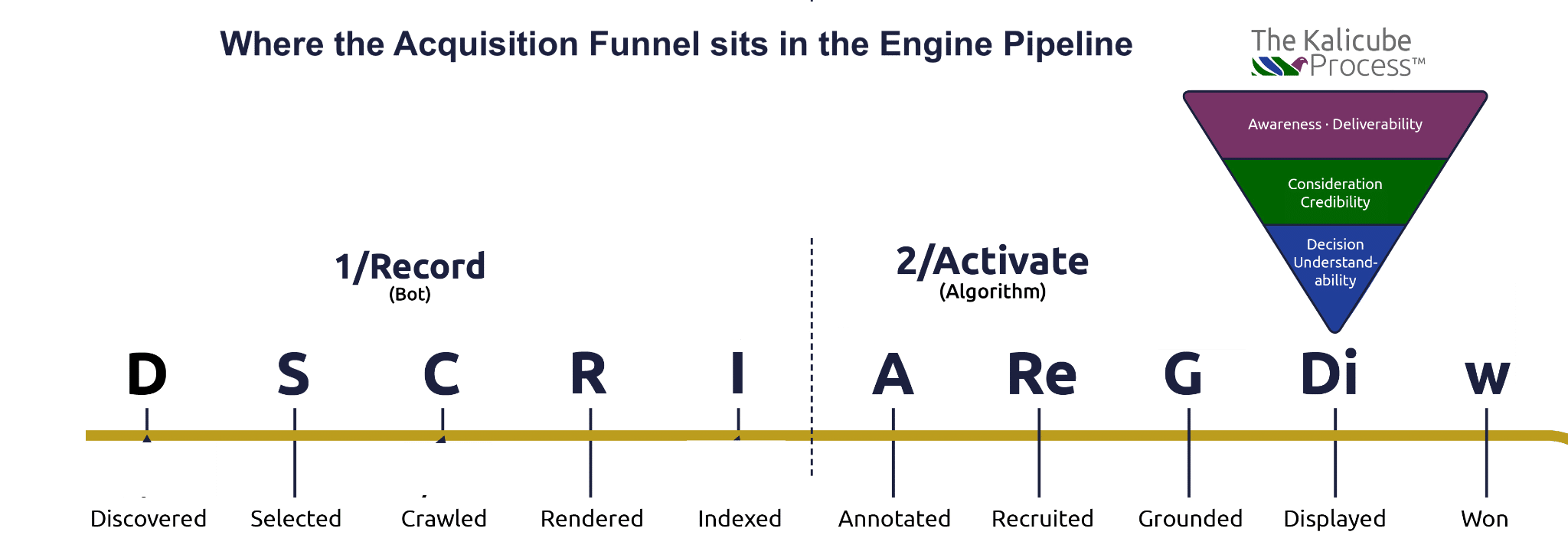
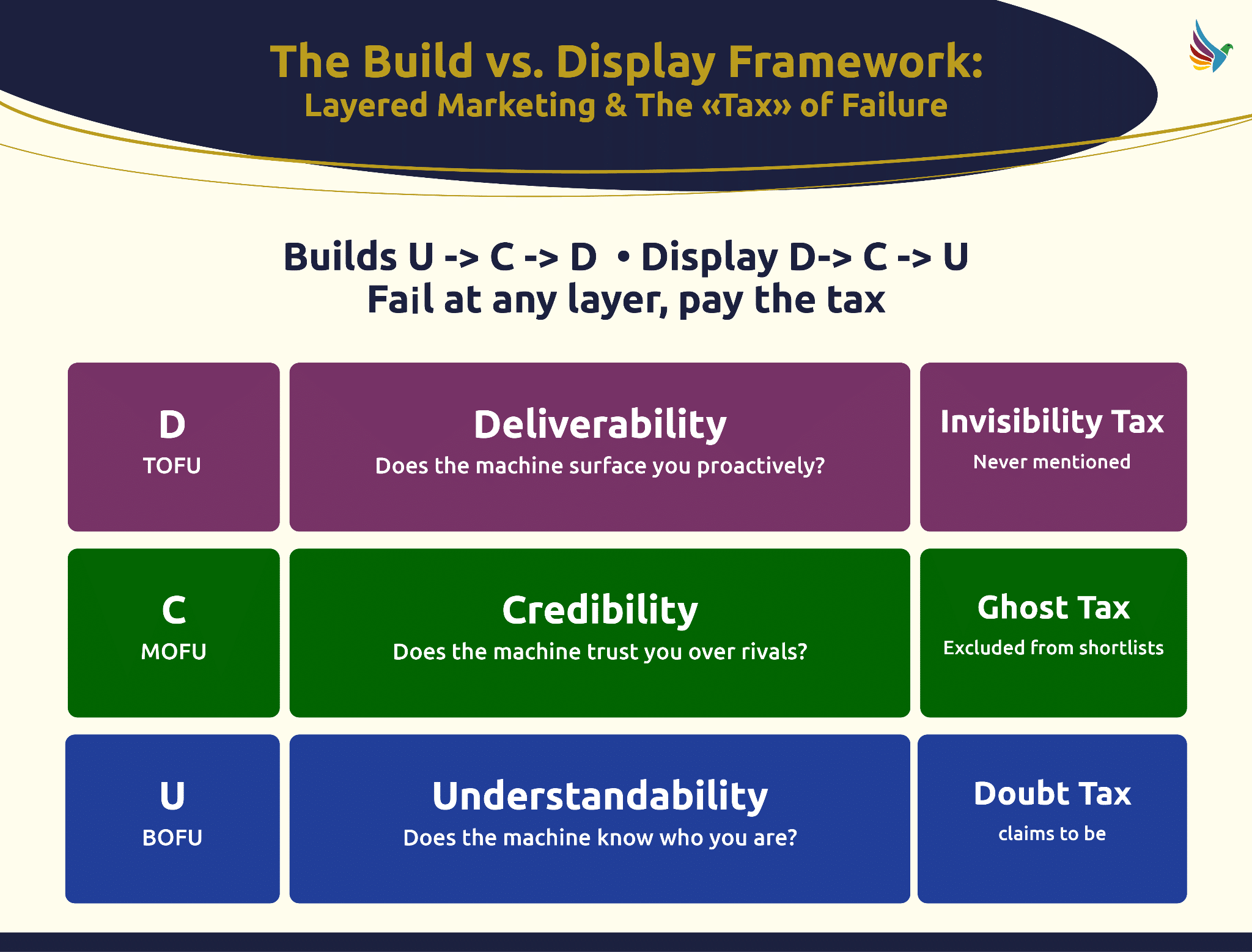
AI has reshaped how we think about acquisition strategy. It’s no longer about starting at the top of the funnel with broad awareness campaigns. Instead, we begin at the bottom, focusing on building understanding, credibility, and reach in the right sequence.
For the past 30 years, the industry followed a top-down model: raising awareness, gaining visibility, and then guiding potential customers through the purchase funnel. This approach made sense during the broadcast era and was somewhat effective in the search era, but today, in AI-driven environments, it’s outdated.
Today’s search engines and AI-powered assistants build brand recommendations from the ground up. They need to grasp who we are before they can evaluate our credibility. Only after establishing credibility can they recommend us. If we prioritize top-down strategies, we’re essentially wasting budget on awareness without a strong foundational understanding for AI to work with.
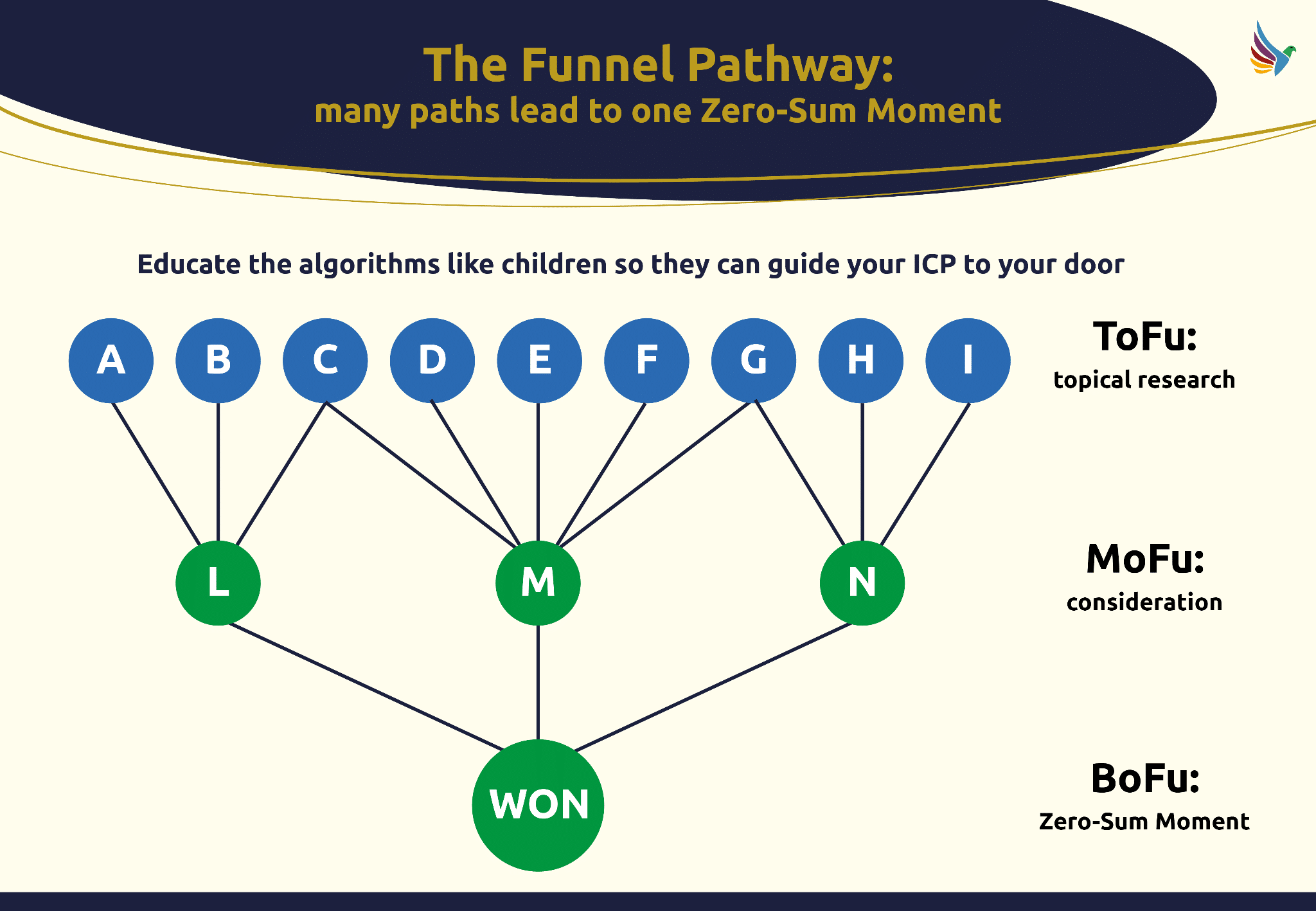
AI systems hold the key to successful brand recommendations — if they don’t understand our brand, or find us less credible compared to our competitors, they’ll likely recommend someone else. This AI-led shift is what I call the ultimate zero-sum game: the unseen recommendation to prospects we might not even know about.
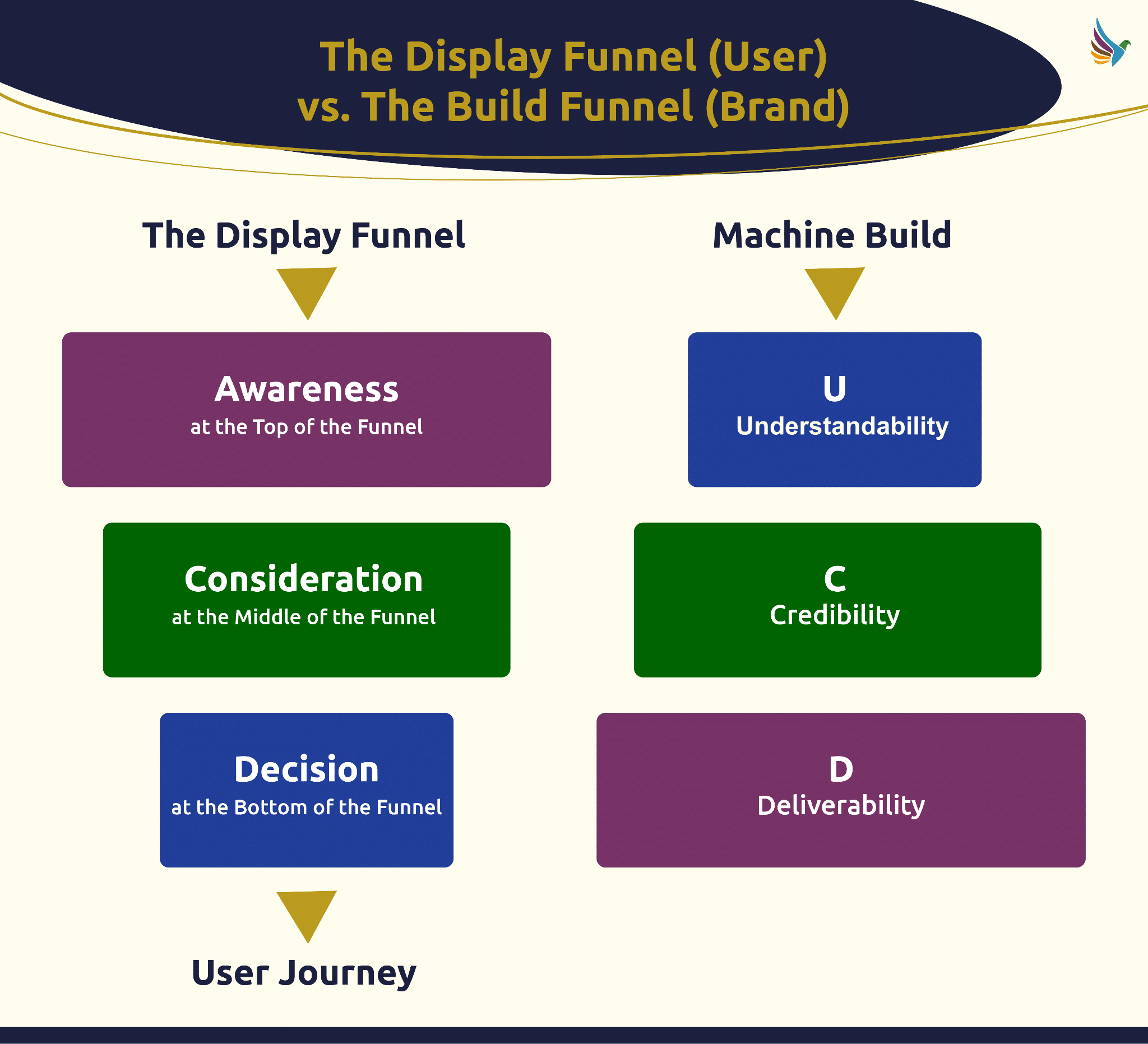
The acquisition funnel hasn’t altered for users. They still journey from awareness to consideration to decision. Essentially, Elias St. Elmo Lewis’s model from 1898 still applies. All marketing models have been based on this, although channels have evolved. The mantra remains: reach first, relationship second, commitment third.
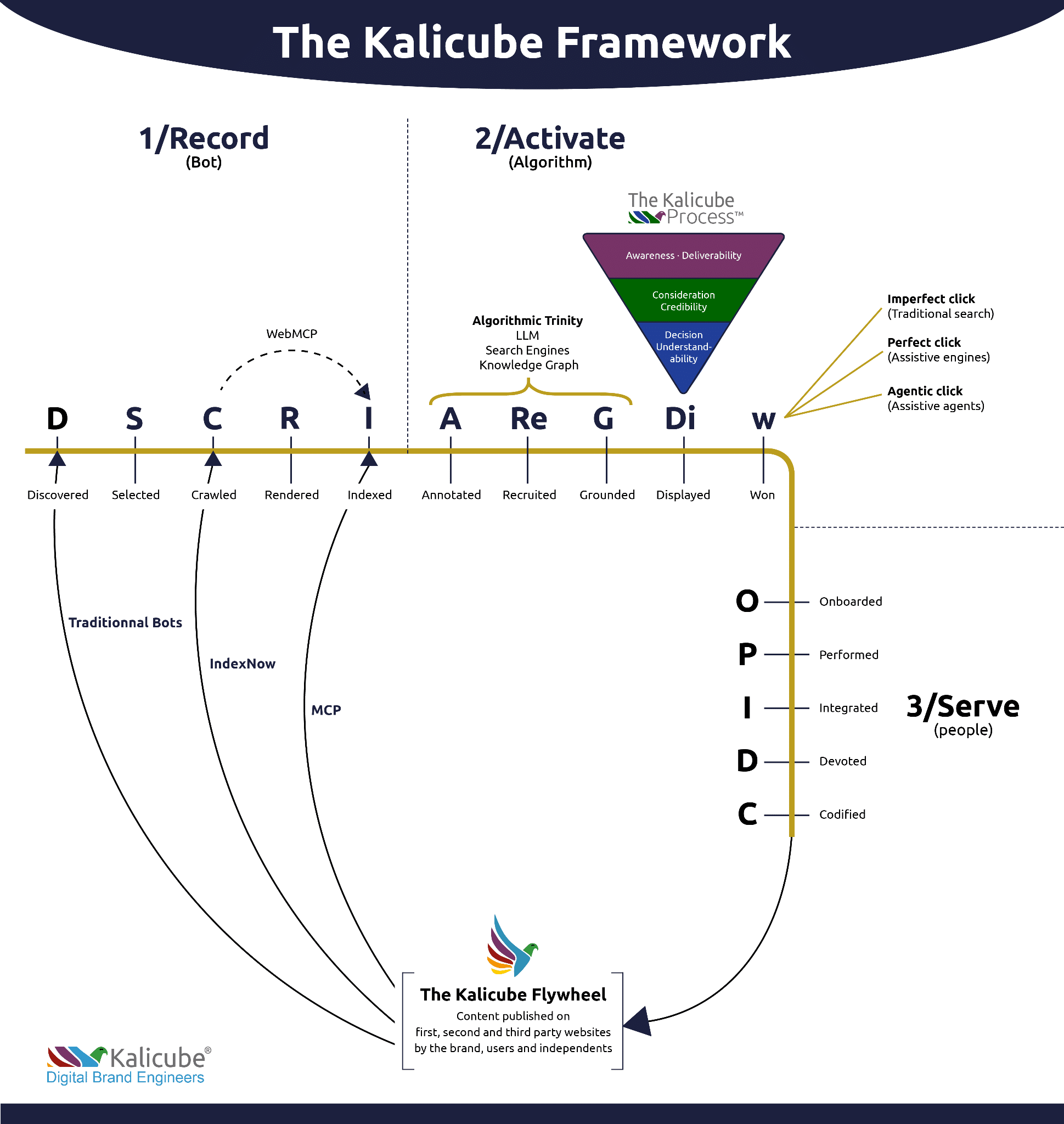
In my experience, the digital landscape changed with Google’s Knowledge Graph in 2012. It allowed machines to form independent opinions about brands, highlighting the need for brand understanding and reputation over mere awareness. Since then, my focus has centered on these aspects because AI-driven engines and agents rely on it to direct users towards credible destinations.
This marks a structural shift in marketing since 1898. While the user still travels from awareness to decision, in AI engines and agents, it’s our understanding and credibility that position us at the top of their funnel, achieved by training AI to guide users to us.
The coexistence of top-down and bottom-up strategies is real. We can still build awareness through controlled channels—paid media, broadcasts, and direct outreach. However, in the realm of organic engines, we must start from the bottom of the funnel, building a foundation for AI to guide users efficiently.
Every algorithm, AI engine, and agent operates based on entity and brand signals. Social media reach, too, hinges on brand recognition and engagement. Therefore, investing in a solid brand understanding orients us favorably within the AI framework, where roadmaps to our brand are increasingly machine-built.
This content reflects my approach to developing robust brand presences that resonate with both AI systems and human audiences.
As I delve into the world of SEO reporting, I realize just how much we’ve outgrown platforms like Data Studio. Let me share what I’ve discovered and the exciting changes on the horizon that promise more efficient workflows powered by AI and APIs.
Imagine this scenario: Our team depends on Data Studio for delivering SEO reports. Just as we’re gearing up for a crucial meeting, Data Studio unexpectedly crashes, leaving us with nothing to showcase. It’s frustratingly common and incredibly embarrassing.
Just last year, I was praising Looker Studio (now Data Studio) for its advantages in SEO reporting. Fast forward, and it seems outdated compared to the dynamic coding tools I’m now utilizing. Here’s why rigid dashboards are holding us back and why transitioning to code-driven SEO reporting is essential.
Data Studio once reigned supreme for customizing SEO reports, but technology advanced, revealing its limitations. From dataset crashes to tedious manual interfaces, let me take you through some challenges I’ve faced with Data Studio.
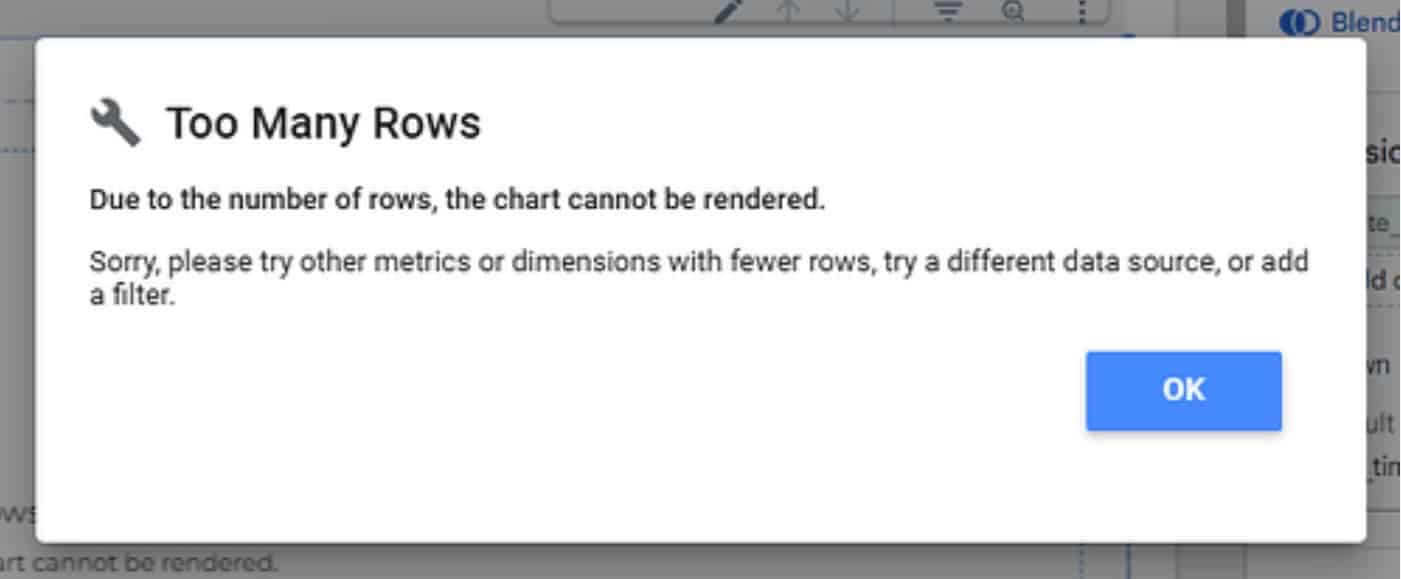
We’re all familiar with the struggle: vast datasets in Data Studio are prone to breaking, often due to the low limits on rows and fields. Hasn’t it been just one too many times when a minor data addition causes everything to crash?
Manual updates in a slow interface make any iteration seem endless. Even the introduction of AI features addresses only a fraction of report-building issues.
Debugging Data Studio reports feels like a never-ending click maze. Unlike code-based systems where agents breeze through files, I’m often left clicking mindlessly within the interface.
Data Studio’s weak API is another stumbling block. It’s representative of Google’s missed opportunities for API-centric platforms. This flaw severely limits external management capabilities.
Despite recent rebranding efforts, these platforms lag behind modern SEO reporting technologies. Let me show you how everything is shifting with AI, APIs, and coding.
The evolution we’re witnessing is astounding. AI-driven coding tools like Claude Code and OpenAI Codex have changed the game. I describe my SEO reporting needs, and these tools take over, executing multi-step workflows efficiently.
Without needing deep coding expertise, I’m able to set up programmatic report workflows from beginning to end. Tools generate code that directly connects to data sources, eliminating reliance on cumbersome dashboard connectors.
Within minutes, comprehensive reports appear as I get accustomed to these tools. Each offers unique advantages, from reasoning to integration speed, transforming manual, rigid processes into infinitely flexible options.
AI coding tools usher in new possibilities for SEO teams by removing barriers between data management and reporting.
Speed is an unmistakable upside. Coding assistants enable SEOs to achieve in hours what once took days, and what took hours, now takes minutes.
Interacting with data directly through coding instead of dashboard interfaces drastically cuts down wait times for refreshes and modifications.
I’m no longer bound by rigid templates. Alongside on-demand data plotting and diverse frameworks, I can tailor reports to perfectly match needs and provide insightful visualizations.
Setting up these tools requires some initial effort but soon transforms the team’s efficiency, offering clearer data constraints and enhanced process transparency.
I’ve discovered how agentic coding assistants can revolutionize real-world SEO applications, from pre-meeting reports to ad hoc stakeholder requests, reducing late-night work and ensuring quick, reliable data access.
AI is reshaping the landscape for all professionals, not just us in SEO. As we adopt this technology, especially in SEO reporting, studies from Stanford and MIT show increased productivity. The shift isn’t optional; it’s imperative.
Teams leveraging AI tools in SEO witness faster iterations and can tackle complex issues more robustly, transforming analysts into strategists with unprecedented capabilities.
Begin this transformation with a small, repeatable project, connect data sources, and slowly expand your use of code-driven reporting. Early adopters are set to lead in SEO efficiency and results.
Traditional SEO reporting tools no longer meet the fast-paced demands of today’s analytics and strategic needs. Through AI and coding, we can leap ahead in reporting accuracy and timeliness, securing a competitive edge.