Category: Opinion

  • Enhance AEO with Must-Have Tools for Today

    Enhance AEO with Must-Have Tools for Today

    I recently found myself attempting to map out a Lumascape of answer engine optimization (AEO) tools. It’s a daunting task, and my computer simply doesn’t have the bandwidth for that!

    Instead, I pivoted to focus on a select few tools I’ve been using effectively to boost my clients’ visibility in AI search results.

    Here, I’m sharing a concise list: four tools that I consistently rely on, alongside three others I’m currently evaluating for potential integration into my workflow.

    1. AI Assistants: ChatGPT, Claude, Perplexity

    These AI assistants have proven invaluable. When used with intentionality, they serve as powerful tools for research and analysis in AEO.

    For AEO, they assist in several key areas:

    • Competitive landscape research.
    • Content gap analysis.
    • Prompt testing.
    • Entity and topical coverage audits.
    • Structured content drafting.

    The difference from casual usage lies in applying a specific AEO research methodology.

    Why They’re Essential

    Understanding AI systems processing is key to AEO, and regularly engaging with these tools analytically is the most direct way to gain that knowledge.

    By querying AI with your audience’s prompts, you glean insightful data on sources, entities, and answer structures.

    Competitive Strengths

    These platforms each offer unique advantages:

    • ChatGPT is well-known for its broad synthesis of general knowledge.
    • Claude provides nuanced, analytical responses.
    • Perplexity excels with its clear citation methods, beneficial for AEO research.

    What You Can’t Do Without Them

    They are crucial for firsthand AEO status assessment, including:

    • Manual prompt testing: Assess your brand representation.
    • Competitive research: Use category-level queries to analyze competitor presentation.
    • Topical gap analysis: Identify missed opportunities.
    • Structural content analysis: Understand preferred AI answer formats.

    Caveats

    AI outputs are variable, influenced by many factors. These tools help build intuition and hypotheses that should be validated with quantitative data.

    Beware of the time-consuming nature of manual testing. Establish a framework and stick to it.

    2. Profound

    Profound specializes in AEO intelligence, tracking how AI platforms interact with and cite your content. It also measures brand mention frequency, sentiment, and competitor visibility.

    Why It’s Essential

    Profound provides direct insights into your brand’s presence in the AI answer ecosystem, shifting the focus from rankings to visibility in AI responses.

    Competitive Strengths

    Its cross-platform view offers comparative insights, allowing you to see how your citation share compares to competitors.

    What You Can’t Do Without It

    Without it, quantifying your brand’s presence in AI-generated answers becomes difficult. It also tracks citation shares and identifies content driving AI mentions.

    It’s a costly tool, but valuable for identifying areas where your brand is losing ground to competitors.

    Caveats

    As the tool evolves rapidly, the data remains a timely reflection of AI outputs. Remember, these metrics are signals, not precise rankings.

    3. Google Trends and Google Keyword Planner

    Google Trends shows search interest trends, while Keyword Planner gives search volume estimates, both critical for AEO strategy.

    Why They’re Essential

    Understanding demand is crucial for content optimization in AI answers. These tools provide reliable data on trending topics and search volume.

    ```json
{
  "alt": "The CapmatchOne logo with a gradient circle and bold text.",
  "caption": "Discover innovation with the CapmatchOne logo, featuring sleek typography and a modern gradient circle.",
  "description": "The CapmatchOne logo features bold, modern typography coupled with a gradient circle, symbolizing connection and innovation. The sleek design conveys a sense of progress and creativity. This image can be used for branding or promotional purposes, appealing to audiences interested in innovative solutions and forward-thinking designs."
}
```

    Competitive Strengths

    While Google Trends offers momentum analysis, Keyword Planner’s forecasting can prioritize content based on future demand.

    What You Can’t Do Without Them

    Build a dynamic AEO strategy by monitoring demand trends and identifying emerging topics and seasonal patterns.

    Caveats

    These tools reflect traditional search behavior, not AI-acre queries, and Keyword Planner requires an active Google Ads account.

    Always use them as a guide, not a complete picture, of AI demand.

    4. Google Search Console and Google Analytics

    These are essential for tracking search performance and on-site behavior, revealing insights into AI platform traffic and content effectiveness.

    Why They’re Essential

    They help diagnose whether AI-cited content is also visible in traditional search and track AI-driven visits and engagement.

    Competitive Strengths

    GSC offers unmatched query data, while GA4’s cross-channel tracking reveals AI platform engagement.

    What You Can’t Do Without Them

    Understanding AEO’s business impact and addressing indexing issues rely on these insights.

    They illuminate high-impression, low-CTR content, indicating potential AI Overview cannibalization.

    Caveats

    GSC data is Google-centric and has some limitations, while GA4 requires precise configuration for accurate tracking.

    Rapid-Fire Roundup

    With numerous tools still to explore, consider testing these emerging options to assess their AEO value:

    5. AI Trust Signals

    This tool evaluates credibility signals influencing AI citation decisions. It’s a new dimension worth exploring as AI citation mechanics advance.

    6. Ahrefs

    Ahrefs shines with backlink analysis and content gap insights, indirectly supporting AEO by building authority signals.

    Its Content Explorer helps identify high-performing content likely to be referenced by AI.

    7. Roadway AI

    This AI-native platform focuses on marketing growth activities, including attributing AEO signals to revenue.

    Keep an eye on this developing option as it may gain importance quickly.

    The Reality of AEO Tools: Fast-Moving and Imperfect

    The AEO landscape is evolving, with tools still catching up. Prioritize consistent measurement, analysis, and testing to extract actionable insights.

    Aiming for perfect setup may be unrealistic, but if a tool shows how it enhances your AEO efforts, that’s a positive start.

    Consult industry colleagues with firsthand tool experience before committing, as better or cheaper alternatives may emerge soon.


    Inspired by this post on Search Engine Land.


    crushpress.ai community screenshot
  • Maximize AI Visibility: Influence, Signals, and Citations

    Maximize AI Visibility: Influence, Signals, and Citations

    I’ve seen how crucial it is to understand that AI visibility starts long before users hit that search bar and ends with citations.

    These insights are vital in shaping what gets seen, summarized, and cited by AI systems.

    Currently, the focus has shifted towards improving the AI ROI story, and I’m right in the thick of it, learning what strategies truly work.

    This year, attending SMX Advanced will be more enlightening than ever, bringing unique perspectives and strategies.

    Let’s dive into why influence matters everywhere, and how it impacts AI citations.

    Rand Fishkin’s study, ‘Influence Happens Everywhere,’ reveals that, although Google commands the majority of search traffic, it’s the influence happening outside of search that truly dictates what people look for online.

    For many, wandering through social media or news sites builds their understanding and interest long before the actual search occurs.

    Despite the exciting growth of AI tools, achieving a stable presence online requires understanding how fragmented channels contribute to this influence.

    When crafting content, it’s essential to dominate the influence phase so thoroughly that an AI assistant doesn’t just suggest your brand—it demands it.

    That’s the strategic thrust behind the discussions at SMX Advanced in Boston and why I align my content calendar accordingly.

    My colleagues at Search Engine Land are among those shaping these discussions. Insights from thought leaders like Dave Davies and Carolyn Shelby are invaluable.

    They emphasize the importance of structured visibility signals and entity recognition, helping AI systems select the right brands to highlight.

    In my own analysis, the various AI models like ChatGPT, Perplexity, and others have unique methodologies for selecting sources, reinforcing the idea that an engaged, multi-platform strategy is critical.

    So, what does full-stack content truly mean today? It’s more than crafting blog posts; it’s about commanding entire topics with authority and depth, enhanced by AI tools like Jasper’s Enterprise Suite.

    ```json
{
  "alt": "The CapmatchOne logo with a gradient circle and bold text.",
  "caption": "Discover innovation with the CapmatchOne logo, featuring sleek typography and a modern gradient circle.",
  "description": "The CapmatchOne logo features bold, modern typography coupled with a gradient circle, symbolizing connection and innovation. The sleek design conveys a sense of progress and creativity. This image can be used for branding or promotional purposes, appealing to audiences interested in innovative solutions and forward-thinking designs."
}
```

    The ability to integrate real-time data, identify competitive content gaps, and create diverse multimedia content packages mean we’re shifting from simply generating content to dominating entire narratives.

    But AI tools can only serve the overarching strategy if our content offers the original insights that help us stand out in AI retrieval systems.

    This year, Purna Virji’s insights at SMX Advanced will challenge us to think critically about the real ROI in AI investment.

    I’m particularly interested in seeing how Google Vids is democratizing video content by eliminating the high entry barriers of previous video production methods.

    Now, video content can be produced and localized for a multitude of markets rapidly, a paradigm shift in how we engage audiences across the globe.

    The standards AI is setting for content — whether text, video, or multimedia — require a strategic framework that aligns with evolving platforms like GEO and AEO.

    For those in the trenches like me, adjusting focus towards an integration of structured data and earned media becomes imperative.

    The real challenge isn’t in the buzzwords but effectively navigating the volatile landscape of AI-driven citations.

    I recognize the adjustments needed in approach, especially when considering the stark differences in referral and conversion rates from traditional search versus AI platforms.

    So, practical actions for the rest of 2026? Audit your AI presence thoroughly, stop gating original research, secure your place in vibrant communities, and refine your focus towards citatability rather than simple visibility.

    Ultimately, the brands ready to adapt will continue to thrive in this AI-enhanced environment.

    Indeed, the bots are crawling, and it’s time I ensured my brand is worth citing.


    Inspired by this post on Search Engine Land.


    crushpress.ai community screenshot
  • Maximize B2B Results: 5 Essential Tips for Performance Max

    Maximize B2B Results: 5 Essential Tips for Performance Max

    Performance Max for B2B- 5 best practices

    In the evolving world of B2B marketing, Performance Max has emerged as a powerful, yet often misunderstood, tool. Over the years, I’ve witnessed its transformation from an uncertain trial to a crucial part of my B2B marketing toolkit.

    The core principles still hold true: skepticism is essential, first-party data remains invaluable, and experimentation is a must. Google has improved in integrating these elements, making it important for me to adapt my strategies accordingly.

    Let me share five best practices that have helped me enhance my Performance Max campaigns effectively.

    1. Guide AI with the Right Inputs

    In 2022, as Google aggressively promoted automated PMax campaigns, I predicted a surge in AI integration. This shift has indeed occurred, driven by competitors like ChatGPT. AI Max for Search and PMax have taken center stage, with improvements making PMax more viable for the B2B landscape.

    Some updates I’ve embraced include search themes for precise targeting, brand exclusions to control costs, and account-level channel reporting, which allows me to see performance across all campaigns. By segmenting conversion metrics, I can identify and optimize on overperforming channels.

    Get started with Semrush to ensure your brand shows up where it matters most.

    2. Address Persistent Lead Quality Issues

    B2B lead quality has always been a concern in search campaigns. PMax’s lack of control has made it even more challenging. To combat this, I’ve relied heavily on offline conversion tracking (OCT). It’s a vital element for successful B2B campaigns.

    In addition to OCT, I’ve been using enhanced conversions for leads, along with reCAPTCHA, to reduce low-quality leads from my PMax campaigns.

    3. Build Stronger Audience Signals

    With the end of third-party cookies and the phasing out of Similar Audiences, I’ve focused on leveraging PMax’s audience signals. By feeding high-quality first-party data to the AI, I’ve managed to target the right prospects efficiently.

    ```json
{
  "alt": "The CapmatchOne logo with a gradient circle and bold text.",
  "caption": "Discover innovation with the CapmatchOne logo, featuring sleek typography and a modern gradient circle.",
  "description": "The CapmatchOne logo features bold, modern typography coupled with a gradient circle, symbolizing connection and innovation. The sleek design conveys a sense of progress and creativity. This image can be used for branding or promotional purposes, appealing to audiences interested in innovative solutions and forward-thinking designs."
}
```

    Cleansing and segmenting CRM data to create robust audience lists close to revenue points are pivotal to capturing valuable new users.

    4. Make Creative a Performance Lever

    Creative content plays a crucial role in engaging the right audience. Given YouTube’s significance in PMax campaigns, producing quality video content is more critical than ever. Google’s new tools for AI-generated assets and creative A/B testing have made this process much easier.

    Testing these elements helps me identify what truly resonates with my audience and optimize accordingly.

    5. Use Reporting to Drive Decisions

    Transparency in results has been a sticking point with PMax, but recent reporting updates from Google offer more insights than before. Utilizing search term insights and auction insights provides me with clarity on performance metrics, enhancing my optimization capabilities.

    With asset-level reporting, I can see how creative assets perform and make data-driven decisions to boost my campaigns’ success.

    Don’t miss out on optimizing your search visibility with Semrush’s comprehensive AI toolkit.

    Make Performance Max Work for You

    These updates have made PMax a more practical tool for B2B marketers like me, especially when equipped with strong first-party data. I always strive for more control and transparency, balancing Google’s tools, and leveraging every resource available to optimize my campaigns.

    Stay ahead by exploring the latest Google releases that add visibility and control, making Performance Max truly work for you.


    Inspired by this post on Search Engine Land.

    crushpress.ai community screenshot
  • Transforming SEO: A Guide to Semantic and Programmatic Success

    Transforming SEO: A Guide to Semantic and Programmatic Success

    As I dive into the world of Programmatic SEO (pSEO), I understand that many people in the industry view it with suspicion, associating it with low-quality pages and duplication. Often, it’s seen simply as replicating city names on static templates.

    Google’s policies on content spam are clear: strategies that generate unoriginal content just to influence rankings will not be tolerated.

    In the modern landscape, pSEO isn’t about mass page generation. Instead, I aim to address thousands of search intents with local specificity and semantic depth, achieving what isn’t possible manually.

    Here, I share my blueprint for transitioning from syntax-based to semantics-based pSEO, using methods we’ve tested with major companies in Brazil.

    When embarking on a pSEO project, it’s common to start with templates. Yet, this approach often misses the mark. For instance, the intent behind “Best Hotel in [Las Vegas]” differs from “Best Hotel in [Orlando],” focusing on entirely different priorities and amenities.

    I leverage AI to make content more granular, ensuring that each page addresses unique travel intents rather than generic keywords. My goal isn’t just to create a thousand pages, but a thousand pages that each fulfill a specific travel need.

    Before creating content, I must answer a vital question: where does my domain have authority to rank? Failed pSEO projects often miss this step, targeting areas without established authority. My solution involves deep analysis using real Google Search Console data.

    ```json
{
  "alt": "The CapmatchOne logo with a gradient circle and bold text.",
  "caption": "Discover innovation with the CapmatchOne logo, featuring sleek typography and a modern gradient circle.",
  "description": "The CapmatchOne logo features bold, modern typography coupled with a gradient circle, symbolizing connection and innovation. The sleek design conveys a sense of progress and creativity. This image can be used for branding or promotional purposes, appealing to audiences interested in innovative solutions and forward-thinking designs."
}
```

    Through cluster audits, priority definitions, and strategic calendar alignment, I ensure my pSEO actions enhance topical authority while addressing existing semantic gaps.

    Brand consistency is a hurdle when adopting AI. By implementing context governance, I ensure AI-generated content remains true to the brand’s voice, using guidelines to prevent deviations.

    For internal linking, I adopt the semantic mesh strategy to ensure that every page connects logically, directing the user through a logical journey rather than dead ends.

    In practice, understanding regionalization and seasonality at scale is crucial. Ânima Educação in Brazil is a perfect case study, showing how strategic pSEO leads to precision and considerable business impact.

    As I scale content, monitoring with technical SEO agents helps maintain site quality, foreseeing issues like indexing problems or high LCP in real time.

    In summary, successful SEO is about integrating the efficiency of technology with the nuanced human touch to deliver timely and relevant content to users.


    Inspired by this post on Search Engine Land.

    crushpress.ai community screenshot
  • Unlocking AI Marketing Potential with Enhanced Data Access

    Unlocking AI Marketing Potential with Enhanced Data Access

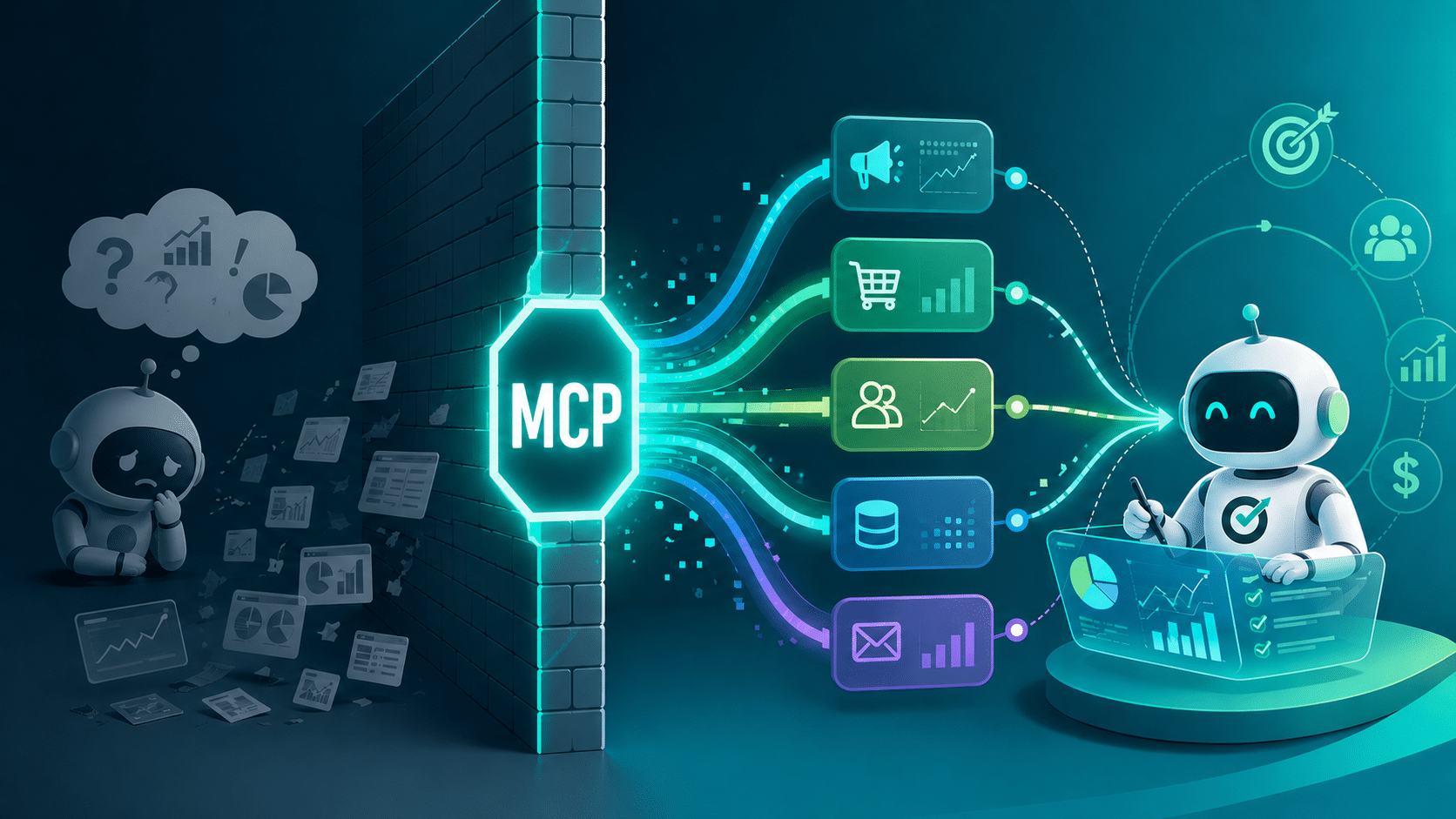
    I’ve often heard from paid search managers that dealing with AI agents can feel repetitive. Imagine exporting your performance data, pasting it into a chat window, receiving a useful answer, and then having to repeat the process every day. That doesn’t sound like automation, does it? It’s just good old manual work with a tech twist.

    Interestingly, the issue isn’t with the AI tools themselves. Many of them excel in data analysis when they have access to the right information. The real hurdle is providing this data to them in real time, without constantly needing a human to copy it over. This data wall explains why many PPC accounts today operate nearly the same way as they did before the advent of AI agents.

    Every ad platform tends to operate in isolation. Google Ads might record conversions, while your CRM notes whether those leads are qualified, and your inventory system checks stock availability. Without deliberate integration, they each function in their own silo. PPC managers have traditionally bridged this gap manually with regular exports and cross-referenced spreadsheets. Although this worked while humans managed it, it doesn’t hold up when an AI agent needs to take action in real time.

    ```json
{
  "alt": "Screenshot of Optmyzr tool permissions interface showing API key and access toggles for various tools.",
  "caption": "Exploring the Optmyzr tool permissions interface, where users can manage API access and configure tool usage with ease.",
  "description": "This screenshot displays the Optmyzr tool permissions section, featuring an API key and customizable toggles for different tools like 'create_or_edit_alert' and 'fetch_help_articles'. The interface allows for detailed permission management, ensuring users can control access to tools effectively. Keywords: Optmyzr, tool permissions, API key, interface, access management."
}
```

    Consider a keyword with good volume and a satisfactory CPA, according to Google Ads. But in HubSpot, these could be marked as disqualified leads. The AI, lacking this context, continues its work blissfully unaware, leading to unnecessary budget spend until someone catches the discrepancy during the monthly review. This is a data access problem that better prompts alone can’t fix; a robust data pipeline is essential.

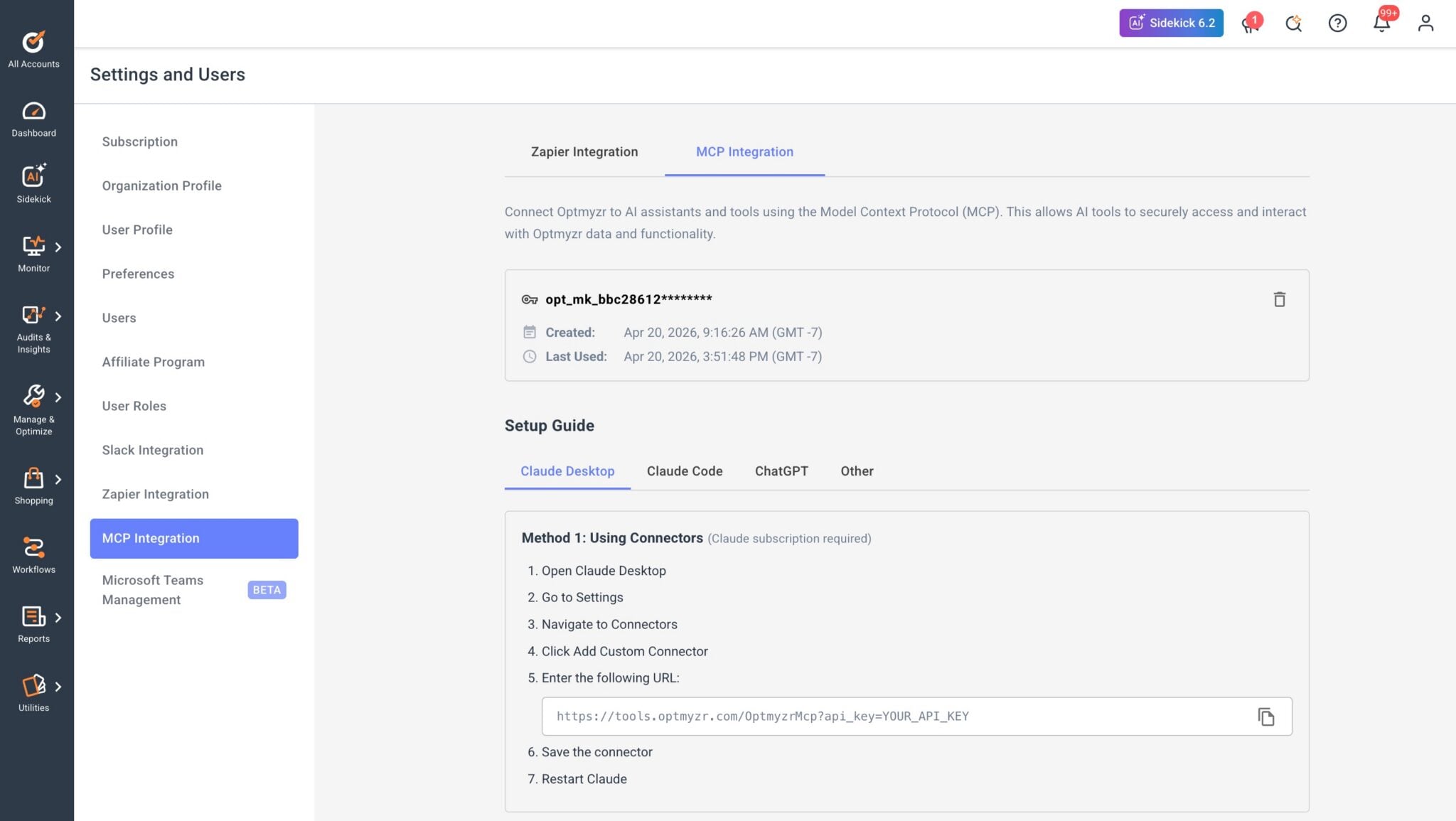
    The Model Context Protocol (MCP) is here to address this by providing a standardized way for AI clients to connect to various data sources. Before MCP, one would need to build separate connectors for systems like Google Ads, CRMs, and inventory systems, but MCP simplifies this connection significantly.

    ```json
{
  "alt": "Comparison chart between direct AI agent approach and AI agent with Optmyzr for ad management.",
  "caption": "Explore the difference between direct AI tools and the enhanced capabilities of AI with Optmyzr for seamless ad management.",
  "description": "This image compares two approaches to ad management: a direct AI agent versus an AI agent using Optmyzr. The left side shows risks like syntax errors and hallucinations when using direct AI tools with Google, Meta, and Microsoft Ads. On the right, using Optmyzr provides error-free API execution and strategic ad management, detailing benefits like deep platform logic and budget guardrails. Ideal for understanding enhanced business intelligence in ad platforms."
}
```

    Now, with MCP, an AI agent could efficiently work with Google Ads and CRMs like HubSpot, cross-referencing conversions with CRM dispositions. This setup can automatically adjust bids based on data, eliminating the need for human intervention in the reporting process, saving valuable time.

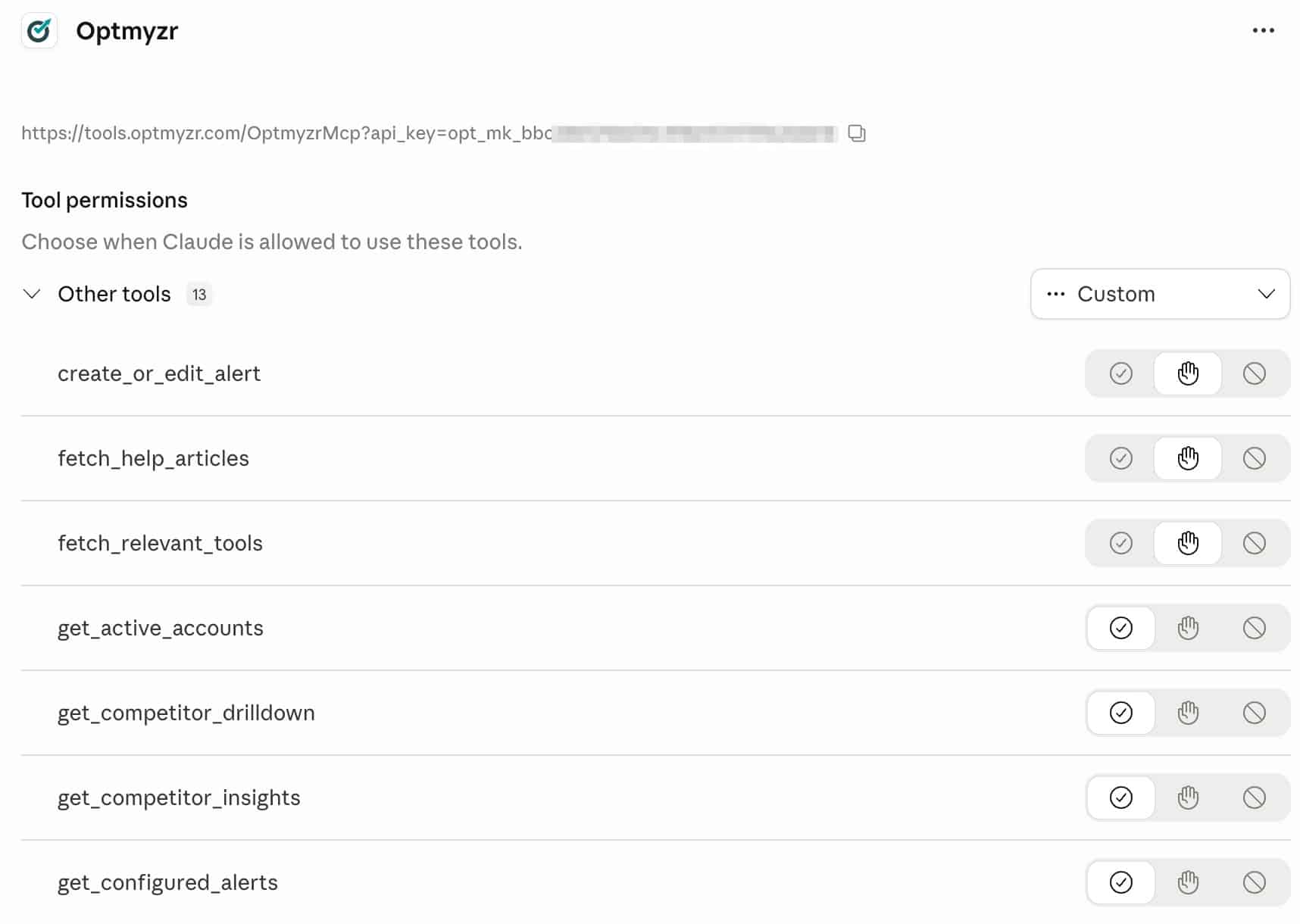
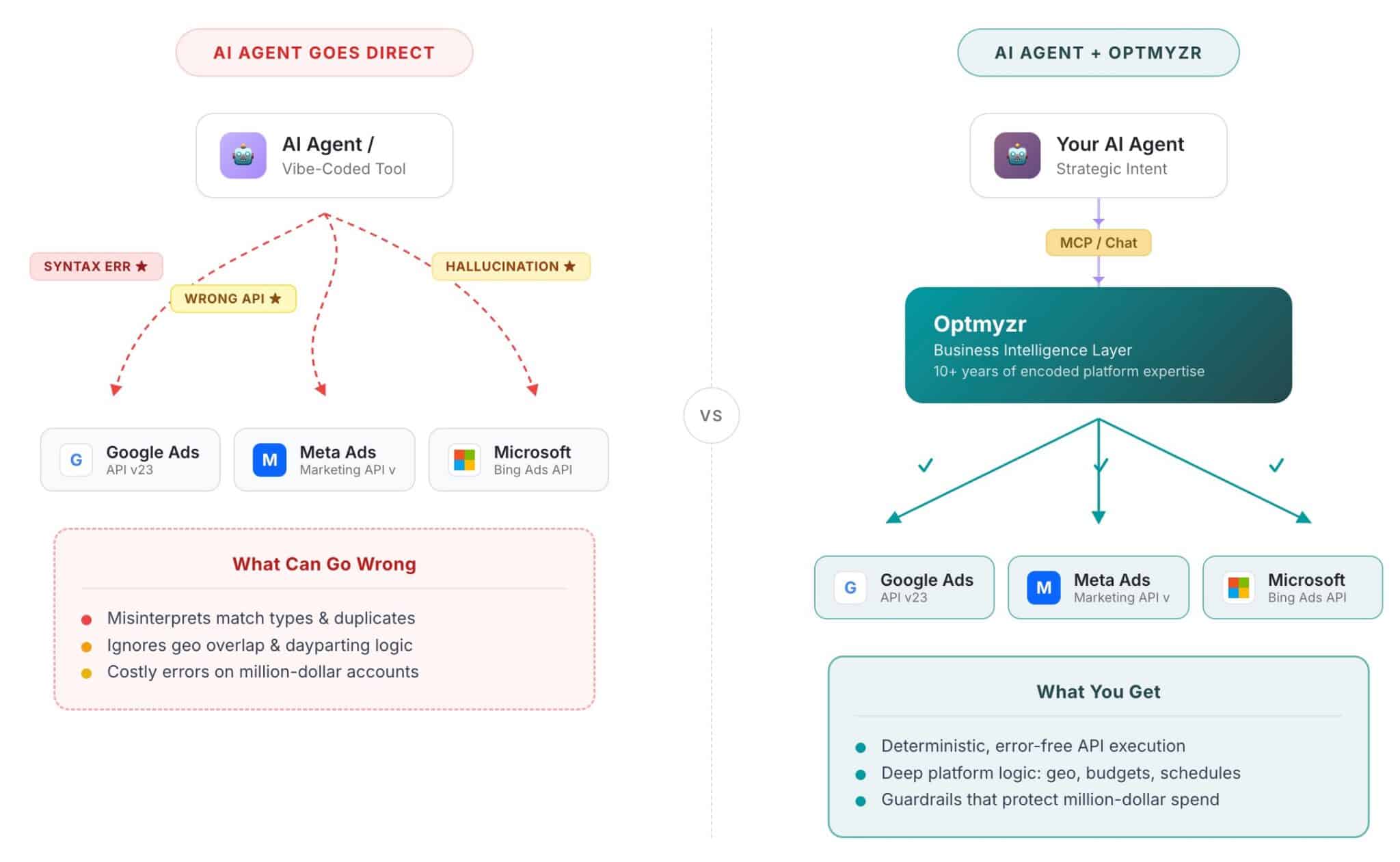
    Yet, having an open pathway to data without safeguards introduces new risks. Imagine an AI with write access to a Google Ads account. Without defined parameters or constraints, actions taken by the AI could become unpredictable. This unpredictability is why guardrails must be established around the AI, rather than relying on the AI tool itself to handle this responsibility.

    ```json
{
  "alt": "Optmyzr settings page showing MCP integration options for AI tools.",
  "caption": "Explore seamless integration with AI tools using Optmyzr's MCP setup, enhancing data access and interaction.",
  "description": "The image displays the Optmyzr platform's settings page, specifically focusing on the MCP Integration section. Users can connect Optmyzr to AI assistants through the Model Context Protocol, as shown under the 'Setup Guide' with methods for multiple platforms. The interface includes navigation tabs on the left and integration details on the main panel, offering instructions for desktop setups like Claude Desktop and ChatGPT."
}
```

    Optmyzr’s MCP allows advertisers to control what actions the AI can take, ensuring a balanced approach to AI management. This ensures the AI can effectively manage campaigns while staying within safe operational parameters.

    The MCP from Optmyzr integrates these controls into its system, allowing AI agents to perform complex tasks such as executing a full Rule Engine strategy from a simple directive while ensuring the appropriate checks and balances are in place. The result is an agent capable of operating with the precision of a seasoned PPC strategist across your entire portfolio, offering a level of intelligence and safety unattainable through raw API access alone.

    For those who wish to explore the possibilities of AI with care, Optmyzr’s MCP provides a secure and efficient pathway, integrating seamlessly with tools like Claude Desktop or ChatGPT for a comprehensive AI-powered approach to managing marketing campaigns effectively.


    Inspired by this post on Search Engine Land.


    crushpress.ai community screenshot
  • Navigating SEO in the Age of AI: A Personal Guide

    Navigating SEO in the Age of AI: A Personal Guide

    SEO is evolving, but it’s certainly not disappearing. In my journey through the changing landscape, I’ve found that blending traditional SEO techniques with emerging AI search practices is crucial for staying ahead.

    SEO is at a fascinating juncture. On one side, there’s a push to optimize for AI and large language models (LLMs), while on the other, some want to stick to the tried-and-true methods. I’ve found a middle path — merging core SEO principles with an awareness of LLMs and their operations.

    Embracing this approach means holding onto effective strategies like on-page SEO and quality backlinks while also exploring new avenues such as optimizing for query fan-out and new prompt intents. Since the rise of tools like ChatGPT, my research has focused on how AI engines present search results and the future direction of SEO.

    ```json
{
  "alt": "The CapmatchOne logo with a gradient circle and bold text.",
  "caption": "Discover innovation with the CapmatchOne logo, featuring sleek typography and a modern gradient circle.",
  "description": "The CapmatchOne logo features bold, modern typography coupled with a gradient circle, symbolizing connection and innovation. The sleek design conveys a sense of progress and creativity. This image can be used for branding or promotional purposes, appealing to audiences interested in innovative solutions and forward-thinking designs."
}
```

    Here’s what I’ve learned and how you can adjust your strategy to consider human behavior at the forefront of SEO innovations.

    The Red Queen evolutionary model suggests that we must constantly adapt to maintain our position; if we don’t evolve, we risk falling behind. This is exactly the case in the world of AI and SEO — stand still, and you’ll be left behind.

    ```json
{
  "alt": "Recommended anti-aging products list with descriptions and ratings.",
  "caption": "Explore top-rated anti-aging skincare products curated for their efficacy. See expert picks to keep your skin youthful and glowing.",
  "description": "This image presents a recommended list of anti-aging skincare products with detailed descriptions, prices, and ratings from various beauty retailers. Featured items include SkinCeuticals C E Ferulic, CeraVe Resurfacing Retinol Serum, Estee Lauder Advanced Night Repair Overnight Treatment, and Clarins Double Serum. Each product is accompanied by user reviews and star ratings, providing insights into their popularity and effectiveness. Keywords: anti-aging, skincare, product recommendations, beauty reviews."
}
```

    As you and your competitors adapt, you must maintain your competitive edge. In SEO, failing to adapt means losing visibility and influence.

    How to apply the Red Queen principle to your AI SEO strategy

    The evolution of AI search is a continuation of developments over the past decade. With concepts like RankBrain since 2015, familiar SEO tactics remain relevant. This isn’t about a complete overhaul but rather a series of adaptations and improvements.

    ```json
{
  "alt": "Screenshot discussing February 2026 as a favorable time for home buyers due to low mortgage rates and rising inventory.",
  "caption": "Considering buying a house? February 2026 is predicted to be ideal for buyers with low mortgage rates, a surplus of sellers, and increased inventory!",
  "description": "This image highlights a favorable housing market forecast for February 2026, emphasizing low 30-year fixed mortgage rates averaging 5.87% to 5.98%. With 44% more sellers than buyers, the market provides strong negotiating leverage. An increase in listings by over 10% year-over-year reduces bidding wars, and stable home prices (0.9% to 1.2% growth) prevent significant spikes. Relevant sources include Redfin and Freddie Mac."
}
```

    Core elements like retrieval-based search engines, content quality, speed, and intent matching are as important as ever. By focusing on these, alongside optimizing for AI retrieval and third-party visibility, you position yourself favorably.

    One effective way I’ve discovered to engage with AI search is by understanding its limitations, particularly their reliance on retrieval-augmented generation (RAG) systems. RAG helps fill the gaps in LLM databases without constant updates, ensuring relevant answers are provided.

    ```json
{
  "alt": "February 2026 snapshot of the U.S. housing market trends and forecasts.",
  "caption": "Explore the latest trends in the U.S. housing market for February 2026, including mortgage rates and buyer-seller dynamics.",
  "description": "This image presents a February 2026 overview of the U.S. housing market. It features articles from the Financial Times, Reuters, and New York Post detailing recent mortgage rate changes, construction trends, and market dynamics. Key highlights include mortgage rates hitting the lowest since 2022 and a notable gap with more home sellers than buyers. This image serves as a guide for potential homebuyers evaluating current market conditions."
}
```

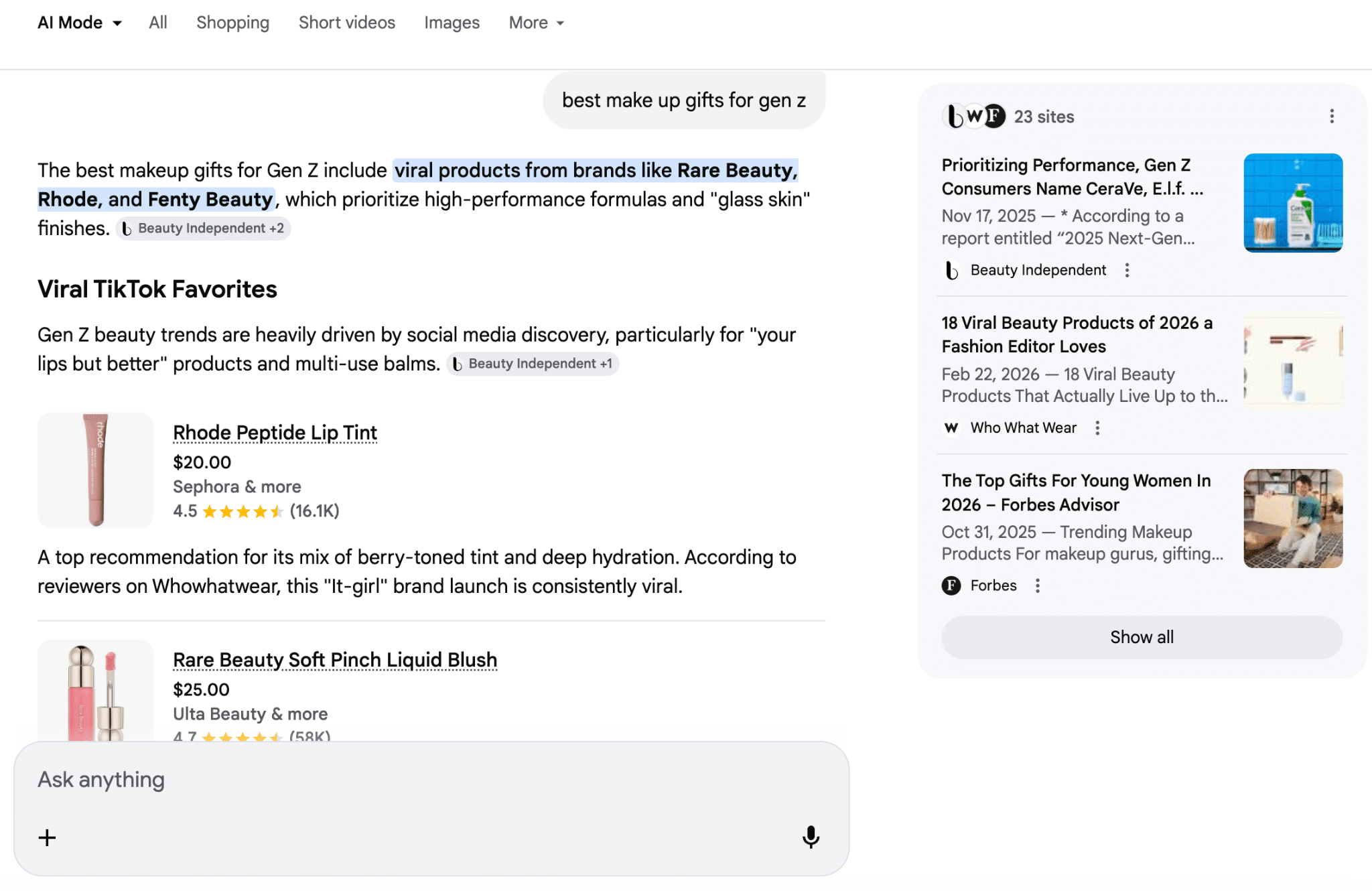
    In practice, this involves seeing how AI tools like Google AI Mode and ChatGPT respond to prompts and identifying where they draw their information. Using this insight, you can ensure your content is part of the external sources AI assists rely upon.

    Understanding how your content interacts with AI engines’ limitations is critical. AI does its own searching and then provides answers, sometimes without showcasing external sources. Therefore, becoming a trusted source for LLMs is the key to SEO in the AI era.

    ```json
{
  "alt": "Makeup products for Gen Z, including Rare Beauty blush, Morphe face trio, and NYX lip oil.",
  "caption": "Discover trending makeup gifts perfect for Gen Z! Featuring Rare Beauty's blush, Morphe's face trio, and NYX's vibrant lip oil.",
  "description": "This image showcases top makeup and beauty gift ideas ideal for Gen Z, featuring three products: Rare Beauty Soft Pinch Liquid Blush ($25.00), Morphe Cheek Thrills Multi-Finish Face Trio ($19.00), and NYX Professional Makeup Fat Oil Lip Drip ($10.00). These products, highlighted for their trendy appeal and versatility, are available at Ulta Beauty and other retailers. The selection emphasizes lightweight, buildable, and vibrant aesthetics that appeal to modern Gen Z preferences."
}
```

    It’s essential to analyze AI answers, understand their behavior, and continuously evaluate their preferences. By feeding these systems with quality data, we can ensure we’re among the go-to trusted sources AI assistants reference.

    The long-term future of SEO relies on human behavior

    Long-term SEO strategies should remain focused on understanding human behavior. This involves pinpointing search intent and analyzing how AI-generated queries align with different user needs and intents.

    ```json
{
  "alt": "Search results for best makeup gifts for Gen Z, highlighting viral products from Rare Beauty, Rhode, and Fenty Beauty.",
  "caption": "Explore the top makeup gifts for Gen Z! Featuring viral products from Rare Beauty, Rhode, and Fenty Beauty, these selections promise high performance and trendy appeal.",
  "description": "The image displays search results for the best makeup gifts for Gen Z. It highlights popular products like the Rhode Peptide Lip Tint and Rare Beauty Soft Pinch Liquid Blush. Brands such as Rare Beauty, Rhode, and Fenty Beauty are emphasized for their appeal to Gen Z, focusing on high-performance formulas and 'glass skin' effects. The section also mentions TikTok's influence on beauty trends. Keywords: makeup gifts, Gen Z, Rare Beauty, Rhode, Fenty Beauty, TikTok trends."
}
```

    Being successful means considering both traditional search intents and new AI-induced intents to provide valuable content that resonates with user needs. It’s about dynamically adapting approaches based on observed behavior and striving to stay ahead in this ever-evolving field.


    Inspired by this post on Search Engine Land.

    crushpress.ai community screenshot
  • Mastering AI Search Visibility: Key Signals You Need to Know

    Mastering AI Search Visibility: Key Signals You Need to Know

    I’ve discovered that rankings alone no longer guarantee visibility in AI search. In today’s digital landscape, four key signals dictate whether a brand appears in AI-generated responses and how they’re portrayed.

    Ranking and visibility have diverged. For years, SEO was all about securing that sweet spot on the SERPs, boosting visibility, clicks, and traffic. This connection is unraveling.

    Earlier this year, Ahrefs reported that only 38% of pages featured in Google AI Overviews also ranked in the traditional top 10. Compare this to eight months prior when it was 76%, and you’ll see the shift.

    The message is clear: a high rank doesn’t necessarily mean visibility.

    Visibility in AI-generated responses hinges on inclusion and the portrayal of your brand upon inclusion, determined by a unique set of signals.

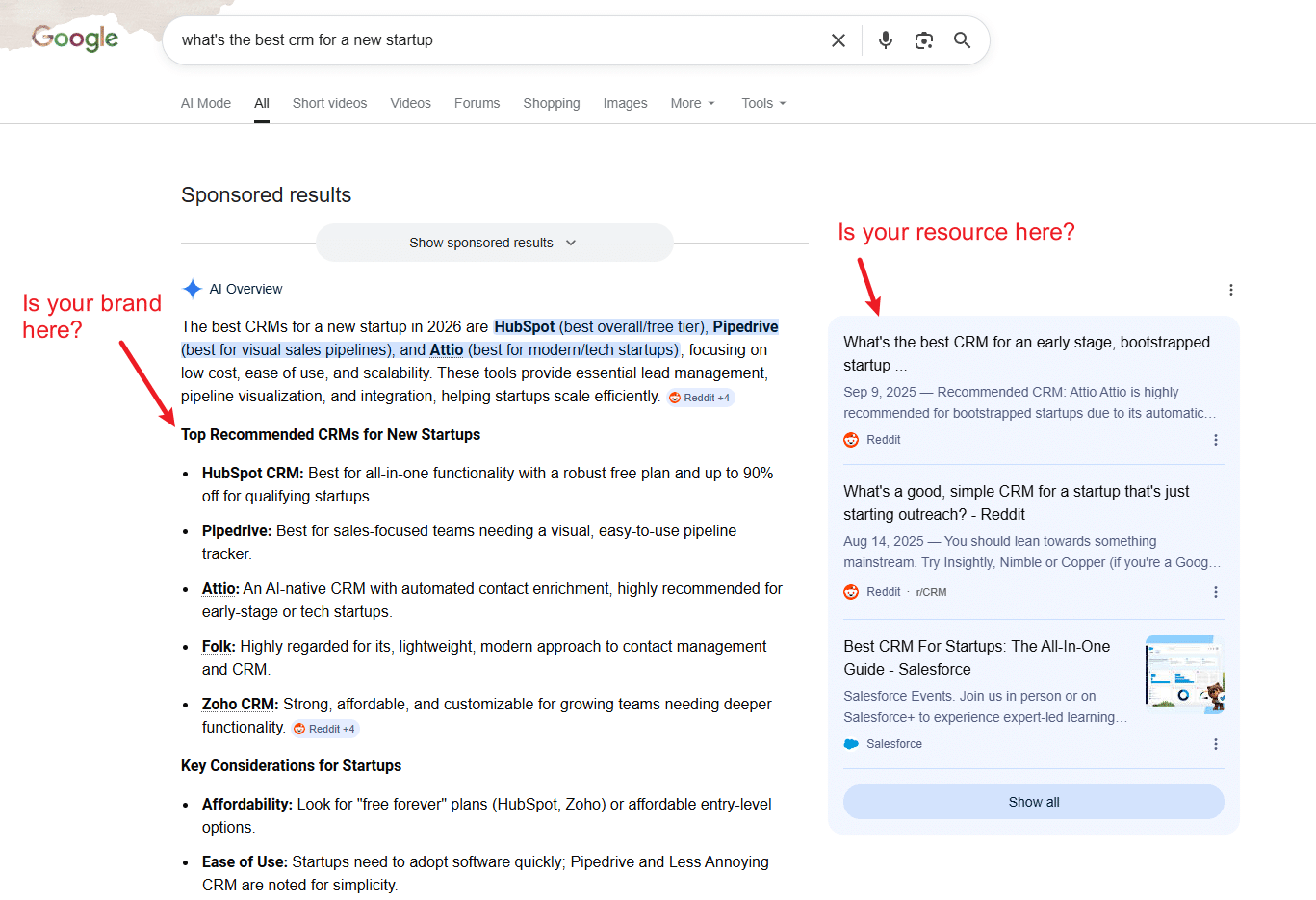
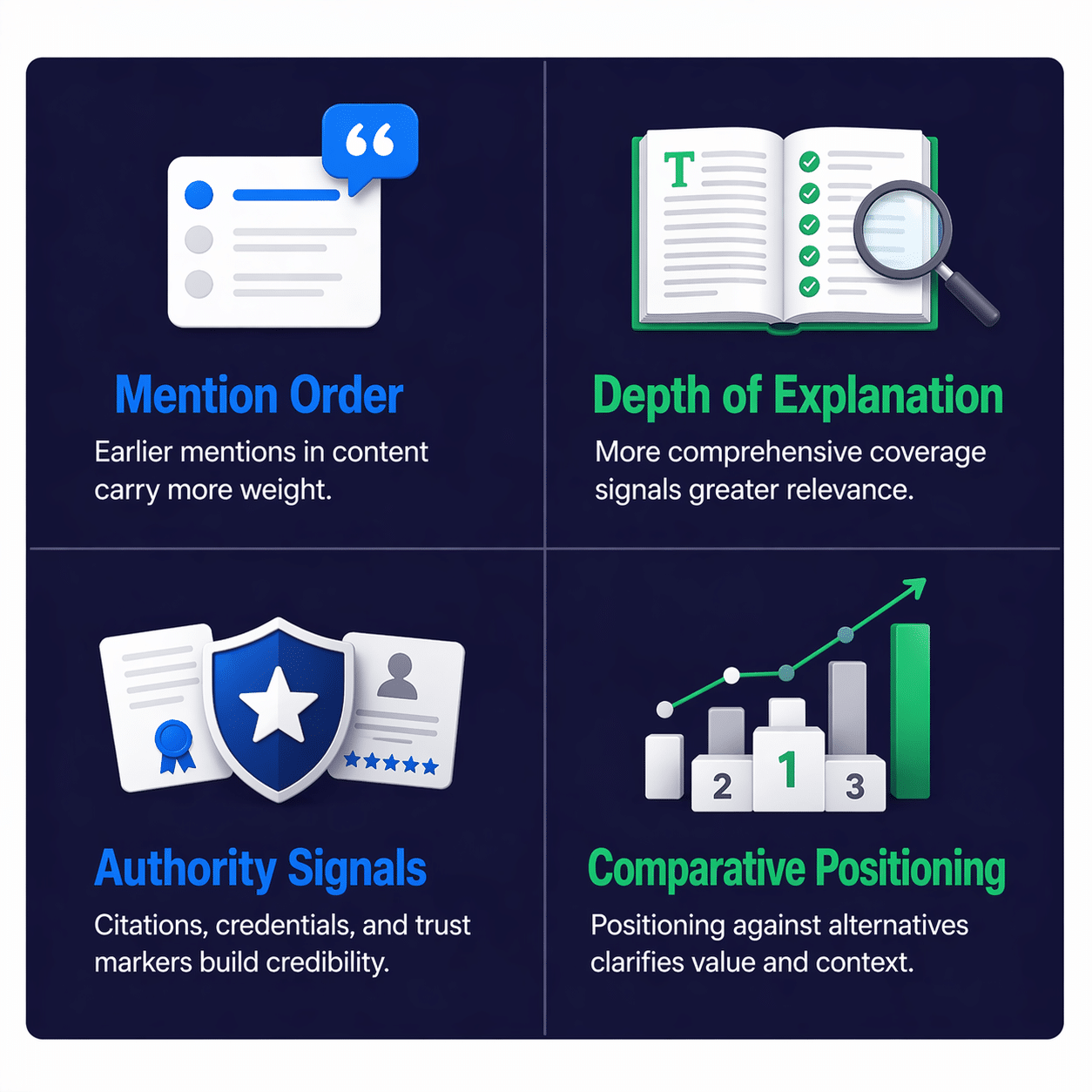
    So, how exactly does visibility work within the realm of AI search? There are four critical signals I need to focus on:

    ```json
{
  "alt": "Search result page highlighting best CRMs for startups including HubSpot, Pipedrive, and Attio.",
  "caption": "Explore the top CRM platforms for startups, featuring HubSpot, Pipedrive, and Attio, known for their scalability, ease of use, and affordability. Is your brand or resource listed?",
  "description": "This image showcases a Google search results page for 'what’s the best CRM for a new startup.' Featured CRMs include HubSpot, Pipedrive, and Attio, recommended for their functionality and cost-effectiveness. The page emphasizes considerations like affordability and ease of use, while highlighting resources from Reddit. Keywords: CRM, startup, HubSpot, Pipedrive, Attio, Google search."
}
```
    • Mention order.
    • Depth of explanation.
    • Authority signals.
    • Comparative positioning.

    Let me dive deeper into them, starting with mention order.

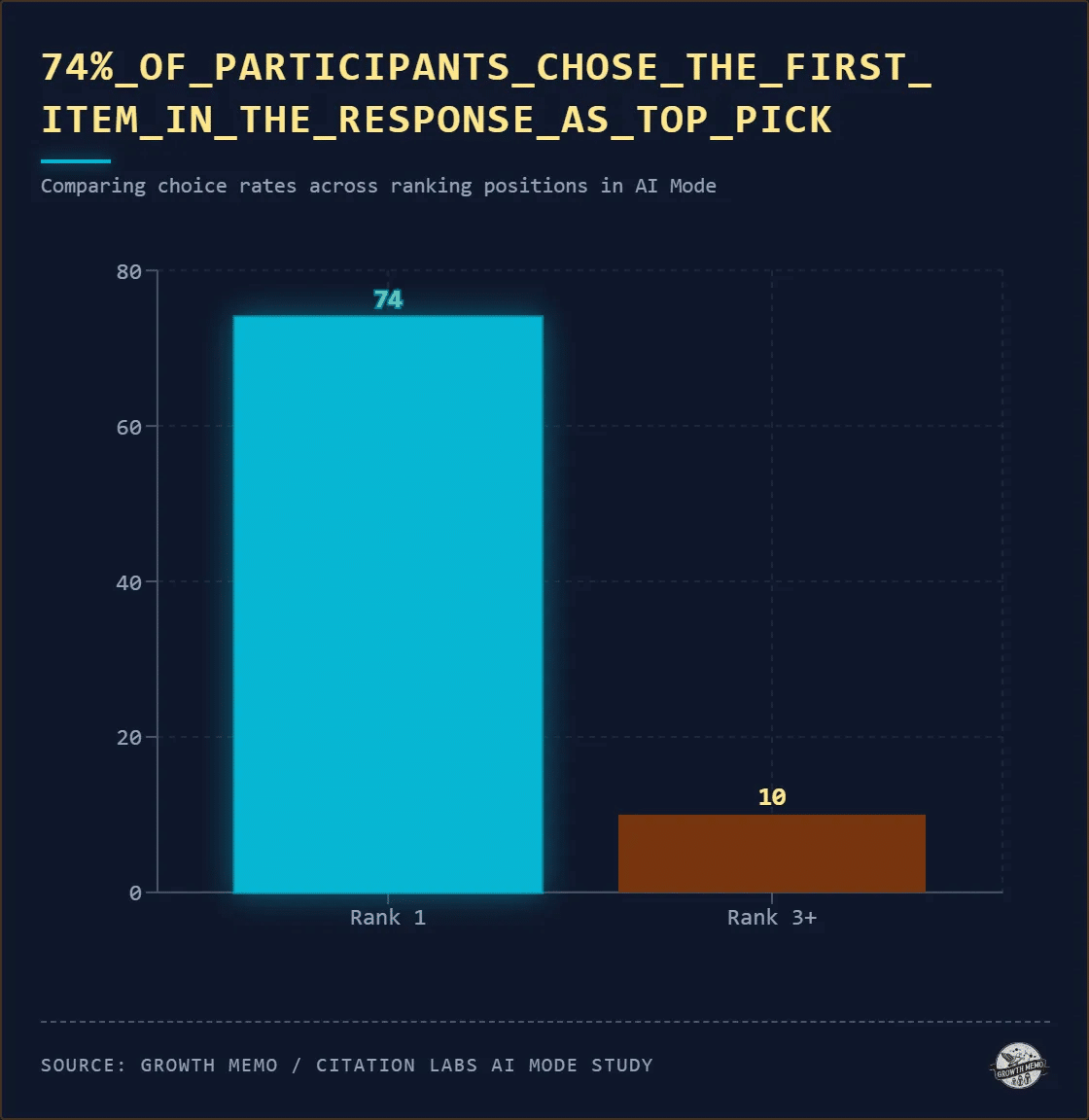
    The order in which AI models list options is crucial. According to a study by Growth Memo and Citation Labs, a whopping 74% of users tend to go with the AI’s top suggestion.

    Yet, 26% of users overturn the AI’s order if they recognize a brand they trust. This is quite a change from traditional search behavior. In AI Mode, most users accept the AI’s shortlist without further checks.

    However, the mention order is unstable. SE Ranking’s research shows AI Mode only overlaps with itself 9.2% of the time when running the same query thrice, indicating variable sources and order.

    Lesson learned: While mention order gives an edge, it’s not a sure thing. Brand recognition can surpass position.

    ```json
{
  "alt": "Four quadrants describing content relevance factors: Mention Order, Depth of Explanation, Authority Signals, Comparative Positioning.",
  "caption": "Boost your content's relevance! Explore how Mention Order, Depth of Explanation, Authority Signals, and Comparative Positioning enhance credibility and value.",
  "description": "This image is divided into four quadrants, each illustrating a factor that enhances the relevance of content. Mention Order notes that earlier mentions carry more weight. Depth of Explanation emphasizes comprehensive coverage for greater relevance. Authority Signals focus on citations and trust markers for credibility. Comparative Positioning underlines the importance of context and value clarification. These insights collectively aim at improving content strategy."
}
```

    Next, let’s explore the depth of explanation.

    Not every mention is equal. Some brands earn only a sentence, while others get full paragraphs detailing their strengths and uniqueness.

    This comes down to how much citation-worthy information AI systems have gathered about you.

    When Semrush launched its AI Visibility Awards in December 2025, it reviewed over 2,500 prompts using ChatGPT and Google AI Mode. Category leaders like Samsung in consumer electronics didn’t just show up more—they received more in-depth mentions.

    Challenger brands, like Logitech in gaming accessories, appeared too, but typically with shorter, focused mentions highlighting a single differentiator.

    ```json
{
  "alt": "Bar chart showing 74% of participants chose rank 1 items, compared to 10% for rank 3+ in AI mode.",
  "caption": "In a compelling AI study, the first choice dominated with 74% preference, leaving rank 3+ far behind at just 10%.",
  "description": "This image depicts a bar chart comparing choice rates in AI mode, where 74% of participants favored the first-ranked item, while only 10% selected items ranked third or lower. This visualization highlights the significant preference for top-ranked options in AI-derived responses. Source: Growth Memo / Citation Labs AI Mode Study."
}
```

    Pages that are comprehensive, answering “what is it,” “who uses it,” and “how to choose” in one place, rose to the top in AI citations.

    Lesson learned: If AI systems only find sparse data on your brand, expect sparse mentions.

    Third on the list: authority signals.

    AI systems not only cite but also characterize sources by tone, indicating how much confidence they place in a brand’s authority.

    HubSpot’s AEO Grader classifies brands as leaders, challengers, or niche players, labels influencing how AI conveys their authority.

    ```json
{
  "alt": "The CapmatchOne logo with a gradient circle and bold text.",
  "caption": "Discover innovation with the CapmatchOne logo, featuring sleek typography and a modern gradient circle.",
  "description": "The CapmatchOne logo features bold, modern typography coupled with a gradient circle, symbolizing connection and innovation. The sleek design conveys a sense of progress and creativity. This image can be used for branding or promotional purposes, appealing to audiences interested in innovative solutions and forward-thinking designs."
}
```

    Semrush’s data shows that brands identified as leaders exhibit less than 20% monthly volatility in AI share of voice, maintaining consistent authority.

    Leaders are described using strong terms like “the industry standard,” while challengers are termed “gaining traction.”

    Lesson learned: AI doesn’t just name-drop; it frames your reputation.

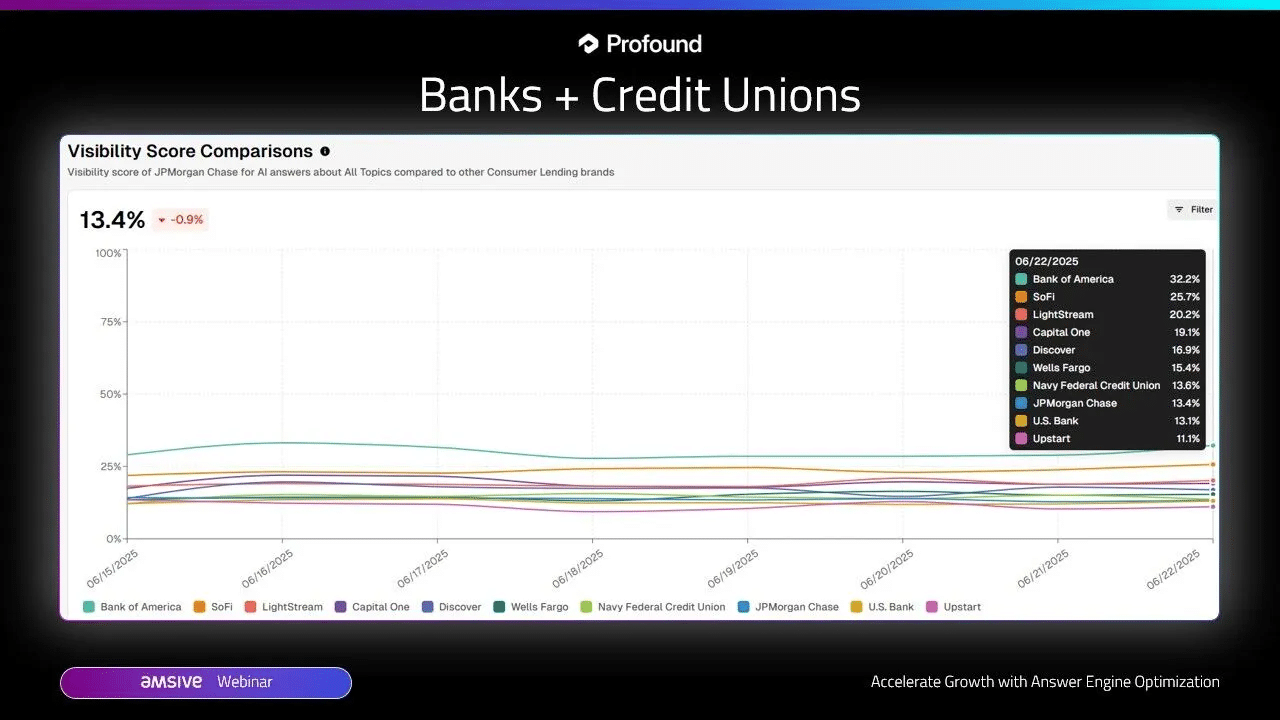
    Finally, comparative positioning is akin to traditional rankings in AI answers—how you’re positioned among multiple brands.

    Amsive’s research demonstrates clear positioning hierarchies within sectors.

    ```json
{
  "alt": "Line graph comparing visibility scores of banks and credit unions, including Bank of America, SoFi, and JPMorgan Chase, dated June 2025.",
  "caption": "Explore the visibility scores of top banking institutions like Bank of America and JPMorgan Chase over a week in June 2025. See which financial giants are leading the digital arena!",
  "description": "This image displays a line graph titled 'Visibility Score Comparisons' by Profound, illustrating the visibility scores of banks and credit unions as of June 2025. The data compares entities like Bank of America, SoFi, LightStream, Capital One, and others, showing subtle fluctuations over several days. Bank of America leads with a score of 32.2%, while Upstart is at the lower end with 11.1%. The graph provides insights into the digital presence and performance of these financial institutions."
}
```
    • In banking, Bank of America leads, followed by SoFi and LightStream.
    • In healthcare, Mayo Clinic stands out significantly.

    Kevin Indig’s research highlights how users self-select based on AI’s framing, regardless of actual capabilities.

    Lesson learned: It’s not about being number one; it’s about owning a niche in AI’s mental map.

    Traditional rankings’ correlation with AI visibility is minimal. The concept of query fan-out explains why visibility dropped so swiftly.

    During an AI Overview, Google processes not just the top pages for a query but various sub-queries to synthesize a complete response.

    This means your page might rank first for one query but may be overlooked if AI finds more relevant passages elsewhere.

    ```json
{
  "alt": "Line graph showing Google's share of ChatGPT referral traffic from October 2024 to February 2026, displaying upward trend.",
  "caption": "Google's influence grows as its share of ChatGPT referral traffic rises steadily over time, peaking in early 2026.",
  "description": "This graph illustrates Google's share of total ChatGPT referral traffic, derived from Semrush US clickstream data between October 2024 and February 2026. The line graph, highlighted in purple, shows a general upward trend starting around mid-2025, reaching its highest point in early 2026. The chart provides insights into Google's impact on ChatGPT referral traffic over this period. Keywords: Google, ChatGPT, referral traffic, Semrush, clickstream data."
}
```

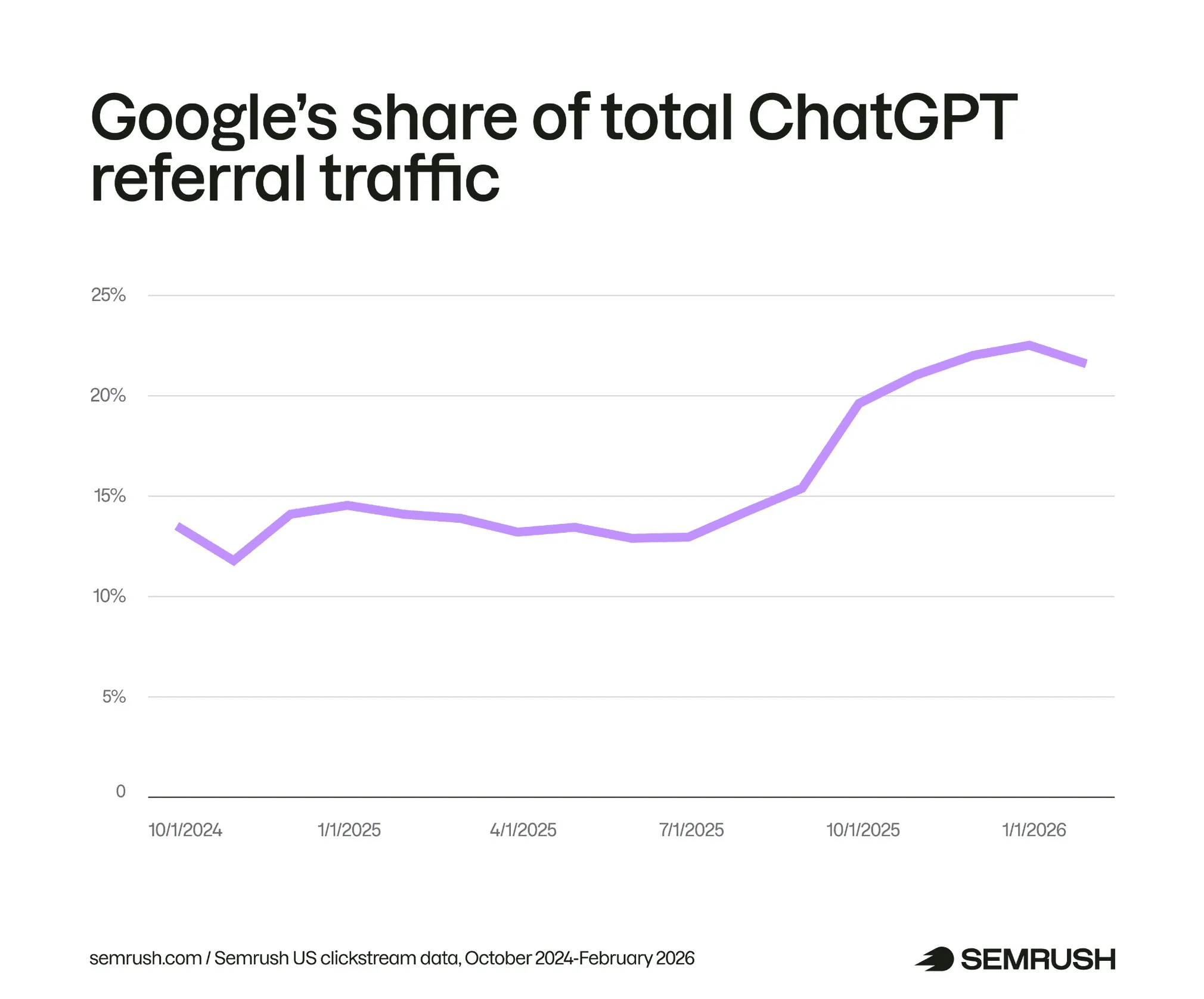
    Research shows Google’s Gemini 3 update altered approximately 42% of cited domains, making traditional rank positions less predictive.

    Where does AI traffic land? Interestingly, a substantial portion of ChatGPT traffic eventually ends up on Google. Users seek answers from ChatGPT, then confirm their findings on Google.

    Most prompts to ChatGPT are too specific for traditional keywords, intensifying the shift.

    So, how can I measure visibility in AI answers?

    • Track citation frequency to gauge how often your brand appears in AI answers.
    • Measure brand mention rate for category penetration.
    • Focus on recommendation rates, especially in B2B and high-consideration sectors.
    • Analyze sentiment and context of mentions to evaluate impact.
    • Citation position provides an edge, even if it’s not organic rank.

    The 2026 measurement model demands dual tracking—traditional and AI-focused metrics for accurate visibility insights.

    New tools have emerged for this purpose, complementing but not replacing traditional SEO tools.

    For citation tracking, platforms like Profound and Peec AI keep tabs on cited URLs across AI responses.

    For brand analysis, tools like Semrush’s AI Visibility Toolkit check mention frequency, portrayal, and recommendations.

    For competitive positioning, Bluefish and HubSpot’s AEO Grader assess your brand’s AI categorization against competitors.

    Traditional rank obsession persists, but visibility in AI requires a broader view with a distinct measurement model.


    Inspired by this post on Search Engine Land.

    crushpress.ai community screenshot
  • Why 40% of AI Projects Fail: The Human Element Matters Most

    Why 40% of AI Projects Fail: The Human Element Matters Most

    In exploring the world of agentic AI, I’ve come across a startling prediction from Gartner: by the end of 2027, more than 40% of these projects will have been canceled. This isn’t due to the technology being insufficient; it’s because of the human factors involved. The real issue lies not with the tech, but with our deployment strategies and the absence of essential human insights.

    Gartner’s research, involving over 3,400 organizations that are currently investing in agentic AI, makes it clear that the downfall isn’t in the capabilities of AI itself. It’s in the decisions we, as humans, are making. Anushree Verma from Gartner notes that most of these AI projects are merely hype-driven experiments, lacking in strategic direction and governance.

    This brings a critical reminder for those of us in marketing: agentic AI can optimize and scale tasks exponentially, yet without a knowledgeable human behind it, the technology is as good as the strategy guiding it. We need agents that can handle audience selection, content generation, and journey orchestration effectively, but we must steer these agents with insight and responsibility.

    If we’re spurred by fear of missing out (FOMO), we might find ourselves hastily deploying AI solutions. This rush can lead to poorly constructed workflows and inadequate data strategies, resulting in agents implementing erroneous actions at inappropriate times. FOMO isn’t a sustainable strategy; it’s a costly oversight.

    Another pitfall presented by Gartner is what’s termed ‘agent washing.’ This is where existing chatbots are disguised as agentic AI without delivering authentic autonomous functionality. As marketing teams, if we invest in these disguised solutions, we’re essentially falling for dressed-up automation without real AI benefits.

    Deploying AI prematurely can be damaging. Gartner anticipates that by 2026, many companies might harm their customer relationships through misguided AI applications, leading to eroded trust and damaged brand reputations. Our role as marketers should be to prioritize strategy and judgment alongside technological advancements.

    One of the gravest challenges we face is the potential erosion of critical thinking brought about by reliance on AI. Gartner predicts half of the organizations will need to reassess competencies, ensuring that our human ability to question and evaluate AI outputs remains sharp and undiminished.

    In this rapidly evolving landscape, the successful marketer will be one who integrates AI while maintaining a leadership role. This encompasses being a multidisciplinary thinker who utilizes AI to transcend traditional roles, driving strategy and ensuring that AI recommendations align with our brand’s vision and values.

    As we embrace the agentic era, it’s imperative that we balance technological advancements with human insights. We shouldn’t slow down but rather be deliberate—ensuring that our AI endeavors are guided by robust human judgment to harness true value, protect customer trust, and avoid costly missteps.


    Inspired by this post on Search Engine Land.

    crushpress.ai community screenshot
  • Elevate Your SEO: The Power of Truly Helpful Content

    Elevate Your SEO: The Power of Truly Helpful Content

    I recently realized that search engines, including those powered by AI, are not changing the ultimate goal—they’re raising the bar. Creating content that provides clear, in-depth answers with expertise is more important than ever.

    The March 2026 core update from Google focused on surfacing relevant and satisfying content for users across all sites. This underscores a simple truth: people turn to Google for answers.

    In our fast-paced, on-the-go lives, searchers want content that solves their problems, imparts new knowledge, or assists decision-making. If my content delivers, it thrives. Otherwise, no SEO trick will push it to page one or get it featured in AI Overviews.

    How modern search systems surface helpful content

    AI Overviews have grown from covering 6.49% of queries in January 2025 to 15.69% by November 2025, according to a Semrush study. Currently, they appear for 25-50% of searches, highlighting how search engines and LLMs are efficiently collaborating. It’s an exciting period for SEO professionals like me, eager to create content that aligns with user intent.

    Techniques like retrieval-augmented generation (RAG) and query fan-out come to my aid, helping my useful content feature prominently in AI Overviews.

    RAG empowers AI to source relevant information from multiple places before responding to a query, while query fan-out decomposes a search into related queries for a comprehensive response. These concepts underscore a shift in SEO, now focusing beyond keywords to genuinely satisfy user questions and intent.

    Why this raises the bar for SEO in 2026 and beyond

    Emerging systems are increasingly adept at filtering out thin, redundant content. Instead, Google’s focus on TurboQuant illustrates a push toward recognizing substantial, unique content that shares authentic experiences and original research. As SEOs, we must pivot toward creating content with true depth, clarity, and expertise.

    Depth: No longer about word count, depth means addressing main and follow-up questions comprehensively.

    Clarity: My audience is busy, seeking quick, understandable answers. The ability to scan and grasp information easily is key.

    Expertise: I need to demonstrate real-world know-how and credibility that my audience can trust.

    It’s refreshing to see that it’s no longer just about ticking SEO boxes. The emphasis on providing genuine value elevates what’s considered good SEO beyond core basics.

    ```json
{
  "alt": "The CapmatchOne logo with a gradient circle and bold text.",
  "caption": "Discover innovation with the CapmatchOne logo, featuring sleek typography and a modern gradient circle.",
  "description": "The CapmatchOne logo features bold, modern typography coupled with a gradient circle, symbolizing connection and innovation. The sleek design conveys a sense of progress and creativity. This image can be used for branding or promotional purposes, appealing to audiences interested in innovative solutions and forward-thinking designs."
}
```

    Why visibility matters more than clicks for local SEO

    Small and service-based businesses depending on SEO-driven leads can apply these strategies, as success now hinges on visibility over clicks. AI platforms frequently recommend businesses without direct website links, shifting the narrative to maximize brand visibility online.

    While tools exist to measure AI metrics, they can be costly. As Elizabeth Rule notes, measuring visibility is like gauging a wave with a ruler—hence the importance of open dialogue between stakeholders and SEO teams when defining success.

    What ‘helpful content’ looks like in practice

    Here are five strategies I utilize for creating genuinely helpful content:

    1. Answer follow-up questions

    I explore overarching queries and anticipate subsequent questions my audience might have. The People Also Ask section on SERP is a valuable resource, offering new angles and questions to address in my content.

    2. Show expertise and experience

    By sharing my specialized knowledge and firsthand insights, I build trust and connect with my audience. This approach aligns with the principles laid out in the helpful content update of 2022.

    3. Structure content clearly

    Recognizing that readers often skim, I employ clear structures that leverage headings and bullet points to facilitate quick and easy information retrieval, crucial for both mobile and desktop users.

    4. Be authentic

    Authenticity resonates best with my audience. Avoiding fluff and filler, I aim to deliver concise, relevant content right to the point of the user’s query.

    5. Ask ‘who, what, and how?’ about your content

    I reflect on semantic triples rooted in relevance engineering to provide structure and substance. Who am I reaching, what needs do they have, and how can I satisfy those requirements?

    As the only narrator of my story, I’m in a unique position to explain my processes and convey why my business or brand is impactful and worthwhile.

    Helpfulness is the competitive edge

    The cornerstone of an effective SEO strategy persists through each core update: Create truly helpful content. Focus on resolving audience issues, answering queries completely, and leveraging personal expertise to foster engagement.

    In a landscape driven by AI and sophisticated retrieval systems, thin, generic content falls by the wayside. If I align my content with the genuine needs of searchers, we soar to the forefront, no trickery required.


    Inspired by this post on Search Engine Land.

    crushpress.ai community screenshot
  • Why AI Falls Short in Crafting Your Brand’s Unique Identity

    Why AI Falls Short in Crafting Your Brand’s Unique Identity

    I’ve always found brand positioning to be an intricate dance of claims, proofs, and strategic framing. While AI can validate claims, it won’t decide on the conclusions that best elevate your business. Let me share how framing transforms proof into brand loyalty.

    In today’s digital world, every brand has its arsenal of claims and underlying proofs scattered across its digital presence. AI engines like ChatGPT and Google’s AI can verify these, but they hold no narrative power to create an engaging story for your brand.

    Often, there’s a disconnect between what your audience desires and what brands or AI understand. The missing link? A powerful frame that converts disjointed data into a compelling brand narrative.

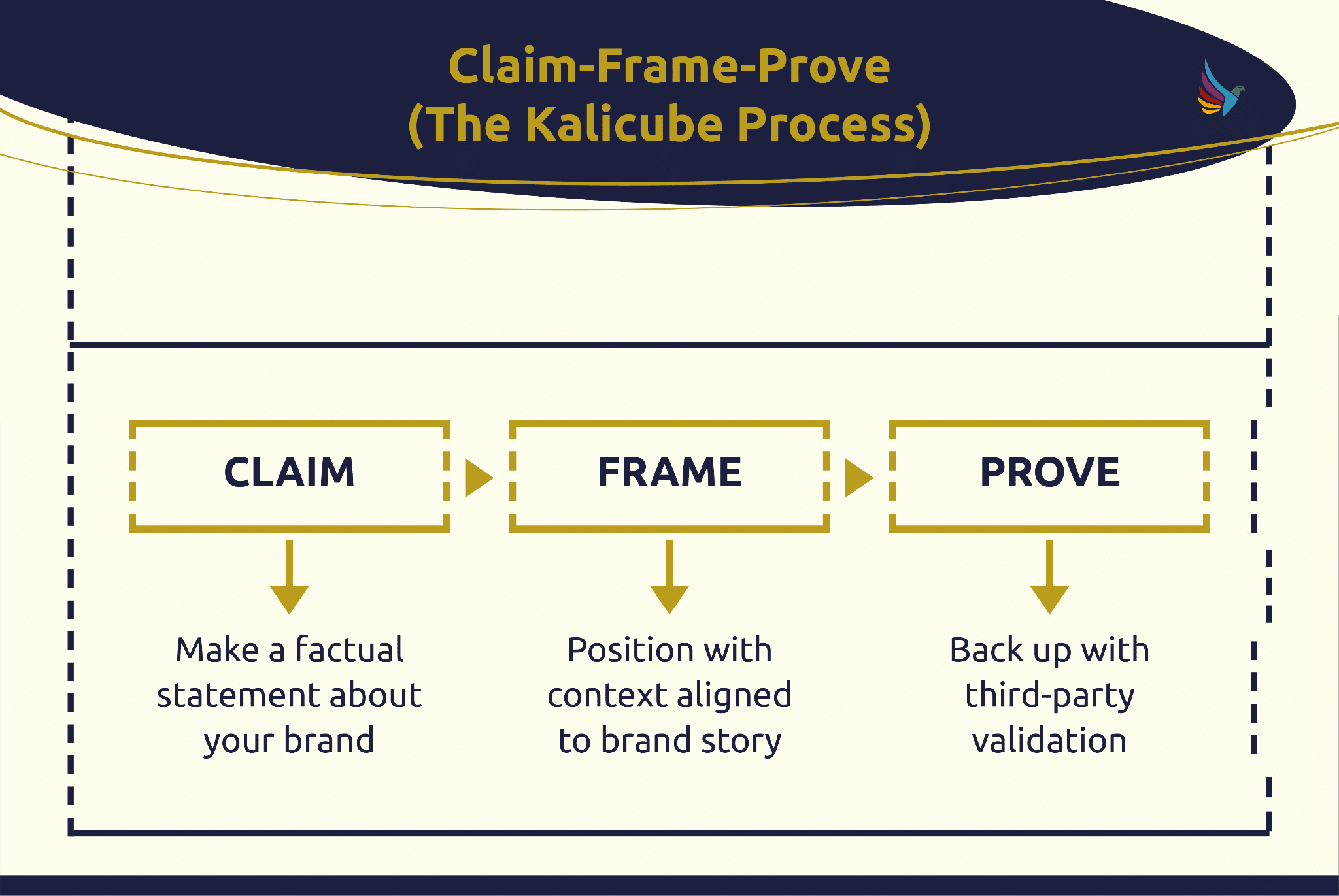
    Here’s where I introduce the claim-frame-prove (CFP) approach. Claims and proofs are mechanical, but framing adds that strategic layer necessary to craft your brand’s narrative.

    Claims and proofs are mechanical tasks AI can handle, but creating a strategic frame is your brand’s unique prerogative.

    Building your brand through CFP means understanding that AI can link known facts but cannot make that creative leap your brand requires. AI connects the dots logically but lacks the ability to reach a commercially beneficial insight.

    ```json
{
  "alt": "Diagram illustrating the Claim-Frame-Prove process by Kalicube, showcasing steps: Claim, Frame, and Prove.",
  "caption": "Understand the Claim-Frame-Prove process by Kalicube: Make a claim, frame it with context, and prove it with third-party validation.",
  "description": "This image showcases the Claim-Frame-Prove process from Kalicube, represented in a flowchart format. It describes three steps: Claim, where you make a factual statement about your brand; Frame, where the context is aligned to your brand story; and Prove, where you back up the statement with third-party validation. This visual tool is designed to help brands strategically position themselves in the market."
}
```

    Consider the alphabet analogy: while C is an apparent commercial reach, J represents a nuanced insight, and Q symbolizes a bold vision your brand can aspire to.

    I’ll illustrate with some personal examples. My work in answer engine optimization demonstrates this journey from mere understanding to unique brand positioning.

    A + B → C

    A: I coined answer engine optimization in 2017. B: I also run a brand engineering firm. AI arrives at the simple, logical conclusion: I’m connected to AEO implementation. While true and functional, it lacks depth.

    A + B → J

    ```json
{
  "alt": "The CapmatchOne logo with a gradient circle and bold text.",
  "caption": "Discover innovation with the CapmatchOne logo, featuring sleek typography and a modern gradient circle.",
  "description": "The CapmatchOne logo features bold, modern typography coupled with a gradient circle, symbolizing connection and innovation. The sleek design conveys a sense of progress and creativity. This image can be used for branding or promotional purposes, appealing to audiences interested in innovative solutions and forward-thinking designs."
}
```

    By pushing further, the narrative evolves. J: I might be the only practitioner with extensive insights from a decade’s worth of operational data.

    This move from A and B to J is vital. It’s about identifying which non-obvious insight fosters brand growth and constructing a logical link from accepted realities to this aspirational leap. That logical bridge is essential for AI to consider it factual, rather than mere self-promotion.

    Why AI Can’t Decide What’s Best for Your Brand

    AI won’t instinctively choose the best narrative for your brand—that responsibility is yours. Even as AI gets more sophisticated, it lacks the commercial insight to select paths that benefit your brand uniquely.

    A creative marketer makes two critical moves: discovers imaginative insights and aligns them strategically with brand goals. Not a feat even the most evolved AI can match, as it lacks the personal stake in this narrative crafting.

    ```json
{
  "alt": "Three levels of brand-AI communication chart with brand, AI response, and outcome columns.",
  "caption": "Unveil the three dynamic levels of brand-AI communication, where brand proof and AI response align to shape powerful outcomes.",
  "description": "This image illustrates the three levels of brand-AI communication: deductive, connective, and strategic. It features a table with three columns titled 'Brand provides,' 'AI response,' and 'Outcome.' At Level 1, brands offer scattered proof, leading to hedged AI responses and mid-to-low pack mentions. Level 2 involves connected proof, resulting in confident AI responses and frequent mentions. Level 3 utilizes framed proof, facilitating powerful AI transmission and dominant mentions. This chart is a guide for strengthening brand communication at various stages."
}
```

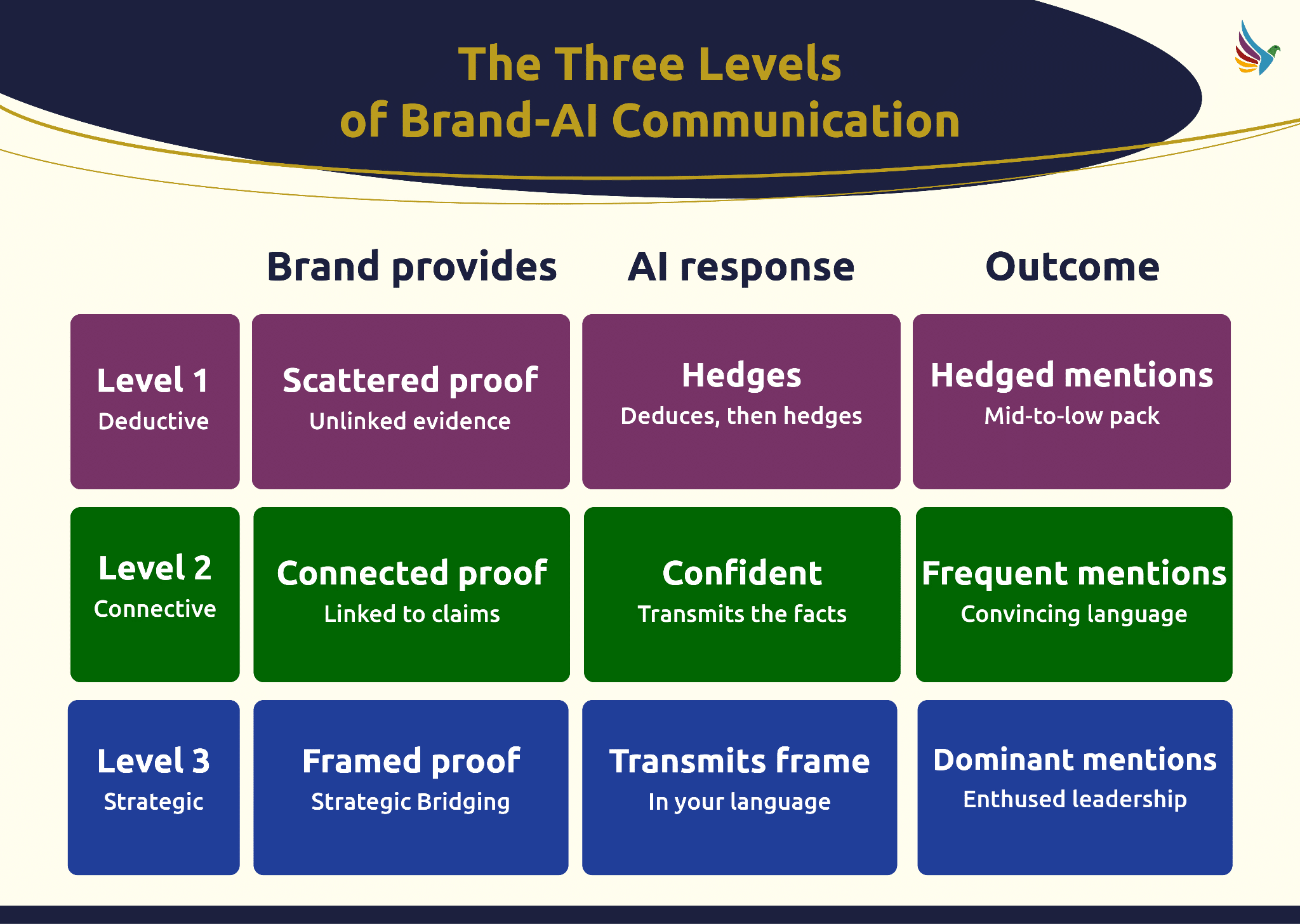
    I use an approach called “empathy for the machine,” which helps brands create content that AI can easily comprehend and relay, rather than leaving connections for AI to interpret independently.

    This method enables a three-tiered communication with AI, evolving from mere proof of claims to frames that the AI can transmit seamlessly to your audience.

    Level 1: Scattered Proof of Claims

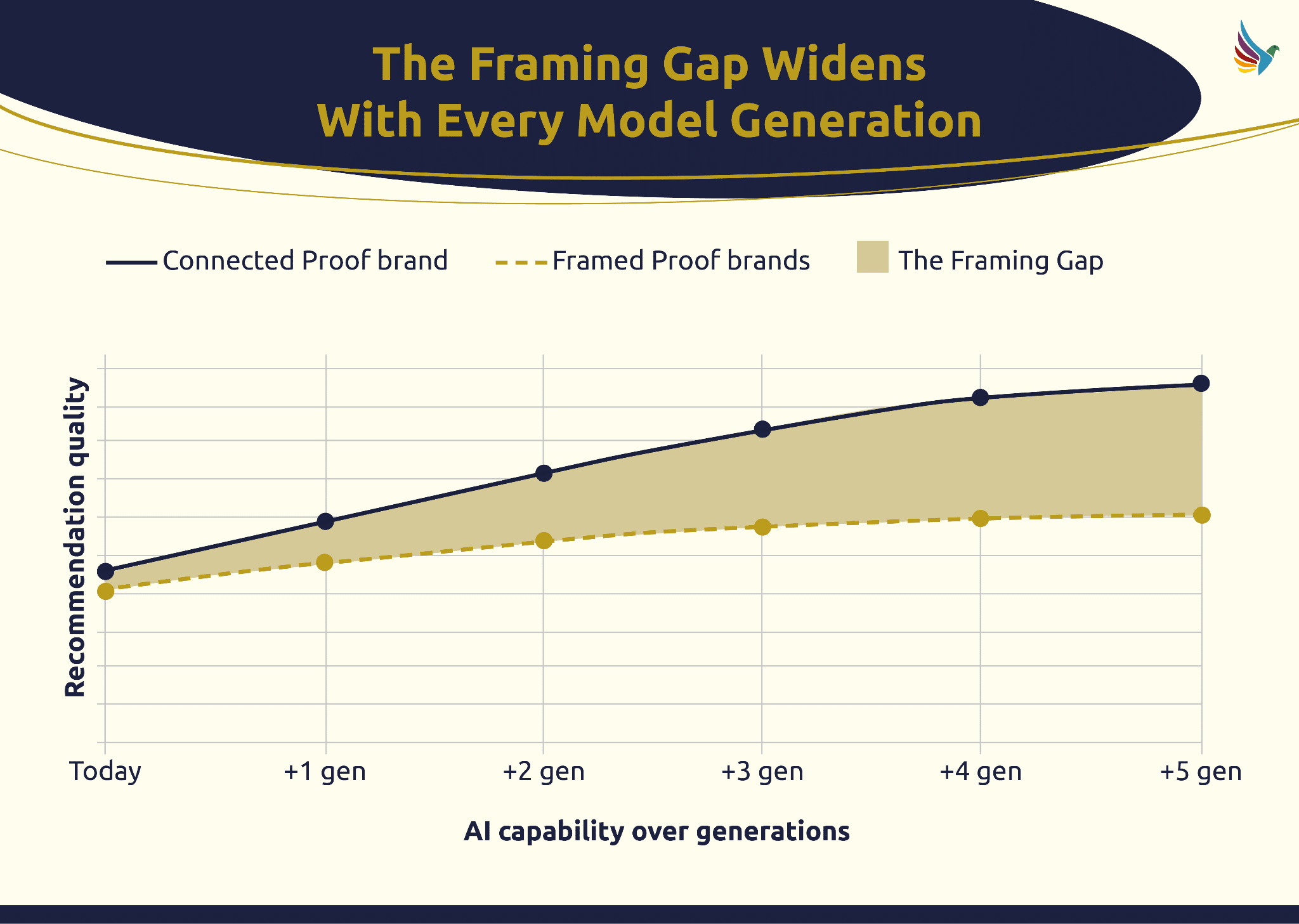
    Many brands rest here—proofs exist in separate spaces, disconnected, leaving AI to infer relationships. The reality is that without explicit links, much of this value is lost.

    Without these connections, AI struggles to assert your brand’s credibility, potentially leaving valuable insights untapped.

    ```json
{
  "alt": "Graph showing the increasing gap in recommendation quality between Connected Proof and Framed Proof brands over five AI generations.",
  "caption": "Discover how the Framing Gap widens with each AI generation. This graph illustrates the growing disparity in recommendation quality between Connected Proof and Framed Proof brands.",
  "description": "This image features a line graph titled 'The Framing Gap Widens With Every Model Generation,' comparing recommendation quality between Connected Proof brand and Framed Proof brands over five AI generations. The solid line represents Connected Proof, while a dashed line shows Framed Proof. The shaded area between these lines highlights the increasing Framing Gap. The x-axis marks AI capability over generations from 'Today' to '+5 gen,' and the y-axis indicates recommendation quality. Keywords: Framing Gap, AI generation, recommendation quality, Connected Proof, Framed Proof."
}
```

    Level 2: Connected Proof of Claims

    At this stage, connections via copy, hyperlinks, and schema are established, significantly reducing the AI’s workload and increasing your brand’s credibility.

    Proper connections allow AI to confidently present your brand’s claims as facts, significantly enhancing its visibility and competitive positioning.

    Level 3: Framed Proof of Claims

    This is where strategic framing really takes shape—bridging claims, proofs, and strategic insights to position your brand distinctly in the market.

    With well-framed claims, AI doesn’t just confirm but actively advocates for your brand’s superiority, making your voice the narrative AI conveys to the world.


    Inspired by this post on Search Engine Land.


    crushpress.ai community screenshot