As I see it, the focus of SEO in 2026 has shifted dramatically. Now, recognition has taken precedence over traditional rankings. It’s fascinating how visibility today is essential and influenced by factors like authority, brand presence, and clarity of information across the entire web, not just our position on the search results page.
For almost two decades, our main goal was to secure the top spot on search results. It felt like a game where rankings equaled visibility and traffic. But now, that premise is evolving faster than ever, reshaping the very essence of SEO.
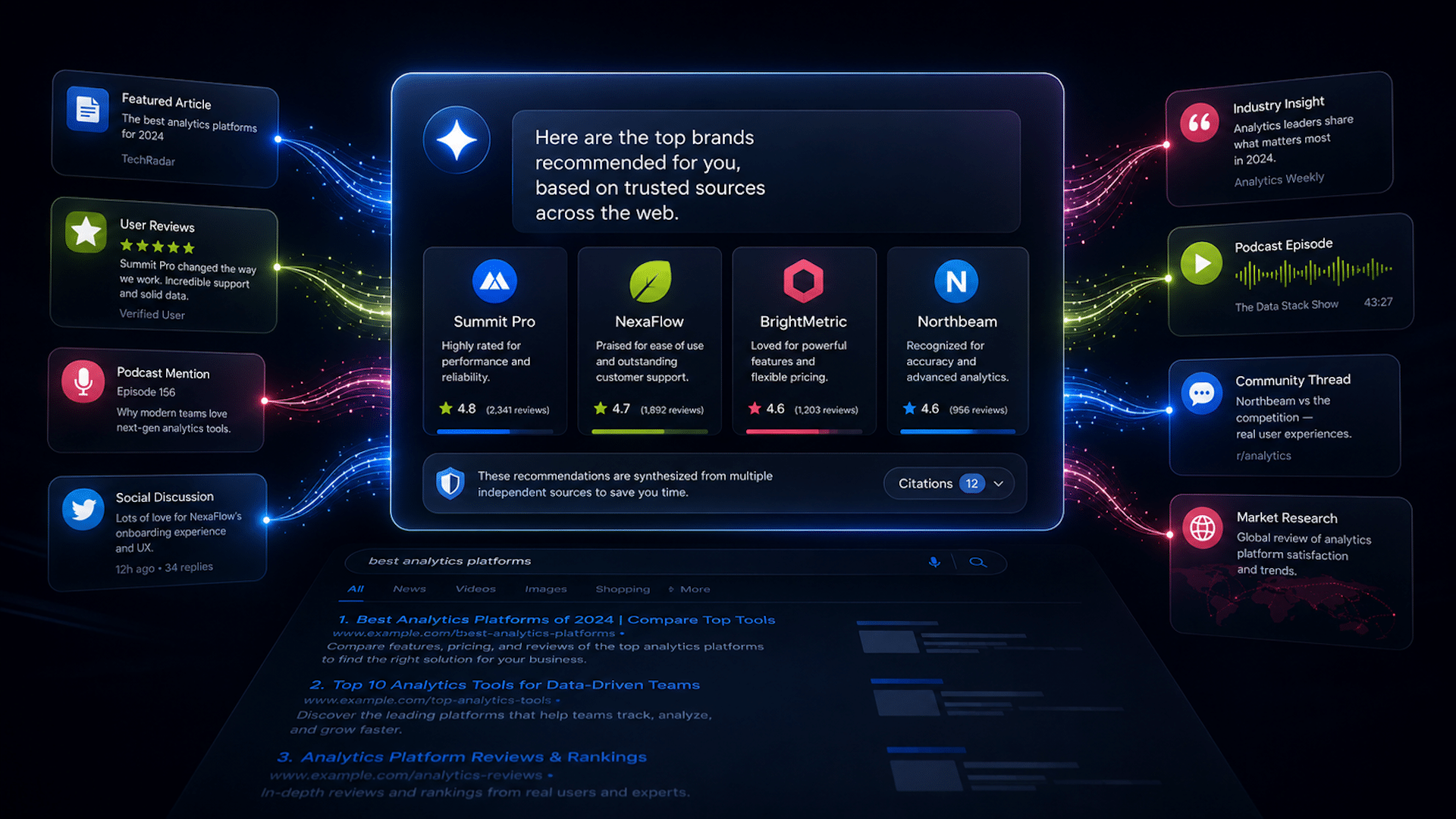
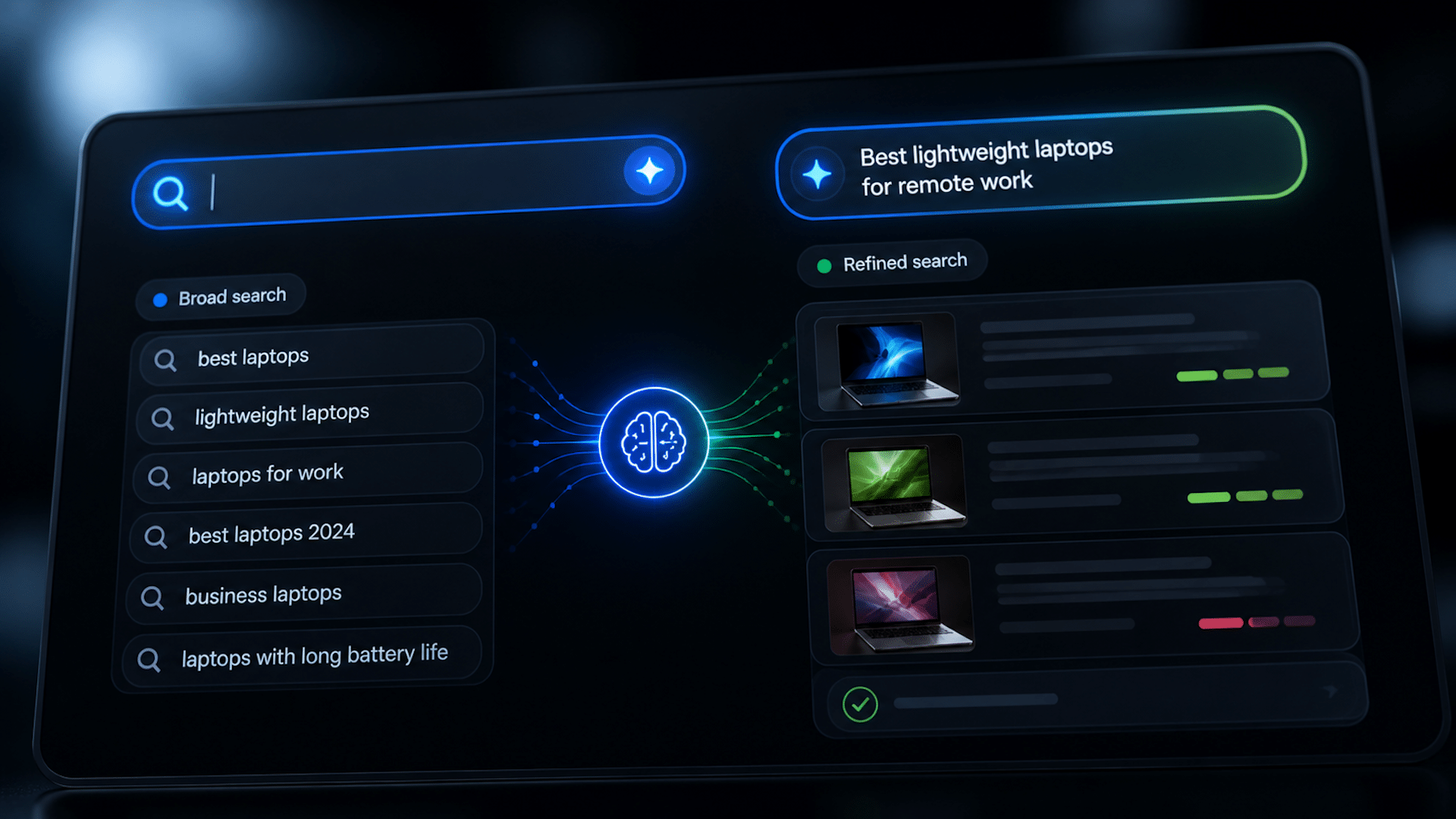
AI overviews and platforms are altering how people interact with online information. We’re noticing zero-click searches becoming the norm, demanding a shift from traditional tactics to a fresh perspective where recognition is the ultimate goal.
SEO has always followed the algorithm’s lead, adapting to its signals. Yet, this time, the change feels deeper. I find myself questioning how we can ensure our brand is preferred in a conversation, moving beyond just ranking well.
With AI transforming what searchers see, our high-ranking pages need more than just good positioning. They require acknowledged authority — being known, cited, and trusted beyond our own domains. This approach ensures that when AI platforms provide answers, our brand stands recognized.
User behavior is also shifting. I see more users getting their answers directly from AI without even clicking further. This world demands that our strategy aligns not just with ranking questions, but with how our brand becomes the preferred conversation choice.
It’s crucial to understand how AI ‘chooses’ which brands to recognize. It requires a brand’s consistent presence across various platforms and discussions, beyond just search engine results. It’s about accumulating recognition over time and ensuring we’re part of those trusted domains.
Recognition also involves having clear entity presence, being cited in meaningful contexts, and ensuring authority across relevant topics. For me, this extends beyond just SEO; it’s building our presence across the vast digital landscape.
True recognition requires a deliberate and strategic approach. It might be slower to achieve but offers a long-term durable advantage. It’s about setting ourselves up to become respected authorities that AI systems—and users—genuinely trust.
These days, simply fixing technical SEO issues on my site isn’t enough to make a significant impact.
When my site achieves technical parity with competitors, the ranking focus shifts from infrastructure to relevance. Google evaluates relevance based on how well my content aligns with search intent.
Let’s explore how I can make my site more relevant.
Why an intent mismatch may be suppressing my site’s performance
An intent mismatch happens when the content on my page doesn’t meet user expectations. If the page isn’t relevant or the signals sent are mixed, it results in poor behavior signals, like users bouncing off the page without finding answers.
These signals suggest to Google that my page doesn’t satisfy the query, causing ranking drops, fewer users viewing the page, and worsening behavior signals. It’s a situation that technical SEO alone won’t solve.
Technical SEO improvements may no longer make a difference
Initially, when I start an SEO strategy, improvements come quickly. If my website lags in technical standards, resolving crawl errors, addressing duplicate content, boosting page speed, and adding schema can result in significant gains.
However, once these changes place my site on par with competitors, Google evaluates sites based on user query satisfaction. Now, my technical foundation is solid, but the rules have changed.
Intent alignment becomes the primary improvement focus here.
Signals that reinforce search intent
Various elements affect a page’s intent and Google’s decision on whether it matches. These include:
Click-through rate.
Engagement signals.
Core Web Vitals.
Schema type.
Internal linking anchor texts.
URL structure.
Click-through rate (CTR)
My CTR can be influenced by factors like my title tag, meta description, URL structure, and schema, all measured against intent.
If my title tag is well-optimized yet mismatched with user queries, CTR will drop. Google sees low CTR as a relevance signal and adjusts rankings.
Engagement rate
Intent misalignment can harm time-on-page, scroll depth, and interaction rates. A user searching to purchase something might exit immediately if they land on a how-to guide. Similarly, a user seeking an emergency plumber might bounce from a page lacking contact details.
Core Web Vitals (CWV)
LCP, INP, and CLS measure page load speed. A slow transactional page frustrates users ready to buy, whereas informational article readers are more patient.
While CWV thresholds matter everywhere, they heavily impact conversion and behavior on high-intent pages.
Schema type
Schema markup explicitly tells Google the page content type. Contradictory content and schema signals send Google a wrong intent signal, affecting traffic.
Internal linking anchor texts
Internal link anchor text informs Google about the linked page’s intent. If a transactional page’s links use informational text like “learn more about X,” intent signals get diluted.
URL structure
Google uses URL patterns to infer page type. For instance, URLs in /blog/ are seen as informational. A product page in a blog path may struggle with ranking expectations.
Cannibalization and canonicalization
Multiple pages targeting the same keyword with different intents dilute Google’s signal, hindering ranking. Using canonical tags can emphasize the preferred page for a keyword, consolidating or redirecting when necessary.
How to fix intent misalignment
Let’s consider a common intent mismatch and steps I can take to audit and fix it.
What an intent mismatch looks like
If someone searches for “financial analysis software,” they intend to purchase software, a highly transactional query. Targeting this keyword with an informational blog post explaining DIY analysis creates a mismatch.
These users want to compare features and pricing or book a demo. Therefore, targeting the keyword with a dedicated page outlining features and pricing is optimal, aligning with user needs and boosting conversions.
Identify the intent of my pages
To remedy intent mismatches, I start by compiling top-performing keywords and manually checking their Google rankings. This research shows what type of page and content best suits these keywords.
See what my competitors are doing
By researching competitors’ pages targeting my keywords, I note elements they include, such as tables, comparisons, or videos, which can inform improvements on my pages.
Measure my page’s performance based on intent metrics
After making page improvements, I track performance indicators like clicks, rankings, and time on page to evaluate the effectiveness of changes.
Technical SEO and intent need to work together
Technical SEO is vital; it lays the groundwork. Pages that aren’t properly crawled won’t rank to their full potential, regardless of intent alignment.
Intent alignment, however, dictates how high a technically sound page can rank and its conversion rate. Every page should have clearly defined intent supported by technical signals for reinforcement.
Over the years, I’ve noticed how digital marketing has settled into a predictable routine. It spans across various channels like SEO, content marketing, social media, and digital advertising. Yet, many of us relied too heavily on a familiar core strategy, often ignoring the potential of using every available channel.
This predictability was comforting. It allowed marketing teams, including mine, to stick to what worked, refining execution within a known framework. However, AI search has upended this comfort, exposing our inconsistencies. To truly succeed with AI SEO, it’s clear that I need to adopt a much broader strategy.
Over the last 15 to 20 years, I’ve observed how digital marketing comfortably fit into a predictable rhythm, with each channel having a designated role.
Content marketing, social media, SEO, and paid advertising followed habitual strategies. But this lack of variation led to a form of laziness in our approach.
This structure offered results, so we let the broader strategies slip away.
The issue? It gave us a false sense of security. We should have employed broader strategies all along, as they now drive real visibility in AI search.
AI has reshaped digital marketing, changing user search behavior and how brands are evaluated.
Traditional search relied heavily on algorithms and singular sources, whereas AI taps into multiple inputs across numerous sources.
These sources ought to be part of your marketing arsenal—representing your brand across social media, third-party directories, press releases, and more. In this new system, your website is just one element among many sources AI uses to comprehend your brand.
One of the most significant changes AI has introduced is how it has expanded the digital marketing landscape beyond the website. While having a robust website is crucial, it’s part of a much larger ecosystem now. The marketing strategy must adapt to this expansive landscape.
In the past, maximizing website visibility was often enough to yield results. However, relying solely on this approach no longer suffices. AI aggregates data from a wide range of sources, from articles and brand mentions to third-party profiles and published content, shaping its understanding of who you are.
Focusing exclusively on the website restricts AI’s ability to locate and understand your brand.
Most marketing programs, especially those established before AI’s time, fall short here. To modernize, it’s vital for a brand to be visible across a more extensive range.
AI prefers brands that establish an intentional online presence, showing up with purpose across the internet.
A fragmented marketing approach, which worked in the past, now falls short. Previously, each successful channel felt effective and met our goals, but AI demands more. It looks for consistent messaging and expertise, linking various online signals to assess your brand’s presence.
When these signals are aligned, your brand’s visibility in AI search improves. Inconsistent or weak broader presence translates to weaker visibility.
Lazy marketing approaches—sticking to separate channels using the same old tactics—are now exposed. This approach may have yielded results once, but those days are numbered. It’s crucial now to go beyond that—to present your brand on multiple platforms, so AI can find you.
If your competitors enhance their presence, failure to do the same will leave you behind as they occupy more space in AI-generated responses.
As AI exposes any inconsistencies, it’s time to transition into the era of AI search.
It’s essential now to transition beyond older models and adopt newer strategies suitable for digital marketing. The tactics that always worked like press releases, directory listings, and marketing beyond just your website, should have been in use all along.
AI search doesn’t rewrite marketing rules; it enforces the importance of a comprehensive strategy. This means we can’t afford to do less anymore.
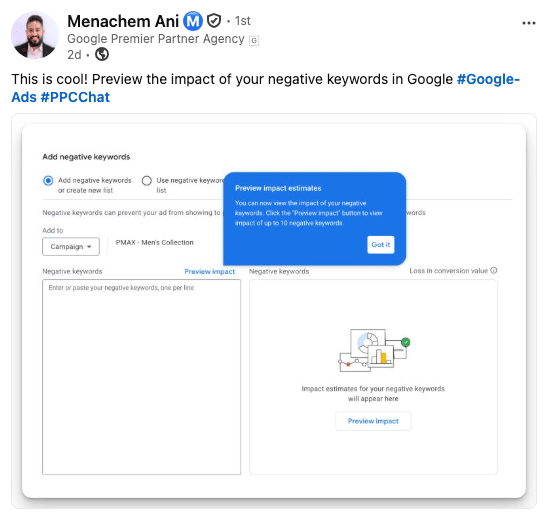
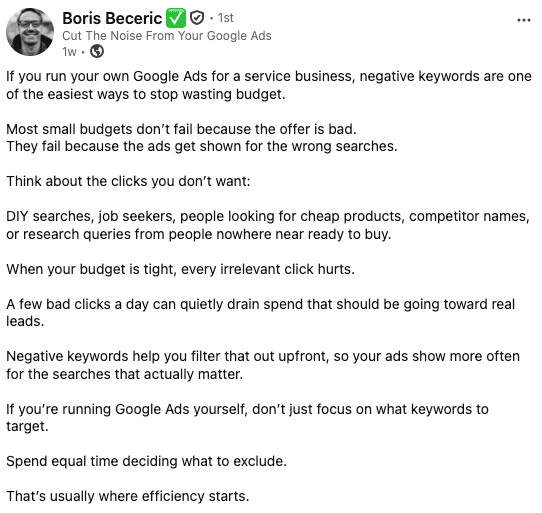
I’ve always believed that negative keywords are more than just a checklist. In 2026, they represent strategic decisions that shape how the algorithm interprets your ad account.
If you’re still viewing negative keywords as a mere maintenance task, you’re missing out. Each exclusion signals who you intend to target, what you’re willing to pay for, and how you expect your campaigns to perform.
Let me share six key decisions that define today’s negative keyword strategy, and explain their growing significance.
Negative keywords help shape our campaigns so the right ad appears in front of the right audience. Achieving alignment between the user’s search query, your ad, and the landing page is crucial for creating an exceptional user experience.
When this alignment is absent, budget is wasted, click-through rates (CTR) decline, Quality Scores suffer, and cost-per-click (CPC) rises. These challenges can make the algorithm seem like it’s working against you.
However, many of us weren’t taught how negative keywords fit into an overall account strategy, only how to add them. Let me delve into these six critical strategic choices.
Determining how aggressive to be with negative keywords is the first decision every account manager needs to make, yet it’s often overlooked.
Are you relentlessly removing every low-performing search term? Are you deliberately allowing space for keyword opportunities? Or do you find yourself somewhere in between?
There isn’t a universal right answer, but it is essential to choose your level of aggression. A growth-focused account may need a less aggressive approach, whereas an efficiency-focused account might require more aggression. This choice should align with the account’s goals and performance metrics.
Using the right match types for negative keywords is crucial. Most advertisers default to one type without understanding why.
Here’s my breakdown:
Use negative exact match for strictly removing specific long-tail variations, negative phrase match for groups of related queries, and negative broad match for eliminating words that indicate a misaligned audience.
A well-thought-out negative keyword strategy utilizes all three match types, each serving a distinct purpose.
When should you add negative keywords? This is a consideration I’ve seen approached in various ways by different account managers.
Some add negatives weekly regardless of data, while others only when conversions drop, or during quarterly reviews. The right approach depends on your goals and data-driven insights.
For growth-focused accounts, trigger addition when a query exceeds three times your target CPA over 90 days without conversion. For efficiency-focused accounts, use a stricter budget-focused trigger.
The timeframe for reviewing data when deciding on negative keywords is another crucial factor.
A 30-day window might be too aggressive unless dealing with short-term promotions. A 90-day window is balanced and often recommended, while a 365-day window may be conservative, excellent for long buying cycles.
Choosing the correct timeframe informs smarter strategic decisions.
The role of AI in campaign sculpting through negative keywords is increasingly pivotal.
Decide how much control you want versus how much you rely on the machine. Some eliminate competitor keywords, yet others let them through for conversions.
While AI holds more information than us, sculpting is necessary for communicating your intent.
In 2026, we have more options than ever for managing negative keywords effectively.
You can conduct a manual review, use AI tools for suggestions, or let AI handle it fully. The key is balancing efficiency with oversight according to the comfort level and stakes of the account.
In every era, a few principles remain true. Keep your search terms report in check, make sure to update negatives as your campaign evolves, and always remain flexible to changes in user intent.
Ultimately, efficient advertising starts with strategic exclusion. What we choose not to target often holds equal importance to what we do target.
When I first looked at my SEO data, everything seemed perfectly fine. All metrics from Google Search Console, traffic, and indexing were normal without any red flags. But then, I decided to dig deeper using Scrunch, our AI citation monitoring tool, to examine the platform presence for searchinfluence.com over the past 30 days.
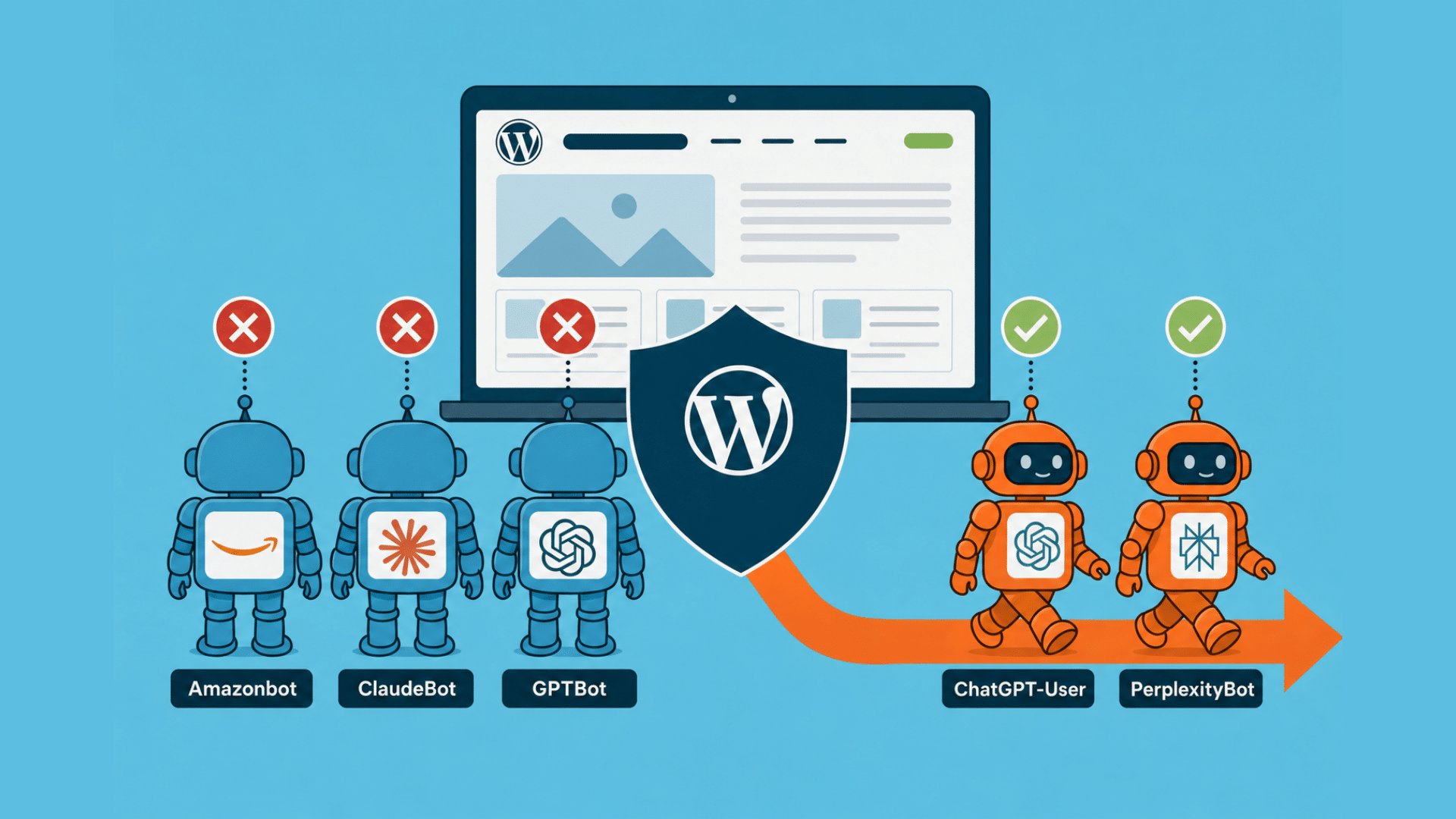
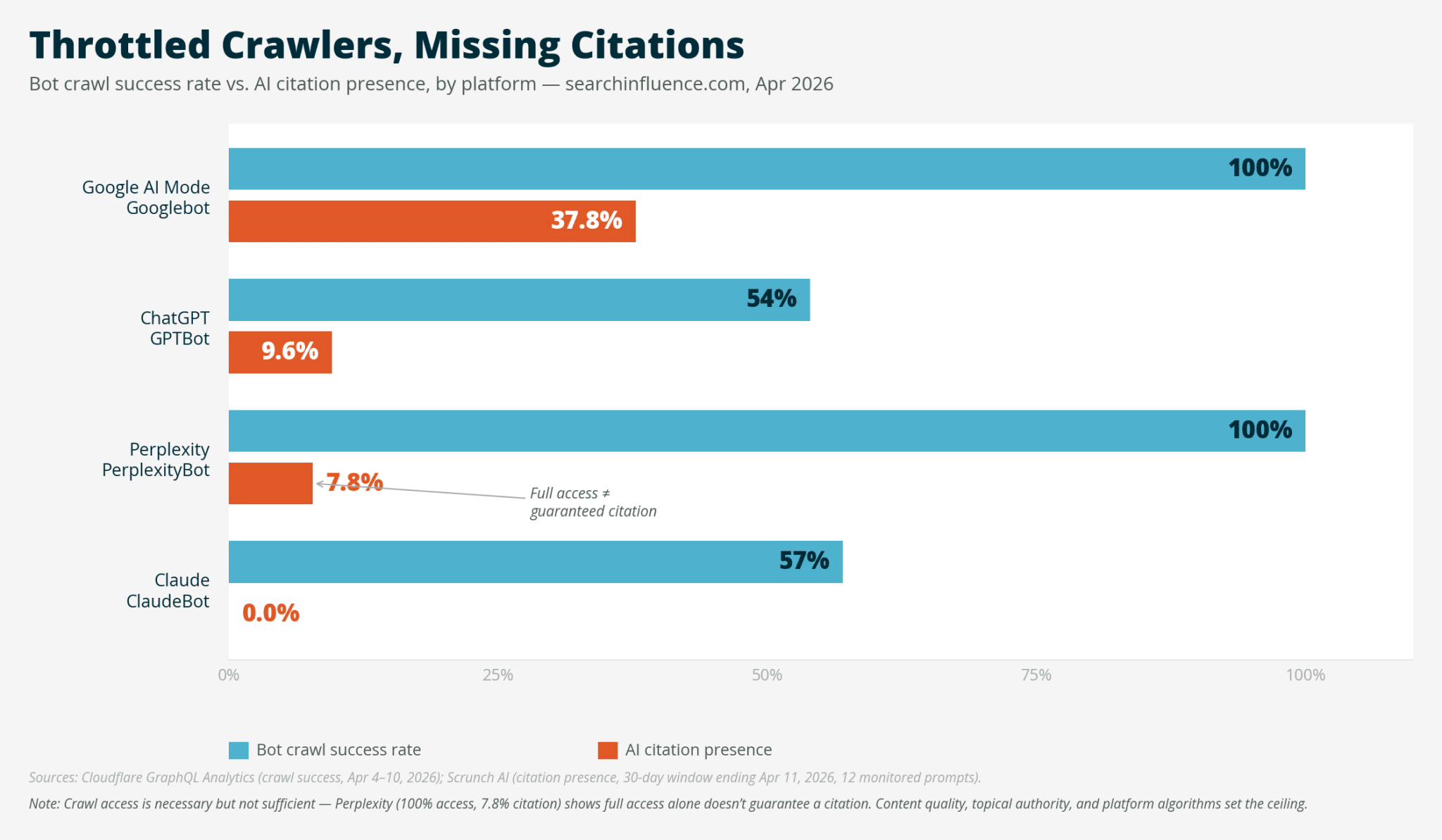
Here’s what I found: Google AI Mode showed a presence of 37.8%, Copilot at 22.2%, Google Gemini at 16.3%, ChatGPT at 9.6%, and Perplexity at 7.8%. Alarmingly, both Claude and Meta AI were at 0.0%.
Two platforms had zero presence. Given that every crawler reads the same site, differences in content quality or topical authority couldn’t explain this discrepancy. The only factor that varied was crawler access.
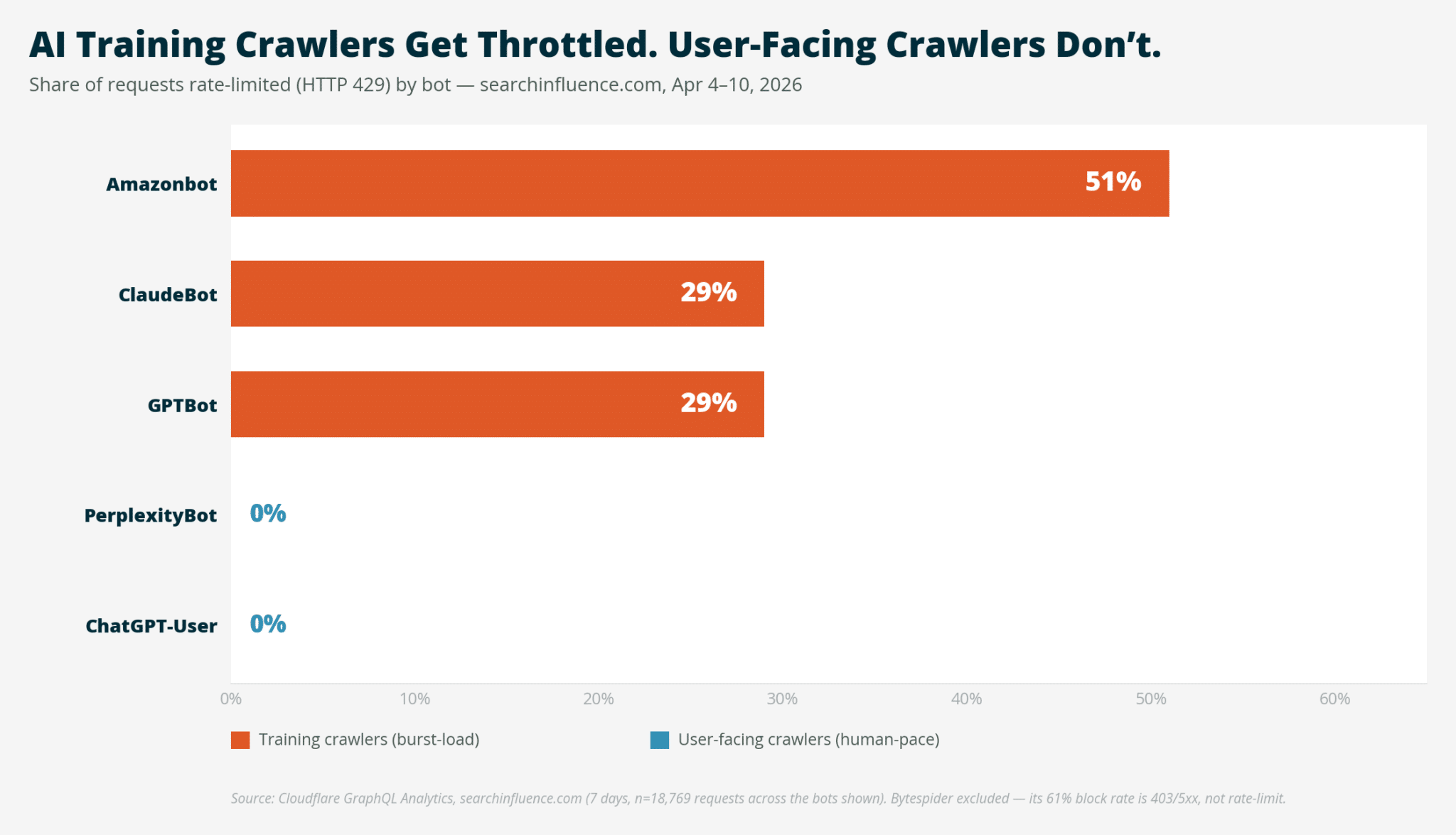
To understand this further, I analyzed seven days of Cloudflare logs and discovered 29,099 bot requests, with 65.8% involving AI bots. The requests rate-limited with HTTP 429, or “too many requests,” were interestingly varied by bot user-agent.
Training crawlers that make bulk requests are throttled, while user-facing crawlers that mimic human pacing during live queries aren’t. For example, ClaudeBot made 20,583 crawl requests for each referral returned.
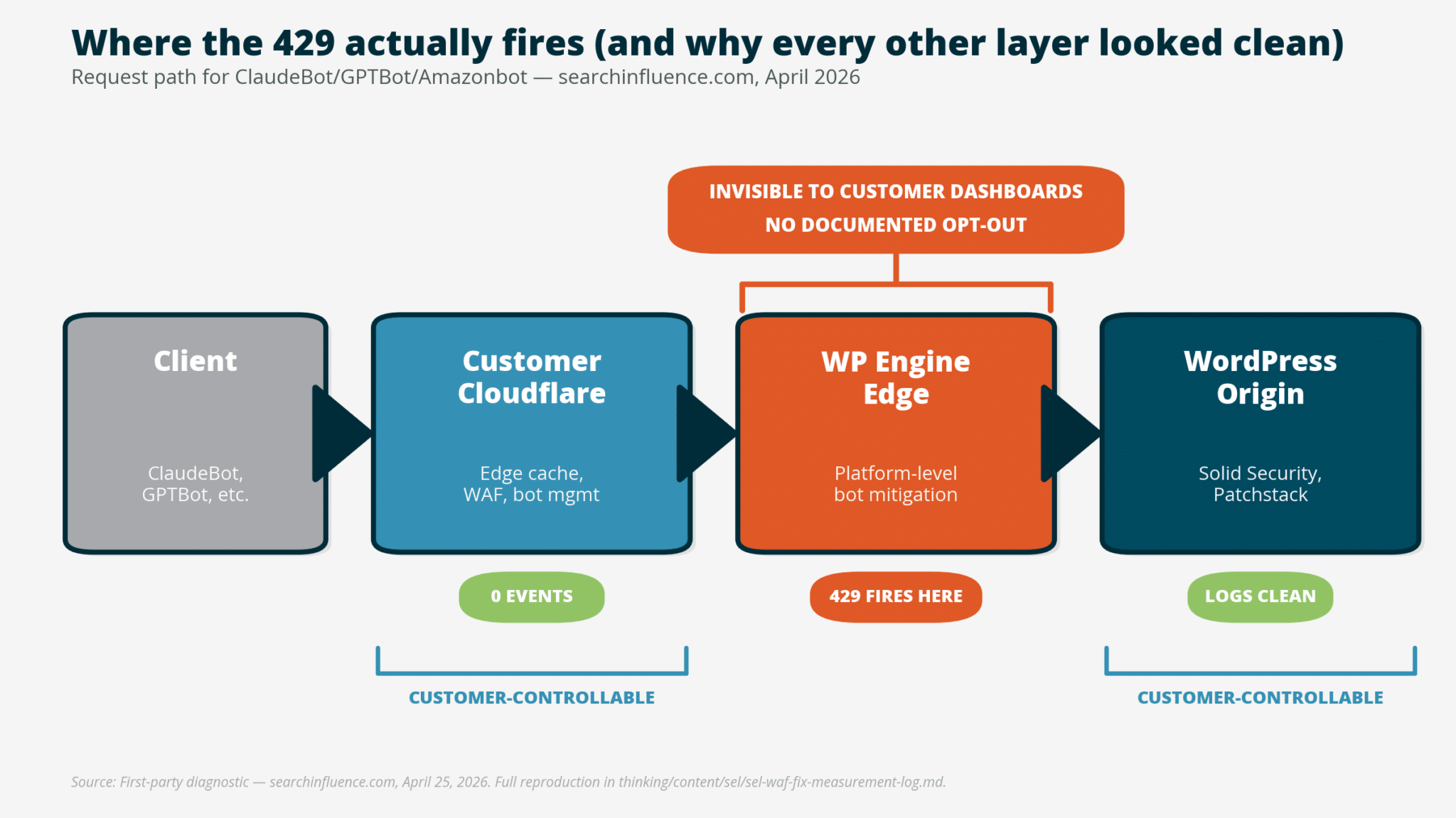
My assumption was that the 429 errors originated from Cloudflare, perhaps due to a web application firewall (WAF) or security plugin interference. I went down a rabbit hole investigating multiple layers. It was time-consuming and ultimately unnecessary.
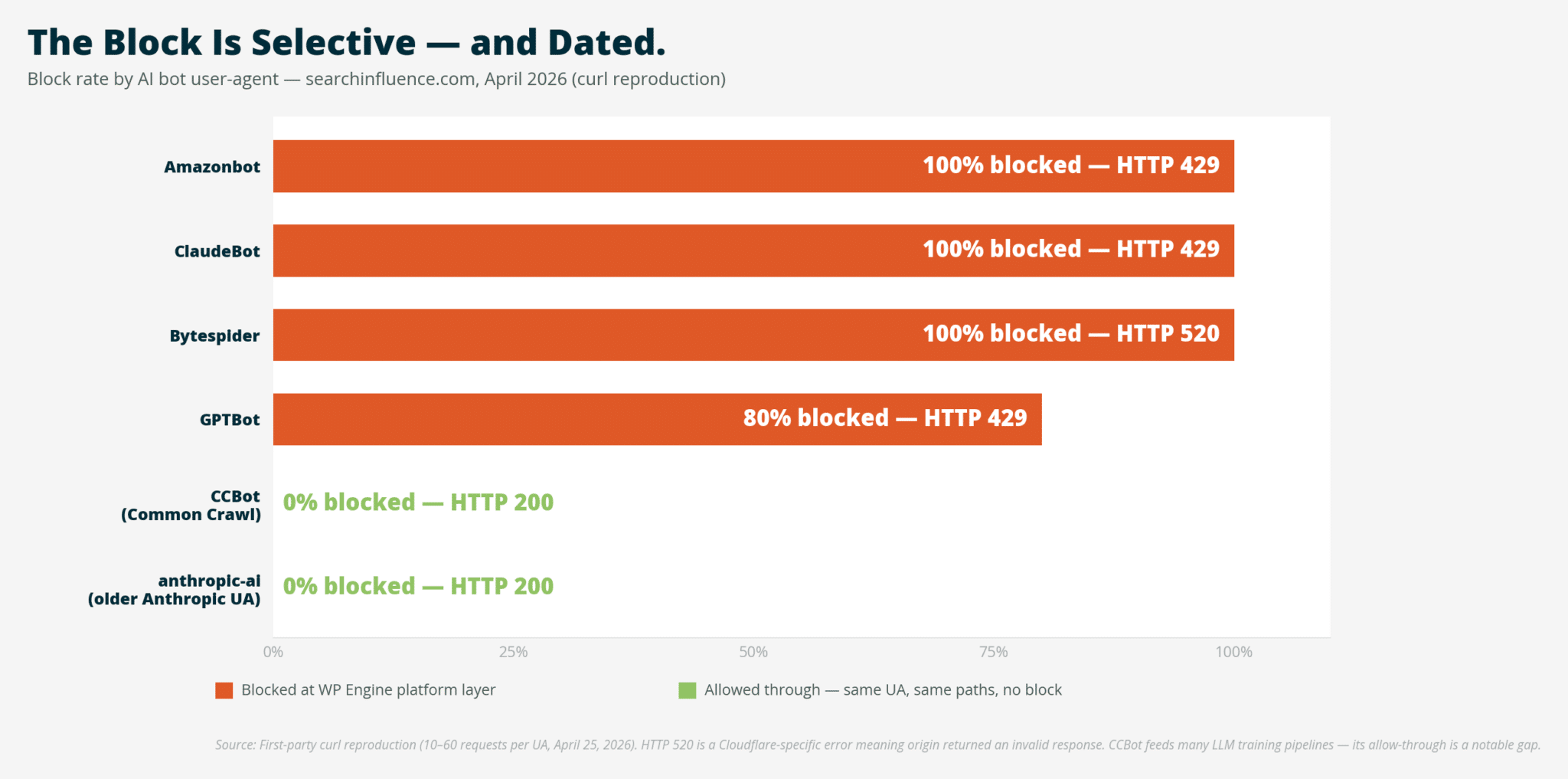
The truth emerged when I performed a reproduction test using curl requests, revealing that the block was based on user-agent, not path or rate. The realization hit when I discovered the x-powered-by header: WP Engine hosted our site, and the block came from their platform infrastructure.
I then tested other AI bot UAs and crafted a fingerprint for each, discovering that the blocklist was outdated. While some bots were blocked, others like Common Crawl passed through unaffected.
In conclusion, while WP Engine’s firewall, documented on their support page, was intended as a security measure, it wasn’t transparent to customers. Identifying these blocks requires specific diagnostic steps, and the process taught me much about managed hosting’s hidden layers.
I’ve noticed that more and more of us are finding ourselves suddenly and, at times, permanently locked out of our Facebook accounts. What used to be just an occasional issue has turned into a widespread frustration impacting not only everyday users but creators and business owners as well.
So, what’s driving this increase? It’s a mix of AI moderation, enhanced security protocols, platform dynamics, and changing user habits. Let’s dive into the underlying factors behind this trend.
The rise of AI moderation — and its tradeoffs
At the core of this issue is Meta, Facebook’s parent company, which relies heavily on artificial intelligence to oversee user activities across billions of accounts. These AI systems are tasked with:
Identifying harmful content,
Thwarting scams and abuse,
Enforcing community standards at scale.
However, there’s a significant tradeoff with AI moderation. Unlike humans, AI struggles to grasp context and nuance, which often leads to:
Flagging normal behavior as suspicious,
Misinterpreting the context of communications,
Imposing account restrictions based on patterns instead of intentions.
This has triggered an increase in false positives, where users find themselves unjustly locked out. Reports of wrongful account deactivation are rampant, typically due to AI-only moderation with little human oversight. Astonishingly, appeals can sometimes be resolved immediately, hinting at minimal human involvement despite official policies.
Account takeovers are increasing
With the surge in cybercrime over recent years, social media platforms have increased their security measures. Facebook now deploys more aggressive signals to spot:
Logins from unfamiliar locations or new devices,
Frequent changes to account settings,
Unusual messaging or posting patterns.
While these steps aim to block malicious actors, they also come with unintended side effects:
Travel, using a VPN, or device changes can cause lockouts,
Legitimate users may be snared alongside malefactors.
When hackers access an account, they often alter the registered email and password, activating security alerts and locking the original owner out entirely. From Facebook’s viewpoint, the account is indeed compromised; however, recovery processes don’t always fast-track access back to the rightful owner.
The role of new features and identity verification
In recent years, Facebook has introduced new security layers, including:
Two-factor authentication,
Identity verification checks,
Paid support options connected to account verification.
While these features enhance security, they also introduce complications, making account recovery more cumbersome:
Adding steps to recover accounts,
Creating barriers for users who struggle with identity verification,
Causing lockouts when verification fails.
Some users report being asked to submit identification several times without resolution, escalating the frustration.
The business incentive behind platform changes
Meta’s motivations for investing in AI moderation and automated enforcement boil down to cost-effectiveness. Automation provides instant scalability, reduces operational expenses, and manages ‘standard’ cases effectively. However, this efficiency comes at a price. For those outside agencies or larger entities operating within Business Manager, finding significant support can be a challenge — leaving some of us without a clear path for escalation.
Meta’s commanding position in the social media advertising space, coupled with robust financial performance and political influence, leads to minimal external pressure to reform its support systems. Meanwhile, search queries related to account recovery are often dominated by Meta’s resources, directing users back into the same narrow support ecosystem, even when alternative solutions might exist.
Platform scale is working against users
One can’t ignore the sheer enormity of Facebook’s operations. With a global user base of billions, even minor error rates can affect millions of individuals. Consequently, Meta’s support systems can’t possibly offer personalized support to everyone, leading to automation as the norm, despite its imperfections.
Additionally, internal fragmentation complicates matters further. Facebook isn’t a singular system — it’s an expansive ecosystem including personal profiles, Pages, ad accounts, Business Manager, and platforms like Instagram, Threads, and WhatsApp. Each operates with distinct rules and support channels. When issues traverse multiple systems — as they often do — no single team fully ‘owns’ the problem, making resolutions slower, more complex, and harder to navigate.
What can seem like a deeply personal problem is often the result of a system optimized for global efficiency, sometimes at the expense of individual support. Facebook aims to minimize risk on a large scale, which can clash directly with the need for prompt, personalized support.
Lack of human support and regaining access
One of the ongoing frustrations isn’t just the lockouts but what follows them. Many users, including myself, face challenges such as:
Limited access to human support,
Automated replies that fail to address the issue,
Confusing or ineffective recovery workflows.
Although Meta is introducing new support tools, much of the assistance process remains automated. If your problem doesn’t fit perfectly into one of their defined categories, resolution becomes even more challenging.
This is primarily because Facebook’s support system is structured around rigid, predefined pathways like “my account was hacked,” “I can’t log in,” or “my ad was rejected.” But most issues don’t neatly fit into one of these categories. They’re often multifaceted: part hack, part lockout, or linked to both personal and Business Manager accounts, further complicated by unclear or incorrect policy flags.
When my situation doesn’t match a single category, the system struggles to process it correctly. Instead of progressing towards a solution, I’m often routed through repetitive workflows — submitting forms that don’t entirely apply — leaving me trapped in exhausting loops without a clear way forward.
William Jennings, who runs WKJ Consulting, a social account recovery consultancy, has observed how these gaps have led to an underground recovery market. Some dubious services even exploit locked-out users by demanding payments through unconventional means like game credits — a problem that persists because legitimate recovery channels remain limited.
Accounts that link through Meta’s Account Center (including Facebook and Instagram) generally have a more straightforward recovery process. Sometimes, users can subscribe to Meta Verified on a linked Instagram account to access chat support and initiate an administrative claim.
Jennings highlights that:
“Meta Verified acts almost like paid protection — approximately 90% effective in preventing wrongful restrictions or disabling, though it doesn’t offer a guarantee if the rules are violated.”
A well-structured recovery method often involves:
Subscribing to Meta Verified to gain chat support,
Filing an administrative dispute with necessary documentation (such as error screenshots, emails, account URL, and ID verification),
Escalating to legal support in more acute scenarios.
It’s crucial that hacked accounts follow dedicated channels like facebook.com/hacked or instagram.com/hacked, and it’s far more effective to focus on prevention than recovery.
After regaining access, it’s essential to undertake steps like enabling two-factor authentication, saving recovery codes, and adopting advanced security measures.
Enforcement has scaled — recovery hasn’t
Facebook lockouts are an inherent consequence of the platform’s development. As Meta continues to emphasize automation and efficiency, many of us engage with systems built for speed, security, and risk minimization.
Most of the time, these systems function silently in the background. But when they falter, it feels abrupt, opaque, and incredibly hard to navigate.
Access to meaningful support often correlates with high ad spend, established business accounts, and tied to paid verification products. This leads to an unbalanced support landscape where major advertisers receive better assistance, leaving individuals and small businesses with fewer options.
For a platform operating on a global scale, this setup is intentional. But for those entangled in the process, it’s incredibly frustrating.
I’ve noticed that what users type into search engines isn’t always a reflection of what they truly want. This drove me to explore how aligning intent signals, behavior, and branding can significantly enhance performance.
As someone deeply involved in PPC, I’ve held onto syntax-oriented keyword strategies for a long time. This was because of the gap between ‘query intent’ and ‘conversion intent.’ For years, relying on keywords has been my way to show I understand my customers’ desires and to filter traffic through syntax-based signals.
With the shift towards more conversational queries and the rise of AI, understanding the difference between these two intents has become crucial to effectively meet user needs.
In this discussion, I’ll define query and conversion intent and share strategies to use them effectively. While these suggestions aren’t prescriptive, they provide a framework for analyzing your data and optimizing for your audience.
Disclosure: I’m a Microsoft employee, and some examples I’ll share are based on Microsoft tools, though the strategies are applicable across platforms.
Query intent refers to the underlying need driving the text input into a search function, whether it’s on a search engine, video platform, or within AI applications. Conversion intent, on the other hand, centers on the actual goals users aim to achieve, derived from their interactions and data points.
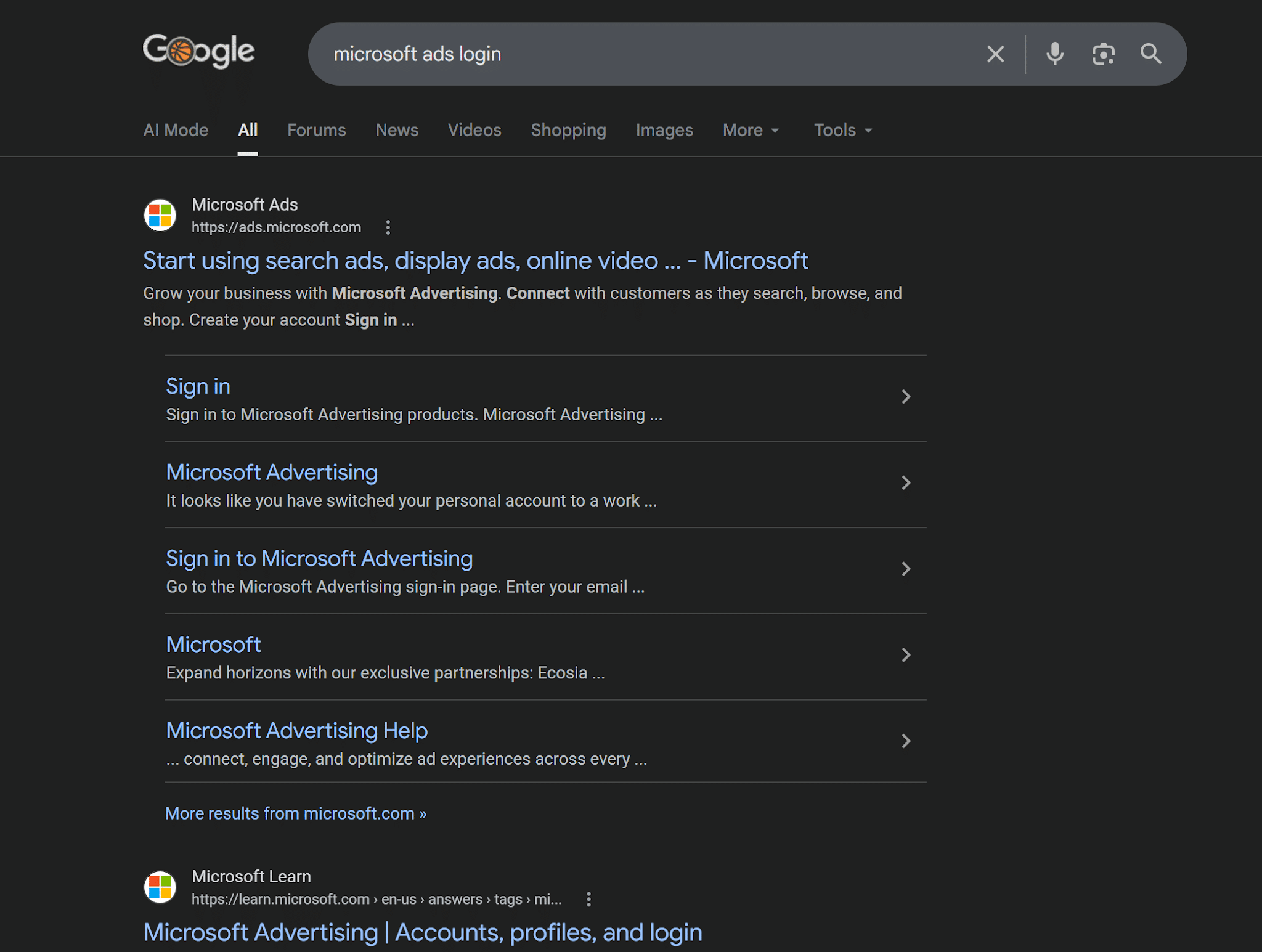
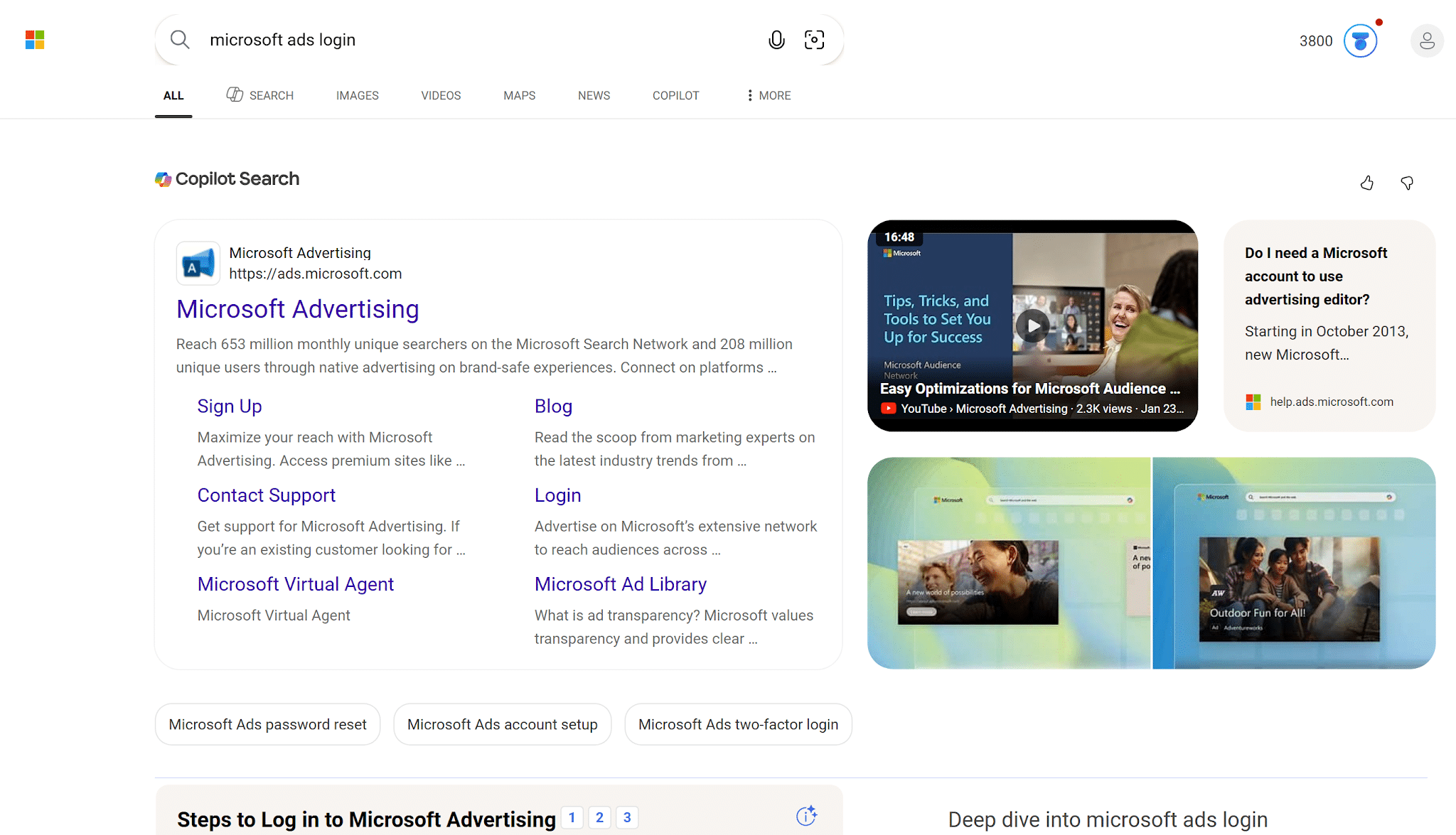
The confidence in understanding these intents varies, influenced by how explicit the text is and observed content consumption patterns. For instance, searching for ‘Microsoft ads login’ reveals a clear intent to log in, readily aligning with ads and content targeted at this action.
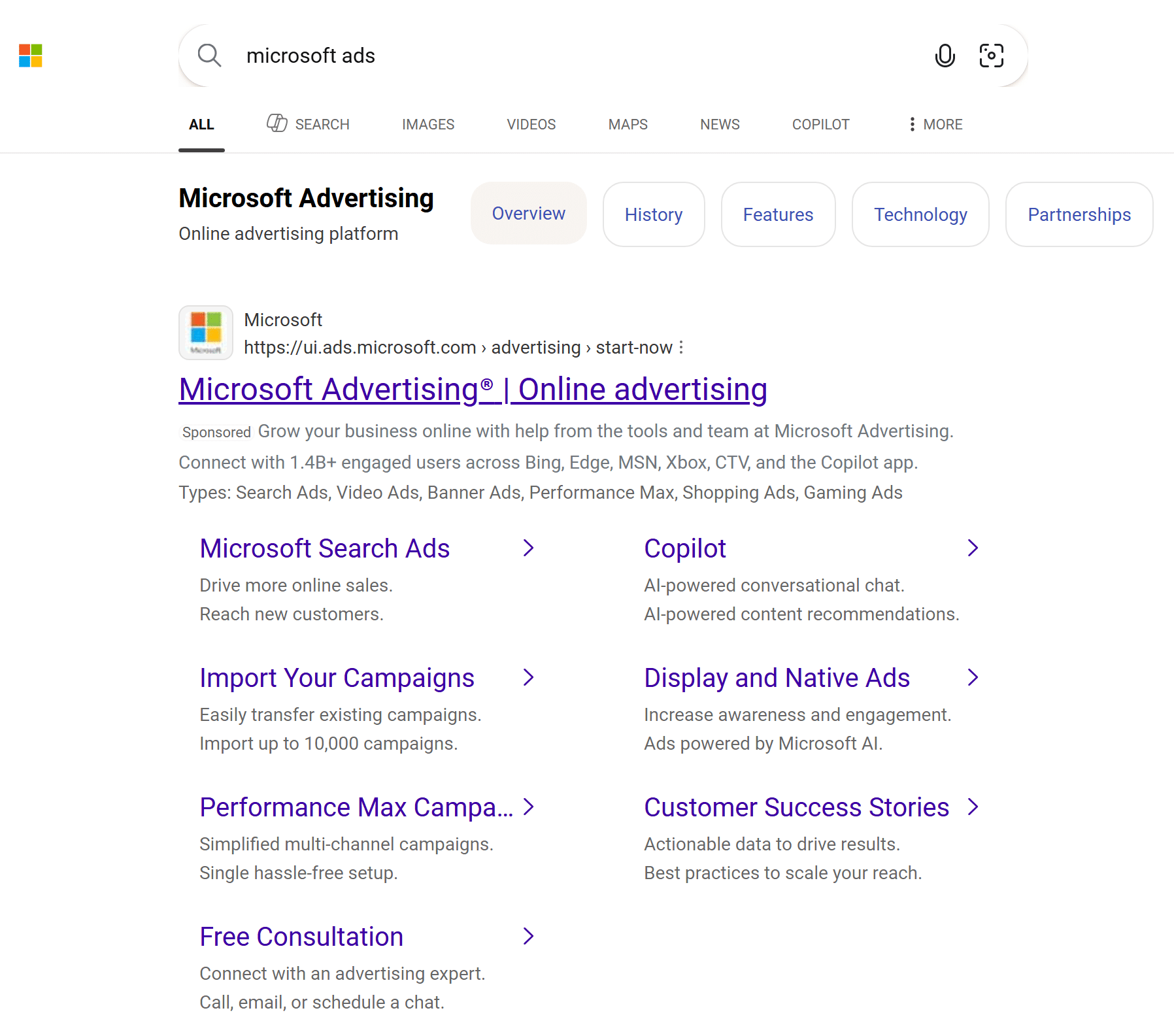
However, a query like ‘Microsoft ads’ is vaguer, prompting the need to draw insights from past engagement and search history to fulfill user expectations effectively.
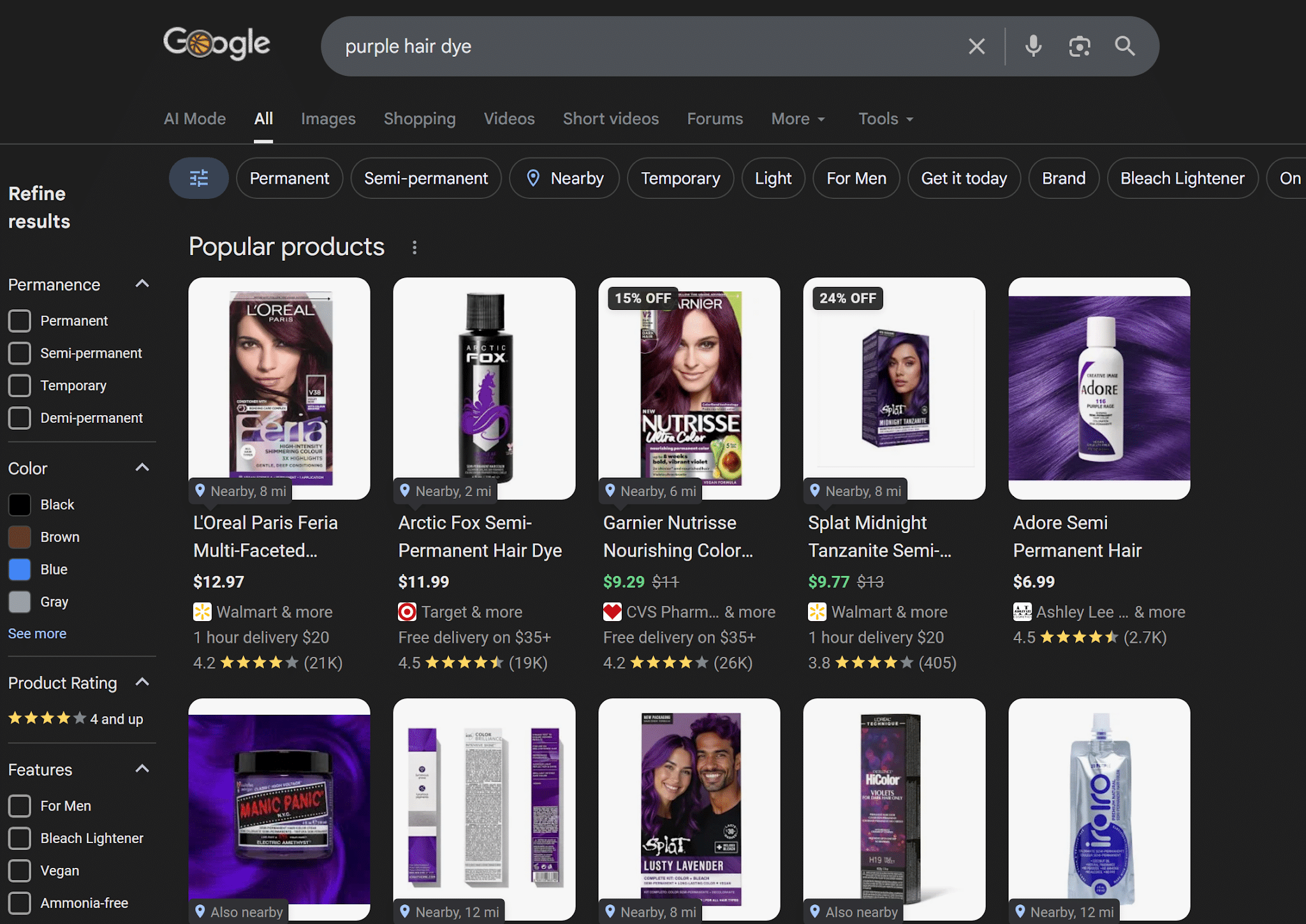
A non-branded query such as ‘purple hair dye’ shows a distinct transactional intent. Users have a general idea of what they want but not necessarily the brand, which necessitates a strategy that’s both inclusive and targeted.
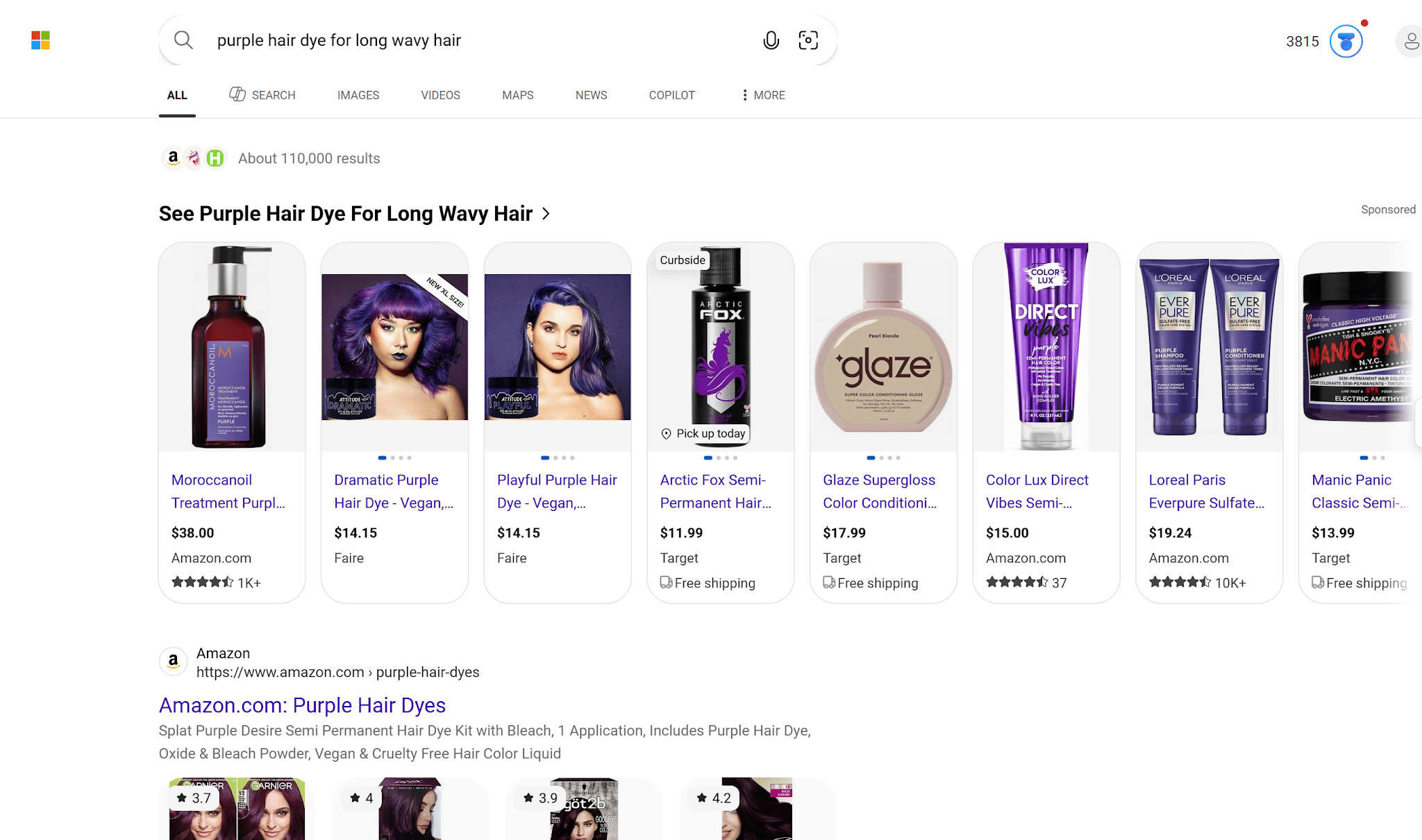
By understanding the core desires behind queries, such as ‘purple hair dye for long wavy hair,’ we can fine-tune our approach to align products or content that specifically meet user preferences and characteristics.
Combining close variants and recognizing interactions beyond SERPs, like social media and video content, helps us tap into insights that enhance brand recognition and audience engagement effectively.
Ultimately, aligning query and conversion intent needs careful planning and execution across both brand and performance marketing.
In February 2025, I watched a captivating display as humanoid robots graced the CCTV Chinese New Year stage. Although their steps were shaky, it was still delightful to witness.
A year later, these robots at the Spring Festival Gala had transformed, executing smooth moves, somersaults, and full kung fu routines. This rapid progression felt like a decade’s worth of technological advancement condensed into one year.
The technological leap wasn’t limited to robots. It raised a crucial question for digital marketers targeting the largest web population: How have China’s search trends evolved recently?
A parallel in the Chinese search landscape
We’re seeing early signs of a major shift. AI hasn’t replaced traditional search engines yet. Instead of a single breakthrough, change comes from consistent, subtle advancements.
New language models frequently emerge, each refined for a specific niche. Tech companies in China are increasingly sharing these developments openly, with players like Baidu integrating advanced models like DeepSeek into their platforms.
To understand the current search behaviors in China, we need to grasp the shift from simple link searches to more reasoning-based approaches and adjust our 2026 SEO strategies accordingly.
The great narrative fallacy: Is web search dead in China?
There’s a persistent narrative in marketing circles that traditional search, especially on Baidu, is obsolete — that everything is happening on platforms like WeChat. But how true is this?
The social supremacy argument
Indeed, China’s web is mobile-first and dominated by super-apps. While social media is pivotal, it’s not the sole avenue for B2C brands aiming to thrive amidst such a vast, versatile environment.
For instance, platforms like Xiaohongshu excel in lifestyle research, while Pinduoduo and Douyin are social commerce powerhouses. Meanwhile, WeChat is indispensable for everyday tasks.
The B2B reality check
For B2B sectors, dismissing Baidu is a mistake. Metrics show ongoing engagement and tangible results from Baidu SEO, often outshining Western counterparts in lead quality and conversion rates.
When B2B professionals seek industrial solutions, they prioritize verified websites over endless scrolling on social media apps, indicating an undying need for structured web searches.
Mapping the 2026 landscape: Intent-based specialization
As someone deeply integrated into the Chinese market, I’ve noticed that users select tools based on intent rather than defaulting to search engines. It’s an everyday occurrence here.
While optimizing for Baidu, others in my circle might be using Pinduoduo for deals or Xiaohongshu for travel plans. The right tool for the right task wins their clicks.
1. Traditional web search: The authority tier
Traditional search continues to dominate B2B and high-authority research areas. Baidu, despite narratives of its decline, remains central to mobile and web searches.
Baidu: Dominates mobile search with a vast user base. Though AI-driven, it remains a key player in web search.
Microsoft Bing: Offers a professional experience for a tech-focused audience.
Haosou (360 Search): Known for its security and enterprise-centric approach.
Sogou: Integrates with WeChat, bridging between app-based and traditional searches.
Google: Despite restrictions, it’s accessed by tech-savvy users via VPN for global insights.
2. Social discovery: The inspiration tier
Here, search turns into discovery. Users are led by interests rather than predefined keywords, making SEO a matter of being on the right social platforms at the right time.
WeChat (Weixin): For brand news and internal communications.
Xiaohongshu (RED): Essential for lifestyle and luxury brand discovery.
Douyin: Offers visual insights into product utility.
Kuaishou: Used predominantly in emerging markets for grassroots content.
Weibo: Ideal for real-time trends and news.
Bilibili: Focus on long-form video content and niche interests.
3. Ecommerce: The transactional tier
While Westerners often end their buying journeys on Amazon, Chinese users tend to both start and finish on the same platform, whether for variety or efficiency.
Taobao / Tmall: The prime destination for diverse product offerings.
JD.com: Favored for electronics and efficient logistics.
Pinduoduo: A leader in group-buy and value-driven purchases.
Douyin Mall: Capitalizes on impulse purchases through engaging content.
Xianyu (Goofish): Supports second-hand markets and niche hobbies.
4. Generative AI (LLMs): The reasoning tier
This emerging layer focuses on “thinking” searches where AI synthesizes data into insights rather than mere lists.
Doubao (ByteDance): Popular for casual queries.
DeepSeek (Domestic): Integrated with WeChat for deep logic queries.
Kimi (Moonshot AI): Specializes in handling lengthy documents.
Qwen (Alibaba): Plays a crucial role in business and coding tasks.
Tencent Yuanbao: Focuses on WeChat content.
Wen Xiaoyan (Baidu): Represents the next stage of Baidu’s AI search capabilities.
5. Hyper-local and logistics: The utility tier
This sector addresses immediate, location-driven demands, prioritizing services that cater to “now” and “near me” needs.
Meituan / Dianping: Leading platforms for food and leisure services.
Amap (Gaode) / Baidu Maps: Vital for navigation and local search optimization.
Ctrip (Trip.com) / Railway 12306: Key for travel and transportation booking.
From mapping to maneuvering: The Baidu specialist’s edge
Optimizing Baidu SEO extends beyond ranking web pages; it’s about mastering search landscape intricacies.
The ‘walled garden’ SERP: A decade of distraction
Focusing solely on Google-style tactics might overlook nuances like Baidu’s ad-heavy SERPs and content positions.
The ad-heavy layout: Ads can dominate substantial SERP real estate.
The Baidu monopoly: Prime organic positions often favor Baidu properties.
The portal giants: High-authority contributors also claim space within results.
Riding the Chinese SERP dragon
In this scenario, relying on long-tail strategies often proves more lucrative than targeting head keywords due to the complex Chinese language and diverse user base.
Whether leveraging platform authority or becoming a trusted contributor, it’s essential to adapt upcoming SEO tactics to sustain visibility.
What is changing in Baidu SEO?
The competition among AI models emphasizes versatility over loyalty, making Baidu SEO a nuanced challenge.
The AI-switching reality
Chinese users frequently shift between AI models, seeking superior intelligence or alternatives when certain models falter. This behavior means SEO must account for broader dynamics.
Brainstorming the wisdom platforms
Understanding the foundational platforms for AI development can greatly boost a brand’s presence in AI-dominated searches.
Tencent is invested in Sogou: Hence, Sogou Baike becomes integral for WeChat-based AI queries.
Bytedance owns Baike.com: Engaging here helps brands appear in Doubao’s results.
The neutral giants: Zhihu sits at the intersection of multiple investments, making it a balanced source for varied AI insights.
The new SEO commandment
SEO is now about optimizing for diverse data sources that fuel AI models, across various ecosystems.
In the B2B realm, Baidu remains central. Yet for ecommerce, branching into Alibaba or Doubao ecosystems will expand visibility across key AI systems.
The 2026 China SEO/GEO blueprint: From keywords to semantic saturation
Anticipating a specific SEO guide for AI like DeepSeek or Doubao misses the evolving landscape’s essence. The need is not for singular-model focus but a diversified approach that shifts with frequently changing user and model preferences.
Optimize for citations and not just clicks
Chinese SEO centers around fact density, aiming for content immediately recognizable by AI as authoritative.
The logic: AIs like Kimi and DeepSeek rank content based on factual reliability.
The tactic: Use clear, concise, data-backed writing, enabling rapid fact verification by AI.
Build an entity moat across wisdom platforms
Given that AI models distill and share intelligence, maintaining consistent brand representation across various platforms is crucial.
The goal: Ensure uniformity in brand presentation across Baidu, Sogou, and Baike.com.
The result: Consensus between AI models establishes your authority.
Leverage information gain
AI in China demonstrates a preference for recent data by about 25% compared to traditional search engines.
The tactic: Present unique, timely insights to stand out amidst common knowledge.
The era of the entity architect
We’ve moved past the initial robotic steps of 2025. In 2026, China’s search landscape is a dynamic entity, requiring an intricate understanding of intent fragmentation.
Despite the dominance of super-apps, the real revelation lies in this fractured landscape. My personal experiences echo this as my wife seeks deals on Pinduoduo, and my colleagues navigate Bing for professional resources. Meanwhile, AI enthusiasts cycle through LLMs for varied answers.
As a Baidu specialist, my role has evolved from targeting websites to designing robust entities. Building for the source, not just the bots, ensures your brand is consistently recognized and trusted, no matter which AI models deliver the solutions.
Imagine your brand becoming the celebrated go-to source, regardless of the search model. That’s the ultimate goal for today’s SEO specialists.
You know what I’m starting to realize? Our customers see the entire search engine results page (SERP). So, if they do, shouldn’t we?
Back in February 2024, Gartner predicted a 25% decrease in traditional search volume by 2026. But guess what? That didn’t happen. Google’s search revenue soared by 17% year-over-year, hitting over $63 billion in just the last quarter of 2025. While query volume is surging, clicks per search are on the decline. It’s like the pie got bigger, but the slices are being divvied up differently, and many of us are still optimizing for that old pie.
I have a question for you: Are we stuck rifling through endless spreadsheets of organic keyword rankings like it’s still 2003? Our customers don’t care about where they get their answers; they just want them to be trustworthy. And they’re finding those answers across a wide array of platforms that our standard rank trackers might not even be aware of.
If our organic, paid, and AI search strategies are operating in separate silos, we might be optimizing for a search experience that’s obsolete.
What Search Really Looks Like Today
Go ahead and Google “best tax software” right now. I’ll wait.
Notice the variety on just one results page: top sponsored ads, an AI Overview citation, a Reddit thread (because people trust real people more than brands), organic listings from CNET and H&R Block, a video carousel, discussion forum links, a product carousel with prices, more sponsored results at the bottom, and a “People also search for” section directing the next inquiry.
This is one search with one keyword, and nobody truly owns it.
Reflect on how different folks use that page. I’ll scroll right to the Reddit thread, seeking genuine human recommendations. My dad clicks the first sponsored ad, trusting Google to display the best option up top. Someone else might read the AI Overview and feel content enough with the answer to avoid further clicking. A fourth person might watch that Smart Family Money video and depart satisfied.
Same query, four distinct paths, four different “winners.” As a brand, if we’re celebrating being third in organic ranking on this page, we should realize that most of the attention and user engagement may be happening beyond those blue links.
That’s why I emphasize understanding the total SERP experience. If our customers are seeing the whole picture, shouldn’t we?
The AI Layer Changes the Equation
AI Overviews now appear on around 25% to 48% of Google queries, according to various studies. ChatGPT processes 2.5 billion prompts daily. Perplexity’s up by 239% year over year—hard figures from platforms shaping consumer opinions about our brands. Yikes, right?
But let’s not start panicking. AI might be shifting the terrain, but it only represents less than 1% of U.S. web traffic. Google, on the other hand, drives referrals 300 times more than all AI platforms combined.
The significant transformation lies in consumer behavior. According to Wynter’s 2026 research, 68% of B2B buyers initiate their research within AI tools before heading to Google. They use ChatGPT to narrow down options, then verify them on Google. AI evaluates, Google validates, and it’s on us to convert. If we aren’t in that initial AI conversation, we’re missing the chance to be a go-to choice.
Why the Click Data is Intriguing, Not Alarming
A Search Engine Land study of 25 million organic impressions revealed that organic CTR drops by 61% when an AI Overview is present, with paid CTR plummeting by 68%.
It’s tempting to go into panic mode but don’t hit the alarm just yet.
Here’s an interesting finding: brands cited in AI Overviews experience a 35% increase in organic clicks and a 91% rise in paid clicks. The AI Overview acts as a trust signal, boosting user engagement below the overview itself.
Interestingly, ranking high in organic doesn’t automatically put you in the AI’s radar. Research by Tom Capper at Moz shows that 88% of AI Mode citations don’t appear in the organic SERPs for the same query. Organic and AI sources differ. You could be the top Google result but completely invisible in a ChatGPT response to the same query.
But here’s a glimmer of hope—traffic from AI tends to convert at quadruple the rate of organic traffic. Its audience arrives informed and ready to make decisions after preliminary evaluation in the AI space.
The Organizational Chart is the Roadblock
Most organizations have SEO reporting to content, PPC to demand gen, and AI search to no one, effectively stranding strategic coherence. BrightEdge found 54% of organizations delegate AI search solely to SEO teams, akin to entrusting your plumber with your electrical work because it’s all in the same house.
The losses here are tangible. One Performance Max campaign paid a staggering $500,000 for clicks that were coming naturally through organic referrals. Google’s studies confirm that when you’re organically ranked first, half of your paid clicks might as well have been free.
Moreover, McKinsey’s findings show a brand’s own website contributes only 5% to 10% of sources AI refers to. AI aggregates from Reddit, review sites, affiliates, and more. A top-tier SEO program might still leave you out in the cold when it comes to AI, as it’s influenced more by collective sentiment than official content.
A unified strategy works wonders. At Level, we cut acquisition costs by 18% and increased SEO leads by 22% by merging paid and organic efforts for a B2B SaaS client. Our Level Intelligence Suite connects performance signals across search surfaces, proving that compartmentalizing these efforts is a missed opportunity for synergy.
Three Audits You Can Kickstart on Monday
If you’re looking for a fast start, here are three audits using your top 20 keywords to pinpoint gaps and opportunities.
Lens 1: Check Where You’re Really Visible. Analyze your organic rankings, paid ad presence, and AI search visibility across platforms like ChatGPT, Perplexity, and Gemini. Use Semrush’s free AI visibility checker to see where you really stand.
Lens 2: Identify Unnecessary Ad Spend. Correlate your top organic rankings with active PPC bids. Begin with branded keywords, where over-expenditure from paying for organic reach is typically largest.
Lens 3: Discover AI Overlooking. Compare your organic presence with AI citations. Only 11% of domains are noted by ChatGPT and Perplexity, so strength in one area doesn’t ensure visibility in the other. Ensure your robots.txt isn’t blocking AI crawlers, or you’ll be invisible in those discussions.
This revealing diagnostic paves the way for action. I’m laying out a detailed unification framework at SMX Advanced, and I’d love to see you there.
The Window Won’t Stay Open Forever
Generative Engine Optimization (GEO) keyword difficulty currently floats between 15 and 20, far lower than traditional SEO terms, which can span 45 to 60. This disparity will soon narrow, as favored sources selected by LLMs end up being perpetually referenced.
Some companies are watching their search traffic nosedive, yet they are surging in actual business growth. These firms stopped isolating channels and started analyzing their customers’ comprehensive search journey.
We’re introducing our unified search strategy at SMX Advanced in our session titled “Organic, Paid, and AI Search: One Strategy to Rule Them All.” If you’re eager to blend your strategies into one cohesive plan, join our session or visit us at Booth #9.
Remember, the search experience we had in 2023 has evolved, and our strategies should too.
I’ve discovered a fascinating truth about search in the age of AI: brand authority often outshines topical authority. The landscape of search has shifted, and it’s time for us to adapt.
While topical authority remains a beloved concept among SEO consultants pitching content, brand authority holds the reins in today’s AI-driven search landscape. Marketers have long discussed brand authority, though it was often dismissed or left to brand teams post-sitemap adjustments.
AI’s emergence has upended the traditional approach, revealing underlying issues. Search is crucial for the global economy, and the industry’s marketing approach needs re-examination. More content doesn’t automatically confer authority. In fact, AI search champions brands gaining notable visibility, mentions, and real demand.
Too many SEOs overlook the reasons people choose, trust, and remember brands. In this new world of AI search, such ignorance stands out even more. That’s why brand authority prevails—but not in the way our typical SEO tools might suggest.
Previously, the meaning of topical authority was intended to highlight genuine expertise through useful work, citations from others, and a growing associated reputation. This builds your brand’s association with a topic, which in turn, creates authority and fosters brand development.
However, the industry often marketed topical authority commercially, emphasizing volume over value. Technical SEO became a niche, links were outsourced or repackaged, but content was the consistent agency engine.
Pre-AI, this made sense. Creating good content involved rigorous processes and offered substantial value, earning rankings and supporting commercial interests. In contrast, topical authority introduced the misguided idea that mere keyword coverage equated to expertise, diluting the concept’s original intent.
Another intriguing aspect of authority is understanding what others say about you, rather than solely focusing on self-published content. Google’s Jun Wu highlighted the importance of ‘mention information’—how search engines discern topics, identify sources, and map relationships.
Our modern term for this is brand co-occurrence. Being consistently mentioned by authoritative sites and communities solidifies your brand’s association with a topic, elevating market perception and authority.
Many might pitch the concept of topical authority as building a comprehensive keyword strategy, but actual authority requires originating valuable data and sharing insights that engage audiences and capture media attention.
The changing economic landscape of AI means that traditional advertising methods through content must evolve. With AI offering direct answers, the value of certain traditional SEO practices is diminishing. Users, like my AI-liking father, prefer quick, synthesized information over cumbersome web browsing.
The rise of AI citations in search metrics has become a focus, but they differ from authentic human endorsements. Real influence is reflected through human testimonies, where your brand is discussed, cited, and recommended.
If measuring brand authority, brand searches present a clearer indicator of growth. If more people search specifically for your brand, it signals rising demand and market presence—a more accurate reflection of impact than solely relying on AI citations.
Traditional SEO still plays a role, ensuring you’re found where it matters—be it in search rankings or marketplaces. Yet, brand authority distinctly drives recommendations, and AI search is starting to favor consolidated options, often mentioning specific brands and solutions.
The future echoes the demand for meaningful engagement and widespread brand visibility. Though SEO isn’t dead, a simplistic keyword-centric approach is fading. A holistic approach integrating positioning, PR, reviews, and content as interconnected elements is pivotal.
In an era where fitness and visibility are equal determinants of success, brands must excel in products and services while ensuring their market presence is robust and omnipresent. After all, brand authority is what truly wins, confirming that mediocrity no longer warrants attention.