Category: Opinion

  • Unlocking the Full Potential of AI: Beyond Topical Authority

    Unlocking the Full Potential of AI: Beyond Topical Authority

    When it comes to SEO, I’ve learned that topical authority is just the beginning. AI search systems take it a step further by assessing choices among entities, not just content. Understanding the nine-cell model is crucial for grasping how these selections truly happen.

    The concept of topical authority is fundamental in SEO. I’ve realized it doesn’t fully explain how search and AI choose between different sources. The critical element is missing, lying in the selection signals that separate mere eligibility from being the chosen one.

    Topical Authority: Understanding Content vs. Selection

    In my journey, I see topical authority as foundational for both SEO and the evolving AEO and AAO. However, it’s not enough. The current framework accounts for semantics, content, and structure but falls short of explaining topical ownership — the real goal.
    ```json
{
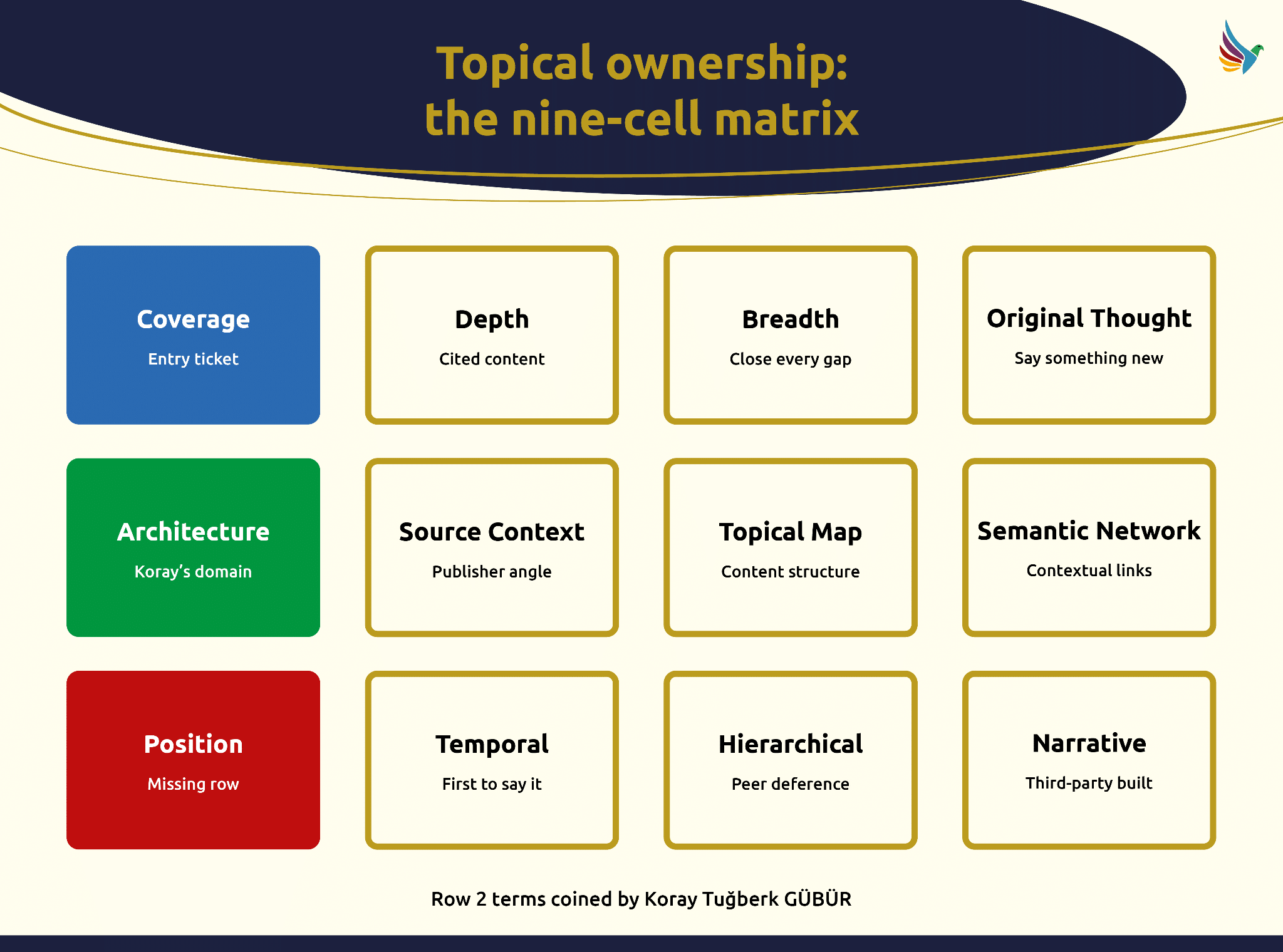
  "alt": "Nine-cell matrix for topical ownership with categories like coverage, depth, breadth, original thought, and more.",
  "caption": "Explore the nine-cell matrix of topical ownership, featuring diverse categories like coverage, depth, and originality. Enhance your content strategy today!",
  "description": "This image displays a nine-cell matrix titled 'Topical ownership: the nine-cell matrix.' Each cell represents a category essential for mastering topical content, such as Coverage, Depth, Breadth, and Original Thought. Other categories include Architecture, Source Context, Topical Map, Semantic Network, Position, Temporal, Hierarchical, and Narrative. This matrix helps in structuring and optimizing content strategies effectively. The second row is noted to have terms coined by Koray Tuğberk GÜBÜR. Ideal for SEO and content developers looking to cover all bases in their content planning."
}
```

    Topical authority reflects what I’ve built, while topical ownership is about whether AI systems prefer my content over others during the selection. This hinges on having content that surpasses mere existence and becomes preferred through the selection processes in AI pipelines.

    My insights have been influenced greatly by Koray Tuğberk GÜBÜR’s work. His methodological approach to content architecture has consistently demonstrated how signaling genuine expertise results in notable outcomes.

    GÜBÜR’s formula and framework, which include the temporal dimension, are crucial to expanding the cell model. His innovation in coining terms like “topical map” has provided the industry with structured guidance steeped in thorough research and understanding.

    ```json
{
  "alt": "The CapmatchOne logo with a gradient circle and bold text.",
  "caption": "Discover innovation with the CapmatchOne logo, featuring sleek typography and a modern gradient circle.",
  "description": "The CapmatchOne logo features bold, modern typography coupled with a gradient circle, symbolizing connection and innovation. The sleek design conveys a sense of progress and creativity. This image can be used for branding or promotional purposes, appealing to audiences interested in innovative solutions and forward-thinking designs."
}
```

    Row 1: Coverage as the Starting Line

    I’ve come to see coverage as more than just ticking off content boxes. It means providing unmatched depth, comprehensive breadth, and offering unique insights. These elements together ensure that one’s presence is unmistakably their own.

    While ensuring complete coverage is vital, presenting a new perspective is what keeps content relevant in the dynamic AI landscape. Original thought is my ticket to retaining repeated attention from AI systems, fostering recognition and engagement.
    ```json
{
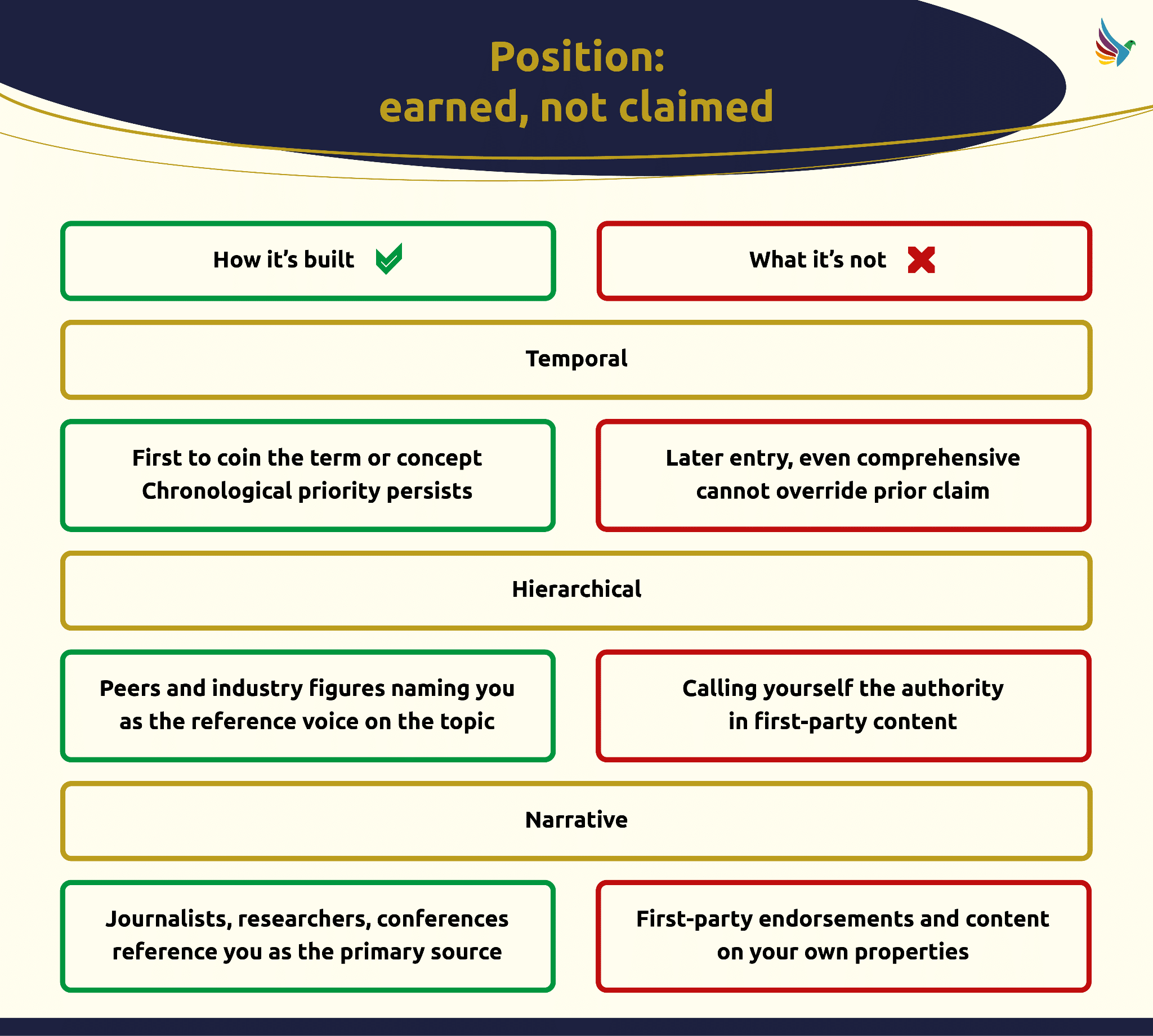
  "alt": "Diagram titled 'Position: earned, not claimed' differentiating between how a position is built and what it's not, across temporal, hierarchical, and narrative aspects.",
  "caption": "Understanding the Distinction: This insightful diagram explains how a position is genuinely built versus what does not constitute it, focusing on temporal, hierarchical, and narrative contexts.",
  "description": "This image features a diagram titled 'Position: earned, not claimed', outlining the differences between legitimately earning a position and misconceptions of self-attributed authority. It contrasts methods like chronological precedence, peer recognition, and external referencing with later entries, self-proclaimed authority, and first-party endorsements. The diagram is visually structured with sections labeled temporal, hierarchical, and narrative. Keywords: position, earned, authority, temporal, hierarchical, narrative."
}
```

    Row 2: The Foundation of Architecture

    The architecture of content, from sentence clarity to strategic linking, is a cornerstone for effective communication. Starting with source context helps determine the identity and structure that align with my strategic goals.

    Good architecture, as I’ve experienced, is not just about organizing content but about making it accessible and understandable for AI systems. It bridges what exists with how it is understood, a critical factor for effective communication.

    ```json
{
  "alt": "Nine-cell matrix showing where N.E.E.A.T.T. signals land, including Coverage, Depth, and Original Thought.",
  "caption": "Explore the N.E.E.A.T.T. framework: a nine-cell matrix revealing how Coverage, Depth, and Original Thought interplay in a structured analysis.",
  "description": "This image presents a nine-cell matrix titled 'Where N.E.E.A.T.T. signals land in the nine-cell matrix.' It categorizes areas such as Coverage, Depth, and Breadth into specific signals involving Experience, Expertise, and more. Blue cells represent foundational aspects, green implies domain-specific signals, and red highlights areas with missing elements. Grey cells indicate no N.E.E.A.T.T. signal. Key details include 'E' for Experience and 'A' for Authoritativeness, aiding in content strategy visualization."
}
```

    Row 3: Position Decides the Game

    Building a strong position requires more than content. It involves staking my claim as an entity of authority, ensuring recognition and relevance in my chosen topics. In AI, position is the differentiator that sets entities apart in a crowded digital landscape.

    The effort I invest in establishing this position pays off when AI systems recognize and prioritize my contributions, setting me apart from others with similar coverage and architecture. This understanding underscores the significance of position in AI optimization strategies.

    Through exploring these strategies, I have seen how each layer — coverage, architecture, and position — supports and enhances the other. Together, they create a robust framework that ensures my content stands out in competitive AI environments.


    Inspired by this post on Search Engine Land.


    crushpress.ai community screenshot
  • Transforming PPC with Claude Skills for Automation Success

    Transforming PPC with Claude Skills for Automation Success

    Have you ever felt like you’re living in an ‘AI Groundhog Day’? Despite the wealth of AI tools we can use, many of us find ourselves stuck in a loop, manually prompting AI again and again. If we aim to truly automate PPC tasks, we need to move beyond this cycle.

    Picture this: you open a chat window, carefully craft a prompt, and paste in your context. The result is fantastic! Yet, an hour later, the cycle repeats. If this sounds familiar, you’re still entrenched in manual work, albeit with a digital twist.

    To harness AI effectively, I’ve realized we must transition from being doers to orchestrators. This means moving away from one-off prompts and starting to build robust systems. My book, “The AI Amplified Marketer,” delves deeper into how the human element remains crucial even as AI evolves rapidly.

    Today, I’ll guide you on using Skills, an emerging AI capability, to enhance efficiency in managing PPC.

    What’s a Claude Skill?

    Many of us marketers have tried ChatGPT’s Custom Instructions—a broad directive for AI behavior. A Claude Skill, however, is more precise, dictating specific instructions to ensure consistent and predictable outcomes aligned with my expectations.

    Recently, while rating search terms, I noticed AI’s inconsistency. One session yielded letter grades, another a percentage, and another, a numerical scale. This variability can disrupt workflows, confusing tools and team members alike.

    A Skill eliminates this inconsistency, ensuring that every time, the results format remains unchanged. This evolution transforms AI from an unreliable assistant to a steadfast team member.

    The latest capabilities in Claude allow a Skill to morph your comprehensive PPC strategy into an executable AI playbook, coordinating tasks among various tools and subagents efficiently.

    Whether it’s auditing accounts or analyzing search query reports, Skills encapsulate your expertise into scalable systems for your team to deploy with AI seamlessly.

    ```json
{
  "alt": "The CapmatchOne logo with a gradient circle and bold text.",
  "caption": "Discover innovation with the CapmatchOne logo, featuring sleek typography and a modern gradient circle.",
  "description": "The CapmatchOne logo features bold, modern typography coupled with a gradient circle, symbolizing connection and innovation. The sleek design conveys a sense of progress and creativity. This image can be used for branding or promotional purposes, appealing to audiences interested in innovative solutions and forward-thinking designs."
}
```

    How to Build Your First AI Skill

    Starting a new Skill might seem daunting, but it’s quite straightforward. In a chat with your AI, you can upload an audit checklist, a SOP, or a workflow blueprint, and instruct Claude to formulate it into a Skill.

    Intriguingly, Claude employs a specialized protocol to construct Skills, guaranteeing outputs that are structured, adhere to best practices, and align with Anthropic’s architecture.

    Technically, a Skill is stored as a Markdown (.md) file, serving as the playbook for the task at hand. Concerned about data privacy? You can save this locally or opt to share it in a cloud repository for easy team access and updates.

    You don’t need to start from scratch. Platforms like GitHub offer pre-built Skills that you can experiment with and tailor to your needs.

    How to Use a Skill in PPC

    To get started with a Skill, make sure you have some available in your account.

    Simply tell the AI the specific task you wish to accomplish. If a suitable Skill exists, the AI will apply those instructions to carry out the task.

    Keep in mind, having competing skills could disrupt consistency. For instance, two skills performing Google Ads audits might randomly select different methodologies, thwarting the predictability.

    PPC Skills Need Real-Time Data

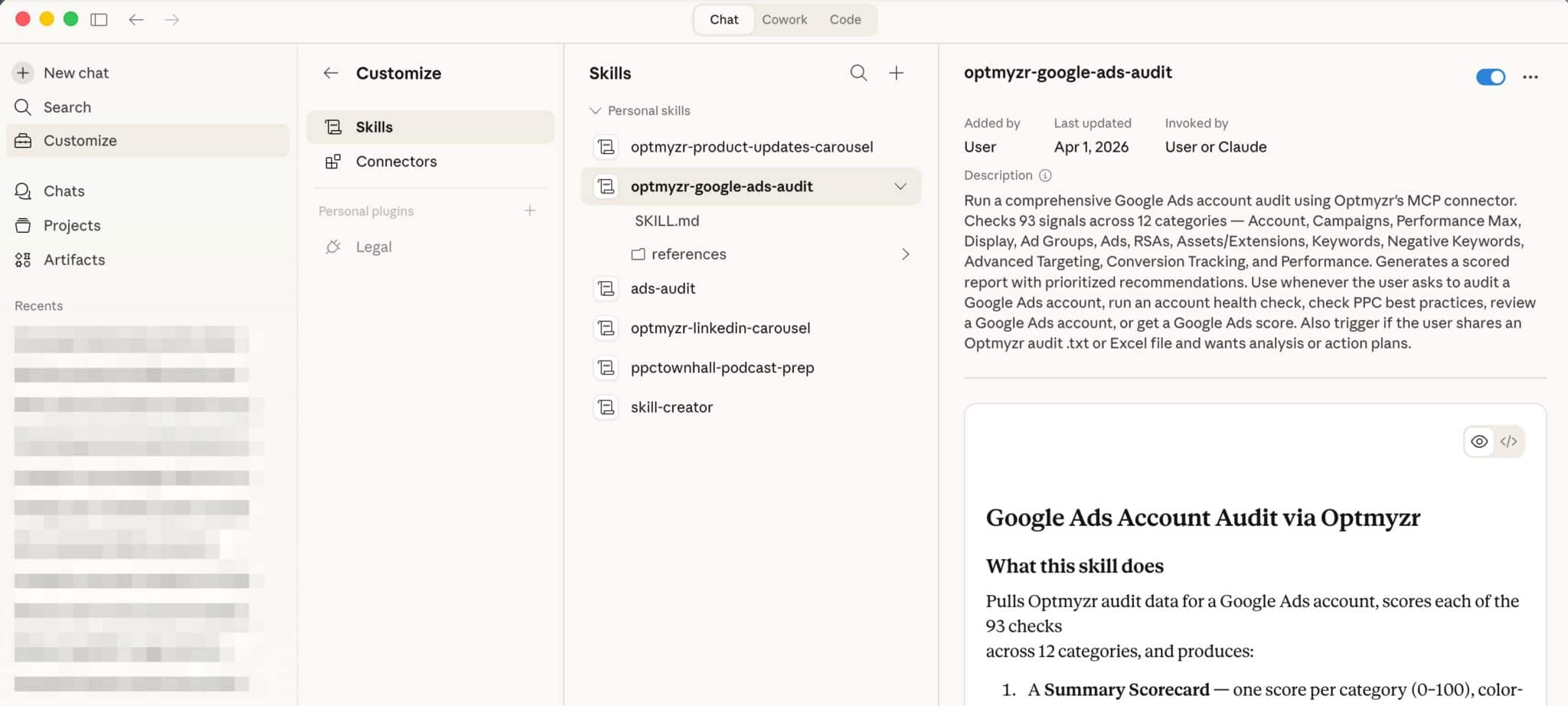
    While a Skill defines powerful logic, without real-time data, its application remains theoretical. Consider crafting an analysis to review search terms over the past 14 days—it’s great in concept, but without active data pulling from Google Ads, it remains incomplete.

    ```json
{
  "alt": "Screenshot of a software interface showing customization options for Google Ads audit using Optmyzr.",
  "caption": "Explore efficient Google Ads auditing with Optmyzr's detailed software interface offering comprehensive customization options and detailed skill descriptions.",
  "description": "This image displays a software interface focused on customizing skills for Google Ads audits using Optmyzr. The interface shows options such as 'Skills' and detailed descriptions about Google Ads account auditing, including signal checks across 12 categories. Keywords for optimal searchability include 'Google Ads', 'Optmyzr', 'audit', 'skills', and 'customization'."
}
```

    Previously, this required manually downloading CSVs from interfaces. It worked, but was slow and the data became outdated immediately.

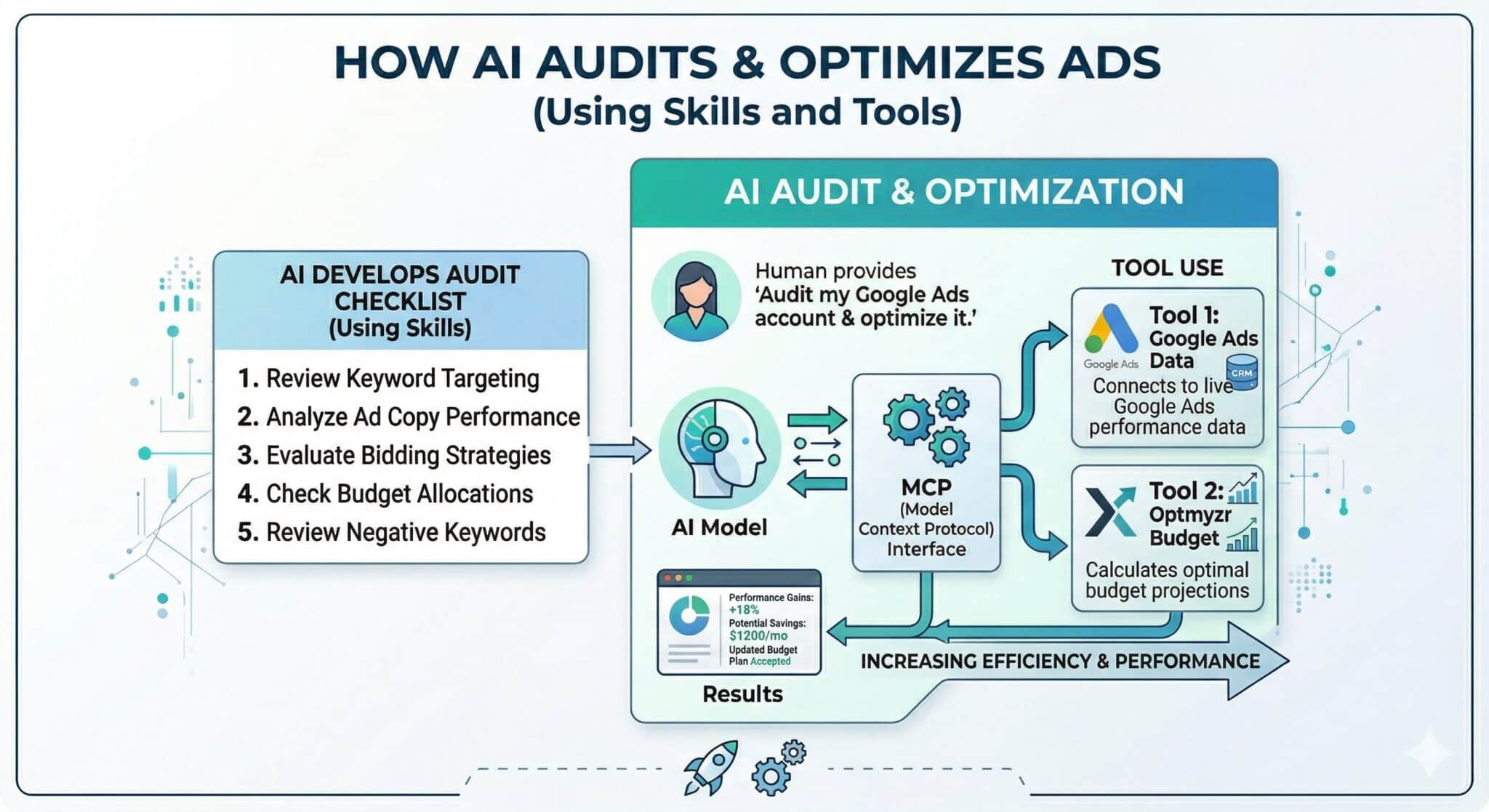
    Enter the Model Context Protocol (MCP), bridging AI Skills to live data sources seamlessly. Using protocols like Optmyzr’s MCP, Skills can dynamically access and apply live Google Ads data, converting static instructions into an adaptive, responsive tool. (Disclosure: I’m the cofounder and CEO of Optmyzr.)

    From Grunt Work to System Oversight

    Integrating Skills with MCP transforms AI from assistantship into management. Tasks like search term analysis can shift from hands-on processes to automated oversight, with the AI undertaking everything from data pulling to implementing results.

    Incorporating capable logic (Skills) with real-time data (tools) nurtures a practical system ready to shoulder routine tasks, enabling me to focus more on strategy orchestration.

    4 PPC Skills You Can Build Today

    Ready to jump into action? Here are four PPC Skills to inspire you:

    1. Search Term Mining

    This Skill guides AI in evaluating search query reports to target waste and opportunities.

    Without tools, it requires manual CSV uploads and report implementation. However, with MCP, the necessary data is automatically sourced and applied directly in your Google Ads account.

    2. Ad Copy Generation

    Using a landing page and keywords, this Skill generates ad copy tailored to user intent and value propositions.

    ```json
{
  "alt": "Diagram illustrating how AI audits and optimizes ads using skills and tools for enhanced performance.",
  "caption": "Discover how AI smartly audits and optimizes ads, leveraging tools and skills to boost efficiency and performance in advertising campaigns.",
  "description": "This diagram explains the process of how AI audits and optimizes advertisements by developing an audit checklist using skills such as reviewing keyword targeting and analyzing ad copy performance. It includes AI and tool usage, like Google Ads Data and Optmyzr Budget, to increase efficiency and performance. The image emphasizes the collaboration of human input, AI models, and tools to improve advertising results, showcasing potential performance gains and savings."
}
```

    Manual editions involve copying assets, whereas MCP integrations can identify underperforming ads, generate new copy, and even initiate ad experiments autonomously.

    3. Account Auditing

    This Skill performs a checklist to spot issues like missing ad extensions or budget constraints.

    Manually, it reports findings, but with MCP, it remedies problems directly, such as applying existing extensions to appropriate ad groups.

    4. Budget Reallocation

    Analyzing comparative data, this Skill identifies budget shifts to maximize returns.

    Without tools, it suggests reallocations; with MCP, it dynamically analyzes and implements these changes, optimizing budgets promptly.

    The Future of Your Role: From PPC Doer to PPC Designer

    The fusion of Skills and tools allows us to depart from mere AI collaboration to AI-driven responsibilities. Instead of juggling tasks, our focus shifts to designing automated systems, crafting Skills, and setting the course for relentless efficiency.

    As technology melds development and user-friendly interfaces, we’re at the cusp of a paradigm where non-developers design systems. It’s time to innovate and welcome AI as a genuine ally.

    The End of Endless Prompting

    The cyclical nature of endless prompting confines us to manual execution. By harnessing Claude Skills, we’re revolutionizing our approach to PPC—from mundane tasks to sophisticated system design. This transition embodies the essence of an AI-amplified marketer, fostering a dependable, efficient partner that channels our expertise into thriving systems.

    The journey begins by viewing your daily routines through a designer’s lens. What process is ripe for crafting your inaugural Skill?


    Inspired by this post on Search Engine Land.

    crushpress.ai community screenshot
  • Google Ask Maps: A Shift Towards Personalized Recommendations

    Google Ask Maps: A Shift Towards Personalized Recommendations

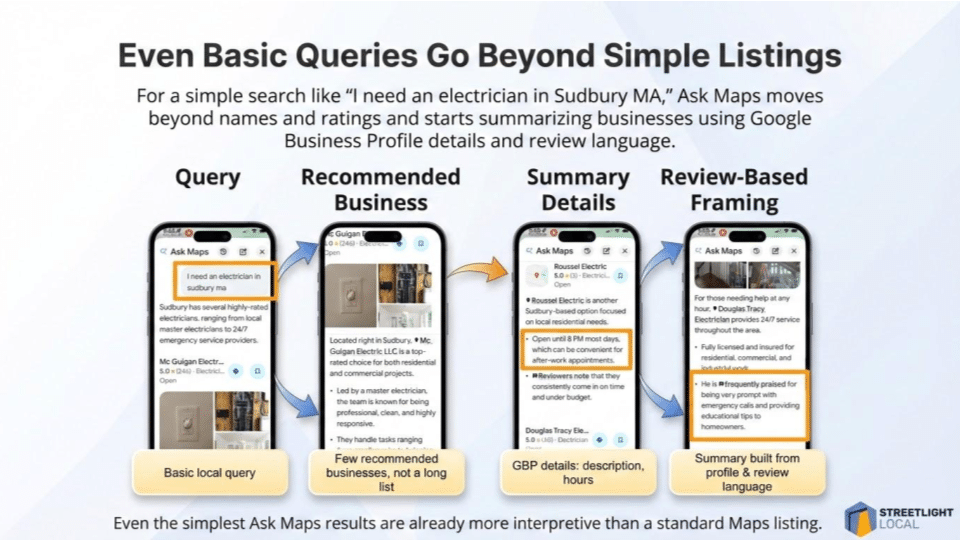
    I’ve noticed a fascinating shift in Google’s Ask Maps function—it’s transitioning from simple listings to offering more personalized recommendations. This change is not just about showcasing local businesses anymore; it’s about truly understanding user needs and suggesting the best options.

    The other day, I dug into some local service queries—think plumbers, electricians, HVAC services—and was amazed to find how Ask Maps narrows down options by user intent. It’s evaluating businesses based on factors like responsiveness and specialization, which feels fresh and user-focused.

    ```json
{
  "alt": "The CapmatchOne logo with a gradient circle and bold text.",
  "caption": "Discover innovation with the CapmatchOne logo, featuring sleek typography and a modern gradient circle.",
  "description": "The CapmatchOne logo features bold, modern typography coupled with a gradient circle, symbolizing connection and innovation. The sleek design conveys a sense of progress and creativity. This image can be used for branding or promotional purposes, appealing to audiences interested in innovative solutions and forward-thinking designs."
}
```

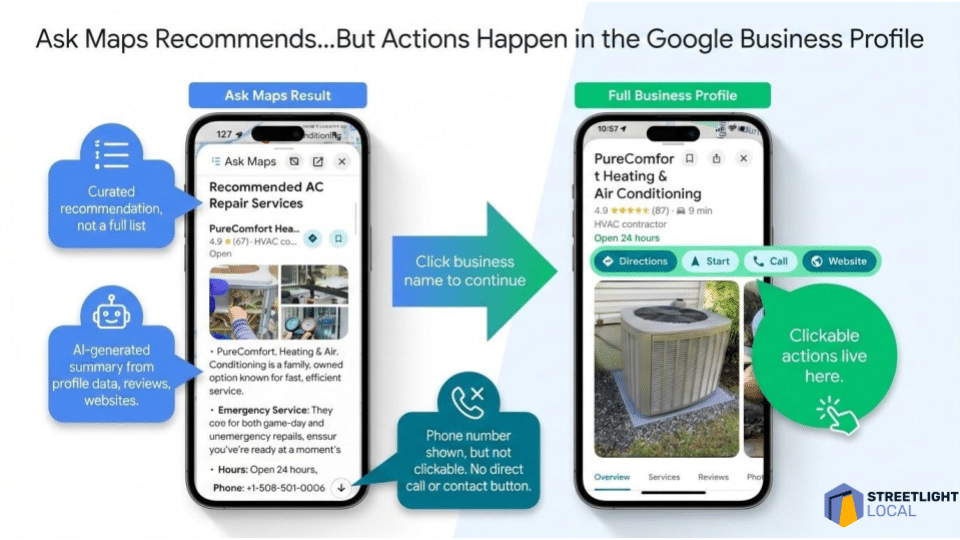
    What’s even more exciting is how Ask Maps frames these businesses. It’s not just a list; there’s guidance involved, which is a leap beyond traditional local retrieval methods. So, I decided to explore this by testing across five levels of local intent, ranging from simple searches to detailed conversational prompts.

    ```json
{
  "alt": "Comparison of Ask Maps recommendations and Google Business Profile actions for AC repair services.",
  "caption": "Explore how Ask Maps provides curated AC repair recommendations while actionable decisions await in the Google Business Profile.",
  "description": "This image illustrates the difference between Ask Maps recommendations and actions available on a Google Business Profile for AC repair services. The left side shows a smartphone displaying Ask Maps results with curated AI-generated summary, while the right side highlights actionable features like directions and call buttons in the full business profile. The presentation emphasizes interactive elements and user engagement, branded by Streetlight Local."
}
```

    As the complexity of queries increased, I saw a clear pattern: Ask Maps shifted from merely listing businesses to interpreting which ones truly fit the ask—and why. This is huge.

    ```json
{
  "alt": "Diagram showing how Ask Maps enhances local business queries beyond basic listings.",
  "caption": "Discover how Ask Maps transforms simple searches into detailed summaries using Google Business Profiles and reviews.",
  "description": "This image illustrates how Ask Maps enhances basic local business queries into insightful recommendations. Starting from a sample query for electricians in Sudbury, MA, the process shows transitioning from basic listings to recommendations, detailed business profiles, and review-based summaries. Highlighting these steps, the image explains how Ask Maps uses Google Business Profiles and review language to provide more comprehensive results. The image is branded with StreetLight Local's logo."
}
```

    This exploration pulled insights from specific locality tests, so while it’s directional, it’s not exhaustive across all markets or queries.

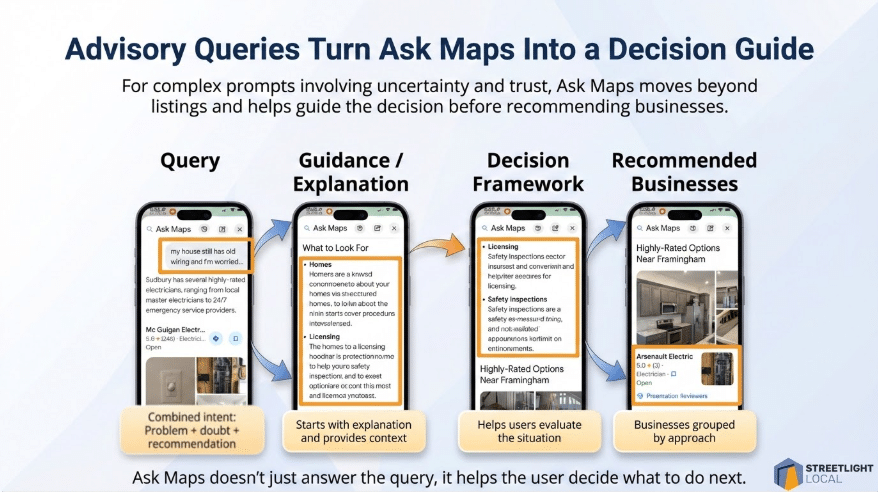
    ```json
{
  "alt": "Infographic showing how Ask Maps transforms queries into decision guides using smartphones.",
  "caption": "Discover how Ask Maps evolves a simple query into a guided decision-making tool, enhancing user experience with structured insights.",
  "description": "This infographic illustrates the process of Ask Maps transforming advisory queries into comprehensive decision guides. It shows four smartphones, each representing a step: Query, Guidance/Explanation, Decision Framework, and Recommended Businesses. The flow begins with a query about an outdated electric system, progresses by providing evaluation criteria, then narrows down options with decision frameworks, and finally lists local business recommendations. Aimed at guiding user choices, the system emphasizes explanation, evaluation, and categorization. Streetlight Local is credited below."
}
```

    The five-level intent model I developed was based on what I’ve learned about how people search for local services. I structured these not by traditional keyword categories but from simple inquiries to complex, conversational decision-making.

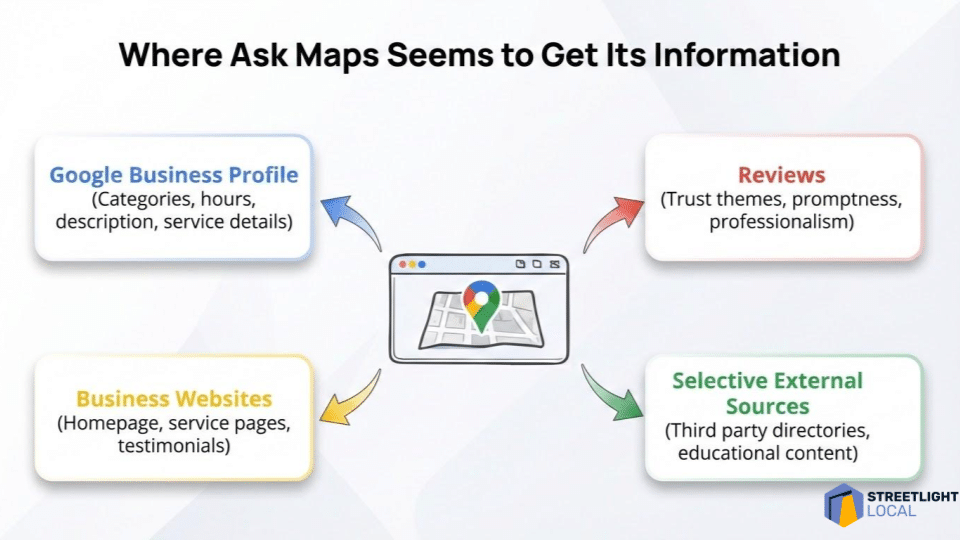
    ```json
{
  "alt": "Graphic illustrating four sources of information for Ask Maps: Google Business Profile, Business Websites, Reviews, Selective External Sources.",
  "caption": "Discover how Ask Maps gathers its information from diverse sources such as Google Business Profiles, professional reviews, business websites, and other external directories.",
  "description": "This infographic shows how Ask Maps compiles data, highlighting four primary sources: Google Business Profile, Reviews, Business Websites, and Selective External Sources like directories and educational content. This comprehensive method ensures a well-rounded information database. Arrows point from each source to a central map icon, illustrating the flow of data into Ask Maps. This visual is part of Streetlight Local's insights on information sourcing."
}
```

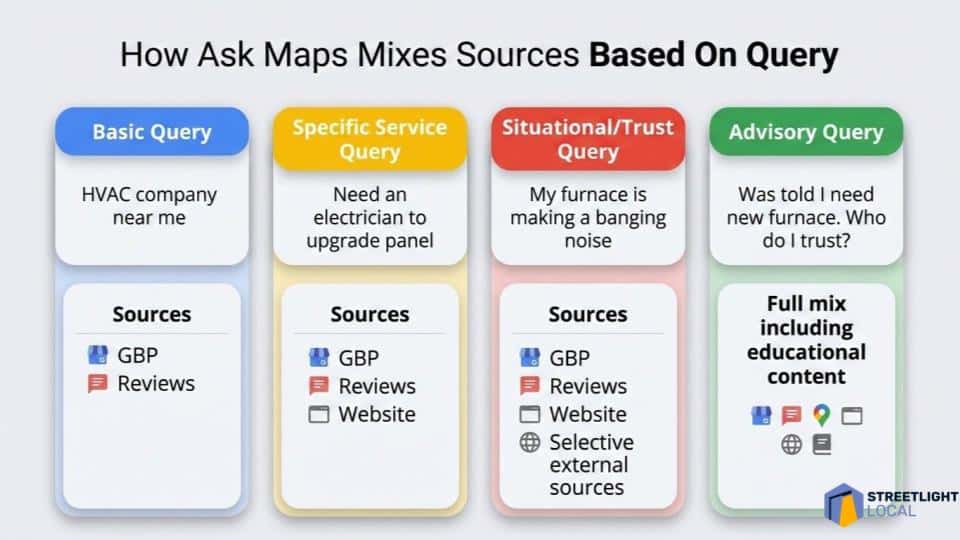
    At the basic level, requests start simple, like “I’m looking for an HVAC company nearby.”

    ```json
{
  "alt": "Infographic showing how Ask Maps mixes sources based on query type, including basic, specific service, situational, and advisory queries.",
  "caption": "Discover how Ask Maps tailors its source mix for different query types, from basic needs to advisory consultations. Get the most from your local search.",
  "description": "This infographic illustrates how Ask Maps customizes the mix of sources it uses according to four query types: Basic, Specific Service, Situational/Trust, and Advisory. Each category lists different needs—like finding an HVAC company or advice on a new furnace—and the respective sources such as GBP, reviews, websites, and educational content. Ideal for understanding local search strategies."
}
```

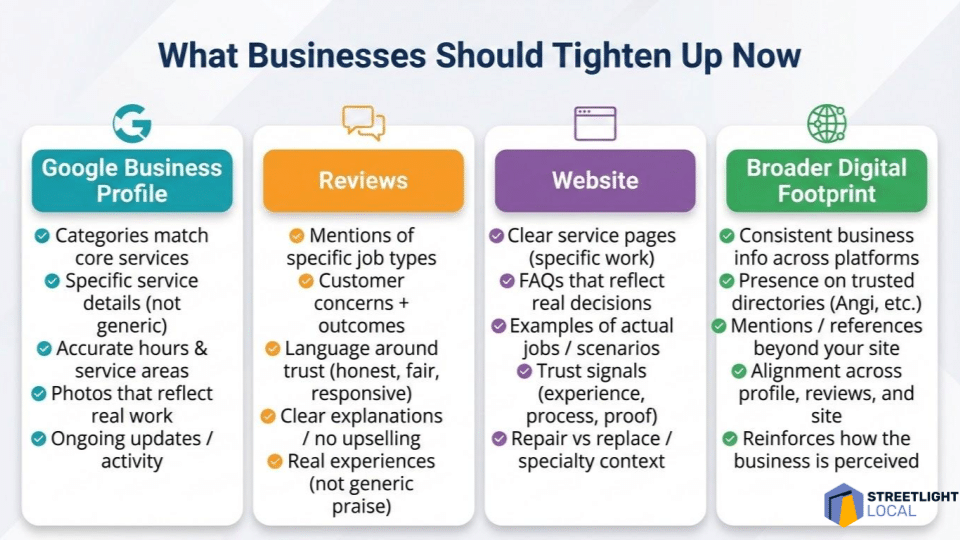
    Then, I experimented with queries involving more service specifics, like “I need an electrician to upgrade my panel in an older home.” This was fascinating as it introduced nuances into what I look for in search results.

    ```json
{
  "alt": "Infographic outlining strategies for businesses to enhance their online profiles, reviews, websites, and digital footprint.",
  "caption": "Discover key strategies to refine your business's digital presence, focusing on profiles, reviews, website content, and a broader digital footprint.",
  "description": "This infographic titled 'What Businesses Should Tighten Up Now' provides a comprehensive guide for businesses to improve their Google Business Profile, manage reviews, enhance website functionality, and expand their broader digital footprint. It includes actionable tips such as maintaining consistent business info across platforms and reinforcing brand perception. Keywords: business strategy, digital marketing, online presence, Google Business Profile, reviews, website optimization."
}
```

    The most interesting insights emerged from situational queries and those involving trust or decision-making, revealing how Ask Maps balances offering a realistic number of options with the depth of interpretation. The shifts were consistent: as we went from simple prompts to narratives, Ask Maps fine-tuned business selection and added layers of explanation.

    From this testing, I realized the intricate way Ask Maps processes information—using Google Business Profiles, reviews, and even external sources. While reviews dominated initial impressions, Ask Maps dives deeper on complex queries, pulling from business websites and informative content to guide users through decisions.

    Overall, the direction Ask Maps is heading could redefine our local search approach. If it continues evolving, it might influence how visibility is determined—not just by listing presence but by the ability to comprehensively understand and meet the user’s needs.


    Inspired by this post on Search Engine Land.

    crushpress.ai community screenshot
  • AI Search: Bridging the Wealth Gap in Digital Exploration

    AI Search: Bridging the Wealth Gap in Digital Exploration

    I keep hearing about AI search as if it’s become the norm for everyone—an inevitable shift in how we discover information. But in reality, it’s not so simple.

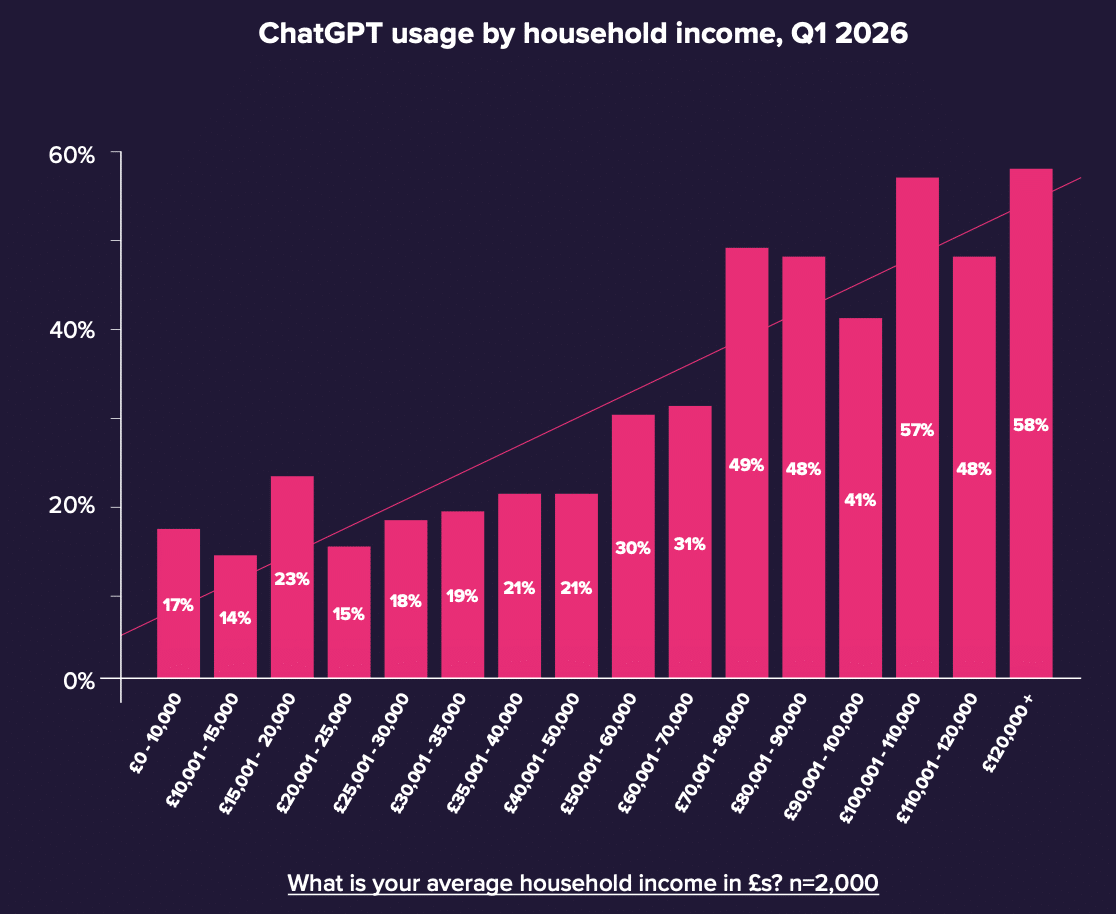
    AI search is indeed on the rise, but it’s not being adopted equally. The real divide comes down to something rarely discussed: household income.

    My agency started closely monitoring search behaviors back in early 2025. In our latest study, we took a closer look through the lens of household income.

    The results? A significant divide emerged. While a general 27% of users claim to regularly use ChatGPT, income-specific data paints a different picture.

    In essence, higher-income households are significantly more likely to use generative AI tools.

    This major variation challenges the common assumption that AI adoption progresses uniformly across demographics.

    We’re seeing a new layer of digital inequality in accessing information. This divide, visible across the UK, is adding to an existing digital skills gap.

    AI adoption relies on more than just having the right tools. It’s also influenced by:

    If you work in certain sectors like digital or corporate, you’re more likely to be encouraged to incorporate AI into your daily routines.

    Capability plays a role, too. For some, using AI tools comes naturally. For others, it’s an intimidating process without proper guidance.

    Then there’s confidence—trust in AI tools varies. In our research, users on platforms such as Perplexity report high levels of trust, but they remain niche.

    ```json
{
  "alt": "Bar chart showing ChatGPT usage by household income ranges, Q1 2026. Usage increases with income, peaking at 58% for £120,000+.",
  "caption": "ChatGPT usage peaks at 58% for households earning over £120,000, illustrating a strong correlation between income and AI adoption.",
  "description": "This image features a bar chart depicting ChatGPT usage by household income for Q1 2026. It displays various income brackets from £0-£10,000 to £120,000+. The data points show a rise in usage from 17% in the lowest bracket to 58% in the highest, highlighting income-based variance in AI usage. The sample size is 2,000 households, emphasizing economic impact on technology adoption."
}
```

    These disparities mean that AI literacy is quickly becoming another possible layer of the digital divide, augmenting the advantage of the digitally savvy.

    For businesses, this division has tangible implications. Different audiences are developing distinct behaviors:

    This isn’t a minor shift. Making incorrect assumptions about user behavior could lead to strategic missteps, like over-investing in one area and neglecting another.

    Yet, there’s an upside. Fast adopters of AI are often the very decision-makers and high-income consumers that brands value most.

    These users are frequently termed “digital explorers” and see AI as an integral part of their decision-making process.

    Behavior and confidence are intertwined, shaping how far users will go with AI.

    To respond to these fragmented behaviors, brands need to:

    A comprehensive understanding of AI’s role at every step of the customer journey becomes essential.

    Ultimately, as AI weaves deeper into our lives, the human element remains paramount in determining the future of search.


    Inspired by this post on Search Engine Land.

    crushpress.ai community screenshot
  • Unveiling the Real Reasons SEO Can’t Save a Broken Brand

    Unveiling the Real Reasons SEO Can’t Save a Broken Brand

    I often find myself in the thick of technical SEO challenges, particularly when organic traffic takes an unexpected nosedive. Initially, my focus lands on technical performance aspects like algorithm updates or content gaps. I dive into logs, crawl through sites, and check Google Search Console.

    But what if the core issue isn’t in the sitemap, content, or backlinks but lies within the boardroom or the warehouse? Recently, I assessed a set of ecommerce brands once thriving during the pandemic. They surged with the online shopping boom but later faced a sharp decline. The new owners bluntly requested, “Fix our SEO.”

    Upon closer inspection, I realized SEO wasn’t the real problem. It merely reflected deeper, systemic operational issues. The diagnosis pointed towards a collapse in operational alignment affecting their online presence.

    SEO extends far beyond a mere technical fix. It’s a crucial integration of offline operations and online reputation. Misalignment here often leads search engines to pick up on discrepancies, resulting in falling rankings. Organizational decisions by individuals unfamiliar with SEO can greatly impact organic performance.

    For instance, logistics personnel unaware of SEO might cause delays in shipping or mishandle inventory, leading to a cascade of negative reviews affecting Google’s trust metrics.

    The same applies to legal decisions removing essential pages like “About Us” in a bid to streamline operations, inadvertently harming the brand’s expertise, authority, and trustworthiness (E-E-A-T).

    Product and merchandising decisions that orphan URLs to manage pricing disrupt SEO crawl equity and destabilize rankings, which no amount of technical SEO can resolve on its own.

    The ramifications of organizational missteps are mirrored in search engines. I observed a foundational collapse in a high-trust niche where the bar for credibility is set higher due to its impact on Your Money or Your Life (YMYL) content.

    Ignoring Google’s Search Quality Raters Guidelines comes at a cost. My audit revealed four efficiency-driven actions that dismantled the foundational organic ranking framework of these brands.

    Unresolved negative reviews and the removal of contact pages not only affected public perception but also led Google to lower their domain safety value.

    Post-acquisition changes in communication strategy resulted in a drastic 70% drop in brand search volume, nearly halting high-intent traffic.

    A misguided inventory management strategy led to orphaned URLs, causing a traffic crash wrongly attributed to SEO until a deeper technical audit identified the mass product removal.

    ```json
{
  "alt": "The CapmatchOne logo with a gradient circle and bold text.",
  "caption": "Discover innovation with the CapmatchOne logo, featuring sleek typography and a modern gradient circle.",
  "description": "The CapmatchOne logo features bold, modern typography coupled with a gradient circle, symbolizing connection and innovation. The sleek design conveys a sense of progress and creativity. This image can be used for branding or promotional purposes, appealing to audiences interested in innovative solutions and forward-thinking designs."
}
```

    Streamlining all brands’ product inventories created internal competition and cannibalized market share, stripping unique selling propositions.

    SEO isn’t just about fixing technical issues; it involves aligning with the organization’s foundational reputation and operational strategies reflected in external search results.

    Educating leadership about traffic as a vanity metric is critical. Shifting the focus from sheer volume to intent can fortify the bottom line by increasing focus on buy-ready intent.

    Reducing irrelevant content might decrease session numbers, but the uplift in high-intent page clicks elevates profitability. Content consolidation into authoritative pages enhances user experience and conversion rates.

    Connecting SEO activities to profit and loss shifts its perception from a technical detail to a core revenue-protecting strategy. If an organization needs recovery, it requires a phased strategy with measurable outcomes.

    For example, reintegrating inventory to resolve a reputation crisis can initially aim for a 15-20% increase in gross merchandise value.

    Re-establishing a brand voice can significantly reduce customer acquisition costs. Scaling topical authority and interlinking strategies can secure market share in high-intent searches.

    My role transcends technical maintenance; it involves advising on business strategies that align with public perception.

    Understanding that you provide the best roadmap is key, but accountability lies with leadership when deciding whether to take the necessary steps to save the brand.

    By connecting SEO recommendations to revenue, customer acquisition, cost, and gross merchandise value, I illustrate how SEO transforms from a luxury to an indispensable business function.

    Before diving into keywords, it is vital to assess operational infrastructures first. The integrity of the brand’s foundation directly impacts SEO success.


    Inspired by this post on Search Engine Land.


    crushpress.ai community screenshot
  • PPC Salaries Diverge: Are You on the Winning Side?

    PPC Salaries Diverge: Are You on the Winning Side?

    Every year, I eagerly anticipate the release of Duane Brown’s PPC Salary Survey. It provides a revealing glimpse into what we’re really earning in this industry. The 2026 survey, which gathered input from 445 practitioners across over 50 countries, is particularly telling. What stands out this year is the growing divide in middle-career PPC salaries, as the extremes continue to pull away.

    PPC salaries aren’t uniformly dropping. Instead, there’s an expanding gap between the high earners and those at the baseline. This divergence has never been clearer, or more concerning.

    AI has certainly sped up this change, but the roots of this transformation have been deepening for years.

    What Four Years of Salary Data Reveal

    The salary survey has kept tabs on U.S. median pay by experience since 2018. When you lay out the data for four straight years, a distinct pattern emerges:

    Experience20222023202420252026
    3-5 years$80,000$80,016$80,000$75,000$87,500
    6-9 years$100,000$110,000$108,000$110,000$100,000
    10-15 years$125,000$150,000$136,000$133,500$135,000
    15+ years$150,000$134,000$144,000$140,000$150,000

    Two key insights stand out:

    • The salary for the 3-5 year band rebounded significantly in 2026 to $87,500 after a drop to $75,000 in 2025. This indicates junior-to-mid practitioners who secure roles are being compensated fairly.
    • However, the 6-9 year band slipped back to $100,000, and the 10-15 year group has stagnated between $133,500 and $136,000 for three years. For those with a decade of experience, pay has essentially stalled or decreased when adjusted for inflation.

    The difference becomes even more pronounced at the extremes. Data from the U.S. survey shows top salaries exceeding $300,000 for the 10-15 years cohort. Freelancers with comparable experience have a median income of $202,895, compared to an agency median of $123,545. That’s a $79,000 premium for going independent, demonstrating the distinct advantage if you offer something valuable enough to justify it.

    The Growing Divide: In-house vs. Agency

    The 2026 survey highlights an increasing divergence in mid-career earnings between in-house and agency roles.

    ExperienceAgency (median)In-house (median)Difference
    3-5 years$80,000$89,000+$9,000
    6-9 years$90,000$170,000+$80,000
    10-15 years$123,545$140,000+$16,455
    15+ years$120,000$140,000+$20,000

    Although the 6-9 year in-house statistic is somewhat inflated by outliers, the trend is clear: in-house professionals regularly out-earn their agency peers, sometimes by significant margins. For those with 10-15 years of experience, an in-house position could mean a $16,000 annual advantage.

    This isn’t merely a question of individual skill development; it’s about the strategic role you play. Agency work, despite its diversity, doesn’t match up to in-house strategy roles in terms of financial reward. Automation of execution tasks makes it harder for agency workers to justify their billing rates, likely pushing salaries down.

    Examining the Gender Pay Gap

    The 2026 survey paints a complex picture of gender pay differences in our field.

    For the 3-5 year experience band, women in the U.S. are actually earning more than men, with a median of $87,500 compared to $85,000. At the 10-15 year level, women also slightly surpass men with a median of $135,000 against $130,000. However, a chasm appears at senior levels, with men earning a median of $150,000 versus $120,000 for women—an alarming 25% gap.

    This trend aligns with broader compensation research, where pay gaps tend to close at mid-career but widen at senior levels, a result of factors like negotiation skills and access to high-value client relationships. It’s crucial for the industry to address this discrepancy as we increasingly value strategic capabilities.

    The U.K. and Europe: Stagnation at the Pinnacle

    In the U.K., salary trends are worrying. The 5-year survey shows the 10-15 year median fluctuating between £48,800 and £60,000, finally settling at £50,000 in 2026, a drop from £60,000 in the previous year.

    ```json
{
  "alt": "The CapmatchOne logo with a gradient circle and bold text.",
  "caption": "Discover innovation with the CapmatchOne logo, featuring sleek typography and a modern gradient circle.",
  "description": "The CapmatchOne logo features bold, modern typography coupled with a gradient circle, symbolizing connection and innovation. The sleek design conveys a sense of progress and creativity. This image can be used for branding or promotional purposes, appealing to audiences interested in innovative solutions and forward-thinking designs."
}
```

    Conversely, European data shows a more positive trend at senior levels. The median for the 10-15 year experience range rose from €50,000 in 2024 to €65,625 in 2026. However, the 3-5 year band has fallen back to €37,200, less than it was in 2022, indicating entry-level and early-career pay isn’t keeping up with job demands.

    In Berlin specifically, the 2026 survey reports a 10-15 year band median of around €76,000, significantly above the broader EU figure, showing that the Berlin market still values senior experience highly.

    Beyond AI: The Real Power Shift

    I want to assert that the shift in PPC salaries isn’t merely about having or lacking AI skills.

    The State of PPC 2026 report notes AI has dropped to the third priority among professionals, not because its use declined, but because it has become standard. AI saves us around 5.2 hours per week; useful, but not a salary game-changer.

    Payscale’s 2026 Compensation Best Practices Report reveals that 55% of companies offer no additional benefits for AI skills, even though 61% require them. AI fluency is now expected, not exceptional.

    Top earners have shifted from being campaign operators to business outcome leaders. They:

    • Focus on revenue contributions and margin impacts rather than ROAS and CTR.
    • Position themselves closer to the CFO than to the media buyer.
    • Demonstrate their expertise through effective communication, meaningful frameworks, and insightful questions in board meetings.

    While salary data indicates past trends, it’s your approach that determines where on the scale you land.

    Ask Yourself the Right Questions

    The PPC salary curve is not collapsing, yet it is branching.

    • The 3-5 years cohort remains competitive salary-wise.
    • U.S. freelancers with over 10 years of experience and strong positioning can earn $200,000+.
    • Senior in-house strategists see salaries ranging from $140,000 to $170,000.

    What’s stagnating is the middle—the agency expert with 6 to 15 years of experience. While skilled at running campaigns, they lack the differentiated value that would push them to the next tier.

    This group faces pressure from below, with automation taking over execution, and from above, where strategic roles demand more than just campaign prowess.

    The question is—not just whether I’m using AI—but am I the go-to person when the AI report arrives?

    If you find yourself unsure, it might not be about upgrading your tools, but rather a reevaluation of your positioning. Now is the time to make that change, before the salary gap widens further.


    Inspired by this post on Search Engine Land.

    crushpress.ai community screenshot
  • Unlocking the Power of AI: How LLM Nudges Shape Your Digital Journey

    Unlocking the Power of AI: How LLM Nudges Shape Your Digital Journey

    As I delve into the vast realm of AI, I’ve realized how integral Large Language Models (LLMs) are to virtually every aspect of our lives—be it work, leisure, shopping, or health. They are the ignition point for nearly everything we do.

    But here’s something that often goes unnoticed: how these models wrap up their interactions. They don’t just stop; they subtly guide us forward, and that’s a game-changer.

    It’s as if LLMs adopt a “no, you hang up first” approach, perpetually inviting us to continue. They ask things like, “Would you like me to draft that travel itinerary for you?” or, “Shall I compare the Nike and New Balance running shoes for your marathon?”

    These gentle nudges make it incredibly easy to stay engaged. More often than not, I find myself responding with a simple “sure” or “sounds good,” eager to see what’s offered next.

    Such nudges are pivotal in shaping consumer behavior. Where the LLMs lead us truly matters.

    If you represent a premium brand and an LLM suggests a price comparison, it might not align with your strategy, but it’s vital to grasp and react appropriately.

    We’ve delved into various LLMs to understand these nudges across different platforms, seeking patterns that shape user behavior and signaling what it means for brands aiming to steer the digital journey.

    What LLM Nudges Look Like Across Platforms

    Budget and Deals Dominate

    Across the board, LLMs frequently suggest follow-ups related to budgets and deals, with about 45% of mentions falling into this category. Though not uniformly distributed, these elements are often default interests for consumers.

    For instance, Perplexity and ChatGPT feature over 60% of budget-related suggestions, while Meta doesn’t lean as heavily into this assumption.

    ```json
{
  "alt": "Stacked bar chart showing different categories by LLMs including ChatGPT, Google Gemini, Grok, Meta AI, Microsoft Copilot, and Perplexity.",
  "caption": "Discover how top LLMs like ChatGPT, Google Gemini, and others perform across various categories such as Budget, Product Comparison, and Tech Support.",
  "description": "This stacked bar chart presents an analysis of various Large Language Models (LLMs) like ChatGPT, Google Gemini, Grok, Meta AI, Microsoft Copilot, and Perplexity. Each model is evaluated across different categories represented by colors: Use Case & Lifestyle, Tech Support & Troubleshooting, Product Comparison, General Recommendation, Features & Specs, and Budget & Deals. This visual representation helps in understanding how different LLMs prioritize various functionalities, offering a comparative insight into their capabilities."
}
```

    Comparisons Drive the Next Step

    Product comparisons are the second most common type of suggestion. LLMs compare everything from retail products to financial services and health treatments, touching various industries.

    Specs Play a Minor Role

    While there’s a common belief that providing detailed specifications is vital, these comprise only a small fraction of the LLMs’ recommendations. That said, they do add ranking value, even if LLMs typically don’t extend conversations in this manner.

    How Each Platform Uses Nudges Differently

    In our research, we’ve noticed that each LLM has a unique style of extending conversations, offering insights into how these platforms subtly influence consumer behavior.

    PlatformDominant Nudge StyleKey Characteristic
    ChatGPT“If you want…”Heavy commerce focus: Primarily nudges toward deals and product comparisons.
    Microsoft Copilot“If you tell me…”Interactive/clarifying: Frequently asks for more user data to refine recommendations.
    Google Gemini“Would you like me…”Polite and permission-based: Exclusively uses this formal invitation to continue helping.
    Perplexity“I can help…” / “If you’d like…”Service-oriented: Uses varied phrasing to offer utility and assistance.
    Meta AI“Let me know…”Casual and passive: Primarily nudges toward product comparisons and specs with a less aggressive tone.

    What Actions to Take Based on AI Nudges

    These nudges are not just to keep the dialogue open; they also push users to explore further, greatly influencing consumer behavior and the entire customer journey.

    As data becomes more plentiful, we’ll better optimize for these nudges. For now, our insights are somewhat limited to individual interactions.

    ```json
{
  "alt": "The CapmatchOne logo with a gradient circle and bold text.",
  "caption": "Discover innovation with the CapmatchOne logo, featuring sleek typography and a modern gradient circle.",
  "description": "The CapmatchOne logo features bold, modern typography coupled with a gradient circle, symbolizing connection and innovation. The sleek design conveys a sense of progress and creativity. This image can be used for branding or promotional purposes, appealing to audiences interested in innovative solutions and forward-thinking designs."
}
```

    Here are three key actions to prioritize, largely tied to the content you create across various channels:

    Capitalize on the “Support” Gap
    • Proactive nudges related to troubleshooting and support are significantly lower in frequency than commerce-driven themes.
    • Focus on owning the post-purchase “how-to” and technical support space to establish long-term authority where AI currently isn’t as assertive.
    Prioritize the “Comparison” Hook
    • LLMs frequently nudge users toward comparative analysis.
    • Strengthen “Product A vs. Product B” guides to capture AI’s primary next step.
    Maximize the “Budget and Deals” Opportunity
    • Pricing and discounts are the top drivers of AI nudges, comprising 48% of all prompts.
    • Ensure your site maintains structured, real-time deal data to become a preferred destination for AI-driven commerce referrals.

    As the LLM landscape rapidly evolves, these platforms will become the main touchpoints for consumer research and decision-making. Understanding how LLMs discuss your brand and how these conversational nudges affect users is essential.

    By dissecting these automated cues across platforms like Gemini, ChatGPT, and Perplexity, we can see where consumers are being steered—whether towards budget-friendly alternatives, product comparisons, or technical specifications.

    Recognizing these trends enables us to shift from mere observation to actionable strategies, ensuring our value proposition remains clear, even when an LLM reframes the conversation around cost or competitors.

    Monitoring these shifts is key to maintaining brand authority as AI-driven interactions increasingly dictate the customer journey.


    Inspired by this post on Search Engine Land.

    crushpress.ai community screenshot
  • 6 Key Questions to Uncover a True Agency Growth Partner

    6 Key Questions to Uncover a True Agency Growth Partner

    When I think about auditing an agency to find a genuine growth partner, I am often reminded of how many agencies sound the same at first glance. Yet, when we dig deeper, the real differences can be stark, particularly in their methods of optimization, measurement, and scaling.

    As a seasoned performance marketing head at an agency, I frequently encounter agencies offering account audits during their sales pitch. Their goal is usually twofold: to deliver immediate value and to showcase their expertise.

    But, in my experience, brand marketers seldom reverse roles to audit these agencies during the Request for Proposal (RFP) process. Over the years, I’ve noticed many brands settling for mediocrity simply because they aren’t equipped with the right questions to unearth the weaknesses in a potential partner’s strategy.

    If I were a brand, eager to secure a true growth partner, these are the questions I’d make sure to ask.

    1. What are your key services, and what percentage of your clients utilize each? I’ve seen many agencies claim they offer ‘full service,’ but true execution excellence is rare. I’d scrutinize where they truly focus their time and efforts. This not only includes channel proficiency but how their strengths align with our brand’s needs.

    2. How are you approaching AI-driven account optimization and platform automation? Gone are the days when manual controls set us apart as high-performing marketers. Understanding how an agency balances AI automation without over-reliance is crucial.

    ```json
{
  "alt": "The CapmatchOne logo with a gradient circle and bold text.",
  "caption": "Discover innovation with the CapmatchOne logo, featuring sleek typography and a modern gradient circle.",
  "description": "The CapmatchOne logo features bold, modern typography coupled with a gradient circle, symbolizing connection and innovation. The sleek design conveys a sense of progress and creativity. This image can be used for branding or promotional purposes, appealing to audiences interested in innovative solutions and forward-thinking designs."
}
```

    3. What is your reporting process, and what KPIs do you focus on for the majority of your clients? A mere sample report won’t do. I need to comprehend their data philosophy, especially if it centers around revenue and ROAS metrics.

    4. What’s the average industry tenure of the team on my account? A common query, yet crucial for understanding their ability to retain experienced professionals who leverage AI tools adeptly.

    5. How is your team using AI on client accounts? Striking a balance in AI usage is essential. I prefer teams that use AI wisely for operational efficiency without sacrificing strategic insights and creativity.

    6. When you take over an account, what are the first things you do to save budget without affecting growth? This is a litmus test of their technical proficiency, focusing on identifying and eliminating budget waste efficiently.

    Ultimately, to distinguish a true growth partner from others, I focus on their service utilization rates, tactical AI applications, and budget efficiency approaches. These considerations help identify a partner ready to deliver genuine performance rather than just manage our budget.


    Inspired by this post on Search Engine Land.

    crushpress.ai community screenshot
  • Understanding AI Annotation: Why Your SEO Strategy May Be Failing

    Understanding AI Annotation: Why Your SEO Strategy May Be Failing

    Have you ever wondered why AI often misunderstands your content? It all comes down to how AI systems label and score your content before ranking it. This process, known as annotation, determines how you’re perceived and whether you’ll succeed online.

    Imagine my surprise when Google once attributed two of Barry Schwartz’s articles from Search Engine Land to me. This misclassification briefly altered authorship in Google’s systems, inaccurately listing me as the author.

    For those few days, if you searched for specific articles written by Schwartz, Google misidentified me as the author, connecting these articles to my Knowledge Panel. This mishap highlights a critical aspect often overlooked in the SEO industry: annotation, not the content itself, is key to visibility and success.

    How Google Misannotated and Got the Author Wrong

    ```json
{
  "alt": "The CapmatchOne logo with a gradient circle and bold text.",
  "caption": "Discover innovation with the CapmatchOne logo, featuring sleek typography and a modern gradient circle.",
  "description": "The CapmatchOne logo features bold, modern typography coupled with a gradient circle, symbolizing connection and innovation. The sleek design conveys a sense of progress and creativity. This image can be used for branding or promotional purposes, appealing to audiences interested in innovative solutions and forward-thinking designs."
}
```

    When Googlebot crawled those pages, it prominently noted my name below the article—my author bio appeared as the first recognized entity. The annotation algorithms then wrongly classified me as the author with high confidence.

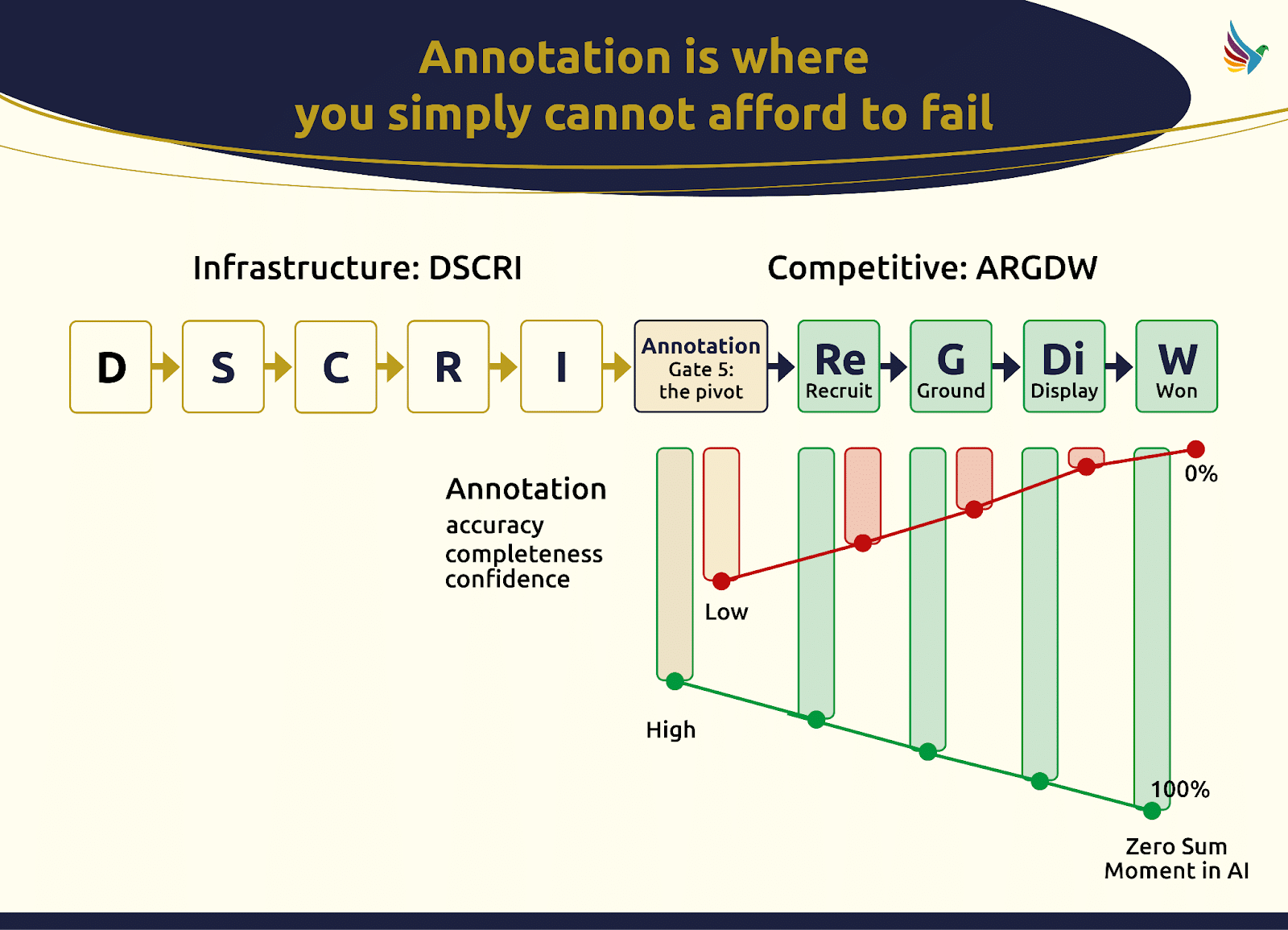
    This highlights the importance of annotation as a defining gate that influences everything downstream, from recruitment to ranking. Although this was simply an authorship error, imagine if it involved a product, price, or crucial attribute—that would severely impact your competitive standing.

    Annotation serves as a vital gate in taking your brand from being discovered to winning, for whatever search intent or engine you’re optimizing for.

    ```json
{
  "alt": "Flowchart titled 'Annotation is where you simply cannot afford to fail' showing steps DSCRI and ARGDW with a graph on annotation accuracy.",
  "caption": "Unlock the power of annotation accuracy in your process with this strategic flowchart outlining DSCRI and ARGDW steps, highlighting its pivotal impact.",
  "description": "This flowchart illustrates the importance of annotation within processes labeled DSCRI (Infrastructure) and ARGDW (Competitive). It emphasizes accuracy, completeness, and confidence in annotations, with a graph depicting annotation accuracy's trajectory from low to high. The overarching message 'Annotation is where you simply cannot afford to fail' underscores the critical nature of precise annotation in competitive scenarios. Keywords: annotation, accuracy, DSCRI, ARGDW, strategic flowchart."
}
```
    Your customers search everywhere. Make sure your brand shows up. The SEO toolkit you know, plus the AI visibility data you need.

    Understanding Annotation Beyond Indexing

    While indexing breaks your content into chunks and stores it, annotation labels these chunks with classifications based on confidence. It’s a pragmatic labeler, describing what the chunk contains, when it could be useful, and its trustworthiness.

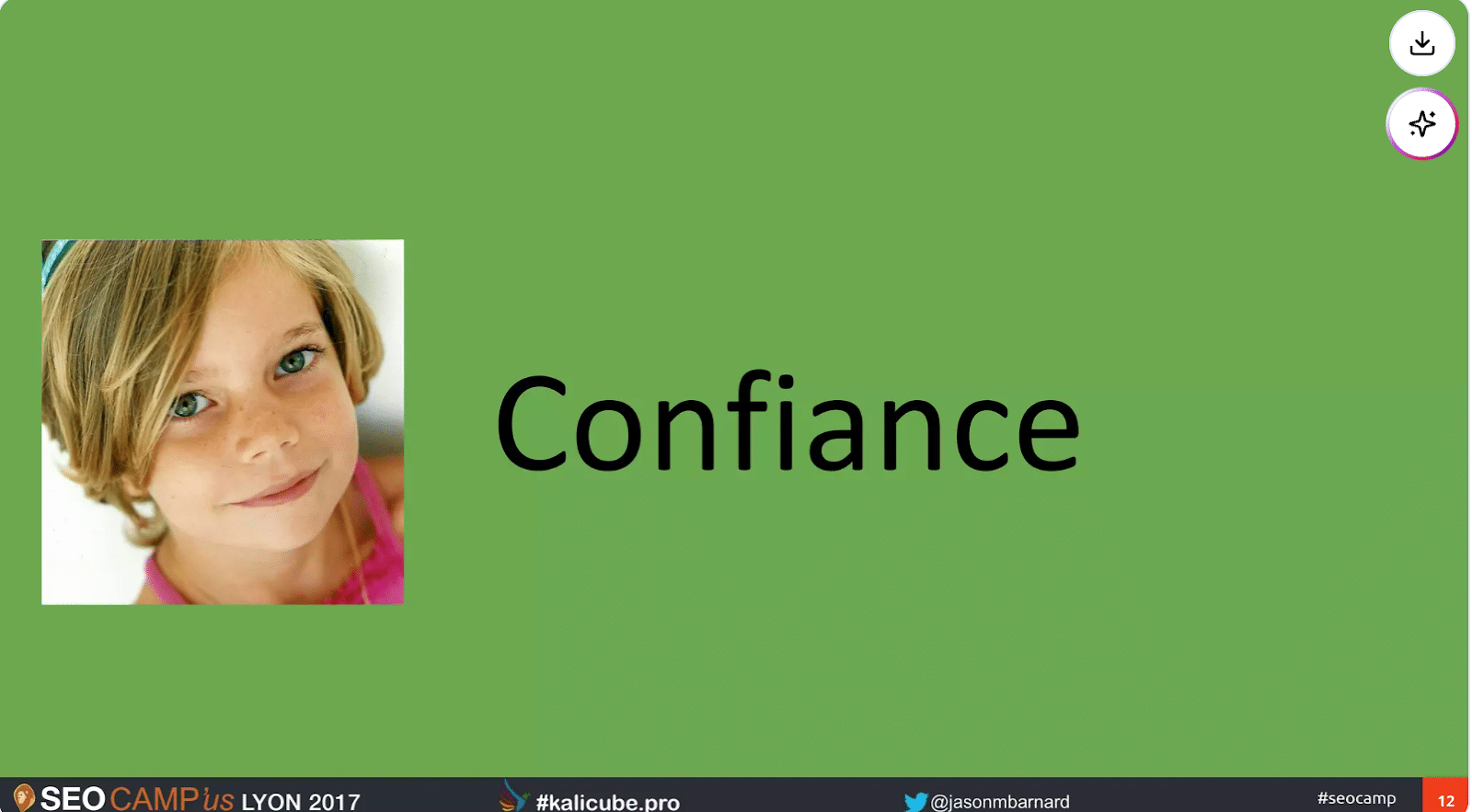
    ```json
{
  "alt": "Presentation slide with the word 'Confiance' and a smiling child's photo on a green background.",
  "caption": "A warm smile radiating confidence—this presentation slide captures the essence of trust and self-assurance.",
  "description": "This slide from SEO CAMP'us Lyon 2017 features a smiling child alongside the word 'Confiance' on a green background. The image conveys themes of trust and confidence, integral to the presentation's focus. Additional context and event details are displayed at the bottom, with social media handles and the event's branding, enhancing the slide's professional appeal."
}
```

    Annotation remains largely impartial, tagging content without bias. Microsoft’s Fabrice Canel notes that filtering occurs later at query time, meaning annotation is neutral at the crawl stage, classifying without knowing its future retrieval context.

    This insight transformed my approach to “crawl and index.” The real action happens with annotation: an indexed page with poor annotation is invisible to algorithms across search engines, language models, and knowledge graphs.

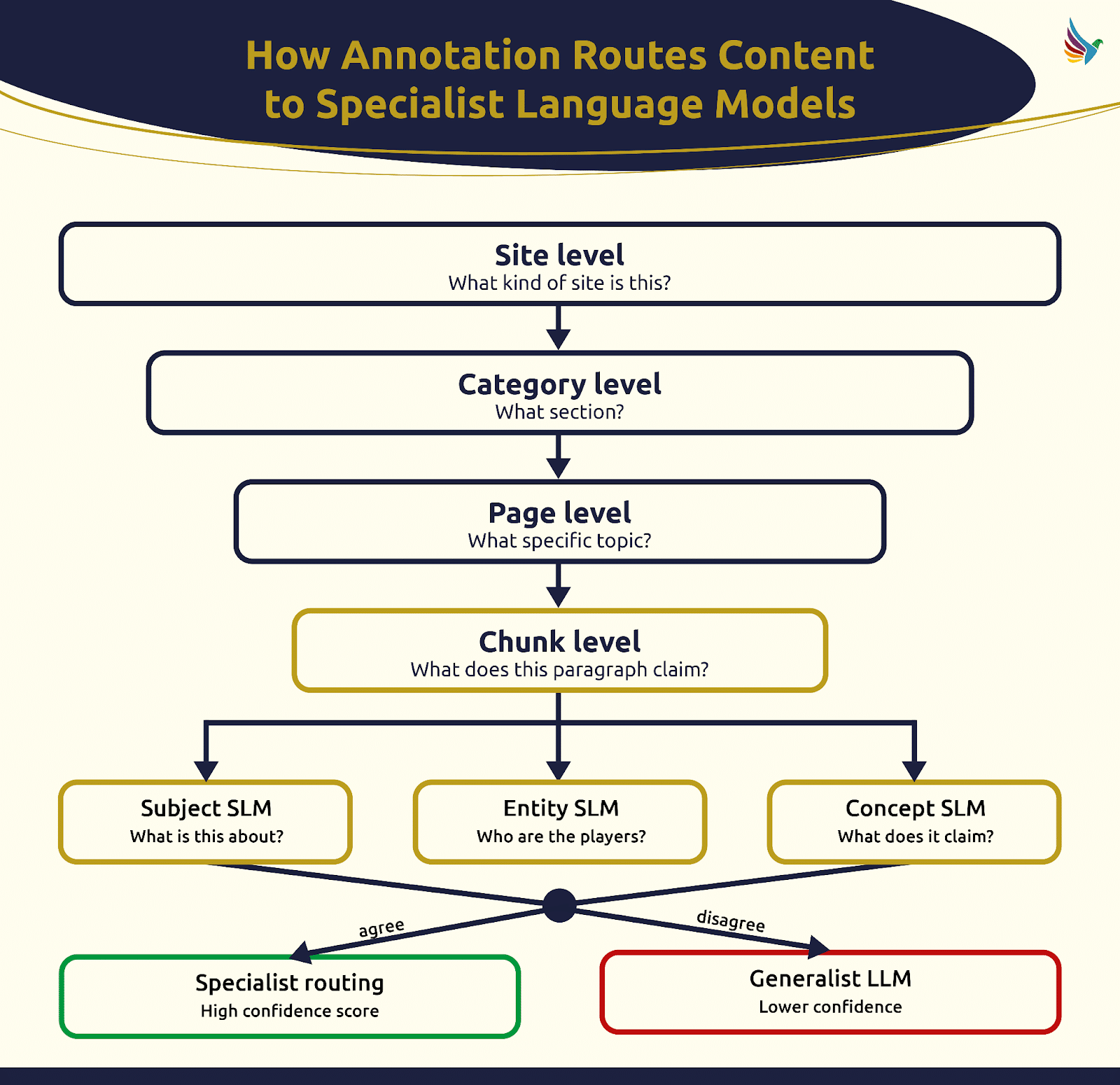
    Annotation analyzes each chunk in the context of the whole page, using multiple language models, the web index, and a knowledge graph to determine context and confidence. Poor page-level understanding affects every chunk’s annotation.

    Algorithmic systems use annotation to absorb content during recruitment, influenced by different criteria. A low-confidence or misclassified chunk results in a weaker competitive standing.

    ```json
{
  "alt": "Diagram showing five levels of annotation for content classification.",
  "caption": "Explore the Five Levels of Annotation to enhance content classification and clarity at Gate 5. From Elimination to Deployment, each level ensures precision and trust.",
  "description": "This image illustrates a diagram titled 'Five Levels of Annotation: 24+ Dimensions Classifying Your Content at Gate 5.' It includes five hierarchical levels: Gatekeepers, Core Identity, Selection Filters, Confidence Multipliers, and Extraction Quality, each with specific roles like Eliminate, Define, Route, Rank, and Deploy. Designed to improve content classification, the diagram emphasizes the importance of confidence scores, clarity, and the risks of ambiguity."
}
```

    Annotation is a critical midpoint in the content pipeline, where strategy shifts from infrastructure to competition.

    The Five Levels of Annotation

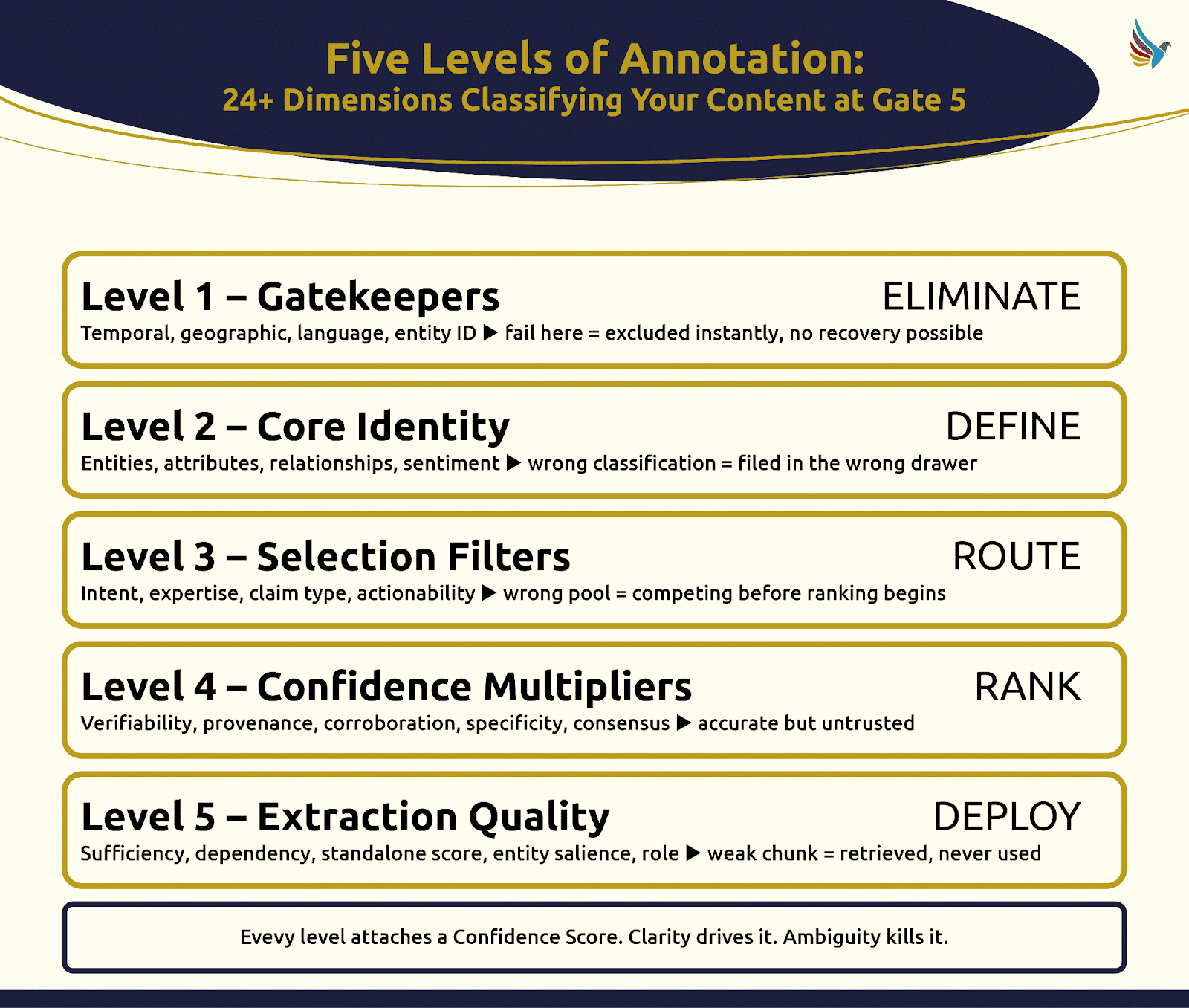
    Annotation has five functional categories, each essential in the classification process. Here’s the taxonomy I’ve identified:

    ```json
{
  "alt": "Infographic illustrating the multiplicative destruction effect with probability percentages and a quote by Brent Payne.",
  "caption": "Explore the multiplicative destruction effect: how one near-zero can impact entirely. A thought-provoking concept by Brent Payne emphasizing consistent effort.",
  "description": "This infographic highlights 'The Multiplicative Destruction Effect: When One Near-Zero Kills Everything'. It visually represents how probabilities compounded across dimensions can significantly dwindle to small percentages: 35% at 0.9, 11% at 0.8, and 3% at 0.7. It features a quote from Brent Payne, 'Better to be a straight C student than three As and an F,' illustrating the message that consistent effort beats occasional high performance. Numbers in the graphic are for illustrative purposes."
}
```

    Level 1: Gatekeepers

    • Temporal scope, geographic scope, language, and entity resolution, determining pass or fail.
    • Failures here instantly remove content from competitiveness.

    Level 2: Core Identity

    ```json
{
  "alt": "Flowchart illustrating how annotation routes content to specialist language models.",
  "caption": "Understanding the flow of content through annotation routing to enhance the accuracy of specialist language models.",
  "description": "This image is a flowchart explaining the process of how annotation routes direct content to specialist language models. It starts with the 'Site level,' followed by 'Category level,' 'Page level,' and 'Chunk level.' At the chunk level, content is analyzed by Subject, Entity, and Concept language models. Depending on agreement, content is routed either to specialist routing with high confidence or to generalist language models with lower confidence."
}
```
    • Entities, attributes, relationships, and sentiment are defined.
    • Without a strong identity, chunks lack significance.

    Level 3: Selection Filters

    • Intent, expertise, claim structure, and actionability determine competition pools.
    • Mismatched pools mean competing against better-suited content.
    ```json
{
  "alt": "Flowchart illustrating first-impression persistence in data annotation and correction difficulties.",
  "caption": "A flowchart explaining the challenge of correcting initial data annotations, emphasizing the cost of errors and the importance of thorough updates.",
  "description": "This flowchart visualizes the concept of first-impression persistence in data annotation. It outlines the process from the first crawl setting a baseline, through the fluidity window, to a crystallized state that is reinforced by subsequent crawls. A correction attempt can lead to either zero residual signals with new classification adoption or residual signals remaining, causing old classification persistence. The chart underscores the importance of accuracy before publishing to avoid expensive corrections, using a clean, organized layout for clarity."
}
```

    Level 4: Confidence Multipliers

    • Factors like verifiability and corroboration scale rankings.
    • Confidence impacts all other signals profoundly.

    Level 5: Extraction Quality

    ```json
{
  "alt": "Flowchart titled 'The Annotation Flywheel' outlining the process from content publication to stronger search results.",
  "caption": "Discover the Annotation Flywheel: a seamless flow from publishing your content to enhancing search results through a series of interconnected processes.",
  "description": "This flowchart, titled 'The Annotation Flywheel,' illustrates a comprehensive process starting from publishing new content. It involves annotation-time cross-references through web indexing, knowledge graphs, and LLM/SLM alignment. The process leads to a high confidence score, better recruitment, more wins, increased third-party mentions, and stronger search results incorporating LLM and KG elements. Each step feeds into the next, creating a continuous cycle aimed at optimizing content visibility and search efficacy."
}
```
    • Determines content’s sufficiency and context need.
    • Impacts how content appears in outputs.

    Annotation Is Where the Game is Won

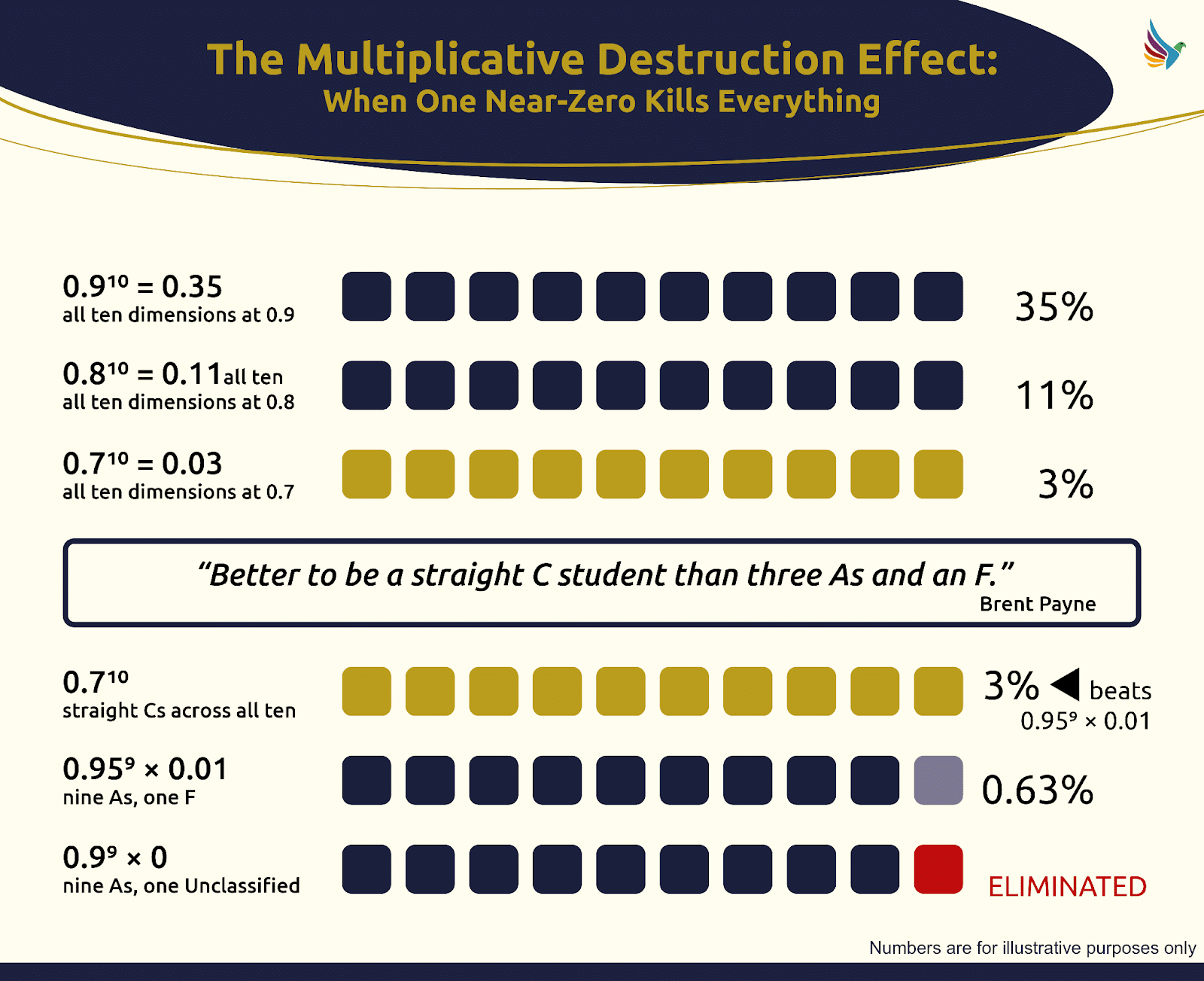
    Annotation scores in each level reflect confidence in various aspects of content. Misclassified or low-confidence annotations can doom content before it truly competes.

    ```json
{
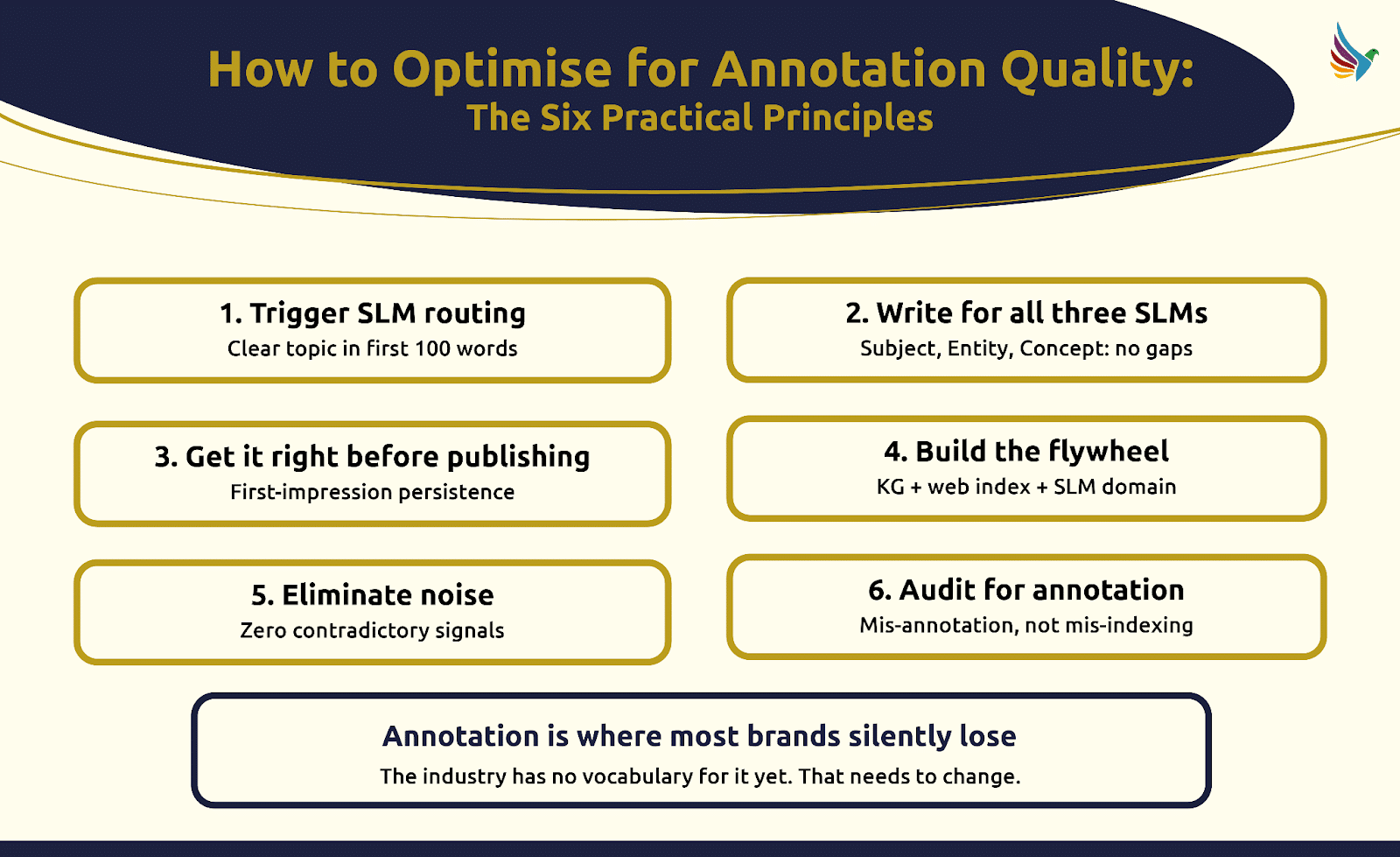
  "alt": "Infographic outlining six practical principles to optimize annotation quality.",
  "caption": "Optimize your annotation quality with these six practical principles. Discover steps from triggering SLM routing to auditing for annotation.",
  "description": "This infographic details 'How to Optimise for Annotation Quality: The Six Practical Principles.' Key steps include triggering SLM routing, writing for all three SLMs, getting it right before publishing, building the flywheel, eliminating noise, and auditing for annotation. The image is visually structured with six highlighted steps, emphasizing the critical nature of annotation in brand management and calling for industry change."
}
```

    Annotation fundamentally shapes the understanding algorithms have of your content, making it a crucial aspect of content strategy.

    How to Optimize for Annotation Quality

    The key to success is optimizing for annotation, not just indexing. Follow these principles:

    • Ensure category clarity early in content.
    • Write for subject, entity, and concept clarity.
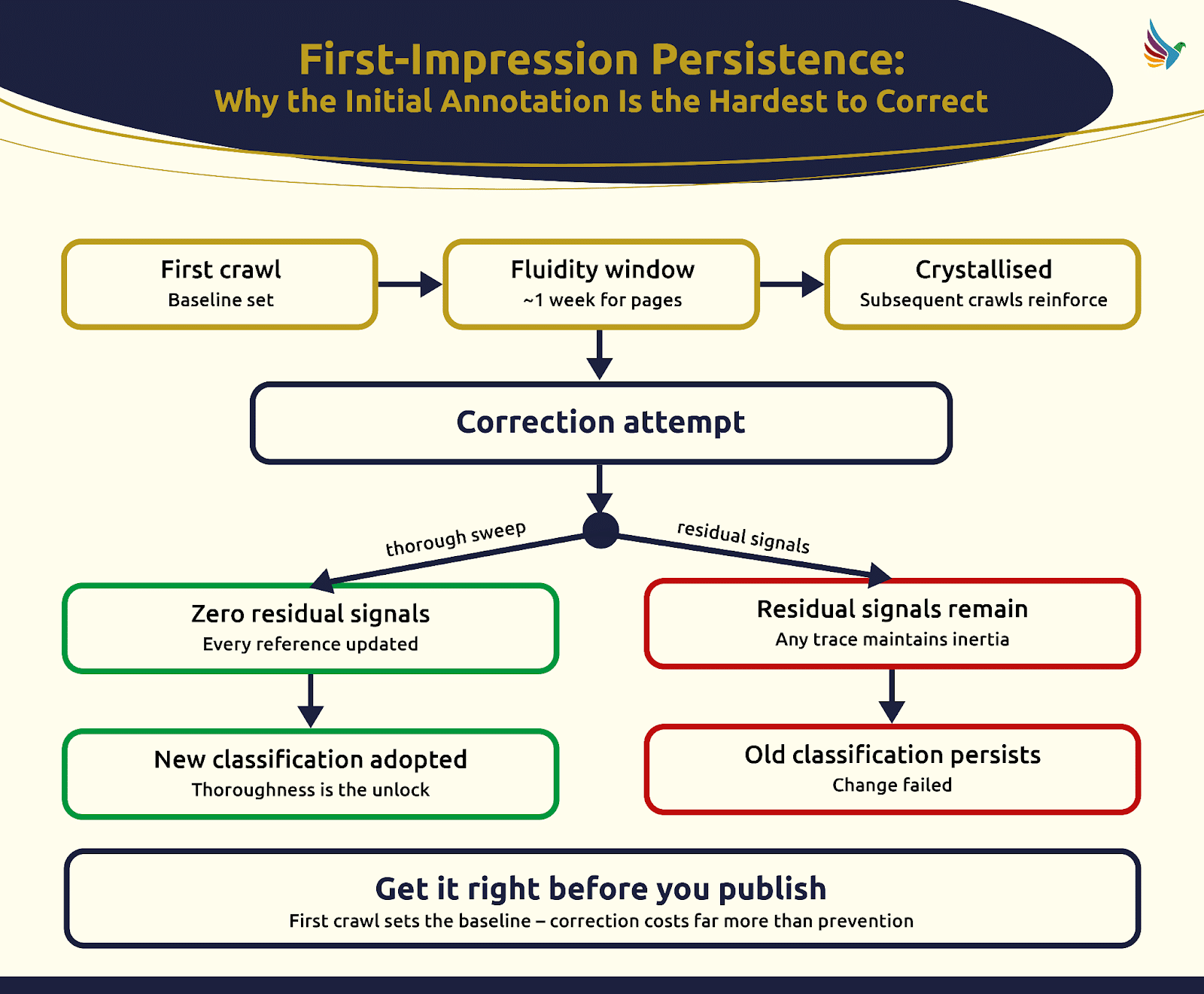
    • Get annotation right on initial publish.
    • Invest in a solid entity foundation.
    • Eliminate contradictory signals promptly.
    • Audit for annotation accuracy.

    Why Annotation Matters

    Annotation is your last solo run before entering the competitive fray. Once classified correctly, you’re better positioned to win at recruitment and beyond. Fix it here, or face persistent issues downstream.


    Inspired by this post on Search Engine Land.

    crushpress.ai community screenshot
  • How AI is Redefining SEO with Persuasion and Positioning

    How AI is Redefining SEO with Persuasion and Positioning

    The journey into SEO’s future is personal for me. When I think of ‘Mad Men,’ it’s more than a show; it’s an era of advertising where persuasion reigned supreme. It’s fascinating to see how today’s AI influences SEO in a similar way, deciding visibility based on a brand’s positioning, proof, and online presence.

    I recall the early days of the internet, where simply getting a brand found was the goal. Google streamlined that process, making SEO a crucial part of marketing. But now, AI drives a new layer of SEO that many still misinterpret.

    Interestingly, AI is revealing gaps in traditional SEO practices. Brands won’t capture AI’s attention by just pumping out content; rather, they must appeal through strategic positioning and persuasive narratives, just like Madison Avenue did.

    Back when SEO was emerging, content felt like king, but it was a means to an end. For many businesses, it shifted from serving customers to gaming search algorithms—it’s a narrative that’s changing.

    I can see how AI is absorbing the informational retrieval once handled by search engines, pushing users straight to answers rather than through a maze of links. This shift highlights how SEO is becoming more about impactful marketing.

    Reflecting on the “4 Ps” of marketing, traditional SEO was all about place. Today, I feel the challenge lies more in earning preference through AI’s lens, transforming from being found to being favored.

    Those AI-driven recommendations boil down to good old advertising principles. It’s about guiding choices invisibly, which AI does through recommendations rather than ads.

    Understanding AI recommendations is crucial. These systems weigh evidence like reviews and brand prominence, similar to how we humans rely on social proof and authority to make decisions.

    ```json
{
  "alt": "The CapmatchOne logo with a gradient circle and bold text.",
  "caption": "Discover innovation with the CapmatchOne logo, featuring sleek typography and a modern gradient circle.",
  "description": "The CapmatchOne logo features bold, modern typography coupled with a gradient circle, symbolizing connection and innovation. The sleek design conveys a sense of progress and creativity. This image can be used for branding or promotional purposes, appealing to audiences interested in innovative solutions and forward-thinking designs."
}
```

    I realize that if a brand isn’t actively testing and optimizing for AI recommendations, it’s missing out, especially as these recommendations can quietly sway market outcomes.

    Now, I see my website—our digital face—as more than a stopping point. It’s an advocate for preference, needing clear differentiation and purpose to stand out in AI and human evaluations alike.

    True commercial copywriting must articulate value and sharpen the proposition for potential customers, standing out in a sea of content vying for attention.

    The future seems to demand that we move beyond keyword-centric strategies. To truly prepare, we need to craft compelling arguments for why our brand deserves to be recommended and seen.

    As I explore strategies to remain relevant, it’s clear—the focus shift is from visibility to building persuasive, evidence-based branding through various channels, including digital and traditional PR.

    Even amidst all the change, core SEO fundamentals still hold their ground. Understanding technical optimization, site architecture, and secured recommendation visibility remain indispensable.

    Winning in this landscape means embracing a hybrid approach, merging SEO with branding, PR, and strategic infrastructure. It’s about ensuring our brand is not just found, but chosen, guided by both traditional tactics and cutting-edge AI understanding.


    Inspired by this post on Search Engine Land.

    crushpress.ai community screenshot