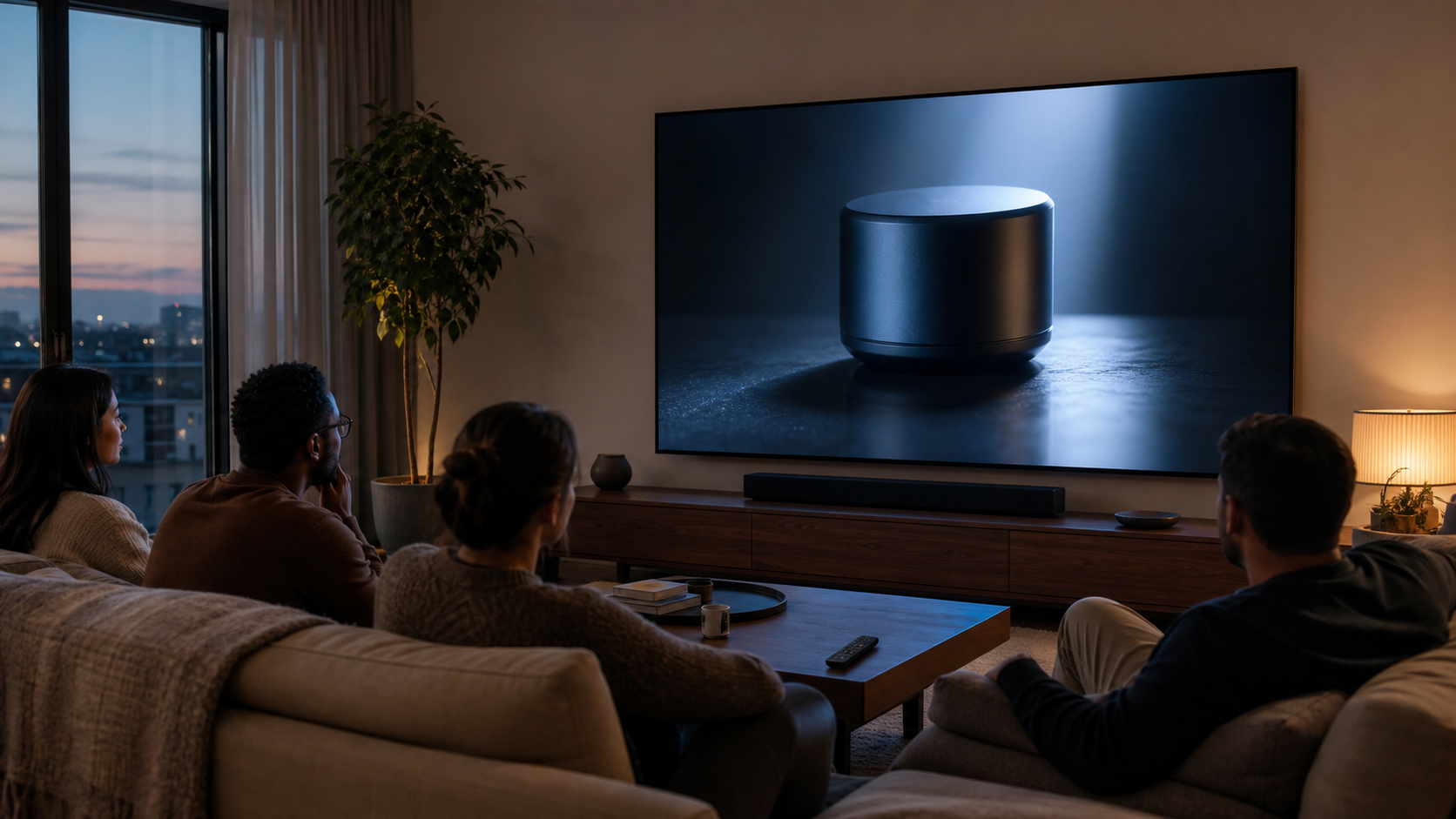
You need your YouTube message to survive past the skip button, especially when it appears on the largest screen in the home. But non-skippable delivery is easy to overvalue: it means the ad can run to completion, not that the viewer paid attention, understood the offer, or changed their mind.
YouTube VRC Non-Skip ads are most useful when complete-message delivery and connected TV reach are central to the campaign. The practical challenge is to give the optimizer a coherent set of 6-, 15-, and 30-second ads, then judge the campaign by incremental audience and business effects rather than completion alone.
Know what VRC Non-Skip buys before you budget for it
VRC stands for Video Reach Campaign. The Non-Skip option is available globally through Google Ads and Display & Video 360 and is designed around non-skippable placements on connected TV screens.
The format solves a specific media problem. If your idea needs more than a fleeting brand appearance, removing the skip decision gives the complete sequence an opportunity to play. That is particularly relevant in the living room: YouTube has held the position of the leading U.S. streaming platform for three consecutive years, making its TV inventory difficult for reach-focused advertisers to ignore.
What you are buying is delivery, however, not guaranteed attention. A non-skippable impression cannot tell you whether someone looked away, started a conversation, remembered the brand, or later bought. Write that distinction into the brief. Otherwise, the campaign’s most predictable behavior – a high proportion of ads playing through – can be mistaken for proof that the advertising worked.
VRC Non-Skip is a strong candidate when your primary objective is broad reach and the full message matters. It is a weaker fit when success depends mainly on an immediate click, when every second of budget must be assigned manually to a particular duration, or when you have only one piece of creative that cannot adapt to different placements.
Build one creative system for three different jobs

Google AI can dynamically optimize delivery across 6-second bumpers, 15-second standard ads, and 30-second connected-TV-exclusive ads. That does not mean the same edit should simply be cut shorter twice. Each duration needs to express the same proposition at a different level of depth.
| Duration | Role in the creative system | What to protect |
|---|---|---|
| 6 seconds | Make the brand and one idea recognizable immediately | Brand cue, category context, and a single memorable point |
| 15 seconds | Connect the problem, promise, and brand without detours | One clear benefit and one simple next step |
| 30 seconds | Use the CTV-exclusive time for a fuller argument or story | Context, proof or explanation, brand, and a legible closing action |
Start by writing one sentence that every version must communicate. If you cannot reduce the campaign to one proposition, the optimizer may distribute three different ideas rather than three expressions of the same idea. You will then be unable to tell whether a duration, a message, or the media placement caused the difference.
- Lock the invariant. Keep the audience problem, brand promise, and intended perception consistent across all three cuts.
- Write the six-second ad from scratch. Do not speed up a longer script. Show the brand early and remove every supporting point that competes with the central idea.
- Let the 15-second ad make one complete argument. Give the viewer enough context to understand why the promise matters, but resist adding a second benefit merely because time remains.
- Earn the 30 seconds. Use the longer CTV format for information that changes understanding: a demonstration, meaningful contrast, qualification, or narrative progression. A slower version of the 15-second cut wastes the additional exposure.
- Design for viewing distance. Use large, persistent visual cues and a closing instruction that can be understood from across a room. Tiny disclaimers, dense feature lists, and several competing calls to action make a completed ad difficult to process.
Review the three versions side by side without sound and then audio-only. They do not need to communicate every detail in both modes, but the brand and main promise should not disappear when either the visual or audio channel loses the viewer’s attention.
Give the AI a precise objective, not three unrelated ads
The operational benefit of VRC Non-Skip is that Google AI allocates impressions across the available formats instead of requiring you to maintain a separate budget for each duration. The optimizer handles that allocation; you still own the strategic choices around audience, message, constraints, and evidence of success.
A useful campaign brief should settle these points before launch:
- The audience to be reached: define who must see the campaign and which geography and flight period matter. A broad label such as “prospects” is not enough to interpret the resulting reach.
- The change you want: specify the perception, recall, consideration, or business behavior the campaign is intended to influence. “Run the whole ad” is delivery behavior, not the marketing outcome.
- The invariant proposition: document the one promise that appears in every duration so format allocation does not become message allocation by accident.
- The acceptable trade-off: decide how much control you are willing to exchange for automated reach efficiency. If a contract or internal plan requires an exact spending share by duration, verify that requirement can be enforced rather than assuming the optimizer will infer it.
- The decision rule: state which result would justify scaling, maintaining, changing, or stopping the campaign. Set it before performance data can tempt the team to choose whichever metric looks best.
Do not feed the system one awareness ad, one product tutorial, and one promotional spot and call them a format mix. Even if all three carry the same logo, they ask different questions of the audience. Keep the campaign thesis stable; vary the amount of time used to express it.
The same discipline applies to calls to action. A CTV reach campaign can support later search, site visits, store activity, or other responses, but the viewer may not act on the television itself. Use a short, memorable destination or instruction. If the action requires several details, let the ad create the reason to act and let the destination handle the explanation.
Test for incremental impact, not inevitable completion
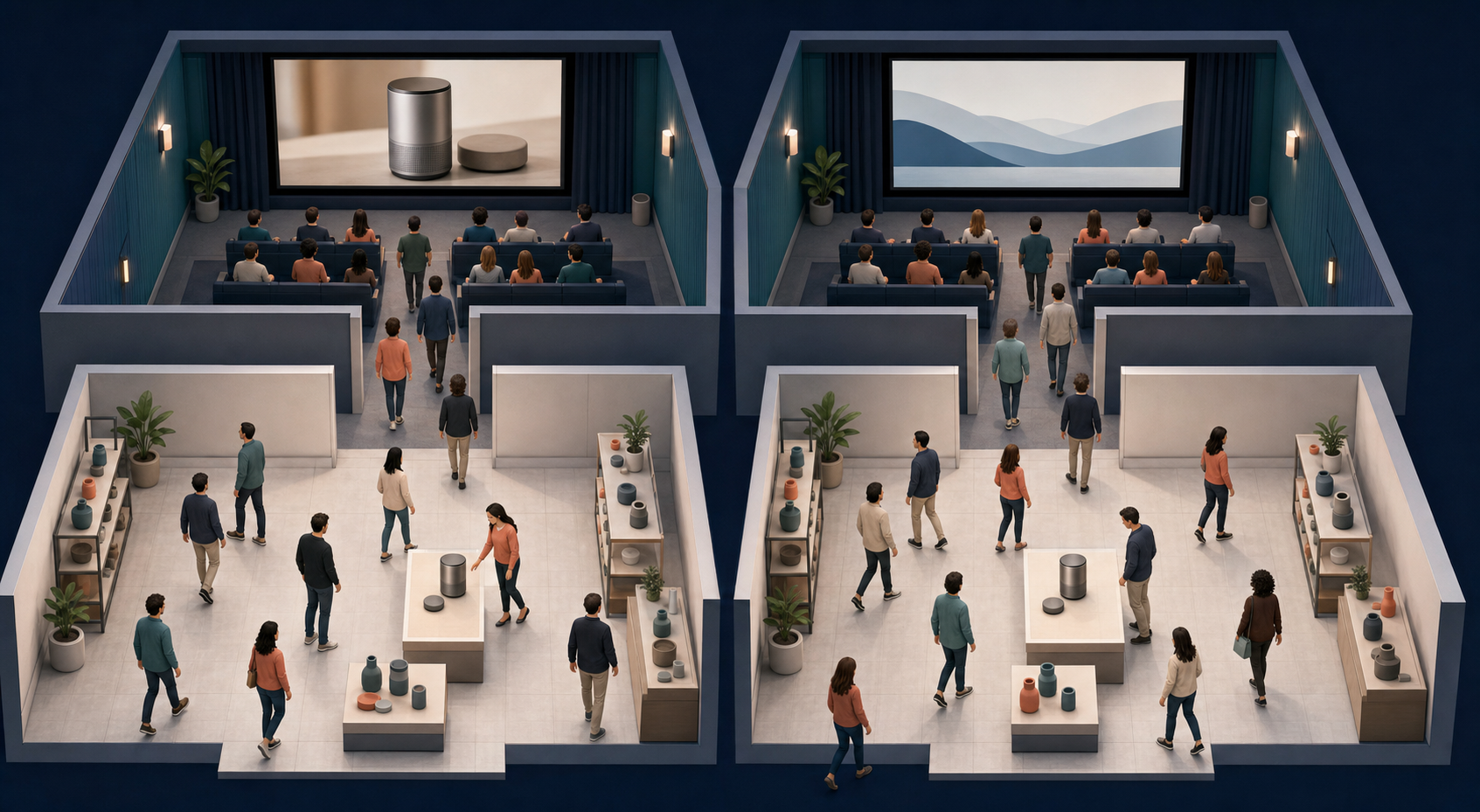
A non-skippable campaign should complete more of its message by design. Completion therefore belongs in delivery quality checks, not at the top of the business scorecard. Scaling spend because the ads played through would reward the defining feature of the format without showing that it improved the result you care about.
Measure the campaign in three layers:
- Delivery: confirm where the ads ran, how impressions were distributed among durations, and whether the intended connected TV inventory and audience were reached.
- Audience: examine unique reach and frequency, not just the impression total. Repeatedly reaching the same viewers is different from extending the campaign to new viewers.
- Outcome: evaluate the predefined brand or business change. That might involve a controlled brand measure, qualified visits, conversions, or another result tied to the campaign’s actual objective.
If you want to know whether Non-Skip adds value over your existing YouTube reach approach, create a real comparison rather than contrasting the new campaign with an unrelated historical period. Keep the audience definition, proposition, flight conditions, and outcome measure as consistent as your testing method allows. The main variable should be the delivery strategy you are trying to evaluate.
Branded search, direct traffic, and channel activity can help you notice movement after a CTV push, but they do not establish causation on their own. Other campaigns, seasonality, news, and existing demand can move the same signals. Treat them as supporting evidence unless you have a controlled design capable of isolating the campaign’s effect.
Set the scale decision in advance. For example, require evidence that Non-Skip reaches additional members of the intended audience and improves the chosen outcome at an acceptable cost. If it only increases completed delivery, revise the creative or media plan before committing more budget. That protects you from paying more for a result that is mechanically built into the unit.
Key takeaways for your launch decision
- Use VRC Non-Skip when connected TV reach and complete-message delivery are central to the objective, not simply because non-skippable inventory sounds more forceful.
- Treat 6-, 15-, and 30-second ads as a coordinated creative system with one proposition, not as three independent campaigns.
- Let Google AI allocate impressions across eligible formats, but define the audience, constraints, intended change, and scale rule yourself.
- Separate playback from persuasion. A completed non-skippable ad is a delivery result, not proof of attention or business impact.
- Compare Non-Skip with a credible alternative under similar conditions and scale only when it improves incremental audience or outcome value.
Your next move is to write the invariant campaign sentence and the scale rule before opening the ad platform. If the team can agree on both, build the three duration-specific executions and run a bounded test. If it cannot, more automation will only distribute an unresolved strategy faster.
Leave a Reply