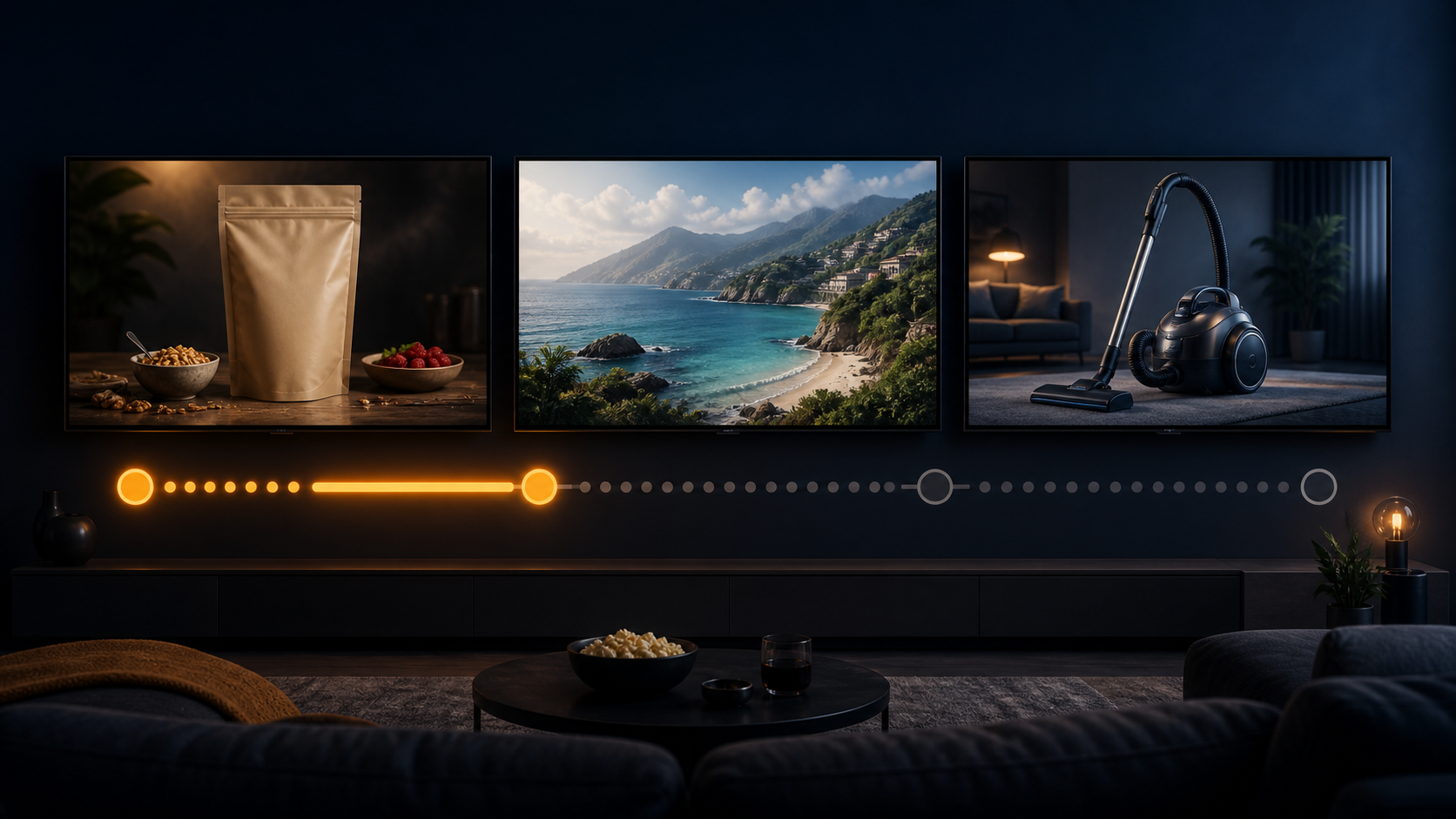
Tag: Brand Campaigns

  • Google Ads API v25.1: A Practical Measurement Playbook

    Google Ads API v25.1: A Practical Measurement Playbook

    If you pull Google Ads data into a warehouse, dashboard, or client-facing platform, adding fields is the easy part. The harder job is deciding which business question each field can answer without turning unlike signals into one misleading performance score.

    Google Ads API v25.1 gives you several useful separations: original versus adjusted conversion value, attributed results versus incremental lift, internal performance versus category benchmarks, and total converters versus loyalty segments. Used carefully, those distinctions can make your reporting more explainable. Used carelessly, they can produce a wider dashboard that is no more trustworthy than the old one.

    Key takeaways

    • Store original_conversion_value beside the corresponding adjusted value. The difference shows how conversion value rules and customer lifecycle goals are changing the values used downstream.
    • Treat Conversion Lift and Brand Lift as distinct measurement layers. Their API resources are read-only, and access is currently limited to allowlisted Google Ads accounts.
    • Use Product & Service Category benchmarks as context for investigation, not as automatic bidding instructions.
    • Keep brand sentiment separate from campaign outcomes. It can guide review and creator analysis, but it does not establish incremental impact.
    • Model loyalty tier, loyalty membership conditions, and conversion value as separate fields so you can explain who converted and why a value adjustment applied.
    • Although v25.1 is a drop-in upgrade for v25, you still need updated client libraries, code changes for the new capabilities, and semantic regression tests before using the data in decisions.

    Build your measurement model around six different questions

    Six separate measurement workstations examine different signals from one central data source using distinct instruments.

    The most important design choice is not which new metrics to retrieve. It is which question each capability answers. A clean measurement model keeps the following layers separate:

    Business questionv25.1 capabilityAppropriate use
    What was the conversion worth before Google applied value adjustments?original_conversion_valueAudit the effect of value rules and lifecycle goal adjustments.
    Did advertising create incremental conversions or awareness?Conversion Lift and Brand Lift resourcesInspect eligible lift studies, configurations, dimensions, and results.
    How does performance compare with a relevant market category?BenchmarksService with Product & Service CategoriesAdd competitive context to internal performance analysis.
    What sentiment is associated with a creator or brand?ContentCreatorInsightsService sentiment dataSupport creator intelligence, brand review, and reporting workflows.
    Which loyalty groups converted, and did membership affect value?Loyalty tier segmentation and loyalty membership dimensionsAnalyze converters by tier and explain membership-based value rules.
    How might parental-status targeting affect planned reach?ReachPlanService targetingUse parental status in forecasting and plannable product discovery.

    Do not collapse these capabilities into a composite campaign health score. A strong benchmark, positive sentiment, and positive lift are different observations with different scopes. Combining them can hide the exact information a decision-maker needs.

    Make original conversion value an audit layer

    The new original_conversion_value metric exposes the value of a biddable conversion before conversion value rules or customer lifecycle goal adjustments. That distinction matters whenever the value used for reporting and optimization is not identical to the underlying conversion value.

    For each compatible reporting grain, preserve at least three concepts in your own model:

    • Original value: the pre-adjustment value returned by original_conversion_value.
    • Adjusted value: the corresponding value after the applicable rules or lifecycle adjustments.
    • Adjustment delta: adjusted value minus original value, calculated in your reporting layer.

    Report the absolute delta before reaching for a percentage. A percentage becomes undefined when the original value is zero and can look extreme when the denominator is small. If you do show a percentage, define how zero and missing values are handled instead of letting a dashboard silently convert them into zeros.

    The delta is not evidence that Google changed a value incorrectly. It tells you that an adjustment occurred. Your next question is whether that adjustment matches the value rule or lifecycle policy your team intended. Where your system already stores rule metadata, expose it beside the delta so an analyst can move from detection to explanation.

    Do not replace an established revenue or return-on-ad-spend metric with original_conversion_value in one step. That can change budget conclusions simply because the definition changed. Run original and adjusted value in parallel, reconcile known value-rule cases, and label both clearly before either number reaches automated budget logic.

    Keep lift, benchmarks, and sentiment in their own lanes

    Lift data needs its study context

    Google Ads API v25.1 adds read-only resources for Conversion Lift and Brand Lift studies. You can inspect configurations, flight dates, associated campaigns, and conversion goals. The API also adds 24 Conversion Lift metrics, winner score metrics for statistical analysis, and Brand Lift dimensions covering age range, campaign, device, gender, and video.

    Read-only is an important boundary. Build your integration to retrieve and explain study data, not to promise study creation or modification through these resources. Put configuration and result data in the same analytical view: a result without its flight dates, campaign scope, and conversion goal is easy to apply to the wrong period or objective.

    Access is another boundary. Brand Lift and Conversion Lift API capabilities are currently limited to allowlisted accounts, and advertisers are directed to contact their Google representative for access. Check eligibility before committing a delivery date. In a multi-account platform, treat eligibility as an account-level capability rather than assuming that one successful request means every account is supported.

    Your internal presentation should distinguish at least four states: supported with data, supported with no returned data, unavailable because eligibility has not been established, and failed because the request encountered an error. Those are product states you define in your application, not API status labels. Keeping them separate prevents an access limitation from being reported as a zero lift result.

    Winner score metrics should retain Google’s metric names and definitions in your semantic layer. Do not relabel a winner score as probability, certainty, or incremental return unless the applicable definition supports that interpretation. The safe workflow is to display the score with its study scope, then let the measurement owner determine how it informs a campaign decision.

    Category benchmarks provide context, not a target

    BenchmarksService can now compare performance within specific Product & Service Categories and return aggregate cost and views alongside share-based measurements such as share of voice. The narrower category dimension can make a comparison more relevant than a broad benchmark group, but relevance still depends on whether the selected category represents the business being evaluated.

    Before placing a benchmark beside an account metric, document the category, measurement window, metric definition, and any other comparability controls available in your query. If those elements differ, show the benchmark as external context rather than a direct performance gap.

    A share metric and an aggregate volume metric also answer different questions. Share of voice describes relative presence, while aggregate cost and views add scale context. Show both when available. A low share in a large category may deserve a different response from the same share in a small category.

    Do not let a benchmark variance trigger bid or budget changes automatically. The comparison may identify an issue worth investigating, but it does not tell you whether the right response is more spending, different creative, narrower targeting, or no change at all. Route the variance into an analyst review that also considers the account’s own goals and economics.

    Brand sentiment is an intelligence signal

    ContentCreatorInsightsService now supports brand sentiment distributions and summaries for creators and brands. That gives advertising platforms another signal for creator research and brand reporting, but sentiment should not be presented as conversion performance or causal campaign impact.

    Use the distribution when you need to understand the mix behind a summary. A single summary can conceal whether sentiment is consistently moderate or sharply divided. The practical use is triage: identify creators or brands that warrant closer review, then examine the relevant campaign and brand context before acting.

    Connect loyalty reporting to value-rule governance

    Concentric groups of customer tokens pass through adjustable rule gates into a transparent value-measurement chamber.

    Google Ads API v25.1 allows reporting metrics to be segmented by the loyalty program tier of users who converted. It also makes loyalty membership a primary dimension for conversion value rules, allowing you to identify when a loyalty membership condition was satisfied.

    Those capabilities describe two related but different facts:

    • Loyalty tier segmentation tells you which tier is associated with a converting user.
    • Loyalty membership as a value-rule dimension tells you whether a membership condition was met when a conversion value rule was evaluated.

    Do not infer the second from the first. A converter’s tier is an audience attribute; a satisfied rule condition is part of value-processing logic. Store them separately even if your first dashboard shows them together.

    The most useful loyalty analysis combines tier segmentation with the original-versus-adjusted value audit. Start with these questions:

    • How many conversions and how much original conversion value came from each returned tier?
    • How much adjusted conversion value was reported for those same segments?
    • When a loyalty membership condition was satisfied, did the resulting delta match the intended value policy?
    • Are any apparent differences driven by a small number of conversions rather than a stable segment pattern?

    Always report conversion volume beside value when reviewing tiers. A high average value from a small segment can dominate a ranking without providing a dependable basis for budget changes. You do not need an invented universal threshold; you need enough context for the owner of the loyalty program to judge the segment responsibly.

    Parental-status targeting in ReachPlanService belongs in a different part of your model. It expands reach forecasting and plannable product discovery; it is not an observed conversion result. Keep forecast inputs and planned reach outside outcome tables so users cannot mistake a planning scenario for delivered performance.

    Roll out v25.1 without changing metric meaning by accident

    Google describes v25.1 as a drop-in upgrade for v25, but access to the new capabilities still requires the latest client libraries and corresponding code updates. Drop-in compatibility reduces migration friction; it does not replace testing of your transformations, labels, and downstream decisions.

    1. Inventory the current integration. Record the v25 services, fields, generated client types, transformation jobs, dashboards, and automated decisions that could be affected.
    2. Update the client library in an isolated change. Confirm that the existing extraction and build processes still work before requesting new resources or metrics.
    3. Regression-test existing outputs. Run representative unchanged queries through the old and upgraded paths. Compare row grain, identifiers, null handling, totals, and field mappings.
    4. Add one capability group at a time. Original conversion value, lift studies, benchmarks, sentiment, loyalty, and reach planning should enter separate staging models. This makes a semantic error easier to locate.
    5. Model access explicitly. Check allowlist eligibility for lift features and make unavailable capabilities visible to the user. Do not coerce an unavailable response into zero.
    6. Validate with known business logic. For accounts using conversion value rules or lifecycle goals, select known cases and verify that the original-to-adjusted relationship matches the configured intent.
    7. Release reporting before automation. Let analysts inspect the new fields and definitions in read-only dashboards before any benchmark, sentiment, loyalty, or value delta changes bids, budgets, or alerts.

    Give every new metric a short data contract. It should name the business question, API service or resource, reporting grain, raw and derived fields, eligibility requirement, refresh process, null policy, and downstream decision. That document is what stops an accurate field from becoming a misleading KPI six months later.

    If you need one place to start, add original_conversion_value as a parallel audit field and trace its path through your warehouse and reports. Then add category benchmarks and loyalty segmentation as separate analytical views. Treat lift integration as its own workstream because account eligibility and study context must be resolved first. Your next API pull should not merely contain more columns; it should make the path from underlying value to business decision easier to explain.

    References


  • YouTube Audio Ads: Creative and Campaign Setup Guide

    YouTube Audio Ads: Creative and Campaign Setup Guide

    You have a short brand message, a YouTube campaign to build, and one awkward question: how do you make an ad work when the audience may barely look at the screen?

    The answer is to make audio carry the complete idea. YouTube audio ads are built for audio-focused surfaces and listening-first experiences across YouTube and YouTube Music. The screen still matters, but it should confirm the brand rather than rescue an incomplete script.

    First decide whether your message survives without the screen

    Audio inventory is a sensible fit when your immediate goal is awareness or reach and the central message can be understood by listening alone. It is a weaker fit when comprehension depends on a product demonstration, a sequence of screenshots, a dense offer table, or several visual disclaimers.

    Use a simple test before you spend time on production: read the proposed script while hiding every visual. A listener should still be able to identify the brand, understand what category it belongs to, and repeat the one idea you want associated with it. If any of those answers depend on text or imagery, the concept is still a video ad with an audio track, not an audio-first ad.

    A useful one-sentence brief is: “Make [audience] remember [brand] when they think about [need or category].” That sentence forces you to pick one memory rather than compressing an entire landing page into a short spot.

    • Choose the format when: the campaign is about brand awareness or reach, the proposition is easy to say, and the brand name can be worked naturally into the audio.
    • Rework the concept when: the voiceover refers to something the listener must see, the offer requires several conditions, or the brand is withheld until a final visual reveal.
    • Choose a different campaign approach when: the screen demonstration is the argument rather than supporting evidence.

    This distinction also keeps expectations aligned with setup. The format lives under the Brand awareness and reach objective. Treating it as an awareness format from the briefing stage prevents a later mismatch between the creative, campaign configuration, and the decision you expect the campaign to support.

    Choose the duration before you write the script

    One second can change the ad experience. Creative that runs for up to 15 seconds is non-skippable, while creative from 16 through 30 seconds is skippable. Do not write a script, record it, and let the final edit determine which side of that boundary you land on by accident.

    Creative lengthAd experienceWhat to do with the script
    Up to 15 secondsNon-skippableDeliver one complete idea. Name the brand early and remove setup that delays the point.
    16 to 30 secondsSkippableMake the opening meaningful on its own. Do not rely on a late reveal to explain the brand or proposition.

    Non-skippable does not mean guaranteed attention. It describes the ad controls, not the listener’s concentration. A 15-second script still needs an immediate, recognizable opening. An abstract soundscape followed by a delayed brand reveal may be elegant, but it spends the most valuable part of the ad withholding context.

    The longer, skippable range gives you more room, but that room should add clarity rather than another message. Build the opening so it can establish the brand and central idea without depending on the ending. Use the remaining time for a reason to believe, a memorable restatement, or a clear next action.

    Be especially careful with a 16-second export. Crossing from 15 to 16 seconds is not a cosmetic change; it moves the creative from the non-skippable range into the skippable range. If an edit finishes just over the boundary, decide deliberately whether the extra material earns that change in experience.

    Build an audio-first asset that happens to be a video

    A sound engineer and creative director work in a studio with a microphone, mixing console, speakers, and a monitor showing simple abstract shapes.

    You still upload the creative as a YouTube video. A static image or simple animation is the intended visual approach, which is useful discipline: the audio makes the argument, while the image confirms who is speaking.

    1. Write a listening-only draft. Start with spoken words and sound. Do not add visual directions until the message works without them.
    2. Mark the essential information. The brand, category or problem, central proposition, and any intended action must be understandable through audio.
    3. Remove visual dependencies. Phrases such as “as you can see,” “choose the option below,” or “look at the difference” expose a concept that still requires the screen.
    4. Read it at its real pace. If the delivery has to be rushed to meet the chosen duration, cut an idea rather than forcing the voiceover to carry more.
    5. Add restrained visuals. Use a static image or simple animation that reinforces brand recognition. Avoid making small on-screen copy responsible for a qualification the listener needs to understand.
    6. Run two separate quality checks. Listen once without looking, then watch once as a complete video. The first check tests comprehension; the second catches a visual that contradicts or distracts from the spoken message.

    The most common structural mistake is trying to create suspense before establishing relevance. For a listening-first placement, the audience may encounter your ad while focused on something else. Give them a reason to orient themselves: a recognizable need, a clear category cue, or the brand connected directly to its proposition.

    Keep the call to action proportional to the format. A spoken instruction should be short enough to remember and complete without consulting the screen. If the action requires a long URL, multiple steps, or detailed conditions, let the destination handle that complexity. The ad’s job is to create enough recognition and interest for the next interaction.

    Configure the campaign without losing the format in setup

    The required campaign path is specific: use the Brand awareness and reach objective, choose the Audio video campaign subtype, and select Target CPM bidding. Those choices are not labels to clean up after creative production; they define the campaign you are building.

    1. Create a campaign under Brand awareness and reach.
    2. Select the Audio video campaign subtype.
    3. Use Target CPM as the bidding strategy.
    4. Select or upload the YouTube video containing your audio-first creative.
    5. Set the audience, budget, and schedule from the approved campaign brief rather than improvising them during setup.
    6. Confirm the final runtime so you know whether the ad will be non-skippable or skippable.
    7. Check the destination and every audience-facing field before enabling spend.

    Pause before launch if the subtype, bidding strategy, or duration does not match the plan. Advertising spend is the wrong place to discover that a last-minute export crossed the skippability boundary or that the campaign was created under a different path.

    Keep a compact launch record containing the final script, video URL, runtime, campaign objective, subtype, bidding strategy, audience definition, and the question the campaign is meant to answer. That record makes later analysis more useful because you can distinguish a creative decision from a configuration mistake.

    Run a test that gives you a clear next move

    A listener wearing headphones participates in a controlled comparison of two audio ad versions while an observer monitors the session.

    Do not frame the first campaign around the vague question, “Do audio ads work?” A single campaign cannot settle that. Ask a narrower question whose answer changes the next creative decision: whether the brand-led opening is clearer than a problem-led opening, whether the short non-skippable treatment suits the message better than a longer skippable treatment, or whether one proposition is easier to understand by ear.

    When comparing creative, change one important element at a time and keep the rest as stable as practical. If the audience, message, length, visual, and campaign conditions all change together, the result cannot tell you what to repeat. Write down the hypothesis and decision rule before launch, then evaluate the campaign against the awareness or reach outcome selected in the brief.

    Key takeaways

    • YouTube audio ads are intended for listening-first experiences across YouTube and YouTube Music.
    • The creative is uploaded as a YouTube video, ideally with a static image or simple animation.
    • Creative up to 15 seconds is non-skippable; creative from 16 to 30 seconds is skippable.
    • The campaign path is Brand awareness and reach, followed by the Audio video subtype and Target CPM bidding.
    • The script must communicate the brand and central idea without relying on the screen.
    • A useful test changes one consequential variable and defines the next decision in advance.

    Start with the listening-only test. If your current script cannot name the brand, explain the proposition, and make sense with the screen covered, revise it before opening the campaign builder. Once it passes, choose the duration deliberately and carry that decision unchanged through production, setup, and launch review.

    References


  • Brand vs. Non-Brand Paid Search: A Structure for Growth

    Brand vs. Non-Brand Paid Search: A Structure for Growth

    You open Google Ads and see a healthy return on ad spend, yet total revenue and new-customer growth are barely moving. Before you approve more budget, you need to know how much paid search is reaching people who were not already looking for your business.

    You cannot answer that from a campaign that mixes brand and non-brand traffic. These searches serve different audiences, respond to different economics, and deserve different budgets. Separating them turns ROAS from a flattering account average into information you can actually use.

    Why one ROAS number cannot answer two different questions

    A branded query contains your company, product-line, or owned brand name. It expresses prior awareness: the searcher already knows enough about you to ask for you. A non-brand query describes a product, category, problem, or desired outcome without naming your business. It gives you a chance to reach someone who has not yet chosen a brand.

    Those two query classes answer different commercial questions. Brand campaigns ask how efficiently you can capture and protect existing demand. Non-brand campaigns ask whether you can acquire customers and revenue beyond the people already seeking you out.

    When both live inside one campaign, automated bidding is rewarded for finding the easiest route to its target. Branded searches are often cheaper and more likely to convert, so an algorithm optimizing toward short-term ROAS has a strong incentive to favor them. Brand consumes more of the budget, the campaign reports impressive efficiency, and harder non-brand opportunities receive less exposure.

    The blended ROAS calculation may be arithmetically correct, but it is managerially misleading. It cannot tell you whether paid search created an incremental sale, intercepted a customer who would otherwise have clicked your organic result, or merely claimed the final touch after another channel created the demand.

    Key takeaways

    • Use separate campaigns, budgets, and reporting for brand and non-brand traffic.
    • Give brand spend a defined capture or protection role rather than allowing it to maximize blended ROAS.
    • Organize non-brand campaigns around the products and categories the business wants to grow.
    • Do not require brand and non-brand campaigns to meet the same efficiency target.
    • Judge a restructure through new customers and combined paid-plus-organic results, not paid-search revenue alone.

    Build boundaries that survive real search behavior

    A magnifying-lens gateway and layered filters sort abstract search tokens into separate amber and blue campaign channels.

    Separating campaigns starts with a query taxonomy, not a naming convention. Renaming one campaign Brand and another Non-Brand achieves nothing if branded searches can still enter both, the campaigns share a budget, or their bidding goals continue to reward the same behavior.

    Traffic classWhat belongs in itPrimary jobWhat it should not prove
    BrandCompany names, owned product lines, common name variants, and brand-plus-product searchesCapture known demand and protect valuable brand resultsThat paid search generated all credited demand
    Non-brandGeneric products, categories, problems, features, and use cases without an owned brand nameReach prospective customers and expand category revenueThat it can match the conversion rate of people already seeking the brand
    Competitor or ambiguousOther companies’ names or queries whose commercial meaning cannot be classified cleanlySupport a distinct competitive strategy or remain separately measurableThat its economics represent either pure brand or pure non-brand demand

    The third row matters because forcing every query into a binary bucket can contaminate both benchmarks. Competitor queries are non-brand in the literal sense, but their intent, cost, and landing-page needs may differ sharply from generic category discovery. If they have meaningful volume, report them separately.

    Use this sequence to create the boundary:

    1. Define your owned-name set. Include the company name, owned product and service names, common variants, and queries that combine those names with a category term.
    2. Classify actual search terms. A keyword list describes what you targeted; the search-term data shows what entered the auction. Label the meaningful terms as brand, non-brand, competitor, or unresolved.
    3. Route traffic deliberately. Apply the negative-keyword, exclusion, inventory, or listing-group controls available to each campaign type. Where query control is limited, reinforce the separation through distinct inventory, goals, budgets, and campaign roles.
    4. Remove shared incentives. Give brand and non-brand their own budgets and performance expectations. Otherwise, the more efficient traffic can continue to absorb money intended for acquisition.
    5. Audit leakage after the change. Review search terms and product distribution once the new structure has begun receiving traffic. Reclassify edge cases instead of assuming the initial rules caught every variant.

    Pay special attention when your brand name includes a generic product term. Names such as Mattress Firm or Guitar Center can create more classification and defense pressure than an invented name. Write down how you will treat exact owned-name intent, broad category intent, and queries that could plausibly mean either one.

    Give brand spend a job, not a blank check

    Separating brand traffic does not mean turning it off. It means deciding what you are paying it to do.

    Brand advertising can be valuable when competitors are bidding around your name, when Shopping placements could show rival products, or when you need precise control over an offer and landing destination. In competitive categories, removing brand coverage without testing can surrender prominent paid space even while your organic result remains visible.

    The opposite mistake is treating every branded conversion as incremental. Many branded searchers were already looking for you. If the paid ad had not appeared, some might have clicked an organic result or another owned listing. That does not make the ad worthless; it means platform-attributed revenue and revenue caused by the ad are not automatically the same number.

    Set brand policy by answering four questions:

    • What are you defending? Record whether competitors or marketplace listings occupy important paid placements around your owned terms.
    • What can organic search retain? Compare branded paid and branded organic outcomes together rather than assuming every lost ad click becomes a lost sale.
    • What is the spending limit? Give brand a separate budget ceiling tied to its capture or protection role. Do not let it draw from acquisition funds merely because it can produce a higher ROAS.
    • Whom are you converting? Where customer-status data is reliable, separate new from returning customers. A brand campaign dominated by existing customers should not be presented as proof of acquisition.

    If brand spend looks excessive, reduce it in controlled stages rather than shutting it off abruptly. Watch paid brand revenue, branded organic revenue, combined Google revenue, total new customers, and visible competitive pressure. Keep major promotions and unrelated account changes out of the test where practical, and let the evaluation cover the buying cycle that matters to your business.

    A decline in paid brand conversions is not, by itself, evidence that the test failed. If organic captures much of the displaced demand and total revenue holds, you may simply have stopped paying for some navigational clicks. If organic does not recover the loss and total business results weaken, the cut may have gone too far. That is why the safe decision comes from the combined outcome, not a philosophical position that brand bidding is always good or always wasteful.

    Make non-brand campaigns accountable for growth

    Once brand has its own budget, non-brand traffic finally has room to compete. The next risk is recreating the same problem at the product level by placing an entire catalog into one broad campaign and allowing automation to favor only the products with the strongest existing history.

    That structure can maximize near-term efficiency while starving emerging categories, lower-volume products, and strategic lines that need exposure before they can build performance data. Broad catalog management effectively asks the advertising platform to decide which parts of your business matter most. Its answer will follow the campaign objective, not your merchandising or growth plan.

    Build non-brand segmentation from commercial priorities:

    • Separate strategic categories from the general catalog so they have protected budgets.
    • Isolate newer or underexposed product groups when the business has deliberately chosen to develop them.
    • Group products closely enough that bids, landing pages, and search intent can be managed coherently.
    • Keep established volume drivers visible, but do not let their history prevent other priority products from entering auctions.
    • Document the business reason for each segment. If no one can explain why a segment deserves distinct budget or control, it may not need its own campaign.

    Standard Shopping can be useful when you need stronger product-level control over bidding and budget. Performance Max can serve a narrower acquisition role rather than being asked to manage brand capture, generic discovery, and every product priority at once. One workable division of labor is to pair granular Standard Shopping campaigns with Performance Max’s New Customer Acquisition setting, where that setting is available and supported by reliable customer data.

    Treat that as an account-design pattern, not a universal template. The important principle is that each campaign receives one intelligible job. If Performance Max is responsible for customer acquisition, evaluate it against that job. If Standard Shopping is responsible for protecting investment in priority product groups, verify that those groups actually receive traffic and budget.

    Do not force non-brand campaigns to match brand ROAS. A person searching generically is less committed to your business than a person typing its name. Set a commercially acceptable acquisition constraint, then judge whether the campaign is producing new customers, non-brand revenue, and strategic category growth. If you demand brand-like efficiency immediately, automation will either retreat to the easiest available demand or stop competing where acquisition is possible.

    Campaign structure cannot rescue a poor journey. Match category intent to a useful category page, product intent to the relevant product experience, and problem-led intent to a page that resolves the searcher’s uncertainty before demanding a purchase. When non-brand performance is weak, inspect the search term, product, offer, and landing page as a connected path instead of treating the bid as the only lever.

    Read the business result without declaring the wrong winner

    Two color-coded campaign channels deliver different patterns of conversion and customer-growth tokens into a shared business outcome basin.

    A brand and non-brand restructure often makes the paid-search dashboard look worse before it makes the business easier to understand. Removing inexpensive branded conversions from an acquisition campaign lowers blended ROAS by design. That is not proof of failure. It is the expected effect of exposing the true cost of reaching less familiar customers.

    Build a scorecard with three layers:

    • Brand capture: brand spend, paid brand revenue or conversions, branded organic performance, customer status where reliable, and competitive presence.
    • Non-brand acquisition: non-brand spend, revenue, ROAS or acquisition cost, new customers, search-term quality, and product or category coverage.
    • Business outcome: combined paid and organic Google revenue, total new customers, total revenue, and the profit or contribution measure your business actually manages.

    This wider view also reduces attribution errors. A brand search can be the final step after CTV, programmatic, organic discovery, or another channel introduced the business. Without a broader attribution method such as marketing mix modeling, brand campaigns can receive credit for demand created elsewhere. The ad platform can report the conversion following a click; that alone does not establish what caused the customer to search for the brand.

    One documented account restructure shows how dramatically the interpretation can change. Paid-search revenue fell 25% year over year, or about $2.3 million, while Google organic revenue rose 99%, combined Google paid and organic revenue rose 15%, and new-customer acquisition rose 20%. That is one account, not a benchmark or a promise. Its value is diagnostic: paid revenue alone would have labeled the change a loss even though the broader business measures moved in the intended direction.

    Use directional patterns to decide what to do next. If paid brand revenue falls while branded organic revenue rises and combined results hold, substitution is a plausible explanation. If non-brand investment and new-customer acquisition rise alongside total revenue, a lower paid-search ROAS may be an acceptable cost of growth. If brand cuts are not recovered elsewhere and total results weaken, restore coverage selectively. If non-brand spend rises without acquisition or category progress after a representative buying cycle, examine targeting, segmentation, economics, offer, and landing experience rather than hiding the weakness beneath brand conversions.

    Before your next budget decision, require one page that shows brand performance, non-brand performance, combined paid and organic Google results, and new customers as separate lines. Do not approve growth spending from blended ROAS alone. Once each campaign has a distinct job and scorecard, you can fund acquisition without confusing captured demand for created growth.

    References


  • Google Ads Video Campaign Groups: Planning and Measurement

    Google Ads Video Campaign Groups: Planning and Measurement

    If you run several YouTube awareness campaigns against much of the same audience, each campaign can look acceptable on its own while the account-level picture remains unclear. You still need to know how many people the campaigns reach together, how often those people see your ads, and whether separate campaigns are competing for the same exposure.

    Google Ads video campaign groups give you that broader control layer. You can coordinate multiple YouTube reach and frequency campaigns around one shared reach or frequency objective without giving up their individual budgets, creative assets, or campaign settings. The opportunity is useful, but only if the campaigns belong together strategically.

    One group objective sits above campaign-level controls

    A video campaign group is not merely a folder for tidying an account. It adds cross-campaign optimization and unified reporting for eligible YouTube reach and frequency campaigns. The feature is available globally in Google Ads, but its scope matters: it is designed around reach and frequency management rather than every type of video campaign.

    Decision or controlWhere it remainsHow to use it
    Shared reach or frequency objectiveCampaign groupDefine the exposure outcome the included campaigns should pursue together.
    BudgetIndividual campaignAllocate spending according to each campaign’s role and review the combined amount before launch.
    Creative assetsIndividual campaignKeep distinct messages or executions while coordinating their overall audience exposure.
    Other campaign settingsIndividual campaignPreserve the controls that make each campaign operationally distinct.
    Unique reach and average weekly impressionsCampaign group reportingJudge the combined audience outcome instead of adding campaign reports together.

    The budget distinction deserves special attention. A shared objective does not turn separate campaign budgets into one shared budget. Check every included campaign and calculate the total amount you intend to have active. Otherwise, a clean group-level strategy can sit above an allocation that does not reflect it.

    Key takeaways

    • Use a group when several YouTube reach and frequency campaigns should pursue one audience-exposure outcome.
    • Keep using campaign-level budgets, creatives, and settings to define each campaign’s role.
    • Read unique reach at the group level; adding campaign-level reach can count the same person more than once.
    • Treat unified reporting as a decision tool, not as permission to combine strategically unrelated campaigns.

    Group campaigns by the decision you need to make

    Hands sort video campaign tiles into separate groups represented by reach, frequency, and audience-overlap symbols.

    The best grouping rule is not a naming convention, product line, or account structure. It is whether you would make a shared reach or frequency decision across the campaigns.

    Write the intended decision before building the group: “Across these campaigns, we want to manage for [reach or frequency] among [the intended audience] during [the relevant campaign period].” If that sentence describes every candidate campaign without becoming vague, the group is probably coherent. If you need several different objectives, audiences, or time horizons to finish it, you are likely forcing unlike campaigns together.

    A campaign is a sensible candidate when:

    • It is an eligible YouTube reach or frequency campaign.
    • Its audience exposure should be coordinated with the other campaigns.
    • It supports the same high-level reach or frequency outcome.
    • Its separate budget, creative, or settings serve a clear purpose within that shared outcome.
    • You would take action based on the group’s combined reach and frequency results.

    Keep campaigns in different groups when they pursue conflicting exposure goals, operate over periods that make one combined view misleading, or serve audiences whose results you would never manage together. A campaign focused on expanding the number of people reached and another intentionally concentrating repeated exposure may both be legitimate, but placing them under one ambiguous objective makes the group harder to interpret.

    Separate campaigns can still preserve different creative strategies inside a group. That is one of the feature’s practical strengths. You do not have to flatten meaningful creative or budget differences merely to coordinate delivery across the larger campaign set.

    Build the measurement plan before evaluating the group

    Unified reporting is valuable because campaign reports cannot reveal combined audience reach simply by being added together. If one person sees ads from three campaigns, each campaign can include that person in its own reach result. Summing those figures would treat repeated people as additional people. Group-level unique reach is the relevant view when the business question concerns the whole campaign set.

    The group view includes unique reach, average weekly impressions, and reach-and-frequency performance across the group. Give each metric a job:

    • Unique reach tells you whether the campaigns collectively reached more distinct people. Use the group figure rather than a sum of campaign figures.
    • Average weekly impressions helps you see how much repeated weekly exposure accompanies that reach.
    • Group reach and frequency performance shows whether the combined system is moving toward the shared objective.
    • Campaign-level results help you diagnose which budget, creative set, or campaign setting may be contributing to the group outcome.

    This creates a useful reporting sequence: assess the group first, then investigate campaigns. Starting with individual campaigns can pull you into local optimizations that look beneficial in isolation but do not improve combined reach or exposure.

    1. State whether reach or frequency is the primary group objective.
    2. Record which campaigns are included and why each one belongs.
    3. Confirm every campaign budget and the combined planned allocation.
    4. Review the group-level audience metrics before drawing conclusions from individual campaigns.
    5. Use campaign-level controls to investigate a group-level problem.
    6. Document changes so you can distinguish a strategic adjustment from ordinary variation in delivery.

    Do not expect one metric to answer every question. Growing unique reach can be desirable when expansion is the objective, while more repeated exposure can be intentional when frequency is the objective. The metric only becomes useful after you state which outcome the group is meant to produce.

    Interpret frequency as an account-specific decision

    There is no universal weekly frequency that automatically produces the best result for every advertiser. Google has cited a Meridian marketing mix modeling analysis in which 2.7 impressions per week was the modeled optimum and produced a 19% increase in ROI. Those figures show that frequency can have measurable economic consequences, but they do not establish 2.7 as a default setting for every brand, audience, creative strategy, or campaign period.

    Use 2.7 as a hypothesis worth examining, not a number to copy uncritically. Your practical question is whether additional weekly exposure is still contributing to the campaign’s purpose or merely increasing repetition among people you have already reached.

    Several reporting patterns can guide that investigation:

    • If unique reach is expanding while average weekly impressions remain consistent with your plan, the group may be balancing audience growth and repetition as intended.
    • If average weekly impressions rise while unique reach changes little, investigate whether particular campaign budgets or settings are concentrating delivery among the same people. This is a signal to inspect, not proof of waste.
    • If group performance looks acceptable but one campaign appears weak in isolation, check whether that campaign plays a useful role in the combined result before cutting it.
    • If the group average looks healthy, still inspect campaign-level reporting. An average can conceal one campaign receiving substantially different exposure from another.

    Video campaign groups can help reduce unnecessary overlap and overexposure, but grouping alone does not guarantee either result. The advantage is that you can now see and optimize the shared outcome more directly while retaining the controls needed to correct it.

    Use a controlled first rollout instead of grouping everything

    A small group of active video campaign modules is measured inside a controlled test area while additional modules remain inactive outside it.

    Start with one campaign family whose overlap is easy to explain. A smaller, coherent group makes it easier to learn what the group-level reporting changes in your decisions. Adding every eligible campaign at once can produce a combined result that is technically complete but strategically meaningless.

    1. Inventory eligible campaigns. Identify the YouTube reach and frequency campaigns that may be addressing the same exposure opportunity.
    2. Choose one shared objective. Decide whether the group should prioritize reach or frequency. Do not leave both as equally important if they would lead to different actions.
    3. Define inclusion criteria. Include a campaign only when its exposure should be coordinated with the others.
    4. Verify campaign-level controls. Check budgets, creative assets, and other settings because they remain separate after grouping.
    5. Calculate the active budget. Review the combined allocation before launch or expansion; the group objective does not replace individual budget responsibility.
    6. Assign each campaign a role. Be able to explain why its creative, budget, or settings need to remain distinct.
    7. Review from group to campaign. Start with unique reach, average weekly impressions, and overall reach-and-frequency performance, then use campaign reporting for diagnosis.
    8. Expand only when the group answers a real decision. Add more campaigns when their inclusion improves coordination, not merely because the interface allows it.

    Your first useful group does not need to contain every YouTube awareness campaign. Choose the campaigns most likely to reach the same people, define the shared objective, and use the unified report to decide whether your spending is buying broader reach or additional repetition. If the group cannot support a clear action, tighten its membership before changing its campaigns.

    References

  • When Is a Brand Campaign Ready for Google Ads AI Max?

    When Is a Brand Campaign Ready for Google Ads AI Max?

    AI Max can extend a Search campaign beyond its existing keywords, but a high-performing brand campaign is not automatically a good place to activate it. Readiness depends on whether broader automation serves a defined growth objective without weakening the measurement and control that make branded search valuable.

    The available reporting points to a practical decision rule: separate eligibility for Google’s AI-driven search surfaces from the business case for expanding brand traffic. Then assess signal quality, account structure, learning volume, and testing safeguards before changing the campaign.

    AI surface eligibility and campaign readiness are different questions

    Two connected platforms contrast an active search surface with checkpoints for signals, campaign structure, volume, and testing.

    According to the source article, AI Max uses keywords, landing pages, and site content as signals to reach searches beyond explicitly targeted phrases. It can therefore uncover demand that a tightly constrained brand campaign would not ordinarily enter. The article also notes that brand exclusions, URL exclusions, text guidelines, and location targeting provide boundaries for that expansion.

    That expanded reach may be useful, but access to AI-driven placements is not by itself a reason to alter a successful brand campaign. The article reports that Google Ads liaison Ginny Marvin identified three routes to AI Overview eligibility: broad match with Smart Bidding, Performance Max, and AI Max for Search. It further reports that exact-match keywords are not eligible for AI Overviews.

    This distinction matters because an account already using Performance Max may already have the desired surface coverage. Adding AI Max to brand Search in that situation could duplicate an eligibility benefit while introducing broader query matching into the account’s most predictable traffic source. The relevant question is not simply whether AI Max can obtain more reach, but whether that reach is incremental, measurable, and aligned with the campaign’s role.

    The article cited Semrush data indicating that AI Overviews reached approximately 2.5 billion monthly users and that ads appeared in 25.6% of AI Overview results. Those reported figures help explain advertiser interest, but they do not establish that every brand campaign needs AI Max or that eligibility will produce profitable incremental demand.

    The reported performance evidence does not settle the brand question

    Google’s reported upside and the independent observations cited in the article point in different directions. More importantly, the independent findings were not specific to brand campaigns, so they should inform test design rather than be treated as a verdict on branded search.

    Evidence reported by the sourceReported resultWhat it can and cannot show
    Google’s AI Max claimA potential 14% conversion increase, rising to 27% for campaigns using exact and phrase matchProvides a platform benchmark, but not an account-specific forecast or a brand-only result
    Smarter Ecommerce test across 600 accountsAI Max produced 35% lower ROAS than traditional match typesShows that broader automation can underperform in some account mixes; the article says the test was not brand-focused
    Xavier Mantica’s four-month examinationReported cost per conversion was $100.37 for AI Max, $43.97 for phrase match, and $52.69 for exact matchIllustrates a cost gap in one examination, but does not establish a universal ordering of match strategies
    Ezra Sackett’s analysis of 30,000 search termsAccording to the article, 99% of AI Max impressions produced no conversionsRaises a query-quality concern, but does not isolate the effect on defensive brand campaigns

    Taken together, these reports support caution rather than a blanket rejection. AI Max may create value where an account has trustworthy optimization signals and room to expand. The evidence presented does not, however, demonstrate that a stable exact-match brand campaign is the best testing ground. A campaign already capturing known branded demand efficiently has a different job from a generic campaign designed to discover new demand.

    Readiness starts with signals, structure, and an unmet objective

    AI Max learns from the objectives and data supplied to it. If a campaign optimizes toward low-value actions, incomplete lead records, or conversions dominated by existing brand demand, broader automation can reinforce those biases. Strong historical performance does not compensate for a weak definition of success.

    Readiness dimensionEvidence of readinessRisk when it is weak
    Conversion integrityMacro and micro actions are clearly separated, primary goals reflect business value, and tracking is reliableAI Max may optimize toward easy but commercially weak actions
    Offline feedbackQualified leads, completed sales, or other downstream outcomes return to the advertising platform consistentlyHigh lead volume can be mistaken for high lead quality
    Learning volumeThe campaign or account supplies enough relevant conversion activity and variation for automation to distinguish useful patternsResults may be unstable or overly influenced by a narrow set of branded conversions
    Account architectureSearches such as brand plus pricing, reviews, or other modifiers have deliberate treatment where their intent warrants itAI Max can conceal structural gaps instead of resolving them
    Generic growthBudget constraints, landing-page mismatches, outdated queries, and campaign structure have already been examined outside brandAttention may shift to squeezing more from efficient branded demand while larger growth barriers remain untouched
    Strategic purposeThe team can name the incremental audience, query class, or coverage gap the test is meant to addressActivation becomes a response to a platform recommendation rather than a business objective

    This framework also prevents a common measurement error: interpreting additional conversions as incremental conversions. Brand campaigns often capture people who already know the advertiser. Any evaluation therefore needs to distinguish newly reached, valuable demand from traffic that would have converted through existing brand coverage or another campaign.

    Key takeaways

    • AI Max eligibility for AI-driven search surfaces does not prove that a brand campaign is operationally ready for broader automation.
    • Performance Max may already provide relevant AI surface eligibility, so overlap should be checked before AI Max is added to brand Search.
    • The independent results cited by the source are mixed and not brand-specific; they justify controlled experimentation, not universal conclusions.
    • Reliable conversion tracking, downstream quality feedback, sufficient learning data, and intentional campaign architecture are prerequisites.
    • A test needs an incremental-growth hypothesis and explicit safeguards, especially when the existing brand campaign is efficient and predictable.

    A controlled experiment should protect the brand baseline

    Parallel glass channels separate a protected control path from a smaller gated experimental path with branching routes.

    If the readiness conditions are satisfied, AI Max is better treated as a hypothesis to test than as a routine account upgrade. The hypothesis should state what additional value is expected, such as reaching a defined class of relevant searches that existing coverage misses. Success criteria should include business-quality outcomes, not conversion count alone.

    The baseline should remain interpretable throughout the test. Query expansion, landing-page selection, conversion quality, cost, and overlap with other campaigns all need review. The controls cited by the article can limit unwanted reach, but controls do not replace monitoring or a clear threshold for stopping an unproductive experiment.

    Accounts that fail the readiness assessment have a more immediate priority: repair measurement, restore downstream feedback, clarify branded intent segments, and remove constraints from generic growth. As those foundations improve, AI Max can be reconsidered with a cleaner baseline and a more credible definition of incrementality.

    The durable standard is whether automation advances the advertiser’s objective while preserving trustworthy evidence. Brand campaigns should move toward AI Max only when the account can answer that question through a disciplined test.

    References

  • YouTube Unskippable Ads on TV: What the 90-Second Test Means

    YouTube Unskippable Ads on TV: What the 90-Second Test Means

    You are planning or reviewing a YouTube campaign, and a 90-second unskippable break on a television sounds like either premium attention or an expensive way to irritate viewers. The reality is narrower: YouTube has been testing longer ad blocks for some viewers using TV devices, with the skip option delayed for roughly 90 seconds and, in some reported cases, even longer.

    That does not make 90 seconds the new rule for every YouTube impression. It also does not mean you should immediately commission a 90-second commercial. First separate the viewing device, the length of the ad break, and the length of any individual ad. Those are three different decisions.

    What the 90-second timer actually tells you

    Three television screens show different fictional commercials connected by one continuous visual progress indicator.

    The documented behavior concerns the period before a viewer can skip an ad block. Some TV viewers have waited as long as 90 seconds for that control to appear, while individual reported blocks have sometimes run beyond 90 seconds. Because the behavior is described at the ad-block level, you should not assume that one advertiser receives a single, uninterrupted 90-second placement.

    The phrase “YouTube TV ads” can also cause confusion. The test concerns YouTube watched on television devices. It is not, on the available evidence, a platform-wide change limited to or defined by the separate YouTube TV service. Initial observations were concentrated on TVs rather than mobile phones or desktop computers.

    What you observeWhat you can reasonably concludeWhat you should not assume
    A skip countdown approaching 90 seconds on a TVYou may be seeing the longer ad-block testEvery YouTube viewer now receives a 90-second unskippable ad
    Several ads before the skip control appearsThe timer may represent a combined breakOne advertiser owns the entire interval
    The break appears on a short videoThe test is not tied only to long-form contentThe video’s length determines the ad load
    The same behavior is absent on mobile or desktopThe experience may be specific to TV-device deliveryYour account, connection, or television is necessarily malfunctioning

    Reports have found the format on both shorter and longer videos. That matters when you diagnose what happened. A long break before a short clip is not proof that the video’s creator selected that ratio, and a long video is not a reliable predictor that the test will appear.

    Why YouTube is treating the living-room screen differently

    A television is not simply a larger phone. It is usually a lean-back viewing environment, often watched from across a room and sometimes shared by several people. YouTube can therefore package TV-screen viewing more like traditional television inventory: longer breaks, greater room for brand storytelling, and a prominent full-screen placement.

    For advertisers, the attraction is the combination of TV-like inventory with digital targeting and measurement. That can make YouTube more relevant to budgets previously reserved for conventional television. It does not make the format right for every objective.

    Give TV-device inventory serious consideration when your campaign needs broad visual reach, your creative works without an immediate click, and your reporting can separate television delivery from mobile and desktop performance. Be more cautious when success depends on a fast site visit, a small-screen interaction, or a direct comparison with highly clickable placements.

    The practical mistake is to treat all YouTube impressions as interchangeable. If TV-screen delivery is strategically important, give it its own hypothesis, creative review, and reporting view wherever your account data permits. Otherwise, aggregate campaign results can conceal whether the television portion added useful reach or merely added completed impressions.

    Build a TV campaign without confusing forced exposure with attention

    A media planner observes a test viewer who looks at a phone while a fictional commercial continues playing on a television.

    An unskippable placement guarantees an opportunity to be seen for a period of time. It does not guarantee that the viewer welcomed, understood, or remembered the message. Use that distinction to shape the campaign before you increase spending.

    1. Write a device-specific hypothesis. Define what television delivery is meant to add, such as incremental reach or stronger brand response. “More completed views” is not enough on its own when viewers cannot skip.
    2. Keep ad-break length separate from creative length. A timer approaching 90 seconds does not establish that advertisers have been given one 90-second commercial. Maintain a strong shorter edit, especially because 30-second unskippable formats are already part of YouTube’s TV-style approach. Only produce a longer version when the story genuinely needs it and the placement supports it.
    3. Review the creative from across a room. Use readable text, uncomplicated frames, and clear product or brand identification. Let sound improve the message, but do not make audio the only way to understand it.
    4. Set exposure guardrails. Use the frequency and sequencing controls available for your campaign type. Prepare more than one creative treatment when the campaign will run repeatedly. A longer break makes repetition more noticeable, not less.
    5. Measure more than completion. Pair delivery metrics with the business signal the campaign is supposed to influence. Depending on the tools available to you, that could include incremental reach, brand-lift evidence, branded search behavior, or downstream conversions. Treat an unskippable completion as proof of delivery, not proof of persuasion.
    6. Choose a tolerance signal before launch. Monitor frequency, creative fatigue, negative feedback, or another relevant indicator alongside your primary outcome. Decide in advance what would cause you to rotate creative, reduce exposure, or stop the test.

    This last step matters because early viewer reaction has been largely negative, with some people considering ad blockers or third-party viewing apps. That response does not prove the inventory is ineffective, but it does expose the central risk: purchased visibility can rise while willingness to pay attention falls.

    Do not use the skip timer as your proxy for engagement. If brand response remains flat while forced exposure and repetition climb, the campaign has not become more persuasive. It has only become harder to avoid.

    Questions about YouTube’s unskippable TV ads

    Are all YouTube ads on TVs now unskippable for 90 seconds?

    No. The available information describes a test affecting some TV-device viewers, not a universal rule for every viewer, video, market, or campaign. Treat a 90-second countdown as evidence of the tested experience, not evidence of a complete platform rollout.

    Is this specifically a change to the YouTube TV service?

    Not on the available evidence. The reported distinction is based on viewing through television devices rather than mobile or desktop. “YouTube on TV” and the separate YouTube TV service should not be used interchangeably when you document or analyze the change.

    Does a 90-second countdown mean one commercial lasts 90 seconds?

    Not necessarily. The documented experience is an extended ad block before skipping becomes available. That interval may contain more than one ad, so advertisers should not turn the countdown into a creative specification without confirming the placement they can actually buy.

    Why can the long break appear before a short video?

    The initial test was not tied consistently to video length. It appeared with both shorter and longer content. Do not use the duration of the selected video to predict whether a long unskippable block will appear.

    Before your next media plan is locked, label this correctly as a TV-device ad-block test. Keep a strong shorter creative cut, isolate TV-screen results where possible, and define both a success signal and a viewer-tolerance signal. That plan remains useful whether YouTube retires the test, keeps it limited, or expands it to more viewers.

    References


  • YouTube VRC Non-Skip Ads: A Practical Campaign Guide

    YouTube VRC Non-Skip Ads: A Practical Campaign Guide

    You need your YouTube message to survive past the skip button, especially when it appears on the largest screen in the home. But non-skippable delivery is easy to overvalue: it means the ad can run to completion, not that the viewer paid attention, understood the offer, or changed their mind.

    YouTube VRC Non-Skip ads are most useful when complete-message delivery and connected TV reach are central to the campaign. The practical challenge is to give the optimizer a coherent set of 6-, 15-, and 30-second ads, then judge the campaign by incremental audience and business effects rather than completion alone.

    Know what VRC Non-Skip buys before you budget for it

    VRC stands for Video Reach Campaign. The Non-Skip option is available globally through Google Ads and Display & Video 360 and is designed around non-skippable placements on connected TV screens.

    The format solves a specific media problem. If your idea needs more than a fleeting brand appearance, removing the skip decision gives the complete sequence an opportunity to play. That is particularly relevant in the living room: YouTube has held the position of the leading U.S. streaming platform for three consecutive years, making its TV inventory difficult for reach-focused advertisers to ignore.

    What you are buying is delivery, however, not guaranteed attention. A non-skippable impression cannot tell you whether someone looked away, started a conversation, remembered the brand, or later bought. Write that distinction into the brief. Otherwise, the campaign’s most predictable behavior – a high proportion of ads playing through – can be mistaken for proof that the advertising worked.

    VRC Non-Skip is a strong candidate when your primary objective is broad reach and the full message matters. It is a weaker fit when success depends mainly on an immediate click, when every second of budget must be assigned manually to a particular duration, or when you have only one piece of creative that cannot adapt to different placements.

    Build one creative system for three different jobs

    Three connected scenes show the same unbranded lantern in a close-up, during a power outage, and illuminating a family dinner.

    Google AI can dynamically optimize delivery across 6-second bumpers, 15-second standard ads, and 30-second connected-TV-exclusive ads. That does not mean the same edit should simply be cut shorter twice. Each duration needs to express the same proposition at a different level of depth.

    DurationRole in the creative systemWhat to protect
    6 secondsMake the brand and one idea recognizable immediatelyBrand cue, category context, and a single memorable point
    15 secondsConnect the problem, promise, and brand without detoursOne clear benefit and one simple next step
    30 secondsUse the CTV-exclusive time for a fuller argument or storyContext, proof or explanation, brand, and a legible closing action

    Start by writing one sentence that every version must communicate. If you cannot reduce the campaign to one proposition, the optimizer may distribute three different ideas rather than three expressions of the same idea. You will then be unable to tell whether a duration, a message, or the media placement caused the difference.

    1. Lock the invariant. Keep the audience problem, brand promise, and intended perception consistent across all three cuts.
    2. Write the six-second ad from scratch. Do not speed up a longer script. Show the brand early and remove every supporting point that competes with the central idea.
    3. Let the 15-second ad make one complete argument. Give the viewer enough context to understand why the promise matters, but resist adding a second benefit merely because time remains.
    4. Earn the 30 seconds. Use the longer CTV format for information that changes understanding: a demonstration, meaningful contrast, qualification, or narrative progression. A slower version of the 15-second cut wastes the additional exposure.
    5. Design for viewing distance. Use large, persistent visual cues and a closing instruction that can be understood from across a room. Tiny disclaimers, dense feature lists, and several competing calls to action make a completed ad difficult to process.

    Review the three versions side by side without sound and then audio-only. They do not need to communicate every detail in both modes, but the brand and main promise should not disappear when either the visual or audio channel loses the viewer’s attention.

    Give the AI a precise objective, not three unrelated ads

    The operational benefit of VRC Non-Skip is that Google AI allocates impressions across the available formats instead of requiring you to maintain a separate budget for each duration. The optimizer handles that allocation; you still own the strategic choices around audience, message, constraints, and evidence of success.

    A useful campaign brief should settle these points before launch:

    • The audience to be reached: define who must see the campaign and which geography and flight period matter. A broad label such as “prospects” is not enough to interpret the resulting reach.
    • The change you want: specify the perception, recall, consideration, or business behavior the campaign is intended to influence. “Run the whole ad” is delivery behavior, not the marketing outcome.
    • The invariant proposition: document the one promise that appears in every duration so format allocation does not become message allocation by accident.
    • The acceptable trade-off: decide how much control you are willing to exchange for automated reach efficiency. If a contract or internal plan requires an exact spending share by duration, verify that requirement can be enforced rather than assuming the optimizer will infer it.
    • The decision rule: state which result would justify scaling, maintaining, changing, or stopping the campaign. Set it before performance data can tempt the team to choose whichever metric looks best.

    Do not feed the system one awareness ad, one product tutorial, and one promotional spot and call them a format mix. Even if all three carry the same logo, they ask different questions of the audience. Keep the campaign thesis stable; vary the amount of time used to express it.

    The same discipline applies to calls to action. A CTV reach campaign can support later search, site visits, store activity, or other responses, but the viewer may not act on the television itself. Use a short, memorable destination or instruction. If the action requires several details, let the ad create the reason to act and let the destination handle the explanation.

    Test for incremental impact, not inevitable completion

    An isometric illustration shows two matched audience groups following parallel test paths, with one group exposed to a product film before both enter identical shopping spaces.

    A non-skippable campaign should complete more of its message by design. Completion therefore belongs in delivery quality checks, not at the top of the business scorecard. Scaling spend because the ads played through would reward the defining feature of the format without showing that it improved the result you care about.

    Measure the campaign in three layers:

    • Delivery: confirm where the ads ran, how impressions were distributed among durations, and whether the intended connected TV inventory and audience were reached.
    • Audience: examine unique reach and frequency, not just the impression total. Repeatedly reaching the same viewers is different from extending the campaign to new viewers.
    • Outcome: evaluate the predefined brand or business change. That might involve a controlled brand measure, qualified visits, conversions, or another result tied to the campaign’s actual objective.

    If you want to know whether Non-Skip adds value over your existing YouTube reach approach, create a real comparison rather than contrasting the new campaign with an unrelated historical period. Keep the audience definition, proposition, flight conditions, and outcome measure as consistent as your testing method allows. The main variable should be the delivery strategy you are trying to evaluate.

    Branded search, direct traffic, and channel activity can help you notice movement after a CTV push, but they do not establish causation on their own. Other campaigns, seasonality, news, and existing demand can move the same signals. Treat them as supporting evidence unless you have a controlled design capable of isolating the campaign’s effect.

    Set the scale decision in advance. For example, require evidence that Non-Skip reaches additional members of the intended audience and improves the chosen outcome at an acceptable cost. If it only increases completed delivery, revise the creative or media plan before committing more budget. That protects you from paying more for a result that is mechanically built into the unit.

    Key takeaways for your launch decision

    • Use VRC Non-Skip when connected TV reach and complete-message delivery are central to the objective, not simply because non-skippable inventory sounds more forceful.
    • Treat 6-, 15-, and 30-second ads as a coordinated creative system with one proposition, not as three independent campaigns.
    • Let Google AI allocate impressions across eligible formats, but define the audience, constraints, intended change, and scale rule yourself.
    • Separate playback from persuasion. A completed non-skippable ad is a delivery result, not proof of attention or business impact.
    • Compare Non-Skip with a credible alternative under similar conditions and scale only when it improves incremental audience or outcome value.

    Your next move is to write the invariant campaign sentence and the scale rule before opening the ad platform. If the team can agree on both, build the three duration-specific executions and run a bounded test. If it cannot, more automation will only distribute an unresolved strategy faster.

    References

  • Branded-Search PPC Defense: A Practical Campaign Playbook

    Branded-Search PPC Defense: A Practical Campaign Playbook

    Your brand ad can be winning clicks while losing the decision. If every branded query triggers the same message and lands on your homepage, a prospect searching Is [Brand] good? or Alternatives to [Brand] still has to find the answer alone. A competitor, affiliate, or review site can make that answer easier to reach.

    A useful branded-search defense does more than bid on your name. It separates navigation from validation, feature research, comparison, and objection handling. That gives you control over the bid, message, proof, and landing page at the point where each decision is being made.

    Treat branded search as four different decisions

    Four connected isometric scenes depict direct navigation, proof checking, feature research, and comparison as separate decision paths.

    The exact brand name is your baseline, not your complete keyword strategy. People add modifiers when they need reassurance, confirmation, alternatives, or an answer to a specific concern. Those searches carry different risks and should not be forced through one generic ad group.

    Query familyWhat the prospect needsCompetitive openingBest response
    Trust and reputationEvidence that your brand is credible and safe to chooseReview sites can redirect the prospect toward competing offersProof-led ads and a testimonial or reputation page
    Product and featureConfirmation that a required capability existsA rival can introduce its own feature claim before you answerFeature-specific copy, sitelinks, and a relevant product page
    ComparisonHelp choosing between your brand and another optionCompetitors and affiliates can frame the comparison for youTransparent comparison content, clear positioning, and sufficient bids for visibility
    Niche question or objectionA direct answer about cost, suitability, or another concernAn unanswered concern can become a reason to leaveFAQ-style copy and a page that resolves the exact issue

    This division matters because branded searches extend across validation, feature research, comparisons, and narrow questions. Combining them hides which searches face competitive pressure and which landing pages fail to answer the prospect’s real question.

    Keep navigational searches such as the brand name by itself in their own group. Someone trying to reach your website is not in the same decision state as someone asking whether your product is expensive. The first may need a quick route to the correct page. The second needs context before a price can make sense.

    Build the campaign around intent, not one brand keyword

    You do not need a complicated account structure for its own sake. You need enough separation to change the bid, ad, and destination when the query’s purpose changes. In a smaller account, distinct ad groups may provide enough control. Use separate campaigns when an intent family needs its own budget or other campaign-level settings.

    1. Inspect the search terms that actually triggered your branded ads. Do not limit the review to the keywords you originally added.
    2. Label each useful term as navigation, trust and reputation, product and feature, comparison, or niche question. Put unclear modifiers in a review queue rather than forcing them into a convenient category.
    3. Separate the intent families that require different bids, messages, or landing pages. If two terms would receive the same treatment, they do not need artificial separation.
    4. Create a destination map before rewriting ads. Assign each group to the page that answers its question most directly.
    5. Use negative keywords to prevent obvious routing conflicts, but check the effect before expanding them. An aggressive negative list can remove the very modifier coverage the defense is meant to create.
    6. Maintain a controlled way to discover new brand modifiers. Exact-match coverage alone cannot reveal every reputation concern, comparison phrase, or feature question appearing in real searches.

    The destination map is the most important check in this process. If every row still points to the homepage, the structure has changed but the customer experience has not. Either build a page that answers the intent or acknowledge that you are not yet ready to buy that traffic aggressively.

    Query classification also prevents an easy reporting mistake. A high-converting navigational group can make the overall brand campaign look healthy while reputation or comparison traffic quietly underperforms. Review performance by intent family, not only at campaign level.

    Match the ad and landing page to the modifier

    Four icon-based search signals pass through separate colored gateways and lead to four different landing-page environments.

    Your ad should answer the extra words in the search. Repeating the brand name is rarely enough because the prospect already knows it. Use the headline and supporting copy to address what changed when the modifier was added.

    Trust and reputation searches need verifiable proof

    A query such as Is [Brand] good? is a request for reassurance, not a request for your standard value proposition. Lead with evidence the prospect can verify. That might include eligible ratings, genuine awards, a meaningful history in the market, or a concrete customer outcome, but only when the claim is accurate and supported on the destination page.

    Send the click to a page organized around trust. Put testimonials, rating context, credentials, and answers to common doubts where the visitor can find them without navigating through the rest of the site. Available rating or review assets can reinforce the message, but they cannot compensate for a landing page with no proof.

    Feature searches need a direct confirmation

    For a query containing a specific feature, lead with that capability. The brand is already present in the query, so repeating it in every headline may use space that could resolve the question. Use sitelinks to expose closely related feature pages, documentation, demonstrations, or videos when they help the prospect verify the claim.

    The landing page should make the feature easy to confirm and understand. Name what it does, show how it works, and explain any material limits. A vague product overview forces the visitor back to the search results, where a competitor may offer a clearer answer.

    Comparison searches need an honest decision page

    Alternatives to [Brand] signals active comparison. Avoid answering it with copy that pretends no alternatives exist. Explain the criteria that should drive the decision, where your offer fits, and who may not be a good fit. If your pricing is an advantage, make it easy to understand rather than burying it behind a generic call to action.

    A comparison page should not rely on a straw-man competitor. Use criteria a buyer would genuinely consider, keep claims supportable, and make the basis of each comparison visible. Monitor auction insights for this query family because a new advertiser can change the value of maintaining top-page presence even when the core brand term looks quiet.

    Niche questions need a concise answer before a pitch

    A question such as Is [Brand] expensive? exposes a specific hesitation. Route it to an FAQ-style page or a tightly relevant section that answers the concern in plain language. Explain the factors that affect the answer, then give the visitor an appropriate next step.

    Competition may be lighter on narrow questions, so test lower bids instead of copying the bidding posture used for comparison terms. Check the auction rather than assuming the query is uncontested. More importantly, treat newly appearing questions as feedback: repeated concerns may warrant changes to product pages, sales material, organic content, and customer-facing FAQs.

    Set bids by the cost of losing the decision

    Branded campaigns are often managed as if every click has the same defensive value. It does not. A clean navigational query with no visible advertiser pressure is different from a reputation query surrounded by review sites or a comparison query targeted by competitors.

    • Bid assertively on trust and reputation searches when the prospect is close to choosing and competing pages can intercept that choice.
    • Protect comparison visibility when competitors are actively appearing, but make sure the landing page can support the bid with a credible comparison.
    • Evaluate feature terms separately. A high-value feature query may justify more coverage than the unmodified brand name.
    • Start niche questions with controlled bids when competition is limited, then adjust according to conversion quality and auction pressure.
    • Set navigational brand bids from observed competition and incremental value, not from the assumption that the top paid position must be owned at any cost.

    There is real budget risk in bidding aggressively before you segment performance. Easy navigational conversions can subsidize expensive comparison clicks and conceal the difference in your aggregate return. Separate reporting before raising bids, then decide which searches are worth defending and which need a better page first.

    Judge the campaign with a small set of diagnostic questions:

    • Did the important query trigger the intended ad group and message?
    • Did it land on a page that answered the modifier directly?
    • Which competitors, affiliates, or review properties appeared in auction insights for that intent family?
    • Did the click produce the intended conversion or a qualified lead, rather than merely a high click-through rate?
    • Which new modifiers reveal objections, comparisons, or feature needs that your current structure misses?

    Do not use aggregate branded return as the only success measure. Break out conversion rate, conversion value or lead quality, search-term coverage, and auction pressure by intent. The goal is not to maximize paid brand traffic. It is to preserve access to valuable prospects when paid visibility and a better answer can influence the outcome.

    If you need to test whether paid ads are merely capturing clicks your organic result would have received, avoid pausing the entire defense in the middle of visible competition. Start with the least contested navigational segment and preserve coverage for reputation and comparison queries. A broad pause can expose the brand to competitors while producing a result that does not explain which intent family caused the change.

    Key takeaways

    • A bid on the exact brand name covers navigation, not the full branded customer journey.
    • Separate trust, feature, comparison, and niche-question searches when they need different bids, messages, or destinations.
    • Fix the landing-page route before paying more for a query. A stronger bid cannot repair an unanswered question.
    • Use proof for reputation searches, direct confirmation for feature searches, transparent criteria for comparisons, and concise answers for narrow objections.
    • Review auction insights and search terms by intent so easy brand conversions do not hide competitive gaps.
    • Feed recurring modifiers back into your organic pages and FAQs; they reveal the language prospects use when deciding whether to trust or choose you.

    Start with your existing search-term data. Label the terms by intent, identify the valuable queries currently routed to a generic page, and fix those destinations first. Then change the ads and bids. That order keeps branded-search defense tied to the decision you need to protect, rather than the position you want to occupy.

    References

  • Paid AI Advertising: A Campaign Optimization Framework

    Paid AI Advertising: A Campaign Optimization Framework

    You’re being asked to put paid media into AI environments, but the budget question has arrived before the measurement plan. One option sells visibility inside an AI conversation. Another uses AI to distribute campaigns across established ad inventory. Treating them as the same thing is how an expensive pilot ends with plenty of activity and no defensible conclusion.

    Before you spend, decide whether you are buying attention, teaching an automated campaign system to find valuable outcomes, or proving incremental impact. Those are different jobs. Each needs its own success metric, data inputs, and testing method.

    Separate AI ad placement from AI campaign optimization

    A split illustration contrasts an unbranded product placed inside a text-free AI conversation with an automated system distributing campaign signals across multiple advertising surfaces.

    Conversational AI inventory is a placement. You pay to appear within an AI product and receive whatever reporting that product makes available. The early ChatGPT ad offer has reportedly been priced at around $60 per 1,000 impressions, roughly three times the rate of standard Meta advertising. Advertisers may initially receive basic totals such as impressions and clicks without purchase-level reporting.

    That measurement ceiling changes the campaign’s proper role. If you cannot observe purchases or other downstream outcomes in the ad platform, you cannot honestly manage the placement like a mature direct-response channel. You can test reach, click response, message-market fit, and post-click behavior in systems you control. You cannot turn an impression-and-click report into a reliable platform ROAS calculation.

    Initial ChatGPT ad availability is expected to focus on free and lower-cost Go users, while excluding people under 18 and conversations involving sensitive subjects such as mental health or politics. Those rules help define where ads may appear, but they do not tell you whether the reachable audience matches your buyers. Confirm audience fit before treating the environment itself as proof of media quality.

    Performance Max is a different use of AI. It is a goal-based campaign model spanning Search, YouTube, Display, Discover, Gmail, Maps, and emerging inventory in AI Overviews. You are not simply purchasing an isolated AI placement. You are giving an automated system a business objective, conversion signals, creative assets, and permission to allocate delivery across Google’s inventory.

    DecisionConversational AI placementAI-optimized campaign
    What you are buyingVisibility within an AI productAutomated delivery across multiple channels
    Main information available to the systemPlacement context and the product’s available targetingConversion goals, audience signals, customer data, and creative assets
    Best initial useBrand visibility and format learningDemand capture or demand generation tied to meaningful outcomes
    Critical limitationIncomplete attribution can prevent performance-level conclusionsWeak conversion signals can teach the system to pursue low-value actions

    Neither model is inherently better. The useful question is whether you want to buy attention in a new environment or delegate campaign allocation to an outcome-driven system. If your brief cannot answer that question in one sentence, it is not ready for budget approval.

    Set the campaign job and evidence standard before the budget

    A premium CPM makes an undefined learning campaign expensive. At a reported $60 CPM, 50,000 impressions represent $3,000 in media, while 100,000 impressions represent $6,000. Those figures are not performance forecasts. They are the budget identity: planned impressions divided by 1,000, multiplied by CPM.

    Use that calculation before you debate creative or targeting. Decide how much exposure is necessary to answer a defined question, then price the test. Do not start with an arbitrary budget and invent a purpose after delivery begins.

    A workable campaign charter should state six things:

    1. The decision: Name what you will do differently when the test ends. Examples include rejecting the placement, revising the message, expanding the test, or moving budget into a controlled lift experiment.
    2. The hypothesis: Describe the audience, message, environment, and expected behavior. “Test AI ads” is an activity, not a hypothesis.
    3. The campaign job: Choose visibility, qualified demand, or incrementality. Do not make one campaign responsible for all three.
    4. The primary outcome: Use delivered impressions or click response for a visibility test, a CRM-qualified event for performance optimization, or lift for an incremental-impact test.
    5. The spending limit: Set the maximum media outlay before launch. A learning objective is not permission for an open-ended budget.
    6. The claim boundary: Write down what the available evidence will not prove. If the platform reports only impressions and clicks, state in advance that the platform report will not prove purchase impact.

    Use a measurement ladder instead of one dashboard

    Each measurement layer answers a different question. Keeping those questions separate prevents attribution language from outrunning the evidence.

    • Platform delivery data: Impressions show that ads were served. Clicks and click-through rate show an immediate response. They do not show whether the campaign created revenue.
    • Owned post-click analytics: A dedicated or properly tagged destination can show what visitors did after clicking, subject to your consent and analytics setup. This connects traffic to on-site behavior, but it does not prove that the same behavior would not have happened without the campaign.
    • CRM outcomes: Qualified leads, appointments, opportunities, and eventual revenue help you distinguish valuable responses from easy conversions. Preserve the campaign identifier through the handoff so the business outcome can be associated with its acquisition path.
    • Controlled experiments and lift: A suitable control or lift design addresses the incremental question: what changed because the campaign ran?

    OpenAI has paired its advertising plans with commitments not to sell user data or compromise the privacy of conversations. That stance may constrain the user-level targeting and attribution methods advertisers know from Google and Meta. Build the plan around aggregated platform reporting and consented, first-party post-click measurement. Do not base the business case on conversation-level data you hope might become available later.

    Give campaign automation a business outcome it cannot misread

    An automated campaign will pursue the success signal you provide, even when that signal is a poor substitute for business value. If every form submission is treated as equally valuable, the system has no reason to distinguish a sales-ready buyer from a vendor, student, job applicant, or unqualified prospect.

    Performance Max therefore needs a conversion architecture before it needs more creative. For a B2B campaign, put these elements in place first:

    1. Connect the CRM or other business data source. Salesforce is one example, but the brand matters less than the handoff. The advertising system needs a path from the online action to a meaningful business status.
    2. Select a revenue-relevant conversion event. A qualified lead submission or booked appointment is more informative than an unfiltered form fill when qualification is part of the sales process.
    3. Separate optimization events from diagnostic events. Page views, content interactions, and raw leads can help diagnose the journey without being treated as equal optimization targets.
    4. Supply a customer list when appropriate and permitted. First-party customer data gives the system characteristics it can use for modeling and can be more useful than relying on website remarketing audiences alone.
    5. Choose an outcome-based bid strategy. Maximize conversions and target CPA are aligned with the campaign model’s focus on outcomes rather than traffic alone.
    6. Protect the learning process from constant intervention. Frequent targeting, bidding, or structural changes alter the problem the system is trying to solve. Route substantial changes through planned experiments instead of repeatedly editing the live campaign.

    Check whether your market can support automation

    Good conversion plumbing does not make every market suitable for Performance Max. The system also needs room to find patterns and scale delivery.

    • Use automation when the addressable market is broad enough. A larger market gives the system more opportunities to learn which signals correlate with meaningful outcomes.
    • Keep manual control for tightly bounded account-based programs. If success depends on reaching only a few hundred named accounts, broad automated allocation may conflict with the strategy.
    • Be cautious in extremely narrow categories. Too little audience and conversion data can prevent useful scaling, regardless of the campaign’s technical setup.
    • Confirm organizational readiness. A team that cannot tolerate automated allocation or repeatedly overrides it may destabilize the campaign before it can produce interpretable evidence.

    The strongest B2B use case is a sizable market with a long buying cycle and several stakeholders. Cross-network delivery can maintain a presence around that buying group beyond a single search interaction. But sustained visibility only becomes optimizable when the conversion signal reflects genuine progress through the sales process.

    Optimize with controlled tests, not reactive campaign edits

    Two matched campaign test lanes carry audience tokens toward outcome vessels while an analyst observes the single highlighted difference between them.

    Optimization is a sequence of decisions. It is not the habit of changing bids, audiences, and creative whenever a dashboard moves. When several variables change together, you lose the ability to tell which change caused the result.

    Google’s Experiment Center brings campaign experiments and lift studies into one location. It can support tests involving bidding, targeting, and creative, alongside brand, search, and conversion lift measurement. Expanded A/B testing for Shopping and Performance Max, plus a Campaign Mix Experiments beta, provides more ways to validate a change before scaling it where those features are available.

    Run tests in an order that protects the quality of later conclusions:

    1. Validate conversion quality. Confirm that the primary event represents business value and reaches the campaign correctly. A creative or bidding test is difficult to interpret when the success label is unreliable.
    2. Test the proposition and creative. Compare a specific message or asset treatment against the control. Do not replace the audience, bid strategy, landing page, and creative in the same test.
    3. Test targeting or audience signals. Once the outcome and message are credible, determine whether a different signal set finds more of the right response.
    4. Test bidding and campaign mix. Evaluate allocation changes after the campaign is measuring the right outcome. Otherwise, you may simply become more efficient at acquiring the wrong conversion.
    5. Use lift when the question is causality. Platform attribution can associate an outcome with an ad interaction. Lift is the more relevant design when you need to know whether advertising generated an outcome that would not otherwise have occurred.

    Every experiment record should include the hypothesis, control, variant, primary outcome, guardrails, stopping rule, result, and resulting action. Define those fields before launch. A stopping rule created after seeing the data is an invitation to keep running a preferred result and stop an inconvenient one.

    The pattern across measurement layers matters more than any isolated metric:

    • If reported conversions rise while CRM-qualified outcomes stay flat, the campaign has probably improved the proxy rather than the business result. Fix the conversion signal before scaling.
    • If clicks rise but qualified outcomes do not, the creative may be attracting curiosity instead of buying intent, or the landing experience may not fulfill the ad’s promise. A higher click-through rate is not enough to choose between those explanations.
    • If reach is strong but you have no control or lift measurement, you can report delivery. You cannot claim that awareness increased merely because impressions were purchased.
    • If a lift test shows an incremental effect that last-click reporting misses, evaluate the cost of that lift against the value of the outcome. Do not discard incrementality solely because it appears in a different reporting layer.

    This is where campaign optimization and AI-search strategy meet. Paid visibility can create exposure while organic AI optimization works toward durable discovery, but the two should not be blended into one performance claim. Track paid placement, post-click behavior, CRM outcomes, and organic visibility as distinct evidence streams. Combine them only when the measurement design supports the connection.

    Key takeaways

    • Decide whether you are buying an AI placement or using AI to automate campaign delivery. They require different data and success criteria.
    • Treat a conversational placement with impression-and-click reporting as a visibility or learning test unless your owned systems can support a stronger, clearly qualified conclusion.
    • Price the learning question before launch. At a reported $60 CPM, every 50,000 impressions represents $3,000 in media spend.
    • Connect Performance Max to CRM-qualified outcomes, not just easy website actions, and use it only where the addressable market gives automation room to learn.
    • Move consequential changes into controlled experiments. Test conversion quality before creative, targeting, bidding, or campaign mix.
    • Match every claim to its evidence layer: delivery for exposure, CRM data for associated business outcomes, and lift testing for incrementality.

    Your next step is small but decisive: write one sentence naming the campaign’s job, then name the strongest outcome you can actually observe. If the job requires evidence your current setup cannot produce, repair the measurement plan or narrow the claim before you approve the spend.

    References

  • How to Find and Reduce Uncontested Holiday Google Ads Spend

    How to Find and Reduce Uncontested Holiday Google Ads Spend

    Your holiday campaigns can hit their headline targets and still waste money. The blind spot is not simply an expensive click. It is a click that remains expensive during a genuine gap in competition, even though a lower bid or a brief suppression might have preserved the same profitable demand.

    Do not respond by pausing brand campaigns or cutting bids across your account. First prove where competition is absent, then test the smallest reversible intervention. That distinction separates useful savings from a bid change that quietly costs you traffic and revenue.

    Uncontested is an auction state, not a campaign label

    An uncontested moment occurs when available auction evidence indicates that no meaningful competing advertiser is present for a particular opportunity. It does not mean the campaign, keyword, product group, or brand is permanently uncontested. A competitor may disappear for one query, device, location, or part of the day and return for the next auction.

    BrandPilot calls the issue the “Uncontested Google Ads Problem”. Its position is that advertisers can continue paying elevated CPCs on brand terms, Shopping placements, and category keywords when competing bidders are absent. Because that claim comes from a vendor associated with auction-visibility and AI bidding tools, treat it as a hypothesis to verify in your own account, not as a universal savings guarantee.

    Holiday activity makes a recurring leak more consequential. Campaigns concentrate more traffic and budget into a short selling period, so a small amount of avoidable cost repeated across many auctions can consume money that could support incremental demand elsewhere.

    • Low competition is not the same as no competition. A weak or intermittent rival can still affect the placement you need to defend.
    • No competitor in a summarized report is not proof of an uncontested auction. The report may cover a broader period or segment than the bidding decision you want to make.
    • A high CPC is not automatically waste. It becomes avoidable only when a lower-cost intervention preserves the business outcome that matters.
    • Brand traffic is not automatically safe to suppress. A brand ad can protect visibility, control promotional messaging, and direct shoppers to the right landing page even when competition appears light.

    Build evidence before you calculate savings

    An analyst uses a magnifying lens to compare several translucent data layers above a desk with a laptop and holiday parcels.

    Your account-wide average CPC cannot tell you whether uncontested spend exists. Build the analysis at the narrowest level supported by both your auction visibility and your performance data. If the competition signal is hourly, for example, do not combine it with a weekly CPC and call the result auction-level evidence.

    1. Choose a bounded scope. Start with one high-spend brand campaign, Shopping product group, or category cluster. Do not classify an entire account from a few visible gaps.
    2. Preserve the baseline. Record cost, clicks, impressions, impression share where available, conversion volume, conversion value, revenue, CPA, and ROAS. Segment by the dimensions that could change the auction: query or search-term group, product group, device, geography, and time.
    3. Find candidate competition gaps. Use the most granular auction visibility available to identify periods in which meaningful rivals appear absent. Label these as candidates until a controlled bid or suppression test confirms that cost can be reduced safely.
    4. Match competition and performance at the same grain. Each analytical row should represent the same campaign cell, time interval, location, device, and traffic type. A competitor gap on mobile should not be used to justify a desktop bid change.
    5. Mark confounding changes. Promotions, feed edits, landing-page changes, inventory constraints, budget limits, match-type changes, and altered conversion tracking can all move CPC or revenue independently of competition.
    6. Rank candidates by testable cost. Prioritize cells with meaningful spend, repeated competition gaps, stable demand, and a reversible bidding lever. A large but poorly verified opportunity is a worse starting point than a smaller, cleanly measurable one.

    Do not label every dollar in a candidate window as waste. The useful counterfactual is what you would have paid after a safe intervention, not zero. Once a test produces a defensible lower CPC, calculate gross media savings as eligible clicks x (baseline CPC – tested CPC). Then subtract the value of any lost conversions, revenue, or contribution margin.

    This also prevents a common reporting error. If lower CPCs buy more clicks because the campaign remains budget constrained, total spend may not fall. That can still be a good result, but it is an efficiency or volume gain rather than reclaimed budget. Decide in advance whether success means the same demand at lower cost, more profitable demand at the same cost, or a deliberate combination of both.

    Test a reversible bid change without sacrificing revenue

    A small bid lever controls parallel test and main pathways as parcels continue moving toward a checkout symbol behind a transparent guardrail.

    A historical before-and-after comparison is weak during the holidays because demand, promotions, inventory, and competitor activity can change quickly. When your setup allows it, use a concurrent control and treatment. Both should cover comparable traffic while only the intended bid or suppression rule differs.

    1. Write the hypothesis. Name the exact segment, the evidence that competition is absent, the intervention, and the expected business result. For example: lower the effective bid in a verified competition-gap window while preserving conversion value and the required visibility.
    2. Choose the smallest useful treatment. Apply a lower bid, a bid ceiling, or temporary suppression only to the qualifying query, product, device, geography, or time cell. Avoid an account-wide cut.
    3. Keep unrelated variables stable. Do not change creative, landing pages, promotion terms, feed attributes, audience settings, and bidding logic at the same time. Otherwise, you will not know what caused the result.
    4. Set commercial guardrails before launch. Monitor impression share or another visibility measure, clicks, conversion volume, conversion value, revenue, CPA, and ROAS. For a retailer, contribution margin is often a better final judge than media cost alone.
    5. Respect conversion lag. Do not declare savings from early CPC movement while delayed conversions are still arriving. Use the same attribution and completion rules for the control and treatment.
    6. Keep a rollback trigger. Restore the prior setting if a competitor returns, visibility drops beyond your accepted limit, or lost contribution margin overtakes media savings.

    The economic test is straightforward: net benefit equals media savings minus lost contribution margin and any added technology or operating cost. A treatment that saves ad spend but loses more profit has failed, even if CPC and ROAS look better in isolation.

    Brand Search deserves particular care. Turning off an entire brand campaign is a blunt experiment because it changes message control, landing-page selection, paid visibility, and competitive exposure at once. Shopping needs equally narrow treatment: a competition gap for one product group does not establish that the rest of the catalog is uncontested. Expand only after the first segment holds its result.

    Make automation prove what it sees and what it saves

    AI-driven bidding or suppression can be useful when competition changes too frequently for a person to manage auction by auction. The valuable part is not the AI label. It is a controlled loop that detects a qualifying gap, applies a bounded change, restores the normal setting when conditions change, and records enough detail for you to audit the decision.

    • Ask about signal granularity. The competition data should be at least as precise as the rule it activates. Daily evidence cannot reliably justify minute-by-minute suppression.
    • Ask about latency. You need to know how quickly the system detects both a competitor’s departure and return.
    • Inspect false-positive handling. The system should explain what happens when visibility is incomplete or confidence is low. The safe default should reflect the revenue risk of disappearing from an active auction.
    • Require decision logs. Each change should preserve the trigger, affected segment, prior setting, new setting, time, and reversal condition.
    • Define coexistence with existing bidding. Establish which system has authority when an auction rule and your campaign’s automated bidding logic point in different directions.
    • Demand an incrementality test. A dashboard estimate is not enough. Compare the automated treatment with a credible control and include lost business value in the calculation.
    • Retain manual limits and a kill switch. Automation should not be able to suppress broad holiday traffic because one input becomes stale or unavailable.

    Give reclaimed budget a specific next job

    Lower CPCs do not create growth by themselves. Decide where verified savings will go before the test ends. Candidates include a non-brand segment that is constrained by budget and clears your marginal-return requirement, an in-stock product group with acceptable margin, or a reserve for later high-intent demand.

    Evaluate the destination at the margin. An existing campaign’s average ROAS can look strong while its next dollar performs poorly. If no alternative clears your profitability threshold, retaining the savings is a valid decision. Reallocating money merely to exhaust a holiday budget recreates the problem in a different campaign.

    Key takeaways

    • Classify uncontested spend at the query, product, device, geography, and time level rather than labeling whole campaigns.
    • Treat competitor absence as a candidate signal until a controlled bid or suppression test preserves the required business outcome.
    • Calculate net benefit from tested CPC reduction, then subtract lost contribution margin and operating costs.
    • Use concurrent controls where possible because holiday demand and competitive conditions can make simple before-and-after comparisons misleading.
    • Judge automation by signal quality, latency, reversibility, decision logs, and incremental profit rather than by its estimated savings dashboard.
    • Assign verified savings to a profitable marginal opportunity or retain them; do not re-spend automatically.

    Your next move is deliberately small: select one meaningful campaign segment, document the suspected competition gaps, set a revenue guardrail, and run one reversible test. If the savings survive conversion lag without damaging profitable demand, expand one segment at a time and give the freed budget an explicit purpose.

    References