
I’ve recently stumbled upon some fascinating global research data that highlights a tech gap silently draining team speed, revenues, and competitive edge. The Storyblok Global Speed-to-Market Benchmark Report explores these issues comprehensively.
This rapidly evolving world demands a new pace, driven by cutting-edge AI and technology, and constant shifts in digital trends have redefined how we handle go-to-market (GTM) strategies.
In today’s marketplace, everyone, from customers to organizations, expects top-notch deliveries with speed. Unfortunately, only 22.5% of teams consistently meet these soaring speed-to-market expectations, revealing a disconcerting gap between ambition and actualization.
One might ask, what’s holding us back?
The Global Speed-to-Market Benchmark survey involved several GTM teams who shared insights on where processes are stalling or facing delays and what steps would truly improve speed-to-market in today’s fast-paced business environment.
The survey uncovered four significant bottlenecks largely tied back to technological hiccups or dependencies. The approval process, for instance, emerged as the most substantial bottleneck, with over 50% of teams identifying it as a major hurdle. This includes enduring multiple rounds of content revisions largely driven by disorganized feedback systems, exacerbating inefficiencies.
The practical solution? A well-configured CMS, particularly a headless one, allows for an organized and efficient content review process by decoupling content from presentation. This ensures stakeholders have access to a central content repository, thereby minimizing review confusion and delays.
Equally problematic is the overreliance on developers, where 38% of teams require developer input for most GTM operations. This not only slows marketers but also distracts developers from more critical tasks. A modern tech stack enabling team autonomy can mitigate this issue, allowing each team to concentrate on their core functions.
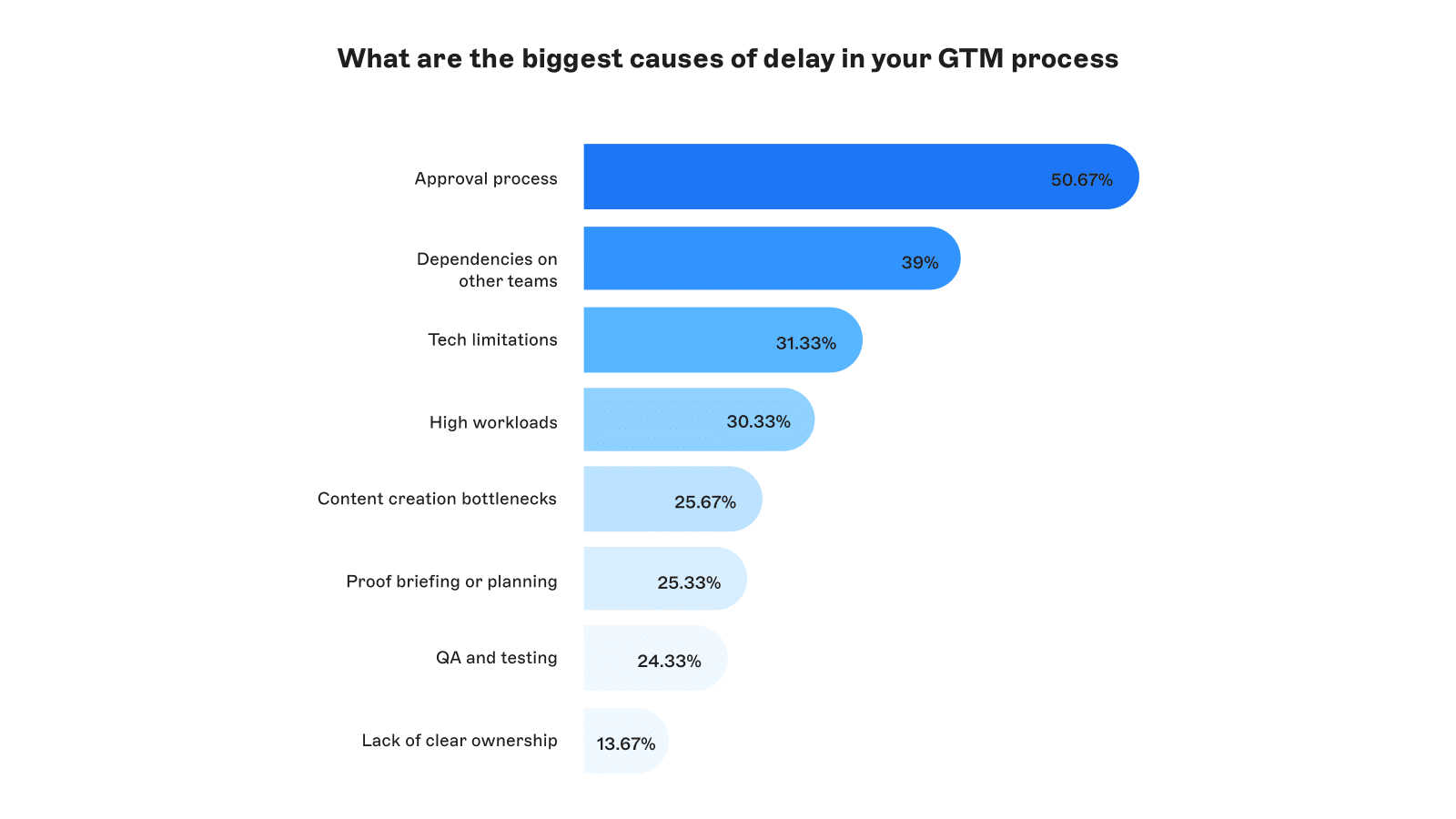
Moreover, compounding tech limitations, including complex deployment and outdated systems, further warrant an overhaul. Tech bottlenecks often operate silently, but they demand attention and timely solutions for improved GTM cycles.
I also noticed how post-launch firefighting issues are rampant, affecting 79% of teams. This inefficiency stems from fragmented systems, where constant developer intervention is necessary, further delaying launch processes.
Addressing these challenges involves refining the tech stack, especially choosing a CMS that aligns with modern delivery needs. This results in smoother launches, improved efficiency, and fewer post-launch issues.
The cost of slow GTM delivery is undeniable, leading to lost revenue and missed market opportunities, while also impacting team morale and increasing turnover risks. Interestingly, there’s a visible discrepancy between executive priorities and the requisite support for improved speed-to-market capabilities.
Armed with data, teams can make a compelling business case for change, drawing attention to specific bottlenecks and their ramifications, thus bridging the leadership alignment gap.
Overall, overcoming GTM challenges requires adopting adaptive technology stacks that align with today’s fast-paced demands. By doing so, we not only keep up with competition but also foster a resilient, engaged team poised for success.
For the complete analysis and strategies, the full Storyblok Global Speed-to-Market Benchmark Report is an invaluable resource.
Inspired by this post on Search Engine Land.

Leave a Reply