Why Preparing for WebMCP Now is Crucial for SEO Success

```json
{
  "alt": "Computer screen displaying a car rental booking website with vehicle options and booking steps.",
  "caption": "Navigate effortlessly through a modern car rental interface, where choosing your preferred vehicle has never been easier.",
  "description": "This image showcases a modern car rental booking website on a computer screen. The interface allows users to search, compare, and book vehicles by following clear steps: Search, Select, Details, and Confirm. Various filters for vehicle types, such as SUV and Sedan, are available to narrow down choices. Pricing and booking details for two car models, Alloy E7 and Summit X3, are presented, with real-time inventory check enabled by WebMCP Layer, displayed on the right side. Designed for intuitive navigation, this system offers tools for searching, reserving, and confirming bookings. The visual design is sleek and user-centric, aimed at enhancing user experience."
}
```

I’ve seen many technologies come and go throughout my career. I used to chase after every new trend, trying to stay on the cutting edge. However, I quickly learned that this approach often cost me and my clients countless hours, with many technologies fading into obscurity. Does anyone remember Google Authorship?

I’ve realized that by waiting for wider adoption, learning from early adopters’ mistakes, and catching up quickly, I avoid wasting time and create more value. This approach has been invaluable to me.

However, some moments in technological advancement stand out—when being an early mover means not just succeeding but helping shape the future. The first people to realize the importance of PageRank and started building links can relate. WebMCP feels like another one of those pivotal moments, only larger.

The change we’re facing isn’t just about search engine mechanics or generative engine visibility. Discovery itself is evolving, and the entities performing this discovery are changing too.

I remember the age-old debate in SEO circles—should we focus on search engines or people? My answer is both. Yet now, this paradigm is shifting. What happens when discovery shifts from human-driven to being guided by AI agents?
```json
{
  "alt": "ChatGPT browser window showing network tab with response data related to Outer Banks search.",
  "caption": "Exploring the Outer Banks online through a network tab view, uncovering queries about scenic beach points.",
  "description": "This image displays a browser window with the network tab open, part of a developer's tool in a ChatGPT session. The visible section lists various network requests and responses associated with a query about Outer Banks. The response data mentions phrases like 'Outer Banks beaches sunrise dunes' and 'Nags Head beach coastline,' reflecting an exploration of scenic coastal locations. The layout captures elements like time graphs, filters, and specific headers, offering insight into the backend processing of web queries."
}
```

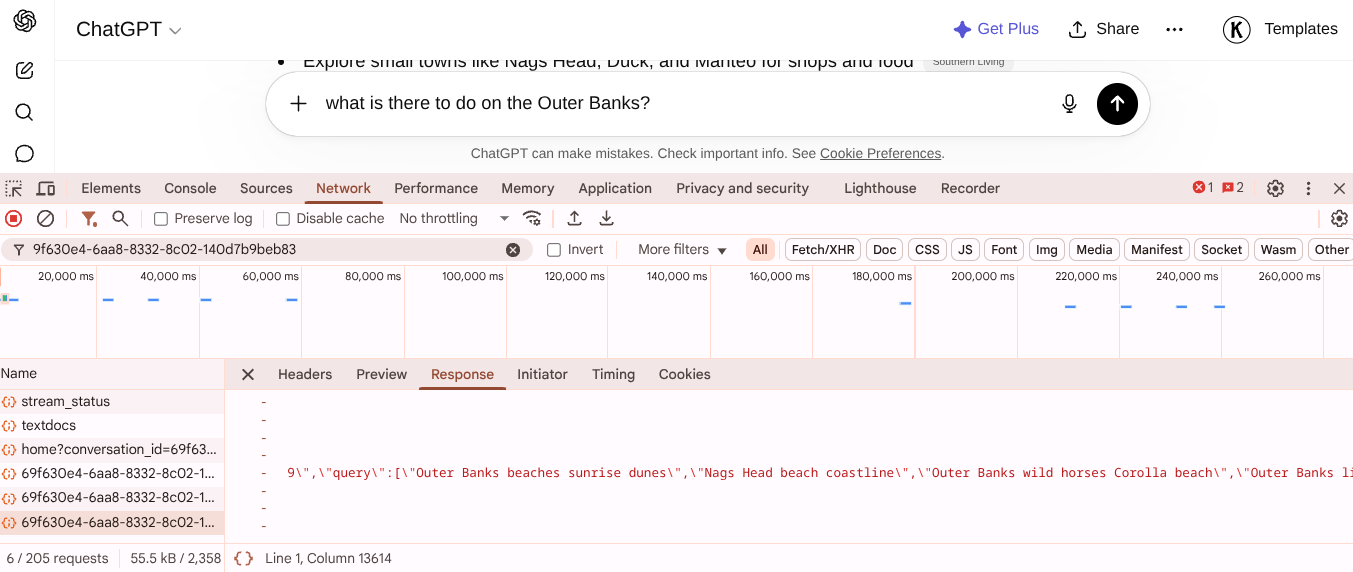
When you ask ChatGPT a question today, it processes information, conducts additional searches, asks follow-ups, and delivers conclusions. The AI agent plans and decides for you, influenced entirely by its data sources and interpretive frameworks.

This evolution represents just one chapter in the ongoing story of discovery:

Discovery v1: Experiential interactions and word of mouth dominated.

Discovery v2: The written word took prominence in libraries and print media.
```json
{
  "alt": "People sitting in futuristic chairs with AI company logos in a high-tech environment.",
  "caption": "In a bustling futuristic cityscape, individuals glide in high-tech seats advertising AI firms like OpenAI. The city embodies a vibrant digital age.",
  "description": "This image depicts a futuristic scene where people recline in advanced hover seats labeled with AI company logos such as OpenAI and Anthropic. The setting is a bustling, high-tech city with neon signs and digital advertisements, creating an immersive cybernetic environment. The image captures the essence of a digitally-driven future, with seamless integration of technology into everyday life."
}
```

Discovery v3: The web spawned directories and search engines.

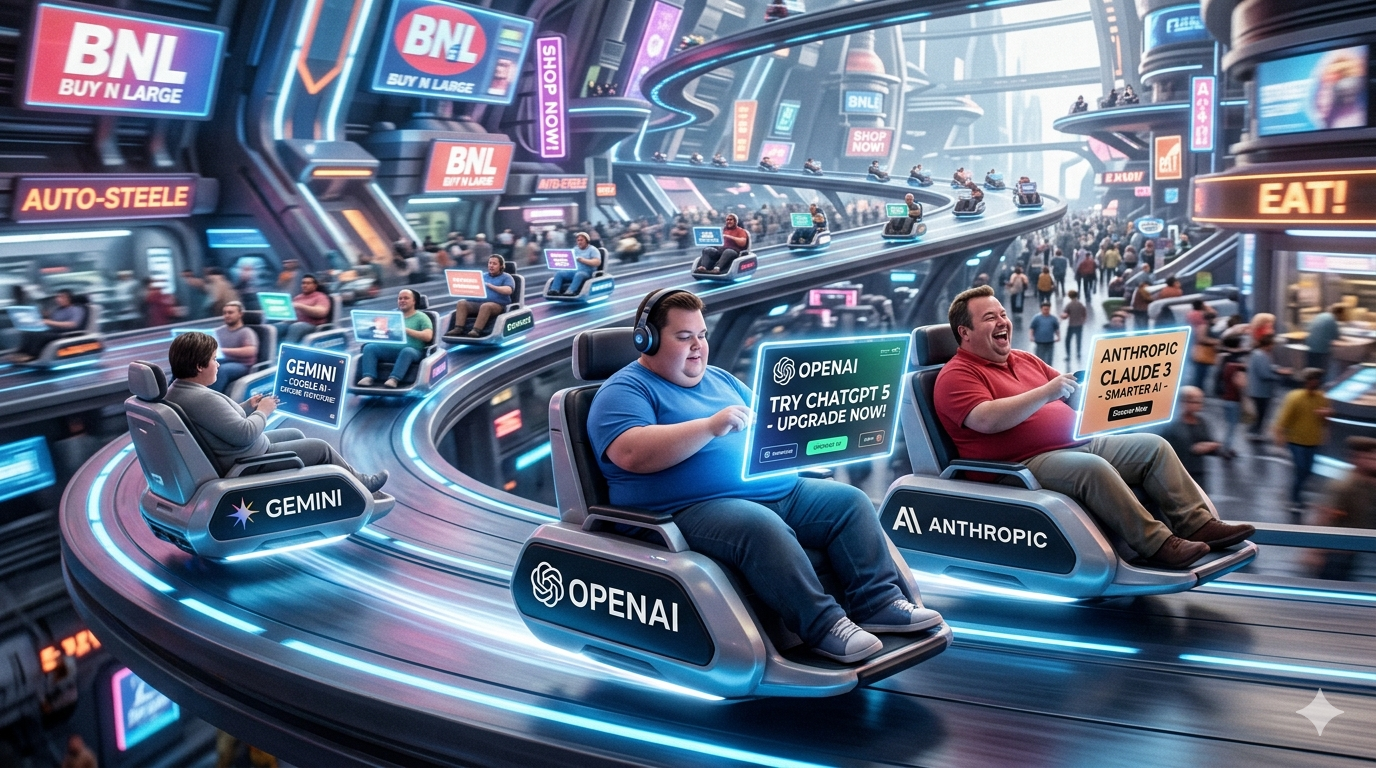
Discovery v4: Today, we see AI and LLMs increasingly aid discovery.

Discovery v5 (coming soon): Agentic systems will advance to perform actions autonomously.

Embracing Discovery v5 could offer us significant liberation—freeing our minds from mundane decisions, and enabling a focus on what truly matters.

```json
{
  "alt": "The CapmatchOne logo with a gradient circle and bold text.",
  "caption": "Discover innovation with the CapmatchOne logo, featuring sleek typography and a modern gradient circle.",
  "description": "The CapmatchOne logo features bold, modern typography coupled with a gradient circle, symbolizing connection and innovation. The sleek design conveys a sense of progress and creativity. This image can be used for branding or promotional purposes, appealing to audiences interested in innovative solutions and forward-thinking designs."
}
```

The path to Trustable AI is underway. I now trust AI systems with everyday queries, relying on them more each time they enhance their capabilities.

Would I trust an AI to handle complex tax or health questions? Not entirely. Would I ask it to help plan dinner or schedule my day? Definitely.

This gradual trust expansion parallels past experiences with technology. As it grows, so does our reliance on agents to act on our behalf.

The tangible impact is visible: Automating grocery reorders or offering extraordinary travel deals are low-risk, high-reward changes.

```json
{
  "alt": "A man standing in front of a futuristic window displaying holographic code and digital elements, indicating technological advancements.",
  "caption": "As he stands before the glowing window of innovation, the future of coding and technology comes alive, offering a gateway to new digital horizons.",
  "description": "The image features a man observing a futuristic scene with a large, arched window showcasing holographic code and digital interfaces. Prominent phrases like 'Early Mover Advantage' and 'Cloudflare Integration' are displayed, suggesting a technological narrative. Two humanoid robots interact with the digital elements, illustrating advanced integration of technology and innovation. The scene is set against a backdrop of a digital landscape, highlighting the theme of progress and technological advancement. Keywords: futuristic, technology, innovation, coding, digital interface."
}
```

The skepticism towards relinquishing control to technology is as old as technology itself. From fear of entering credit card details online to today’s reliance on smartphones and GPS, each shift was gradual but unstoppable.

WebMCP, which facilitates AI interaction with websites, is a browser-native web standard. It’s gaining momentum, authored by Google and Microsoft. It’s about easing AI’s job in understanding actions on websites, not replacing human interaction.

AI doesn’t need to infer tasks. WebMCP allows clear communication of a site’s capabilities, marking a shift like early schema markup days.

Engaging with this framework ensures your site is AI-ready, simplifying AI interaction.

WebMCP impacts discovery, influencing which sites AI agents prefer. Having your site AI-visible can make or break engagement in the emerging landscape of Discovery v5.

I’m taking advantage of this moment, despite my usual skepticism of early adoption—it feels different this time.


Inspired by this post on Search Engine Land.


crushpress.ai community screenshot

FAQs

What is WebMCP?

WebMCP is described as a browser-native web standard that facilitates AI interaction with websites. The post frames it as a way for sites to communicate their capabilities clearly to AI agents.

Why does WebMCP matter for SEO success?

The article argues that discovery is shifting from human-driven search toward AI-guided agents. If AI agents can understand and interact with a site more easily, that site may be better positioned in the emerging Discovery v5 landscape.

Does WebMCP replace human website interaction?

No. The post says WebMCP is about easing AI’s job in understanding actions on websites, not replacing human interaction.

How is WebMCP similar to early schema markup?

The article compares WebMCP to the early days of schema markup because both help machines understand website information more clearly. Instead of forcing AI to infer tasks, WebMCP lets a site communicate what actions it supports.

What kinds of tasks could AI agents handle as trust grows?

The post points to everyday, lower-risk tasks such as planning dinner, scheduling a day, automating grocery reorders, and finding travel deals. It contrasts these with more complex tax or health questions, where the author is not ready to rely entirely on AI.

Why does the author suggest preparing for WebMCP now?

The author usually waits for wider adoption before investing in new technologies, but sees WebMCP as a pivotal early-mover moment. Preparing now can help make a site AI-ready before agentic discovery becomes more influential.

Comments

Leave a Reply

Your email address will not be published. Required fields are marked *