
Tag: WebMCP

  • Why Preparing for WebMCP Now is Crucial for SEO Success

    Why Preparing for WebMCP Now is Crucial for SEO Success

    I’ve seen many technologies come and go throughout my career. I used to chase after every new trend, trying to stay on the cutting edge. However, I quickly learned that this approach often cost me and my clients countless hours, with many technologies fading into obscurity. Does anyone remember Google Authorship?

    I’ve realized that by waiting for wider adoption, learning from early adopters’ mistakes, and catching up quickly, I avoid wasting time and create more value. This approach has been invaluable to me.

    However, some moments in technological advancement stand out—when being an early mover means not just succeeding but helping shape the future. The first people to realize the importance of PageRank and started building links can relate. WebMCP feels like another one of those pivotal moments, only larger.

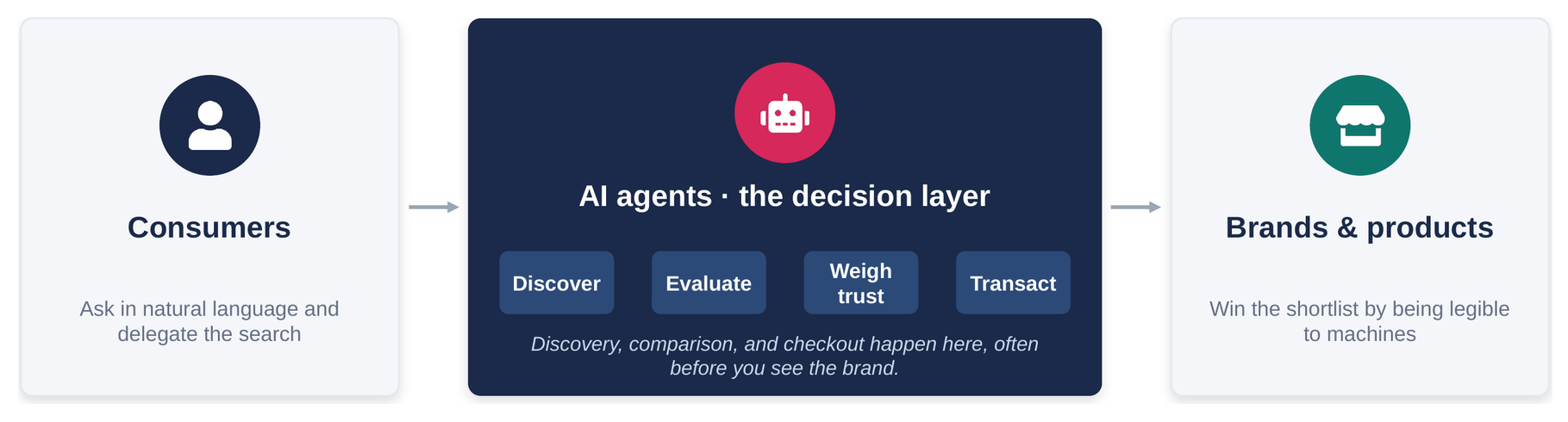
    The change we’re facing isn’t just about search engine mechanics or generative engine visibility. Discovery itself is evolving, and the entities performing this discovery are changing too.

    I remember the age-old debate in SEO circles—should we focus on search engines or people? My answer is both. Yet now, this paradigm is shifting. What happens when discovery shifts from human-driven to being guided by AI agents?

    ```json
{
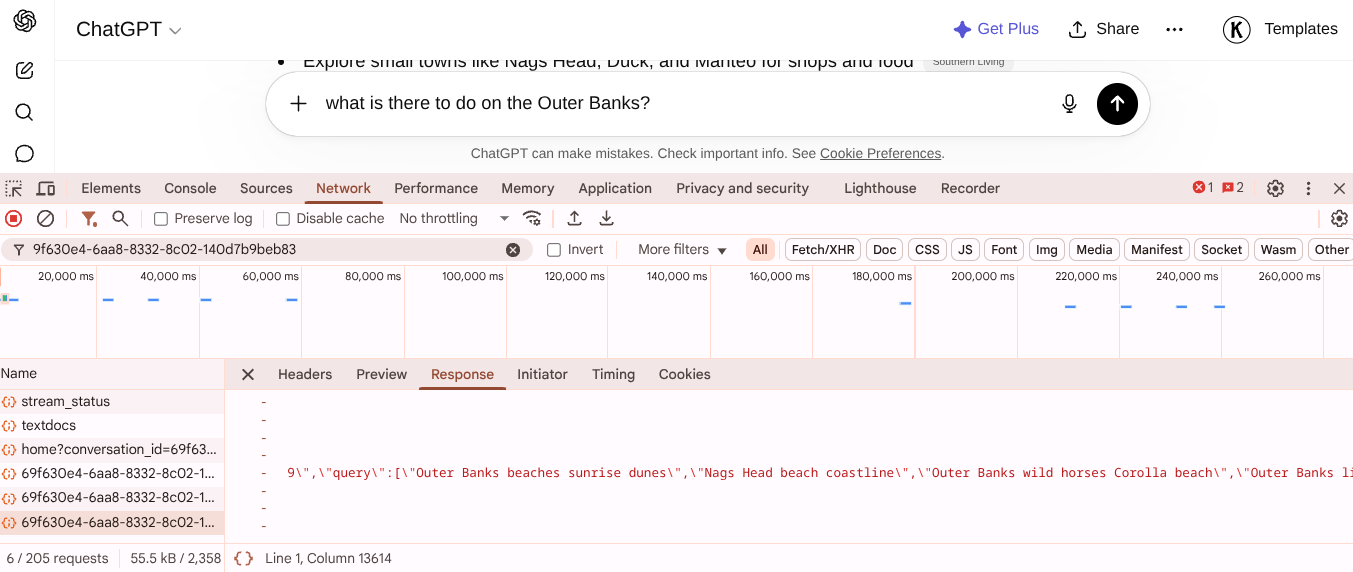
  "alt": "ChatGPT browser window showing network tab with response data related to Outer Banks search.",
  "caption": "Exploring the Outer Banks online through a network tab view, uncovering queries about scenic beach points.",
  "description": "This image displays a browser window with the network tab open, part of a developer's tool in a ChatGPT session. The visible section lists various network requests and responses associated with a query about Outer Banks. The response data mentions phrases like 'Outer Banks beaches sunrise dunes' and 'Nags Head beach coastline,' reflecting an exploration of scenic coastal locations. The layout captures elements like time graphs, filters, and specific headers, offering insight into the backend processing of web queries."
}
```

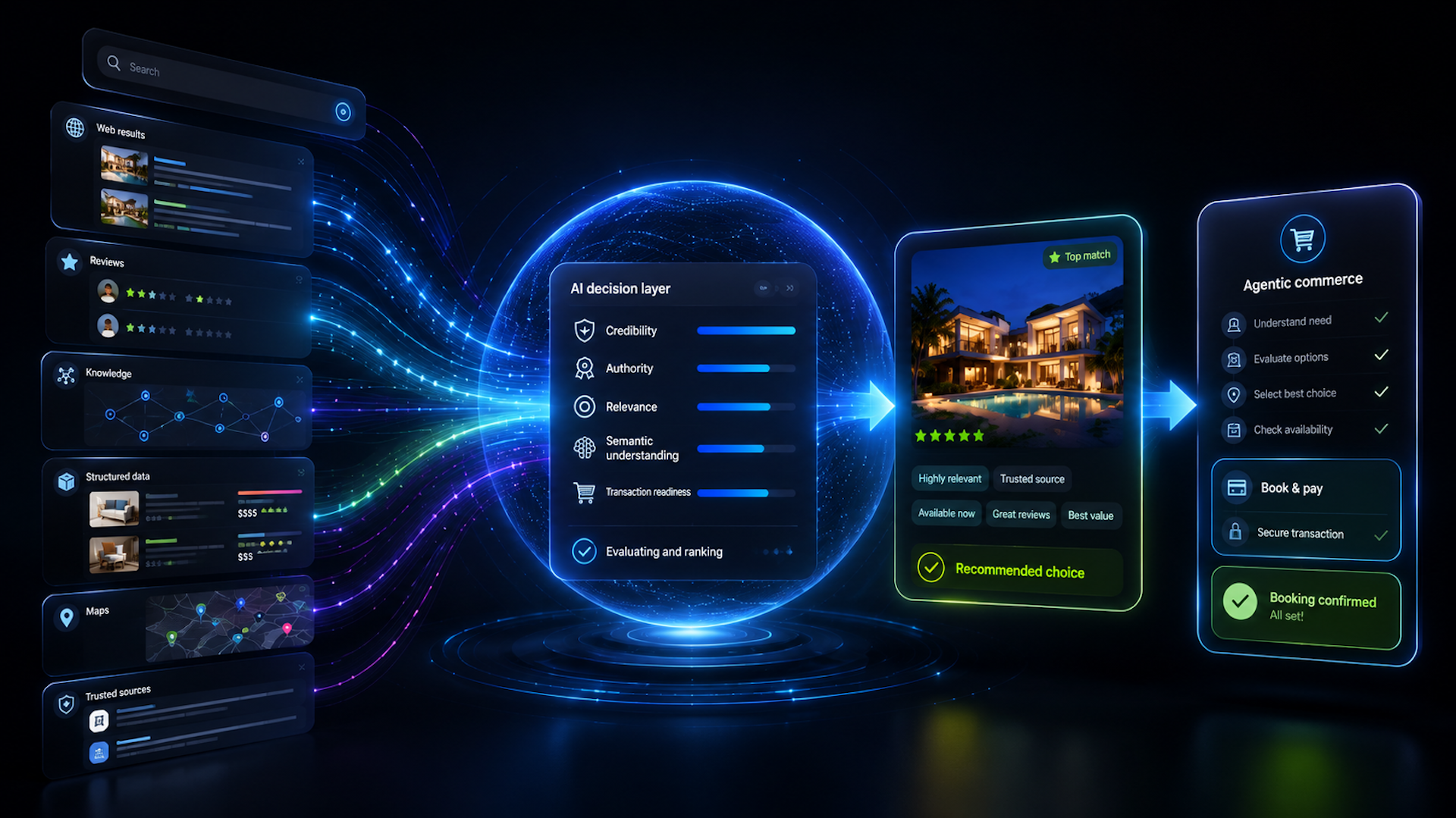
    When you ask ChatGPT a question today, it processes information, conducts additional searches, asks follow-ups, and delivers conclusions. The AI agent plans and decides for you, influenced entirely by its data sources and interpretive frameworks.

    This evolution represents just one chapter in the ongoing story of discovery:

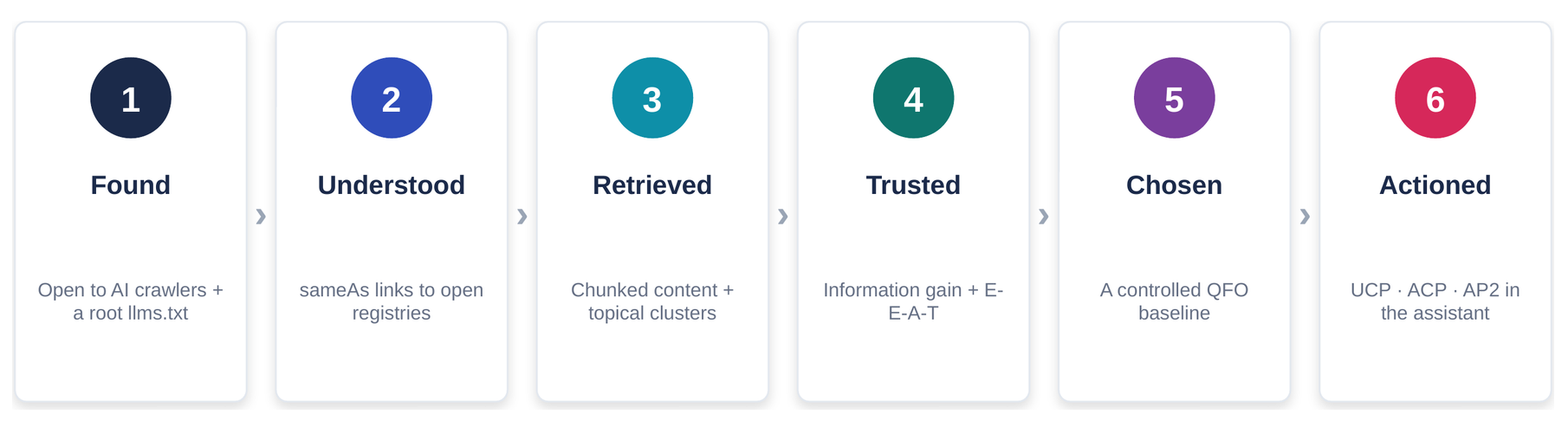
    Discovery v1: Experiential interactions and word of mouth dominated.

    Discovery v2: The written word took prominence in libraries and print media.

    ```json
{
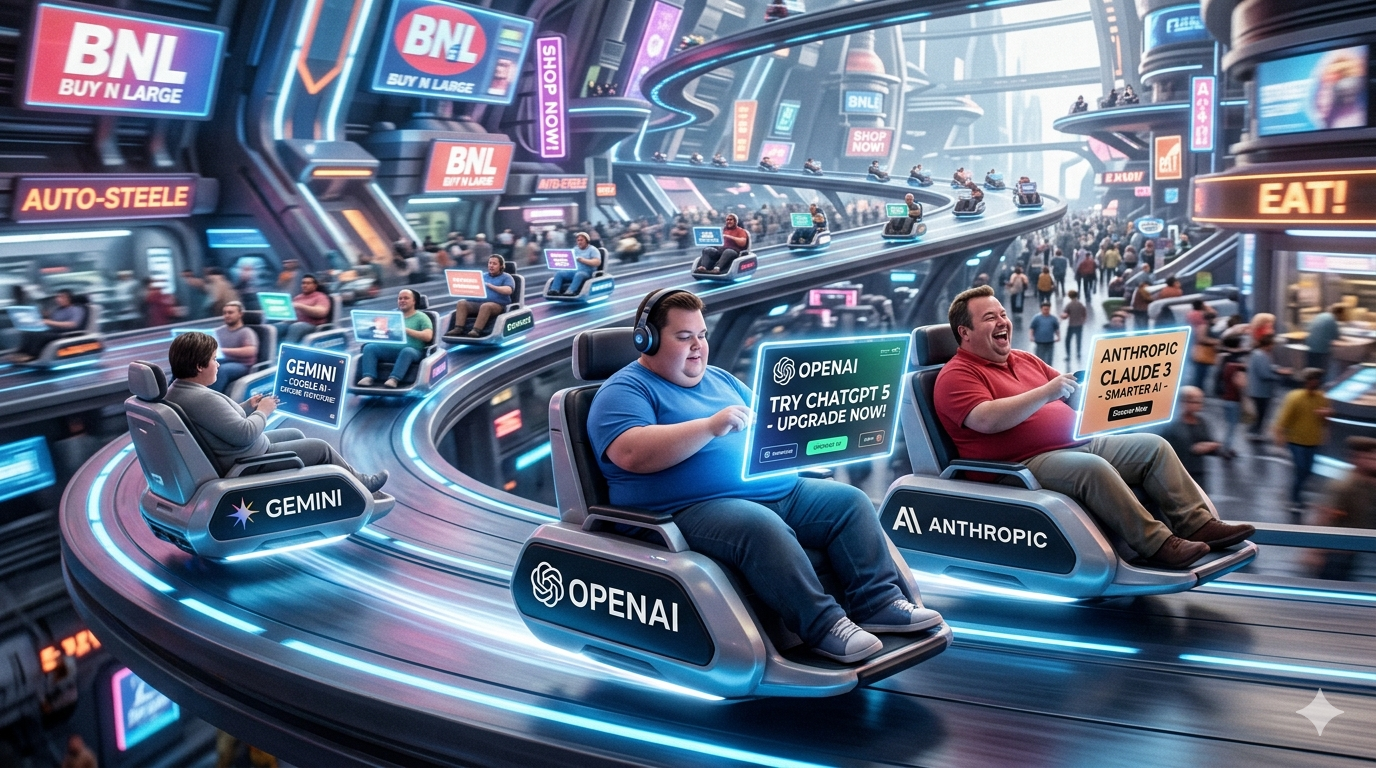
  "alt": "People sitting in futuristic chairs with AI company logos in a high-tech environment.",
  "caption": "In a bustling futuristic cityscape, individuals glide in high-tech seats advertising AI firms like OpenAI. The city embodies a vibrant digital age.",
  "description": "This image depicts a futuristic scene where people recline in advanced hover seats labeled with AI company logos such as OpenAI and Anthropic. The setting is a bustling, high-tech city with neon signs and digital advertisements, creating an immersive cybernetic environment. The image captures the essence of a digitally-driven future, with seamless integration of technology into everyday life."
}
```

    Discovery v3: The web spawned directories and search engines.

    Discovery v4: Today, we see AI and LLMs increasingly aid discovery.

    Discovery v5 (coming soon): Agentic systems will advance to perform actions autonomously.

    Embracing Discovery v5 could offer us significant liberation—freeing our minds from mundane decisions, and enabling a focus on what truly matters.

    ```json
{
  "alt": "The CapmatchOne logo with a gradient circle and bold text.",
  "caption": "Discover innovation with the CapmatchOne logo, featuring sleek typography and a modern gradient circle.",
  "description": "The CapmatchOne logo features bold, modern typography coupled with a gradient circle, symbolizing connection and innovation. The sleek design conveys a sense of progress and creativity. This image can be used for branding or promotional purposes, appealing to audiences interested in innovative solutions and forward-thinking designs."
}
```

    The path to Trustable AI is underway. I now trust AI systems with everyday queries, relying on them more each time they enhance their capabilities.

    Would I trust an AI to handle complex tax or health questions? Not entirely. Would I ask it to help plan dinner or schedule my day? Definitely.

    This gradual trust expansion parallels past experiences with technology. As it grows, so does our reliance on agents to act on our behalf.

    The tangible impact is visible: Automating grocery reorders or offering extraordinary travel deals are low-risk, high-reward changes.

    ```json
{
  "alt": "A man standing in front of a futuristic window displaying holographic code and digital elements, indicating technological advancements.",
  "caption": "As he stands before the glowing window of innovation, the future of coding and technology comes alive, offering a gateway to new digital horizons.",
  "description": "The image features a man observing a futuristic scene with a large, arched window showcasing holographic code and digital interfaces. Prominent phrases like 'Early Mover Advantage' and 'Cloudflare Integration' are displayed, suggesting a technological narrative. Two humanoid robots interact with the digital elements, illustrating advanced integration of technology and innovation. The scene is set against a backdrop of a digital landscape, highlighting the theme of progress and technological advancement. Keywords: futuristic, technology, innovation, coding, digital interface."
}
```

    The skepticism towards relinquishing control to technology is as old as technology itself. From fear of entering credit card details online to today’s reliance on smartphones and GPS, each shift was gradual but unstoppable.

    WebMCP, which facilitates AI interaction with websites, is a browser-native web standard. It’s gaining momentum, authored by Google and Microsoft. It’s about easing AI’s job in understanding actions on websites, not replacing human interaction.

    AI doesn’t need to infer tasks. WebMCP allows clear communication of a site’s capabilities, marking a shift like early schema markup days.

    Engaging with this framework ensures your site is AI-ready, simplifying AI interaction.

    WebMCP impacts discovery, influencing which sites AI agents prefer. Having your site AI-visible can make or break engagement in the emerging landscape of Discovery v5.

    I’m taking advantage of this moment, despite my usual skepticism of early adoption—it feels different this time.


    Inspired by this post on Search Engine Land.


    crushpress.ai community screenshot
  • Unlocking WebMCP: AI’s Key to Seamless Web Interaction with Chrome

    Unlocking WebMCP: AI’s Key to Seamless Web Interaction with Chrome

    Recently, while exploring the latest developments in web technology, I stumbled upon something groundbreaking: WebMCP, introduced in Chrome 146. Being a tech enthusiast, I was intrigued to learn how this emerging protocol could reshape the way AI agents interact with websites.

    Chrome 146 has rolled out an exciting early preview of WebMCP, hidden behind a flag. This protocol, known as Web Model Context Protocol (WebMCP), is designed as a web standard to lay out website tools in a structured manner, guiding AI agents in executing tasks seamlessly.

    So, what does this mean for us? Historically, the internet has been developed with humans in mind. Buttons, forms, and dropdowns are all elements we understand. But there’s an emerging user—AI agents. Soon, they will be completing registrations, purchasing tickets, and achieving other goals autonomously on websites.

    Currently, AI agents face a daunting task. They navigate websites by crawling and attempting to decipher their functionalities. Imagine an AI agent trying to book a flight. It has to identify input fields, guess data formats, and pray nothing goes awry. It’s far from ideal.

    The introduction of WebMCP is set to change this. By exposing the structure behind web tools, AI agents will be equipped to understand and execute tasks with ease.

    ```json
{
  "alt": "The CapmatchOne logo with a gradient circle and bold text.",
  "caption": "Discover innovation with the CapmatchOne logo, featuring sleek typography and a modern gradient circle.",
  "description": "The CapmatchOne logo features bold, modern typography coupled with a gradient circle, symbolizing connection and innovation. The sleek design conveys a sense of progress and creativity. This image can be used for branding or promotional purposes, appealing to audiences interested in innovative solutions and forward-thinking designs."
}
```

    Let’s dive a bit deeper to understand WebMCP. Picture yourself needing to book a flight.

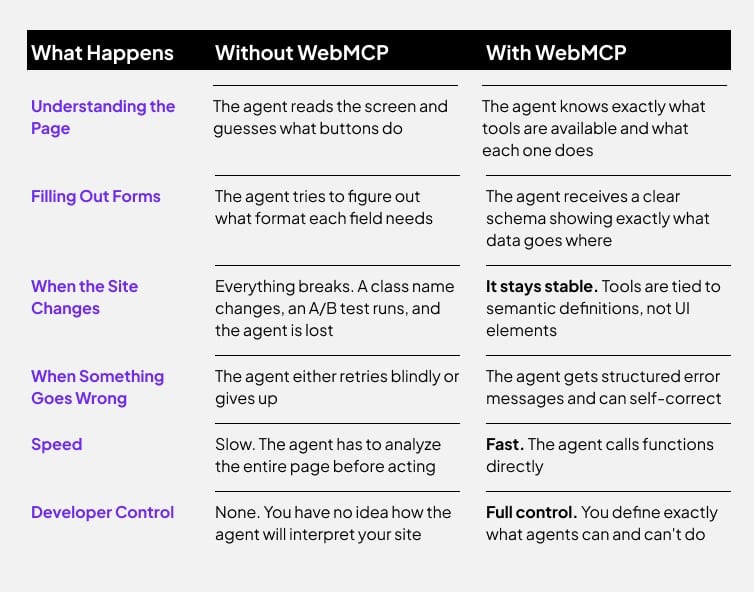
    Without WebMCP: An AI agent scrambles to find a relevant button like “Book a Flight” or “Search Flights.” It then interprets the on-screen information, hoping it inputs correctly.

    With WebMCP: Forget searching for buttons. Instead, the agent calls a function, like bookFlight(), using well-defined parameters (such as date, origin/destination, and passengers), receiving a structured result in return. Much like developers interacting via APIs, AI agents will seamlessly call functions.

    WebMCP empowers websites with JavaScript APIs and HTML form annotations, guiding AI agents on interacting with web tools in three steps:

    ```json
{
  "alt": "Comparison chart showing differences between using WebMCP and not using it in website management.",
  "caption": "WebMCP transforms website management by providing clear schemas, stability, structured error messages, and full developer control.",
  "description": "This image presents a comparison chart between managing a website with and without WebMCP. It highlights six areas: understanding the page, filling out forms, site changes, error handling, speed, and developer control. Without WebMCP, agents guess actions, face instability, react blindly to errors, operate slowly, and developers lack control. With WebMCP, agents use defined tools, maintain stability, self-correct from structured errors, execute tasks quickly, and provide developers full control. Keywords: WebMCP, website management, comparison, agent performance, developer tools."
}
```

    Discovery: What tools does the page support? Examples include Checkout, BookFlight, or searchProducts.

    JSON Schemas: They precisely define expected inputs and the kind of output that will be returned.

    State: Tool availability alters based on the page’s state, allowing agents to only see actions relevant to the current context.

    My website, for instance, could offer a list of actions each detailing its functionality, accepted inputs, returned outputs, and required permissions.

    ```json
{
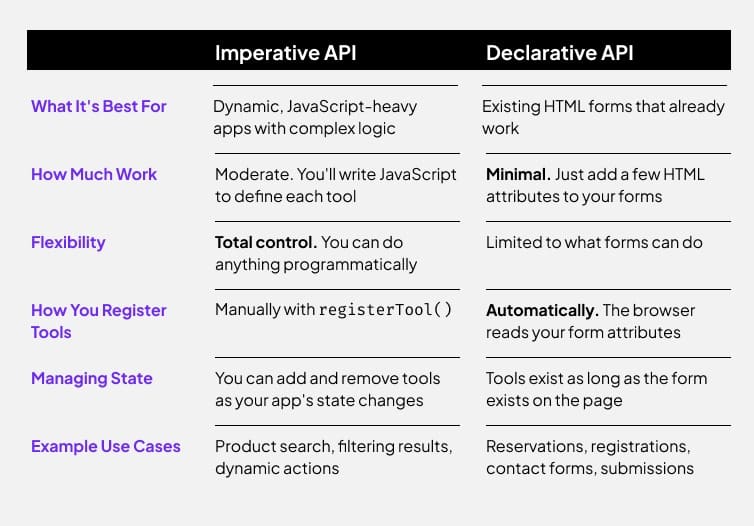
  "alt": "Comparison table of Imperative API vs Declarative API across six categories.",
  "caption": "Discover the differences between Imperative and Declarative APIs, highlighting usage, work effort, flexibility, and more.",
  "description": "This image showcases a comparison table contrasting Imperative and Declarative APIs. It outlines categories like 'What It's Best For,' 'How Much Work,' 'Flexibility,' 'How You Register Tools,' 'Managing State,' and 'Example Use Cases.' Imperative API suits dynamic, JavaScript-heavy apps with complex logic, requiring moderate work and offering total control. Declarative API is ideal for existing HTML forms, involves minimal work, and automates tool registration, providing limited flexibility. Searchability tags: API comparison, web development, JavaScript, HTML forms, software architecture."
}
```

    But why does this matter? AI agents are infiltrating our daily workflows rapidly. Soon, AI will handle our flight bookings, fill out forms, and publish content. But, as of now, AI agents struggle to interact seamlessly with websites due to two current approaches:

    Automation (fragile): An AI acts by clicking buttons and inputting data like we do, but since websites frequently update, this can lead to failures.

    APIs (limited): While APIs offer a structured approach for interaction, they’re not universally available or comprehensive.

    WebMCP offers a middle ground, allowing websites to make tools accessible without the drawbacks of UI automation or needing separate APIs.

    ```json
{
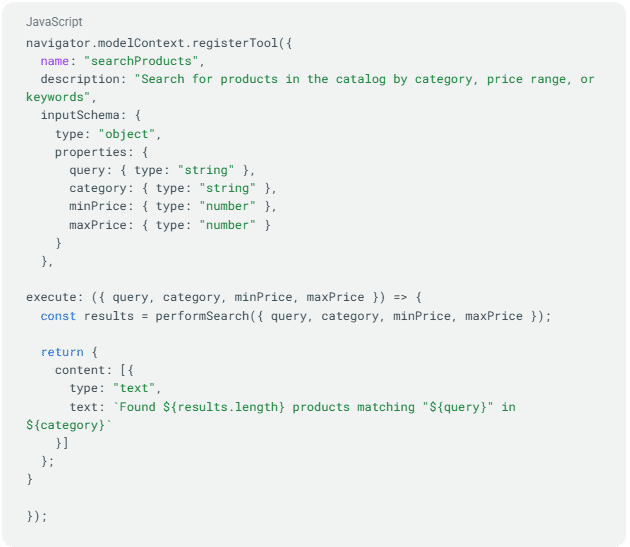
  "alt": "JavaScript code for registering a product search tool with input schema and execution function.",
  "caption": "This code snippet showcases how to register a product search tool in JavaScript, featuring a customizable input schema and dynamic result display.",
  "description": "The image displays a JavaScript code snippet for registering a 'searchProducts' tool. It includes a description, input schema for query parameters like category and price range, and an execution function that performs a search based on these inputs. The function then returns results showing the number of products found. Keywords include JavaScript, tool registration, product search, and code snippet."
}
```

    Like the early 2000s SEO race, WebMCP symbolizes a shift towards optimization for AI agents. Those who adopt this early could enjoy significant advantages as AI-centric search and commerce grow.

    This opportunity is not merely about SEO anymore. It’s about realizing broader growth potential through WebMCP, which signifies not just being discoverable, but actionable by AI agents who’ll soon connect with future customers.

    Practical applications of WebMCP in B2B and B2C scenarios are vast, from simplifying quote requests to expediting inventory checks, offering a seamless experience for business and everyday consumers alike.

    To start experimenting with WebMCP, Chrome 146 lets you access it behind a feature flag. It’s still in its nascent stage but provides a valuable chance for developers and innovative teams to play around with the conceptual framework.

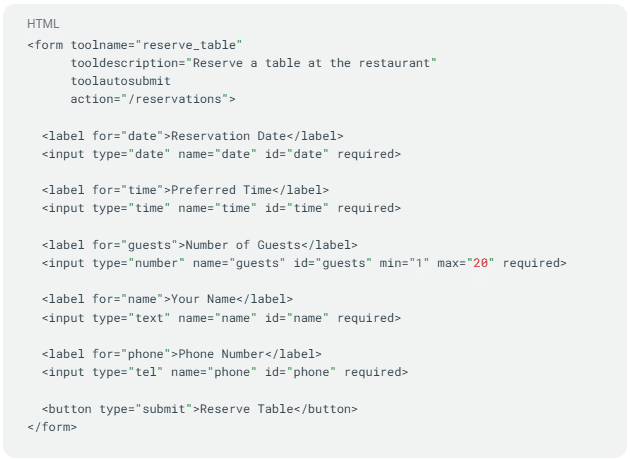
    ```json
{
  "alt": "HTML code for a restaurant table reservation form with fields for date, time, guests, name, and phone number.",
  "caption": "Streamline your dining plans with this easy-to-use HTML form for restaurant reservations. Fill in your details to secure a table effortlessly.",
  "description": "This image displays an HTML code snippet for a restaurant table reservation form. It includes input fields for reservation date, preferred time, number of guests, name, and phone number. Each field is labeled and required for submission. The form has a submit button labeled 'Reserve Table'. This code is a useful reference for creating a user-friendly reservation system."
}
```

    While getting acquainted with WebMCP, you’ll need Chrome version 146.0.7672.0 or later and a basic understanding of Chrome flags. Follow these steps to set up:

    • Navigate to chrome://flags/#enable-webmcp-testing in Chrome.
    • Set the “WebMCP for testing” flag to “Enabled”.
    • Relaunch Chrome.

    Start experimenting with WebMCP today and perhaps even install the Model Context Tool Inspector Extension to witness WebMCP in action. It’s an exciting era we’re stepping into, enabling websites to be as understandable to AI as they are to us.


    Inspired by this post on Search Engine Land.

    crushpress.ai community screenshot