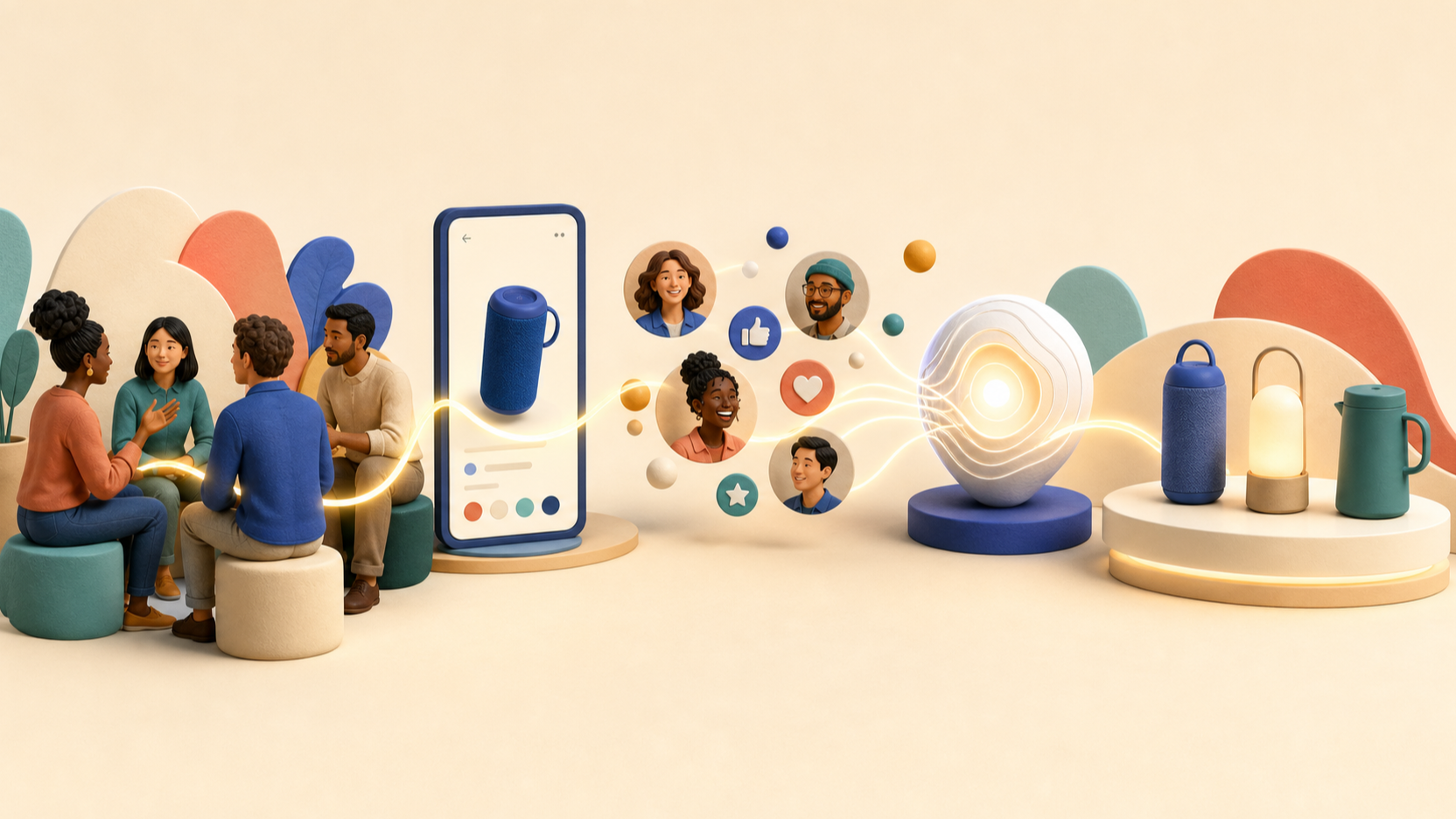
If your brand ranks for useful queries but still fails to make the buyer’s shortlist, another position in Google may not solve the problem. By the time many people reach a conventional search result, they have already encountered names, checked public reactions, watched demonstrations and asked an AI assistant to reduce the options.
You need a discovery system that works across that entire decision chain. The practical job is to coordinate earned authority, social validation, AI-readable owned content and emerging paid placements without treating every platform as another place to publish the same message.
Key takeaways
- Map the questions and uncertainties that move a buyer toward a decision, then assign each one to the channel best suited to resolve it.
- Use digital PR to establish credible evidence, social platforms to demonstrate and discuss it, and owned content to preserve the complete, accurate version.
- Treat AI visibility as a distinct outcome. A brand mention, a citation, an accurate description and a recommendation are not interchangeable.
- Keep conversational advertising separate from organic AI authority. A relevant sponsored placement can create discovery, but it does not mean the assistant endorsed the advertiser.
- Measure movement across the journey with tagged links, assisted paths, branded demand, repeatable AI checks and qualified actions. Last-click conversions alone will undervalue discovery channels.
Map the decision chain, not a list of platforms
A modern discovery journey can begin with a short demonstration, move into a community discussion, continue through a long-form explanation and end with an AI-generated comparison. People are already moving from TikTok to Reddit, YouTube and AI summaries as they form and validate preferences. Google may still participate, but it no longer owns every stage.
This changes the planning unit. A channel plan starts with places: a TikTok plan, a Reddit plan or an AI search plan. A discovery plan starts with a buyer’s unresolved question. That distinction prevents a common failure in which a brand maintains many accounts but provides no connected path from recognition to confidence.
Build a decision-question inventory before you choose formats. For each meaningful audience and use case, record:
- The trigger: What happened that made the person look for an answer now?
- The question: What would that person actually type, say or ask another person?
- The uncertainty: What could stop the decision – cost, complexity, compatibility, risk, proof or trust?
- The required evidence: What would resolve that uncertainty: a demonstration, an independent mention, a technical specification, a customer perspective or a clear limitation?
- The likely surface: Where would the person expect to find that kind of evidence?
- The next useful action: What should become easier after the evidence is consumed?
Organize this inventory around uncertainty rather than generic funnel stages. Someone searching Reddit for hidden drawbacks and someone watching a YouTube setup walkthrough may both be close to a purchase, but they need different proof. Sending both people to the same promotional landing page ignores the reason they chose those surfaces.
Then audit whether your brand appears when those questions are explored. Search the platforms directly, review relevant community discussions and ask representative questions in the AI products your audience uses. Record absence as well as inaccuracy. An absent brand has a distribution problem; a misdescribed brand may have an entity, evidence or consistency problem. Those require different fixes.
Give each discovery channel a distinct job

Cross-channel visibility works when each surface contributes something the others cannot. It breaks when a campaign simply copies the same claim into a press release, social caption, community reply and landing page.
| Surface | Primary job | Useful asset | Failure to avoid |
|---|---|---|---|
| Digital PR | Establish independent authority | Verifiable finding, expert explanation, original resource or documented development | Treating coverage as a link transaction with no durable evidence |
| TikTok and short-form video | Create recognition and make an idea tangible | Focused demonstration, before-and-after process or concise explanation | Compressing away the conditions and limitations that make the claim credible |
| Reddit and other communities | Expose real objections, tradeoffs and language | Transparent participation, useful answers and links only when they genuinely resolve the question | Astroturfing, disguised promotion or inserting the brand into unrelated discussions |
| YouTube and long-form video | Reduce uncertainty through depth | Walkthrough, comparison method, implementation explanation or detailed demonstration | Using a long introduction to delay the answer the viewer came for |
| Owned website | Preserve the canonical facts | Clear product, service, use-case, methodology, limitation and evidence pages | Publishing vague claims that third parties and AI systems cannot verify |
| AI discovery surfaces | Synthesize options and explain relevance | Consistent entity information, answerable content and corroborated claims | Assuming schema or repeated brand copy can manufacture authority |
| Paid discovery | Place a relevant option in an active decision context | Intent-matched message and a landing experience that continues the question | Treating placement as proof of endorsement |
Start with evidence that can travel
Digital PR is most valuable here as an authority layer, not as a temporary traffic event. Credible third-party coverage can turn a brand assertion into something audiences, creators and machines can evaluate outside the brand’s own website. Social discovery then gives that evidence context: people can see how it works, question it and decide whether it applies to them. That combination of earned credibility and platform-native validation is stronger than reach on either side alone.
For every campaign claim, create a compact evidence packet that other teams can use without changing its meaning:
- The exact claim in plain language.
- The evidence supporting it and where that evidence lives.
- The method, scope or conditions needed to interpret it correctly.
- The limitations or cases where the claim does not apply.
- The approved entity names, product names and descriptions.
- The canonical URL that holds the complete version.
- Visual or demonstrative material that shows the claim rather than merely repeating it.
This packet prevents narrative drift. The PR team can pitch the defensible development. A video producer can demonstrate it. A community manager can answer the difficult question without improvising. The SEO and content teams can maintain a canonical explanation that remains useful after the campaign ends.
Make owned content easy to interpret and hard to misquote
Your canonical page should identify the entity, intended audience, use case, evidence, important limitations and next action without forcing a reader to reconstruct them from promotional language. Put the answer near the question it resolves. Use descriptive headings, stable terminology and internal links that explain related entities and concepts.
Add appropriate JSON-LD only when it accurately represents the visible page. Organization, product, service, person and other entity markup can clarify relationships, but structured data cannot replace missing evidence or create third-party agreement. Treat schema as a consistency layer, not a reputation shortcut. If the visible copy, markup and external descriptions disagree, fix the underlying facts before adding more markup.
Portability also requires restraint. A short video should lead with the demonstration, not attempt to contain every technical caveat. A Reddit response should answer the thread’s actual concern, not paste the campaign slogan. A YouTube explanation can carry the method and tradeoffs. The canonical page holds the complete record. The story remains consistent while the form changes to fit the reason someone uses each platform.
Use conversational ads as paid context, not borrowed authority

Conversational advertising could become an important discovery channel because the placement can appear while a person is actively defining a need or comparing options. That is closer to a live decision context than a demographic feed placement. It is also easy to misunderstand.
ChatGPT’s announced U.S. test was designed to put clearly labeled, relevant sponsored options at the bottom of responses. The planned audience included logged-in adults using the free tier or the $8-per-month ChatGPT Go plan. Pro, Business and Enterprise plans were set to remain ad-free, and users under 18 were excluded. Politics, health and mental-health conversations were also excluded from placement.
Those are announced test conditions, not a permanent media specification. Availability, targeting, reporting, pricing and policy can change as the format is tested. Do not build a forecast that assumes this inventory is broadly available or that its initial rules will remain fixed. Verify the current buying interface, eligible audience, exclusions and measurement options before assigning budget.
The most important boundary is answer independence. OpenAI says the advertisements will not affect the assistant’s response, conversation data will not be sold to advertisers, and users will be able to inspect why an ad appeared, dismiss it, disable personalization or clear ad-related data. The practical consequence is simple: an advertiser must not present the placement as an organic recommendation from ChatGPT.
A conversational ad and an AI recommendation perform different jobs:
- The unsponsored answer reflects the assistant’s generated response to the conversation.
- The sponsored placement gives an eligible advertiser visibility beside that response when the system considers the offer relevant.
- A citation points to material used or surfaced as support.
- A brand mention shows recognition, but does not necessarily indicate preference or authority.
Keep these outcomes separate in creative, reporting and executive updates. If a sponsored placement produces visits, report paid conversational discovery. Do not add those impressions to an organic AI visibility score or use them as evidence that the brand has become more authoritative in generated answers.
Build an answer-adjacent campaign
The strongest initial use case is likely to be a product or service that helps with the decision under discussion. Plan around the decision context rather than a broad audience label. A useful brief should state the question being asked, the unresolved need, the offer that genuinely fits and the reason the landing page is the logical next step.
- Match the message to the conversation: Respond to the likely need instead of repeating a general brand line.
- Continue the answer: Send the person to a page that immediately addresses the use case, comparison or constraint implied by the ad.
- Show your status clearly: Do not mimic an assistant response, a citation or an independent recommendation.
- Respect exclusions: Confirm topic, age, geography and plan eligibility before estimating reach.
- Audit claims: Make sure every ad promise is supported on the destination page and remains consistent with your canonical facts.
- Preserve choice: Do not design copy that obscures personalization, dismissal or privacy controls.
Before buying, ask how conversational relevance is determined, what controls exist for placement and exclusions, which reporting dimensions are available, how personalization works, what data the advertiser receives and how conversions are attributed. The announced test does not establish all of those operational details. If the buying product cannot answer them, treat the channel as experimental and cap its role accordingly.
Measure the journey, then launch a connected campaign
Discovery channels often look weak in last-click reports because their work happens before the final visit. That does not make every impression valuable. It means you need measures that distinguish exposure, belief, machine visibility and commercial action.
Use a layered scorecard
Track the same decision question across the journey, then group signals by the job they perform:
- Discovery: Relevant earned placements, on-platform search visibility, qualified video views, participation in useful community discussions, paid conversational impressions and new branded queries.
- Authority: Independent mentions, links or citations from credible coverage, accurate reuse of your evidence and inclusion in serious category discussions.
- Belief: Questions answered, substantive comments, saves, repeat brand mentions, comparison inclusion and reductions in recurring objections.
- AI visibility: Brand mentions, cited pages, factual accuracy, recommendation context and the use cases with which the brand is associated.
- Action: Engaged visits, returning direct traffic, assisted conversions, qualified enquiries, trials, purchases or another outcome tied to the actual business model.
Do not collapse these into a single visibility score. A brand can be frequently mentioned and inaccurately described. It can be cited but not recommended. It can receive paid impressions while remaining absent from unsponsored answers. Keeping the dimensions separate tells you whether to improve distribution, authority, entity clarity, product fit or conversion design.
AI checks need a reproducible log. Use a fixed set of real decision questions from your inventory. For each check, record the exact prompt, AI product or model, date, region, account state, personalization state, response, cited URLs and whether the brand was mentioned accurately. Repeat the checks under comparable conditions. A favorable screenshot from an isolated conversation is an anecdote, not a trend.
For traffic and conversion analysis, tag every link you control with consistent campaign and content identifiers. Preserve referring pages where analytics allow it. Compare new and returning visitors, review assisted paths, monitor branded demand and include a self-reported discovery question when the buying journey makes that practical. If your volume supports a valid holdout, use it to test whether paid distribution creates incremental action rather than claiming conversions that would have happened anyway.
Launch from a decision, not a content calendar
Use this sequence for the next campaign:
- Select a consequential decision question. Choose one that sits close enough to commercial value to justify coordinated work and broad enough to appear on more than one discovery surface.
- Identify the belief gap. Write down what the audience would need to see, understand or verify before your brand becomes a credible option.
- Assemble defensible evidence. Reject claims that cannot survive independent scrutiny, community questions or a detailed comparison.
- Publish the canonical explanation. Make the entity, use case, proof, limitations and next action explicit. Align visible content, metadata and appropriate structured data.
- Create native expressions. Turn the same evidence into a demonstration, a deeper explanation, a transparent community response and a PR angle. Preserve the claim while adapting the format.
- Distribute by channel role. Use earned outreach for authority, social search for demonstration and validation, owned pages for completeness, and paid media for relevant additional reach.
- Separate paid and organic AI outcomes. Label conversational ad results as paid discovery and audit unsponsored mentions independently.
- Review the full path. At campaign checkpoints, compare discovery, authority, belief, AI visibility and action. Fund the channels that remove a documented decision barrier, not merely those that generate the largest surface-level count.
Before approving another isolated channel campaign, choose the decision question it is meant to change and identify the other surfaces a buyer will use to verify the answer. Connect those surfaces around defensible evidence. That is how an emerging channel becomes part of a durable discovery system instead of another disconnected experiment.
References
- Search Engine Land – OpenAI begins testing ads inside ChatGPT
- Search Engine Land – Discoverability in 2026: How digital PR and social search work together
Leave a Reply