
You can publish a genuinely useful Instagram video and still make it difficult to find. The failure often happens before the edit: the topic is broad, the precise subject arrives late, and neither the spoken opening nor the screen tells a searcher exactly what problem the video solves.
The practical fix is to package each video as an answer to a specific query. That does not mean repeating keywords or turning the caption into metadata soup. It means choosing a clear subject, naming it immediately, showing it in action, and making the value of the video obvious before the viewer has to infer it.
Key takeaways
- Start with the question a person might search, not the broad theme on your content calendar.
- Say the specific subject, put it in on-screen text, and show it within the first few seconds.
- Choose the kind of specificity that fits the video: a named product, a defined audience, or a memorable method.
- Treat specificity as a testable strategy, not a confirmed Instagram ranking factor. The available pattern is strong but observational and limited to beauty content.
Turn a broad video idea into a specific search question
A working title such as Summer Contour Tutorial, Easy Weeknight Dinner, or Full Body Workout is suitable for planning. It is not yet a search brief. Each title describes a category, but none identifies the exact decision or task that brought the viewer to Instagram.
Before you record, rewrite the idea as a natural question. Summer Contour Tutorial might become Which contour stick works for round faces? An easy dinner can become How do I make 15-minute miso pasta? A general workout can become Which full-body workout is suitable for beginners?
A useful search brief usually contains three elements:
- The subject: the product, place, recipe, tool, technique, or other identifiable thing at the center of the video.
- The outcome: what the viewer will learn, choose, fix, make, or understand.
- The qualifier: the audience, use case, occasion, or constraint that materially changes the answer.
The qualifier is optional. Add it when it helps the right person recognize that the answer is meant for them. Do not pile on modifiers merely to create a longer phrase. A video about a named product or trend may already be specific enough.
Use these questions to pressure-test the brief:
- Can you identify the video’s exact subject without watching to the end?
- Does the proposed query describe a real decision, task, or problem?
- Would a different audience need a meaningfully different answer?
- Can you answer the query clearly in one video?
- Is the video teaching something, or merely attaching a keyword to an unrelated clip?
If the final question contains several separate jobs, split it. A focused video can establish its subject quickly; an overloaded video usually needs a vague opening just to accommodate everything it intends to cover.
Specificity deserves a serious test. Across roughly 22,700 beauty posts and 634 search terms, 92% or more of the leading videos in the face, fragrance, lips, and skincare categories named a specific product within the first few seconds. Most of those high-placing videos were still tutorials. The lesson is not to replace teaching with promotion. It is to anchor the lesson to something concrete.
That distinction matters. A tutorial can answer both a method question and a product-selection question when it demonstrates a named item. The viewer learns how to perform the task while also seeing which product, tool, or recipe is doing the work.
Make the subject undeniable in the first few seconds
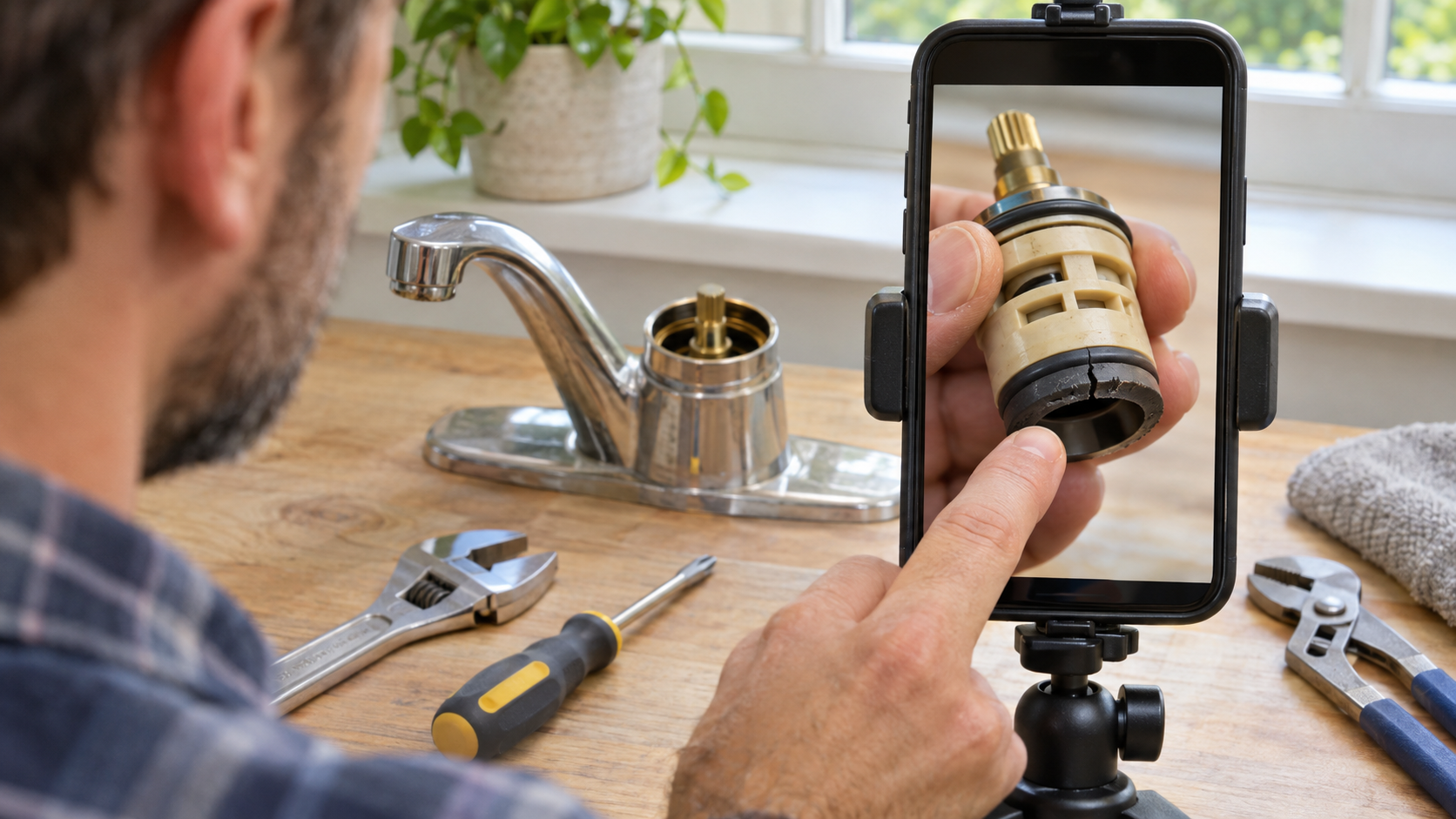
Once you have the query, build the opening around it. Do not make the viewer wait through a generic promise, logo animation, or suspense hook before revealing the subject. If the useful noun arrives late, the opening is asking both the viewer and the platform to guess.
Establish the subject through three coordinated signals:
- Say it. Name the exact product, method, recipe, place, or tool in the spoken opening.
- Write it. Put a short, plain-language version of the subject in on-screen text.
- Show it. Use a close, relevant shot of the item or technique actually doing the job.
A simple opening formula is: specific thing, job it performs, and audience qualifier when needed. For example: This is [specific contour stick], and here is how I use it for a round face. The sentence does not need to sound like a search box. It needs to make the answer unmistakable.
The visual should confirm the language rather than decorate it. If you name a tool, put it in hand and use it. If you name a recipe, show the dish or the defining step. If you teach a technique, frame the movement closely enough that a viewer can see what makes it distinct. This is evidence inside the video: the viewer can connect the name to the thing without relying on your claim alone.
Use the caption to reinforce the subject, but do not make it carry the entire burden. Captions were not measured in the underlying dataset, so there is no basis for declaring them either decisive or unimportant. The safer production choice is to establish the topic in the video itself and use the caption to add context.
Hashtags deserve the same restraint. One Maybelline gel eyeliner video named the product in its first sentence, used no hashtags, and received 300,000 likes. That example shows that hashtags are not a prerequisite for a video to perform. It does not prove that removing hashtags will improve search placement, and likes alone do not isolate search discoverability.
Use a relevant hashtag if it helps describe or organize the content, but do not treat a hashtag bundle as a substitute for a clear subject. A vague video with a precise hashtag is still a vague video.
You should also make the meaning resilient to imperfect query matching. Instagram results can be unpredictable: a search for collar bone contour surfaced anatomy and sewing content, while sunset makeup produced no result until the wording changed. That does not reveal exactly how Instagram matches queries. It does show why betting everything on one exact phrase is fragile.
Instead, express the same idea naturally across the spoken opening, overlay, demonstration, and caption. Do not scatter unrelated synonyms. Give the subject enough plain-language context that a person can understand it even when their wording differs from yours.
Build a one-page brief before recording
A compact production brief keeps the query from disappearing during scripting and editing. Complete these fields before the camera turns on:
- Target question: the natural-language search the video will answer.
- Exact subject: the named item, audience, or technique that makes the answer specific.
- Opening line: the first spoken sentence that identifies the subject and outcome.
- On-screen phrase: the shortest clear version of the topic.
- Proof shot: the moment that visibly demonstrates the item or method at work.
- Viewer question: a closing prompt that can only be answered by someone who understood the content.
If any field is difficult to complete, the concept probably needs more definition. Fix that before filming. Editing can tighten an answer, but it cannot rescue a video that never decided what it was answering.
Choose the right kind of specificity for each video
Specificity does not always mean naming a commercial product. The strongest anchor depends on why someone would search for the video. Use the following decision rule:
- Name the item when a product, tool, place, ingredient, or recipe is central to the answer.
- Name the audience when the method changes according to skill level, hair type, face shape, occasion, or another relevant characteristic.
- Name the technique when the distinctive value is a repeatable movement, sequence, framework, or visual format.
- Stop adding modifiers when a shade, trend, product, or other named subject already tells the viewer what the video is about.
This is why audience qualifiers should not be applied mechanically. In the beauty results, hair and nail tutorials commonly identified who the method was for, while lip and trend videos often relied on the named shade or trend. The audience label added useful information in one format but would have been redundant in another.
A memorable method name can also carry the specificity. Labels such as 3 lines hack, BASIC vs PRO, and V contour hack give viewers a compact way to describe what they saw. The useful part is not the word hack. It is the recognizable structure behind the label.
If you name a method, make the label descriptive enough to survive outside the video. A proprietary-sounding name with no visible explanation creates another guessing problem. Show the steps or contrast that makes the name meaningful, then use the same label consistently in the spoken opening and overlay.
The closing question should be just as specific. A generic prompt such as What do you think? can be attached to almost anything. A question such as Which shade would you match to this? asks the viewer to respond to the actual subject.
Content-specific comment prompts appeared far more often among the leading videos than requests to save or share. That pattern does not establish a ranking benefit. It does offer a better way to invite useful conversation: ask for the viewer’s decision, comparison, use case, or result.
A good closing question can also improve your next brief. If viewers repeatedly name a use case, audience, or comparison you did not cover, their answers reveal a more specific follow-up query. The comment prompt then becomes audience research rather than an empty engagement ritual.
Run a search discoverability test you can learn from
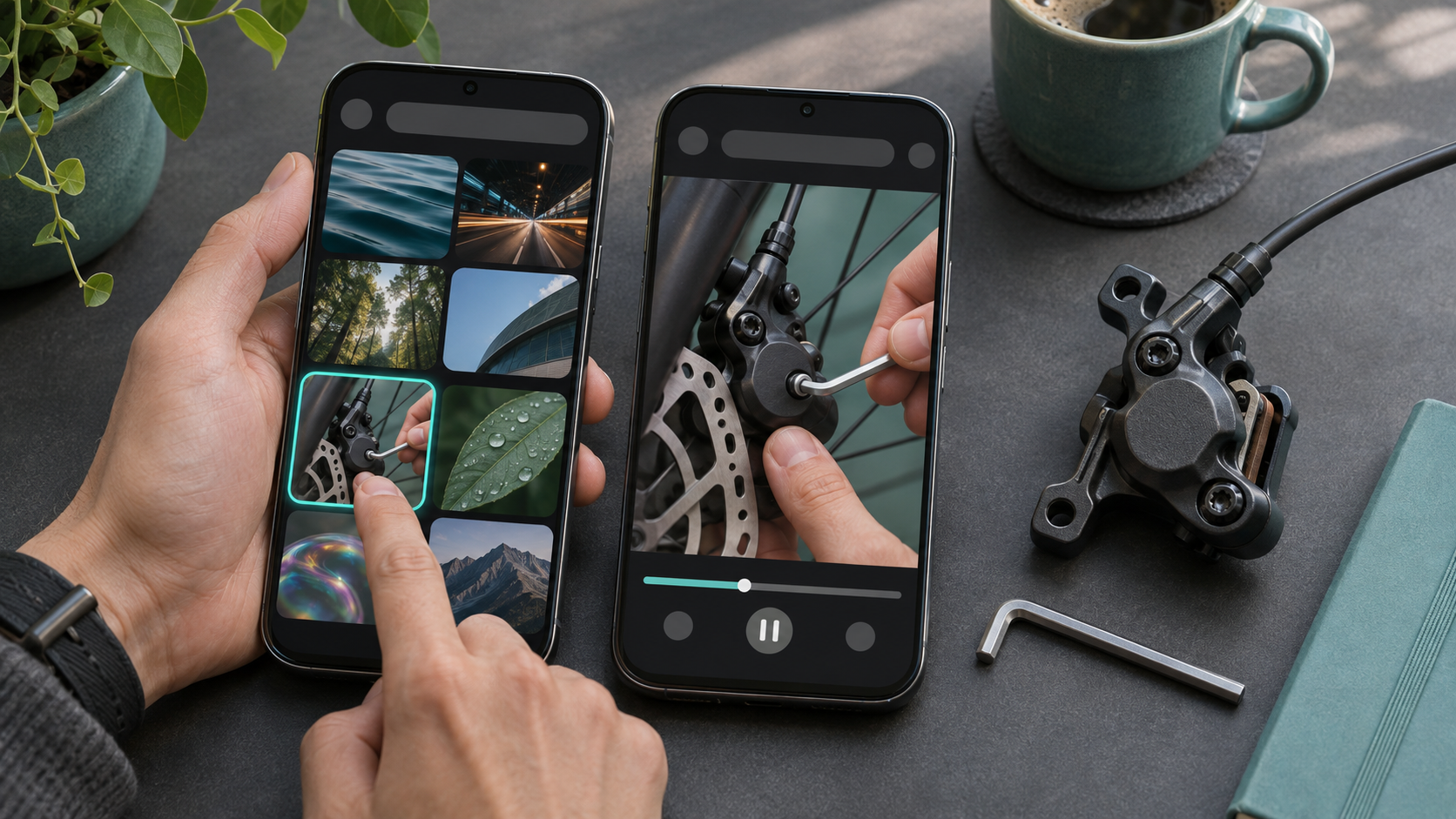
The available pattern has clear limits. It comes from beauty content, and it shows association rather than causation. Naming a specific product early may help search matching, viewer comprehension, retention, or several things at once. It may also correlate with other qualities common to well-produced videos. You cannot responsibly turn that into a universal ranking rule.
You can turn it into a disciplined test. Use your own niche, normal production conditions, and queries that matter to your audience:
- Select an upcoming generic concept. Choose a video you already intended to make rather than inventing an artificial topic for the test.
- Define the target query and likely rewordings. Write the exact question, then note plain-language variations that preserve the same intent.
- Create the query-led version. Name the specific subject in the spoken opening, repeat it in on-screen text, and show it in use.
- Keep the comparison fair. Hold your normal account, editing style, production quality, and publishing practice as steady as practical. If everything changes, you will not know which change mattered.
- Inspect the intended searches consistently. Record whether the video appears for the main query and its natural variations at predetermined checkpoints. Use the same checking process each time.
- Record qualified response. Note whether comments refer to the named product, audience, method, or problem. Broad reach is useful, but relevant response tells you whether the right people understood the subject.
- Change one part of the brief next. Refine the query, opening, qualifier, visual demonstration, or closing question instead of replacing the entire format at once.
Do not judge the test on likes alone. A video can receive engagement for reasons unrelated to its target query. Search discoverability asks a narrower question: can someone looking for this subject encounter the video and immediately recognize it as a relevant answer?
When a video does not appear or attracts the wrong audience, diagnose the failure before producing more of the same:
- The results are unrelated to the intended meaning: rewrite the query in simpler language and add enough context to distinguish the subject.
- The subject appears late: move the name into the opening sentence and the first on-screen phrase.
- The idea is still broad: anchor it to a named item, defined audience, or repeatable method.
- The video appears relevant but viewers do not respond: inspect the usefulness of the answer itself. Clear packaging cannot compensate for a weak demonstration.
- Only the exact wording works: make the video’s language more natural and cover reasonable variations without stuffing them into one sentence.
Your next step does not require a new production system. Take the next generic title on your calendar, turn it into a specific question, and write an opening that names the subject and outcome. Add matching on-screen text, plan the proof shot, and decide what you will record after publication. If a viewer can identify the answer within the first few seconds, you have already made the video easier to understand and easier to evaluate.
References

Leave a Reply