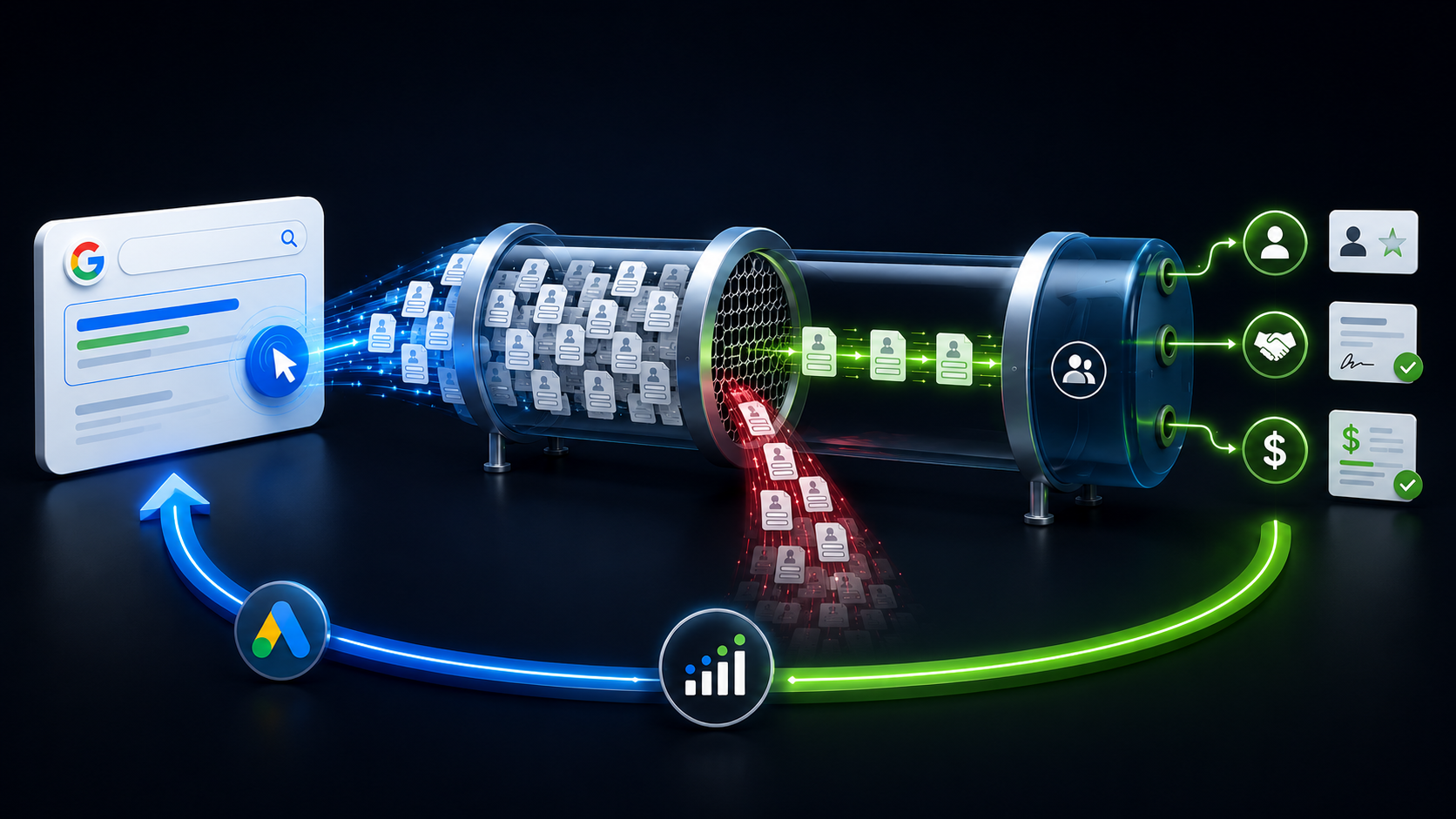
Lead totals can make a B2B paid search program look productive while obscuring whether it creates viable sales opportunities. The gap is especially important for complex, high-cost, regulated, or consultative purchases, where a website conversion begins the buying process rather than completes it.
A more useful measurement system follows prospects beyond the form, connects campaign activity with CRM outcomes, and gives Google Ads signals that better reflect commercial value.
Replace the lead scorecard with a business scorecard
Clicks, conversion rate, lead volume, and cost per lead remain useful diagnostic metrics. They show whether ads attract responses efficiently. They do not reveal whether those responses match the target customer profile, become opportunities, or produce revenue.
Search Engine Land illustrates the distinction with two hypothetical campaigns. The campaign with the cheaper leads generates less qualified pipeline and revenue, while the apparently expensive campaign produces the stronger commercial result.
| Metric | Campaign A | Campaign B |
|---|---|---|
| Leads | 80 | 15 |
| Cost per lead | $50 | $200 |
| Total spend | $4,000 | $3,000 |
| Qualified opportunities | 2 | 8 |
| Opportunity value | $20,000 | $120,000 |
| Revenue | $15,000 | $95,000 |
| ROAS | 3.8x | 31.7x |
The example shows why a higher CPL is not automatically a problem. The relevant question is what the business receives for that cost. Cost per qualified lead, cost per opportunity, pipeline value, close rate, customer acquisition cost, revenue, and ROAS provide the missing context.
Give conversion actions a hierarchy
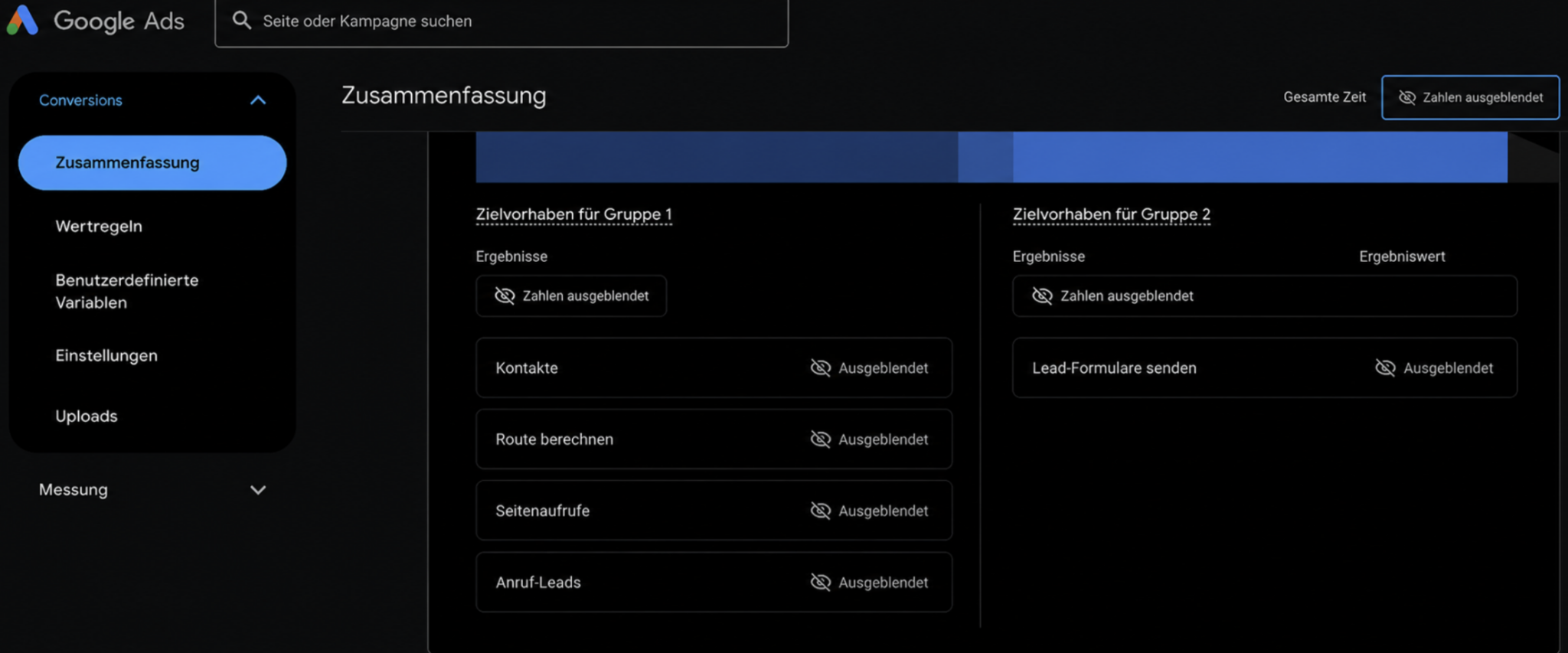
Not every action labeled as a conversion represents equal intent. A page view, route click, general form submission, direct contact request, sales-qualified lead, and closed deal occupy different positions in the commercial journey. Counting them together can inflate reported performance and blur the signal used for optimization.
This creates a predictable incentive problem: if an ad platform receives only a generic form-submission signal, automated bidding will seek more people likely to submit that form. It cannot infer which submissions came from serious business buyers and which came from consumers, students, competitors, or other poor-fit visitors.
Teams should therefore define which actions are primary business outcomes, which are useful secondary indicators, and which exist only for observation. The classification should reflect buying intent and sales value rather than ease of tracking.
Use the CRM to connect acquisition with pipeline
The ad account explains how a prospect arrived and what the initial interaction cost. The CRM records what happened afterward. Combining those views makes it possible to compare campaigns by lead quality instead of response volume alone.
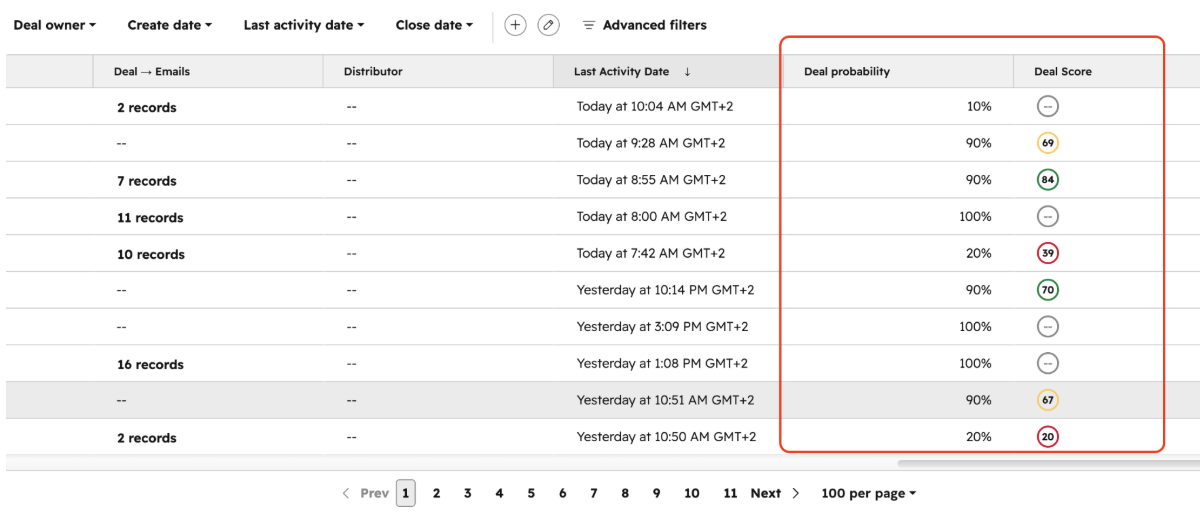
The source describes evaluating deals with two additional signals: a probability updated by sales according to conversations, budget, timing, and intent, and an AI-generated score based on available deal and engagement data. These are examples of downstream evidence, not universal scoring rules. Each business needs lifecycle definitions that match its own sales process.
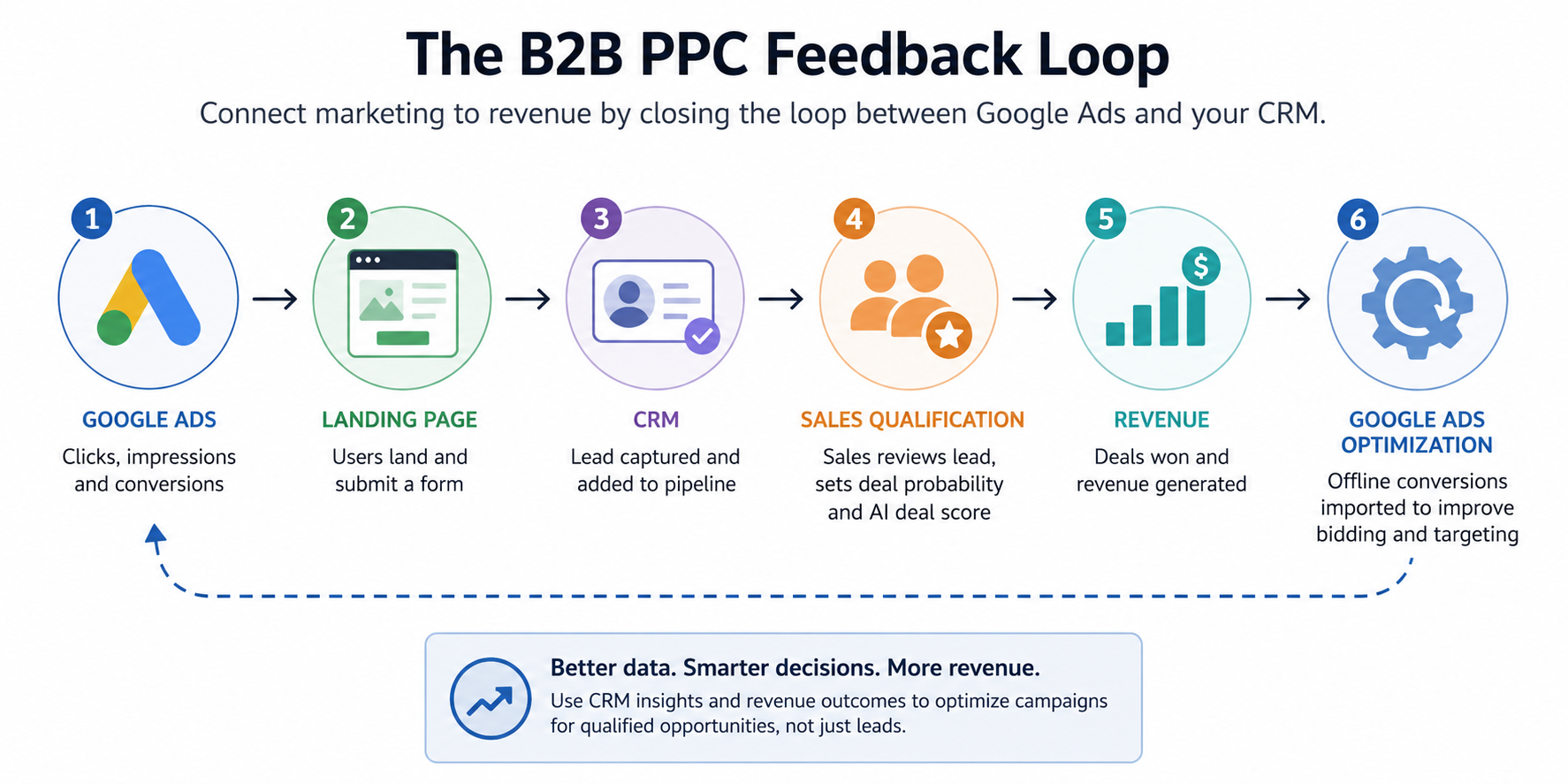
A connected analysis should reveal which campaigns, keywords, and landing pages produce high-probability opportunities; which sources attract poor-fit inquiries; and which acquisition paths ultimately contribute revenue. GA4 and advertising data can support that analysis, but neither replaces the CRM record of qualification and sales progress.
Return qualified outcomes to Google Ads
Measurement becomes more actionable when lifecycle changes are imported as offline conversions. Depending on the sales process, useful events can include qualified lead, sales-qualified lead, opportunity created, deal won, and associated revenue value.
This feedback matters when automated bidding is in use because optimization follows the supplied signals. Better downstream data does not guarantee strong results, and long sales cycles can delay learning, but it gives the system a closer approximation of the outcomes the business actually wants.

Implementation also requires data discipline. Campaign identifiers must survive the handoff into the CRM, lifecycle stages need consistent definitions, and duplicate or incorrectly assigned conversions can distort the feedback loop. Before changing bidding around deeper events, teams should confirm that those events are recorded reliably and occur often enough to support useful decisions.
Key takeaways
- Use lead volume and CPL as diagnostics, not final judgments of B2B PPC value.
- Separate weak engagement signals from qualified, opportunity, customer, and revenue outcomes.
- Connect ad, analytics, and CRM records so campaigns can be assessed by pipeline quality.
- Import reliable offline outcomes to move automated optimization closer to revenue.
- Treat structured sales feedback as performance data that can inform targeting, search terms, landing pages, and budgets.
The practical shift is from asking how many contacts paid search produced to asking which investments created credible buying opportunities. As CRM feedback becomes cleaner and more consistent, budget decisions can follow commercial evidence instead of whichever campaign fills the top of the funnel fastest.
Inspired by this post on Search Engine Land.

Leave a Reply