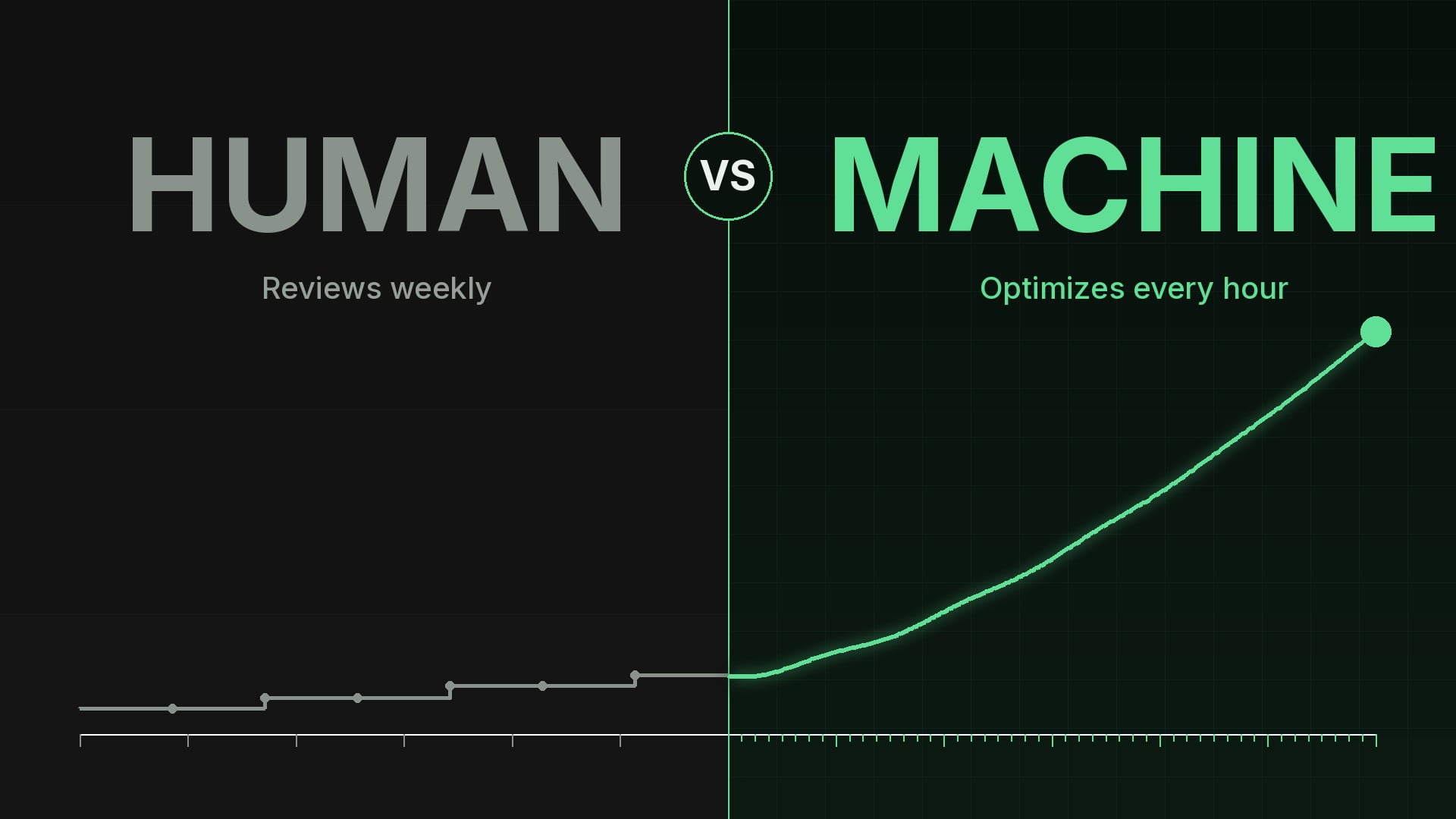

I have watched paid search change into something far faster and less forgiving than the old reporting rhythm was built to handle. Auction dynamics shift by the hour, competitor bids move in real time, and search behavior changes across devices, times of day, and audience segments before a monthly report can even catch up.
For me, the real cost has always lived in the gap between a performance signal and the moment a person can respond. groas is built to close that gap every hour of every day, and the data shows what can happen when that response loop gets dramatically shorter.
When I sign up with groas, the process starts with a human account manager auditing the existing Google Ads account in detail. This is not a quick surface check. Campaign structure, keyword strategy, bidding logic, budget allocation, conversion tracking, quality scores, search term reports, and auction insights all get reviewed.
I see that audit as the foundation for everything that follows. groas optimizes toward the goals and account structure defined in the roadmap, so a clean conversion hierarchy, accurate tracking, and a well-organized account give the system stronger signals to work with. That early human judgment matters because it shapes the machine’s operating environment.
From there, I like that the rollout is paced across the first 60 days. The system does not start moving aggressively before it understands the account it is working in.
Weeks 1 to 2, observation: groas ingests historical performance data, establishes baselines, and maps patterns across search terms, device performance, time-of-day variance, and audience behavior. During this stage, no changes are made while the system learns the account.
Weeks 3 to 4, calibration: The system starts making targeted optimizations, including bid adjustments, negative keyword additions, match type refinements, and budget reallocations between campaigns. These are deliberate campaign-by-campaign changes, so each move can build on the last.
Weeks 5 to 6, traction: I begin to see early changes show up in the data. Performance shifts become visible across ROAS, conversion value, and wasted spend as the optimizations compound.
Weeks 7 to 8, scaling: Around the 60-day mark, the account has usually stabilized enough for groas to scale. More budget moves into the campaigns and keywords with the strongest conversion history, expanding from a proven base instead of guessing.
Once groas is running, I see it work across the full account the way a skilled team would, except it does not stop. It writes and tests ad copy, deploys dynamic landing pages that adjust around each search, turns ad groups on and off when performance calls for it, moves budget where it earns the most, and adjusts bidding strategies in response to live signals.
Anything a person can do inside Google Ads, groas can do too, around the clock.
Capability matters, but results matter more.
The clearest way I can explain the value of continuous, full-surface management is through a real account groas took over. It was a high-spend search account in a tough paid search category: a U.S.-based online mobile recharge platform that lets people instantly top up prepaid mobile phones across major U.S. carriers without creating an account or paying added transaction fees.
This business operates in prepaid wireless, serving many pay-as-you-go and underbanked customers who recharge monthly or even more often, usually right when their balance runs out. That model puts Google Ads at the center of growth.
Demand is intensely intent-driven. When someone’s credit runs out, they search for a way to recharge and often buy within minutes. Capturing that moment is the whole game. But it is also a punishing channel to manage profitably because transactions are low-value and high-volume, margins are thin, and the auction is crowded with carrier brand terms and generic “recharge” and “top up” searches.
In an account like this, a few cents of wasted CPC multiplied across hundreds of daily conversions can decide whether the account is profitable or quietly leaking money.
In this account, a conversion meant a completed recharge. So the numbers are not abstract to me. Every point of ROAS and every additional daily conversion means more recharges processed and more revenue generated on the same budget base.
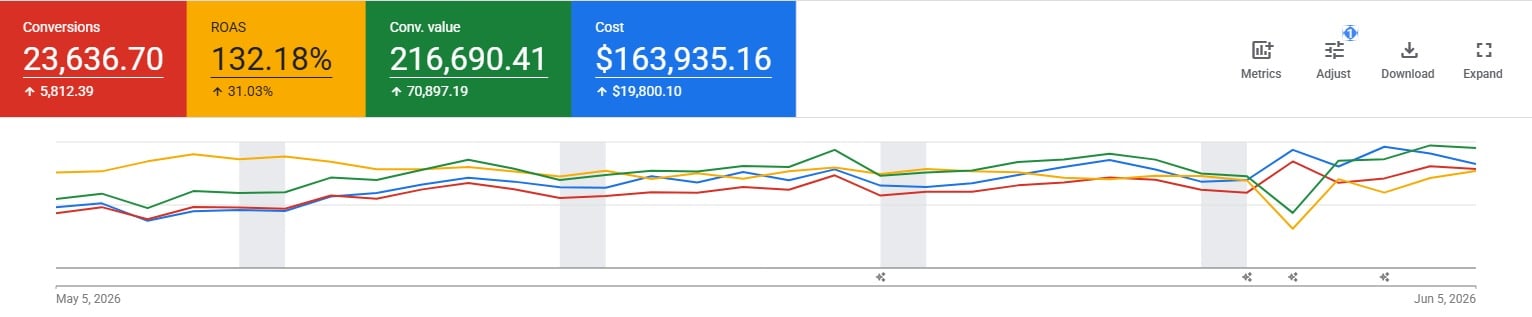
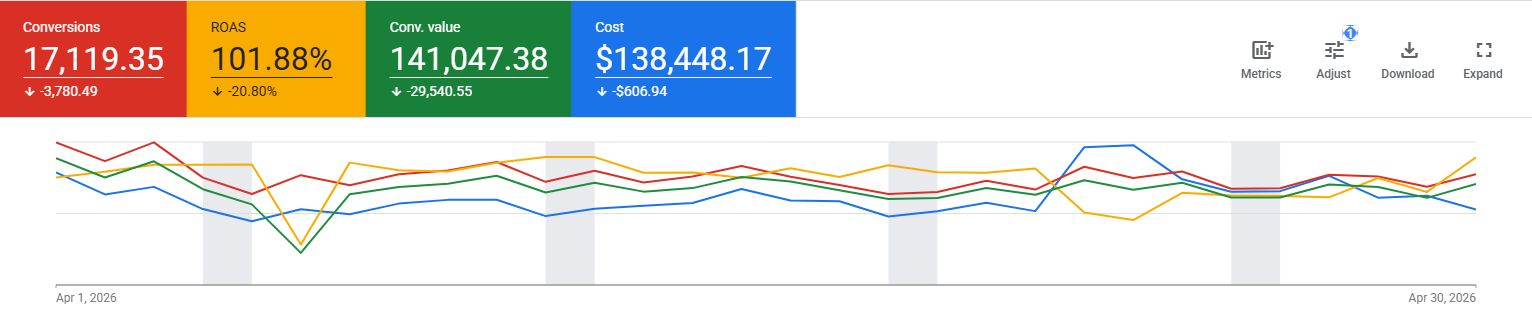
The comparison looked at two account reporting periods: before groas assumed optimization and after.
Spend: up 18% to $164,000.
ROAS: up 30%.
Average CPC: down 15%.
Conversions per day: up 29%.
Conversion value: up 44%.
Cost per conversion: down 14%.
The clearest improvement was return on ad spend. ROAS rose from 1.02x to 1.32x, which is roughly a 30% improvement in value returned for each dollar spent.
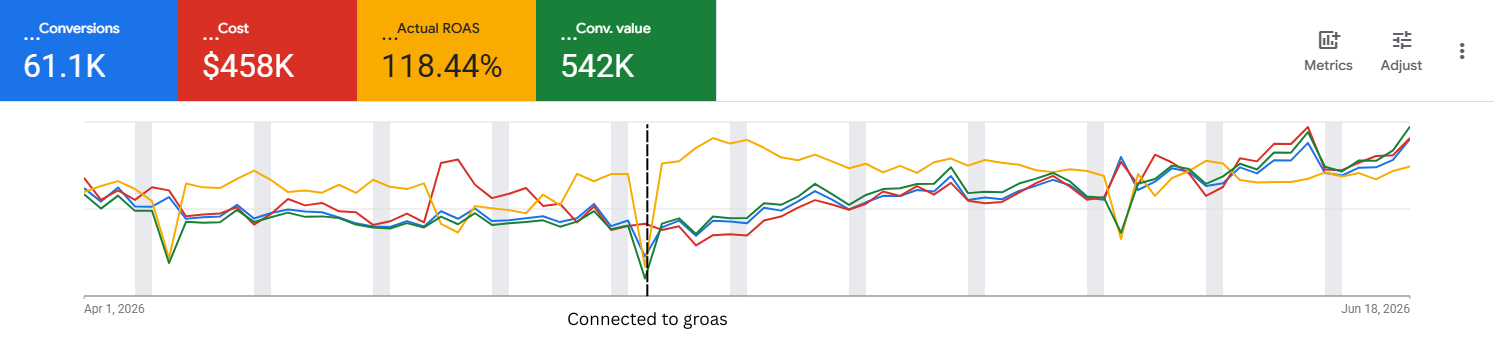
At the same time, average cost per click fell from $2.34 to $2. But the more important point is what the account did with the clicks it paid for. Conversions and conversion value both grew faster than spend, which means each dollar worked harder than it had under the previous setup.


Daily conversions rose from 571 to 739, about 29%. Daily conversion value rose even faster, from $4,702 to $6,772, or roughly 44%.
What stands out to me is that these gains came through consolidation, not expansion. groas focused spend into 10 active search campaigns, down from 17.
Budget that had been spread thinly across underperforming campaigns was redirected into the keywords and campaigns with the strongest conversion history. Fewer campaigns, lower click costs, and more value returned created a cleaner, more focused account.
That is what an account looks like when waste is removed and budget is concentrated where it can compound.

The mechanism behind results like these is speed plus breadth of attention. Under traditional management tied to weekly or monthly reporting cycles, an underperforming search term might run for 7 to 14 days before anyone acts. A target CPA can drift far from its goal between reviews. An autonomous system narrows the time between signal and response to hours while watching every campaign at once.
As groas gathers more data on audience behavior, search patterns, and conversion value, its decisions become more precise. Budget can then concentrate further into the campaigns that return the most value.
That is the structural difference I see between autonomous management and periodic manual review. Each optimization creates new data, and that data informs the next decision. A system running continuous observe-and-optimize cycles can draw more signal from the same account over time.

Business context still belongs with the people who understand the business. When a client launches a new product line, changes pricing, or redefines which conversions matter most, that direction has to come from a person. groas optimizes toward the goal it is given, and setting that goal is strategic work.
Creative is where I see the human and machine layers working together most clearly. groas writes and tests ad copy and landing page variations at a pace no human team could match, while the people on the account define brand voice, positioning, and creative direction. The strategist shapes the message, and groas finds the specific wording and layout combinations that convert.
For businesses ready to see better results
If I am looking at a current setup that runs on monthly reports and weekly changes, I expect to find a steady gap between what the data says and what actually happens in the account. That gap is where budget gets wasted and opportunities close. In the account above, it showed up as more than 15 active search campaigns, many spending inefficiently, with budget spread too thin to compound.
groas’s onboarding is structured to keep the transition low-risk. The first two weeks are analysis only, measured changes follow, and meaningful performance shifts usually appear within the first month or two, with scaling beginning around day 60. Live campaigns keep running throughout calibration, and the initial audit grounds changes in context from the start.
For businesses that have stayed with the same agency for a long time without material improvement, I would expect the audit alone to surface issues that have gone unaddressed.
Get started here.
For agencies running groas white-label
I do not think execution-layer account management scales well on its own.
Continuous optimization, bid management, negative keyword maintenance, and budget pacing take a lot of time at volume. As an agency adds clients, it usually has to add headcount or accept that some accounts get less attention than others. Most agencies know exactly which accounts are underserved.
With groas handling execution autonomously across a client portfolio, I can see the team shifting toward strategy, client relationships, and new business.
The work that differentiates an agency is also the hardest to automate. Clients see stronger results, and team capacity moves toward the work that creates the most value.
Get started here.
Inspired by this post on Search Engine Land.

Leave a Reply