
A reported Google Ads change will shift more responsibility for classifying conversion-based customer lists into Google’s systems beginning in August 2026. For advertisers, the important question is not simply what label appears in Audience Manager, but whether that label matches the role each audience actually plays.
The practical response is to audit lifecycle definitions before the reported change takes effect. Clear distinctions between customers, prospects, and other segments can reduce the risk that automated acquisition or retention decisions are informed by the wrong audience signal.
What Google reportedly plans to classify
CrushPress.AI reports that Google will automatically categorize customer types in conversion-based lists starting in August 2026. The reported categories are existing customers, new customers, and other customer segments.
The report frames the change as part of Google’s effort to make customer-acquisition and retention signals more consistent across its advertising tools. It also says Google Ads expert Bia Camargo first identified the alert on LinkedIn. Because the available source does not detail every classification rule, advertisers should avoid assuming how Google will resolve ambiguous or overlapping audiences.
Key takeaways
- Google reportedly plans to classify conversion-based customer lists automatically from August 2026.
- The stated classifications distinguish existing customers, new customers, and other customer segments.
- A technically accurate list can still send an unsuitable lifecycle signal if its business meaning is unclear.
- Advertisers should review Customer Match lists and their classifications in Google Audience Manager before the change.
Why lifecycle labels matter to automated campaigns
Audience membership and audience meaning are different things. A list may accurately contain people who completed a conversion, yet that conversion may not represent the same customer state in every business. The source specifically warns that incorrect classification could affect how Google’s systems optimize users across their lifecycle.
This matters because acquisition and retention strategies ask different questions. Acquisition focuses on finding or prioritizing people treated as new customers, while retention focuses on people the business already recognizes as customers. When a list’s Google-assigned category does not match the advertiser’s internal definition, automation may receive a signal that is valid at the data level but misleading at the strategy level.
The central risk is a mismatch in definitions
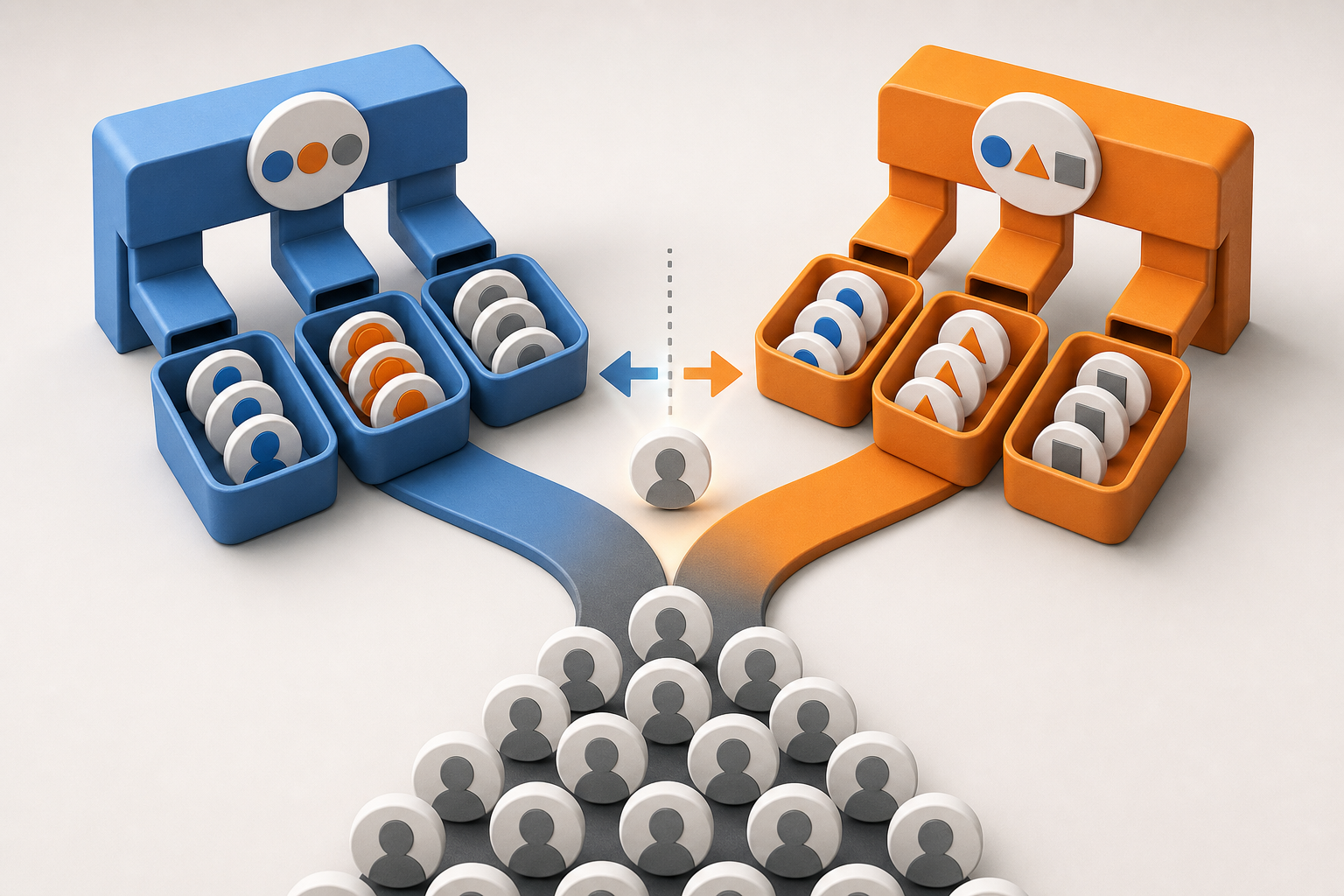
The reported categories sound straightforward, but their boundaries may not be. An advertiser’s internal customer model can contain lifecycle distinctions that do not map neatly to broad labels such as existing, new, or other. The source does not explain how Google will treat every edge case, so the safest analysis is to focus on whether each list has one clear strategic purpose.
The most consequential ambiguity is likely to appear where conversion status and customer status are treated as interchangeable. A conversion-based list records an action according to the advertiser’s setup; classification assigns that audience a role in the customer journey. Reviewing the underlying meaning of the conversion is therefore more useful than relying on a familiar list name alone.
How to prepare before August 2026

The source recommends auditing Customer Match lists based on conversion data in Google Audience Manager. That review should establish what each list contains, which lifecycle state the business intends it to represent, and whether Google’s expected classification appears consistent with that intent.
Advertisers should pay particular attention to lists used in customer-acquisition strategies, because the reported change is intended to clarify the distinction between prospecting and retention audiences. Internal campaign owners should also agree on the meaning of each lifecycle label so that a list is not interpreted differently across campaigns.
The goal before August 2026 is not to predict every decision Google’s classifier may make. It is to remove avoidable ambiguity from the audience signals the system will evaluate and to be ready to assess whether the resulting classifications still support the intended campaign strategy.
Leave a Reply