Unveiling JavaScript SEO Secrets from Leading Ecommerce Sites

```json
{
  "alt": "Digital shopping dashboard showcasing product filters, recommendations, and trending items with AI-driven analytics.",
  "caption": "Explore AI-driven shopping personalization with product recommendations and trending items at your fingertips.",
  "description": "This image illustrates a digital shopping interface featuring various elements like product filters, recommendations, and trending items. Faceted filters and sorting options are prominently displayed at the top, enhancing user experience. Visual connections highlight AI-driven personalization, linking products such as shoes, headphones, bags, and sunglasses. The design emphasizes a seamless, data-driven shopping journey, ideal for e-commerce insights."
}
```

JavaScript SEO seems like it should be a cinch by now, doesn’t it? Yet, here we are with persistent challenges that e-commerce sites continuously face. After five years of grappling with issues like crawling, rendering, and indexing, coupled with the complexities of headless builds and AI-powered recommendations, it’s clear we still have a ways to go. However, some top-tier ecommerce sites have cracked the code. Their innovative approaches offer invaluable lessons in maintaining organic visibility while shipping fast, modern JavaScript experiences. Let me share these five insights with you.

Chewy is a giant in the U.S. pet food and supplies online retail space. They’ve harnessed the power of Next.js, a React framework, to seamlessly integrate server rendering, static generation, and full-stack development into their operations. Imagine visiting a product page like the Benebone Wishbone Chew Toy. Here, everything you need—product title, description, pricing, reviews, Q&A, and breadcrumb navigation—is already embedded in the initial HTML. This means Googlebot can access this information right away, without having to wait for JavaScript to render. This approach reduces the risk of rendering issues, especially significant with the rise of AI chatbots that still don’t handle JavaScript efficiently. While not all content needs to be on the initial load, like the ‘Compare Similar Items’ carousel meant for user engagement, Chewy perfectly balances what’s essential for indexing with user experience enhancements.

```json
{
  "alt": "Chewy site displaying a Benebone Bacon Flavor Wishbone Dog Chew Toy, priced at $9.99.",
  "caption": "Check out this Benebone Bacon Flavor Wishbone Dog Chew Toy available on Chewy for just $9.99! Perfect for keeping your dog entertained and their teeth healthy.",
  "description": "The Chewy website features a Benebone Bacon Flavor Wishbone Tough Dog Chew Toy, available in Medium size and priced at $9.99. Highlighted with a 4.5-star rating from over 11,646 reviews, the toy is designed for durability and dental health. Free delivery is offered on orders over $35, and a $20 eGift card is available for first-time customers spending $49 or more. The page includes options for autoship discounts, sizing selections, and easy delivery scheduling, making it convenient for pet owners."
}
```

Switching gears to Myprotein, this brand masters the art of making navigation easily crawlable. Using Astro, a content-first framework, their site ships zero JavaScript by default and includes components that support React, Vue, or Svelte, making their SEO strategy a prime example to study. By ensuring all navigation links are present in the initial HTML response, Myprotein leverages Astro’s island architecture to hydrate these elements with JavaScript interactively. Crawlers like Googlebot can thus easily discover and process these links since they use proper anchor elements with href attributes. This proactive strategy prevents navigation from being invisible or empty during searches, thereby preserving efficient crawlability.

```json
{
  "alt": "HTML code snippet displaying product details for a dog chew toy.",
  "caption": "Peek behind the scenes at the HTML structure detailing a popular bacon-flavored dog chew toy.",
  "description": "This image captures a snippet of HTML code showcasing the product details for a Benebone Bacon Flavor Wishbone Tough Dog Chew Toy, Medium. It highlights elements such as product names, ratings, links, and navigation properties. This code indicates its presence on a retail website, providing key classifications and linking to reviews and manufacturer details, useful for web development insights and SEO analysis."
}
```

Harrods, renowned for luxury goods, ensures their structured data delivers in the HTML’s initial response. By embedding structured data using the Product schema within the HTML directly, Harrods guarantees that Google can parse this data right from the first crawl, without waiting for page rendering. This foresight prevents client-side dependencies and ensures Google has immediate access to important data like pricing and availability, which is critical due to frequent updates in product details.
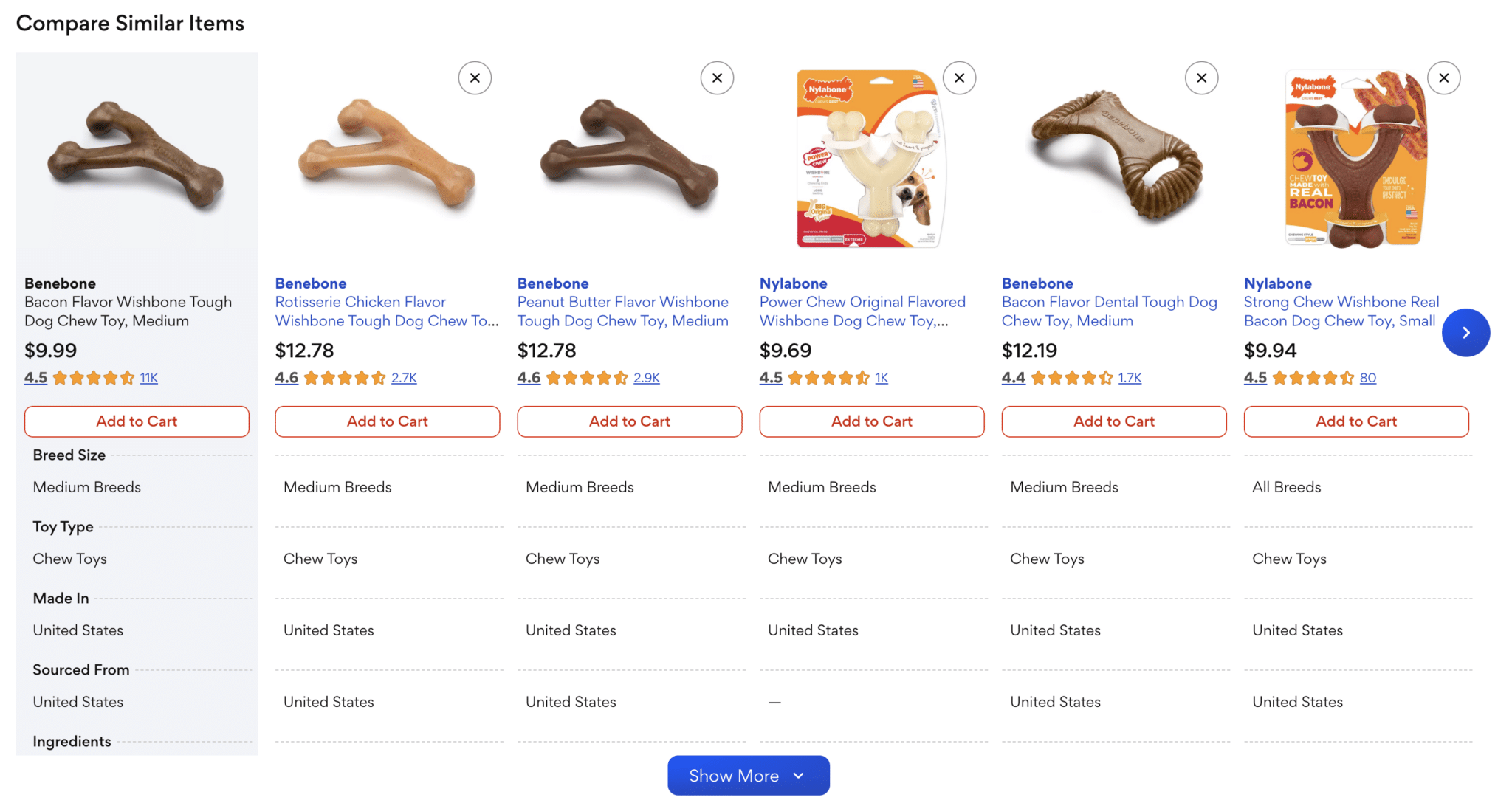
```json
{
  "alt": "Comparison chart of dog chew toys featuring Benebone and Nylabone products with prices and reviews.",
  "caption": "Discover the perfect durable chew toy for your canine companion with these top-rated options from Benebone and Nylabone, designed for medium and small breeds.",
  "description": "This image displays a comparison of various dog chew toys from Benebone and Nylabone. Products include flavors like bacon and peanut butter, designed for medium and small breeds. Prices range from $9.69 to $12.78, with customer ratings visible. Each product is marked 'Made in United States' and offers a handy 'Add to Cart' option. Ideal for those seeking durable and flavorful chew toys for dogs."
}
```

Over at Under Armour, the elegance of their faceted navigation shines. Built on Next.js like Chewy, Under Armour ensures filters on category pages are fast, interactive, and SEO-friendly. When shoppers apply filters, the product grid seamlessly updates without a full reload, leveraging client-side updates while maintaining clean, readable URLs that Google can index effectively. By avoiding hash fragments and bracketed query strings, these URLs become shareable and bookmark-friendly, thus enhancing both user experience and SEO performance.

```json
{
  "alt": "The CapmatchOne logo with a gradient circle and bold text.",
  "caption": "Discover innovation with the CapmatchOne logo, featuring sleek typography and a modern gradient circle.",
  "description": "The CapmatchOne logo features bold, modern typography coupled with a gradient circle, symbolizing connection and innovation. The sleek design conveys a sense of progress and creativity. This image can be used for branding or promotional purposes, appealing to audiences interested in innovative solutions and forward-thinking designs."
}
```

Finally, Manors Golf demonstrates SEO prowess by efficiently managing third-party scripts on their site. Utilizing Shopify’s Hydrogen framework, they cleverly defer scripts using async attributes, ensuring they don’t block the initial rendering process. This tactic not only protects the Largest Contentful Paint (LCP) metric but also eases Google’s rendering workload, contributing to a robust SEO strategy.

```json
{
  "alt": "Navigation bar of MyProtein website showcasing categories like Protein and Supplements.",
  "caption": "Explore the diverse range of categories on MyProtein's navigation bar, from trending items to sports nutrition staples.",
  "description": "This image displays the navigation bar from the MyProtein website. Featured categories include Trending, Protein, Creatine, Supplements, Bars, Food & Snacks, and more. The search bar is prominently placed. The image is vital for understanding how users can access different sections of the site quickly. Keywords: MyProtein, navigation, protein, supplements, e-commerce."
}
```

The secret isn’t in using JavaScript itself but in how it’s used. When JavaScript serves to enhance rather than deliver the core functionality and content, it paves the way for an excellent user experience while preserving SEO integrity. These lessons from major e-commerce players are testament to the delicate balance between interactivity and search engine crawlability.

```json
{
  "alt": "HTML code snippet with navigation links for nutrition products.",
  "caption": "Explore the nutritional products featured in this HTML snippet, including creatine and protein drink options.",
  "description": "This image shows an HTML code snippet from a website, highlighting navigation links for various nutrition products. The links include Creatine, Clear Protein Drinks, and Bundles, directing users to specific product categories. The CSS classes suggest design styling and user interaction, such as 'hover:underline' for link emphasis. Useful for web developers and SEO specialists studying navigation structure and link optimization."
}
```

Inspired by this post on Search Engine Land.


crushpress.ai community screenshot

FAQs

How do Chewy's product pages optimize for Googlebot without relying on JavaScript rendering?

Chewy embeds essential product data in the initial HTML using Next.js for server rendering and static generation. The page includes product title, description, pricing, reviews, Q&A, and breadcrumb navigation, allowing Googlebot to access this information without waiting for JavaScript.

What is Myprotein's approach to making navigation crawlable with zero JavaScript by default?

Myprotein uses Astro to ship zero JavaScript by default and hydrates components with JavaScript as needed. By ensuring all navigation links are present in the initial HTML, Googlebot can easily discover and process these links, preserving crawlability.

How does Harrods ensure its data is parsed by Google from the initial HTML?

Harrods embeds Product schema directly in the HTML, enabling Google to parse data from the first crawl. This reduces reliance on client-side rendering and helps price and availability information stay current.

What technique does Under Armour use for fast, SEO-friendly category navigation?

Under Armour uses Next.js for fast, interactive category navigation with clean URLs. By avoiding hash fragments and bracketed query strings, they keep URLs shareable and indexable for search engines.

What is the overall message about JavaScript use in ecommerce sites?

The article emphasizes that JavaScript should enhance rather than deliver core functionality. When used thoughtfully, it improves user experience while preserving crawlability and SEO performance.

Comments

Leave a Reply

Your email address will not be published. Required fields are marked *