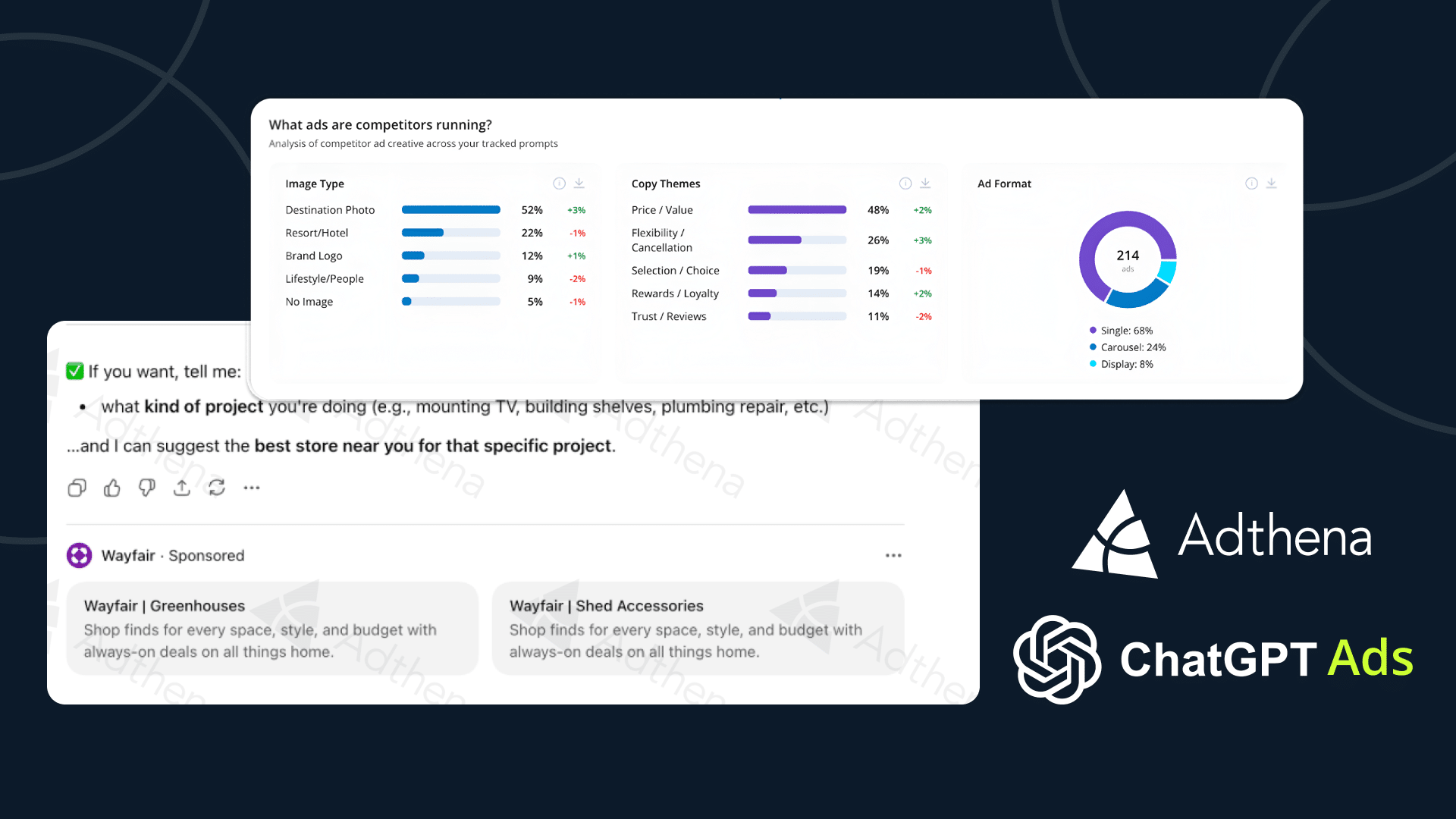
I’ve been closely following the fascinating world of ChatGPT ads, and I’m thrilled to share what I’ve learned. Adthena is tracking over 50,000 daily ad placements from more than 600 advertisers. Let’s dive into what this means for our campaigns.
The ChatGPT ad trial is currently live in the U.S., and it’s moving along faster than I expected. Launched on February 9 for users on Free and Go tiers, it now boasts participation from over 600 advertisers.

With a massive user base of 800 million active weekly users, it’s only a matter of time before ChatGPT ads see a global rollout.
I’ve heard from OpenAI that the next wave will expand to Australia, New Zealand, and Canada. From our trialists’ feedback, it looks like the UK might see ads by mid-May.
Tracking these ad placements since their rollout has given me a front-row seat to their evolution. With an index capturing 50,000+ daily placements across sectors like B2B software, ecommerce, fintech, and consumer verticals, here’s what I’ve discovered.
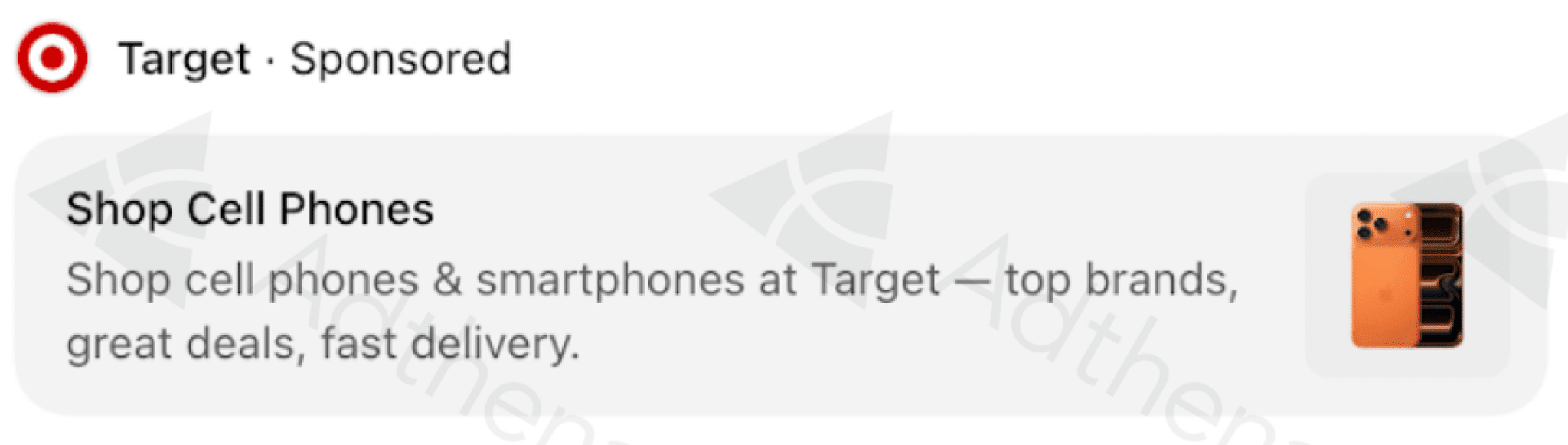
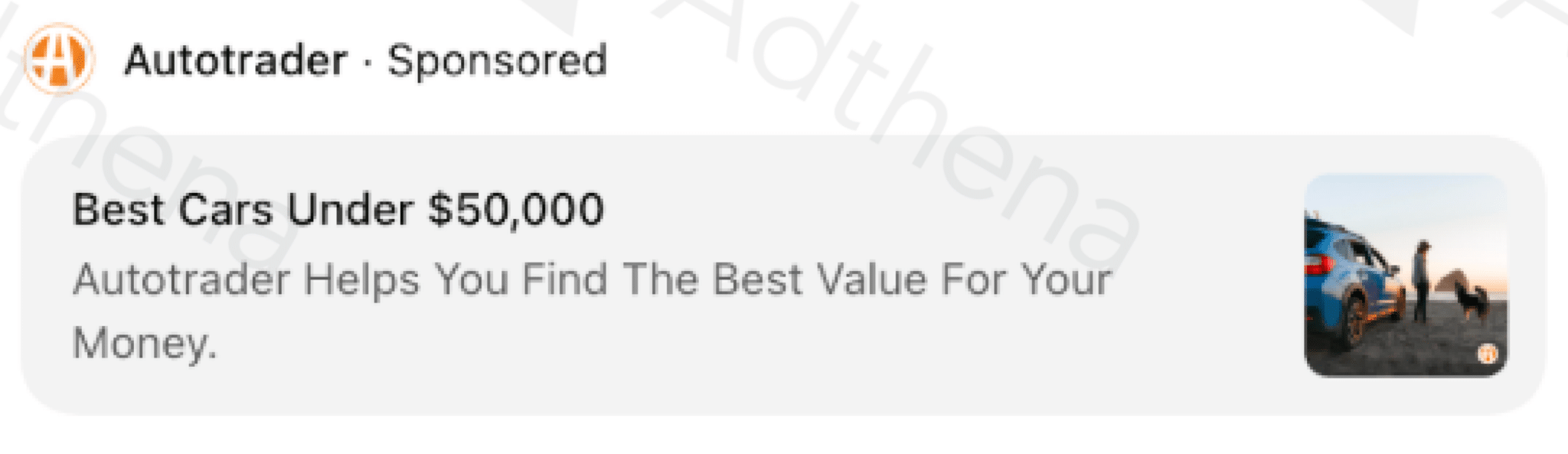
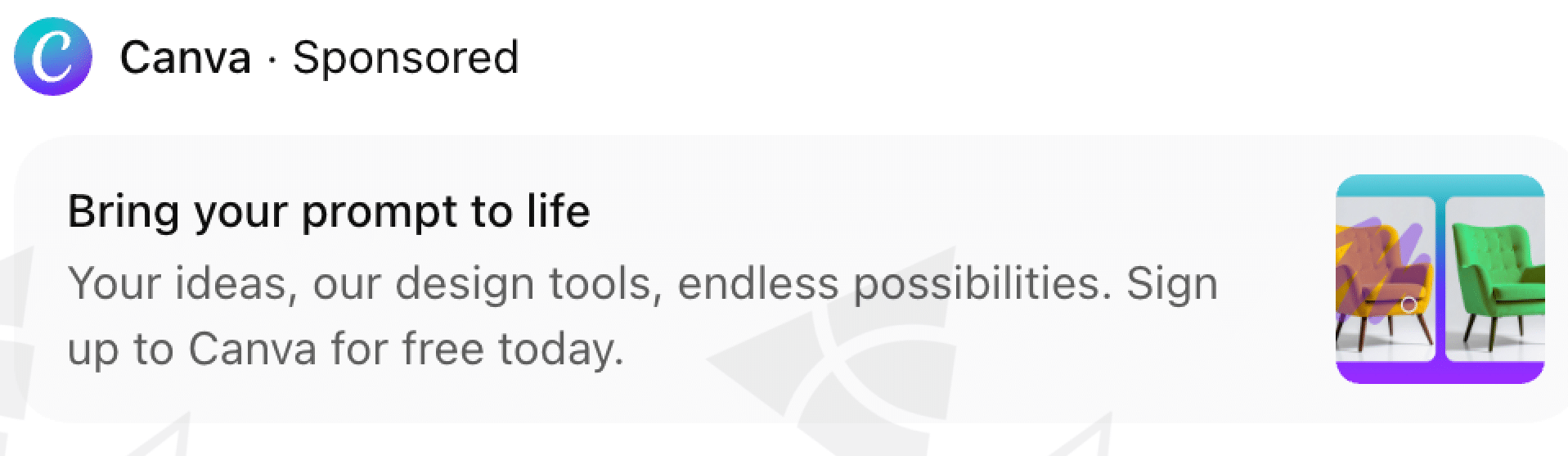
Here’s what ChatGPT ads look like: They appear inline within conversation responses. Imagine asking about the “best weekend getaway” or “top running shoes under $100,” and a sponsored result labeled “Sponsored” pops up alongside the AI’s answer.
Unlike a search bar, ChatGPT is a conversation. Users come already engaged and researching, often on the brink of a decision. The format is more concise than traditional search — just a headline, brief body, and a destination, with no sitelinks or extensions.
Here’s a surprising discovery: what I term the “Double Parked” phenomenon, where a single brand like New Balance appears twice in one ChatGPT response. This unique visibility aspect opens discussions on frequency and owning conversations on the platform.
This is a unique moment with new formats and a largely untapped landscape, presenting data that most competitors don’t yet have. Here’s what I’ve found from over 50,000 daily placements:
- Headlines often follow a “Brand: Benefit” formula. Think “Betterment: 5.25% APY Cash Account.” This is a common thread among top performers.
- Most ads begin with the brand name. This reflects the deeper intent of users already engaged in a conversation.
- Headlines average just 30 characters, peaking at 36. This forces brief, impactful messaging.
- Body copy uses around 19 words. Usually two precise sentences: one proof point, one call to action.
- Context mirroring is key. Top ads reflect the user’s query directly, enhancing relevance.
- The $ symbol boosts conversions. Specific financial figures and rates outperform vague promises.
Brands thriving in this space don’t just reuse their Google ad copy. They tailor ads for an engaged, decision-oriented audience. Leading with the brand, anchoring offers in specifics, and minimizing friction are essential.
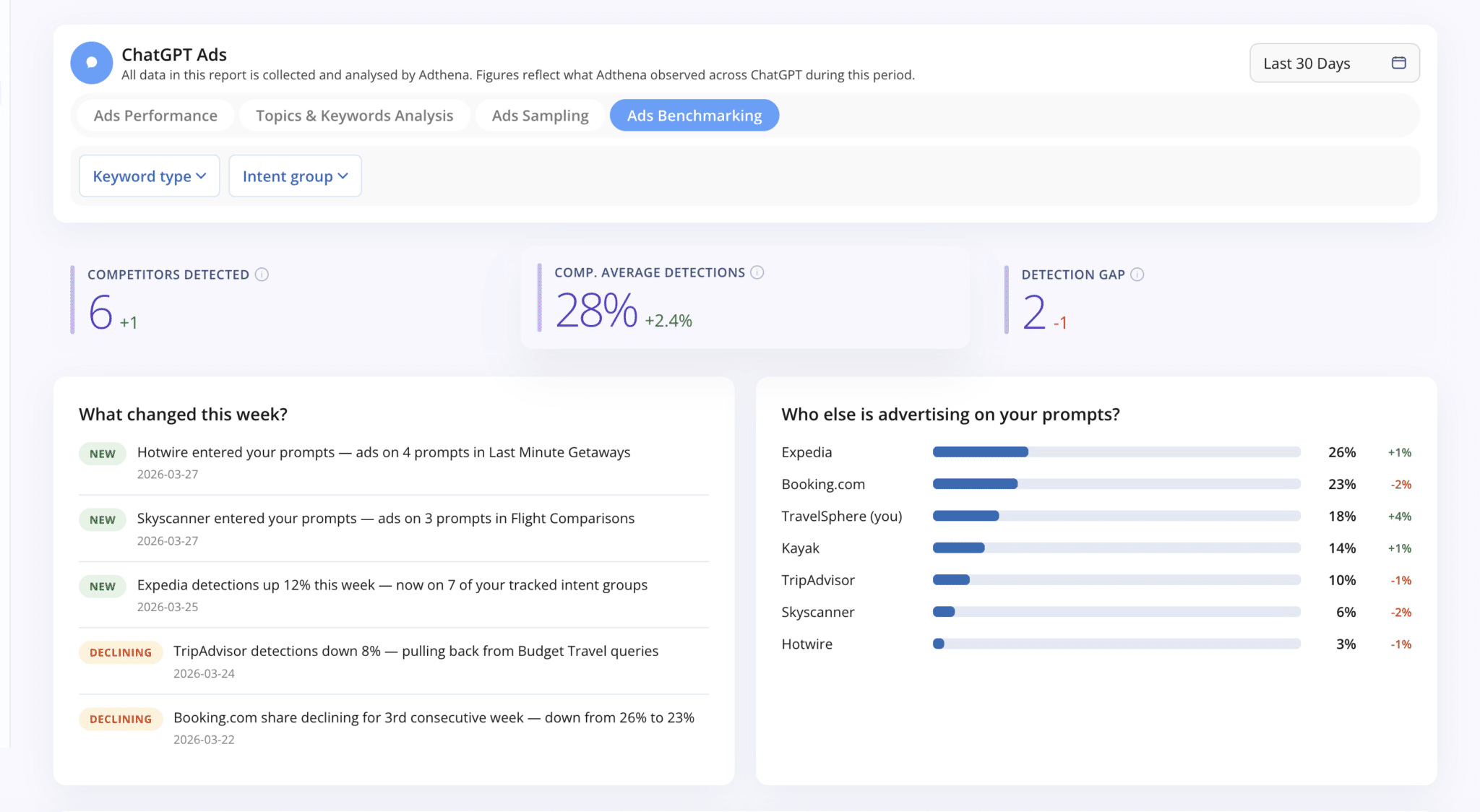
The biggest consideration? Visibility. If competitors are in these conversations and you’re not, you miss more than clicks — you miss part of the dialogue itself.
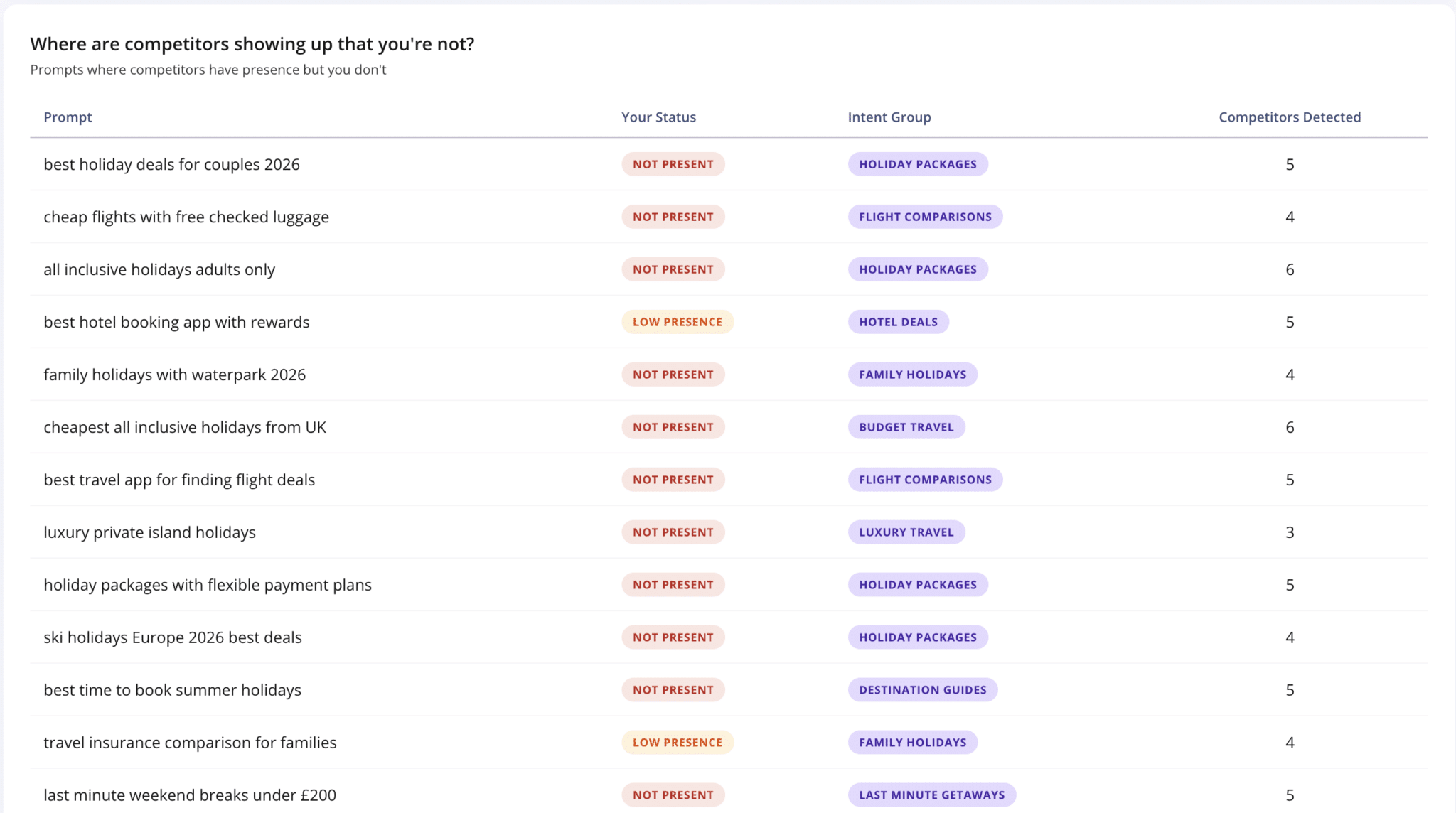
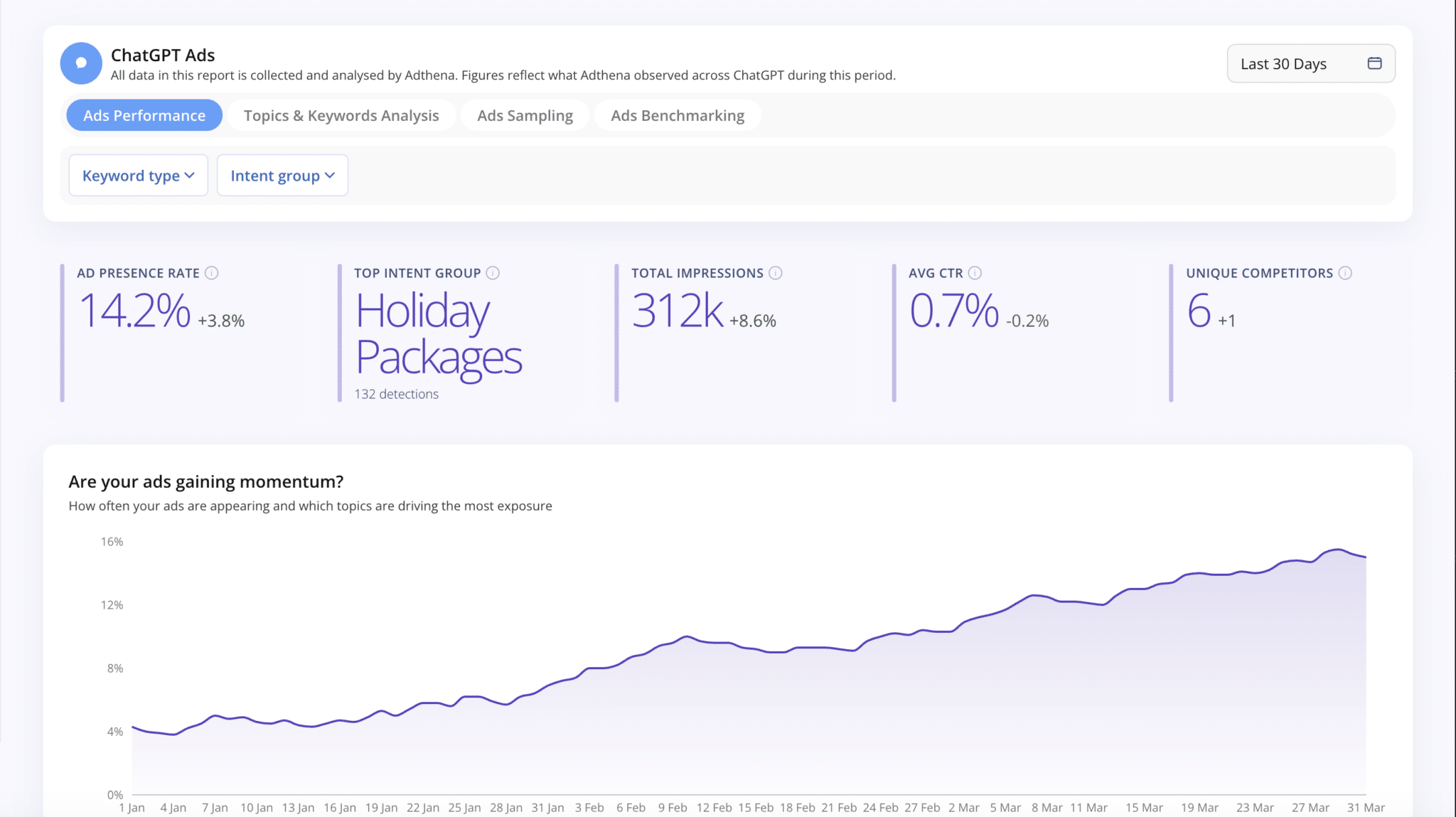
Adthena’s ChatGPT Ads Intelligence offers a solution. It goes beyond impressions and clicks, giving insight into your ad presence, competitors, and performance. Here’s what to expect:
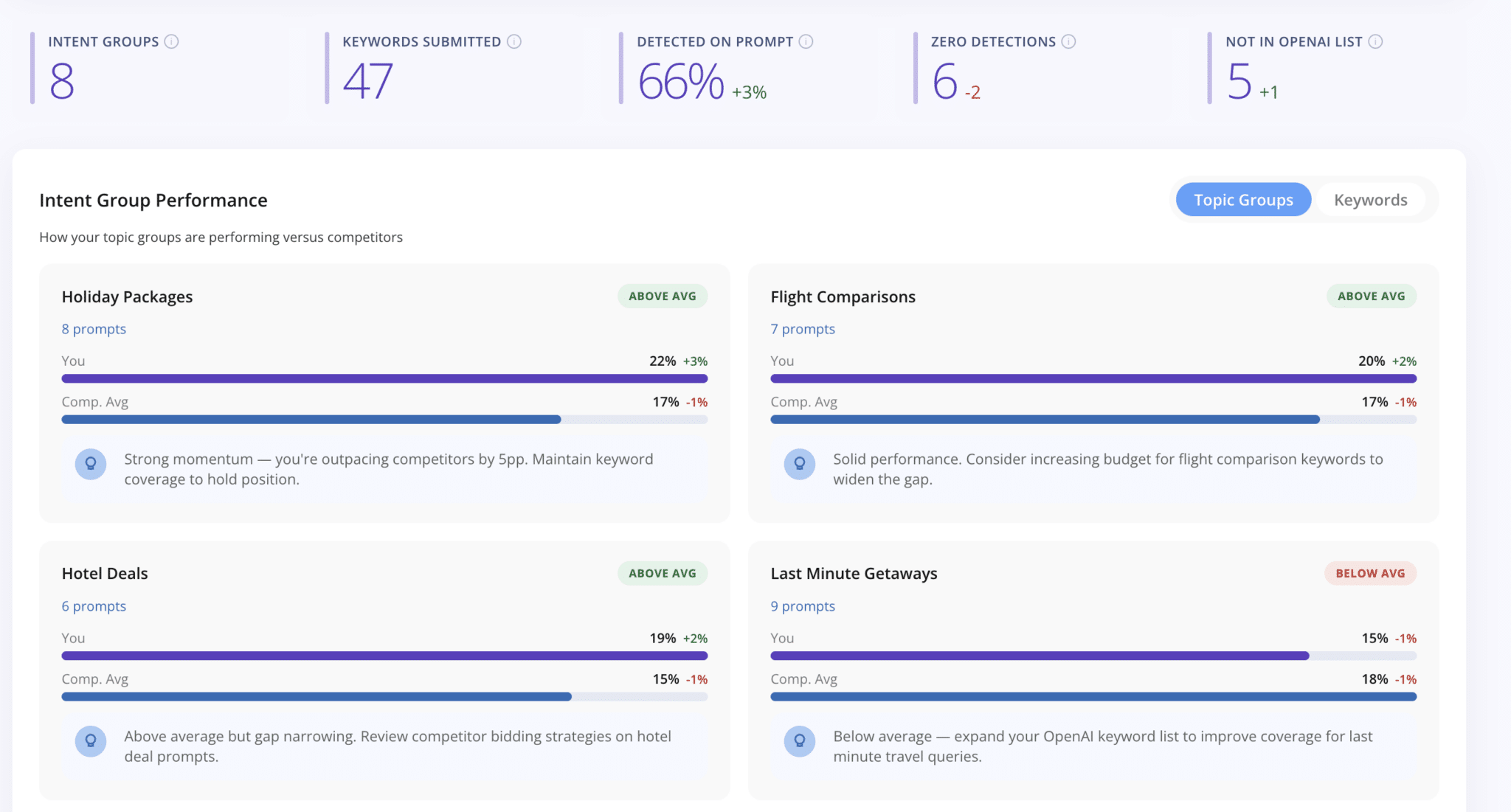
The Ads Performance tab provides live snapshots of your activity, while Topics and Keywords Analysis offers tactical recommendations for improving your ad presence.
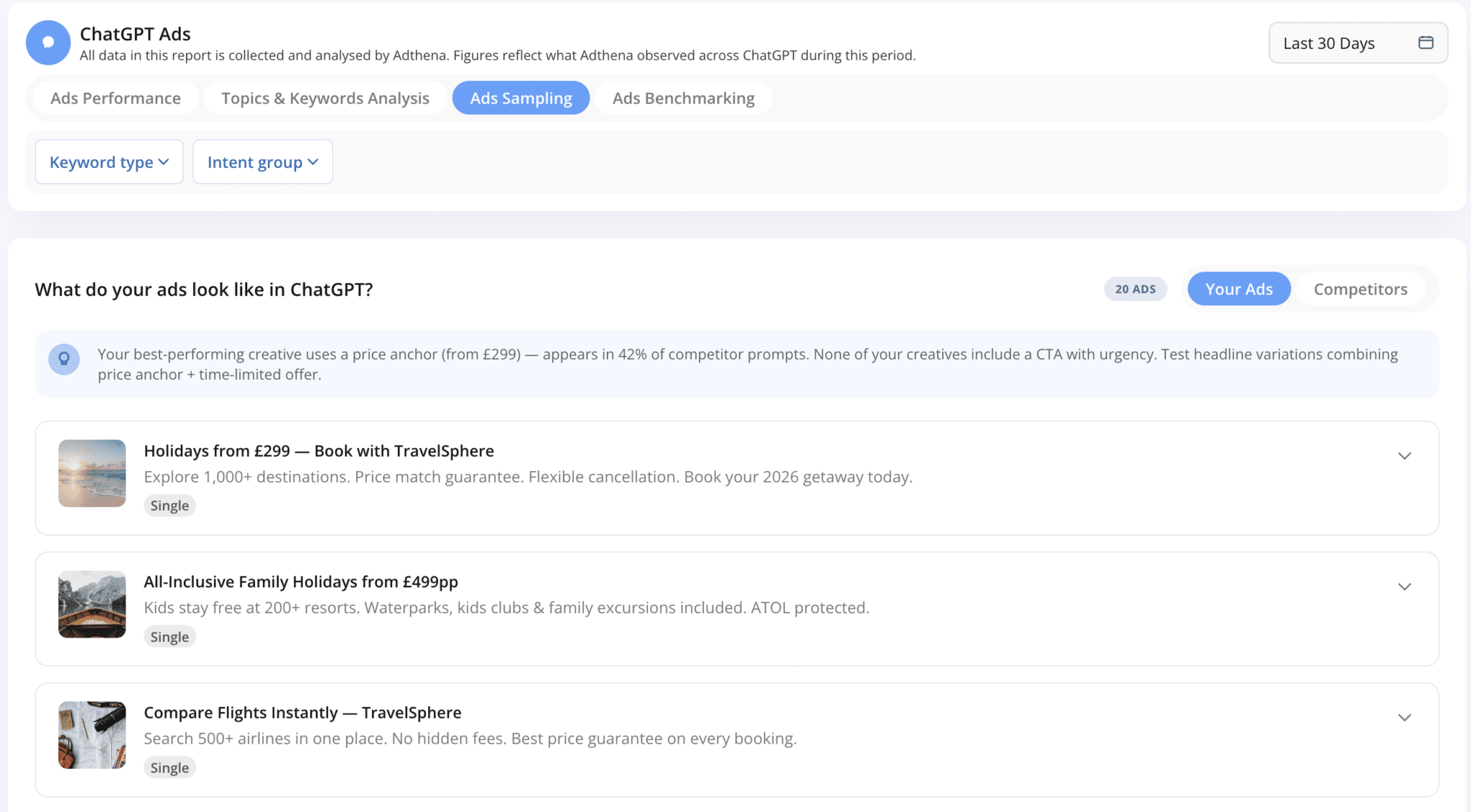
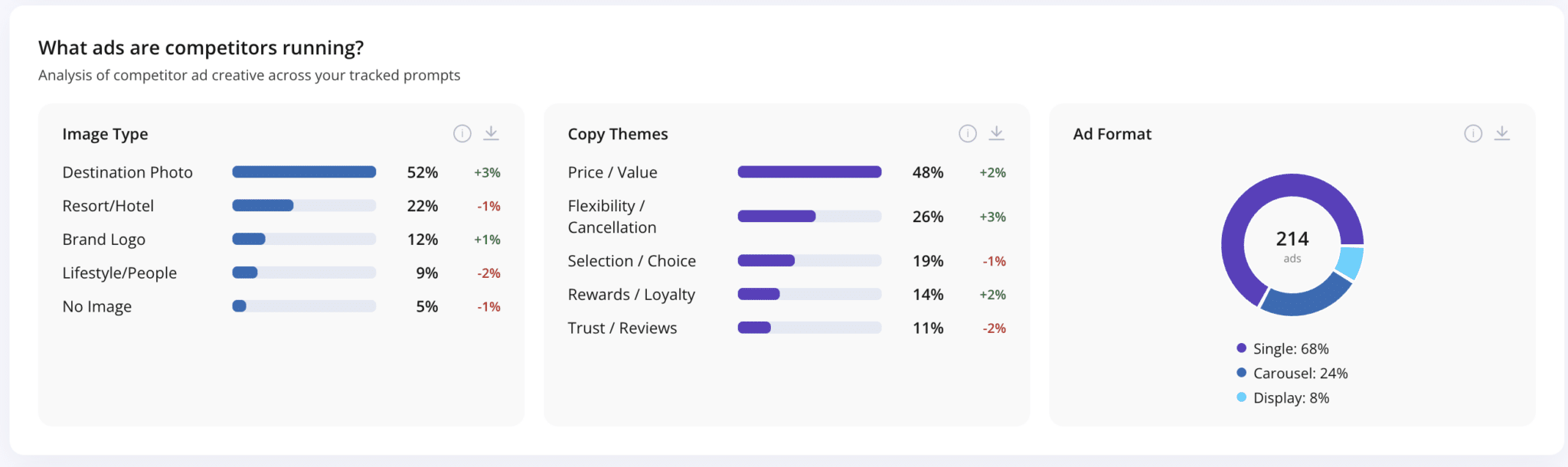
Understand competitor strategies through Competitor Creative Analysis, and never miss shifts in the competitive landscape using the Ads Benchmarking tab. This is how you find gaps before your competitors do.
As OpenAI expands, scaling up your ChatGPT presence can provide a head start in a rapidly changing competitive field. Don’t let competitors win the first prompt. Join Adthena’s waitlist or use their free ChatGPT AdBridge to optimize your campaigns and seize the opportunity now.
Inspired by this post on Search Engine Land.

Leave a Reply