Uncover the Impact of the DOM on SEO and Web Crawling

```json
{
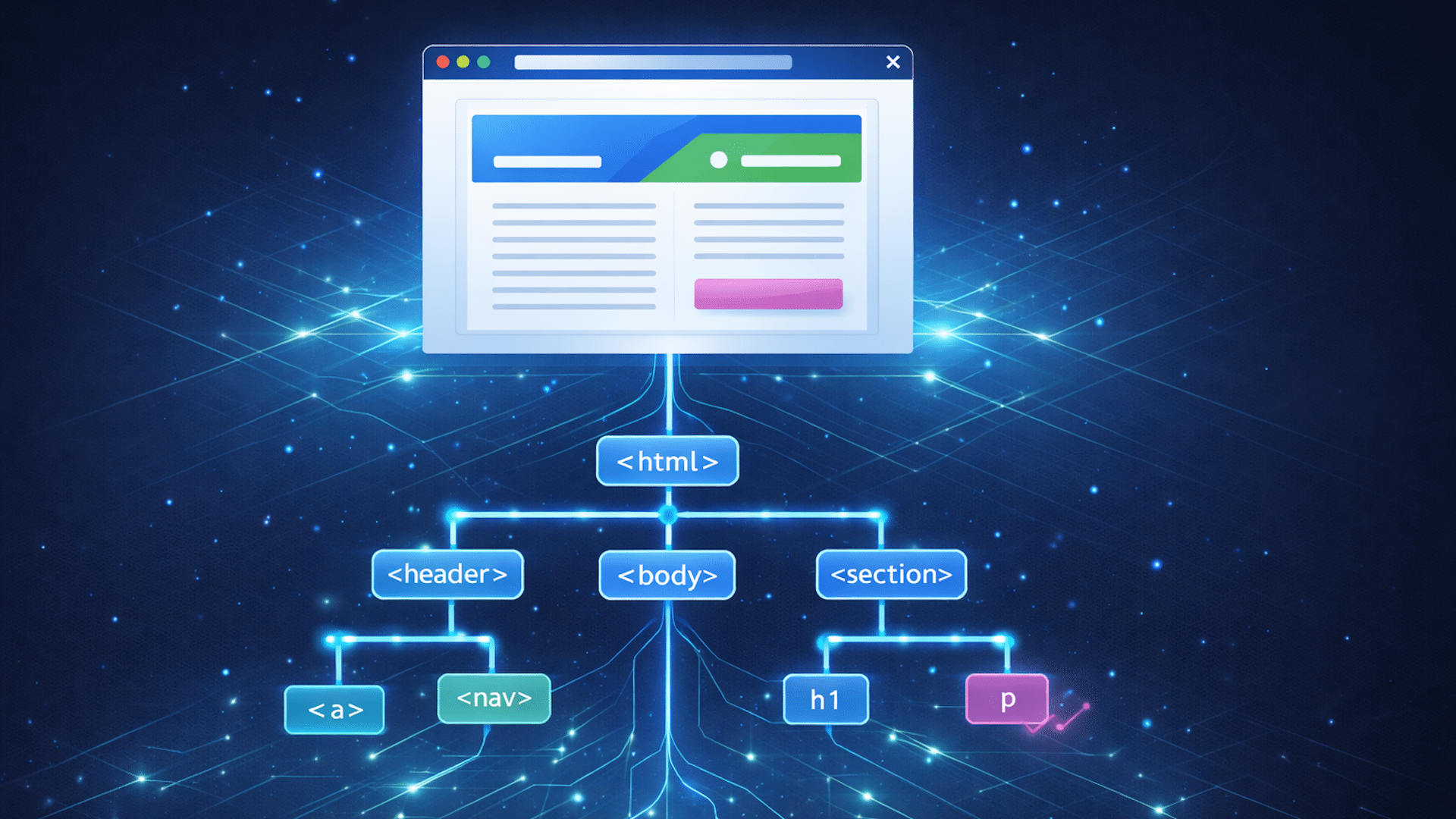
  "alt": "Diagram showing a webpage with elements like HTML, header, body, and section.",
  "caption": "Explore the anatomy of a webpage, visualized with HTML elements branching out like a digital neural network.",
  "description": "This image illustrates a conceptual diagram of a webpage layout, featuring a browser window at the top, followed by a hierarchical structure of HTML elements including tags like header, body, and section. Light lines represent connections between these elements, symbolizing the organization of a webpage. The background has a digital network design, enhancing the tech theme. Keywords: HTML, webpage structure, digital design, web development."
}
```

Have you ever wondered how the structure of your webpage affects its visibility on search engines? As someone who regularly dives deep into the technicalities of SEO, understanding the DOM (Document Object Model) is crucial for optimizing your site.

I’ve often encountered discussions about the DOM with developers, and maybe you’ve seen it referenced in tools like Google Search Console. But why does it matter so much for SEO? Let me walk you through its significance and how to optimize it.

In essence, the Document Object Model is the browser’s dynamic, in-memory representation of your webpage. It serves as a bridge that allows programs, notably JavaScript, to interact with your content.
```json
{
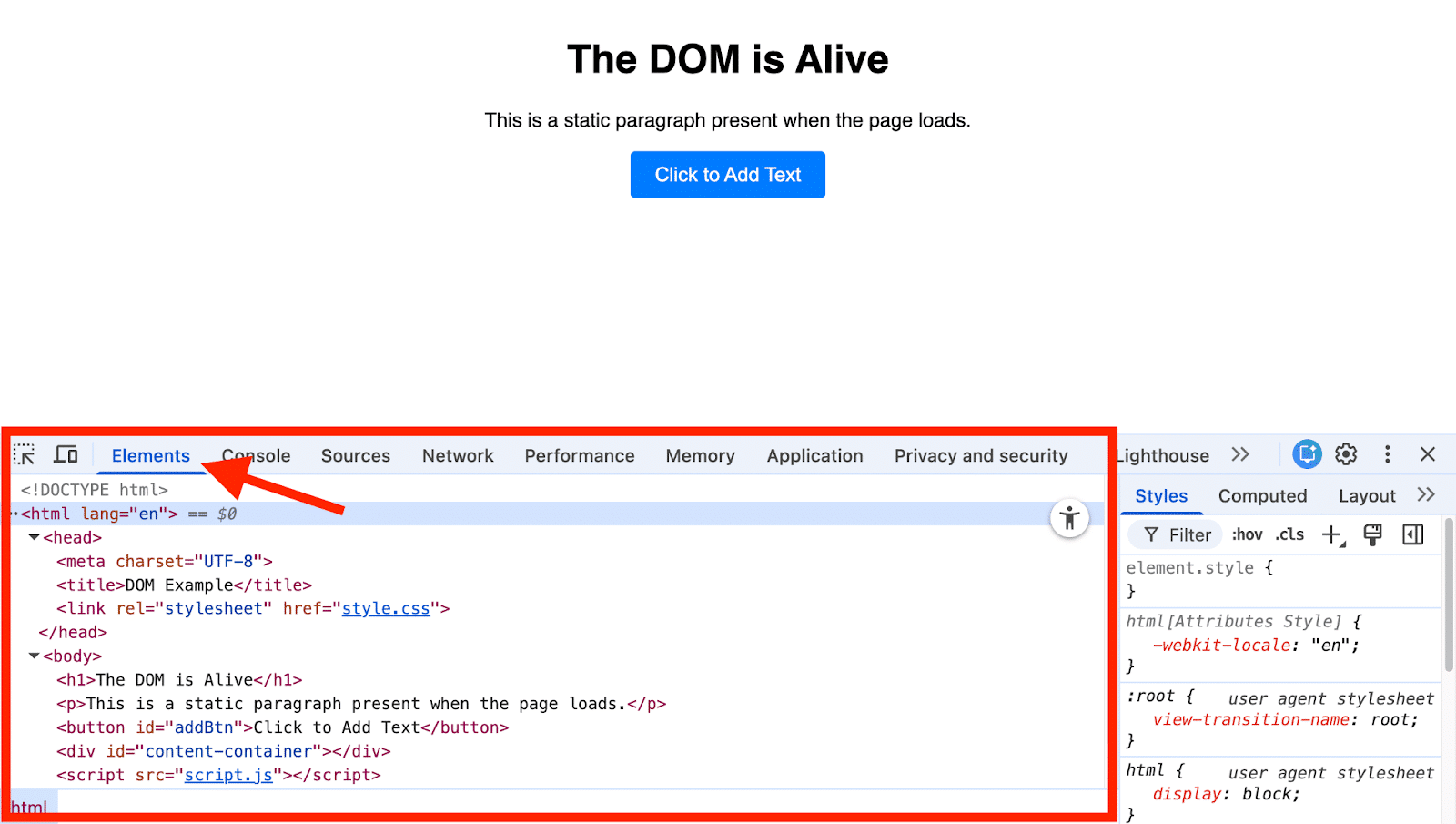
  "alt": "Screenshot showing HTML document structure in the browser's Developer Tools.",
  "caption": "Explore the living DOM! This browser Developer Tools snapshot reveals the dynamic structure of a webpage.",
  "description": "The image shows a browser page with Developer Tools open, highlighting HTML code structure. The page title reads 'The DOM is Alive' with a button 'Click to Add Text'. The Developer Tools display the HTML structure, including document type, head, and body elements. This visual is useful for web developers and those learning about the Document Object Model (DOM) and HTML coding."
}
```

The DOM is structured like a family tree:

The document: Acts as the root of this tree.

```json
{
  "alt": "The CapmatchOne logo with a gradient circle and bold text.",
  "caption": "Discover innovation with the CapmatchOne logo, featuring sleek typography and a modern gradient circle.",
  "description": "The CapmatchOne logo features bold, modern typography coupled with a gradient circle, symbolizing connection and innovation. The sleek design conveys a sense of progress and creativity. This image can be used for branding or promotional purposes, appealing to audiences interested in innovative solutions and forward-thinking designs."
}
```

Elements: HTML tags such as <body> and <p> transform into branches or nodes.

Relationships: There are parent-child-sibling relationships among elements.
```json
{
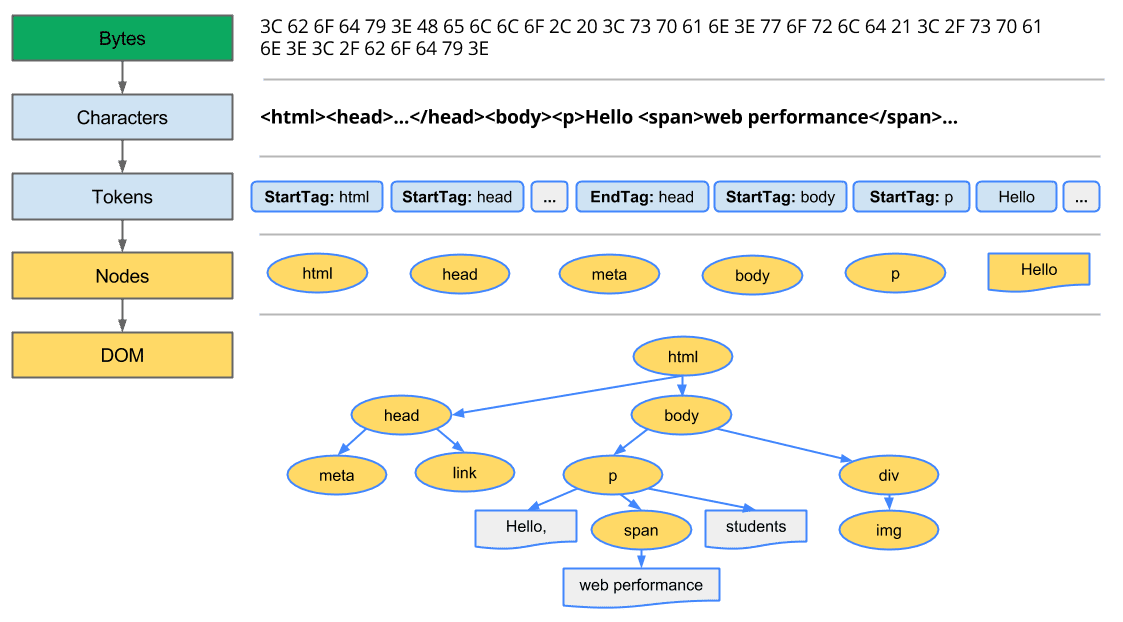
  "alt": "Diagram of web page rendering process from bytes to DOM structure.",
  "caption": "Explore the intricate process of transforming bytes into a fully structured DOM in web development.",
  "description": "This image illustrates the web page rendering process, detailing how a webpage transitions from raw bytes to a structured Document Object Model (DOM). It includes steps of parsing characters, generating tokens, and forming nodes, culminating in a visual DOM tree that displays HTML tags and their hierarchical relationships. Key elements such as 'html', 'head', 'body', and text nodes are depicted. This educational diagram is invaluable for understanding web performance and optimization."
}
```

This hierarchy is key for the browser and search engines in understanding your content’s structure, helping them discern, for instance, which paragraph is associated with a given heading.

The exploration of the DOM doesn’t end there. Let’s look at how you can inspect it directly.
```json
{
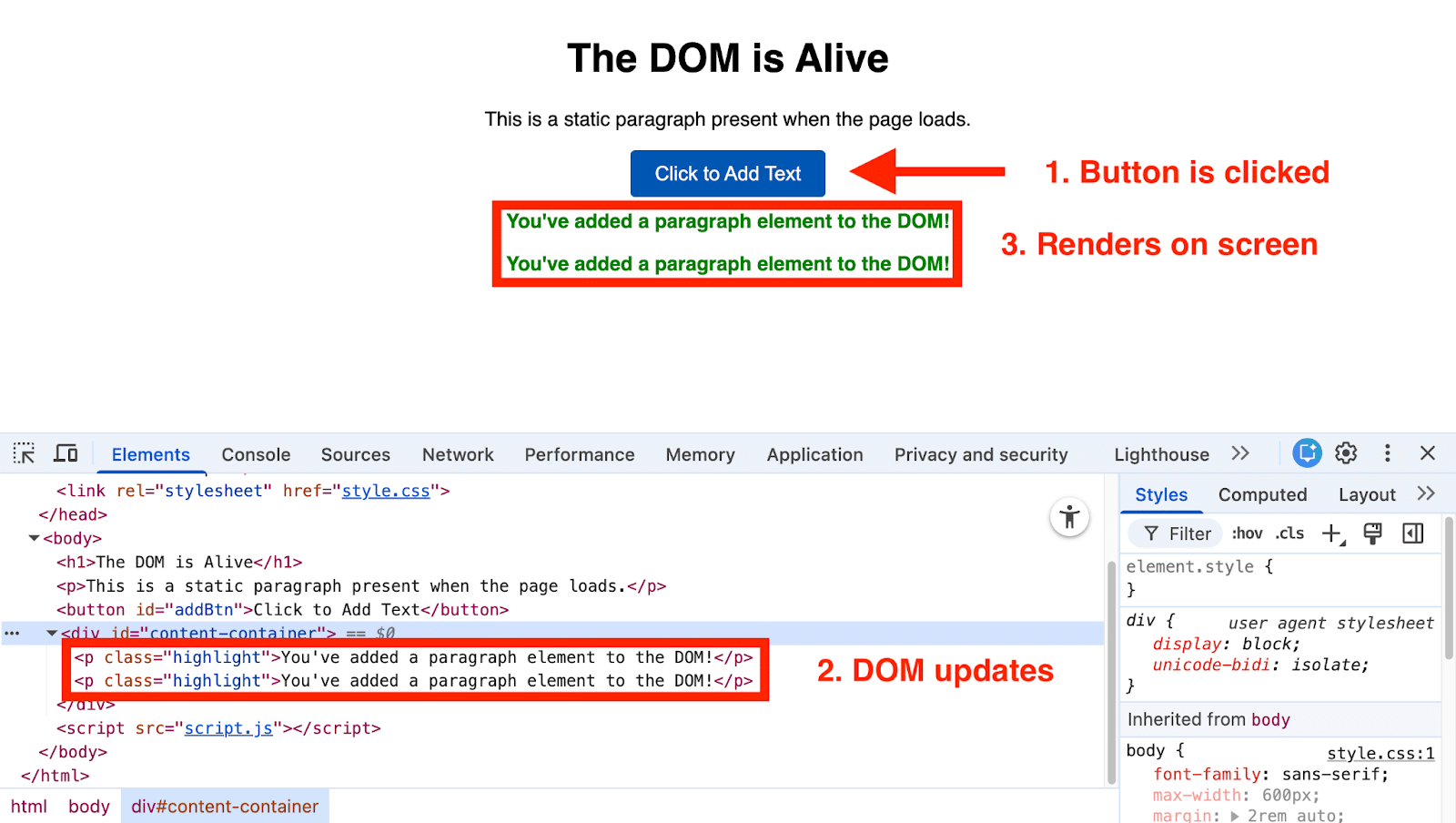
  "alt": "Webpage showing dynamic DOM update where a button click adds paragraphs to the page.",
  "caption": "Witness the dynamic power of the DOM! With just a button click, new content seamlessly appears, illustrating interactive web elements.",
  "description": "This image demonstrates a dynamic change to the Document Object Model (DOM) on a webpage. A button labeled 'Click to Add Text' is clicked, resulting in new paragraph elements appearing on the page. The browser's developer tools window displays the HTML structure, showing the added paragraphs within a highlighted red box. The process exemplifies real-time updates and user interactions in web development, highlighting concepts such as DOM manipulation and JavaScript interactivity. Useful keywords include DOM, web development, JavaScript, and dynamic content."
}
```

The DOM, a JavaScript object, can be viewed in a format akin to HTML using browser DevTools—just right-click on your page, select Inspect > Elements, and you’ll see the Elements panel.

In this panel, it’s easy to dive into the structure by:
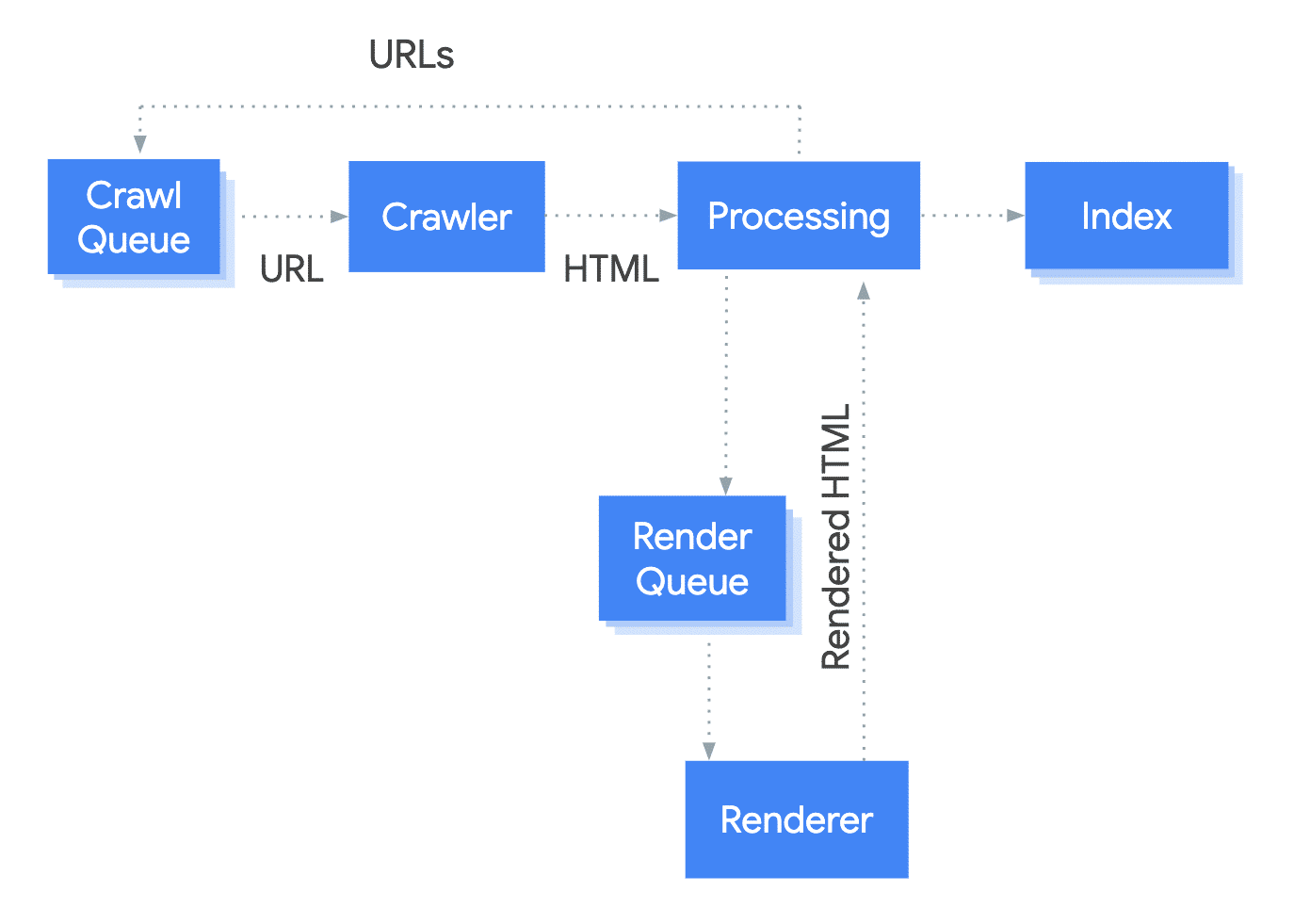
```json
{
  "alt": "Flowchart illustrating web crawling process from crawl queue to index and rendering.",
  "caption": "A visual guide to web crawling and indexing, showing the journey from URLs to rendered HTML.",
  "description": "The image presents a flowchart of the web crawling process. It starts at the 'Crawl Queue,' moves through 'Crawler,' 'Processing,' and ends at 'Index.' There’s a side process involving 'Render Queue' and 'Renderer,' culminating in 'Rendered HTML.' This illustrates the sequence and relation between different stages in page indexing and rendering."
}
```

Expanding and collapsing nodes to explore hierarchy,

Searching for elements using Ctrl+F (Cmd+F on Mac), and
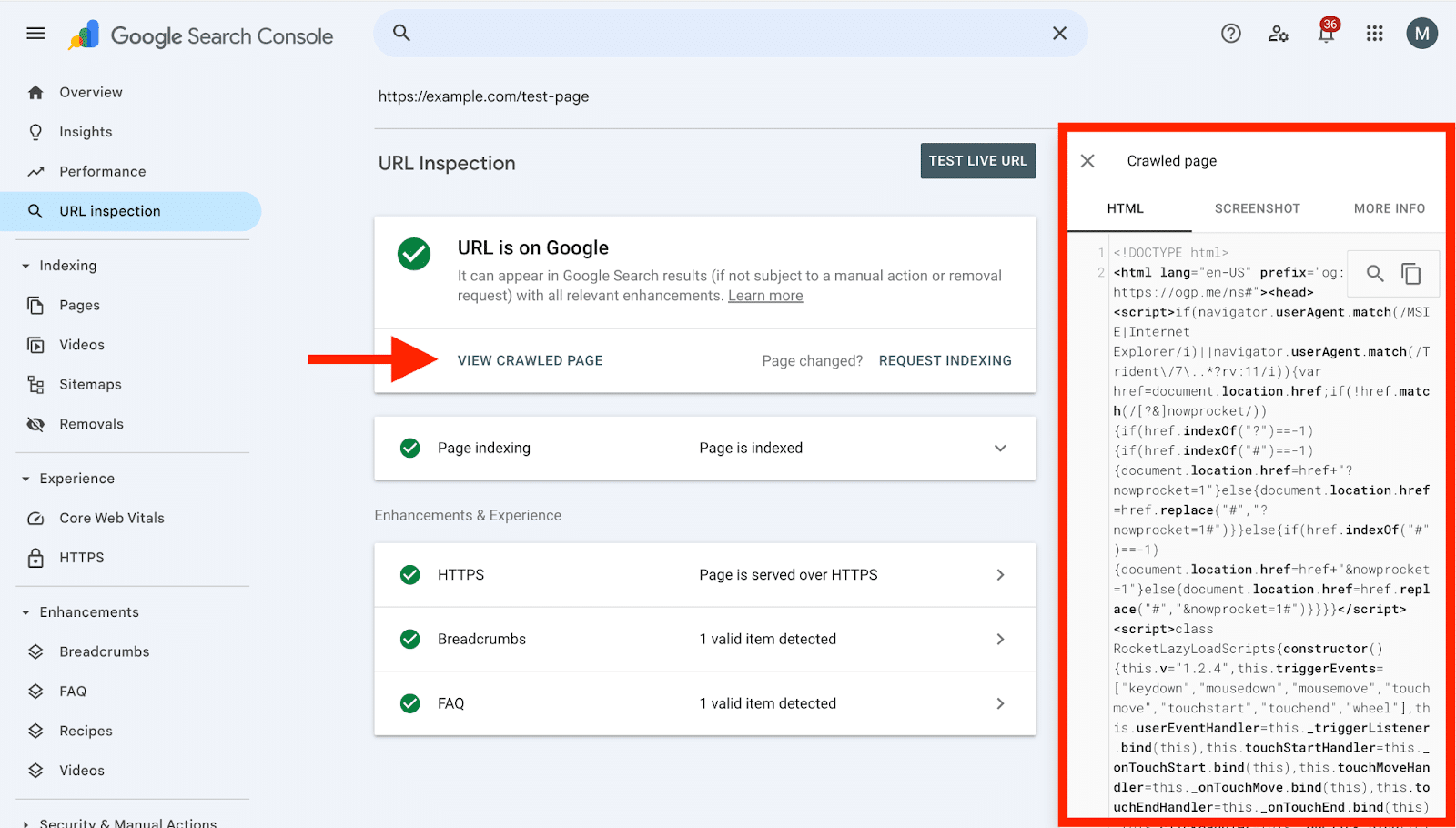
```json
{
  "alt": "Google Search Console URL Inspection tool displaying example.com test-page details.",
  "caption": "Google Search Console confirms example.com/test-page is indexed and visible in search results, showcasing effective SEO health.",
  "description": "This image shows the Google Search Console URL Inspection tool analyzing 'https://example.com/test-page'. The page is indexed and available on Google, with enhancements like HTTPS and breadcrumbs. The right panel displays HTML code from the crawled page. The console interface shows options for page indexing and enhancements, essential for tracking website SEO performance."
}
```

Identifying JavaScript-added or -modified elements as they flash briefly on change.

However, do remember that this tool sometimes shows a different view from what Googlebot crawls. I’ll delve into this discrepancy a bit later.
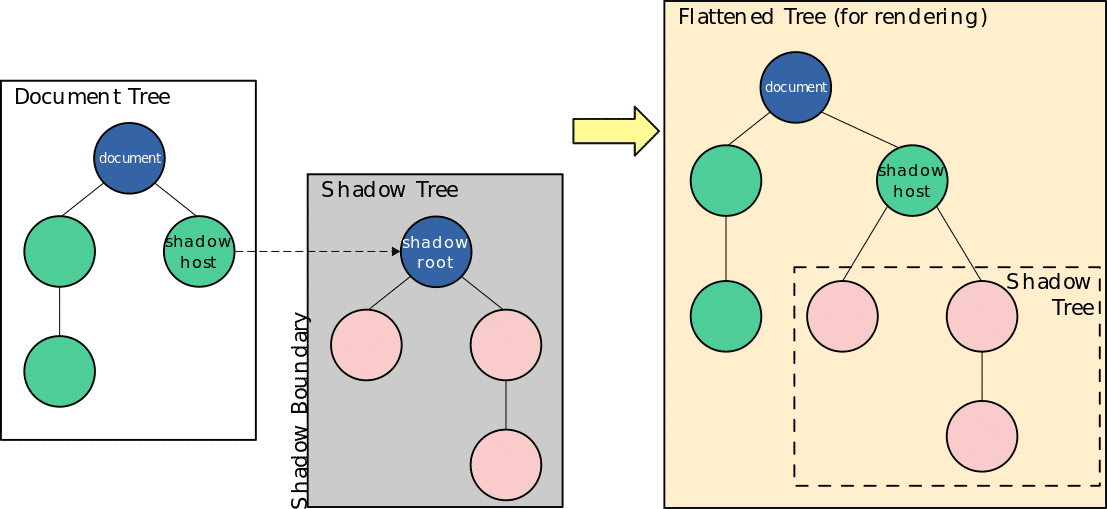
```json
{
  "alt": "Diagram showing the relationship between a Document Tree, Shadow Tree, and Flattened Tree.",
  "caption": "Exploring HTML Structures: This diagram illustrates the integration of a Shadow Tree into a Document Tree, forming a Flattened Tree for rendering.",
  "description": "This image presents a visual representation of how an HTML Document Tree interacts with a Shadow Tree to create a Flattened Tree for rendering purposes. The Document Tree includes a 'document' node leading to a 'shadow host'. The Shadow Tree branches off from the 'shadow host' and contains a 'shadow root' with two child nodes. The Flattened Tree diagram illustrates how these components combine, using a dashed box to indicate the embedded Shadow Tree structure. This visualization aids in understanding web component architecture and rendering processes."
}
```

Next, understanding how the DOM is built is essential. It starts with the browser converting the HTML file retrieved from a server line-by-line into tokens, which are then turned into nodes forming a tree structure.

This tree-building process allows browsers to create a hierarchical structure necessary for rendering the web page you see, which also includes building a CSS Object Model (CSSOM), but this is less crucial for SEO than the DOM.
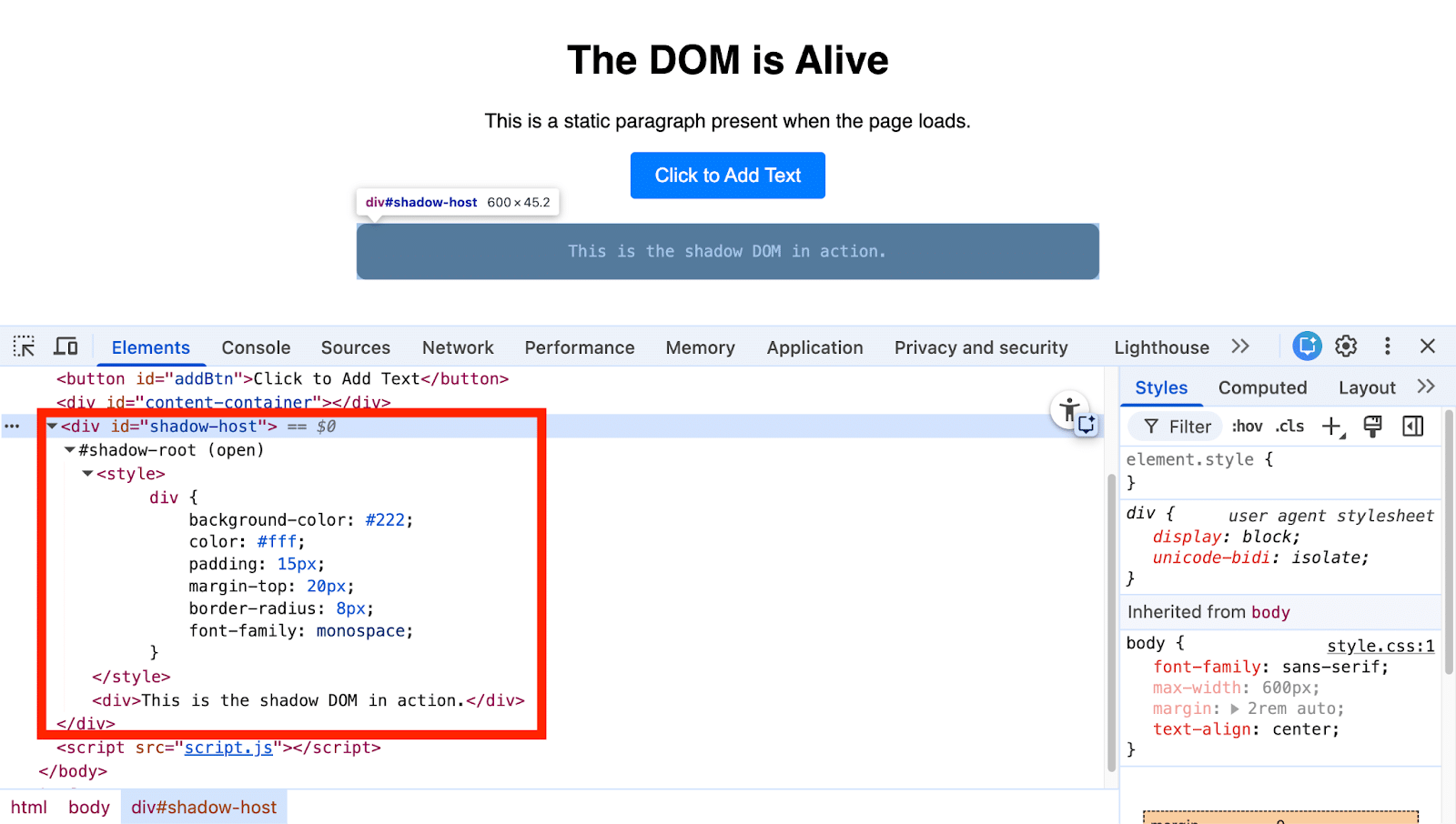
```json
{
  "alt": "Screenshot showing the DOM inspector with shadow DOM elements highlighted.",
  "caption": "Exploring the shadow DOM: A screenshot reveals how elements are isolated within the shadow tree using developer tools.",
  "description": "This image is a screenshot of a browser's developer tools, showcasing the Document Object Model (DOM) inspector with an emphasis on shadow DOM elements. Highlighted in red, the image shows the HTML structure with styling applied inside a shadow root. The display includes elements such as buttons, divs, and scripts, offering a visual guide to shadow DOM implementation and CSS styling. Key terms include DOM, shadow DOM, web development, and CSS."
}
```

JavaScript often runs during this DOM construction. On encountering a <script> tag without async or defer attributes, the browser pauses to execute the script before continuing. These scripts might modify the DOM by adding content or changing links, differing from the initial HTML code.

Let me illustrate this: Each click on a button dynamically adds a paragraph to the DOM, changing the page’s visible content.
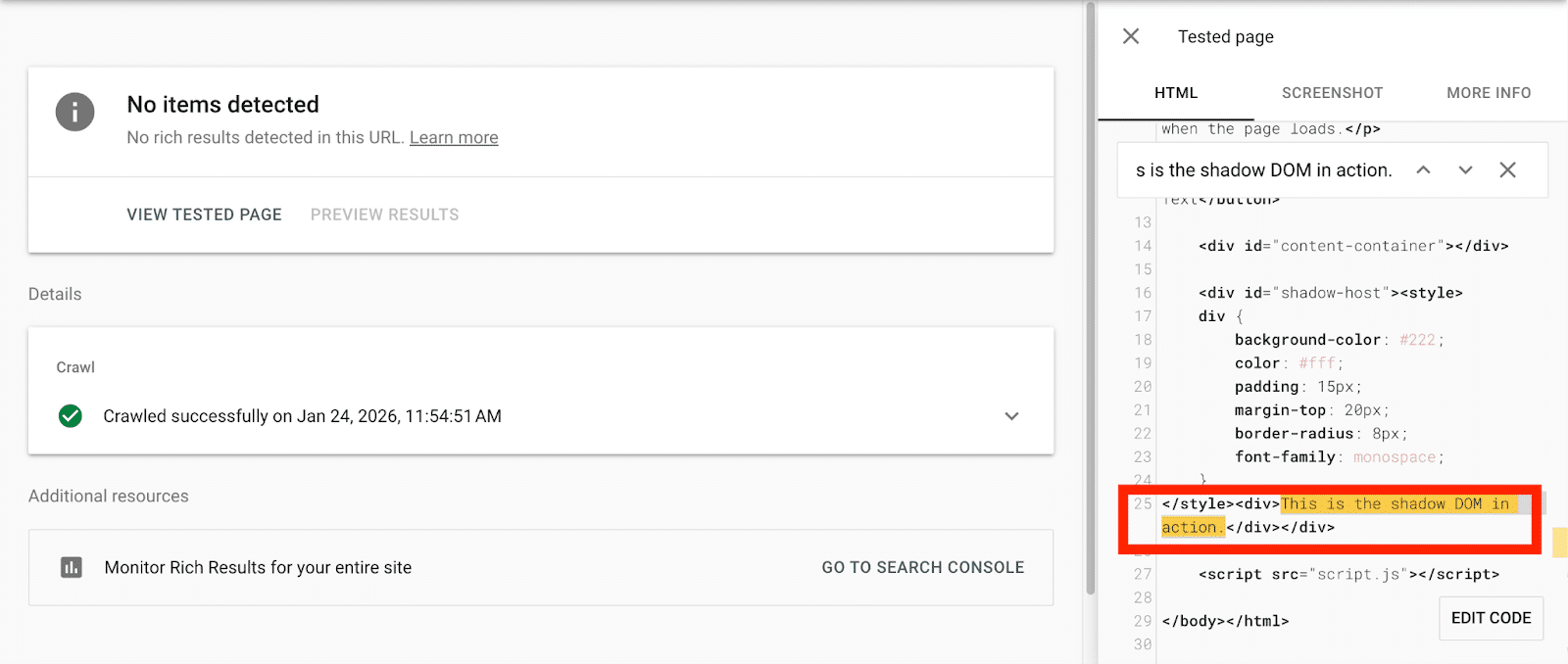
```json
{
  "alt": "Google Search Console report showing no rich results detected and HTML code with shadow DOM highlighted.",
  "caption": "A Google Search Console report reveals the absence of rich results, alongside highlighted shadow DOM code.",
  "description": "This image displays a Google Search Console report indicating 'No items detected' for rich results. The HTML code on the right highlights the shadow DOM section, showcasing a 'This is the shadow DOM in action.' message. The crawl was completed successfully on Jan 24, 2026. Keywords: Google Search Console, rich results, shadow DOM, HTML code, web development."
}
```

The original HTML is just a starting blueprint; the final constructed DOM is what the browser utilizes. It can dynamically change based on JavaScript operations.

Why does the DOM matter for SEO? Modern search engines like Google render pages using headless browsers (Chromium). They evaluate the DOM, not just the initial HTML response.
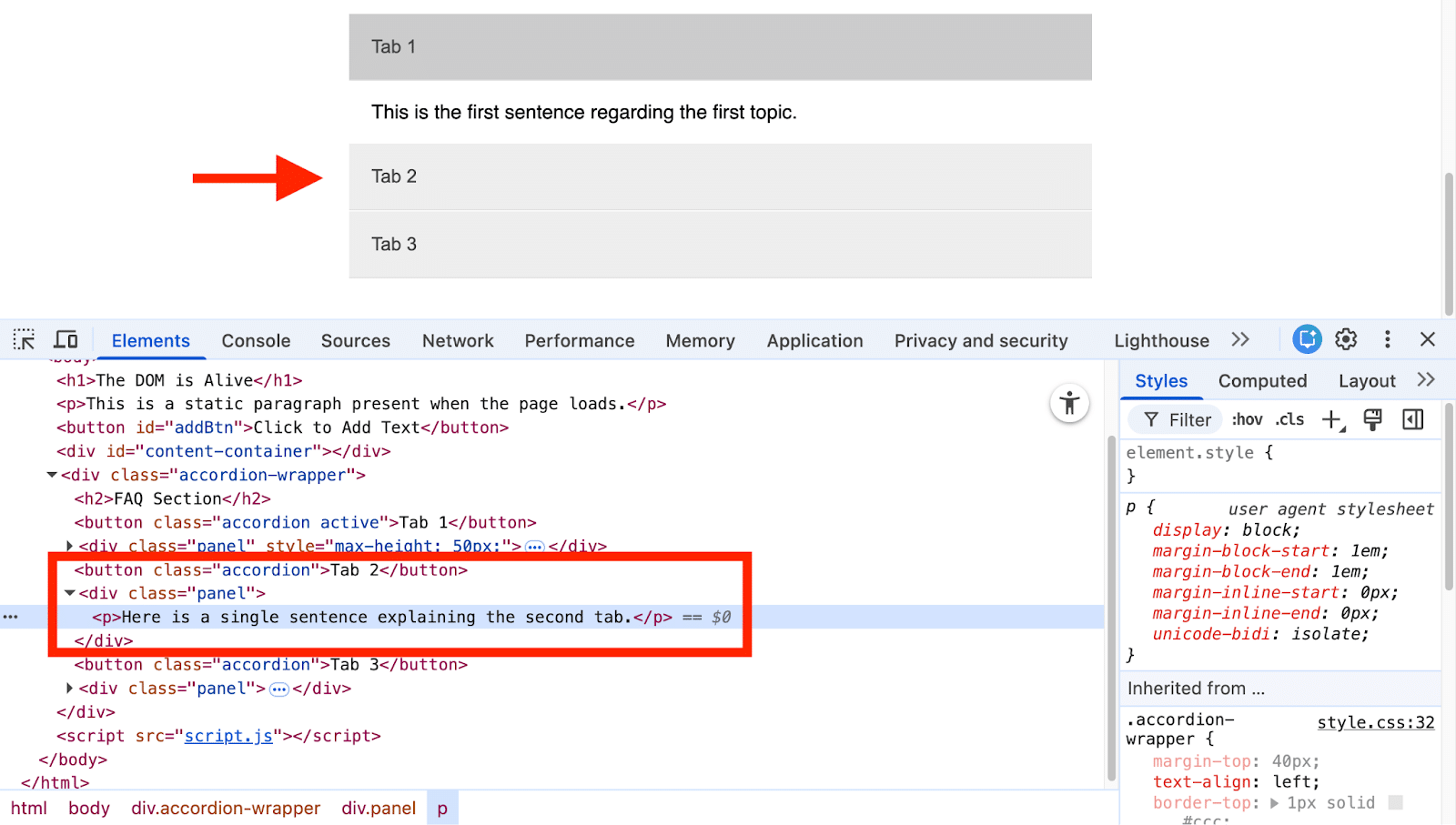
```json
{
  "alt": "Web development interface showing HTML and CSS code for an accordion tab.",
  "caption": "Dive into the code! This web development screenshot showcases an accordion menu with tabs and a focus on 'Tab 2'.",
  "description": "This image displays a web development interface with HTML and CSS code for an accordion menu. In the screenshot, an orange arrow points to 'Tab 2', highlighting its content within the HTML code. The browser's developer tools are open, with the 'Elements' and 'Styles' panels visible, providing insight into the code's structure and styling. Keywords: HTML, CSS, accordion, web development, code inspection."
}
```

Googlebot’s crawl process includes parsing HTML, executing JavaScript, and taking a DOM snapshot for indexing. However, remember:

Googlebot doesn’t interact with pages like humans—content triggered by user actions might go unnoticed.

```json
{
  "alt": "HTML snippet showing a paragraph with a hyperlink and an arrow pointing to it.",
  "caption": "Discover how a simple HTML structure with a hyperlink can enhance webpage interactivity. Dive into code and learn more with just one click!",
  "description": "This image displays an HTML code snippet featuring a paragraph element with static text and an embedded hyperlink labeled 'Learn more' linking to 'https://example.com'. A red arrow points towards the hyperlink, emphasizing its clickable feature. The image highlights basic webpage structure elements, contributing to understanding HTML interactivity. Keywords: HTML, hyperlink, web development, code snippet."
}
```

Other crawlers might not render JavaScript, missing out on JavaScript-dependent content.

With AI agents harnessing DOM data for task execution, a well-structured and accessible DOM becomes ever more crucial.

Verifying what Google sees via Google Search Console’s URL inspection tool reveals the rendered HTML version indexed by Google, showcasing any issues.

Using this tool can alert you to discrepancies in what Google indexes versus what you expect, impacting your SEO efforts if overlooked.

For instances without console access, you can resort to Google’s Rich Results Test for similar page insights.

To ensure your webpages are crawled and indexed well, here are some best practices:

Make sure significant content loads in the DOM by default—Googlebot doesn’t interact beyond initial page loads.

Use proper <a> tags to ensure links are crawlable, avoiding JavaScript-based navigation that search engines don’t execute.

Maintain a clear semantic HTML structure. Search engines rely on tags like <header>, <article>, and <section> to understand content organization, unlike ambiguous <div> nesting.

Keep your DOM lean—under about 1,500 nodes—to avoid performance lags and enhance user experience.

In a digital landscape increasingly reliant on AI interactions and advanced crawling methods, understanding and optimizing the DOM is key to maintaining your site’s SEO competitiveness.


Inspired by this post on Search Engine Land.


crushpress.ai community screenshot

FAQs

What is the DOM in web development?

The DOM, or Document Object Model, is the browser’s dynamic, in-memory representation of a webpage. It lets programs, especially JavaScript, interact with and change page content.

Why does the DOM matter for SEO?

Search engines use the DOM to understand a page’s rendered structure and content, not only the original HTML response. A clear DOM helps crawlers connect headings, paragraphs, links, and sections correctly.

How does JavaScript affect what search engines crawl?

JavaScript can add, remove, or modify DOM elements after the initial HTML loads. Googlebot can render JavaScript, but content that depends on user actions may be missed, and some crawlers may not render JavaScript at all.

How can I inspect the DOM of a webpage?

Use browser DevTools by right-clicking the page and choosing Inspect, then opening the Elements panel. From there you can expand nodes, search with Ctrl+F or Cmd+F, and watch JavaScript-added elements change.

How can Google Search Console help with DOM and rendering issues?

Google Search Console’s URL Inspection tool can show the rendered HTML version Google indexed. This helps reveal discrepancies between what you expect users or crawlers to see and what Google actually sees.

What DOM optimization practices support crawling and indexing?

Make important content load in the DOM by default, use proper anchor tags for crawlable links, and keep semantic HTML structure with elements such as header, article, and section. The article also recommends keeping the DOM lean, around under 1,500 nodes, to reduce performance issues.

Comments

Leave a Reply

Your email address will not be published. Required fields are marked *