
I’ve been observing how AI is transforming search, yet the timeless principles of SEO still seem to bring in the majority of traffic. It’s fascinating to look at data that show which strategies really work.
Generative AI is a huge trend right now. It’s featured in every conference and is all over my LinkedIn. Businesses, mine included, are rethinking organic search.
We’re all in a race to optimize for AI Overviews, work on vector embeddings, and reconfigure content models around LLMs. But what’s less talked about is the simple truth: AI isn’t yet the primary driver of web traffic for most of us.
While AI-driven search is gaining momentum, the LLM platforms collectively account for just a tiny fraction, about 2-3%, of the organic traffic that Google alone provides.

However, I’ve noticed that many teams, maybe even yours, are investing more energy in AI strategies instead of reinforcing essential SEO fundamentals that still deliver tangible results. Focusing too much on the future means we’re not making the most of today’s opportunities.
In my experience, looking closely at proven SEO tactics and real-world data can highlight how they still effectively move the needle today.
Quick SEO Wins Still Deliver Substantial Gains
It’s easy to overlook minor updates when we’re caught up with trends like vector embeddings and semantic SEO. Yet, these small changes can have a significant impact.
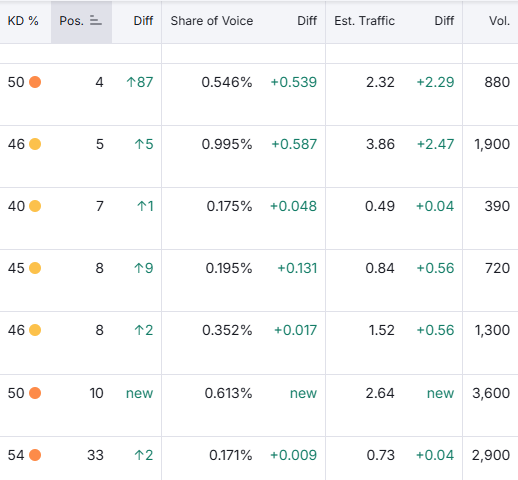
Take title tags, for instance. They’re among the simplest and most effective SEO tools. I’ve seen many websites fail to use them effectively, often neglecting to target the right keywords, include key variations, or use any keywords at all.
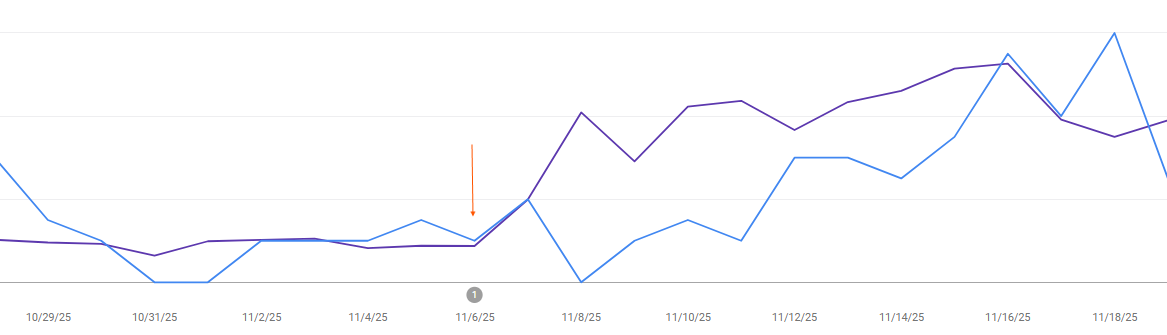
Just recently, a simple change of adding “& [keyword]” to a client’s homepage title tag resulted in a surge in keyword rankings, clicks, and impressions. No other changes were made, yet the results were significant.
Combining this with other strategies like on-page copy edits, internal linking, and backlinks can lead to ongoing growth. It might sound basic, but these tactics continue to work wonders. Don’t let advanced GEO strategies blind you to simple, impactful tactics.
The Importance of Content Freshness and Authority
The rise of AI might have pushed some tactics like the skyscraper technique into the shadows.
This approach involves crafting superior content for keywords and topics that are already ranking, aiming to outperform existing results. While the internet is flooded with similar content, focusing on keyword authority and freshness can be incredibly effective.
I’ve witnessed this success multiple times. Recently, a client’s article on a well-established topic quickly climbed to the second spot, generating new clicks and impressions almost instantly.
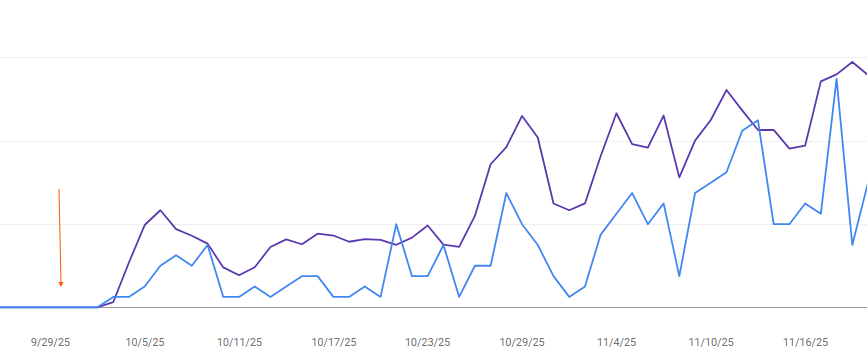
The success was due to the site’s strong authority and because much of the competing content was outdated. Although this strategy may not suit every situation, ignoring it could mean missing out on clear wins.
User Experience: A Key Conversion Lever
Although there’s buzz around AI-driven shopping experiences, the core principles of website optimization remain irreplaceable. Some argue that AI will soon take over interactions and conversions, but this is far from the present reality.
Many websites still rely on traditional search-driven traffic and website-based conversions. Whether visitors come from organic search, paid ads, AI referrals, or direct, what matters is a fast site, an excellent user experience, and a well-defined conversion funnel.

Optimizing these aspects can lead to remarkable performance gains, as I’ve seen through a simple CTR test with a client, which yielded impressive results.
Brands prioritizing user experience and conversion rate optimization will continue to outperform those who don’t. This competitive advantage will only grow if teams delay waiting for AI to perfect conversion mechanisms.
AI’s Role in Search and the Power of Existing Strategies
AI is indeed reshaping search by altering user behavior, influencing SERP appearances, and complicating attribution. Yet, the real risk lies in overreacting to AI at the expense of proven strategies.
For most sites, traditional organic search continues to be the primary traffic source. When well-executed, SEO fundamentals still deliver results. Quick wins and high-quality content are rewarded, and optimizing user experience remains critical.
These efforts support each other, improving organic visibility and complementing paid search and LLM visibility. Staying updated on AI developments is vital but not at the cost of current growth-driving strategies.
Inspired by this post on Search Engine Land.

Leave a Reply