Last Updated: December 22, 2025
Back in June 2025, I noticed an interesting infographic circulating widely. It highlighted the most-cited websites by AI models, according to a comprehensive SEMrush study of over 150,000 citations. Naturally, seeing Reddit at the top sparked a buzz among marketers, who began to believe that featuring on Reddit was key to their GEO strategy.
But, here’s the catch: most of these citations were research-oriented, not necessarily geared towards buying intents. For instance, Reddit was frequently mentioned in queries like “Where in Europe should I take a family vacation?” but not so much in “What are the best web design firms?”
This led to some misguided assumptions. Although Reddit does play a role in AI models like ChatGPT, Perplexity, and Gemini, it represents only about 11% of their commercial recommendation algorithms. So, placing too much emphasis on Reddit won’t really boost your product or service visibility in these AI models.
The Most Cited Websites by AI Models for Buying-Intent Queries
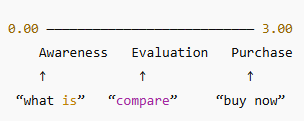
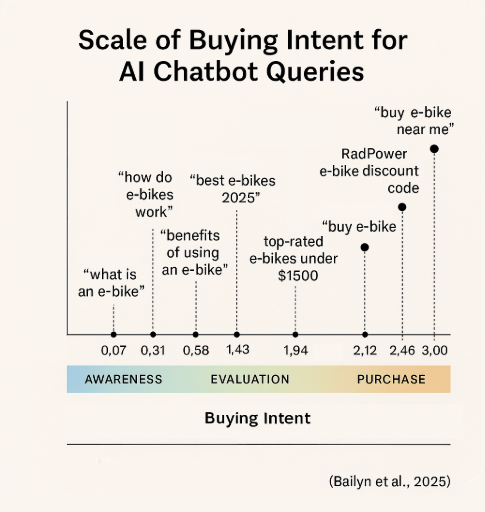
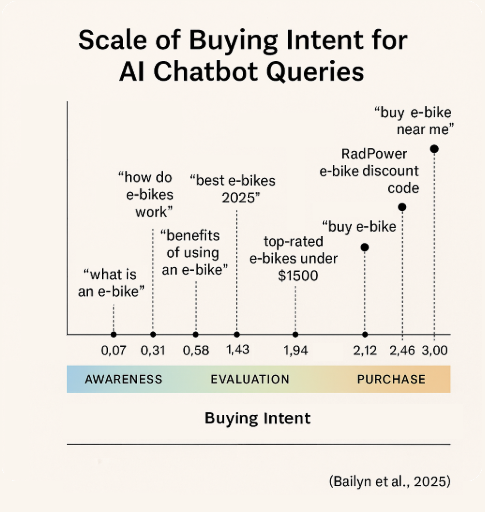
Our research team dug deeper into this in October 2025 and later updated it in December 2025. We conducted 36,127 buying-intent queries on ChatGPT and tallied the top-cited websites. Our “buying-intent query” was defined on a scale measuring how close a query was to a purchase decision. A simplified version of this scale is captured in the infographic below:
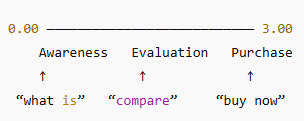
A query scoring higher than 1.35 was marked as “buying-intent.”
Top Website Types Cited by AI Models for Buying-Intent Queries
We meticulously categorized the types of websites AI models prefer for such queries. Understanding the types helped us unravel which channels are more effective at GEO—essential in influencing AI chatbots to nominate certain companies.
Top Website Types Cited by AI Models for Buying-Intent Queries
| # | Website Type | Description | # of Citations |
| 1 | Product Recommendation Media | “Best of” and “Top 10” review sites largely monetized via affiliate links (e.g., Wirecutter, Tom’s Guide, TechRadar). | 7,642 |
| 2 | Consumer Review Platforms | User-generated review aggregators like Trustpilot, BBB, and Google Reviews. | 5,983 |
| 3 | Traditional Media | Established publishers including product roundups or consumer coverage (Forbes, NYT, Wired). | 4,581 |
| 4 | New Media | Digital-native outlets that frequently review or endorse products (TechCrunch, The Verge). | 3,826 |
| 5 | YouTube / Video Review Channels | Video-based reviews and product comparisons often transcribed or summarized by AI models. | 3,211 |
| 6 | Directory Sites | Structured provider listings (Yelp, TripAdvisor, Angi). | 2,639 |
| 7 | Commercial / Brand Sites | Official manufacturer or retailer sites promoting their products. | 2,208 |
| 8 | Marketplace Directories (B2B) | Listings and SaaS marketplaces such as G2, Clutch, UpCity. | 1,762 |
| 9 | eCommerce Marketplaces | Direct retail and product pages from major sellers like Amazon, Walmart, and Best Buy. | 1,413 |
| 10 | Corporate Blogs / Thought Leadership | Brand-run content hubs (HubSpot Blog, Salesforce Newsroom, Adobe Blog). | 1,109 |
| 11 | Influencer / Creator Sites | Independent blogs or Substacks with personal authority and genuine reviews. | 928 |
| 12 | Forum Communities | Public discussion boards like Reddit, Quora, and StackExchange. | 674 |
| 13 | Deal & Coupon Sites | Discount and promotion aggregators (Honey, RetailMeNot, Slickdeals). | 505 |
| 14 | Niche Publications / Enthusiast Media | Specialized media focused on one domain (Outdoor Gear Lab, PC Gamer). | 393 |
| 15 | Local Listings / Maps Data | Google Maps, Apple Maps, and other local data sources. | 318 |
| 16 | Reference Sites | General-purpose informational references (Wikipedia, Investopedia). | 265 |
| 17 | Social Platforms | Citations to public posts from LinkedIn, X (Twitter), or Facebook Groups. | 224 |
| 18 | Academic / Research Sources | Scholarly content (Google Scholar, PubMed, arXiv). | 193 |
| 19 | Government / Institutional Sites | Regulatory or authoritative institutional content (FDA.gov, FTC.gov). | 159 |
| 20 | Standards & Certification Bodies | Official verification or compliance organizations (UL, ISO, Energy Star). | 119 |
The major takeaway from parsing this data? Websites offering list-based product recommendations feature heavily in AI rankings. Being listed on these commercial publications can greatly enhance a product’s visibility in AI recommendations like ChatGPT, Perplexity, and others.
Industry Breakdown: Websites Most Cited by AI Models for Buying-Intent Queries
Next, our analysis focused on the top three websites each industry traditionally relies on. This provided a glimpse into which platforms AI models commonly heed within specific verticals, giving GEO marketers a decisive edge in targeting their media placement efforts.
Top Websites Cited by AI Models in Buying-Intent Queries, by Industry
| Industry | Top-Cited Websites by AI for Buying-Intent Queries |
| eCommerce | Wirecutter, Forbes, Tom’s Guide |
| Managed Services | Clutch, G2, UpCity |
| Healthcare | Forbes Health, Verywell Health, Medical News Today |
| Manufacturing | Thomasnet, IndustryWeek, Engineering360 (GlobalSpec) |
| Financial Services | NerdWallet, Investopedia, Forbes Advisor |
| Cybersecurity | Cybersecurity Insiders, Gartner Peer Insights, TechRadar |
| Real Estate | Zillow, Realtor.com, Redfin |
| Pharmaceutical | Drugs.com, FDA.gov, PubMed |
| SaaS | G2, DesignRush, Clutch |
| Construction | Engineering News-Record, Construction Dive, HomeAdvisor |
| Home Services | Angi (Angie’s List), Thumbtack, HomeAdvisor |
| Automotive | Car and Driver, Kelley Blue Book, Edmunds |
| Marketing Services | Clutch, HubSpot Blog, First Page Sage |
| Higher Education | US News Education, Higher Education Marketing Institute, Niche.com |
| Industrial | Thomasnet, Engineering360 (GlobalSpec), IndustryWeek |
| Hospitality | TripAdvisor, Booking.com, Yelp |
| Software Development | Clutch, G2, First Page Sage |
A key insight here is the fragmented nature of website citations. Trade journals contributed more than the top three sites in any category. As with website types, the predominance of review sites and product recommendation platforms was notable.
Questions, Media Inquiries, or Other Requests
Curious about our study? Have a media request, or want a PDF copy? Reach out to us here.
Inspired by this post on First Page Sage Blog.

Leave a Reply