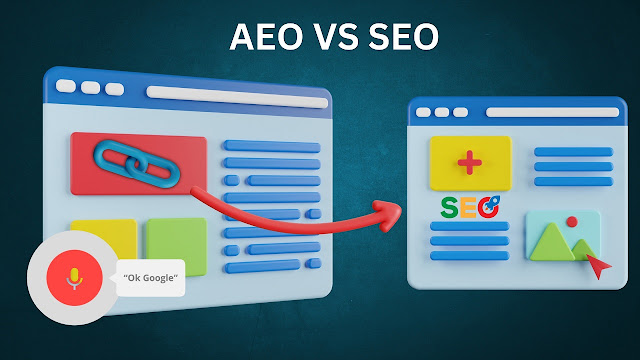
In today’s fast-paced digital marketing landscape, I’ve noticed two terms gaining traction: SEO (Search Engine Optimization) and AEO (Answer Engine Optimization). While SEO has been a foundational element of online visibility, AEO is becoming essential due to shifts in user behavior and advancements in search technology. Understanding these strategies is vital for staying ahead in 2025 and beyond.
What is SEO?
SEO involves enhancing a website to rank higher on search engine results pages (SERPs) for platforms like Google, Bing, or Yahoo. The aim is to boost organic traffic by aligning content with search engine algorithms, focusing on keywords, backlinks, site speed, mobile-friendliness, and user experience. For instance, if I want my blog post on “best running shoes” visible on Google’s first page, I optimize with relevant keywords, meta tags, and high-quality content.
Even though SEO has been effective for years by catering to users seeking information, the rise of conversational queries with AI tools like ChatGPT, Grok, and voice assistants means SEO alone might not be enough.
What is AEO?
AEO, or Answer Engine Optimization, involves optimizing content to directly answer user questions, particularly for AI-driven platforms and voice search. Unlike traditional search engines, answer engines, such as Google’s featured snippets or voice assistants like Siri, aim to provide a single, authoritative answer. AEO targets “position zero,” the immediate response users get.
For example, if someone asks, “What’s the best way to clean a cast-iron skillet?” an AEO-optimized page would offer a clear, structured response that AI can easily extract, like a bullet list or a succinct paragraph. AEO emphasizes natural language, question-based content, and structured data to align with AI algorithms.
Key Differences
Intent Focus:
SEO: Targets users searching for information, often with broad or exploratory intent. Its goal is to drive clicks to a website.
AEO: Focuses on users seeking immediate answers, often via voice or AI assistants. It prioritizes providing definitive answers.
Content Format:
SEO: Utilizes keyword-rich, long-form content with internal links and backlinks for authority.
AEO: Prefers concise, structured content like FAQs or snippets that AI can quickly parse.
Platform:
SEO: Tailored for traditional search engines such as Google or Bing.
AEO: Designed for answer engines, including AI chatbots, voice assistants, and featured snippets.
Why AEO is Gaining Traction
The increasing popularity of voice search and AI assistants is fueling AEO’s rise. By 2025, it’s expected that over half of all searches will be voice-based, with queries like “What’s the weather today?” or “How do I make sourdough bread?” These require instant, accurate responses—an area where AEO excels. Tools like Grok are transforming how we access information, bypassing traditional SERPs completely.
AEO complements Google’s shift toward featured snippets and knowledge panels, offering direct answers on search pages. Failing to optimize for AEO could mean missing out on these valuable placements.
SEO and AEO: Complementary Strategies
I believe it’s best to integrate SEO and AEO rather than viewing them as either-or strategies. SEO builds long-term traffic and authority, while AEO addresses immediate, high-intent questions. For example:
Use SEO to rank a detailed guide on “How to Train for a Marathon.”
Use AEO to optimize FAQs like “What shoes are best for marathon training?” for voice search or AI tools.
How to Implement AEO
Create Question-Based Content: Use tools like AnswerThePublic to find common queries.
Leverage Structured Data: Implement schema markup to help AI understand your content.
Optimize for Conversational Language: Write as you speak to match voice search patterns.
Focus on Clarity: Provide direct, concise answers within the first 100 words of your content.
Conclusion
While SEO remains crucial for organic traffic, AEO is key to capturing users who need quick answers. By integrating SEO’s depth and AEO’s precision, businesses can succeed in both traditional and answer-driven search environments. In 2025, those who adapt this dual approach will dominate across digital touchpoints.
Inspired by this post on AnswerEngineOptimization.blog.

Leave a Reply