Category: Opinion

  • Why Social Search is Revolutionizing Brand Discoverability

    Why Social Search is Revolutionizing Brand Discoverability

    As I reflect on how we used to plan our search strategies, it was all about ranking high on Google. Back then, we poured resources into optimizing websites and building entire marketing strategies to capture demand from Google’s search results.

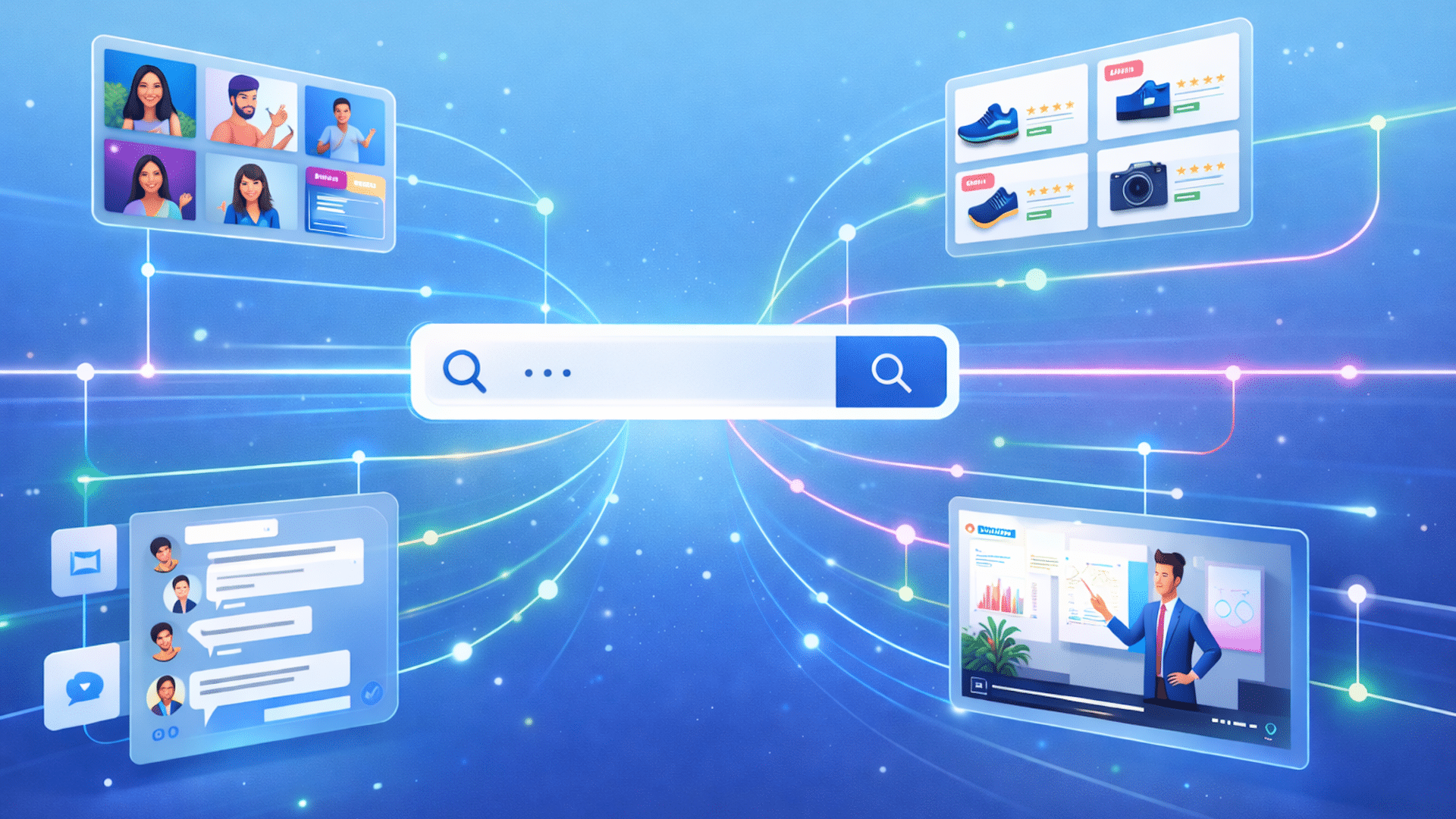
    However, search behavior has evolved. It no longer thrives on a single platform. Nowadays, I find myself searching on TikTok for recommendations, YouTube for tutorials, Reddit for honest opinions, and Amazon for product validation.

    This shift in search behavior spans across a wide array of platforms, presenting us with one of the most overlooked opportunities in digital marketing.

    Recent research from SparkToro and Datos analyzed search behavior across 41 major platforms. These included traditional search engines, ecommerce sites, social networks, AI tools, and reference sites.

    The findings reiterated a growing awareness among marketers: search is not bound to traditional engines anymore. Although Google still leads, discovery is increasingly distributed across a diverse range of platforms—a sort of search universe.

    The research distributes search activity as follows:

    • Traditional search engines: Roughly 80%, with Google alone at ~73.7%
    • Commerce platforms (Amazon, Walmart, eBay): Roughly 10%
    • Social networks: Approximately 5.5%
    • AI tools (ChatGPT, Claude, etc.): About 3.2%

    We search directly on the platforms where we expect to find the most useful answers, in the formats we prefer, instead of relying on Google to direct us elsewhere.

    Dig deeper: Discoverability in 2026: How digital PR and social search work together

    The current buzz in the search industry tends to focus heavily on AI, posing questions such as:

    • How do I rank within ChatGPT?
    • How can I optimize for AI search?
    • Is AI going to supplant Google?

    These questions are debated endlessly by SEO professionals. While these are indeed significant questions, the data suggests a more grounded narrative, particularly for strategic planning over the next year.

    Despite AI tools accounting for roughly 3.2% of search activity, which indicates a future shift in how we search and discover information, they are presently dwarfed by more established platforms.

    For instance:

    • Amazon sees more searches than ChatGPT.
    • YouTube surpasses ChatGPT in search activity.
    • Even Bing records more searches.

    Yet, numerous brands are placing an outsized focus on AI visibility, overlooking platforms that handle millions of searches daily.

    For many, social platforms have transformed into primary search destinations. I’ve noticed people turn to:

    • TikTok for travel ideas, restaurants, and product recommendations.
    • YouTube for problem-solving tutorials and reviews.
    • Reddit for genuine discussions and community feedback.
    • Pinterest for visual inspiration and planning.

    These platforms serve varied roles in the discovery journey.

    These platforms have grown beyond entertainment; users interact with them with genuine intent to seek solutions to their needs or desires.

    ```json
{
  "alt": "The CapmatchOne logo with a gradient circle and bold text.",
  "caption": "Discover innovation with the CapmatchOne logo, featuring sleek typography and a modern gradient circle.",
  "description": "The CapmatchOne logo features bold, modern typography coupled with a gradient circle, symbolizing connection and innovation. The sleek design conveys a sense of progress and creativity. This image can be used for branding or promotional purposes, appealing to audiences interested in innovative solutions and forward-thinking designs."
}
```

    As we increasingly use social platforms for searches, I’ve noticed that Google has been aggregating and featuring social content in its search results pages (SERPs). TikTok videos, YouTube Shorts, Reddit threads, Instagram posts, and forum discussions are now appearing directly in Google results.

    With Google’s partnerships with platforms like Reddit, community discussions often gain more prominence in search results, allowing social content to influence discovery in several ways:

    • Direct searches on social platforms
    • Visibility within Google search results
    • Influence within AI-generated answers

    Dig deeper: Social and UGC: The trust engines powering search everywhere

    Social platforms are also vital for the AI-generated answers that rely on genuine experiences and opinions, making platforms like Reddit, YouTube, and TikTok indispensable sources for these AI systems.

    Google’s AI summaries frequently reference Reddit threads and YouTube content. Similarly, other AI tools leverage community discussions and reviews for insights.

    Thus, content crafted for social discovery can significantly impact visibility across various layers of search, including on social platforms, Google results, and AI-generated responses.

    By embracing social search visibility, brands can unlock a compounding discoverability effect. A high-quality YouTube tutorial, for instance, could:

    • Thrive in YouTube search results
    • Feature within Google search results
    • Be mentioned in AI-generated answers
    • Be shared on various social platforms
    • Spread through private messages and dark social channels

    Unlike conventional website content, social content can seamlessly migrate across platforms, significantly extending its reach.

    Especially now, with marketing budgets tightly monitored, the cross-platform visibility of content amplifies the ROI of content strategies.

    Dig deeper: The social-to-search halo effect: Why social content drives branded search

    Despite these transformative changes, most brands still adhere to traditional search playbooks focused on Google SEO, paid search, website content, and AI interfaces.

    Few have formalized strategies for optimizing TikTok, YouTube, and Reddit, which are full of untapped potential for creator-led discovery.

    Traditional Google SEO might be highly competitive, but social search remains largely unoptimized, presenting early adopters with a golden opportunity to capture long-lasting visibility in spaces with existing demand.

    Investing in social search visibility isn’t just about accessing the 5.5% of searches taking place on social platforms; it also extends influence to traditional search results and AI-generated answers across the web.

    Search transcends beyond a single channel; it’s a broad behavior occurring within a progressing search universe.

    Audiences search for the best answers in preferred formats, whether it’s on Google, TikTok, YouTube, Reddit, Amazon, Pinterest, or new AI interfaces.

    Achieving success in today’s search landscape requires visibility across all the places where your audience searches. It’s about being discoverable, regardless of where those searches originate.

    This is the future of search—this is “search everywhere.”

    Dig deeper: ‘Search everywhere’ doesn’t mean ‘be everywhere’


    Inspired by this post on Search Engine Land.


    crushpress.ai community screenshot
  • Boost Your AI Search Visibility with Entity Authority

    Boost Your AI Search Visibility with Entity Authority

    I realized that the traditional webpage is no longer the center of digital visibility. We’ve been relying on URLs and keywords, a structure made for a journey that AI now bypasses entirely.

    In this era where search is everywhere, the entity—a precise, machine-readable concept of a product, organization, or individual—has become the core unit of power.

    Brands that dominate now in the AI landscape are those creating strong entity authority. The key to surviving the shift to generative discovery is not merely about the page anymore. It’s about developing entity linkages to build the foundation of AI visibility.

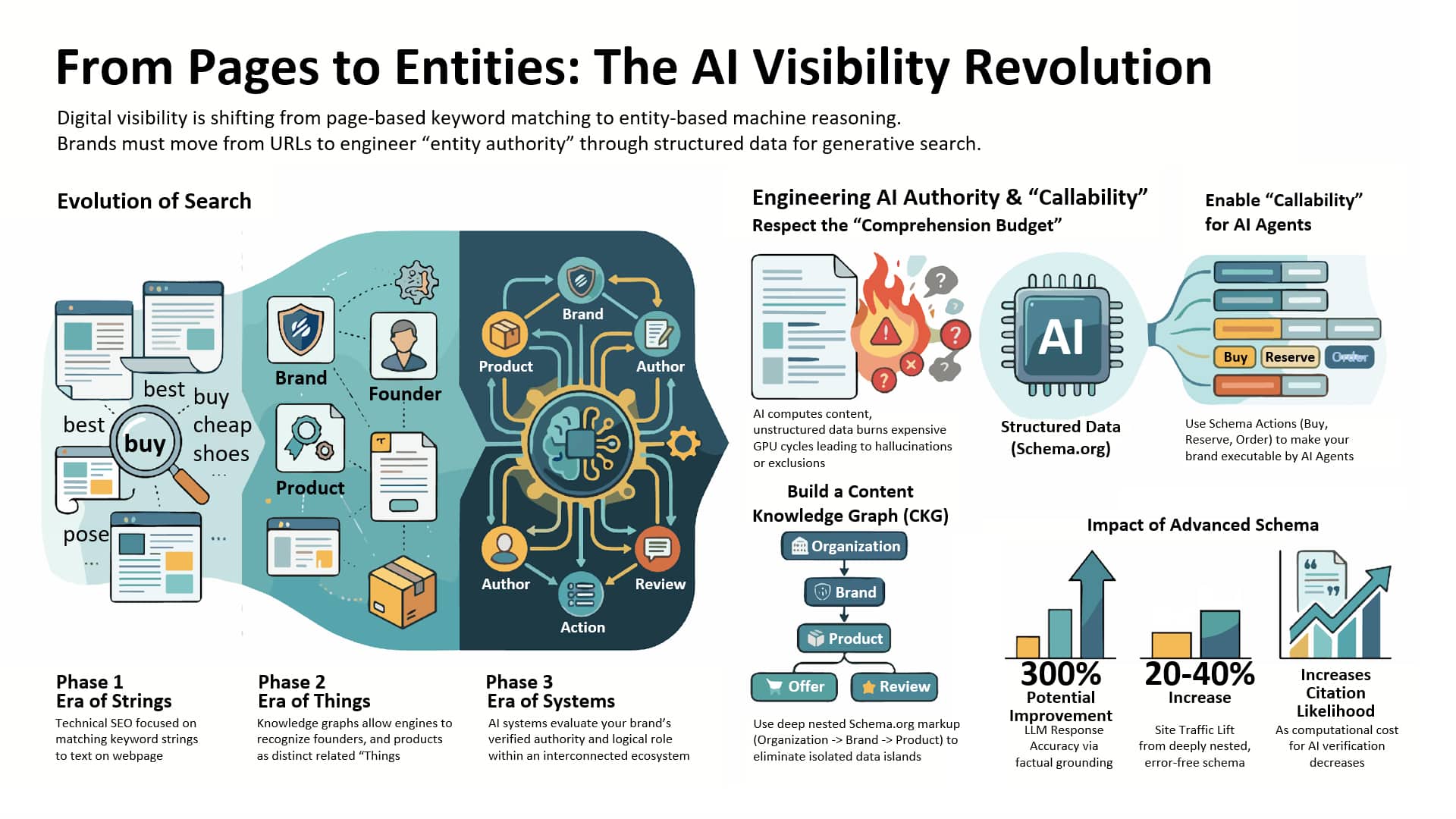
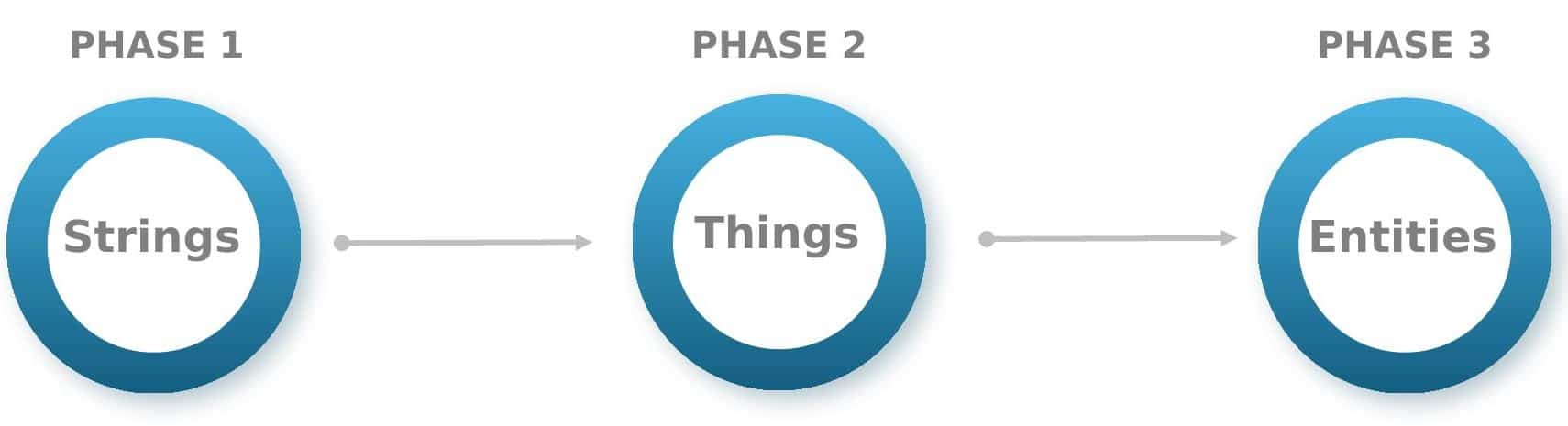
    We need to acknowledge a profound transformation in how the web is indexed. We’ve moved beyond just retrieving information to a new three-stage evolutionary process.

    Phase 1 (Strings): We focused on optimizing keyword strings in traditional SEO. The goal was to align queries with text on a page.

    Phase 2 (Things): With modern search, we understand entities. Knowledge graphs now recognize brands, founders, and products as distinct entities.

    Phase 3 (Entities): AI systems use structured entity ecosystems today. The aim is to become a verified authority within this interconnected network of entities and capabilities.

    ```json
{
  "alt": "Infographic on the AI Visibility Revolution, detailing phases of digital evolution and AI authority through structured data.",
  "caption": "Explore the AI Visibility Revolution: From keyword-driven searches to structured data empowerment. Understand the evolution of search and AI authority.",
  "description": "This infographic titled 'From Pages to Entities: The AI Visibility Revolution' illustrates the shift from keyword-based searches to entity-based machine reasoning. It outlines three phases: the Era of Strings, Things, and Systems. The graphic emphasizes engineering AI authority with structured data to improve search accuracy and visibility. Technical details include schema actions like Buy and Reserve, and the impact on AI agents and LLM response accuracy, highlighting a potential 300% improvement. Keywords: AI visibility, search evolution, structured data."
}
```

    In this current phase, search engines evolve into reasoning engines, analyzing content and your brand’s ecosystem role.

    Dig deeper: The enterprise blueprint for winning visibility in AI search

    The evolution is powered by economic necessity: the comprehension budget. AI systems are resource-intensive, processing content and calculating interpretations.

    Whenever an engine clarifies a brand or assumes a relationship, it exhausts valuable resources. Unstructured or inconsistent data increases this computational load.

    To optimize performance, I use a comprehension subsidy, employing Schema.org to make data more accessible to machines, reducing the inference needs for AI systems.

    Dig deeper: From search to answer engines: How to optimize for the next era of discovery

    ```json
{
  "alt": "Three phases with circles labeled Strings, Things, and Entities connected by arrows.",
  "caption": "Journey through three phases: From Strings to Things and finally to Entities, illustrating the evolution of data comprehension.",
  "description": "This infographic depicts a linear progression through three phases: Phase 1 labeled as Strings, Phase 2 labeled as Things, and Phase 3 labeled as Entities. Each phase is represented by a blue circle with an arrow indicating progression. The image represents the transformation from raw data to structured understanding. Useful keywords include data evolution, phase progression, and information processing."
}
```

    Shifting from traditional SEO to generative engine optimization (GEO), I focus on relevance engineering, structuring content to be part of AI-generated answers.

    GEO is about making your brand’s information easily interpretable, verifiable, and useful in AI-generated responses across platforms like ChatGPT and Google’s AI Overviews.

    Dig deeper: Chunk, cite, clarify, build: A content framework for AI search

    Most enterprise sites have some structured data, but for AI, basic and fragmented schema is insufficient. It creates separate data islands and complicates the AI’s effort to form connections.

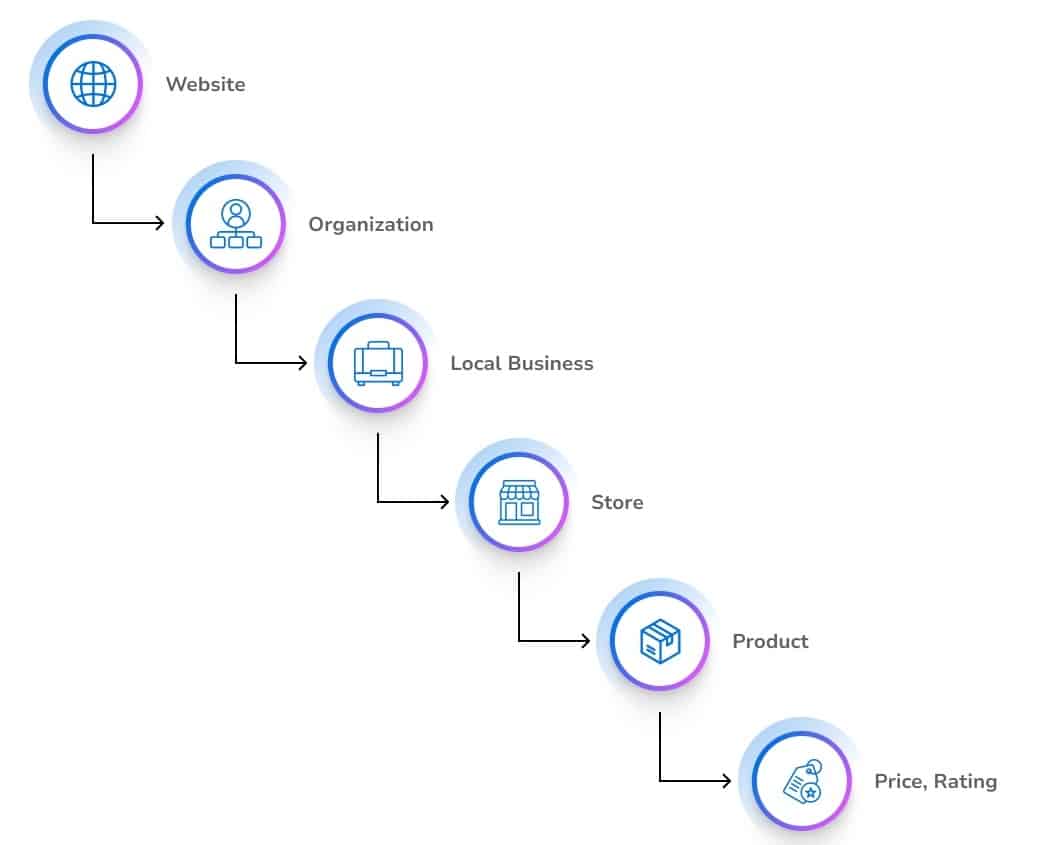
    The correct approach is implementing a content knowledge graph, mapping entities hierarchically and ensuring they’re machine-readable through Schema.org and JSON-LD.

    Dig deeper: Why entity search is your competitive advantage

    ```json
{
  "alt": "The CapmatchOne logo with a gradient circle and bold text.",
  "caption": "Discover innovation with the CapmatchOne logo, featuring sleek typography and a modern gradient circle.",
  "description": "The CapmatchOne logo features bold, modern typography coupled with a gradient circle, symbolizing connection and innovation. The sleek design conveys a sense of progress and creativity. This image can be used for branding or promotional purposes, appealing to audiences interested in innovative solutions and forward-thinking designs."
}
```

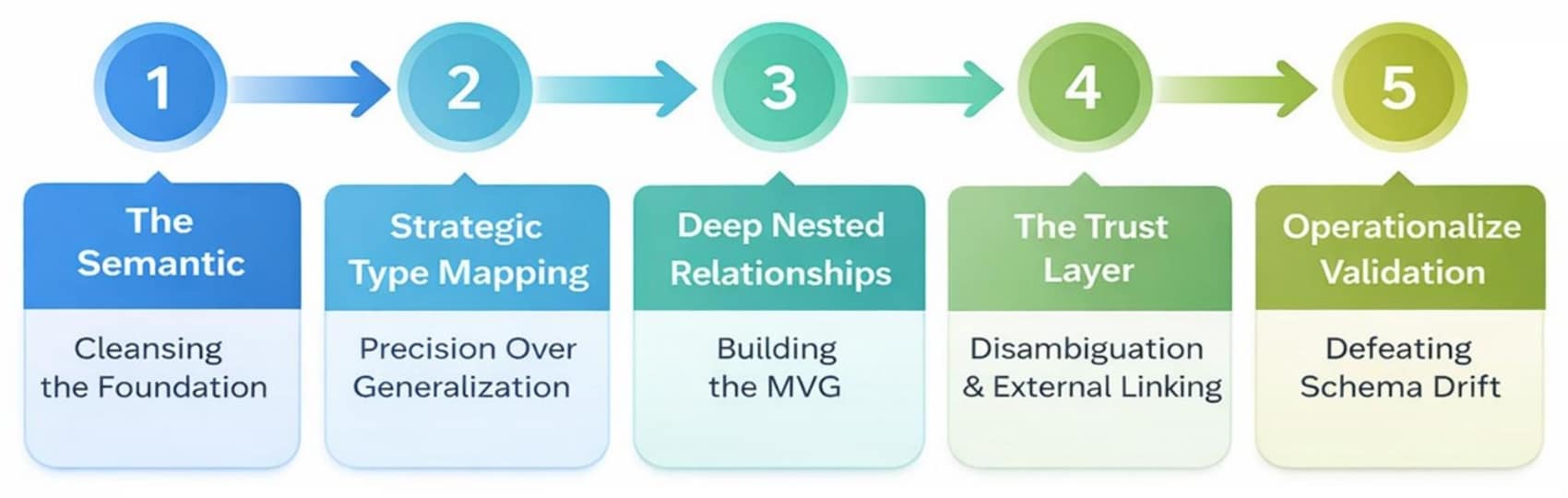
    To be globally recognized, properties such as @id for consistency and sameAs for linking to reputable sources help in entity disambiguation, boosting credibility.

    To maintain a strong AI relationship, move beyond simple tagging to entity governance—establishing verifiable sources of truth for AI platforms at scale.

    As the AI experience evolves toward active agents managing user actions, I focus on schema actions that make my entity callable and ready to support AI-driven interactions.

    If my entity isn’t clearly defined, AI may overlook it, turning to competitors prepared with actionable data pathways for users and AI systems.

    Schema drift is a risk: inconsistencies between human-visible content and machine-readable formats can lead to lower confidence scores, reducing citations.

    Monitoring and continually updating schema with real-time signals ensure I remain present and operationally capable in the agentic web ecosystem.

    ```json
{
  "alt": "Infographic illustrating the progression from website to price and rating through organization, local business, store, and product.",
  "caption": "Explore the journey from a website to product price and rating. This infographic captures the step-by-step progression through key stages in an organized business path.",
  "description": "This image depicts a linear progression infographic starting with a website icon, followed by organization, local business, store, and product, ending with price and rating. Each stage is illustrated with an icon and text, connected by arrows, showcasing a structured pathway from digital presence to consumer evaluation. Perfect for visualizing business processes, digital marketing strategies, or customer journey mapping. Keywords: infographic, business process, digital marketing."
}
```

    Dig deeper: From search to AI agents: The future of digital experiences

    The new key performance indicators in AI environments go beyond traffic metrics, emphasizing model share and citation value, ensuring AI reflects my brand accurately.

    Maintaining AI trust requires precise alignment of schema with declared business specifics, preventing entity drift and supporting positive AI interactions.

    Embracing entity-first strategies allows me to build credibility and presence in AI searches, where content knowledge graphs enhance my brand’s visibility.

    Ultimately, it’s not just about being on the page — it’s about the confidence AI places in my entity, ensuring it remains a powerful tool for discovery.

    Key Takeaways:

    ```json
{
  "alt": "Five steps in a data validation process, including semantic cleansing and operational validation.",
  "caption": "Explore the five-step process of data validation, ensuring semantic clarity and defeating schema drift for robust data systems.",
  "description": "This image outlines a five-step process for data validation, starting with 'The Semantic' for foundational cleansing, followed by 'Strategic Type Mapping' for precision. The next steps include 'Deep Nested Relationships' to build the MVG, 'The Trust Layer' for disambiguation, and 'Operationalize Validation' to defeat schema drift. This guide is essential for maintaining data integrity and reliability."
}
```

    From strings to things to systems: Transition from keyword targeting to entity authority, focusing on overall concept dominance.

    Efficiency is currency: Streamlined, structured data helps AI access your information more efficiently, enhancing citation potential.

    Citations are the new clicks: Achieving top visibility now involves influencing AI recommendations rather than just page visits.

    Governance is revenue protection: Avoid schema drift to maintain AI confidence and brand presence.

    Callability = survival: Ensure your brand’s entities are ready for AI agent interactions with actionable schema.


    Inspired by this post on Search Engine Land.


    crushpress.ai community screenshot
  • 2026 Creative Ops Mastery: Overcome Bottlenecks with Tech

    2026 Creative Ops Mastery: Overcome Bottlenecks with Tech

    How can I excel in creative operations without compromising quality or overwhelming my team? In this guide, I’m eager to share insights on how to construct a sustainable martech ecosystem and craft scalable workflows that pave the way for success.

    Are you, like me, observing your team’s creative operations straining under increasing demands? You’re not alone. With projects growing more complex and clients becoming more demanding, we, as creative leaders, need a strategy to scale operations without compromising quality or leading our teams to burnout.

    The key lies in working smarter, not harder, by harnessing technology that revolutionizes our entire content lifecycle. Let’s dive into how innovative creative operations leaders are forging resilient workflows that can withstand today’s demanding environment.

    Creative teams are faced with mounting expectations and pressures. According to research, 77% of marketing teams report a rise in project volume each year, with 45% struggling to meet the expanding content needs across various platforms.

    ```json
{
  "alt": "Woman shrugging in front of a digital media interface with folders and icons on an orange background.",
  "caption": "Confused about media storage? This image captures a woman shrugging with a digital interface of files and media icons, set against a vibrant orange backdrop.",
  "description": "The image features a woman with a puzzled expression, shrugging her shoulders in front of a digital media interface. The interface displays folders and various media icons, such as text, images, video, and audio symbols, suggesting a theme of digital organization or media management. The background is a bold orange with digital symbols, enhancing the tech-inspired theme. Ideal for illustrating concepts related to digital media storage, organization, or user confusion in technology contexts."
}
```

    Picture this: my team is managing 15 active campaigns over multiple channels, each demanding a host of asset variations. Communication tangles in email threads, designers toil over locating approved assets, and project managers can’t easily track campaign progress.

    This disarray isn’t merely frustrating; it’s costly. Teams trapped in administrative tasks rather than focusing on creativity can see productivity fall by up to 40%.

    Trying to remedy these challenges by simply expanding the team or establishing stringent processes often falls short. The core problem for many is disconnected workflows and isolated tools. An integrated marketing and creative ecosystem connecting every stage of the content lifecycle is essential.

    ```json
{
  "alt": "Colorful infographic with hexagons illustrating concepts like graph, checklist, communication, and finance.",
  "caption": "A vibrant infographic connects elements like communication and finance, showcasing a dynamic blend of business concepts.",
  "description": "This image features a colorful infographic with hexagonal icons representing various business concepts such as data analysis, process management, communication, and finance. The central image is a checklist, surrounded by icons like a bar graph, gears, network, touch interaction, and a dollar symbol. The background is a warm gradient with geometric shapes, enhancing the image's dynamic and modern feel. Keywords: infographic, business, data, communication, finance, design."
}
```

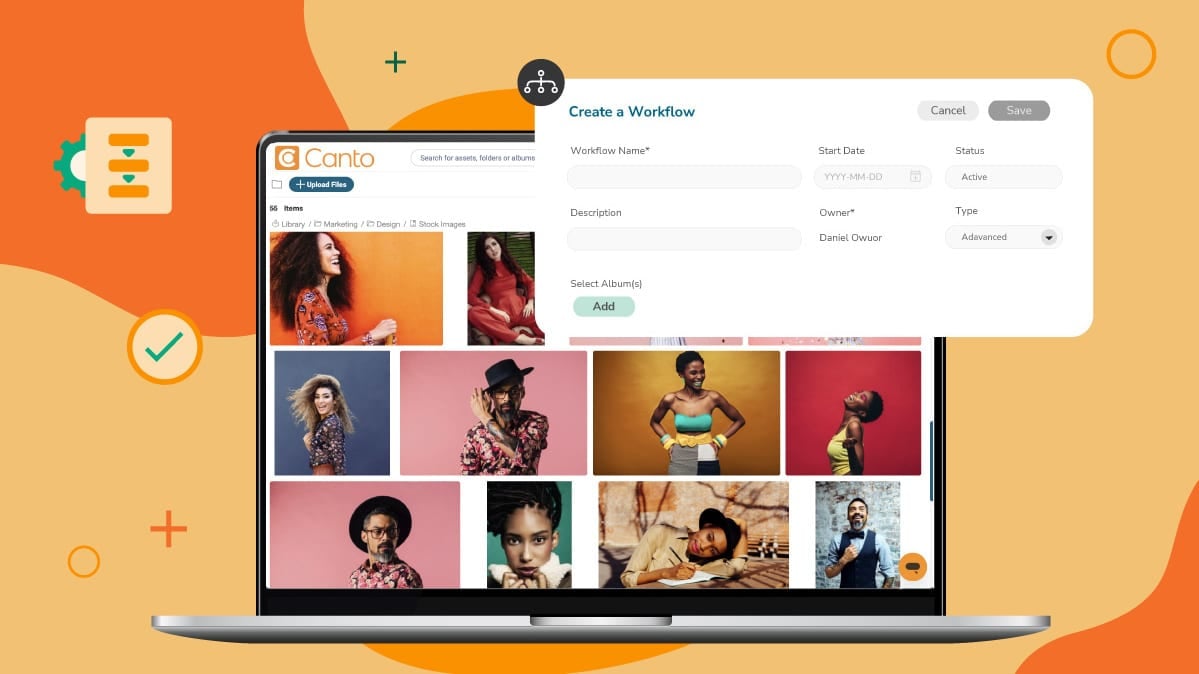
    Let’s explore the technology stack that can elevate operations, beginning with digital asset management (DAM), which acts as the backbone for creative operations. Not all DAM platforms are equal—look for systems that offer intuitive organization, robust version control, strict brand compliance, and global accessibility.

    For smooth operation, your creative tools, whether Adobe Creative Cloud, Figma, or Canva, should integrate seamlessly with your campaign data systems. Proper integration can reduce friction and speed up the time to market.

    Also crucial are intelligent approval workflows, which can replace cumbersome email chains. Automated workflows with dynamic routing, parallel reviews, contextual feedback, and escalation management can streamline the approval process significantly.

    ```json
{
  "alt": "Laptop displaying an image library interface of diverse models alongside workflow creation form.",
  "caption": "Streamline your creative projects with Canto's intuitive image library and workflow management tools. Perfect for marketing teams seeking efficiency.",
  "description": "The image showcases a laptop screen with Canto's media management interface, featuring a grid of diverse model photos against vibrant backgrounds. A floating form for 'Create a Workflow' is visible, allowing users to manage projects seamlessly. The background uses warm orange hues with graphic elements, emphasizing the platform's user-friendly design. Ideal for teams needing organized and efficient asset management and workflow solutions."
}
```

    Generic project management tools often don’t meet creative teams’ needs. Opt for specialized solutions providing creative-specific templates, visual resource planning, real-time collaboration, and detailed performance analytics.

    As you build scalable workflows, start by mapping out your current processes to identify obstacles. Implementing technology incrementally, designed to scale threefold your current volume, ensures smooth future expansion without growing pains.

    Tracking and measuring key performance indicators like asset fulfillment time, project completion rates, and team utilization allows us to gauge success and make continuous improvements.

    ```json
{
  "alt": "Young person smiling while using a laptop, surrounded by digital icons on an orange background.",
  "caption": "A cheerful moment with technology: A young individual uses a laptop, exploring data and digital tools, set against a vibrant orange backdrop.",
  "description": "The image features a young person with a joyful expression, actively engaged with a laptop. The background is orange and adorned with digital icons, including a magnifying glass, dollar sign, and data charts. This setting suggests themes of technology, data analysis, and financial exploration. The scene combines youthful energy with a modern digital context, appealing to an audience interested in tech and innovation."
}
```

    Even with the best technology, transformation depends on people. Successful change needs careful management, starting with team involvement in choosing technologies and designing workflows, followed by thorough training and feedback-based iteration.

    Looking to the future, the most successful leaders are not only solving current challenges but preparing for tomorrow’s opportunities. Technologies like AI-powered content generation are set to radically shift future workflows.

    To modernize creative operations, the question isn’t if, but how soon. Initiate by auditing your current tools, identifying integration gaps, and considering a trial of comprehensive DAM solutions. The leaders who act now will set tomorrow’s industry standards.


    Inspired by this post on Search Engine Land.

    crushpress.ai community screenshot
  • Unlocking Google AI Max: Insights from 23 Tests Revealed

    Unlocking Google AI Max: Insights from 23 Tests Revealed

    Over the past nine months, I’ve put Google AI Max to the test, conducting 23 in-depth analyses with 16 well-established advertisers across diverse sectors. My goal? To truly harness the capabilities of this campaign for optimal outcomes.

    Of course, your own tests and insights might differ, and that’s where the real conversation begins. I’m eager to engage in a dialogue about AI Max, encourage replication of my analyses in your accounts, and explore outcomes unique to your data.

    Before you dive into your AI Max tests, consider some critical elements. Two stand out:

    Your campaigns must bid on crucial conversion actions relevant to your business. Utilize tools like Enhanced Conversions to polish your conversion strategy. Aim for value-based bidding when possible. Additionally, ensure your campaigns are not restricted by budget limitations. This is particularly important with AI Max as it opens up new targeting opportunities.

    ```json
{
  "alt": "The CapmatchOne logo with a gradient circle and bold text.",
  "caption": "Discover innovation with the CapmatchOne logo, featuring sleek typography and a modern gradient circle.",
  "description": "The CapmatchOne logo features bold, modern typography coupled with a gradient circle, symbolizing connection and innovation. The sleek design conveys a sense of progress and creativity. This image can be used for branding or promotional purposes, appealing to audiences interested in innovative solutions and forward-thinking designs."
}
```

    Let’s delve into some key insights I’ve gathered from testing AI Max.

    AI Max can reach its full potential when you activate all three core features:

    • Search term matching.
    • Text customization.
    • URL optimization.

    Campaigns that leveraged all three features saw a 40% higher success rate compared to those that only used search term matching.

    ```json
{
  "alt": "Bar chart showing text customization performance by asset type: Headline and Description.",
  "caption": "Exploring text customization performance: Headlines significantly outperform Descriptions across impressions, cost, and conversion value.",
  "description": "This bar chart illustrates the performance contribution of text customization by asset type. 'Headline' and 'Description' are compared across three metrics: impressions, cost, and conversion value. Headlines, shown in blue, have higher contributions, peaking at 23.5% for conversion value. Descriptions, in pink, offer lesser contributions, topping at 8.6% for conversion value. Useful for analyzing marketing effectiveness and text strategy optimization."
}
```

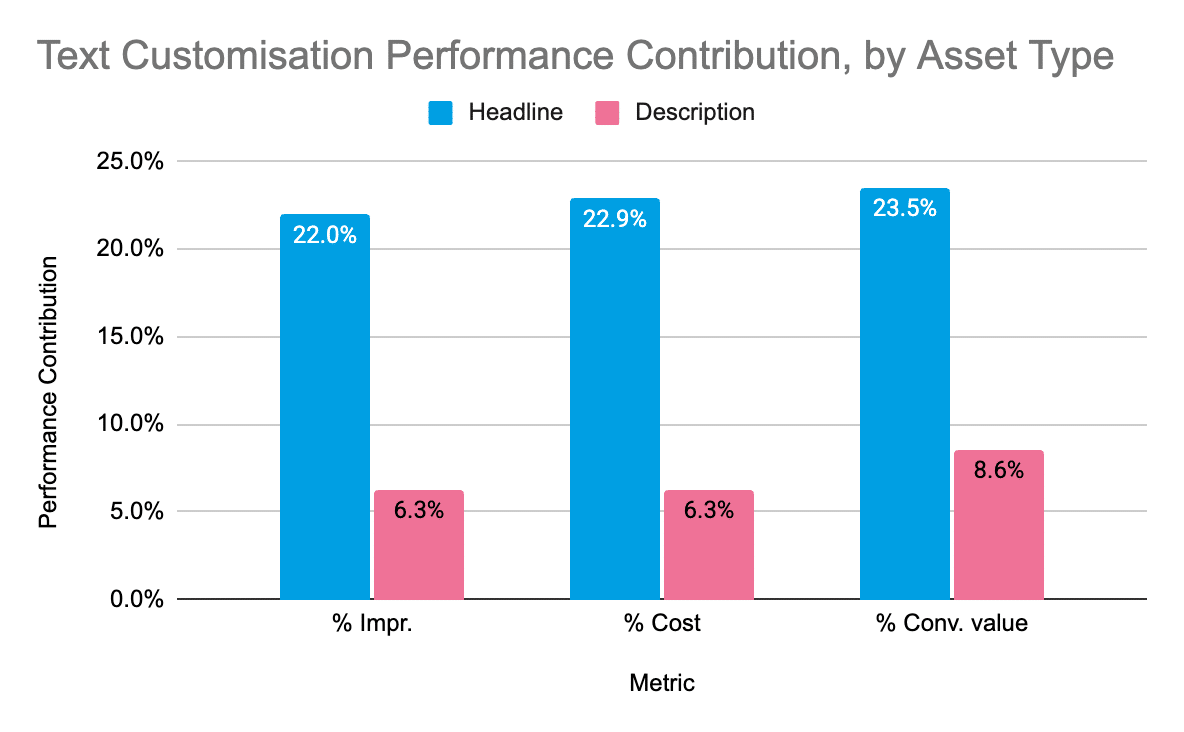
    Text customization can significantly enhance performance, increasing return on ad spend and extracting more value per impression. While it’s more frequently applied to headlines than descriptions, the benefits are clear.

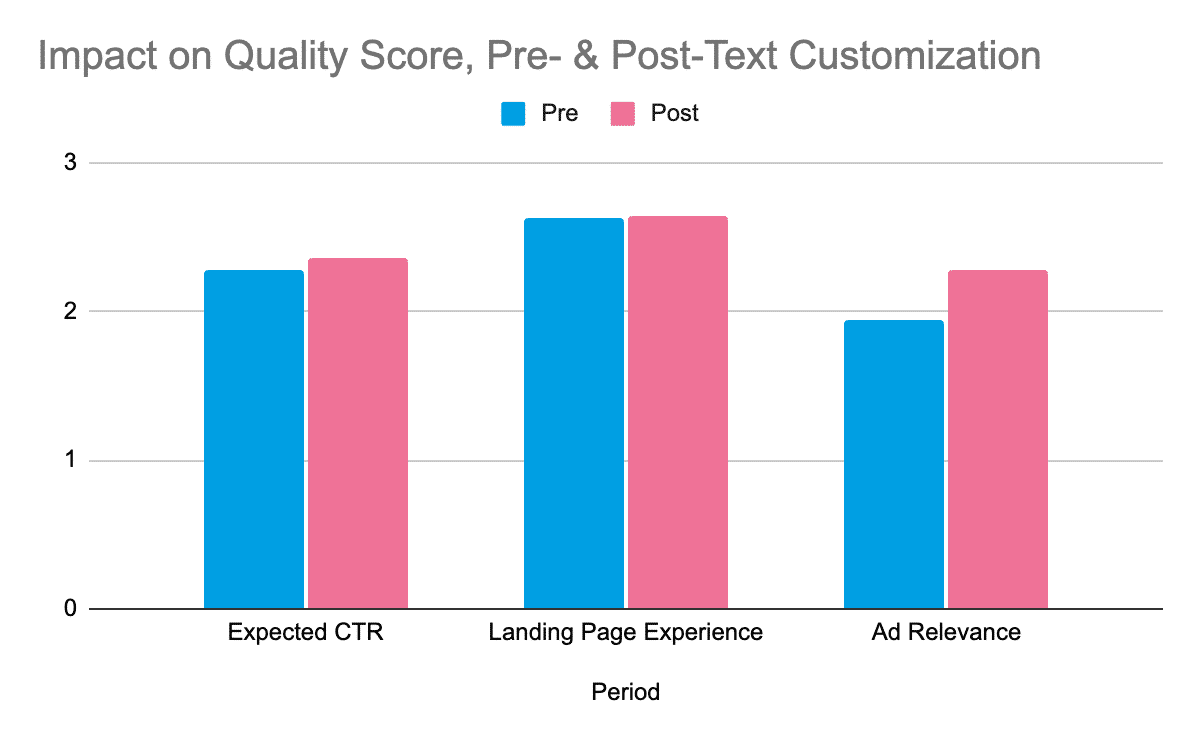
    One exciting outcome of text customization is the observable boost in Quality Score. Our analysis showed that enabling this feature improved Quality Score from 6.8 to 7.3, with ad relevance seeing the most significant rise.

    Given these findings, I encourage testing all three features if possible, especially since our tests showed that only half of the campaigns utilized text customization and even fewer activated URL optimization.

    ```json
{
  "alt": "Bar graph showing impact on quality score with pre- and post-text customization metrics.",
  "caption": "Explore how text customization influences quality scores, with improved metrics post-customization for CTR, landing page experience, and ad relevance.",
  "description": "This bar graph illustrates the impact of pre- and post-text customization on quality score components: Expected CTR, Landing Page Experience, and Ad Relevance. Blue bars represent pre-customization, while pink bars show post-customization results. Each metric sees improved scores post-customization, highlighting the effectiveness of text adjustments in enhancing ad performance. Keywords: quality score, text customization, CTR, landing page, ad relevance."
}
```

    If you’re testing AI Max, consider implementing it across your entire account rather than selectively. This approach facilitates a more comprehensive assessment of its impact.

    Not all new AI Max traffic will be completely new to your account, with 54% of queries having been previously captured by other campaigns. Despite this, AI Max still provides an additional uplift in conversion value.

    Ensure you evaluate AI Max by looking at overall account performance rather than isolated campaign tactics. Additionally, monitor how AI Max interacts with other campaigns, notably Dynamic Search Ads (DSA), since overlapping capabilities can sometimes hinder performance.

    Once you’re comfortable with AI Max, explore additional testing opportunities such as partnering it with Search Bidding Exploration (SBE) for achieving even greater customer reach.

    Finally, it’s crucial to experiment beyond AI Max’s current scope. Consider alternative strategies and the evolving balance between segmentation and consolidation within your account structure.


    Inspired by this post on Search Engine Land.

    crushpress.ai community screenshot
  • AI Citations: No Single Source Dominates for Brands

    AI Citations: No Single Source Dominates for Brands

    Over the past several months, I’ve delved into the fascinating world of AI citation data. What I’ve discovered is intriguing: there isn’t a single, top source that every brand can rely on. Instead, it varies substantially depending on the platform, industry, and the intent behind the data.

    Every so often, I encounter studies claiming platforms like Reddit or Wikipedia are the ultimate sources for AI citations. Marketers and clients often get swayed by such bold claims, quickly drafting new strategies based on them. But are they truly applicable to every scenario?

    The truth is, these analyses can often oversimplify complex data—ignoring the nuances of intent, platform disparity, or industry context. This could lead brands into investing efforts into strategies that don’t align with their specific market or customer journey.

    During our research at Tinuiti, where I serve as the senior director of AI SEO innovation, we embarked on an in-depth exploration of trends. We examined high commercial-intent prompts across nine different verticals on major AI platforms over four months, wrapping up in January 2026.

    ```json
{
  "alt": "Bar chart displaying Reddit share of AI citations by category for 2025 and 2026, with categories like Apparel and Electronics.",
  "caption": "Explore how Reddit discussions around AI are shifting across various sectors from Apparel to Technology between 2025 and 2026.",
  "description": "This bar chart illustrates the share of AI citations on Reddit by category for two periods: 10/1/25 and 1/1/26. Categories such as Apparel, Beauty, Electronics, and others are represented. The chart highlights shifts in discussion prominence, with Apparel leading in 2026 at 10%. The data is sourced from Profound, 2026, offering insights into evolving sector interests in AI discussion on Reddit."
}
```

    The standout insight was clear: there’s no single top source for all. Patterns varied greatly based on the specifics of intent, the platform in use, and the total category involved.

    Reddit’s Growth: A Closer Look

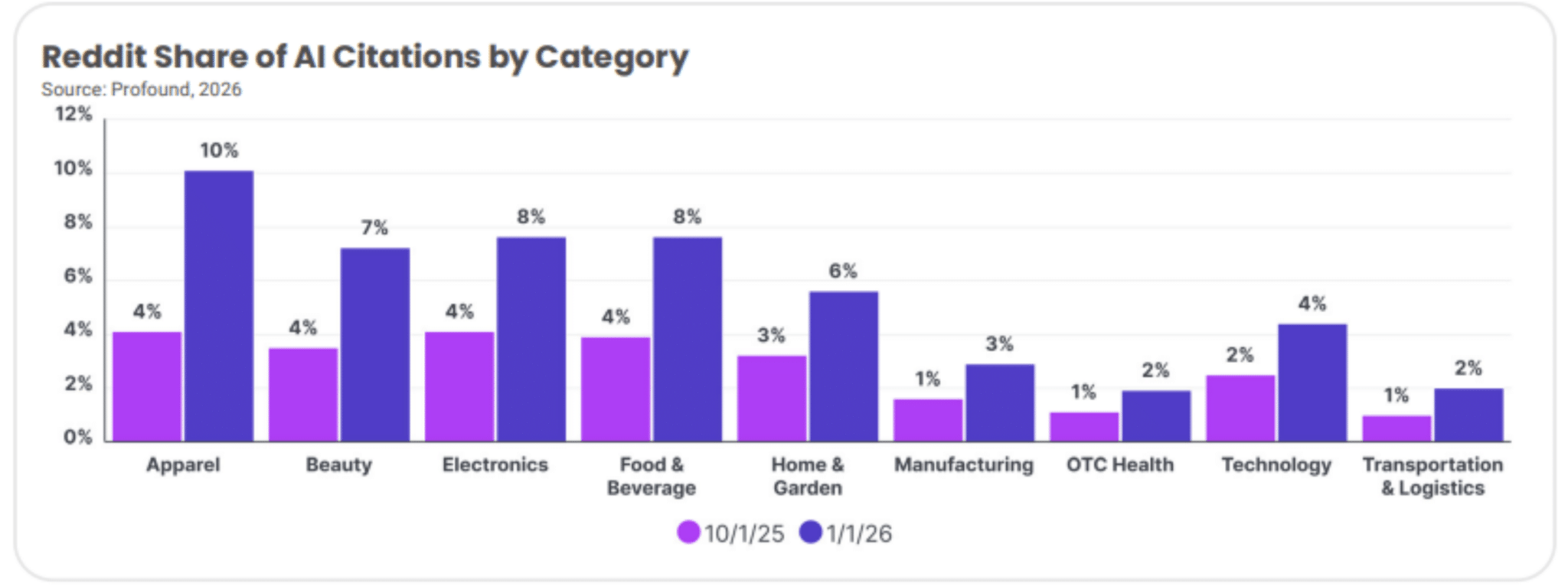
    Take Reddit, for example. Throughout our tracked period, Reddit saw a 73% increase in citations from October 2025 to January 2026. In some industries, this growth was even more pronounced.

    ```json
{
  "alt": "The CapmatchOne logo with a gradient circle and bold text.",
  "caption": "Discover innovation with the CapmatchOne logo, featuring sleek typography and a modern gradient circle.",
  "description": "The CapmatchOne logo features bold, modern typography coupled with a gradient circle, symbolizing connection and innovation. The sleek design conveys a sense of progress and creativity. This image can be used for branding or promotional purposes, appealing to audiences interested in innovative solutions and forward-thinking designs."
}
```

    Yet, when examining platforms like ChatGPT, we noticed the citations pointed toward unique discussion threads rather than general subreddit pages or branded content. This observation means that merely having a Reddit presence may not be enough.

    The real value lies in authentic, insightful discussions within a brand’s category. Brands should focus on fostering genuine community engagement and building strong reputations by participating meaningfully in conversations where their presence can truly make a difference.

    Interestingly, the influence of Reddit on citation shares varied drastically. For instance, sectors like apparel saw 10% of the citations, whereas transportation noted just 2%.

    ```json
{
  "alt": "Bar chart showing social media citations by platform for Google AI services in January 2026.",
  "caption": "In January 2026, Reddit leads in social media citations for Google AI services, with a notable contribution from YouTube.",
  "description": "This bar chart illustrates the share of social media citations by platform for Google AI services in January 2026. Platforms include Facebook, LinkedIn, Medium, Quora, Reddit, and YouTube. The chart distinguishes between three Google services: Google AI Mode, Google AI Overviews, and Google Gemini. Reddit shows the highest citation rate at 44% for Google AI Mode, followed by YouTube with 29%. This data provides insight into the social media influence of Google's AI technologies across different platforms."
}
```

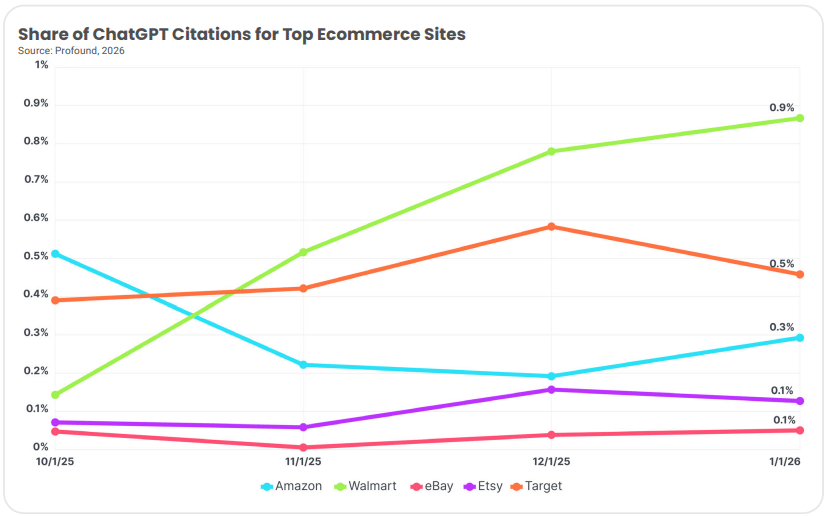
    It’s also worth pointing out the impact of platform specificity. Reddit’s citation share on ChatGPT remained above 5% by January; however, on Google Gemini, it was as low as 0.1%. Thus, the platform a brand’s audience tends to use plays a crucial role in AI visibility strategies.

    Google’s AI Variances and Implications

    Among Google’s AI platforms, there are significant variances in how citations from social media sources get distributed. Reddit citations varied starkly across Google’s AI products — illustrating distinct differences in source preferences.

    ```json
{
  "alt": "Line graph showing the share of ChatGPT citations for top ecommerce sites from October 2025 to January 2026. Walmart leads, followed by eBay, Amazon, Etsy, and Target.",
  "caption": "Walmart surges ahead in ChatGPT citations, leading the pack of top ecommerce sites. From October 2025 to January 2026, eBay and Amazon also show notable presence.",
  "description": "This line graph illustrates the share of ChatGPT citations for major ecommerce sites: Amazon, Walmart, eBay, Etsy, and Target, from October 1, 2025, to January 1, 2026. Walmart shows a significant upward trend, reaching 0.9% by January 2026. eBay maintains a steady 0.5%, while Amazon slightly improves to 0.3%. Etsy and Target trail with 0.1% each. Data sourced from Profound, 2026. Keywords: ChatGPT, ecommerce, citations, trend analysis."
}
```

    Different platforms such as Medium, YouTube, and LinkedIn showed notable splits in their social citation shares across Google’s AI surfaces. This diversity necessitates a careful evaluation of source relevance and citation volume for brands looking to optimize their AI strategies.

    Amazon’s Strategic Choices Affect Competition

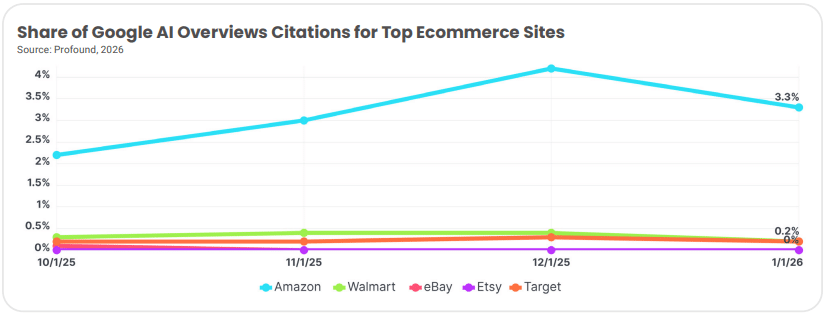
    Interestingly, Amazon’s approach towards AI search led to a notable shift. While initially strong on ChatGPT, Amazon’s citations dipped after it began blocking AI crawlers aggressively, opening space for competitors like Walmart to gain ground.

    ```json
{
  "alt": "Line graph showing Google AI Overviews citations for Amazon, Walmart, eBay, Etsy, and Target from October 2025 to January 2026.",
  "caption": "Amazon's AI citations soar in late 2025 while other eCommerce giants like Walmart, eBay, Etsy, and Target maintain a steady trend below 0.2%.",
  "description": "This line graph illustrates the share of Google AI Overviews citations for major e-commerce platforms: Amazon, Walmart, eBay, Etsy, and Target, from October 2025 to January 2026. Amazon's citations show a significant increase peaking at 3.3% in December 2025, while the other platforms, Walmart, eBay, Etsy, and Target, consistently stay below 0.2%. The data is sourced from Profound, 2026. Keywords: Google AI, e-commerce, citations, Amazon, Walmart, eBay, Etsy, Target."
}
```

    This strategic decision reflects Amazon’s focus on control over direct customer interactions, exemplifying how tactical choices in crawler access can dramatically alter a brand’s competitive dynamics in AI citations.

    Ultimately, understanding your industry and category is key to crafting effective and meaningful AI visibility strategies. It’s about leveraging unique insights, driving authentic engagement, and evaluating platforms critically, rather than just following trendy data insights.

    If you’re intrigued by our findings, you can explore them further in the full Tinuiti’s Q1 2026 AI Citation Trends Report (registration required), developed with Profound.


    Inspired by this post on Search Engine Land.

    crushpress.ai community screenshot
  • Unlocking Local SEO: Why Tripadvisor Remains Crucial in 2026

    Unlocking Local SEO: Why Tripadvisor Remains Crucial in 2026

    Why Tripadvisor still matters for local SEO in 2026

    Optimizing my client’s TripAdvisor listing continues to be a key part of the local SEO strategy. Despite often being an afterthought, a well-managed listing can significantly boost visibility, attract more qualified website traffic, and enhance the business’s online reputation and brand presence.

    TripAdvisor frequently appears in search results for tourism and hospitality businesses, functioning as a vital discovery touchpoint. By leveraging it as a strategic SEO asset, rather than just a review platform, I can gain advantages in visibility, authority, and conversion rates.

    How Tripadvisor fits into the local search ecosystem

    On TripAdvisor, travelers are in decision-making mode, often ready to book. The platform acts as both a comparison tool and marketplace where reviews matter but are part of a bigger picture including the clarity of the business profile and brand image.

    Though I have less control on TripAdvisor compared to my websites, Google respects its authority. Its comprehensive programmatic SEO architecture, indexing millions of URLs, makes it a powerhouse. With about 490 million monthly visits, ignoring it isn’t an option.

    Dig deeper: Local SEO sprints: A 90-day plan for service businesses in 2026

    Why Tripadvisor SEO is about much more than simply collecting reviews

    Optimizing my TripAdvisor profile is more than just gathering positive reviews. Implementing focused strategies can greatly enhance the visibility of my listing.

    1. Respond to reviews with intention

    By thoughtfully responding to reviews, I can boost semantic SEO by adding valuable contextual signals, increasing the chances of appearing in AI-driven search results.

    For instance, if a guest briefly mentions enjoying the pool, my reply can detail family-friendly activities, enhancing the context around the hotel’s amenities.

    I also guide guests in writing detailed reviews, explaining their value to potential visitors.

    2. Using fresh, high-quality images with descriptive captions

    Images on TripAdvisor can catch attention instantly. They must be vibrant and capable of conveying a quality experience quickly.

    By analyzing engagement data from platforms like Instagram, I identify which images perform best and update them regularly with descriptive captions.

    Example: “Grilled salmon served on our sea-view terrace, a popular choice for solo travelers during the summer.”

    ```json
{
  "alt": "The CapmatchOne logo with a gradient circle and bold text.",
  "caption": "Discover innovation with the CapmatchOne logo, featuring sleek typography and a modern gradient circle.",
  "description": "The CapmatchOne logo features bold, modern typography coupled with a gradient circle, symbolizing connection and innovation. The sleek design conveys a sense of progress and creativity. This image can be used for branding or promotional purposes, appealing to audiences interested in innovative solutions and forward-thinking designs."
}
```

    Dig deeper: The local SEO gatekeeper: How Google defines your entity

    3. Categories and tags: Getting the basics right

    Managing categories and tags correctly is crucial on TripAdvisor to enhance internal visibility and Google indexing.

    To appear in curated listings, I ensure the categories and tags reflect the full range of experiences offered by the business.

    For instance, to be listed as a top romantic restaurant, relevant tags must showcase all applicable offerings.

    Dig deeper: Want to win at local SEO? Focus on reviews and customer sentiment

    How Tripadvisor strengthens local and brand signals

    Even in 2026, many businesses still have duplicate listings on TripAdvisor due to its easy, verification-lacking setup process.

    However, verifying and merging these listings requires official documents, mirroring information from Google Business Profiles to maintain consistency.

    For tourism and hospitality, TripAdvisor often serves as the main third-party channel for brand discovery, sometimes even appearing above a business’s own website in search results.

    An incomplete or poorly managed TripAdvisor profile can diminish trust before potential customers even reach my website, so optimization is key in controlling my search presence.

    Tripadvisor optimization is a competitive advantage

    Mastering TripAdvisor SEO offers a significant competitive edge. Here’s what I keep in mind:

    • Review velocity: Maintaining a steady stream of reviews is essential.
    • Freshness signals: Updated images and current menu information are crucial.
    • Engagement: Encouraging profile clicks and interaction helps demonstrate appeal.
    • Owner activity: Regular updates and responses show a well-managed business.
    • Profile completeness: A comprehensive profile assures clarity in value.

    Effective TripAdvisor SEO relies on consistency and a strategic understanding of how reviews, content, and engagement signals coalesce to influence decisions.

    Executing this well transforms customers into the most powerful advocacy tool for my business.

    Get the newsletter search marketers rely on.

    MktoForms2.loadForm(“https://app-sj02.marketo.com”, “727-ZQE-044”, 16298, function(form) { // form.onSubmit(function(){ // }); // form.onSuccess(function (values, followUpUrl) { // }); });


    Inspired by this post on Search Engine Land.

    crushpress.ai community screenshot
  • Transforming SEO: The Shift from Keywords to Infinite Prompts

    Transforming SEO: The Shift from Keywords to Infinite Prompts

    The infinite tail- When search demand moves beyond keywords

    AI search expands the long tail into a multitude of prompt variations. Let me guide you through how fan-out queries, grounding, and task completion are reshaping SEO.

    When I speak naturally, my language flows. It’s often messy, incomplete, and not always coherent. In contrast, the Google search bar made me condense my needs into short-tail or long-tail queries.

    To navigate this, I would stack queries along a journey, refining them from A to B by stripping out personal nuances to suit what I thought the search engine could grasp. SEO experts built strategies around this, organizing queries by search volume and intent.

    That’s evolving now. With Google promoting Gemini and companies like Samsung highlight AI features as key selling points, the landscape is shifting. I’m encouraged to be more expressive and detailed with my searches.

    Long-tail query on Google search bar

    Moving from Keyword Research to Prompt Research

    We need to transition from keyword research to prompt research. Traditionally, keyword research involved quantifying demand and optimizing at a phrase level. The new AI-driven search environment calls for understanding demand as generative concepts, preserving needs across numerous prompt formats.

    This shift doesn’t render keyword research obsolete, but changes its scope. I’m learning to model user journeys, considering decision stages and user uncertainty, rather than just relying on search volume.

    What I get from this isn’t merely a keyword map, but a task map reflecting real audience constraints. This signifies a shift from short and long-tail keywords to an infinite tail of prompt research.

    ```json
{
  "alt": "Two people intimately close, one touching the other's face, overlaid with a search query on a sunset backdrop.",
  "caption": "A moment of intimate connection as one person gently touches another's face, set against the backdrop of dreams of adventure and techno beats.",
  "description": "The image features two individuals in a close, intimate pose, with one gently holding the other's face. Overlaid is a search query about a solo holiday in Asia, yoga meditation, and techno clubs, suggesting a desire for adventure and connection. The background is a serene sunset, enhancing the theme of longing and exploration."
}
```

    Dig deeper: Why AI optimization is just long-tail SEO done right

    @media (max-width: 768px) {.headline-responsive {font-size: 30px !important; line-height: 1.3 !important;}}

    The Infinite Tail as a Behavioral Shift

    The infinite tail is more than just an expansion of the long tail. It’s about personalization at each request. Users, like me, are layering contexts and preferences, creating unique prompt combinations.

    As Ai systems evaluate these prompts, they predict responses probabilistically, shifting away from exact-match keywords. Now, it’s not just about ranking for specific phrases but ensuring my content solves the user’s problems.

    In this journey, finding what users truly seek is as crucial as completing a task. With divergent user paths, flexibility replaces rigid step-by-step processes.

    Dig deeper: From search to answer engines: How to optimize for the next era of discovery


    Fan-out and Grounding Queries

    Query fan-out is crucial in AI search. It breaks complex prompts into subquestions, enabling a deeper evaluation framework.

    Content now needs to satisfy clusters of queries instead of single matches. Covering multiple dimensions of a task creates resilience in this network-centric world.

    ```json
{
  "alt": "The CapmatchOne logo with a gradient circle and bold text.",
  "caption": "Discover innovation with the CapmatchOne logo, featuring sleek typography and a modern gradient circle.",
  "description": "The CapmatchOne logo features bold, modern typography coupled with a gradient circle, symbolizing connection and innovation. The sleek design conveys a sense of progress and creativity. This image can be used for branding or promotional purposes, appealing to audiences interested in innovative solutions and forward-thinking designs."
}
```

    Grounding queries ensure AI answers are validated against the broader web, checking consistency and reputability across sources. For my content to be part of AI responses, it must seamlessly fit this network.

    This evolution redefines authority in how corroborated content appears over technically manipulated content. It emphasizes structure, data consistency, and external validation, significantly easing an AI system’s decision-making process by reducing uncertainty.

    Dig deeper: The authority era: How AI is reshaping what ranks in search

    Designing for Hybrid Search

    Organic search remains integral. It still dictates discovery and influences crawlability. However, AI now layers on top, impacting which brands feature in conversational responses. It’s a blend where organic visibility and AI selection coexist.

    In this hybrid mode, the infinite tail favors genuine audience understanding, where my content should be designed to satisfy users’ situations instead of merely matching keywords.

    This isn’t just a process renamed from keyword research to prompt research. It’s about understanding search motivations, decision-making, uncertainties, and evidential needs, fostering the infinite tail by prioritizing task completion over string matching.

    Dig deeper: How to use AI response patterns to build better content


    Inspired by this post on Search Engine Land.


    crushpress.ai community screenshot
  • Why Content Needs Strategic Distribution in Today’s SEO

    Why Content Needs Strategic Distribution in Today’s SEO

    “Content is king” has long been the mantra in the world of SEO. I’ve always leaned into content creation, though I know some focus on backlinks or technical SEO.

    While I still believe content is crucial for search visibility, I’ve realized that it’s now essential to amplify its reach through effective distribution strategies.

    With AI search evolving, asking, “What should I write next?” might not cut it. The game-changing question is, “Where should I distribute this content next?”

    Content distribution hasn’t always been our focus as SEOs. It was often a task for social media managers, PR specialists, and community managers.

    But with AI search revolutionizing the landscape, distribution has become integral to achieving SEO success.

    Here’s why:

    • AI tools draw from broader sources.
    • They operate under shifting logic.
    • The visibility strategies for AI differ from traditional methods.

    If that sounds abstract, let me break down the evidence behind these changes.

    Different tools have different sourcing logic

    As search tools diversify, a one-size-fits-all strategy is no longer viable. AI tools cite different sources, often with less overlap with traditional SERPs.

    Users are more adaptable, shifting from tools like ChatGPT to Gemini quickly, challenging us to rethink our strategy.

    Instead of focusing solely on one tool, I need a distribution strategy that considers a variety of AI systems.

    AI models generally have low overlap with Google searches. This variance highlights the need for a diverse strategy to ensure visibility across platforms.

    AI searches tap into a wider array of resources, sometimes prioritizing lesser-known sites, complicating the path to dominance.

    The sourcing logic is changeable

    This shifting logic, marked by phenomena like citation drift, further complicates our reach. Over time, AI tools significantly alter their source domains, up to 90% in just six months.

    Get the newsletter search marketers rely on.

    MktoForms2.loadForm(“https://app-sj02.marketo.com”, “727-ZQE-044”, 16298, function(form) {});

    Focus on broad, multi-channel distribution

    The fragmentation of search demands a comprehensive distribution strategy. But how can we really make it work for us?

    The key is not just in predicting where our content might appear but in expanding our reach across a variety of channels.

    ```json
{
  "alt": "The CapmatchOne logo with a gradient circle and bold text.",
  "caption": "Discover innovation with the CapmatchOne logo, featuring sleek typography and a modern gradient circle.",
  "description": "The CapmatchOne logo features bold, modern typography coupled with a gradient circle, symbolizing connection and innovation. The sleek design conveys a sense of progress and creativity. This image can be used for branding or promotional purposes, appealing to audiences interested in innovative solutions and forward-thinking designs."
}
```

    Our approach must adapt, embracing multi-channel distribution to reveal our brand in AI’s broad digital landscape. It involves targeting diverse platforms and collaborating with others, as third-party sources often overshadow personal domains.

    1. Get good at collaborating

    Winning in this fragmented environment requires teamwork. By integrating efforts across PR, social media, and community management, I leverage skills beyond traditional SEO.

    I have to trust others with my projects and accept the shared accountability necessary for broader visibility.

    2. Broaden your skillset

    Understanding fields like digital PR and thought leadership is now part of my expanded role. I still focus on SEO, but I’m prepared to pivot where necessary.

    While I may not master every skill, enhancing my knowledge of these interconnected fields enhances distribution capabilities.

    3. Shift your mindset from ranking to presence

    Google ranks remain important, but it’s equally crucial to populate as many platforms as possible. My goal is to plant hooks in the digital ecosystem that draw AI searches to my content.

    I focus on presence rather than mere ranking, creating broader visibility to capture AI-driven searches.

    4. Redesign your workflow

    Integrating distribution into my workflow involves clear strategies from the outset. By planning post-launch phases and periodic content refreshes, I ensure a consistent distribution cycle.

    Clear responsibilities and reusable elements prevent my distribution strategy from becoming an afterthought.

    5. Start with these easy-to-implement best practices

    Immediate actions help streamline this transformation, such as partnering with fellow businesses and adapting content for third-party sites like Quora or LinkedIn.

    Keeping tabs on AI’s preferred sources and redistributing older content expands my reach and mitigates citation drift’s impact.

    By prioritizing these initiatives, I boost my visibility in a world where distribution stands equal to creation.

    The landscape has shifted, urging me to adapt my SEO approach. As AI tools proliferate, navigating this fragmented terrain requires new methodologies.

    SEO now demands more collaboration, intersecting with other teams like never before. The challenges are significant, but manageable strides toward cross-team coordination will set the foundation for future success.

    Starting small allows me to slowly leverage these changes into formidable strategies, one step at a time.

    Categories: AI SEO, SEO, Opinion


    Inspired by this post on Search Engine Land.


    crushpress.ai community screenshot
  • Transform Your Marketing with McKinsey’s Positionless Strategy

    Transform Your Marketing with McKinsey’s Positionless Strategy

    Recently, I’ve been diving into McKinsey’s ‘Organize to Value’ strategy, a fascinating blueprint for transforming marketing into a positionless model. According to a comprehensive analysis, it’s not technology that’s holding back operational transformations; it’s unclear objectives, uncommitted leadership, and a stagnant culture that are to blame.

    Implementing new AI technologies to drive marketing efforts seems simple. However, the real challenge lies in empowering marketing teams to utilize these tools independently, decisively, and at scale. The primary obstacle? It’s us, the humans.

    For as long as I can remember, marketing teams have aimed to keep up with consumers, delivering timely, relevant messages and optimizing customer lifetime value to boost loyalty and ROI. While this goal isn’t new, the AI technologies that help us analyze data and create personalized messages at scale are continuously evolving. Unfortunately, our ability to fully harness this technology has fallen behind.

    Despite these challenges, progress is being made. Some marketing teams have overcome these hurdles, yielding remarkable results. Take Caesars Entertainment for example. They reduced campaign execution time from five days to just five minutes. As Asadul Shah, the vice president of player revenue strategy notes, this transformation was ‘a massive game changer.’

    Before their transformation, marketers at Caesars manually built targeting lists and coordinated efforts across disconnected systems, often waiting on multiple teams before launching campaigns. This made it difficult to target players with precision and timing. By partnering with Optimove, Caesars combined data, orchestration, and execution into a single platform. This change didn’t just improve efficiency; it allowed the marketing team to react more dynamically to players’ needs.

    What truly made this transformation effective wasn’t just the technology—it was the implementation of Positionless Marketing. This framework liberated marketers from fixed roles, empowering every team member to act independently. Optimove provided the platform, while Caesars developed the necessary team structure. This synergy of technology and human ingenuity brought Positionless Marketing to life.

    Organizations that achieve such transformation are embodying what McKinsey describes as ‘organizing to value.’ This involves a deep rethinking of structure, decision-making, and accountability, transforming marketing teams into operations that continuously drive value—ultimately optimizing customer lifetime value, fostering loyalty, and delivering measurable ROI.

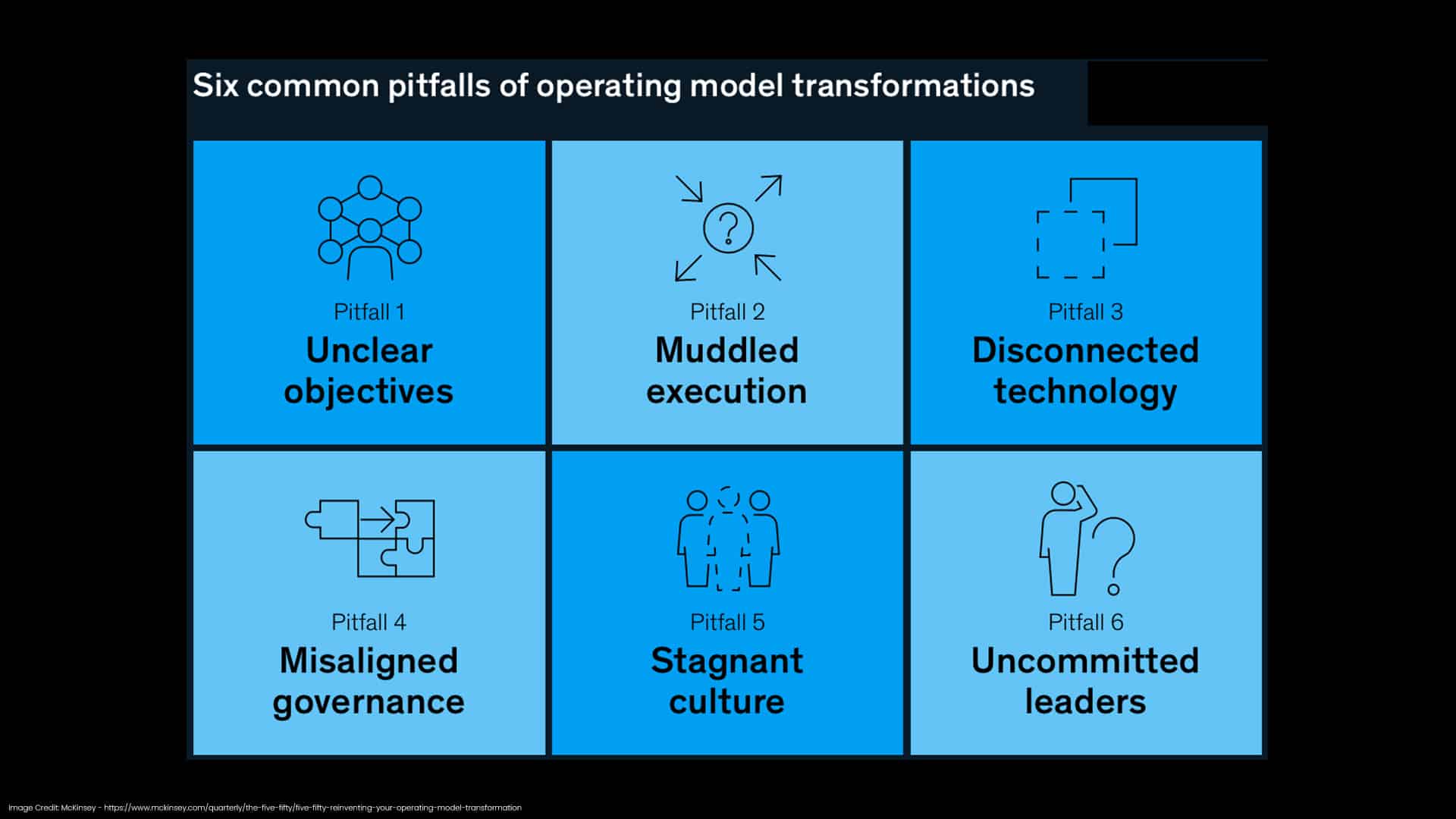
    Yet, McKinsey highlights six pitfalls many teams face when trying to adopt the Positionless model, with only one being technological. The rest involve leadership and organizational issues.

    Some key barriers include unclear objectives causing a focus on activity metrics over outcomes, misaligned governance that slows decision-making, and leaders who reinforce silos instead of enabling autonomy. Other obstacles are a stagnant culture resistant to change, muddled execution with no clear accountability, and disconnected technology further compartmentalizing efforts.

    This kind of ‘assembly-line’ marketing, where tasks are segmented among different teams, hinders value creation. Peter Drucker famously said, “The purpose of business is to create and keep a customer.” However, when insights, creativity, and activation are siloed, value gets lost in between.

    McKinsey’s ‘Organize to Value’ offers a practical path forward. It suggests designing organizations around value creation and impactful outcomes, rather than rigid job titles and processes designed to control.

    To truly embrace Positionless Marketing, leaders must apply pragmatic solutions focused on improving marketing execution. This involves starting with a clear purpose, restructuring work to emphasize outcomes, streamlining decision-making processes, and aligning governance, technology, and talent. It empowers marketers to transcend traditional roles and independently deliver results.

    This transformation requires commitment but staying with an outdated assembly-line structure is even costlier. Organizations like FDJ United and a major retailer have already seen the benefits: improved execution speed, increased purchase rates, and better use of resources.

    As I see it, the window to act is narrowing. AI and data technologies are advancing rapidly, and customer expectations for personalized experiences are growing. Those who are quick to adapt will stay ahead, while those who hesitate may fall behind.

    McKinsey’s insights confirm that the right structure and technology can unleash human potential, transforming marketing from within. Positionless Marketing is more than a strategy; it’s the future we need to embrace.


    Inspired by this post on Search Engine Land.


    crushpress.ai community screenshot