For over a decade, the content formula was clear-cut: choose a keyword, craft an article, publish, promote, rank, and convert. But now, that system is failing.
In today’s world, content marketing is in transformation. AI delivers direct answers to search queries within the results page. With large language models processing information faster than we can distribute it, a new content approach is essential.
While the cost of content creation plummets, the challenge of standing out becomes steeper. Here’s a method for thriving in a market where visibility is far from guaranteed.
The decline of informational SEO
Informational SEO was once a beacon for growth. The idea was simple: produce enough articles, get traffic, and grow. But that traffic was always just a proxy for real progress.
Now, AI tools deliver instant summaries, reducing the need for users to click through. If your strategy revolves around responding to common queries, you’re up against highly trained AI, rendering traditional informational SEO strategies ineffective.
Content needs a new purpose, evolving beyond customer support and sales to creating genuine brand notoriety.
SEO’s evolution into a competition for boardroom-worthy metrics has diluted its effectiveness. It’s time to reset focus.
Content serves two purposes: as a business in itself or as a strategy to boost another business. For most, content acts as advertising—building brand recall, as proven by advertising science, hinges on fame, feeling, and fluency.
Gone are the days when we could rely on attracting users through search alone. AI now answers questions instantly, reducing the effectiveness of content designed only to draw in search engine traffic. It’s time to pivot towards pushing content to audiences directly through media, partnerships, and events.
In this overcrowded media landscape, it’s not about access—it’s about strategy and targeting.
Kevin Kelly’s insight in “The Inevitable” reveals a crucial shift: visibility is now a scarce commodity. As content production skyrockets, curation and distribution become the keys to visibility, shifting the value from creation to distribution.
With finite human attention, being found is a matter of scarcity economics. Today, it’s not just about creating content but making sure it’s uniquely visible.
Dig deeper:
Powerful messaging in an age of abundance
Rory Sutherland’s concept of impactful messaging emphasizes the need for distinct, memorable signals in marketing. When everything is efficient, inefficiency and peculiarity become powerful signals. Just as lavish wedding invitations signal importance through their very wastefulness, marketing must adopt similar strategies to stand out.
In a world awash with competent yet forgettable content, distinct efforts stand out and make a lasting impression.
Paul Feldwick’s principles of fame—interest, reach, distinctiveness, and voluntary public engagement—shape how we approach content marketing now. Creating unique and engaging content that stands out is essential for becoming memorable and broadening reach.
It’s not enough to produce content; it must be distinctive, distributed effectively, and encourage engagement.
Operationalizing fame in search marketing
To thrive in the AI era’s content landscape, marketers must adopt a new mindset. Focus on five steps: differentiate infrastructure from fame-building initiatives, invest in originality, prioritize distribution before creation, establish distinctive brand assets, and measure your growth in fame, not just traffic.
Understanding that fame, not content volume, catalyzes growth is vital. By crafting memorable and distributed content, we can achieve genuine recall in our audience’s minds.
Automation takes the mundane out of our hands, empowering us to create outstanding content. Successful content strategies will pivot from producing large volumes to making each piece count, driving creative impact. As information proliferates, brands must strive not only to be visible but also to be remembered.
In the AI age, the brands that will shine are those that master the art of being found, focusing on creative impact rather than mere existence.
I’ve learned that not overseeing branded search campaigns means letting potential revenue slip through my fingers, leaving my reputation in the hands of competitors and review sites.
Utilizing PPC for brand protection is more than just bidding on my name. It involves a comprehensive strategy of defensive bidding, query monitoring, ad testing, and managing my brand’s reputation throughout the customer journey.
Why Brand Search Needs More Than Basic Defense
Many assume that brand campaigns require minimal effort. I know it takes more than setting up a simple bid on my brand name—it demands attention across all customer touchpoints.
Think about the various ways potential customers are searching for my brand. They’re not simply typing in my brand’s name; they’re investigating different aspects, validating choices, comparing alternatives, and researching features.
If I limit my targeting to exact brand matches, I miss out on numerous relevant searches, leaving room for competitors to attract high-intent users.
Review sites and affiliates bid aggressively on my brand terms, diverting traffic to competitive pages where other brands pay for top positioning.
The true cost is profound: my brand equity, customer trust, and diminished conversion rates.
Four Must-Cover Branded Search Categories
By analyzing user intent and competitive gaps, I can categorize branded searches into four strategies, each requiring distinct ad tactics and tailored landing pages.
Brand Trust and Reputation Queries
These users are seeking validation through queries like, “Is [Brand] good?” They need assurance and social proof before committing.
Review sites posing competitive threats make the need for targeted PPC ads crucial here.
PPC Strategy:
Bid assertively for these high-intent users nearing conversion.
Use review extensions and star ratings in ads.
Highlight trust factors, like awards and years in business.
Send traffic to testimonial-focused landing pages rather than my homepage.
Test callout extensions with specific points of proof.
Product Feature Queries
Users seeking this information want to ensure my product aligns with their needs, and competitors often step in with rival feature claims.
PPC Strategy:
Create feature-specific ad groups with corresponding ad text.
Direct users to targeted feature pages through sitelink extensions.
Address specific features in headlines, saving space by omitting my brand name.
Include feature demonstrations or videos on landing pages.
Evaluate if these queries need higher bids than core brand terms.
Comparison Queries
User searches like “Alternatives to [Brand]” indicate active comparison, making this a competitive battlefield.
As someone who’s been working with brand content for a while, I’ve gathered quite a bit of material that could use a refresh to improve our presence in AI-generated search results. In this context, let’s call this AEO—Answer Engine Optimization—to encapsulate our strategy going forward.
Recently, I’ve been fielding a lot of questions from brand marketers eager to enhance their AEO. To them, the suggestion of revising old content has often been an illuminating solution.
This insight opens up several important follow-up questions that I’d like to delve into now.
How do you reformat content for better AEO performance?
When it comes to content reformatting, I follow these core principles: topical breadth and depth, chunk-level retrieval, and answer synthesis.
Topical breadth and depth.
Chunk-level retrieval.
Answer synthesis.
Let me break down what these mean in practical terms.
Optimize for topical breadth and depth
I organize my site using a hub-and-spoke model. This involves creating a hub page for each main category or keyword theme, which serves as a comprehensive introduction and links to detailed spoke pages.
Each spoke page tackles one specific aspect in detail, which helps in addressing various user questions and broadens the overall topical landscape for our content.
By linking related spoke pages to each other and back to the hub, I reinforce content connections, providing AI systems with clearer signals about topic relationships.
Optimize for chunk-level retrieval
I focus on making each content chunk comprehensible on its own, without relying on the entire page for context. This involves crafting sections that are semantically tight, with each focused on a single idea.
Keep each passage tightly centered on one concept — Our Family Wizard does an excellent job of this
Optimize for answer synthesis
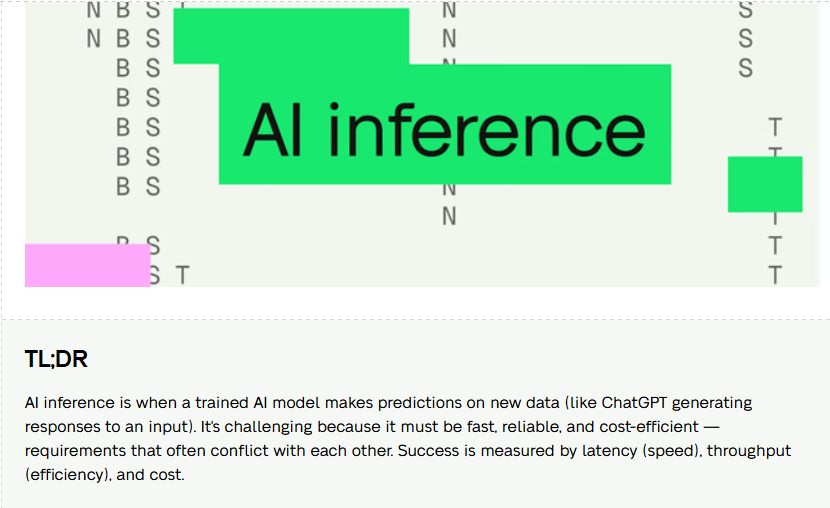
I start answers with a clear, concise sentence, then elaborate using well-structured summaries like “Summary” or “Key takeaways.” A plain, factual style works best.
Here’s an example of effective formatting from Baseten, which places a TL;DR summary at the beginning of a post discussing AI inference:
My experience so far has been that AI readability, focused on clarity, actually appeals to human readers who appreciate content they can understand quickly.
AI systems resonate with content that:
Names rather than infers answers.
Has sections with clear intent.
Allows easy extraction of key points without rewriting.
In some cases, it requires being more explicit than traditional SEO practices, like defining terms upfront, summarizing sections, and providing conclusions early on.
The challenge for me is balancing clarity with nuance, especially since AI-produced content can sometimes oversimplify intricate details.
When optimizing, I focus on:
Explaining initially, then expanding.
Identifying insights, then substantiating them.
Presenting the answer before adding any complexities.
This strategy makes the content appealing for both AI and human audiences.
Although, I’ve noticed that AI-generated content sometimes feels too generic, especially when it lacks personal perspectives and insights not readily available online.
I keep an eye out for AI content characteristics like the “dreaded em dash” and aim to remove them when refining my content.
How do you approach metadata when revising content for AEO?
While SEO uses metadata as ranking levers, in AEO, these elements act as context anchors.
Let’s dive into some key elements.
Title tags
For AEO, title tags should describe the page’s main answer or purpose in addition to the topic.
A title like “Session replay software” might become “Session replay: what it is, when to use it, and when not to use it.” Clearer signals aid AI citation decisions.
Headings (H1-H3)
Rather than generic headers, I align them with specific questions or assertions suited for user inquiries.
What is compliance monitoring?
Why does compliance monitoring matter for {x} industry?
Issues from lacking compliance monitoring
When to invest in compliance monitoring?
If answering these takes more than a few sentences, it likely needs refinement for clear, direct responses.
Meta descriptions
In AEO, meta descriptions serve as a compressed intent signal rather than appearing directly in search results.
They should clarify:
The target audience of the content.
The problem it addresses.
Its framing context.
Viewed through the AEO lens, they function as concise briefing notes for both users and AI systems.
While SEO and AEO often align, understanding where they diverge helps optimize for AI search visibility.
I’m not suggesting a drastic shift in strategy, but recognizing that AI engages with content differently from traditional algorithms is crucial for repurposing valuable content.
For years, I relied on a straightforward ecommerce model: Google attracted visitors to my site, where transactions were completed. Success was measured through rankings, clicks, and conversion rates. That scenario has drastically changed.
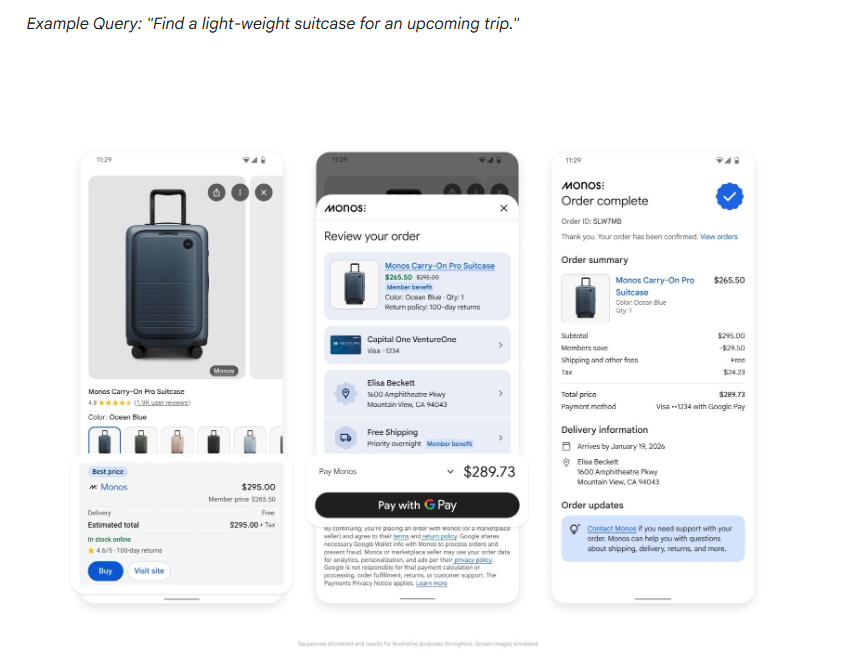
With Google’s Universal Commerce Protocol (UCP) combined with AI Mode, it’s possible for Google to uncover, evaluate, and finalize purchases within its AI framework. The dynamic is shifting from merely directing traffic to facilitating transactions. Now, the visibility of my products hinges on whether Google’s AI includes my data in its algorithm.
When AI can recommend and close sales, the optimization challenge moves even farther upstream. The vital question now isn’t just about my ranking; it’s about whether my products get chosen by AI.
So, let’s explore these changes and what strategies those involved in SEO and AI optimization should adopt next.
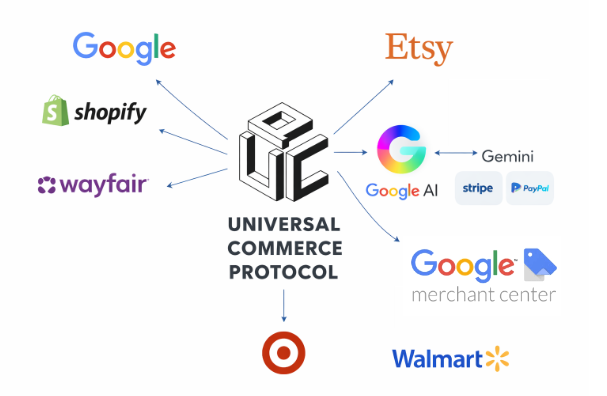
On January 11, Google introduced the Universal Commerce Protocol, or UCP. This innovative open standard empowers AI agents to explore, assess, recommend, and purchase products seamlessly across the web within Google’s own AI settings.
What caught my attention was not just UCP itself but the entire ecosystem Google devised around it. UCP was created in collaboration with platforms like Shopify, Etsy, Wayfair, Target, and Walmart, with pre-existing payment networks incorporated. This level of planning signifies a long-term vision, rather than a fleeting experiment.
Simultaneously, Google introduced three platform-level features that make this transformation tangible in everyday shopping experiences:
Business Agent: Brands now have an AI-powered ambassador in Search and the Gemini app. Shoppers can inquire about products, compare choices, and receive brand-specific advice without the necessity to visit a separate site.
Direct Offers: This feature allows merchants to incorporate exclusive discounts directly into Google’s AI Mode, embedding promotions within the recommendation engine itself.
Checkout in AI Mode: Google now facilitates purchases directly within its interface, transitioning from a traffic broker to an integral transaction facilitator.
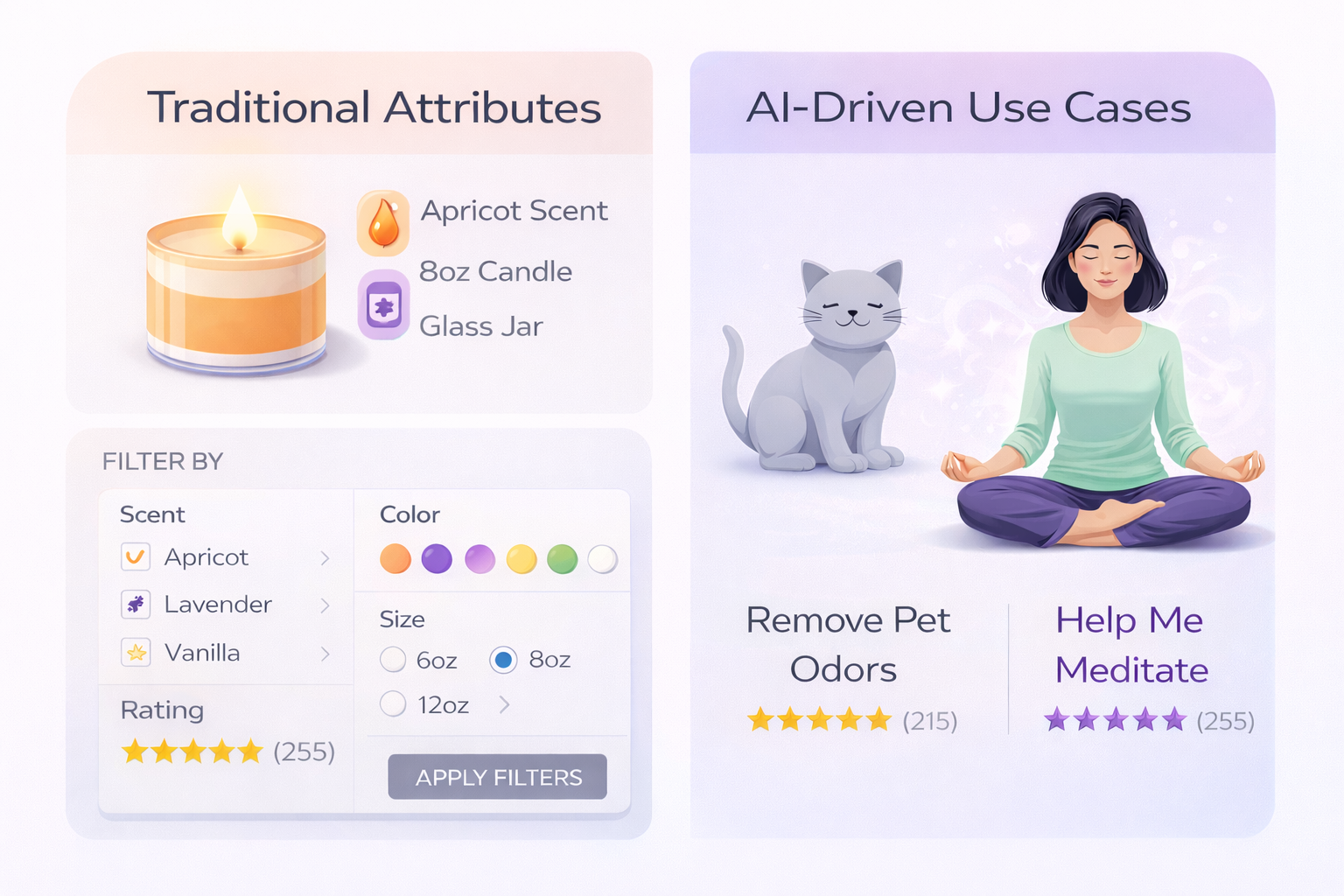
What’s even more remarkable is how Google transforms routine conversations into commerce. Instead of waiting for users to type product-related queries, Gemini can respond to natural language prompts like “help me plan a camping trip” or “what will get wine out of my couch” by sourcing up-to-date inventory, pricing, and availability from retailers, completing the transaction in the same interaction.
In the era where AI navigates the purchasing journey, brands must compete within the AI’s recommendation system, not just in search results.
Throughout my career, ecommerce consistently functioned on a model where search engines, ads, and marketplaces aimed to divert users to my site, so it could handle the sales. UCP reshapes that perception entirely.
Now, AI takes charge of the complete journey. It understands the customer’s needs, assesses different options, and can even finalize the purchase. Under this model, the quality of my website’s homepage or category page matters less if AI doesn’t prioritize my product at the outset.
I often find myself pondering the vital question every marketing leader should consider: How robust are our customer relationships? Not just the campaigns or channels but the genuine connections we forge with our customers.
This question is more challenging than it seems. Over the past two decades, we’ve focused on building around specific channels.
Every channel like email, social media, or ecommerce had its own team, its own metrics, and its own measure of success. From our perspective, it appeared as progress—after all, each team reached its goals.
Yet, customers felt like they were dealing with multiple companies under one logo. Imagine receiving a heartfelt ‘We miss you!’ email the day after a frustrating customer support experience. Sales might not realize a demo had already been seen. In-store purchases could go unnoticed by the ecommerce team. There’s simply no unified memory or relationship there.
On March 11, 2026, top minds in marketing, customer experience, and engagement, including those from BMW, Essity, and Sinch, will converge at Engage with SAP Online. This free, virtual event is essential for leaders ready to shift from isolated channel optimization to holistic customer relationship building.
Who’s Speaking and Why It Matters
The event kicks off with Sara Richter of SAP Engagement Cloud sharing insights from the SAP Engagement Index, a global study. But the real highlight is the presentations that follow.
Mark Ritson, known for his no-nonsense marketing approach, will deliver the keynote on the trends reshaping customer experience. Expect a sharp analysis on the fast-changing customer behaviors and why loyalty needs to transcend marketing.
Following Ritson, Jutta Richter from BMW will discuss modern customer journeys and brand relevance. Daniele Tedesco from Essity and Venky Naravulu from Sinch will share practical lessons on AI and connected systems.
The discussions will focus on what’s effective, what’s not, and actionable steps to enhance engagement.
The Backdrop: Why This Conversation is Urgent
This event is critical as there’s a growing disconnect between customer expectations and organizational delivery capabilities, as highlighted by the SAP Engagement Index.
SAP calls this the Engagement Divide, a widening gap that underscores the urgent need for a new operational model focused more on relationship management rather than isolated channel success.
As businesses navigate this challenging terrain, the speakers at Engage with SAP Online are set to provide the strategies needed to organize around customer relationships effectively.
AI-driven discovery relies heavily on semantic depth and a retrievable structure. I align language, taxonomy, and schema to achieve modern search visibility.
AI-based discovery offers a sophisticated way to surface content, moving beyond mere reliance on keywords. It’s clear to me that contextual and semantic elements are now more crucial than ever.
When optimizing, it’s not just about reinforcing keywords. I focus on constructing a semantic environment that’s easily retrievable.
This shift affects my approach to writing, creating, and conceptualizing content, regardless of whether I write it all myself or use automated workflows.
Reframing My Publishing Strategy Around Context
Although much has been written about this, I aim to tie these concepts together for a cohesive publishing strategy and tactical approach.
If I’m already using a context mindset, I’m likely making these elements work in my favor. For a deeper understanding of contextual and semantic strategy beyond keyphrase-first approaches, I must continue exploring.
Context, semantics, meaning, and intent have always been core to optimization. What’s evolving is how content is presented and discovered, especially on LLM platforms.
This evolution changes how I categorize and structure context across a website, affecting taxonomy, schema, internal linking, and content organization.
It’s also a shift away from lengthy word counts, focusing instead on precision, benefiting both machines and human readers.
Keywords aren’t obsolete but function best within a broader, well-defined strategy. It’s essential to understand what this means for my publishing strategy going forward.
I think of keyphrases as multidimensional points, building semantics in a unified framework. This means treating topics as semantic fields rather than isolated words.
Primary topic as the axis.
Secondary and tertiary concepts for structure.
Intent-based problems for context.
Stemmed or varied phrasing for linguistic diversity.
Entity associations for depth.
Readable chunks as retrieval units.
Structural signals like internal links and taxonomy.
While the keyword anchors the page, it’s the surrounding elements that define performance and meaning. Effective writing considers all these aspects as crucial to creating impactful content.
Context Density and SERP-Level Linguistic Analysis
I compare keyword-level analysis to a broader SERP-level approach, which isn’t entirely new but more comprehensive now with platforms like Content Experience.
By scraping top result pages and assessing common high-ranking words, these tools reveal semantic indicators crucial for content performance.
These analyses help me create competitive, high-performing content in areas where competitors lack depth in their contextual understanding.
Using Secondary and Tertiary Keyphrases
By understanding secondary and tertiary keyphrases as linguistic supports, I can categorize and emphasize language into a useful hierarchy.
These keyphrases are context stabilizers that reinforce my main topic, adding scope and relevance.
Each secondary keyword should bring a unique contribution to my page, whether introducing new topics, addressing questions, or adding context to my primary theme.
Stemmed Linguistics
The power of comprehensive keyword optimization lies in capturing related searches that share roots with primary keywords.
For instance, a detailed guide on “content marketing” might also rank for specific variants and related high-intent searches.
Covering secondary and tertiary keywords thoroughly increases the likelihood of capturing these valuable searches.
High-Level Technical Foundations for Contextual Emphasis
Shifting from string-based to context-based strategies entwines with how machines and humans interact with content.
Retrieval Mechanics: From Pages to Chunks
Large language models segment content into retrievable chunks evaluated for contextual similarity to the searcher’s intent.
Achieving meaningful content fast can be beneficial for both machine evaluation and user experience.
Structural Context: Architecture as Meaning
The way I organize content matters significantly, providing both taxonomical hierarchy and contextual signals.
Internal links apply meaning and reinforce connections between related topics and entities.
Schema and Entity Context
Schema markup offers a way to express meaning explicitly, helping clarify entity relationships and reinforcing signals across platforms.
This adds formal structure to content while maintaining strong, clear writing.
For an in-depth understanding, I recommend Duane Forrester’s book, “The Machine Layer.”
Moving to a Context-First Strategy
Aligning linguistics, structure, and declaration around a central theme is key to my context-first strategy.
Even though shifting from keyword-focused approaches might be challenging, it’s achievable through attentive writing and research practices.
Ultimately, this strategy focuses on creating content that is machine-readable while resonating at both page and site levels.
I’ve noticed a shift in SEO from the traditional “rank, click, and convert” strategy towards a new model that emphasizes being scraped, summarized, and recommended. This change marks the beginning of the dark SEO funnel era, transforming how we measure success in search engine optimization.
Today, up to 84% of B2B buyers use AI tools to discover vendors, and an astounding 68% initiate their search journey with AI rather than Google, according to recent data from Wynter. It’s clear that tools like ChatGPT influence initial decisions, with Google merely acting as a verifier.
If, like me, you’re still considering SEO success through traffic, you’re likely focusing on an outdated model. Here’s what we need to prepare for.
Marketing professionals are already acquainted with the concept of dark social, where sharing happens away from trackable channels. Dark SEO is its algorithmic counterpart, where AI, rather than peers, offers brand recommendations, followed by a Google search for validation.
In this new phase, traditional analytics fail to capture the path from ingestion to recommendation to verification—all obscured within the dark SEO funnel. This gives direct or branded search undue credit, even though the groundwork was laid by SEO.
In this evolving dynamic, Google’s role is changing. A surveyed CMO mentioned using Google only when they know exactly which software or product they want. AI is for evaluation, Google is for verifying—a fundamental shift in our understanding of search behavior.
To succeed, we must understand two visibility types: brand mentions and LLM citations. In traditional SEO, the aim was to get clicks from links. In AI-driven search, it’s about visibility. An LLM could highlight your brand when relevant, impacting how users perceive and search for it.
Brand mentions occur when an LLM explicitly names your brand as a preferred solution—something influenced by your brand’s presence in relevant conversations and media. On the other hand, URL citations represent instances where AI uses your data as a credible source, an opportunity driven by unique data and information gain.
Emphasizing on relevant platforms like review sites and communities helps establish authority. As AI algorithms recognize your brand’s consistent presence, it can become an authoritative recommendation source.
When direct traffic is no longer a primary metric, leadership desires proof that SEO remains effective. This involves measuring more than just clicks. We should pivot to metrics like LLM recommendations visibility, branded traffic, product page visits, and conversion rates.
Ultimately, we’re heading towards a state where brand visibility is the triumph, and traffic is its byproduct. Adapting to this dark funnel era means we need to prioritize inclusion, recommendation, and intent over traditional traffic metrics. By focusing on high-intent queries and third-party visibility, you ensure the strategic progression of your brand in this new SEO landscape.
AI agents, shared signals, and fragmented identities are reshaping marketing intelligence, making it tough for most brands to identify real actors.
Somewhere in my CRM, lies a customer who doesn’t truly exist. They open emails at odd hours and redeem promotions with uncanny precision. They browse product pages across several devices within minutes. While they seem highly engaged on paper, they are likely a mixture of behaviors created by AI assistants, shared accounts, recycled addresses, autofill tools, and automated workflows.
This is what I call the Data Doppelgänger Problem—one of the biggest hidden challenges in contemporary marketing.
For years, we’ve treated identity resolution as merely a data hygiene issue. While cleaning data and removing duplicates are still important, the landscape has shifted. The major risk now comes from data that appears correct but isn’t.
Consumers are now using AI agents to perform tasks like summarizing emails, comparing products, tracking prices, filling forms, and even completing purchases. Shared credentials remain common, and privacy changes in browsers have pushed attribution models toward probabilistic methods. The rise in subscription commerce, loyalty programs, and cross-device behavior reveal a pattern of one individual generating multiple digital identities, while multiple actors generate activity appearing as one person.
The dashboard data no longer consistently reflects genuine intentions, but rather distorted, overlapping digital signals.
When High Engagement Misleads
In our marketing systems, engagement metrics like opens, clicks, and transactions are often proxies for value. But what if some of this engagement is synthetic?
Email clients prefetch content, AI tools summarize messages, and shopping agents track prices automatically, making these actions look like genuine high-intent behaviors in analytics.
When we consider recycled or shared email addresses, oddities surface. Dormant accounts might be reassigned, corporate aliases could forward emails to multiple users, and consumers might use alternate emails to exploit new user discounts. These all compromise identity credibility.
Optimizing campaigns based on inaccurate engagement data might detract from loyal customers, and active, valuable inputs might appear inactive due to fragmented identities. This misalignment could feed machine learning models wrong signals, further escalating problems.
This is where professional frustration kicks in. While dashboards seem intact and segments clear, conversion rates plateau, and fraud sneaks through legitimate-looking channels. Acquisition costs rise inexplicably because our problem is not effort—it’s identity confidence.
Doppelgängers and Operational Risks
The Data Doppelgänger Problem extends beyond marketing inefficiency into risk, compliance, and revenue protection. Much of what we think of as promotional abuse could actually stem from poor identity resolution, allowing a single person to appear as multiple new customers or vice versa.
As AI agents advance, the risk grows harder to detect. Automated assistants that act for customers might not be fraudulent, but they blur the behavioral signals distinguishing genuine intent from misuse.
While traditional systems check for anomalies, future risk might seem normal. Without distinguishing between stable and composite identities, controls become ineffective, either adding too much friction, deterring real customers, or not enough, encouraging exploitation.
To counteract this, we must move to continuous identity validation—understanding not just whether an email is deliverable, but how it behaves over time and integrates within a broader activity network.
Reevaluating the Golden Record
Many still aim for a unified data source, a ‘golden record’ that aligns identities into one profile. While tempting, this is increasingly impractical in a world of AI and shared signals. Identity isn’t a static snapshot but a moving target.
The key isn’t consolidating data into a single profile but assessing our confidence that the associated behaviors truly reflect one coherent person.
This sounds subtle but is crucial. Viewing identity as binary—either matched or unmatched—misses nuances. Treating identity as confidence-based allows us to prioritize higher-confidence interactions and manage ambiguity better.
Effectively, data becomes a strategic asset, not just a reporting tool.
Shifting Focus From Volume to Validation
Marketing tech has long idolized scale, emphasizing bigger lists and more signals. However, scale without validation creates misleading precision.
The Data Doppelgänger Problem prompts a crucial question: Is it better to have ten million records with unknown stability or eight million deeply understood records?
The frontrunners will not necessarily amass the most data but will hold the most reliable data, exemplifying continual validation, real-activity patterns and coherent cross-organizational integration.
Enhancing identity confidence improves targeting, which strengthens engagement quality. Stabilized attribution then fortifies reliable forecasts, leading to performance-driven budget allocation.
Although this positive feedback loop is effective, it’s fragile; unstable identities compromise the entire system.
Key Questions for Professionals
Leaders in marketing, analytics, or risk need to pivot from data access to critically assessing data integrity at scale.
How many active profiles truly represent coherent individuals?
How frequently are identities validated against new activities?
Can we detect identity fragmentation or convergence?
Are fraud controls geared to actual behavior or outdated behavioral assumptions?
These queries don’t signal panic but a necessary evolution, recognizing a matured digital landscape where tasks are more software-driven, devices are proliferating, and privacy demands have complicated identifiers.
Brands that will succeed will treat identity as an evolving construct, using advanced activity networks to anchor identity in its current reality.
They’ll cut acquisition costs waste, safeguard margins without alienating customers, and trust analytics—an understanding of the confidence behind metrics paving the way.
Critically, seasoned professionals need to identify these ‘customers’ within CRMs that don’t exist before budgets suffer the consequences.
When I first heard about Google’s AI Overviews, I realized they weren’t just going to affect visibility; they had the potential to hit revenue hard. Adthena’s latest data analysis sheds light on just how significant this impact could be on CTR and CPC.
Adthena dove into a detailed study from late December 2025 through January 2026, involving a comprehensive look across six major industries. This involved tracking performance metrics from millions of ads.
While on the surface, aggregate data seemed stable, a closer inspection revealed a more complex reality. For advertisers like myself, these automated summaries don’t just pose visibility issues; they’re a direct threat to PPC revenue.
What AI Overviews Mean for Paid Search Revenue
AI-generated summaries are altering the very structure of successful campaigns. When a Google AI Overview pushes ads below the page fold, it sets off a sequence of events impacting my profitability:
Lower CTR = fewer clicks: With diminished visibility, there’s a noticeable drop in visits to landing pages, diminishing the traffic flow.
Fewer clicks = fewer conversions: A decrease in traffic inevitably means fewer leads or sales.
Higher CPC = reduced profitability: In industries where AI summaries appear on competitive terms, maintaining relevance costs more, squeezing margins and lowering ROAS.
AI Overviews Impact Across Six Industries
Adthena’s study tracked AI Overview frequency, content themes, and CPC/CTR performance across devices. The results paint a complex picture, with impacts varying by industry, device, query type, and content intent.
Content Themes: The Battle for Mid-Funnel Intent
Adthena pinpoints a shift where Google moves deeper into comparison and instructional content spaces, directly targeting high-converting paid search areas.
The comparison conflict: In Telecom, Technology, and Retail, AI Overviews frequently deliver comparison content, which could satisfy user curiosity prematurely, preventing a further click on my ads.
The informational buffer: In Healthcare and Financial Services, themes like news and FAQs can act as intent barriers, potentially safeguarding ad spend by meeting low-intent signals before a user clicks on a paid ad.
The opportunity gap: Problem-solving content remains mostly unaffected at 0-2%. This creates a safe harbor for advertisers, with minimal AI interference in these areas.
CPC Trends: The Premium for Visibility
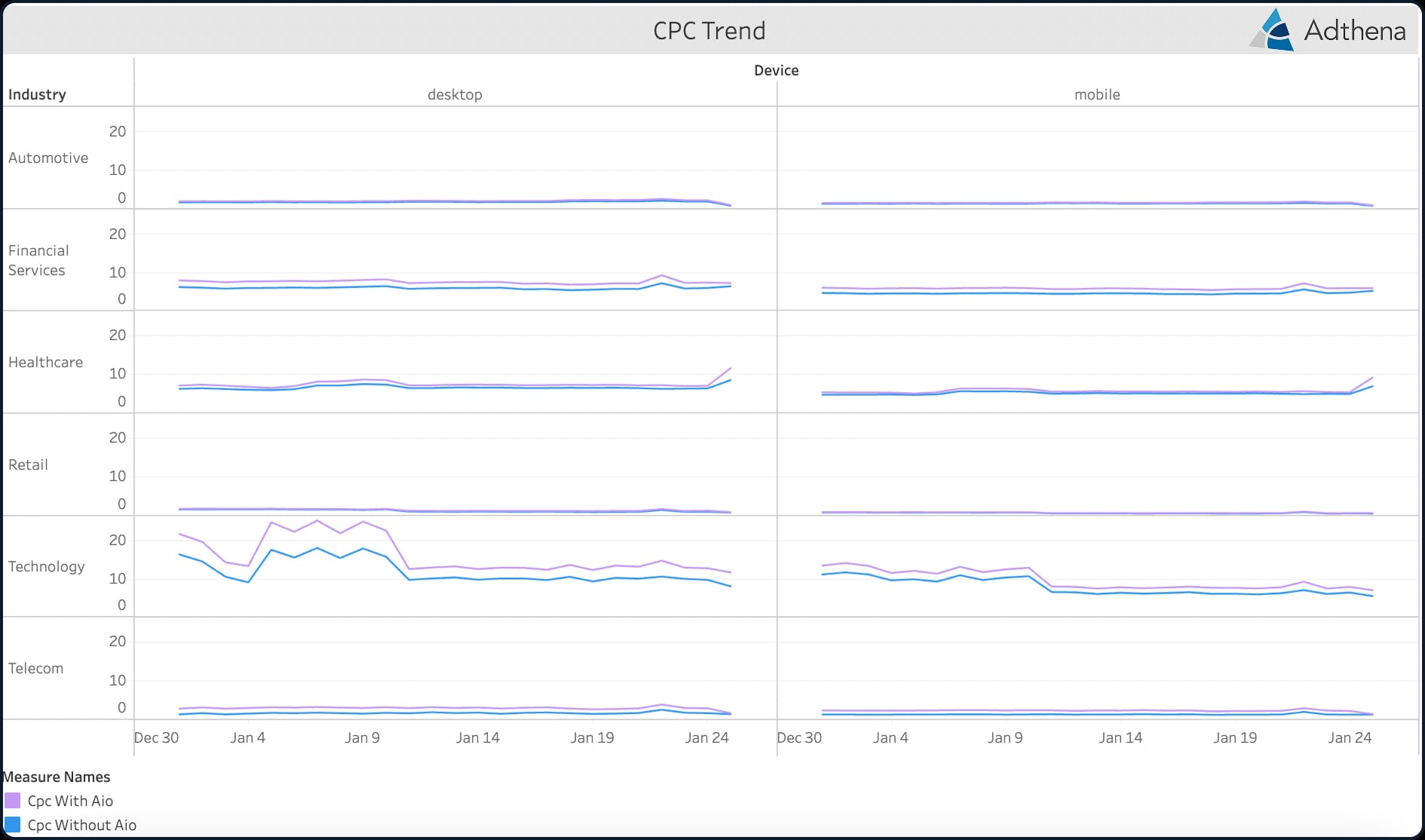
By tracking CPC fluctuations, I can identify where the cost of visibility is increasing due to the presence of AI Overviews.
Technology: AI Overview-related queries consistently yield higher CPCs, signaling increased costs for visibility.
Automotive & Retail: Across these sectors, costs remain similar regardless of AI Overviews, signifying less immediate impact.
Financial Services: Even modest CPC spikes can significantly impact profitability in industries with already high CPCs.
Device Splits Expose Desktop Saturation
Breaking down data by device reveals notable differences, showing more nuance than initially apparent.
Desktop dominance: Queries in Technology and Education are heavily populated by AI Overviews, making ad competition unavoidable.
Mobile opportunity: While AI Overviews appear less frequently on mobile, they more aggressively displace ads due to limited screen space, unlike desktop where multiple ads can sit below the overview.
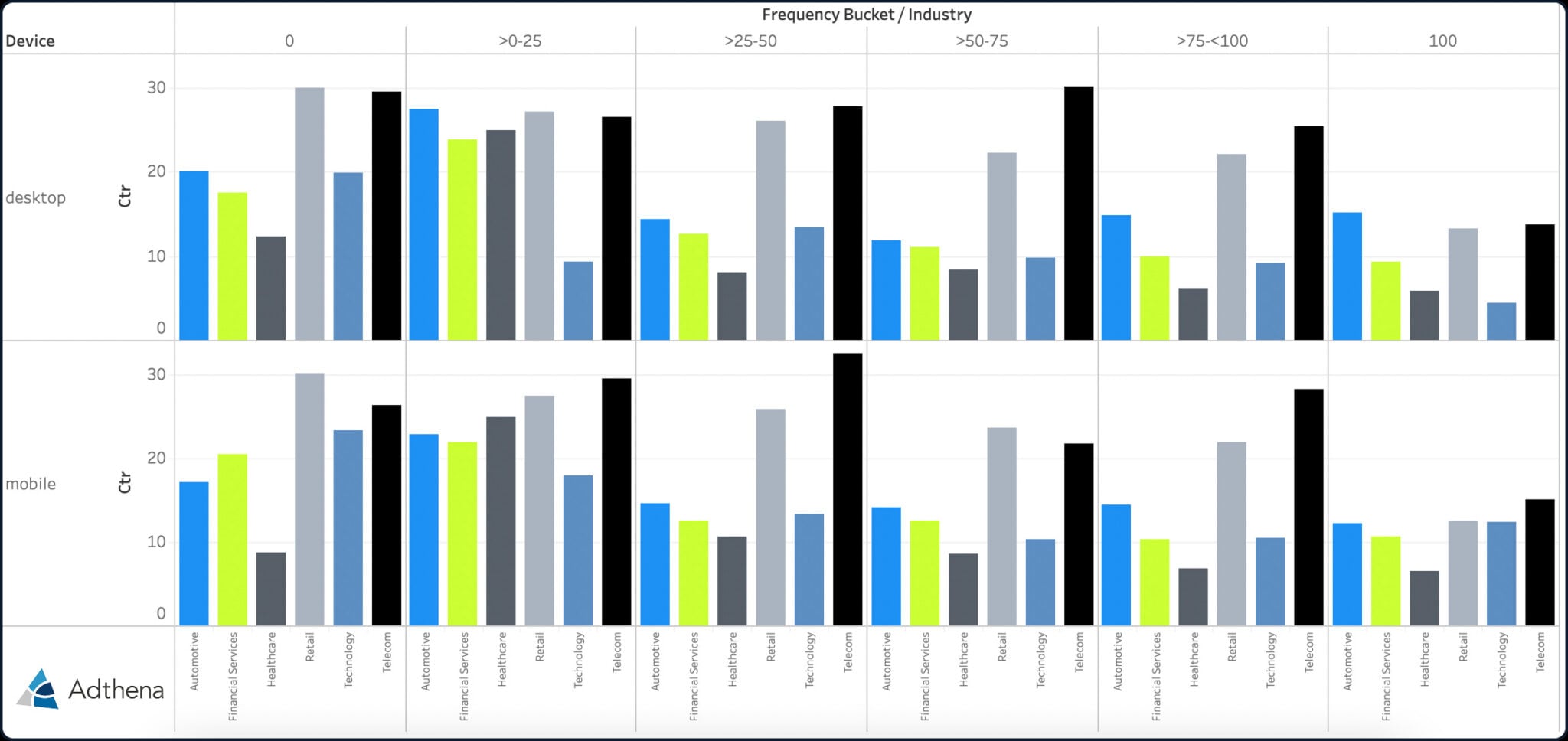
CTR Trends Provide Evidence of Traffic Erosion
Examining CTR trends reveals ongoing discrepancies between influenced and standard search outcomes.
Persistent gaps: In Telecom and Technology, lower CTRs with AI Overviews highlight the direct impact on traffic flow.
Consumer resilience: Financial Services and Retail show narrower CTR gaps, indicating ad preference despite AI Overviews.
Late month volatility: Spikes in Healthcare showcase rapid performance fluctuations as Google refines its AI deployment.
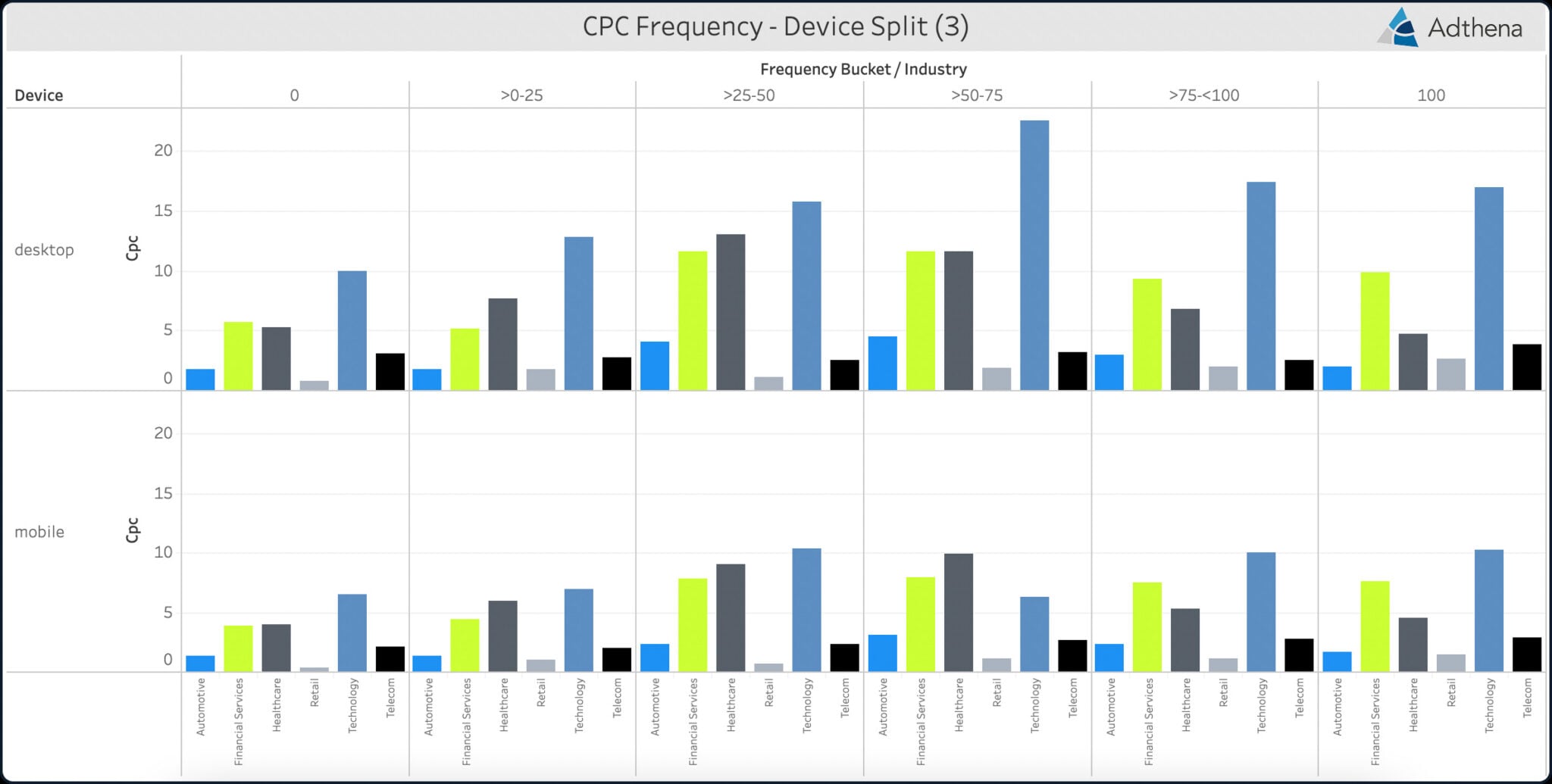
Distribution Data Reveals the Zero Click Reality
This data layer exposes a winner-take-all dynamic often obscured by average metrics.
The baseline gap: In the absence of AI Overviews, CTR remains strong across sectors, particularly Retail. However, where AI Overviews are rampant, the gap reveals the complete story.
High AI Overviews frequency, low CTR: Ubiquitous AI Overviews mean reduced CTR across sectors, including Technology. As frequency climbs, ad traffic capture decreases.
Resilience in Automotive: Automotive maintains a relatively diverse spread in mid-frequency ranges, suggesting users bypass summaries for brand information.
Three Immediate Steps to Adapt Your Paid Search Strategy
To protect my margins, here’s what I can do:
Monitor Click Through Rates (CTR) and Cost Per Click (CPC) changes: Although they don’t provide the complete picture, shifts in CTR or CPC can warn of AI Overview effects.
Segment performance by device: By separating desktop and mobile data, I can discover hidden trends that might be blurred in combined reporting.
Use Adthena’s free Market Share reports: These reports allow me to understand AI Overview frequency in my category and recognize at-risk areas for visibility.
Gaining Visibility with Adthena’s AI Overview Solution
To grasp AI Overview effects, continuous and detailed query-level intelligence is crucial. Adthena’s AI Overview solution regularly indexes search results, providing advertisers with insights into:
AI Overviews frequency patterns by query, industry, and device.
Content themes and citation sources.
Performance metrics including impact on CPC and CTR.
Ad position vs AI Overviews.
These insights help advertisers like me detect and address disruptions to revenue before they impact performance.
Coming soon: Adthena’s enhancement to the AI Overviews solution will include visibility into ads within AI Overviews, offering a comprehensive assessment of ad performance throughout the SERP.
The SERP Has Changed: Adapt or Fall Behind
While Google’s AI Overviews are here to stay, their effect isn’t uniform nor unsurmountable. Successful advertisers, like those who are vigilant, understand precisely where and how AI Overviews appear, what content they promote, and how their audience reacts.
Precision is vital. Assumptions lead to downfall.
Book a demo to see exactly how AI Overviews are impacting your campaigns.
The real insight is not just that Google cracked down on spam or that affiliate content marketing is less effective. It’s that businesses reliant on one easily mimicked distribution channel are vulnerable when that channel shifts.
The future of content will challenge businesses using search as their sole channel.
Instead of focus on broadly applicable topics, many within the industry are emphasizing verticalized research and benchmarks to inspire genuine community dialogues.
Content is evolving beyond simple pages meant to rank, becoming a blend of discovery, discourse, and thought leadership across various channels.
Discovery, discourse, and thought leadership
Hypothetical: Imagine running a SaaS company in the fintech domain, offering advanced financial forecasting.
Rather than creating landing pages targeting “best financial forecasting software” or its affordable counterpart, consider delving into insightful discussions with industry leaders imparts significant wisdom.
Leverage their expertise to pinpoint the most significant financial forecasting gaps in 2026 and verify: Does my offering genuinely address this?
If yes, you’ve likely found a perfect entry to the community.
If not, there’s your direction.
Utilize these insights to craft interactive assessment-based landing pages, supporting them with benchmarking reports derived from top-tier industry organizations.
The intent is for the content to aid organizations in understanding their present state and aims.
These assessments or studies may not dominate Google for high-volume queries, but leveraging owned channels, partnerships, paid media, and other strategies can ensure they reach ideal clients.
These insights act as a springboard for sharing authentic insights from unique dialogues, spanning multiple channels, amplifying your impact.
If executed effectively, you’ll not only enrich the community but also achieve previously elusive growth.
Indexation was swift, and pages appeared for long-tail queries surprisingly quickly.
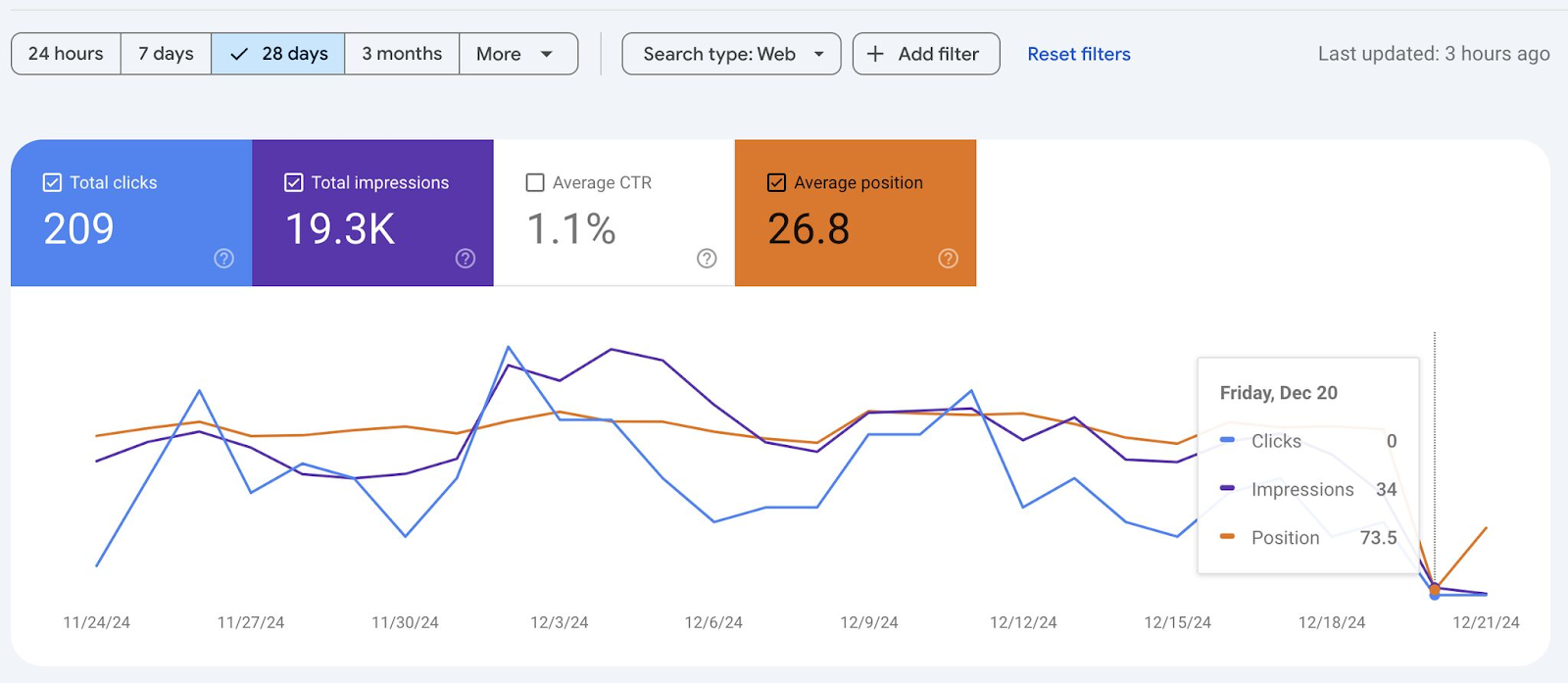
Within a couple of months, each site was generating around 200 in-market clicks.
However, the December spam update changed the game as clicks dropped to zero.
I attempted data updates and performance-enhancing plugins, which proved futile.
While I can’t pinpoint any single tactic’s failure, collectively, they resulted in sites whose only merit was temporary ranking. Once Google no longer found that useful, the sites were left bare.
The lesson here isn’t the failure of these websites; it’s that Google allowed them just enough time to learn from them.
Does affiliate content marketing still work?
Affiliate content marketing remains a viable monetization strategy but not a growth engine on its own.
There are many websites that offer a valuable user experience, adhere to best practices, and successfully generate affiliate income.
For further guidance, consult Google’s information on creating helpful and people-first content to assess if your website is publishing content “created primarily for people, not to manipulate search engine rankings.”
“If the ‘why’ behind your content is to primarily draw search engine traffic, it’s not aligned with what our systems aim to reward. Using automation, AI-generated content to manipulate rankings violates our spam policies.”
Even with best practices, factors such as the rise of AIO and other disruptions have tempered affiliate marketing’s past successes.
The real insight is not just that Google cracked down on spam or that affiliate content marketing is less effective. It’s that businesses reliant on one easily mimicked distribution channel are vulnerable when that channel shifts.
The future of content will challenge businesses using search as their sole channel.
Instead of focus on broadly applicable topics, many within the industry are emphasizing verticalized research and benchmarks to inspire genuine community dialogues.
Content is evolving beyond simple pages meant to rank, becoming a blend of discovery, discourse, and thought leadership across various channels.
Discovery, discourse, and thought leadership
Hypothetical: Imagine running a SaaS company in the fintech domain, offering advanced financial forecasting.
Rather than creating landing pages targeting “best financial forecasting software” or its affordable counterpart, consider delving into insightful discussions with industry leaders imparts significant wisdom.
Leverage their expertise to pinpoint the most significant financial forecasting gaps in 2026 and verify: Does my offering genuinely address this?
If yes, you’ve likely found a perfect entry to the community.
If not, there’s your direction.
Utilize these insights to craft interactive assessment-based landing pages, supporting them with benchmarking reports derived from top-tier industry organizations.
The intent is for the content to aid organizations in understanding their present state and aims.
These assessments or studies may not dominate Google for high-volume queries, but leveraging owned channels, partnerships, paid media, and other strategies can ensure they reach ideal clients.
These insights act as a springboard for sharing authentic insights from unique dialogues, spanning multiple channels, amplifying your impact.
If executed effectively, you’ll not only enrich the community but also achieve previously elusive growth.
Indexation was swift, and pages appeared for long-tail queries surprisingly quickly.
Within a couple of months, each site was generating around 200 in-market clicks.
However, the December spam update changed the game as clicks dropped to zero.
I attempted data updates and performance-enhancing plugins, which proved futile.
While I can’t pinpoint any single tactic’s failure, collectively, they resulted in sites whose only merit was temporary ranking. Once Google no longer found that useful, the sites were left bare.
The lesson here isn’t the failure of these websites; it’s that Google allowed them just enough time to learn from them.
Does affiliate content marketing still work?
Affiliate content marketing remains a viable monetization strategy but not a growth engine on its own.
There are many websites that offer a valuable user experience, adhere to best practices, and successfully generate affiliate income.
For further guidance, consult Google’s information on creating helpful and people-first content to assess if your website is publishing content “created primarily for people, not to manipulate search engine rankings.”
“If the ‘why’ behind your content is to primarily draw search engine traffic, it’s not aligned with what our systems aim to reward. Using automation, AI-generated content to manipulate rankings violates our spam policies.”
Even with best practices, factors such as the rise of AIO and other disruptions have tempered affiliate marketing’s past successes.
The real insight is not just that Google cracked down on spam or that affiliate content marketing is less effective. It’s that businesses reliant on one easily mimicked distribution channel are vulnerable when that channel shifts.
The future of content will challenge businesses using search as their sole channel.
Instead of focus on broadly applicable topics, many within the industry are emphasizing verticalized research and benchmarks to inspire genuine community dialogues.
Content is evolving beyond simple pages meant to rank, becoming a blend of discovery, discourse, and thought leadership across various channels.
Discovery, discourse, and thought leadership
Hypothetical: Imagine running a SaaS company in the fintech domain, offering advanced financial forecasting.
Rather than creating landing pages targeting “best financial forecasting software” or its affordable counterpart, consider delving into insightful discussions with industry leaders imparts significant wisdom.
Leverage their expertise to pinpoint the most significant financial forecasting gaps in 2026 and verify: Does my offering genuinely address this?
If yes, you’ve likely found a perfect entry to the community.
If not, there’s your direction.
Utilize these insights to craft interactive assessment-based landing pages, supporting them with benchmarking reports derived from top-tier industry organizations.
The intent is for the content to aid organizations in understanding their present state and aims.
These assessments or studies may not dominate Google for high-volume queries, but leveraging owned channels, partnerships, paid media, and other strategies can ensure they reach ideal clients.
These insights act as a springboard for sharing authentic insights from unique dialogues, spanning multiple channels, amplifying your impact.
If executed effectively, you’ll not only enrich the community but also achieve previously elusive growth.
The real insight is not just that Google cracked down on spam or that affiliate content marketing is less effective. It’s that businesses reliant on one easily mimicked distribution channel are vulnerable when that channel shifts.
The future of content will challenge businesses using search as their sole channel.
Instead of focus on broadly applicable topics, many within the industry are emphasizing verticalized research and benchmarks to inspire genuine community dialogues.
Content is evolving beyond simple pages meant to rank, becoming a blend of discovery, discourse, and thought leadership across various channels.
Discovery, discourse, and thought leadership
Hypothetical: Imagine running a SaaS company in the fintech domain, offering advanced financial forecasting.
Rather than creating landing pages targeting “best financial forecasting software” or its affordable counterpart, consider delving into insightful discussions with industry leaders imparts significant wisdom.
Leverage their expertise to pinpoint the most significant financial forecasting gaps in 2026 and verify: Does my offering genuinely address this?
If yes, you’ve likely found a perfect entry to the community.
If not, there’s your direction.
Utilize these insights to craft interactive assessment-based landing pages, supporting them with benchmarking reports derived from top-tier industry organizations.
The intent is for the content to aid organizations in understanding their present state and aims.
These assessments or studies may not dominate Google for high-volume queries, but leveraging owned channels, partnerships, paid media, and other strategies can ensure they reach ideal clients.
These insights act as a springboard for sharing authentic insights from unique dialogues, spanning multiple channels, amplifying your impact.
If executed effectively, you’ll not only enrich the community but also achieve previously elusive growth.
Indexation was swift, and pages appeared for long-tail queries surprisingly quickly.
Within a couple of months, each site was generating around 200 in-market clicks.
However, the December spam update changed the game as clicks dropped to zero.
I attempted data updates and performance-enhancing plugins, which proved futile.
While I can’t pinpoint any single tactic’s failure, collectively, they resulted in sites whose only merit was temporary ranking. Once Google no longer found that useful, the sites were left bare.
The lesson here isn’t the failure of these websites; it’s that Google allowed them just enough time to learn from them.
Does affiliate content marketing still work?
Affiliate content marketing remains a viable monetization strategy but not a growth engine on its own.
There are many websites that offer a valuable user experience, adhere to best practices, and successfully generate affiliate income.
For further guidance, consult Google’s information on creating helpful and people-first content to assess if your website is publishing content “created primarily for people, not to manipulate search engine rankings.”
“If the ‘why’ behind your content is to primarily draw search engine traffic, it’s not aligned with what our systems aim to reward. Using automation, AI-generated content to manipulate rankings violates our spam policies.”
Even with best practices, factors such as the rise of AIO and other disruptions have tempered affiliate marketing’s past successes.
The real insight is not just that Google cracked down on spam or that affiliate content marketing is less effective. It’s that businesses reliant on one easily mimicked distribution channel are vulnerable when that channel shifts.
The future of content will challenge businesses using search as their sole channel.
Instead of focus on broadly applicable topics, many within the industry are emphasizing verticalized research and benchmarks to inspire genuine community dialogues.
Content is evolving beyond simple pages meant to rank, becoming a blend of discovery, discourse, and thought leadership across various channels.
Discovery, discourse, and thought leadership
Hypothetical: Imagine running a SaaS company in the fintech domain, offering advanced financial forecasting.
Rather than creating landing pages targeting “best financial forecasting software” or its affordable counterpart, consider delving into insightful discussions with industry leaders imparts significant wisdom.
Leverage their expertise to pinpoint the most significant financial forecasting gaps in 2026 and verify: Does my offering genuinely address this?
If yes, you’ve likely found a perfect entry to the community.
If not, there’s your direction.
Utilize these insights to craft interactive assessment-based landing pages, supporting them with benchmarking reports derived from top-tier industry organizations.
The intent is for the content to aid organizations in understanding their present state and aims.
These assessments or studies may not dominate Google for high-volume queries, but leveraging owned channels, partnerships, paid media, and other strategies can ensure they reach ideal clients.
These insights act as a springboard for sharing authentic insights from unique dialogues, spanning multiple channels, amplifying your impact.
If executed effectively, you’ll not only enrich the community but also achieve previously elusive growth.
Do you remember when partial-match domains and headings could easily rank for commercially intended search queries? I do, and those were simpler times.
With the right strategies and conversion-optimized widgets, I was able to quietly generate tens of thousands of dollars in affiliate revenue each month with minimal upkeep.
Maintaining success was as simple as updating articles for relevancy and freshness signals.
Pressure-testing Google’s spam update
Before launching the experiment, I dedicated several months to scaling an affiliate initiative on a revered website within a YMYL category.
We succeeded by hiring subject matter experts to craft informative content that genuinely educated our readers.
While the newly created content targeted keywords with commercial intent, it wasn’t the sole purpose of the website. We also featured thousands of pages of user-generated content that guided the new writing and encouraged conversions.
Our site boasted brand trust, original research, and expert insights—elements you’d anticipate from a reputable publisher.
This was a perfect combination: a legacy of verticalized user-generated content, numerous earned backlinks, and a commercial element that met existing demand while complying with industry practices. It provided a genuinely helpful user experience.
The experiment: Scaling AI without trust
The initial model was founded on trust and earned authority, but this new venture removed those signals entirely.
During this period, many LinkedIn influencers were employing AI to mass-generate pages by scraping, rewriting content, or programmatically collating public data.
Inspired, I scrounged a few dollars, purchased three domains, and tuned them to match these queries: “best welding schools,” “best plumbing schools,” and “best electrical schools.”
The objective? To test a collection of low-trust, high-scale strategies popular online and observe how long they’d last.
I used AI to enhance the websites visually, fetched public data through a vibe-coded Python API, and crafted templates for subheadings and paragraph text with ChatGPT based on what typically ranks online.
Within hours, thanks to liquid content, I published thousands of bottom-funnel pages across three websites. It allowed me to integrate public data, target specific program types and states with superlatives, and offer a directory with individual pages for each school.
I even utilized aggressive internal linking tactics that favored crawl coverage over user intent.
This arrangement ignored nearly every long-term trust signal, providing a valuable test of system reactions.
The real insight is not just that Google cracked down on spam or that affiliate content marketing is less effective. It’s that businesses reliant on one easily mimicked distribution channel are vulnerable when that channel shifts.
The future of content will challenge businesses using search as their sole channel.
Instead of focus on broadly applicable topics, many within the industry are emphasizing verticalized research and benchmarks to inspire genuine community dialogues.
Content is evolving beyond simple pages meant to rank, becoming a blend of discovery, discourse, and thought leadership across various channels.
Discovery, discourse, and thought leadership
Hypothetical: Imagine running a SaaS company in the fintech domain, offering advanced financial forecasting.
Rather than creating landing pages targeting “best financial forecasting software” or its affordable counterpart, consider delving into insightful discussions with industry leaders imparts significant wisdom.
Leverage their expertise to pinpoint the most significant financial forecasting gaps in 2026 and verify: Does my offering genuinely address this?
If yes, you’ve likely found a perfect entry to the community.
If not, there’s your direction.
Utilize these insights to craft interactive assessment-based landing pages, supporting them with benchmarking reports derived from top-tier industry organizations.
The intent is for the content to aid organizations in understanding their present state and aims.
These assessments or studies may not dominate Google for high-volume queries, but leveraging owned channels, partnerships, paid media, and other strategies can ensure they reach ideal clients.
These insights act as a springboard for sharing authentic insights from unique dialogues, spanning multiple channels, amplifying your impact.
If executed effectively, you’ll not only enrich the community but also achieve previously elusive growth.
Indexation was swift, and pages appeared for long-tail queries surprisingly quickly.
Within a couple of months, each site was generating around 200 in-market clicks.
However, the December spam update changed the game as clicks dropped to zero.
I attempted data updates and performance-enhancing plugins, which proved futile.
While I can’t pinpoint any single tactic’s failure, collectively, they resulted in sites whose only merit was temporary ranking. Once Google no longer found that useful, the sites were left bare.
The lesson here isn’t the failure of these websites; it’s that Google allowed them just enough time to learn from them.
Does affiliate content marketing still work?
Affiliate content marketing remains a viable monetization strategy but not a growth engine on its own.
There are many websites that offer a valuable user experience, adhere to best practices, and successfully generate affiliate income.
For further guidance, consult Google’s information on creating helpful and people-first content to assess if your website is publishing content “created primarily for people, not to manipulate search engine rankings.”
“If the ‘why’ behind your content is to primarily draw search engine traffic, it’s not aligned with what our systems aim to reward. Using automation, AI-generated content to manipulate rankings violates our spam policies.”
Even with best practices, factors such as the rise of AIO and other disruptions have tempered affiliate marketing’s past successes.
The real insight is not just that Google cracked down on spam or that affiliate content marketing is less effective. It’s that businesses reliant on one easily mimicked distribution channel are vulnerable when that channel shifts.
The future of content will challenge businesses using search as their sole channel.
Instead of focus on broadly applicable topics, many within the industry are emphasizing verticalized research and benchmarks to inspire genuine community dialogues.
Content is evolving beyond simple pages meant to rank, becoming a blend of discovery, discourse, and thought leadership across various channels.
Discovery, discourse, and thought leadership
Hypothetical: Imagine running a SaaS company in the fintech domain, offering advanced financial forecasting.
Rather than creating landing pages targeting “best financial forecasting software” or its affordable counterpart, consider delving into insightful discussions with industry leaders imparts significant wisdom.
Leverage their expertise to pinpoint the most significant financial forecasting gaps in 2026 and verify: Does my offering genuinely address this?
If yes, you’ve likely found a perfect entry to the community.
If not, there’s your direction.
Utilize these insights to craft interactive assessment-based landing pages, supporting them with benchmarking reports derived from top-tier industry organizations.
The intent is for the content to aid organizations in understanding their present state and aims.
These assessments or studies may not dominate Google for high-volume queries, but leveraging owned channels, partnerships, paid media, and other strategies can ensure they reach ideal clients.
These insights act as a springboard for sharing authentic insights from unique dialogues, spanning multiple channels, amplifying your impact.
If executed effectively, you’ll not only enrich the community but also achieve previously elusive growth.
The real insight is not just that Google cracked down on spam or that affiliate content marketing is less effective. It’s that businesses reliant on one easily mimicked distribution channel are vulnerable when that channel shifts.
The future of content will challenge businesses using search as their sole channel.
Instead of focus on broadly applicable topics, many within the industry are emphasizing verticalized research and benchmarks to inspire genuine community dialogues.
Content is evolving beyond simple pages meant to rank, becoming a blend of discovery, discourse, and thought leadership across various channels.
Discovery, discourse, and thought leadership
Hypothetical: Imagine running a SaaS company in the fintech domain, offering advanced financial forecasting.
Rather than creating landing pages targeting “best financial forecasting software” or its affordable counterpart, consider delving into insightful discussions with industry leaders imparts significant wisdom.
Leverage their expertise to pinpoint the most significant financial forecasting gaps in 2026 and verify: Does my offering genuinely address this?
If yes, you’ve likely found a perfect entry to the community.
If not, there’s your direction.
Utilize these insights to craft interactive assessment-based landing pages, supporting them with benchmarking reports derived from top-tier industry organizations.
The intent is for the content to aid organizations in understanding their present state and aims.
These assessments or studies may not dominate Google for high-volume queries, but leveraging owned channels, partnerships, paid media, and other strategies can ensure they reach ideal clients.
These insights act as a springboard for sharing authentic insights from unique dialogues, spanning multiple channels, amplifying your impact.
If executed effectively, you’ll not only enrich the community but also achieve previously elusive growth.
Indexation was swift, and pages appeared for long-tail queries surprisingly quickly.
Within a couple of months, each site was generating around 200 in-market clicks.
However, the December spam update changed the game as clicks dropped to zero.
I attempted data updates and performance-enhancing plugins, which proved futile.
While I can’t pinpoint any single tactic’s failure, collectively, they resulted in sites whose only merit was temporary ranking. Once Google no longer found that useful, the sites were left bare.
The lesson here isn’t the failure of these websites; it’s that Google allowed them just enough time to learn from them.
Does affiliate content marketing still work?
Affiliate content marketing remains a viable monetization strategy but not a growth engine on its own.
There are many websites that offer a valuable user experience, adhere to best practices, and successfully generate affiliate income.
For further guidance, consult Google’s information on creating helpful and people-first content to assess if your website is publishing content “created primarily for people, not to manipulate search engine rankings.”
“If the ‘why’ behind your content is to primarily draw search engine traffic, it’s not aligned with what our systems aim to reward. Using automation, AI-generated content to manipulate rankings violates our spam policies.”
Even with best practices, factors such as the rise of AIO and other disruptions have tempered affiliate marketing’s past successes.
The real insight is not just that Google cracked down on spam or that affiliate content marketing is less effective. It’s that businesses reliant on one easily mimicked distribution channel are vulnerable when that channel shifts.
The future of content will challenge businesses using search as their sole channel.
Instead of focus on broadly applicable topics, many within the industry are emphasizing verticalized research and benchmarks to inspire genuine community dialogues.
Content is evolving beyond simple pages meant to rank, becoming a blend of discovery, discourse, and thought leadership across various channels.
Discovery, discourse, and thought leadership
Hypothetical: Imagine running a SaaS company in the fintech domain, offering advanced financial forecasting.
Rather than creating landing pages targeting “best financial forecasting software” or its affordable counterpart, consider delving into insightful discussions with industry leaders imparts significant wisdom.
Leverage their expertise to pinpoint the most significant financial forecasting gaps in 2026 and verify: Does my offering genuinely address this?
If yes, you’ve likely found a perfect entry to the community.
If not, there’s your direction.
Utilize these insights to craft interactive assessment-based landing pages, supporting them with benchmarking reports derived from top-tier industry organizations.
The intent is for the content to aid organizations in understanding their present state and aims.
These assessments or studies may not dominate Google for high-volume queries, but leveraging owned channels, partnerships, paid media, and other strategies can ensure they reach ideal clients.
These insights act as a springboard for sharing authentic insights from unique dialogues, spanning multiple channels, amplifying your impact.
If executed effectively, you’ll not only enrich the community but also achieve previously elusive growth.