Recently, I’ve been diving into McKinsey’s ‘Organize to Value’ strategy, a fascinating blueprint for transforming marketing into a positionless model. According to a comprehensive analysis, it’s not technology that’s holding back operational transformations; it’s unclear objectives, uncommitted leadership, and a stagnant culture that are to blame.
Implementing new AI technologies to drive marketing efforts seems simple. However, the real challenge lies in empowering marketing teams to utilize these tools independently, decisively, and at scale. The primary obstacle? It’s us, the humans.
For as long as I can remember, marketing teams have aimed to keep up with consumers, delivering timely, relevant messages and optimizing customer lifetime value to boost loyalty and ROI. While this goal isn’t new, the AI technologies that help us analyze data and create personalized messages at scale are continuously evolving. Unfortunately, our ability to fully harness this technology has fallen behind.
Despite these challenges, progress is being made. Some marketing teams have overcome these hurdles, yielding remarkable results. Take Caesars Entertainment for example. They reduced campaign execution time from five days to just five minutes. As Asadul Shah, the vice president of player revenue strategy notes, this transformation was ‘a massive game changer.’
Before their transformation, marketers at Caesars manually built targeting lists and coordinated efforts across disconnected systems, often waiting on multiple teams before launching campaigns. This made it difficult to target players with precision and timing. By partnering with Optimove, Caesars combined data, orchestration, and execution into a single platform. This change didn’t just improve efficiency; it allowed the marketing team to react more dynamically to players’ needs.
What truly made this transformation effective wasn’t just the technology—it was the implementation of Positionless Marketing. This framework liberated marketers from fixed roles, empowering every team member to act independently. Optimove provided the platform, while Caesars developed the necessary team structure. This synergy of technology and human ingenuity brought Positionless Marketing to life.
Organizations that achieve such transformation are embodying what McKinsey describes as ‘organizing to value.’ This involves a deep rethinking of structure, decision-making, and accountability, transforming marketing teams into operations that continuously drive value—ultimately optimizing customer lifetime value, fostering loyalty, and delivering measurable ROI.
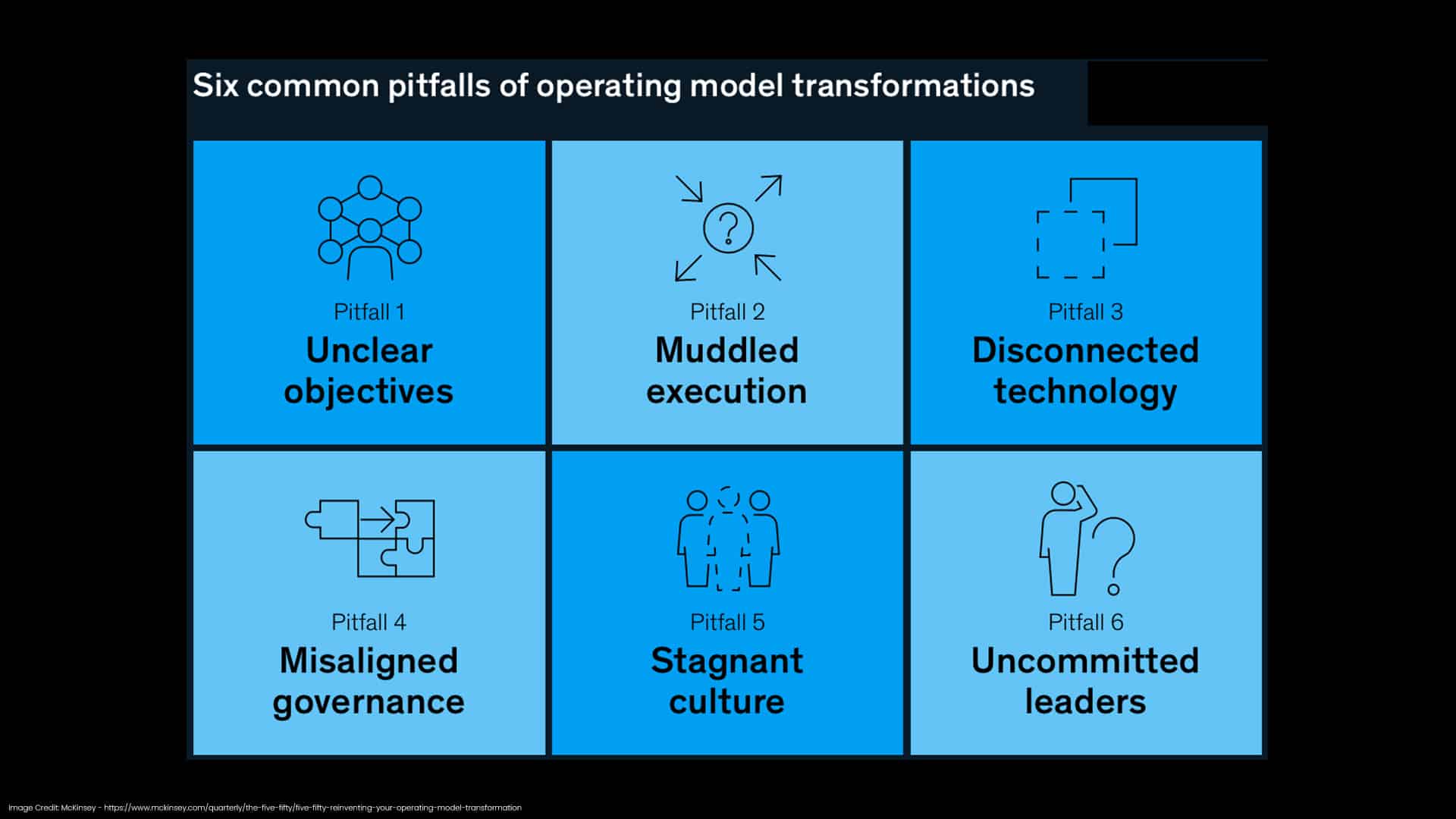
Yet, McKinsey highlights six pitfalls many teams face when trying to adopt the Positionless model, with only one being technological. The rest involve leadership and organizational issues.
Some key barriers include unclear objectives causing a focus on activity metrics over outcomes, misaligned governance that slows decision-making, and leaders who reinforce silos instead of enabling autonomy. Other obstacles are a stagnant culture resistant to change, muddled execution with no clear accountability, and disconnected technology further compartmentalizing efforts.
This kind of ‘assembly-line’ marketing, where tasks are segmented among different teams, hinders value creation. Peter Drucker famously said, “The purpose of business is to create and keep a customer.” However, when insights, creativity, and activation are siloed, value gets lost in between.
McKinsey’s ‘Organize to Value’ offers a practical path forward. It suggests designing organizations around value creation and impactful outcomes, rather than rigid job titles and processes designed to control.
To truly embrace Positionless Marketing, leaders must apply pragmatic solutions focused on improving marketing execution. This involves starting with a clear purpose, restructuring work to emphasize outcomes, streamlining decision-making processes, and aligning governance, technology, and talent. It empowers marketers to transcend traditional roles and independently deliver results.
This transformation requires commitment but staying with an outdated assembly-line structure is even costlier. Organizations like FDJ United and a major retailer have already seen the benefits: improved execution speed, increased purchase rates, and better use of resources.
As I see it, the window to act is narrowing. AI and data technologies are advancing rapidly, and customer expectations for personalized experiences are growing. Those who are quick to adapt will stay ahead, while those who hesitate may fall behind.
McKinsey’s insights confirm that the right structure and technology can unleash human potential, transforming marketing from within. Positionless Marketing is more than a strategy; it’s the future we need to embrace.
Inspired by this post on Search Engine Land.

Leave a Reply